A practical, baker-friendly comparison of almond flour and coconut flour, including measuring tips, cautious conversion ranges, moisture guidance, and the be...
Recipeva
Vegan Baking Substitutes for Eggs and Dairy
A practical, friendly guide to vegan baking swaps that actually work. Learn the best egg, butter, and milk substitutes for cookies, cakes, muffins, brownies, and more, plus tips to get perfect texture every time.

Maya Reynolds
Maya Reynolds is a passionate home cook, recipe developer, and the creative voice behind Recipeva. With over a decade of experience translating complex culinary techniques into approachable weeknight meals, she focuses on creating dishes that bring joy to the dinner table without the stress.
Created September 21, 2026
Updated September 21, 2026
If you have ever stared at a baking recipe and thought, “Okay, but what do I do about the eggs and butter?”, welcome. You are in the right kitchen. Vegan baking is not about settling for sad, dry cupcakes. It is about understanding what each ingredient does so you can replace it with confidence and still get that cozy, bakery-style result.
In this guide, I will walk you through the most reliable egg and dairy substitutes, when to use which, and the little adjustments that make all the difference. I am deeply organized about this, and yes, there will be lots of garlic in dinner later. For dessert, we are keeping it sweet.
First, what eggs and dairy do
Once you know the job, you can hire the right substitute. Here is the quick breakdown.
Eggs: structure, moisture, lift, and binding
- Binding: holds cookies and bars together.
- Structure: helps cakes set and slice cleanly.
- Lift: whipped eggs trap air for lighter texture.
- Emulsifying: helps fat and water play nicely, making batters smooth.
Butter and milk: flavor, tenderness, and browning
- Butter: adds rich flavor, tenderness, and helps with crisp edges in cookies. It also brings a little water, which can create steam and lift, and it traps air when creamed with sugar.
- Milk/buttermilk: adds moisture, balances sweetness, and can activate baking soda when acidic.
- Both: contribute to browning and that “bakery smell” we all chase.
My biggest mindset tip: do not look for a single “best” egg replacer. The best swap depends on whether you are making chewy cookies, fluffy cake, or fudgy brownies.
Egg substitutes
Below are my go-to options, with amounts for replacing 1 large egg in most everyday recipes.
1) Flax egg
Best for: cookies, muffins, pancakes, quick breads, brownies (especially fudgy ones).
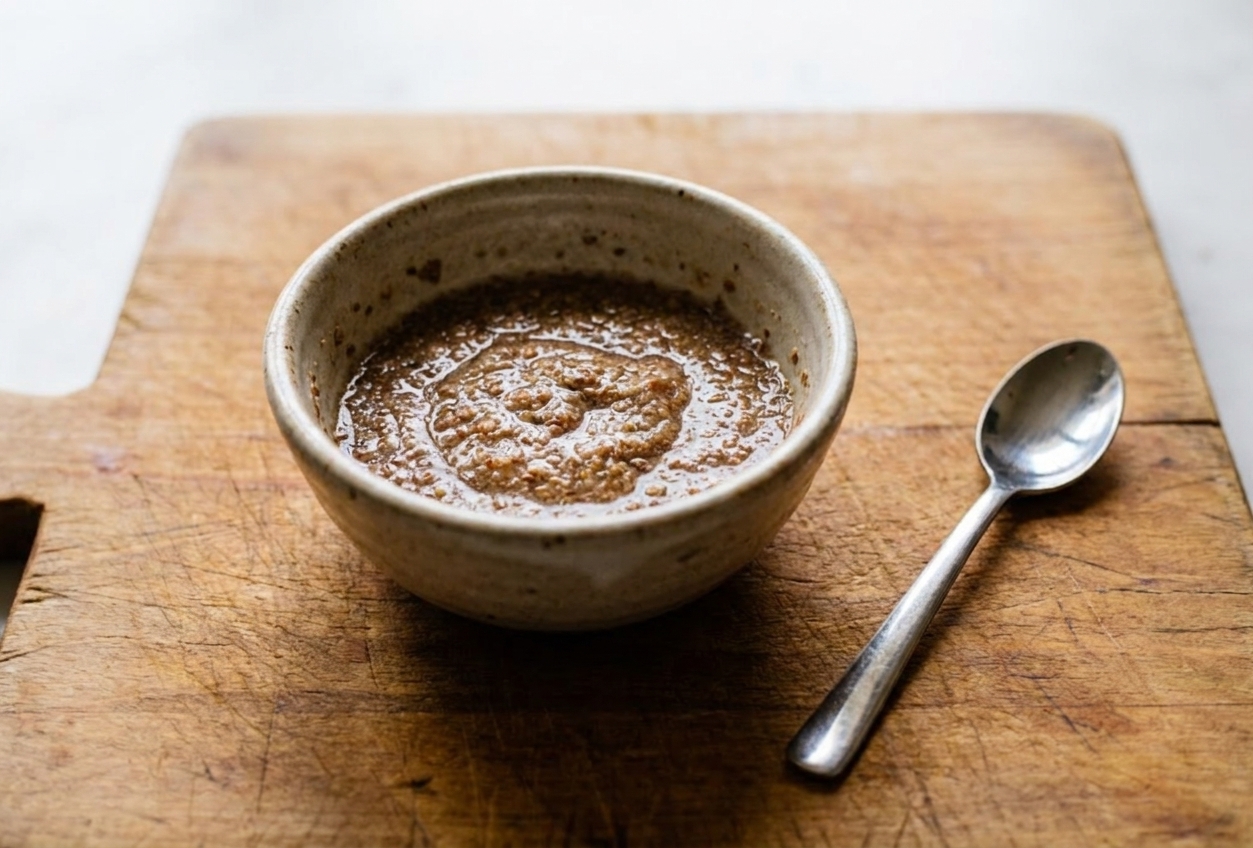
How to make it (replaces 1 egg): Mix 1 tablespoon (7 g) ground flaxseed with 3 tablespoons (45 g) water. Let sit 5 to 10 minutes until gelled.
Why it works: Flax gels beautifully and binds batters without adding weird flavors when paired with vanilla and spices.
Maya tip: Use ground flax (flax meal). Whole seeds will not gel the same way.
2) Chia egg
Best for: muffins, quick breads, heartier cookies, banana bread.
How to make it (replaces 1 egg): Mix 1 tablespoon (12 g) chia seeds (whole or ground) with 3 tablespoons (45 g) water. Rest 10 minutes.
Why it works: Similar to flax, with a slightly sturdier gel.
Watch for: Visible seeds in lighter bakes like vanilla cake. If you want a smooth crumb, use ground chia.
3) Unsweetened applesauce
Best for: cakes, muffins, quick breads, snack bars.
Swap (replaces 1 egg): 1/4 cup (60 g) unsweetened applesauce.
Why it works: Adds moisture and a soft, tender crumb.
Watch for: Too much can make things gummy. If you replace more than 2 eggs in a recipe with applesauce, expect a denser texture.
4) Mashed banana
Best for: banana bread (obviously), muffins, brownies if you like a mild banana note.
Swap (replaces 1 egg): 1/4 cup mashed ripe banana.
Why it works: Moisture plus binding, with natural sweetness.
Watch for: Banana flavor is not subtle. If you do not want to taste it, pick flax or applesauce instead.
5) Aquafaba (chickpea liquid)
Best for: meringues, macarons, mousse, marshmallowy frosting, and recipes needing whipped egg whites.
Swap:
- 1 egg white: 2 tablespoons aquafaba
- 1 whole egg: 3 tablespoons aquafaba (best for moisture and binding)
Important nuance: Aquafaba is excellent at mimicking egg whites (lift and foam). It does not bring yolk richness or the same emulsifying power as a real egg yolk, so some recipes may need a touch more fat or an emulsifier to feel “round” and rich.
Why it works: It can whip into a stable foam and create lift that most other vegan egg swaps cannot.
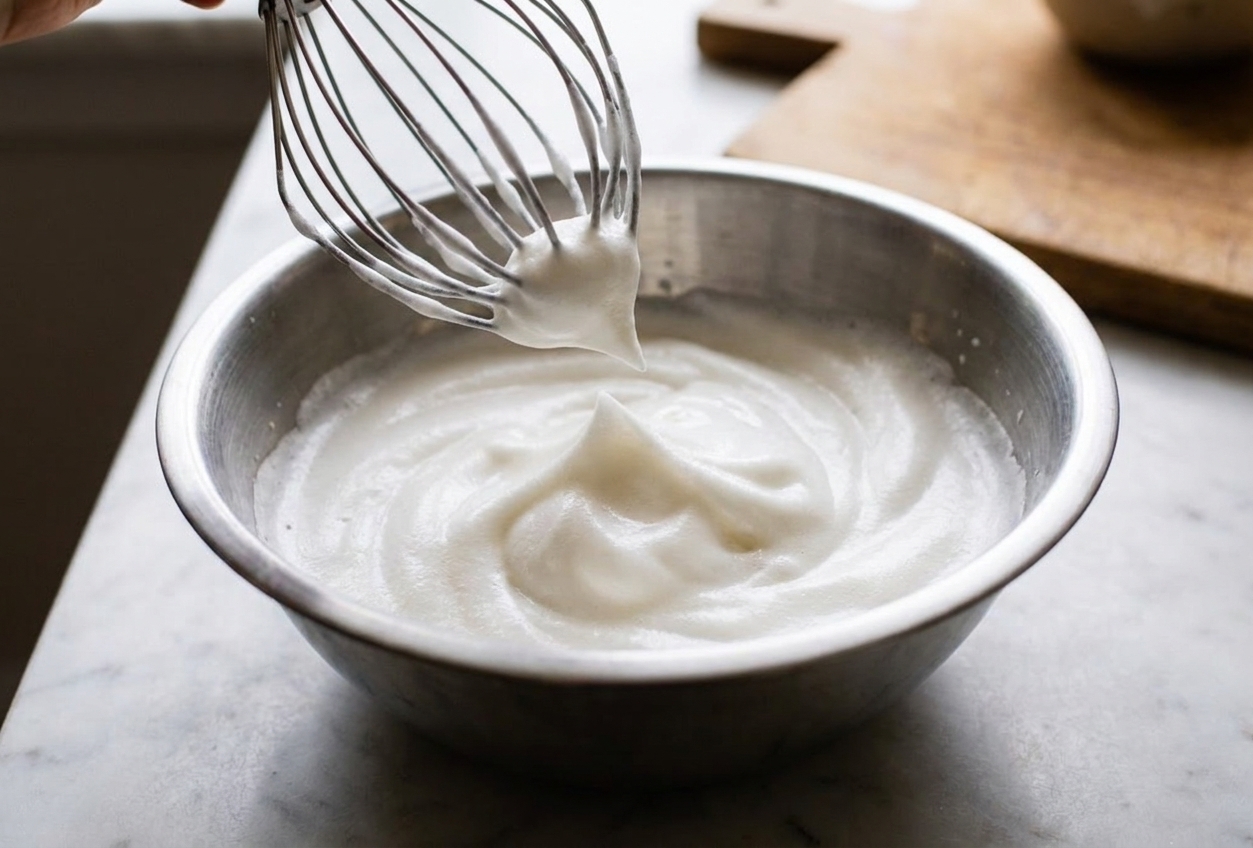
Maya tip: Aquafaba strength varies by brand and can. If yours seems thin, simmer it to concentrate until it looks more like loose egg whites, then cool before whipping. This often improves whipping power.
6) Commercial egg replacer
Best for: cakes, cookies, muffins when you want neutral flavor and consistency.
How to use: Follow package directions. Most are starch-based and designed for binding and structure.
Why it works: Reliable, especially for newer vegan bakers or for “important” bakes like birthday cake.
7) Silken tofu
Best for: dense, creamy bakes like cheesecake, brownies, custardy pies.
Swap (replaces 1 egg): 1/4 cup (about 60 g) blended silken tofu.
Why it works: Adds protein-like structure and a smooth, rich mouthfeel.
Watch for: Can make cakes heavier if overused.
Quick egg swap cheat sheet
- Chewy cookies: flax egg or commercial replacer
- Fluffy cakes: commercial replacer, applesauce (for 1 egg only), or aquafaba for lift
- Fudgy brownies: flax egg or silken tofu
- Meringue: aquafaba, no contest
- Pancakes: flax egg, chia egg, or applesauce
Butter substitutes
Butter brings fat (tenderness), flavor (richness), and structure (especially in cookies where butter solidifies as it cools). It also contains water, which can turn to steam in the oven, and it helps trap air when creamed with sugar. The good news: vegan butter has come a long way, and there are other options depending on what you are making.
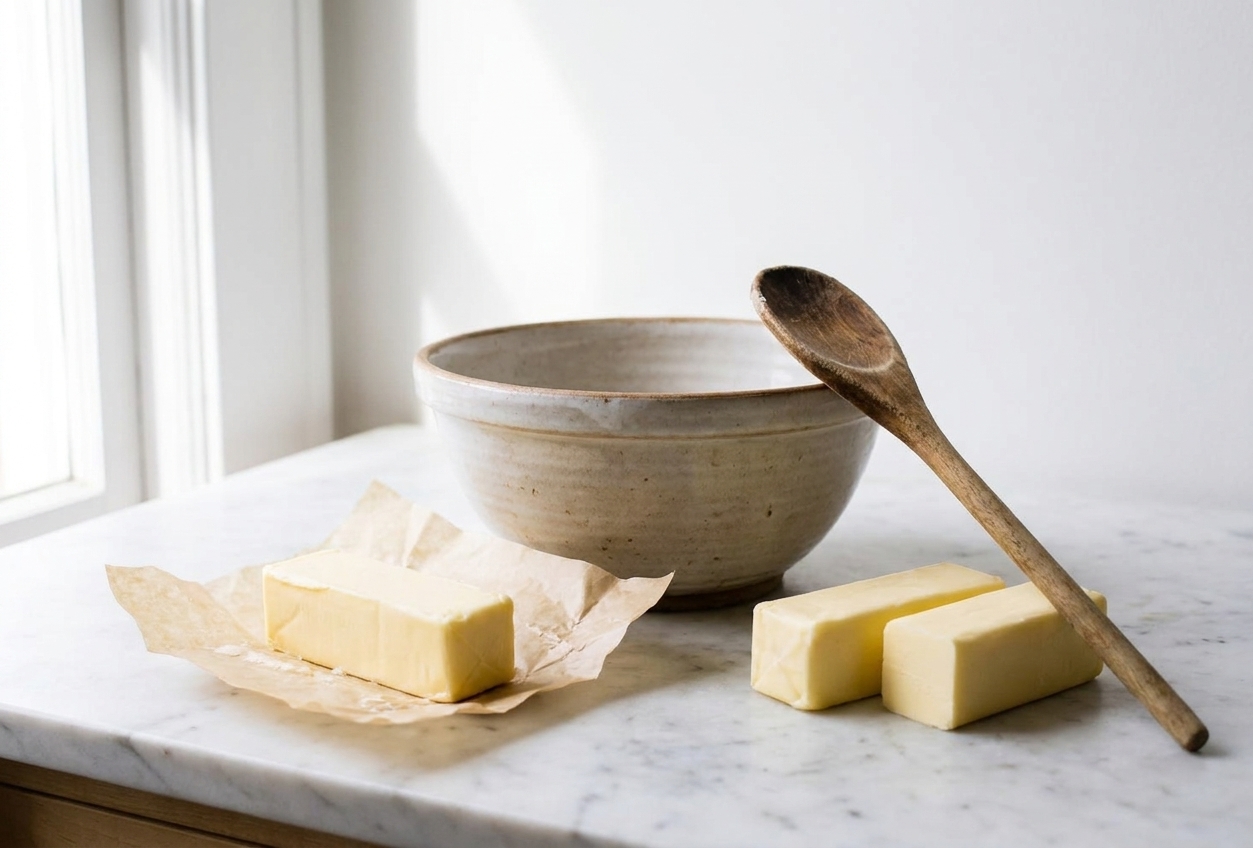
1) Vegan butter (stick style)
Best for: cookies, frosting, pie dough, buttercream, shortbread, anything where butter flavor matters.
Swap: 1:1 in most recipes.
What to look for: A stick version (not tub) is usually firmer and often has less water, which behaves more like dairy butter.
Maya tip: If your cookies spread too much, chill the dough 30 to 60 minutes and make sure your vegan butter is not overly soft.
2) Coconut oil
Best for: crisp cookies, bars, quick breads, granola, and some pie crusts.
Swap: 1:1 for butter by volume in many recipes.
Watch for: Coconut flavor (use refined coconut oil if you want neutral). Also, coconut oil is firm when cool and melts quickly, which can change spread.
3) Neutral oil (canola, avocado, grapeseed)
Best for: muffins, cakes, quick breads, brownies where you want moisture and a soft crumb.
Swap guideline (by volume): Replace butter with 3/4 the amount of oil. Example: for 1/2 cup butter, use about 6 tablespoons oil.
Why: Butter is not 100% fat, so using equal oil can make bakes greasy.
Where this does not apply: Recipes that rely on solid fat and butter’s water content, like laminated doughs, classic shortbread, and many pie crust techniques. For those, stick-style vegan butter is your friend.
4) Nut butters and seed butters
Best for: cookies, bars, brownies, “protein-y” snacks.
Swap: Works best when replacing part of the butter, or in recipes designed for it.
Watch for: Strong flavors and extra thickness. If batter becomes stiff, add a splash of plant milk.
Milk substitutes
Plant milk is usually the easiest vegan swap. Most work 1:1. The main differences are protein, fat, and flavor.
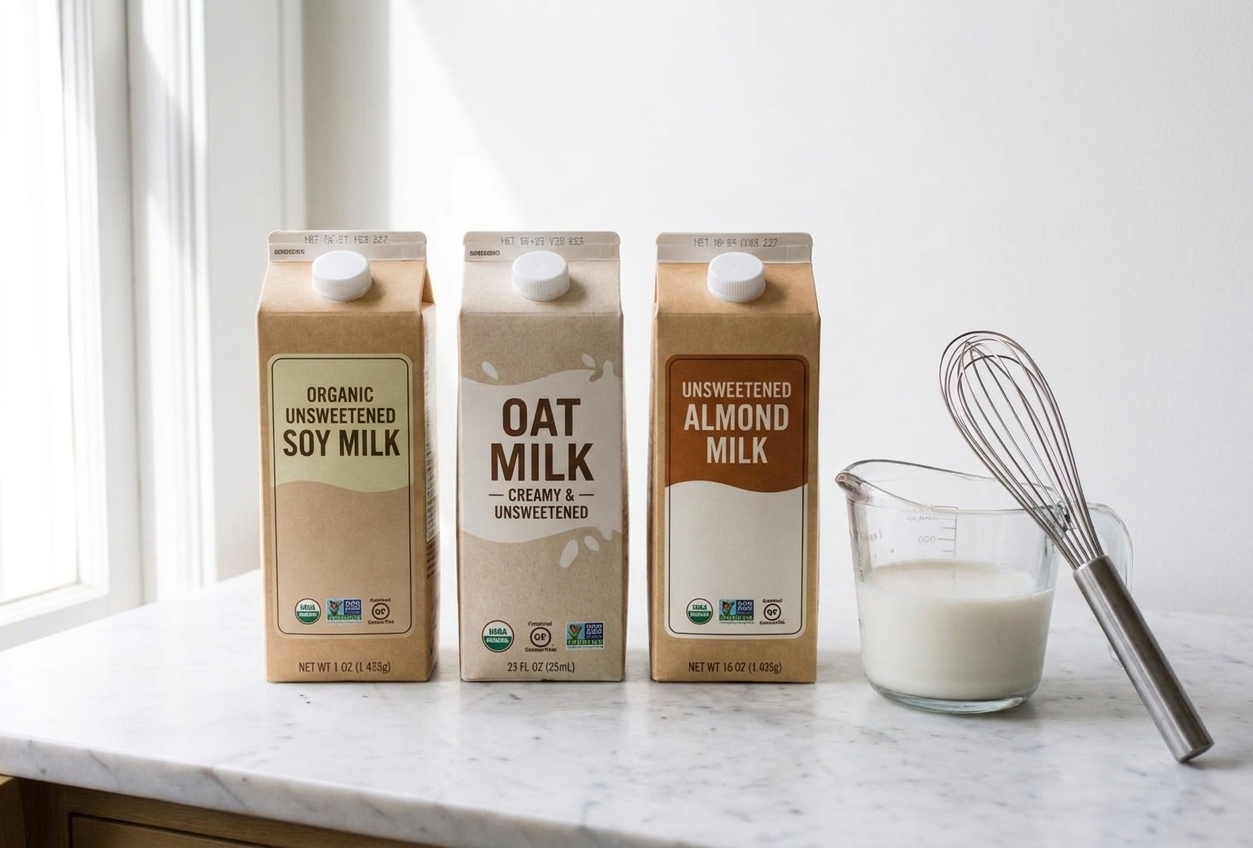
Best all-purpose: unsweetened soy milk
Soy milk has higher protein, which tends to help with structure, and it often browns nicely in recipes where sugar and heat are doing their thing too. If you want one carton in your fridge for baking, this is it.
Great for tenderness: oat milk
Oat milk tends to make cakes and muffins feel soft and cozy. It is slightly sweet, so choose unsweetened for the most control.
Light and neutral: almond milk
Almond milk works well, but it is lower in protein and fat, so very delicate cakes can bake up a touch drier. If that happens, add 1 to 2 teaspoons extra oil to the batter next time.
How to make vegan buttermilk
If a recipe calls for buttermilk, you can absolutely still get that tender crumb and gentle tang.
- Measure 1 cup plant milk (soy is best).
- Stir in 1 tablespoon lemon juice or white vinegar.
- Let sit 5 to 10 minutes, then use as directed.
Important: This is especially helpful in recipes using baking soda, because the acidity helps it do its lifting job.
Other dairy swaps
Yogurt and sour cream
- Swap: Use unsweetened dairy-free yogurt 1:1.
- Best for: coffee cake, muffins, quick breads, tangy frosting bases.
Heavy cream
- For baking: full-fat coconut milk or coconut cream works beautifully.
- For whipping: look for a dairy-free whipping cream designed to whip, or use chilled full-fat coconut cream (results vary by brand).
Condensed milk
For recipes like key lime pie or no-bake bars, use sweetened condensed coconut milk (sold in cans). Swap 1:1.
Cream cheese
Dairy-free cream cheese can be swapped 1:1 in frostings and cheesecakes, but textures vary. If a cheesecake seems soft, plan on a longer chill time and consider adding a little starch (like cornstarch) next time.
Pick swaps by recipe
If you want a quick decision tree, here is what I use at home.
Cookies
- Egg: flax egg or commercial replacer
- Butter: vegan butter sticks for classic results, coconut oil for crispier edges
- Tip: Chill dough if spreading is an issue, and weigh flour if you can
Cakes and cupcakes
- Egg: commercial replacer for the fluffiest crumb, or aquafaba if you need lift
- Milk: soy or oat
- Tip: Do not overmix. Vegan batters can go from tender to tough fast if you keep stirring
Muffins and quick breads
- Egg: flax, chia, or applesauce
- Fat: oil is great here for moisture
- Tip: Resting the batter 5 to 10 minutes can help hydration and height in some recipes, especially with double-acting baking powder. If your recipe relies on baking soda and acid for lift, skip the rest or keep it very short so you do not lose your rise.
Brownies and bars
- Egg: flax egg for fudgy, silken tofu for dense and creamy
- Butter: vegan butter or neutral oil depending on the recipe
- Tip: Slight underbaking is your friend. Let brownies cool fully before cutting
Pie crust
- Fat: vegan butter sticks are easiest, or a mix of vegan butter and shortening for extra flake
- Tip: Keep everything cold. If your kitchen is warm, chill the flour bowl too
Meringues and airy desserts
- Egg whites: aquafaba
- Tip: Use a clean, grease-free bowl. Even a little oil can ruin the whip
When not to swap
Most everyday home baking veganizes beautifully, but a few classic items are fussy because eggs are doing a very specific, high-performance job. For things like custards, pâte à choux, and angel food cake, you will get the best results by using a vegan recipe that was built for that texture from the start, rather than trying to patch-swap eggs one by one.
Also, quick note: this guide assumes standard wheat flour baking. If you are also baking gluten-free, structure can change a lot, and you may need a recipe developed to be both vegan and gluten-free.
Common vegan baking problems
My cake is gummy or dense
- Use a different egg replacer next time (commercial replacer often helps).
- Make sure your leavening is fresh (baking powder and baking soda lose power over time).
- Mix less. Stop as soon as the flour disappears.
My cookies spread too much
- Chill the dough 30 to 60 minutes.
- Use stick vegan butter, not tub.
- Check oven temp with a thermometer. Too-low heat encourages spreading.
My muffins are dry
- Switch to oat or soy milk.
- Add 1 to 2 tablespoons more oil or applesauce.
- Do not overbake. Set a timer early and check with a toothpick.
My bake tastes flat
- Add a pinch more salt. Vegan baking often needs it to bring flavors forward.
- Use good vanilla and a little citrus zest when appropriate.
- Brown sugar, maple syrup, and toasted nuts build warmth and depth.
My go-to swap ratios
- 1 egg = 1 tbsp (7 g) ground flax + 3 tbsp (45 g) water (rest 5 to 10 minutes)
- 1 egg = 1/4 cup (60 g) unsweetened applesauce
- 1 egg = 3 tbsp aquafaba (best for binding and moisture)
- 1 egg white = 2 tbsp aquafaba (best for whipping)
- 1 cup dairy milk = 1 cup unsweetened plant milk
- 1 cup buttermilk = 1 cup plant milk + 1 tbsp lemon juice or vinegar
- 1 cup butter = 1 cup vegan butter (stick style)
- 1/2 cup butter = about 6 tbsp neutral oil (guideline for cakes and muffins)
FAQ
Can I replace multiple eggs in one recipe?
Yes, but choose wisely. For cookies and muffins, replacing 1 to 2 eggs with flax or chia is usually fine. For cakes that call for 3 or more eggs, a commercial egg replacer or a recipe designed to be vegan tends to give better lift and structure than stacking applesauce substitutions.
Does vegan butter brown like dairy butter?
It can, but it varies by brand. Some vegan butters have different fat blends and water content than dairy butter, so cookies may spread more or brown differently. Chilling dough and using a stick-style vegan butter helps a lot.
What is the most neutral milk for baking?
Unsweetened soy milk is my most reliable option for baking performance. Unsweetened oat milk is also great, especially in cozy cakes and muffins.
Will flax or chia make my baked goods taste seedy?
In strongly flavored bakes like chocolate brownies, spiced muffins, or oatmeal cookies, you will not notice. In delicate vanilla cake, you might. Use a commercial replacer or aquafaba if you want a cleaner flavor and lighter crumb.
Do I need to change baking time when baking vegan?
Sometimes. Vegan batters can bake a touch faster or slower depending on moisture and fat. Start checking 5 minutes early for muffins and cakes, and remember that brownies set as they cool.
My gentle challenge to you
Pick one favorite non-vegan bake you already love, and veganize it using the swaps above. Start simple: muffins, pancakes, or a classic chocolate chip cookie. Take notes, tweak one thing at a time, and treat it like a fun little kitchen experiment, not a test.
And if you ever get stuck, remember the most comforting truth in baking: even the “oops” batches are usually still very snackable.