

Buttermilk has a funny way of vanishing right when you are halfway into measuring flour. The good news is that in most baking, buttermilk is playing a very specific role: it adds tang, moisture, and acidity that helps baking soda do its lift. If you can match acidity and thickness, you can get beautifully tender pancakes, tall muffins, and soft-crumb cakes without a special trip to the store. Will every swap taste exactly identical? No. But for most everyday bakes, it will be so close you will still feel like a hero.
Below are my go-to buttermilk swaps, exactly how to mix them, and when each one shines.

What buttermilk does in baking
Knowing the job helps you pick the right substitute.
- Acid plus baking soda = lift. Many buttermilk recipes use baking soda (sometimes with baking powder). The acidity in buttermilk reacts with baking soda to create bubbles, which helps batters rise and stay light.
- Tender texture. The acidity also gently weakens gluten, which can make cakes and quick breads more tender.
- Moisture and richness. Store-bought cultured buttermilk is typically thicker than milk, so it adds body without feeling heavy.
- Tangy flavor. That subtle sour note balances sweetness and makes baked goods taste more “complete.”
Quick rule: If your recipe uses baking soda, choose a substitute that includes a real acid (lemon juice, vinegar, cream of tartar, yogurt, kefir, sour cream) so your rise and browning stay on track.
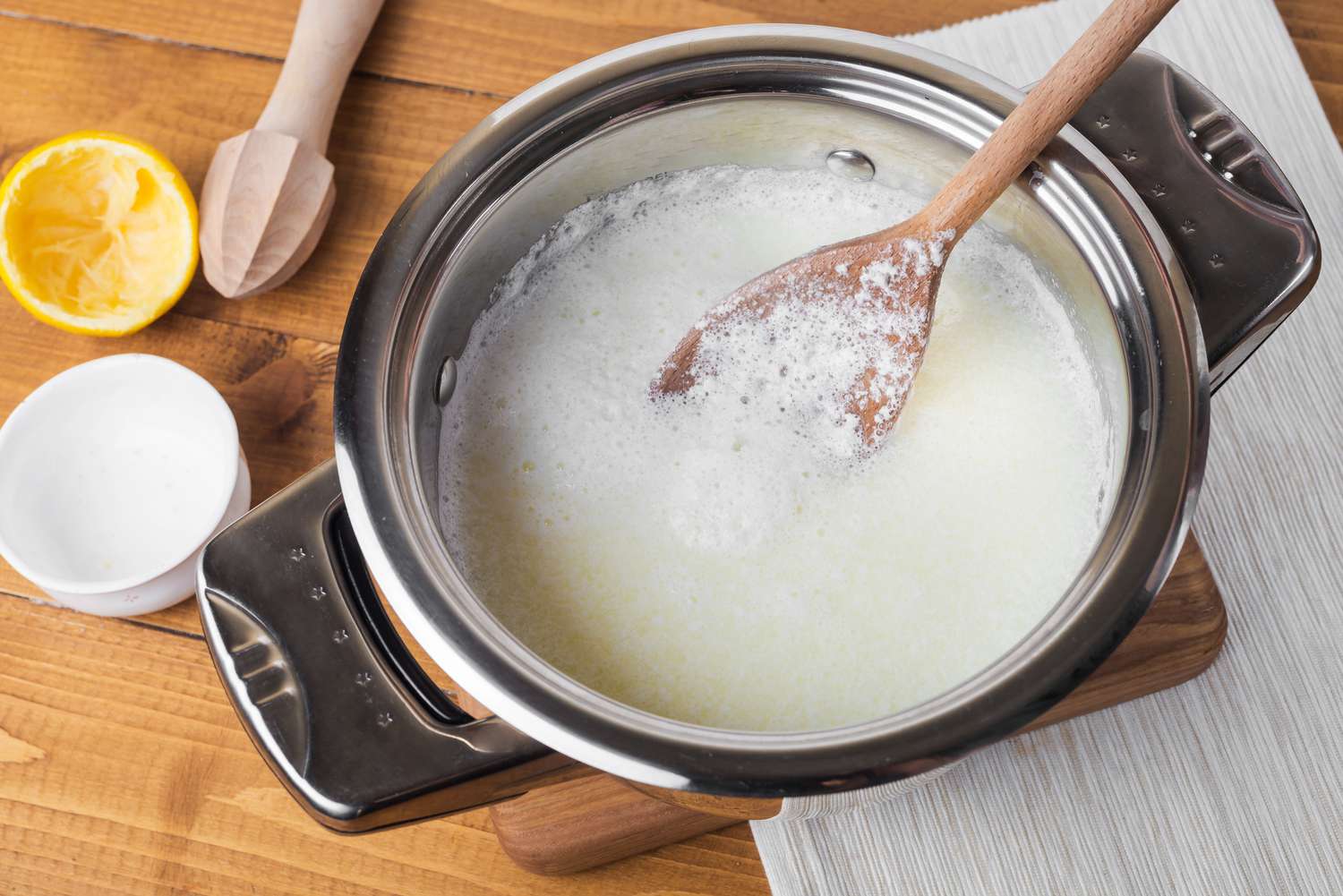
Fastest swap: milk plus acid
This is the classic “soured milk” trick and it works in nearly every recipe that calls for buttermilk.
How to make it (1 cup)
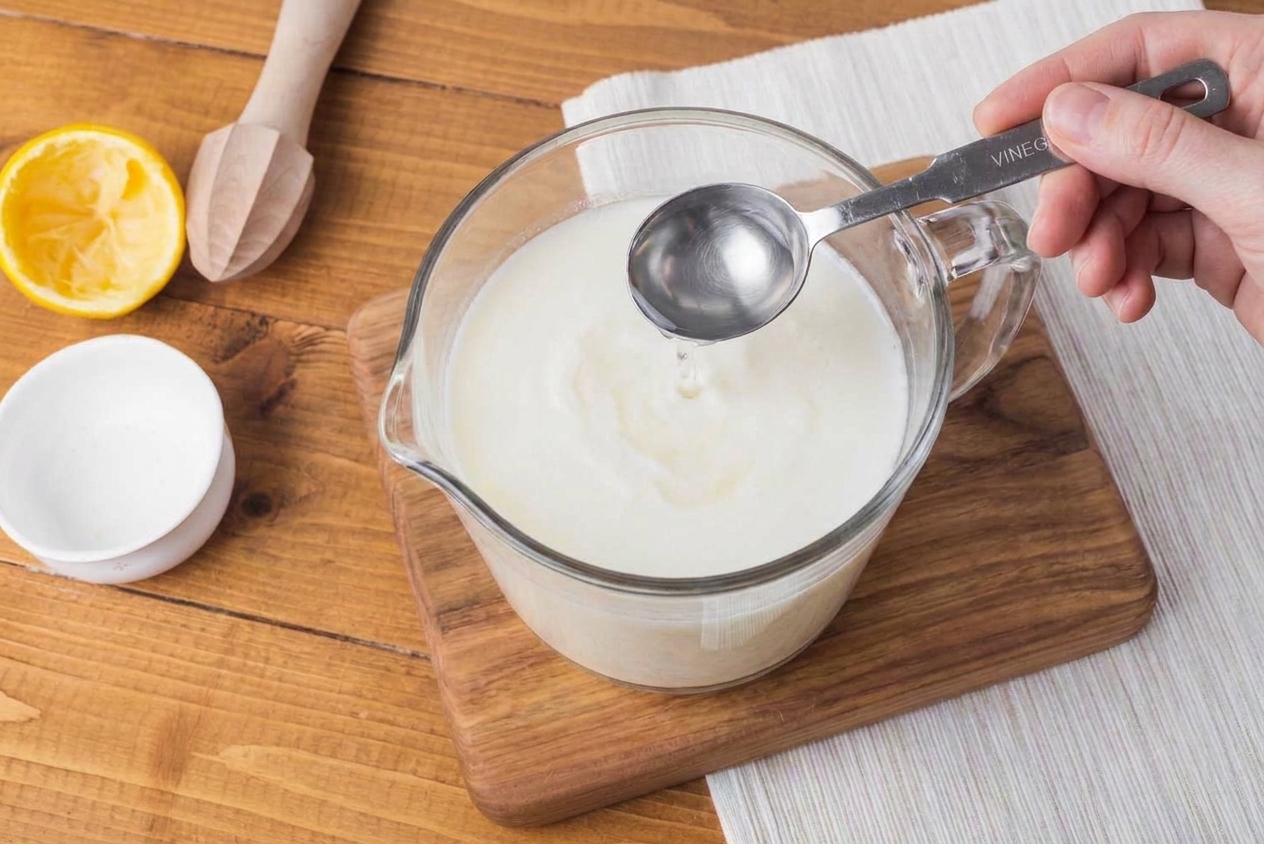
- Add 1 tablespoon lemon juice or white distilled vinegar to a liquid measuring cup.
- Pour in milk until you reach 1 cup total.
- Stir and let stand 5 to 10 minutes, until slightly thickened.
Best for: pancakes, waffles, muffins, quick breads, cake batters, and most biscuit recipes.
Flavor and texture notes: Vinegar is neutral and disappears. Lemon adds a gentle citrus note (usually lovely in blueberry muffins and vanilla cakes). Whole milk gives you the closest richness, but any milk works, including lactose-free dairy milk.
Tip from my weeknight-baking brain: Always measure the acid first, then top up with milk to the correct volume. That keeps your liquid ratio correct.
Metric note: 1 cup is about 240 mL. One tablespoon is about 15 mL.
Thicker swaps: yogurt, sour cream, kefir
If you want a plush crumb (think muffins that stay soft for days), reach for cultured dairy. These options naturally contain acids and have the thickness that mimics cultured buttermilk.
Plain yogurt (regular or Greek)
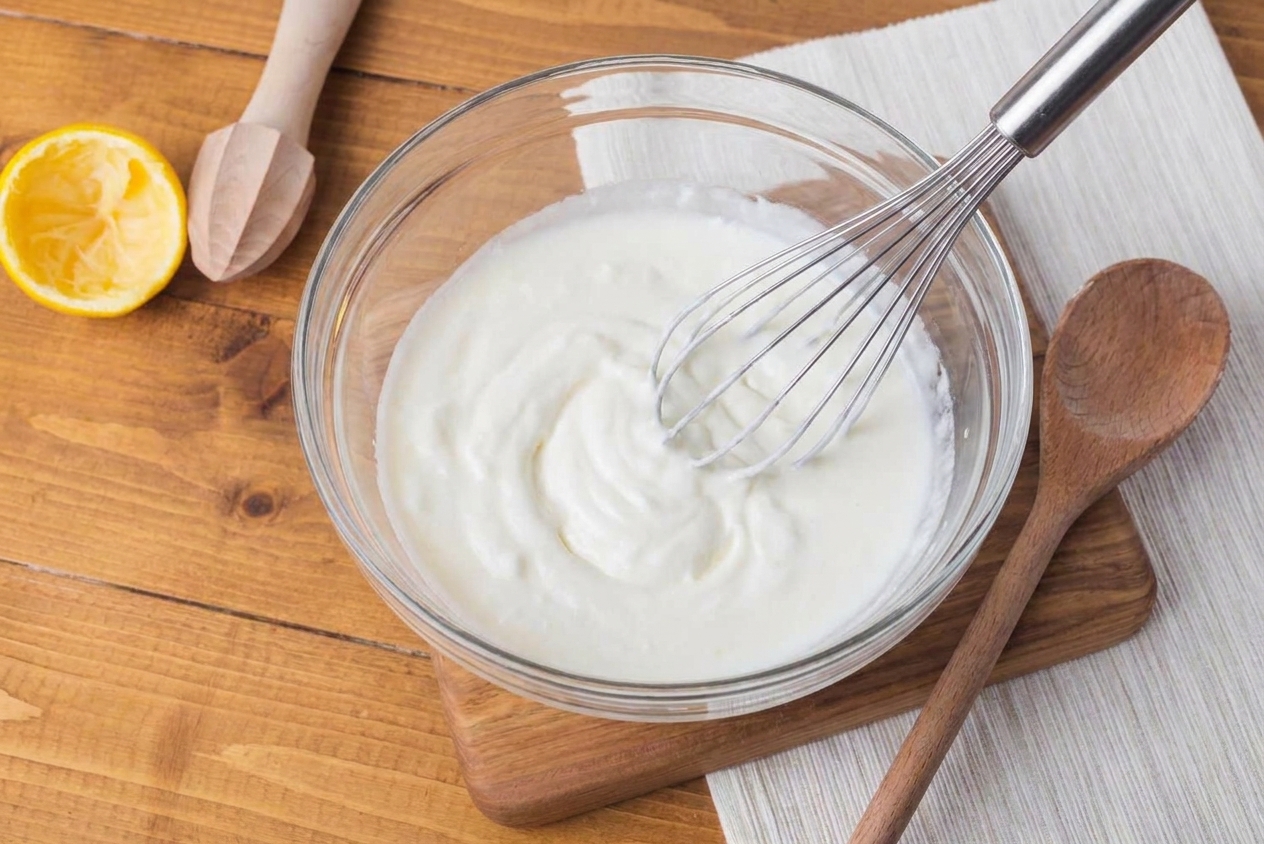
- Use: 1 cup plain yogurt thinned with 2 to 4 tablespoons milk or water, until it pours like heavy cream.
- Best for: muffins, quick breads, coffee cake, snack cakes, and pancakes that you want extra tender.
- Watch for: Greek yogurt is thicker, so thinning matters. If you use it straight, batters can be too stiff and bake up a bit dense.
Sour cream
- Use: 1 cup sour cream thinned with 2 to 4 tablespoons milk or water.
- Best for: pound-cake-style loaves, banana bread, crumb cakes, and any bake where moisture is your priority.
- Texture note: This gives a rich, tight crumb (in a good way). I love it in quick breads.
Kefir
- Use: 1 cup kefir for 1 cup buttermilk (no thinning needed).
- Best for: pancakes, waffles, cakes, and biscuits.
- Flavor note: Tangy and very buttermilk-like. If you keep kefir around for smoothies, you basically always have “buttermilk” on hand.
Dairy-free substitutes
You can absolutely bake tender cakes and fluffy pancakes without dairy. The key is the same: an acid plus a milk-like liquid.
Plant milk plus acid
- Use (1 cup): 1 tablespoon lemon juice or vinegar + plant milk to make 1 cup total. Rest 5 to 10 minutes.
- Best plant milks: soy milk (curdles well and has protein for structure), oat milk (good flavor), almond milk (works, but less body).
- Best for: pancakes, muffins, quick breads, and cakes.
Coconut milk (carton or light canned) plus acid
- Use: same ratio as above.
- Best for: richer cakes and quick breads where a light coconut note is welcome.
Helpful heads-up: Some plant milks do not visibly “curdle.” That is fine. The acid is still there doing the job.
Emergency options
If you are truly in a pinch, these can get you through, especially in pancakes and quick breads.
Milk plus cream of tartar
- Use (1 cup): Whisk 1 1/2 teaspoons cream of tartar into 1 cup milk.
- Best for: cakes and quick breads when you do not have lemon or vinegar.
- Note: Cream of tartar can clump. Whisk like you mean it. It can also taste a bit more sharply tart than lemon or vinegar, so I treat it as a backup option.
Plain milk (only if the recipe uses baking powder)
- Use: 1 cup milk for 1 cup buttermilk.
- Best for: recipes that rely mostly on baking powder for lift.
- What changes: Less tang, slightly less tender crumb. If the recipe calls for baking soda and you use plain milk, the bake can turn out flatter and sometimes a little soapy in flavor.
Thinned crème fraîche
- Use: 1 cup crème fraîche thinned with 2 to 4 tablespoons milk or water.
- Best for: cakes and quick breads.
- Note: It is luxurious and mild. Amazing texture, less tang than buttermilk.
Best substitute by bake
If you want the quickest decision possible, here is how I choose.
Cakes
- Best overall: milk plus lemon juice or vinegar
- Most tender: thinned sour cream or thinned yogurt
- Dairy-free: soy milk plus vinegar
Muffins
- Best overall: thinned yogurt (especially for blueberry, banana, or bran muffins)
- Closest to classic: kefir or milk plus acid
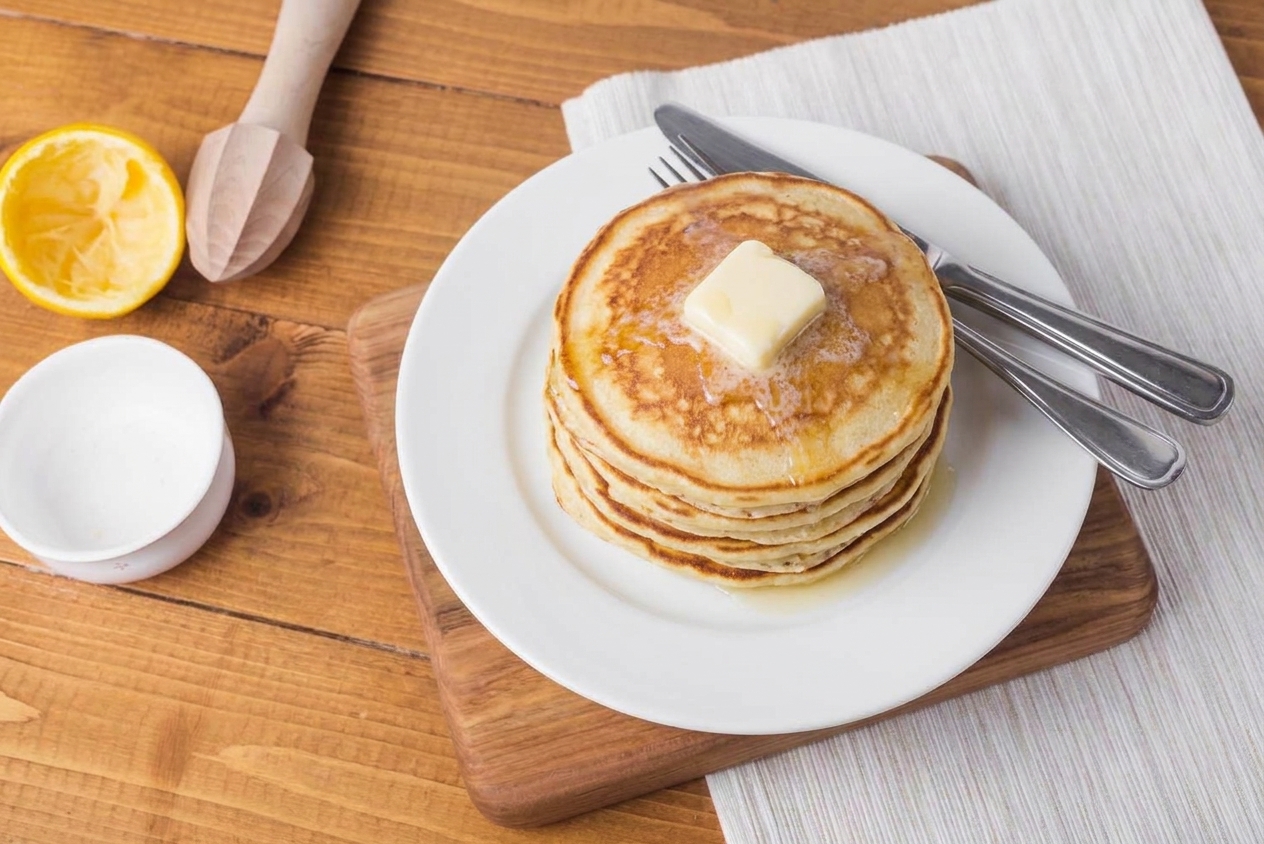
Pancakes and waffles
- Best overall: kefir or milk plus acid
- Extra fluffy and tender: thinned yogurt
- Dairy-free: oat or soy milk plus acid
Quick breads
- Best overall: sour cream (thinned) or yogurt (thinned)
- For a lighter crumb: milk plus acid
Biscuits
- Best overall: milk plus acid
- Also great: kefir
- Note: Very thick substitutes can reduce spread and rise if the dough becomes too dry. If using yogurt or sour cream, thin it well.
Ratios to memorize
- For every 1 cup buttermilk: 1 tablespoon lemon juice or vinegar + milk to make 1 cup
- For every 1 cup buttermilk: 1 cup kefir
- For every 1 cup buttermilk: 1 cup yogurt or sour cream, thinned with 2 to 4 tablespoons milk or water
- For every 1 cup buttermilk: 1 1/2 teaspoons cream of tartar + 1 cup milk
If your recipe calls for 2 cups buttermilk: double the acid (2 tablespoons) and top up with milk to the correct total volume. I promise, this is where most substitution mishaps happen.
Flavor and texture
Flavor
- Milk plus vinegar: clean, neutral tang
- Milk plus lemon: brighter, slightly citrusy
- Yogurt and kefir: cultured tang, more “authentic” buttermilk vibe
- Sour cream: rich and mellow, less sharp
Texture
- Thicker substitutes (yogurt, sour cream) tend to give a softer, moister crumb.
- Thinner substitutes (milk plus acid) keep batters looser, which can mean lighter cakes and pancakes with a bit more spread.
- Over-thick batter is the enemy of lift. If your batter looks like it is fighting your spoon, add a splash of milk.
Salt note: Most buttermilk substitutions do not require changing the salt in your recipe. Store-bought buttermilk can vary slightly by brand, but in typical home baking the difference is not enough to fuss over.
Buttermilk FAQs
Can I use regular milk instead of buttermilk in baking?
Sometimes. If the recipe uses mostly baking powder, regular milk will usually bake up fine, just less tangy and slightly less tender. If the recipe includes baking soda, you really want an acidic substitute (milk plus vinegar or lemon, kefir, yogurt, sour cream) so the chemistry still works.
Do I really have to let milk and vinegar sit before using it?
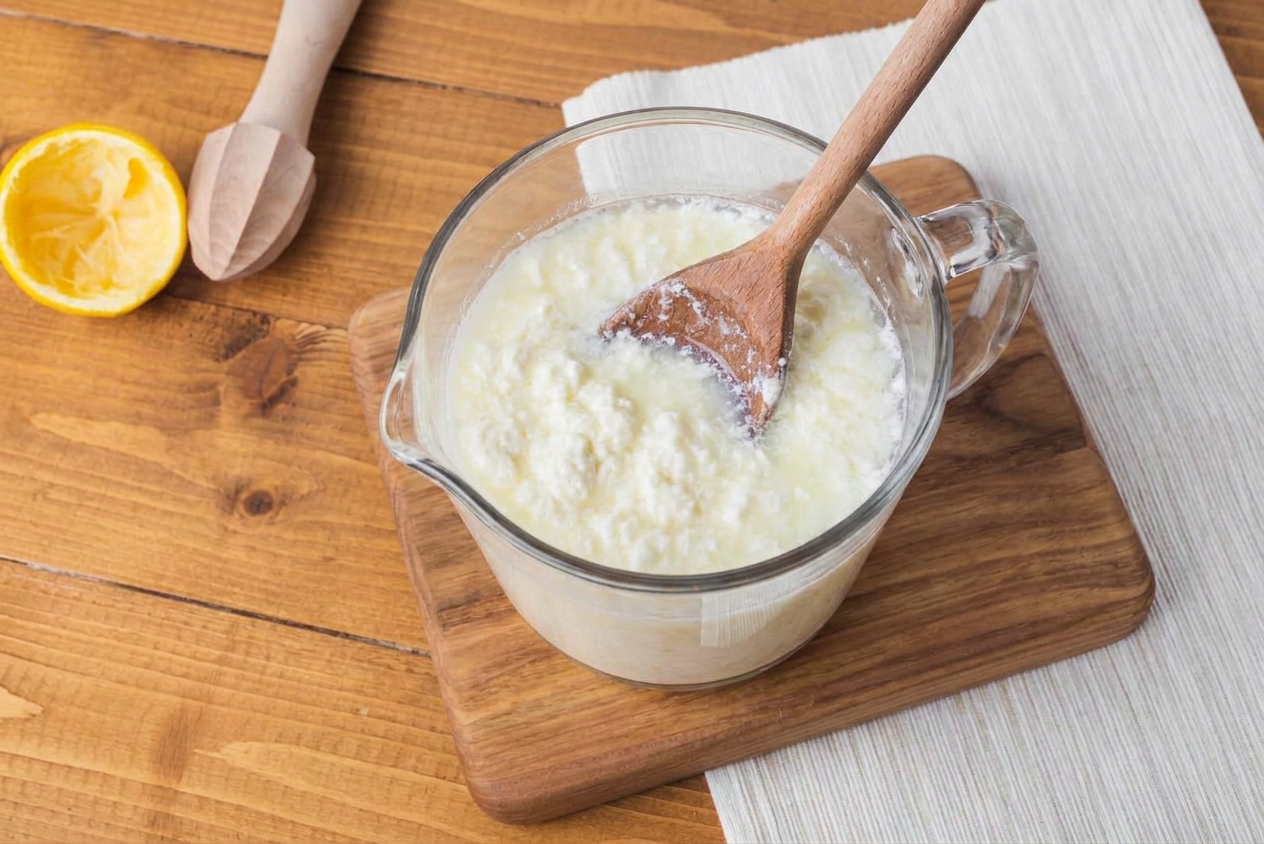
Waiting 5 to 10 minutes helps it thicken a bit, which is closer to buttermilk. If you are in a rush, you can use it immediately, especially in pancakes and quick breads. I still prefer the short rest when I can.
What if my “soured milk” looks curdled?
That is normal. You acidified the milk, which can make it look separated or clumpy. Once it goes into the batter, you will not see any curdling.
Can I substitute Greek yogurt for buttermilk without thinning it?
I do not recommend it for most batters. Greek yogurt is thick, and using it straight can make a muffin or cake batter too stiff, leading to a denser bake. Thin it with a few tablespoons of milk or water until it pours.
What is the closest substitute to the taste of real buttermilk?
Kefir is the closest in both tang and consistency. Thinned plain yogurt is a close second.
How do I substitute for buttermilk in pancakes?
Use milk plus vinegar or lemon (1 tablespoon acid, then milk to 1 cup), or use kefir 1:1. Both give you that classic tang and help the batter rise nicely.
Can I freeze buttermilk for next time?
Yes. Freeze it in measured portions (I love 1 cup portions) and thaw in the fridge. It may look separated after thawing, but it works well in baking once whisked.