
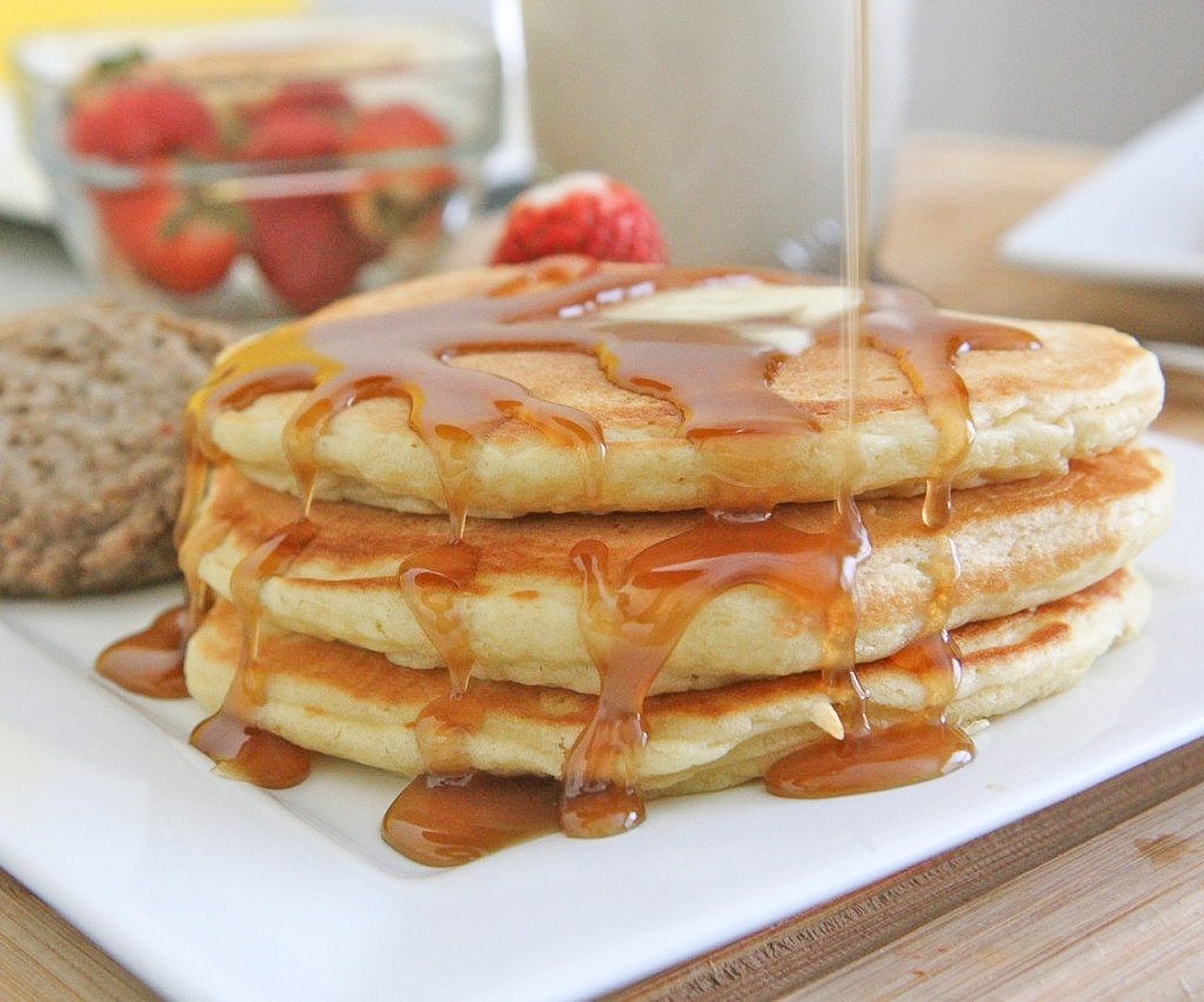
Running out of buttermilk is one of those breakfast curveballs that feels dramatic at 8 a.m. when everyone is hungry. The good news is that fluffy pancakes are not a buttermilk-only club. With a quick milk swap and a couple of small technique tweaks, you can get the same tall, tender stack using everyday ingredients.
Below, you will learn what to use instead of buttermilk, what the batter should look like (this matters more than you think), and how to avoid the usual pancake pitfalls like dense centers and flat, pale rounds.

The quick plan
- Make an easy buttermilk swap: 1 cup milk + 1 tablespoon lemon juice or vinegar, rest 5 minutes.
- Mix gently: A few lumps are your best friend.
- Let the batter rest: 5 to 10 minutes for fluffier pancakes.
- Cook on medium-low: Even heat = tall rise without burnt outsides.
Why this works
Classic buttermilk pancakes rise because chemical leaveners (baking powder and often baking soda) create bubbles, and a gently mixed batter holds onto those bubbles as it cooks. Buttermilk’s acidity is helpful because it activates baking soda and keeps the crumb tender.
When you do not have buttermilk, you can recreate that tangy, acidic environment with a splash of lemon juice or vinegar in regular milk. In this recipe, we lean on baking powder for steady, reliable lift, then use a small amount of baking soda for extra rise and browning. Gentle mixing plus a short rest does the rest of the work by thickening the batter and improving gas retention.
The recipe
This is the full, ready-to-make version, written for the exact ingredient list below. If you follow the batter cues and keep your heat steady, you will get pancakes that are fluffy in the center with lightly crisp edges.
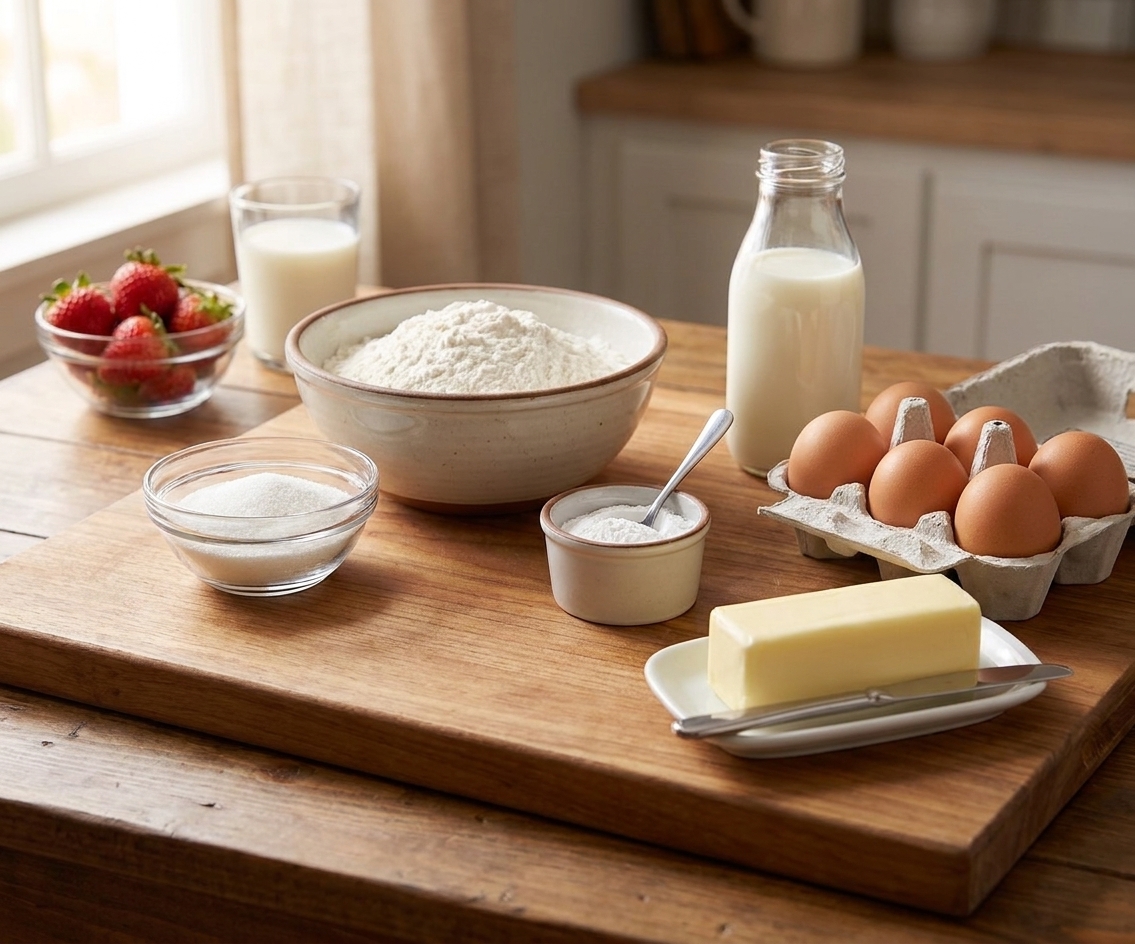
Ingredients
This recipe makes about 8 small to medium pancakes (serves 3 to 4) using about 1/4 cup batter each.
- 1 cup (240 ml) milk
- 1 tablespoon lemon juice or distilled white vinegar
- 1 1/2 cups (195 g) all-purpose flour
- 2 tablespoons granulated sugar (optional, but recommended for flavor and browning)
- 2 1/2 teaspoons baking powder
- 1/4 teaspoon baking soda
- 1/2 teaspoon fine salt
- 1 large egg
- 3 tablespoons (42 g) unsalted butter, melted and slightly cooled (or neutral oil)
- 1 teaspoon vanilla extract (optional)
- Butter or neutral oil, for the pan
Instructions
- Make the buttermilk substitute. In a measuring cup, stir together the milk and lemon juice (or vinegar). Let stand for 5 minutes while you prep the other ingredients. It may look slightly curdled. That is exactly what you want.
- Mix the dry ingredients. In a large bowl, whisk together flour, sugar, baking powder, baking soda, and salt.
- Mix the wet ingredients. To the milk mixture, whisk in the egg, melted butter, and vanilla (if using).
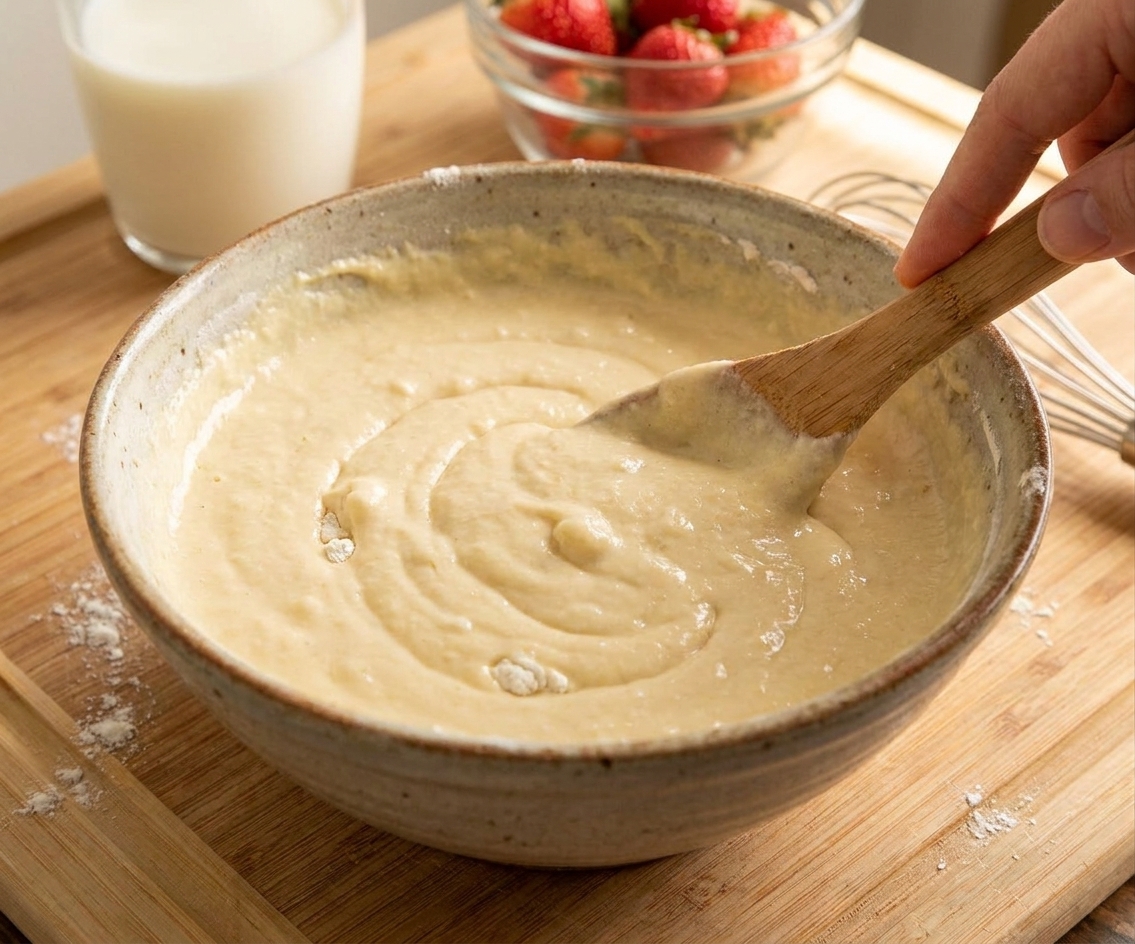
- Combine gently. Pour the wet ingredients into the dry ingredients. Stir with a spatula or whisk just until no dry flour remains. The batter should be thick and lumpy. Stop early rather than late.
- Rest the batter. Let the batter sit 5 to 10 minutes. It should look slightly bubbly and a touch thicker than when you first mixed it.
- Preheat the pan. Heat a nonstick skillet or griddle over medium-low. Lightly butter or oil the surface, then wipe to a thin sheen.
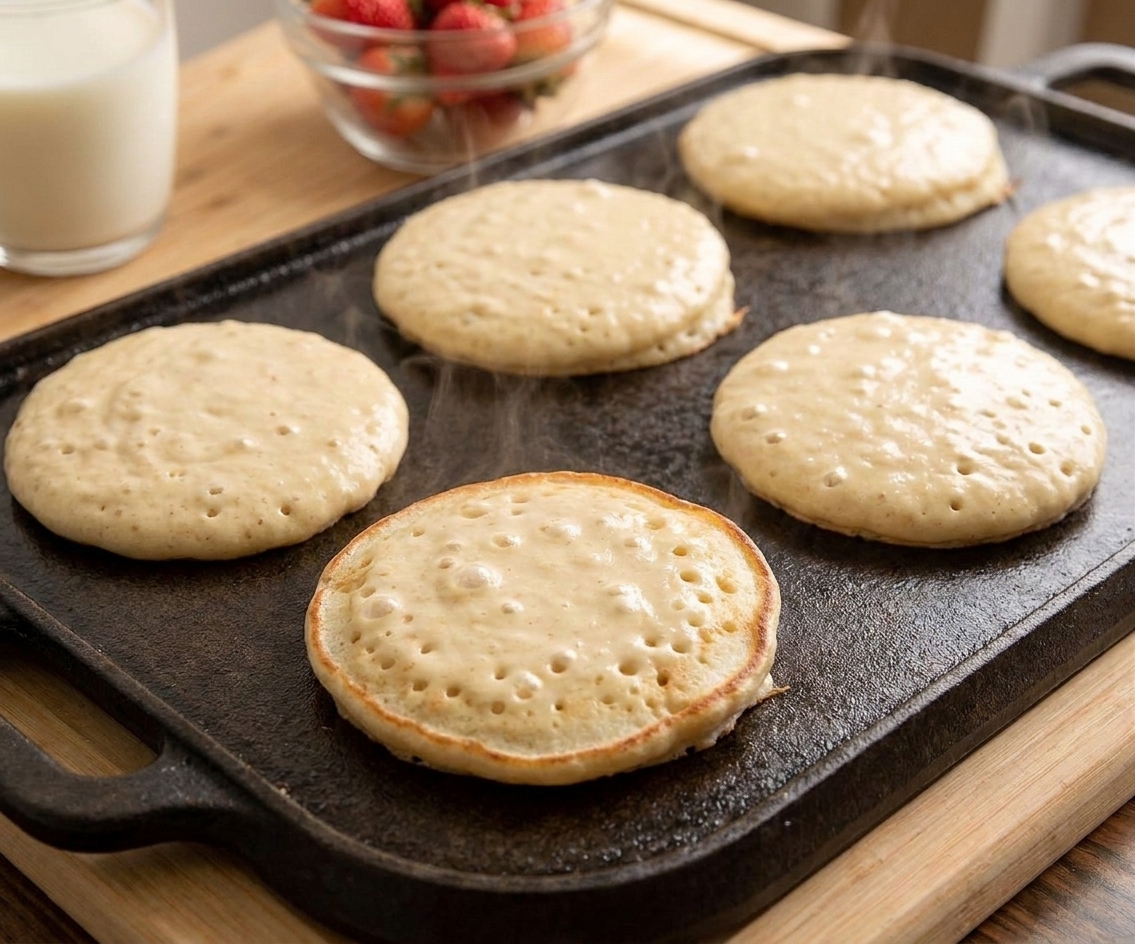
- Cook. Scoop about 1/4 cup batter per pancake onto the skillet. Cook until bubbles form across the surface and the edges look set and a little matte, 2 to 3 minutes. If you peek underneath, the first side should be golden.
- Flip and finish. Flip once and cook 1 to 2 minutes more, until golden and the centers spring back lightly when touched.
- Serve warm. Repeat with remaining batter, adjusting heat as needed between batches.
Troubleshooting
- My pancakes are flat. Your batter is likely too thin or you overmixed. Aim for thick, pourable batter with lumps, and do not whisk it smooth. Also check that your baking powder is fresh.
- They are dark outside and raw inside. The pan is too hot. Drop to medium-low and give the skillet a minute to cool down before the next round.
- They are pale and dry. The heat is too low or the pan is not fully preheated. Nudge the heat up slightly and let the pan warm for 2 minutes.
- The batter feels like paste. Add milk 1 tablespoon at a time until it ribbons off the spoon and slowly relaxes.
- The batter spreads like water. Whisk in 1 to 2 tablespoons flour, then rest 5 minutes so it thickens properly.
The idea
Why This Recipe Works
- Milk + acid stands in for buttermilk: Adding lemon juice or vinegar lowers the pH of the milk, giving you a similar tang and helping baking soda do its job.
- Leaveners create the lift: Baking powder provides reliable rise, and a small amount of baking soda boosts browning and height in the presence of acid.
- Resting the batter improves texture: A short rest lets the flour hydrate and the batter thicken so it holds bubbles better.
- Gentle mixing protects fluff: Overmixing develops gluten and pops bubbles. A few lumps keep the pancakes tender and airy.
Shopping
Ingredient Notes
Milk (or milk alternative)
Any dairy milk works. Whole milk gives the richest texture, but 2 percent and even skim will still make fluffy pancakes. For dairy-free, use unsweetened soy milk or oat milk for the closest body. Non-dairy milks can brown a little differently, so you may need a small heat adjustment.
Acid: lemon juice or vinegar
This is your quick buttermilk stand-in. Use fresh lemon juice or distilled white vinegar. Apple cider vinegar works too and adds a faint fruity note.
Baking powder and baking soda
Baking powder provides a steady rise. A small amount of baking soda helps with extra lift and browning in the presence of the added acid. If you only have baking powder, you can still make great pancakes. See the substitutes section for exact swaps.
Flour
All-purpose flour is the most dependable. If you are scooping from the bag, fluff the flour first and spoon it into the measuring cup, then level it off. Packing flour is a fast track to thick, heavy pancakes.
Butter (melted)
Melted butter adds flavor and tenderness. Let it cool slightly so it does not scramble your eggs. If you prefer, you can swap in the same amount of neutral oil.
Get set up
Equipment You Will Need
- Large mixing bowl
- Medium bowl or measuring jug (for the milk + acid)
- Whisk and a rubber spatula
- Measuring cups and spoons
- Nonstick skillet or griddle
- Thin spatula for flipping
- 1/4 cup measuring cup or cookie scoop for portioning
Technique
Tips for Getting It Right
- Make the faux buttermilk first. Stir milk with lemon juice or vinegar and let it sit 5 minutes while you measure the dry ingredients. It may look slightly curdled. That is perfect.
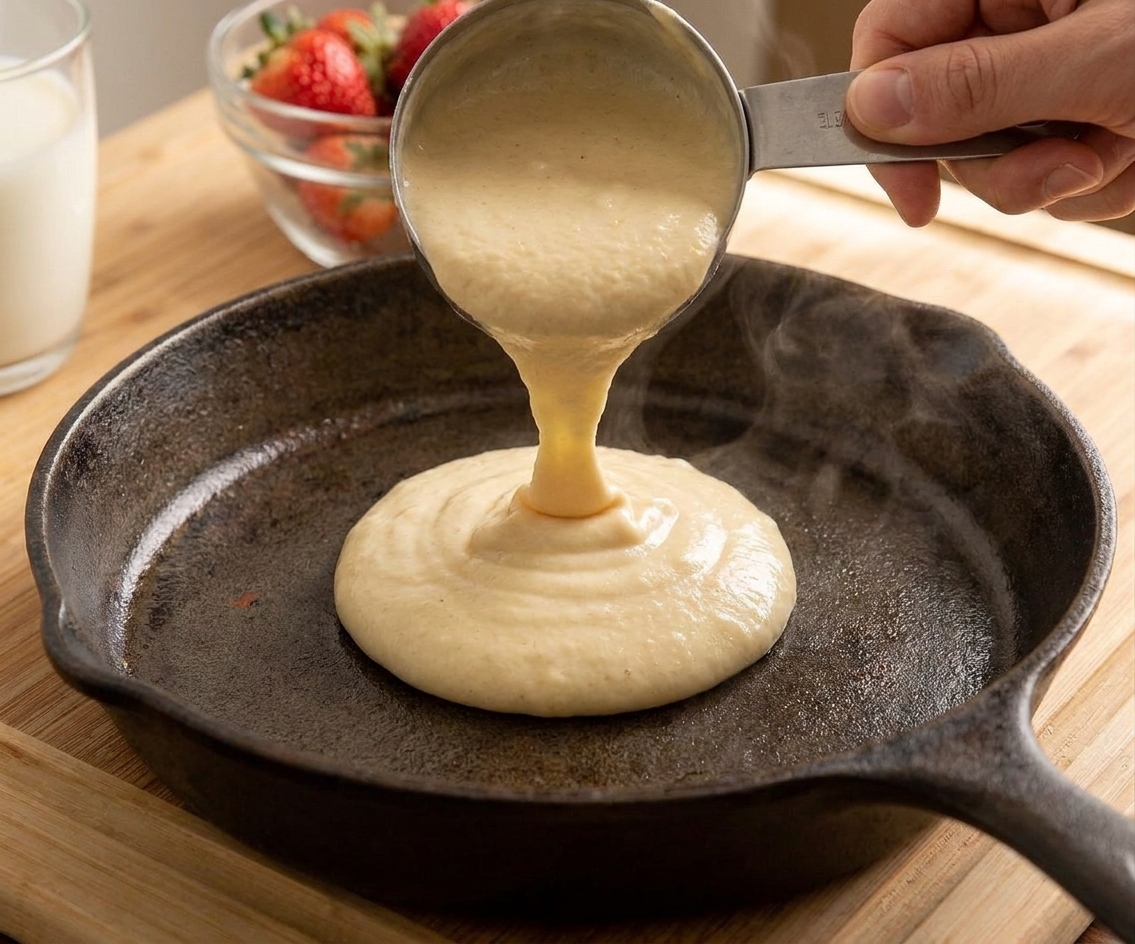
- Watch the batter texture. You want a thick, pourable batter that ribbons off the spoon and slowly relaxes back into itself. If it pours like water, add 1 to 2 tablespoons flour. If it feels like paste, add a splash of milk.
- Do not chase smooth batter. Mix just until you do not see dry flour. Lumps are normal and will hydrate during the rest.
- Rest 5 to 10 minutes. This small pause makes a noticeably taller pancake. If your kitchen is warm, 5 minutes is plenty.
- Use medium-low heat. If the pan is too hot, you get burnt outsides and undercooked centers. Medium-low gives the batter time to rise.
- Flip once. Flip when you see bubbles across the surface and the edges look set and slightly matte. After flipping, the second side usually needs less time.
- Keep them warm the right way. Hold pancakes on a baking sheet in a 200°F oven. Skip stacking them tightly under foil on the counter because steam can make them soggy.
Flexibility
Substitutes That Work
No lemon juice or vinegar?
- Yogurt: Use 3/4 cup milk + 1/4 cup plain yogurt (stir together). This replaces 1 cup buttermilk substitute and adds great tenderness.
- Sour cream: Use 2 tablespoons sour cream + enough milk to make 1 cup total.
- Kefir: Use 1 cup kefir in place of the milk + acid mixture.
No baking soda?
You can still make fluffy pancakes with only baking powder. Omit the baking soda and keep baking powder at 2 1/2 teaspoons total.
No eggs?
- Best simple swap: Use 2 tablespoons melted butter (or oil) extra plus 2 tablespoons water to replace 1 egg. The pancakes will be a bit less springy but still tasty.
- Flax egg: 1 tablespoon ground flax + 3 tablespoons water, rest 5 minutes. Works best in heartier versions like banana or cinnamon pancakes.
Dairy-free
Use unsweetened soy milk or oat milk plus lemon juice or vinegar. For fat, use melted coconut oil or a neutral oil.
Less sugar
You can reduce the sugar to 1 tablespoon or leave it out. The pancakes will be a bit less golden and slightly less flavorful, but the texture will still be good.
Whole wheat
Replace up to half the all-purpose flour with whole wheat flour. For 100 percent whole wheat, add 2 to 4 tablespoons extra milk and rest the batter 10 minutes.
Make it yours
Variations to Try
- Vanilla: Add 1 to 2 teaspoons vanilla extract to the wet ingredients.
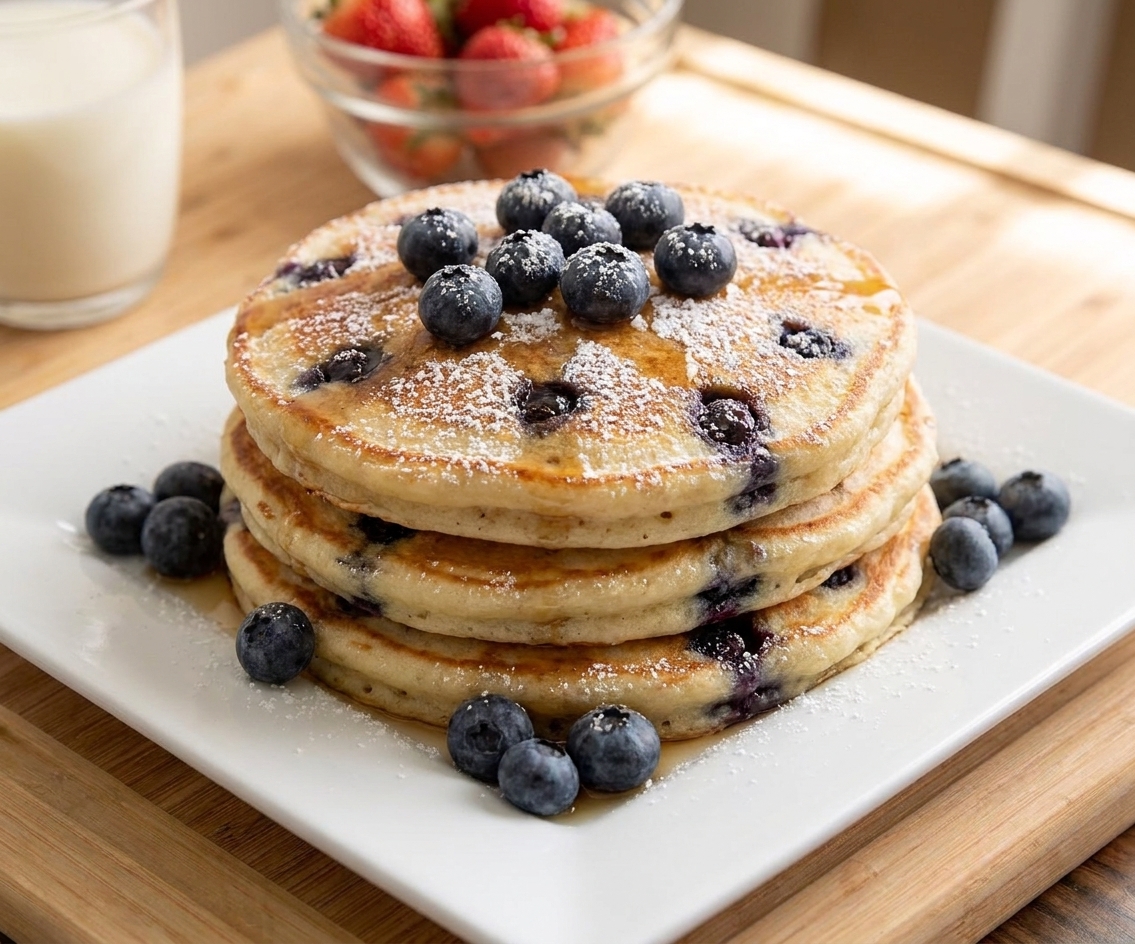
- Blueberry: Sprinkle blueberries onto each pancake right after you pour the batter onto the skillet. This prevents streaking through the whole bowl and keeps the batter fluffy.
- Chocolate chip: Sprinkle mini chocolate chips over each pancake as it cooks on the first side.
- Banana-cinnamon: Whisk 1 teaspoon cinnamon into the dry ingredients and mash 1 ripe banana into the wet ingredients.
- Lemon poppy seed: Add 1 tablespoon poppy seeds and 1 teaspoon lemon zest to the batter. Serve with warm honey.
- Extra fluffy: Separate the eggs. Stir yolks into the wet mix, whip whites to soft peaks, then fold them in gently at the end. Optional, but fun when you want maximum height.
On the table
What to Serve It With
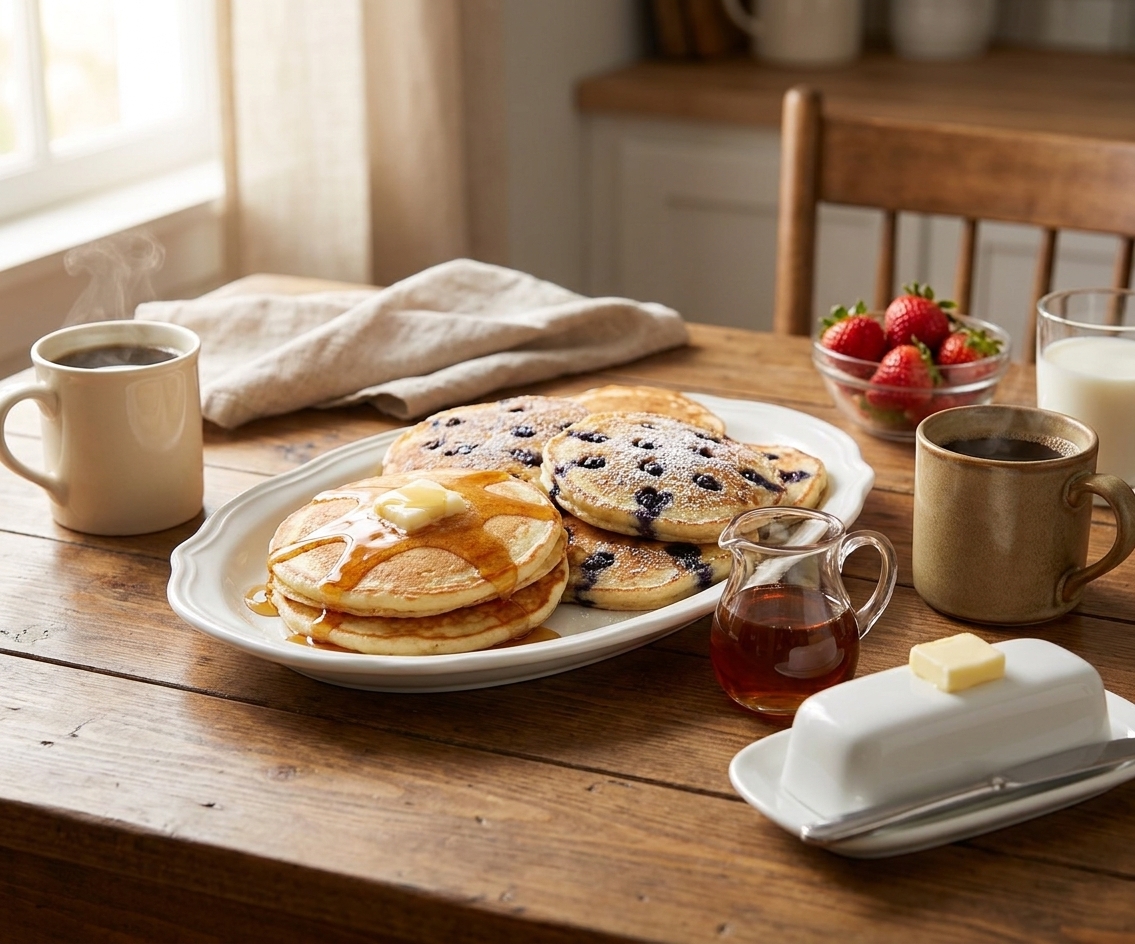
- Classic: Butter + warmed maple syrup + a pinch of flaky salt.
- Fruit and creamy: Greek yogurt, berries, and a drizzle of honey.
- PB and banana: Peanut butter, sliced banana, and a sprinkle of cinnamon.
- Brunchy: Crispy bacon or breakfast sausage plus scrambled eggs.
- Bright: Citrus salad (orange and grapefruit) to balance the richness.
Later
Storage, Freezing and Reheating
Refrigerate
Cool pancakes completely, then store in an airtight container in the fridge for up to 4 days.
Freeze
Freeze in a single layer on a baking sheet until solid, then transfer to a freezer bag with parchment between layers. Freeze up to 2 months.
Reheat
- Toaster: My favorite for edges that stay slightly crisp.
- Oven: 350°F for 8 to 10 minutes (great for a big batch).
- Microwave: 20 to 40 seconds, covered with a barely damp paper towel to prevent drying.
Watch out
Common Mistakes to Avoid
- Overmixing the batter: This makes pancakes tough and flat. Stir just until the flour disappears. The lumps will take care of themselves while the batter rests.
- Skipping the rest: Even 5 minutes helps the batter thicken and the pancakes rise higher.
- Pan too hot: If the first pancake is dark before bubbles form, lower the heat and give the pan a minute to calm down.
- Pressing pancakes with the spatula: It pushes out the air you worked for. Flip gently and leave them alone.
- Greasing the pan heavily: Too much butter or oil can fry the edges and cause uneven browning. Wipe the pan lightly between batches.
Questions
Frequently Asked Questions
What can I use instead of buttermilk in pancakes?
The easiest swap is 1 cup milk + 1 tablespoon lemon juice or vinegar. Stir and let it sit 5 minutes before using. Yogurt thinned with milk also works well.
Will pancakes still be fluffy without buttermilk?
Yes. Fluffiness comes from chemical leaveners plus gentle mixing and the right batter thickness. This recipe uses baking powder for dependable lift and adds a little acid to support baking soda and tenderness.
Why are my pancakes not fluffy?
The most common culprits are overmixing, batter that is too thin, or cooking on heat that is too high. Aim for thick, pourable batter, mix just until combined, rest 5 to 10 minutes, and cook on medium-low.
Can I make the batter ahead of time?
I do not recommend making the full batter the night before because the leaveners lose strength and the pancakes can turn dense. If you want a head start, mix the dry ingredients in one bowl and the wet ingredients in a container, then combine in the morning.
How do I know when to flip pancakes?
Flip when you see bubbles across the surface and the edges look set and slightly matte. The bubbles should look like they pop and stay open. The second side usually cooks faster, about 1 to 2 minutes.
Can I use water instead of milk?
You can, but the pancakes will be less tender and flavorful. If water is all you have, add an extra tablespoon of melted butter or oil to help with richness.
The recipe
Fluffy Pancakes Without Buttermilk
These fluffy pancakes do not need buttermilk. A quick milk-and-lemon swap plus gentle mixing gives you tall, tender pancakes with crisp edges and a soft, airy middle.
Ingredients
- 1 cup (240 ml) milk
- 1 tablespoon lemon juice or distilled white vinegar
- 1 1/2 cups (195 g) all-purpose flour
- 2 tablespoons granulated sugar (optional, but recommended for flavor and browning)
- 2 1/2 teaspoons baking powder
- 1/4 teaspoon baking soda
- 1/2 teaspoon fine salt
- 1 large egg
- 3 tablespoons (42 g) unsalted butter, melted and slightly cooled (or neutral oil)
- 1 teaspoon vanilla extract (optional)
- Butter or neutral oil, for the pan
Instructions
- Make the buttermilk substitute. In a measuring cup, stir together the milk and lemon juice (or vinegar). Let stand for 5 minutes while you prep the other ingredients. It may look slightly curdled. That is exactly what you want.
- Mix the dry ingredients. In a large bowl, whisk together flour, sugar, baking powder, baking soda, and salt.
- Mix the wet ingredients. To the milk mixture, whisk in the egg, melted butter, and vanilla (if using).
- Combine gently. Pour the wet ingredients into the dry ingredients. Stir with a spatula or whisk just until no dry flour remains. The batter should be thick and lumpy. Stop early rather than late.
- Rest the batter. Let the batter sit 5 to 10 minutes. It should look slightly bubbly and a touch thicker than when you first mixed it.
- Preheat the pan. Heat a nonstick skillet or griddle over medium-low. Lightly butter or oil the surface, then wipe to a thin sheen.
- Cook. Scoop about 1/4 cup batter per pancake onto the skillet. Cook until bubbles form across the surface and the edges look set and a little matte, 2 to 3 minutes. If you peek underneath, the first side should be golden.
- Flip and finish. Flip once and cook 1 to 2 minutes more, until golden and the centers spring back lightly when touched.
- Serve warm. Repeat with remaining batter, adjusting heat as needed between batches.
Recipe notes
- Batter thickness cue: You want thick, pourable batter that ribbons off a spoon and slowly relaxes. If it spreads instantly into thin circles, whisk in 1 to 2 tablespoons flour. If it is too thick to pour, add milk 1 tablespoon at a time.
- First pancake is a tester: Use it to dial in your heat. If it browns too fast, lower the heat. If it is pale and dry, increase slightly and give the pan time to warm.
- Doneness cue: Flip when bubbles form across the surface and the edges look set and slightly matte. After flipping, the pancake is done when the second side is golden and the center springs back lightly when tapped.
- For mix-ins: Sprinkle fruit or chips onto each pancake right after pouring the batter, instead of stirring into the whole bowl. This keeps the batter from getting overmixed and helps everything cook evenly.
Nutrition (per serving, approximate)
- Calories: 210
- Protein: 6 g
- Carbohydrates: 30 g
- Fat: 8 g
- Saturated fat: 4 g
- Fiber: 1 g
- Sugars: 6 g
- Sodium: 320 mg