

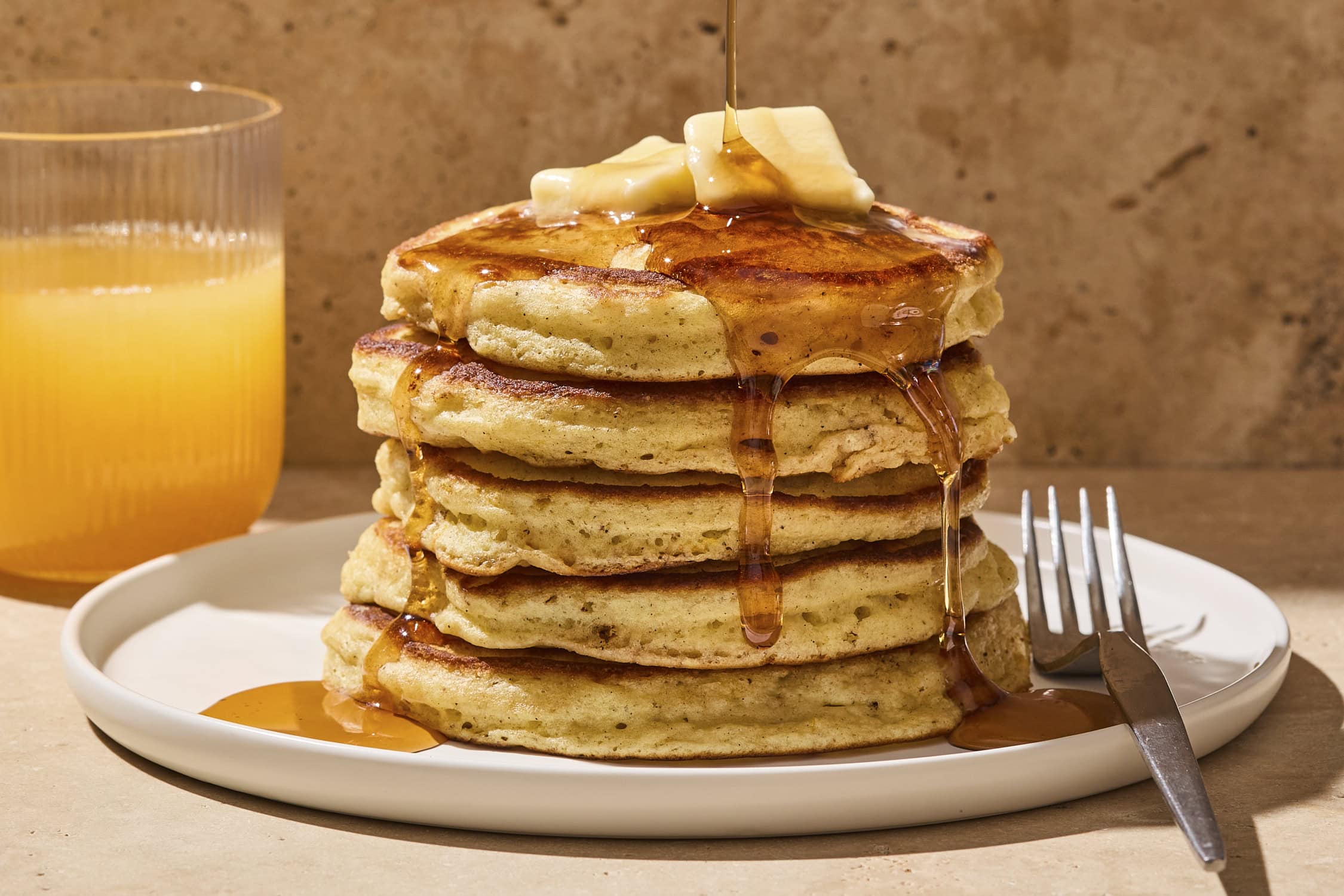
If you have ever chased that classic diner stack that is actually fluffy, not cakey, not rubbery, and definitely not sad by pancake number two, this is the recipe I make on repeat. Buttermilk gives you that gentle tang and tender crumb, while a few small habits keep the batter airy so the pancakes rise high and stay soft.
I grew up in the Pacific Northwest where weekend breakfasts were a full family sport, and pancakes were the reward for getting everyone to the table. These are the kind that make the kitchen smell like vanilla and butter, with golden edges that get just a little crisp on the skillet. They are forgiving, super doable, and they love a heavy hand with warm maple syrup.

Below, I will walk you through what matters most for fluffy pancakes, what each ingredient is doing, and how to avoid the usual pitfalls like dense centers or pale, dry pancakes. Then you can scroll down for the recipe card when you are ready to cook.
Fluffiness basics
Fluffy pancakes are less about a single trick and more about a few small choices that work together. You want a batter that is thick enough to hold bubbles, a gentle hand so you do not knock those bubbles out, and steady medium to medium-low heat so the centers can rise before the outsides over-brown.
If you only remember three things, make it these: do not overmix, give the batter a short rest, and do not crank the heat. Also, when you combine wet and dry, think folding, not beating, and if your stove runs hot, do a quick test pancake to dial in the temperature before you commit to a full batch.
What each ingredient does
Buttermilk brings tang and tenderness, and its acidity helps activate baking soda for lift. It also keeps the crumb soft, even after the pancakes cool a bit.
Flour gives structure. Too much flour makes pancakes dense, so measuring matters. A thick batter is great, but it should still be pourable.
Baking powder and baking soda are the lift team. Baking powder gives you a steady rise, while baking soda reacts quickly with the buttermilk for extra height and often deeper browning.
Sugar does more than sweeten. It helps with browning and keeps the pancakes from tasting flat under syrup.
Eggs add structure and help trap air, which makes the pancakes feel springy instead of heavy.
Melted butter brings flavor and tenderness. Slightly cooling it keeps it from tightening the eggs or making the batter feel greasy.
Salt and vanilla sharpen the flavor. Salt is what keeps the stack tasting like pancakes, not just sweet bread, and vanilla adds that cozy diner vibe.
Troubleshooting
Pancakes are simple, but they are also a little bossy about heat and mixing. If yours are not turning out the way you want, here is how to fix the most common issues fast.
Dense centers
- You overmixed. Stirring until smooth builds gluten and knocks out bubbles. Stop as soon as the flour is mostly absorbed. Lumps are not a problem, they are the plan.
- Your leavening is tired. Baking powder and baking soda lose strength over time, especially if they have lived near steam on the stove. If your pancakes never puff, check freshness.
- The pan is too hot. High heat sets the outside before the inside has time to rise, so the middle can stay heavy. Stick to medium or medium-low heat and adjust down if the first pancake browns too fast.
- The batter is too thick to spread. A thick batter is good, but if it is so stiff it sits in a mound, it can cook unevenly. A small splash of buttermilk can help it relax.
Pale, dry pancakes
- Your pan is too cool. Low heat can lead to longer cook times, which can dry pancakes out before they brown well. Give your skillet time to preheat, then keep the heat steady.
- Too much flour. Scooping directly from the bag can pack in extra flour, which leads to dryness. Spoon and level, or weigh if you can.
- Not enough fat on the surface. You want a thin, even film of butter or oil. Too little can make pancakes look pale and feel dry on the outside.
Burnt outsides, raw insides
- Lower the heat and slow down. Medium or medium-low is the sweet spot. A thicker pancake needs time to cook through.
- Size matters. If you are using a big scoop of batter, your centers need longer. Make slightly smaller pancakes until you find your pan’s rhythm.
Flat pancakes
- The batter sat too long. A short rest helps, but a long rest can deflate the bubbles. Cook soon after mixing.
- You pressed them down. That satisfying spatula press is a fluff killer. Flip once, then leave them alone.
The idea
Why This Recipe Works
Why this works
- Buttermilk plus baking soda creates lift fast. The acidity in buttermilk reacts with baking soda to form bubbles, helping the pancakes rise without tasting overly leavened.
- A thick batter encourages height. This recipe intentionally lands on the thicker side so the pancakes puff up instead of spreading thin.
- Minimal mixing keeps them tender. A few flour streaks are a good thing here. Overmixing develops gluten, which makes pancakes chewy.
- A short rest gives the flour time to hydrate and lets bubbles settle into a batter that cooks up evenly.
- Moderate heat cooks the centers through while still giving you golden, crisp edges.
Shopping
Ingredient Notes
Why these ingredients work
Buttermilk: Real cultured buttermilk gives the best flavor and texture. Shake the carton before measuring. If your buttermilk is very cold, let it sit 5 minutes so it does not seize the melted butter.
All-purpose flour: Standard grocery store flour works perfectly. Spoon and level if you tend to scoop straight from the bag, since too much flour is the fastest road to dense pancakes.
Baking powder + baking soda: This combo gives dependable lift. Baking powder provides ongoing rise, while baking soda reacts with buttermilk for extra fluff and often better browning.
Sugar: Just enough for gentle sweetness and improved browning. Pancakes without a little sugar often look pale even when fully cooked.
Eggs: Add structure and help trap air. Room temperature is nice, but not required.
Melted butter: Brings flavor and tenderness. Let it cool slightly so it does not cook the eggs when you whisk.
Vanilla and salt: Vanilla is optional but highly recommended. Salt keeps the pancakes from tasting flat, especially once syrup hits the plate.
Get set up
Equipment You Will Need
- Large mixing bowl and whisk
- Flexible spatula for gentle folding
- Measuring cups and measuring spoons
- 12-inch nonstick skillet, cast iron skillet, or griddle
- Thin spatula for flipping
- Wire rack set on a sheet pan (optional, for holding pancakes warm)
Technique
Tips for Getting It Right
The secret to fluffy pancakes
Fluffiness is not one magic trick. It is a handful of small choices that stack up in your favor: a thick batter, fresh leavening, gentle mixing, and steady medium to medium-low heat.
Stop mixing early
When the wet and dry meet, mix just until you do not see big pockets of dry flour. The batter should look lumpy and a little shaggy. That is the point. Those lumps disappear on the griddle, but overmixing stays forever.
Rest, but not too long
A short rest gives the flour time to hydrate so the pancakes cook evenly and stay tender. Think minutes, not hours. If you let it sit too long, the batter can lose some of its lift.
Set the heat and be patient
Medium to medium-low heat is where fluffy pancakes live. If the pan is too hot, the outside sets fast and the center struggles to rise. If the pan is too cool, the pancakes spread and can turn pale and a bit dry before they brown.
Watch for cues
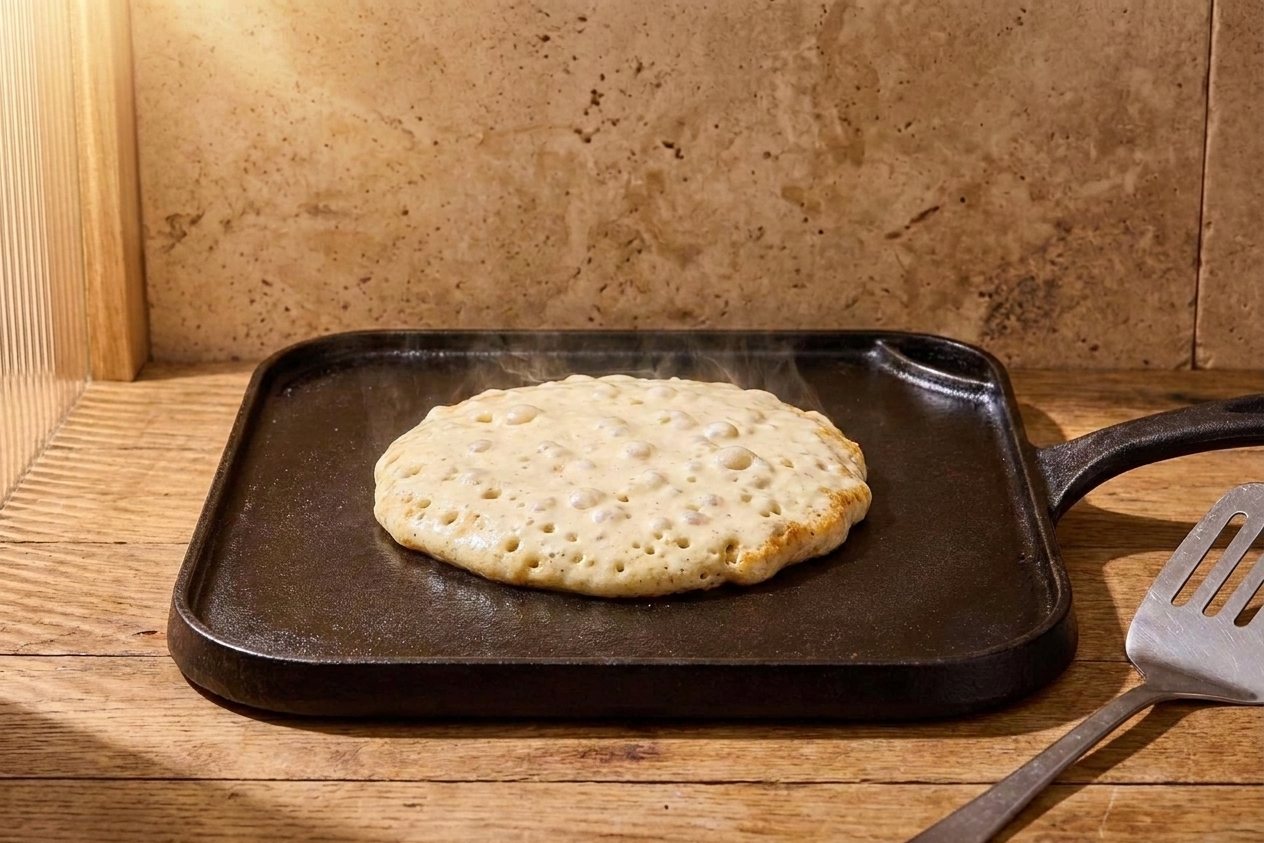
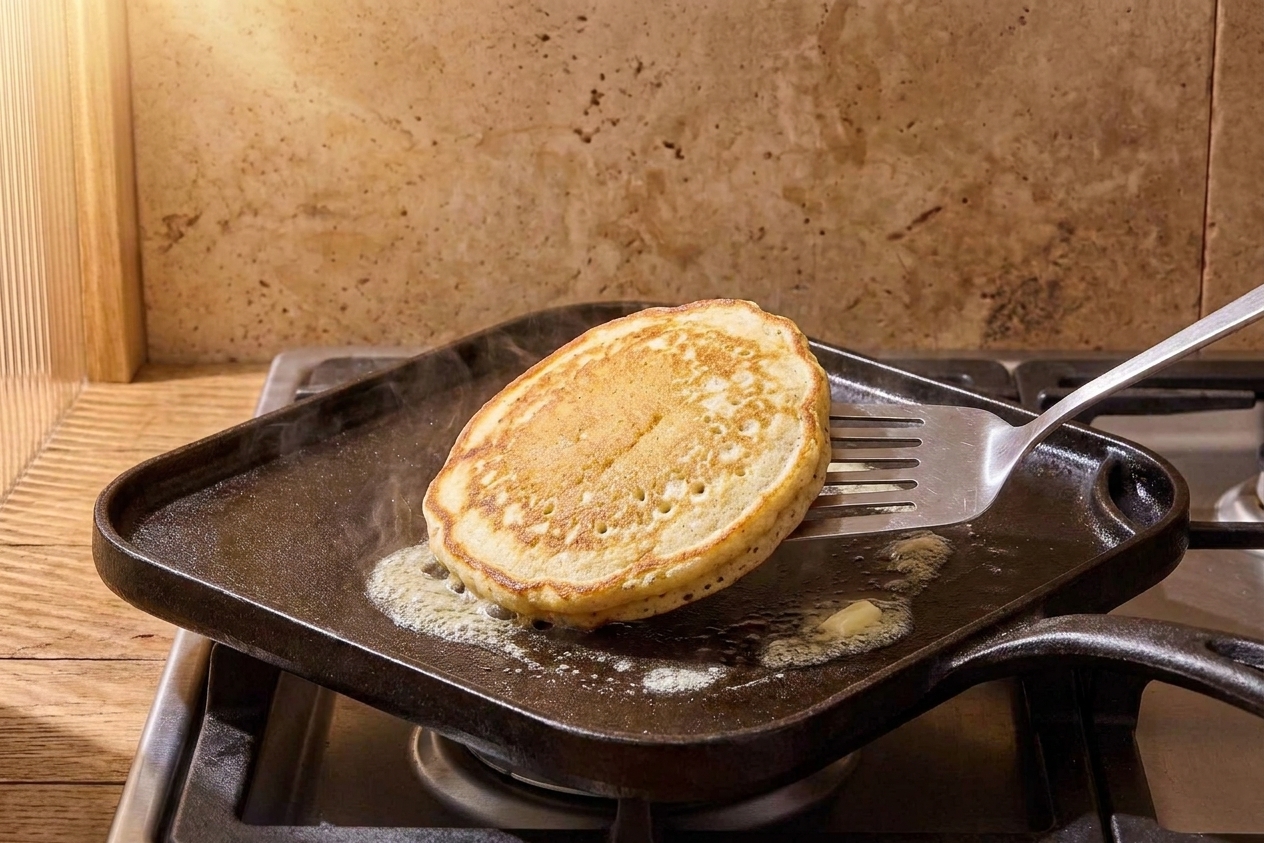
Bubbles across the surface and edges that look set and slightly matte are your green light. The second side always takes less time, and one flip is all you need.
Flexibility
Substitutes That Work
Substitutes
No buttermilk? You have options.
- Milk + lemon juice or vinegar: Add 1 tablespoon lemon juice or white vinegar to 1 cup milk, stir, and let stand 5 minutes. Use in place of buttermilk. The flavor is slightly less rich, but the pancakes still turn out tender.
- Plain kefir: A very close swap. Use 1:1.
- Plain yogurt: Thin with milk until it pours like buttermilk, then use 1:1.
Butter substitute: Neutral oil works in a pinch, but you will miss some flavor. If using oil, add an extra pinch of salt and consider keeping the vanilla.
Dairy-free: Use an unsweetened plant milk soured with lemon juice plus melted plant butter. The pancakes will be slightly less rich, but still fluffy if you avoid overmixing.
Make it yours
Variations to Try
Variations
- Blueberry: Sprinkle fresh or frozen blueberries onto the first side right after you pour the batter. This keeps the batter from turning purple.
- Chocolate chip: Add a small handful of chocolate chips per pancake after pouring, like you would with blueberries.
- Lemon poppy seed: Add 1 tablespoon poppy seeds and the zest of 1 lemon to the dry ingredients. Serve with berries.
- Cinnamon: Add 1/2 teaspoon cinnamon to the dry ingredients and serve with browned butter and sliced bananas.
- Extra fluffy: Separate the eggs, whisk the whites to soft peaks, then fold them in at the end. It is a little more work, but it makes a truly lofty stack.
On the table
What to Serve It With
Serving ideas
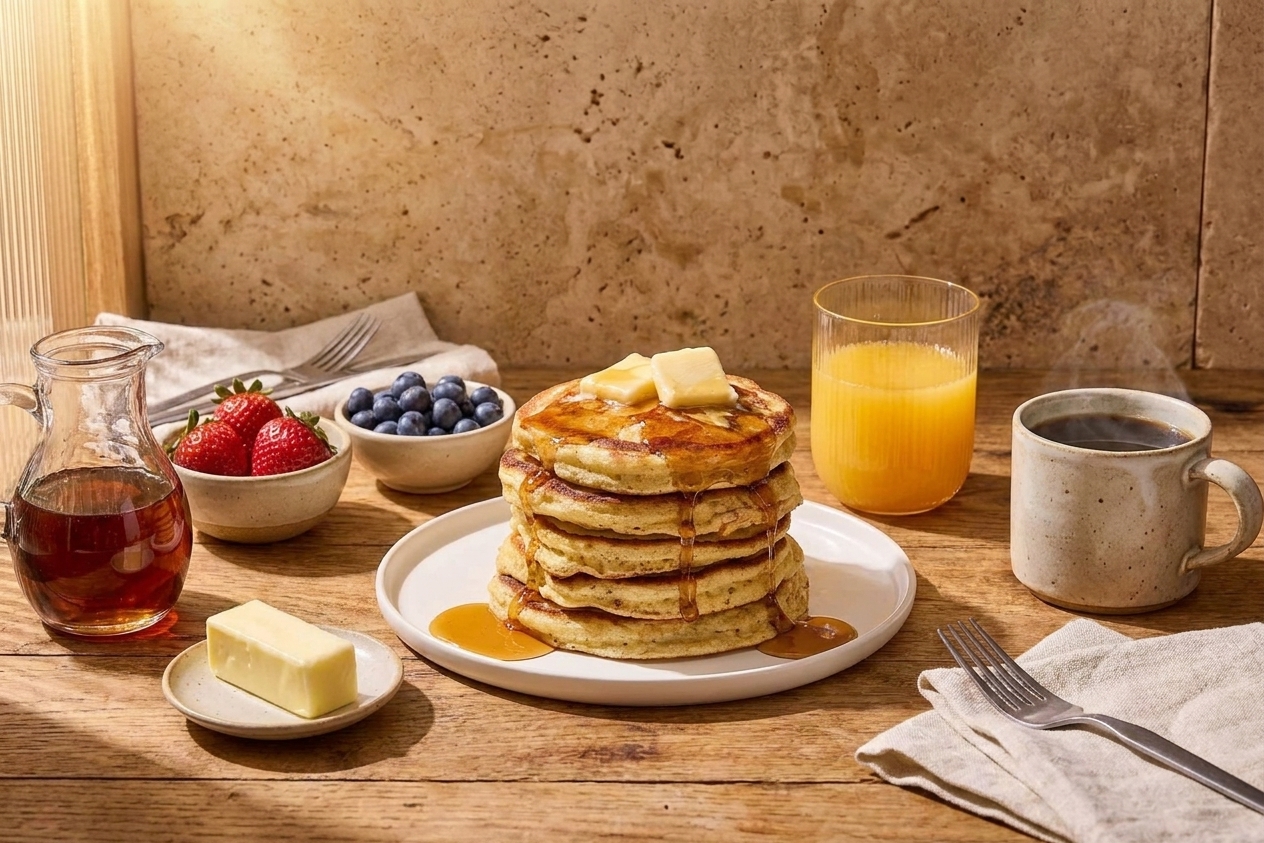
- Classic: Butter and warm maple syrup, with a pinch of flaky salt if you are feeling fancy.
- Fruit-forward: Strawberries or peaches plus a dollop of Greek yogurt.
- Cozy: Cinnamon apples or pear compote and toasted pecans.
- Brunch board: Serve with scrambled eggs, bacon or breakfast sausage, and a big bowl of citrus.
- Kid favorite: Peanut butter and banana slices, or a smear of jam.
Later
Storage, Freezing and Reheating
Refrigerator
Cool pancakes completely, then store in an airtight container in the fridge for up to 4 days.
Freezer
Freeze pancakes in a single layer on a baking sheet until firm, then transfer to a freezer bag with parchment between layers. Freeze up to 2 months.
Reheating
- Toaster: My favorite for bringing back crisp edges. Toast from refrigerated or frozen.
- Oven: Warm on a sheet pan at 325°F for 8 to 12 minutes (a little longer from frozen).
- Microwave: Works, but softens the edges. Cover lightly and heat in short bursts.
Watch out
Common Mistakes to Avoid
Common mistakes
- Overmixing the batter: This is the number one cause of tough pancakes. Mix less than you think you should.
- Cooking on high heat: You will get dark outsides with raw centers. Medium or medium-low is your friend.
- Pressing pancakes with the spatula: It pushes out the bubbles you worked for and makes them dense.
- Flipping too early or too often: Wait for bubbles and set edges, then flip once.
- Greasing the pan heavily: Too much butter or oil can fry the edges and cause uneven browning. A thin, even film is perfect.
Questions
Frequently Asked Questions
Why are my buttermilk pancakes not fluffy?
The usual culprits are overmixing, batter that sat too long (the bubbles deflate), or a skillet that is too hot, which sets the outside before the inside can rise. Mix gently, rest briefly, and cook over medium or medium-low heat.
Can I make the batter ahead of time?
I do not recommend making the full batter the night before, since the leavening starts working right away. For an easy head start, whisk the dry ingredients in a bowl and mix the wet ingredients in a measuring cup, then combine in the morning.
What is the best pan for pancakes?
A griddle is wonderful for batches, but a 12-inch nonstick skillet or well-seasoned cast iron skillet works great. The key is even heat and a thin layer of fat.
When should I flip pancakes?
Flip when you see bubbles popping across the surface and the edges look set and slightly matte. If the batter still looks wet and shiny at the edges, give it another 30 to 60 seconds.
How do I know the inside is cooked?
The pancake should feel springy in the center and the second side should be golden. If you are unsure, lower the heat slightly and cook an extra 30 seconds per side.
Can I make these without eggs?
You can, but the texture will be a bit less fluffy. Try replacing each egg with a flax egg (1 tablespoon ground flax + 3 tablespoons water, rested 5 minutes). Keep the batter thick and avoid overmixing.
The recipe
Fluffy Buttermilk Pancakes
Tall, tender, lightly tangy pancakes with golden edges and a soft, fluffy center. This is my go-to buttermilk pancake recipe for a dependable, cozy stack any day of the week.
Ingredients
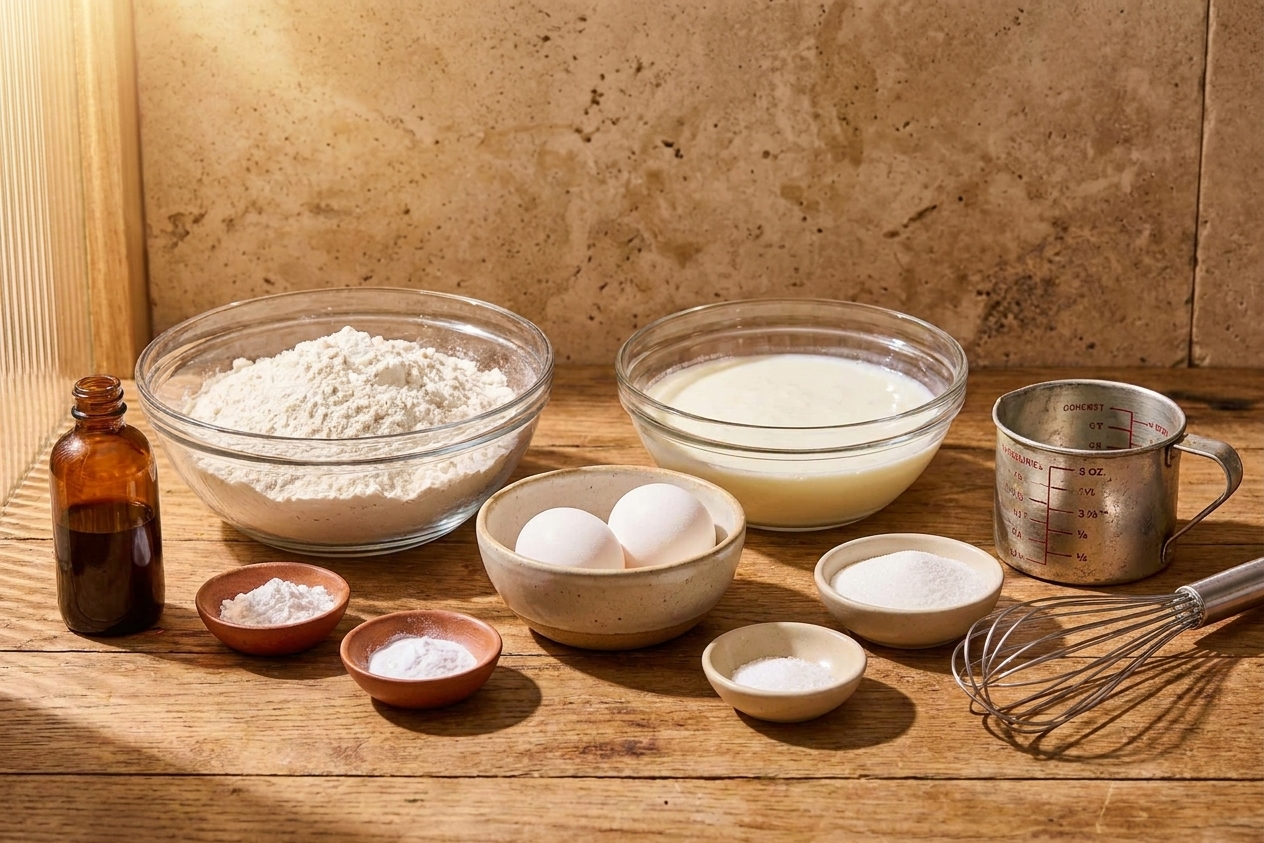
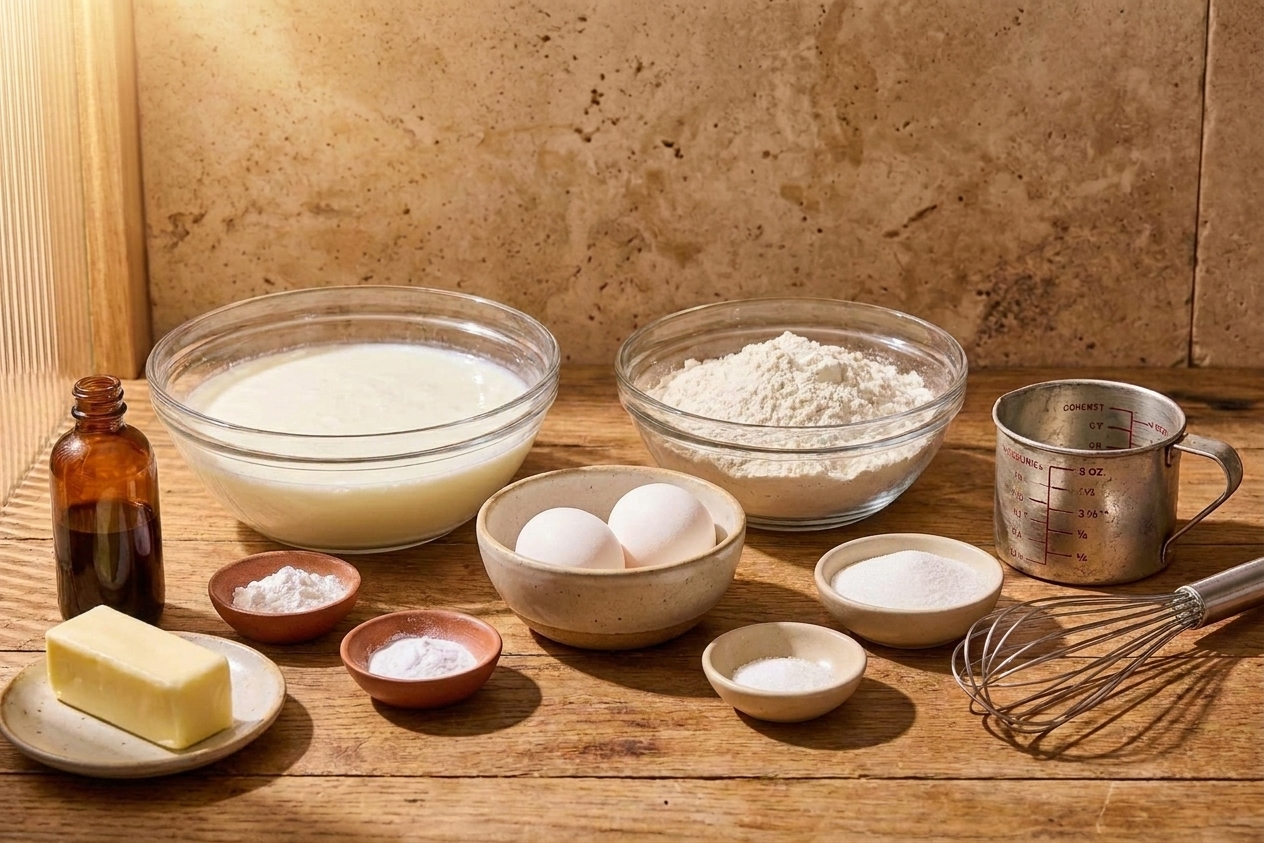
- 2 cups (240 g) all-purpose flour
- 2 tablespoons (25 g) granulated sugar
- 2 teaspoons baking powder
- 1 teaspoon baking soda
- 1 teaspoon fine salt
- 2 1/4 cups (540 ml) buttermilk
- 2 large eggs
- 4 tablespoons (57 g) unsalted butter, melted and slightly cooled, plus more for the pan
- 2 teaspoons vanilla extract (optional)
Instructions
- Mix the dry ingredients. In a large bowl, whisk together the flour, sugar, baking powder, baking soda, and salt.
- Mix the wet ingredients. In a medium bowl or large measuring cup, whisk the buttermilk, eggs, melted butter, and vanilla (if using).
- Combine gently. Pour the wet mixture into the dry mixture. Use a spatula to fold until just combined. The batter should look thick and lumpy. Do not overmix.
- Rest the batter. Let the batter sit for 5 to 10 minutes while you preheat the pan.
- Preheat the skillet. Heat a skillet or griddle over medium heat. Lightly butter the surface, then wipe with a paper towel so you have a thin, even coating.
- Cook the pancakes. Scoop 1/3 cup batter per pancake onto the hot skillet. Cook until bubbles form across the surface and the edges look set, 2 to 3 minutes.
- Flip and finish. Flip once and cook until the second side is golden and the center feels springy, 1 to 2 minutes more.
- Keep warm and serve. Transfer to a wire rack on a sheet pan in a 200°F oven while you cook the remaining batter, adding a little more butter to the pan as needed. Serve warm.
Recipe notes
- Consistency check: The batter should be thick but pourable. If it is too thick after resting, add 1 to 3 tablespoons buttermilk.
- Batch size: For smaller pancakes, use 1/4 cup batter and reduce cook time slightly.
- Mix-ins: Add blueberries or chocolate chips after pouring the batter onto the skillet to prevent streaking and sinking.
- Keeping edges crisp: Hold cooked pancakes on a wire rack, not stacked on a plate.
Nutrition (per serving, approximate)
- Calories: 260
- Carbohydrates: 36 g
- Protein: 8 g
- Fat: 9 g
- Saturated Fat: 5 g
- Fiber: 1 g
- Sugar: 6 g
- Sodium: 650 mg
Nutrition will vary based on portion size and toppings.