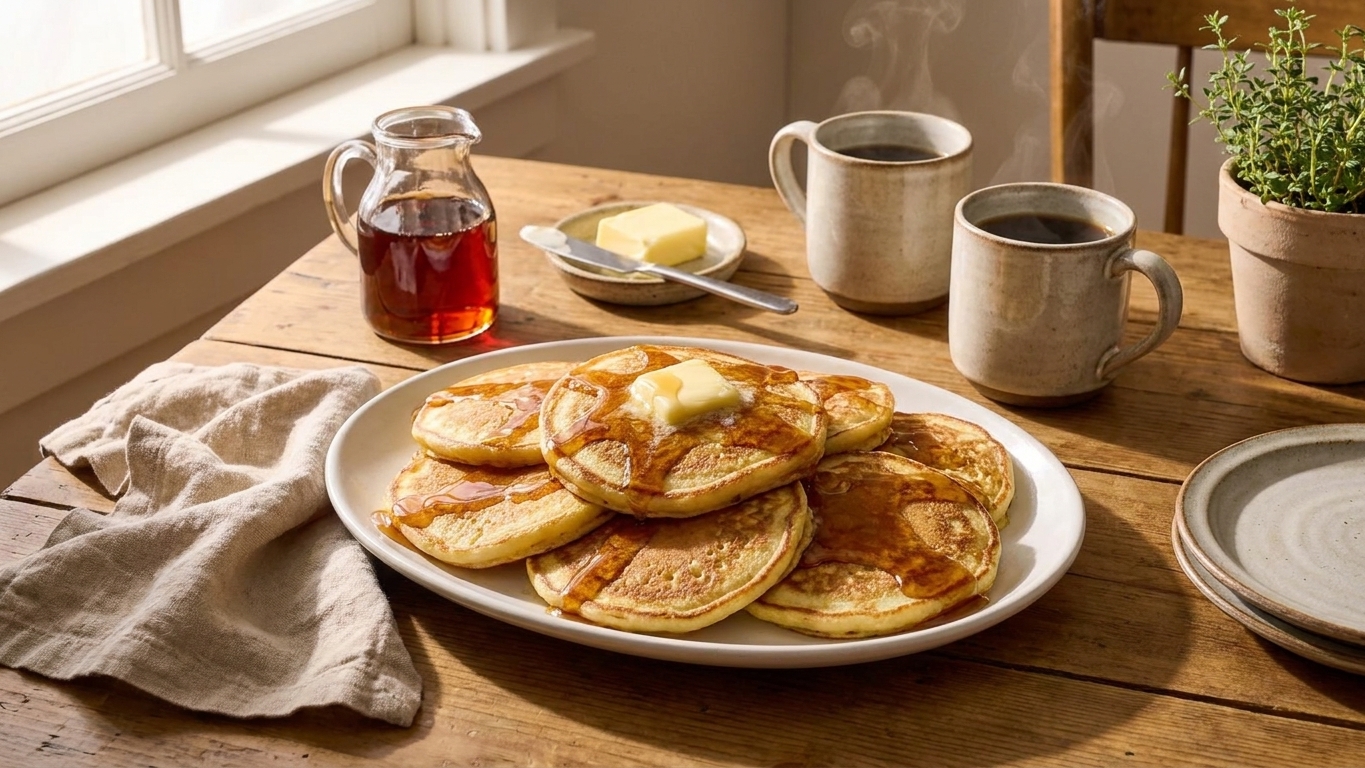
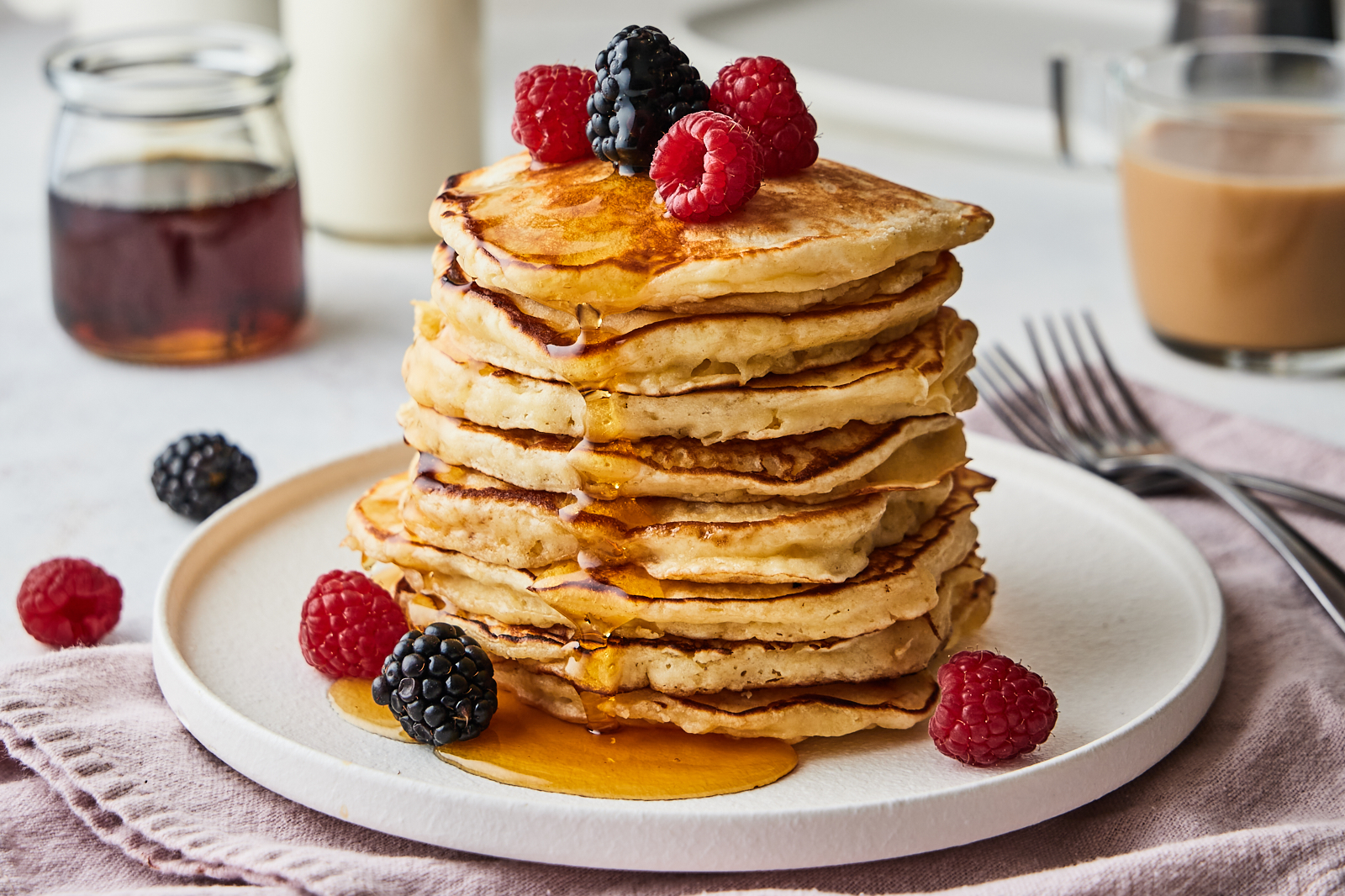
A cozy, foolproof pancake recipe that turns out soft and airy every time. Learn the simple mixing and griddle tricks that make pancakes truly fluffy.
Recipeva
The Baking Soda Trick for Fluffier Pancakes
Want taller, fluffier pancakes? Here’s the baking soda trick that actually works, plus the exact amounts, when to add it, and the common mistakes that lead to flat cakes.

Maya Reynolds
Maya Reynolds is a passionate home cook, recipe developer, and the creative voice behind Recipeva. With over a decade of experience translating complex culinary techniques into approachable weeknight meals, she focuses on creating dishes that bring joy to the dinner table without the stress.
Created September 24, 2026
Updated September 24, 2026
There are two kinds of pancake mornings: the ones where the stack is lofty and cloud-like, and the ones where you end up with… tasty, but a little too “crepe-adjacent.” If you have ever wondered why your pancakes look fine in the bowl but hit the griddle and go flat, I have good news. There is a simple, reliable baking soda trick that can seriously boost fluffiness, and it does not require any fancy ingredients.
The secret is not just adding baking soda. It is pairing it with the right acid and using it at the right moment so the batter traps more gas and lifts as it cooks.
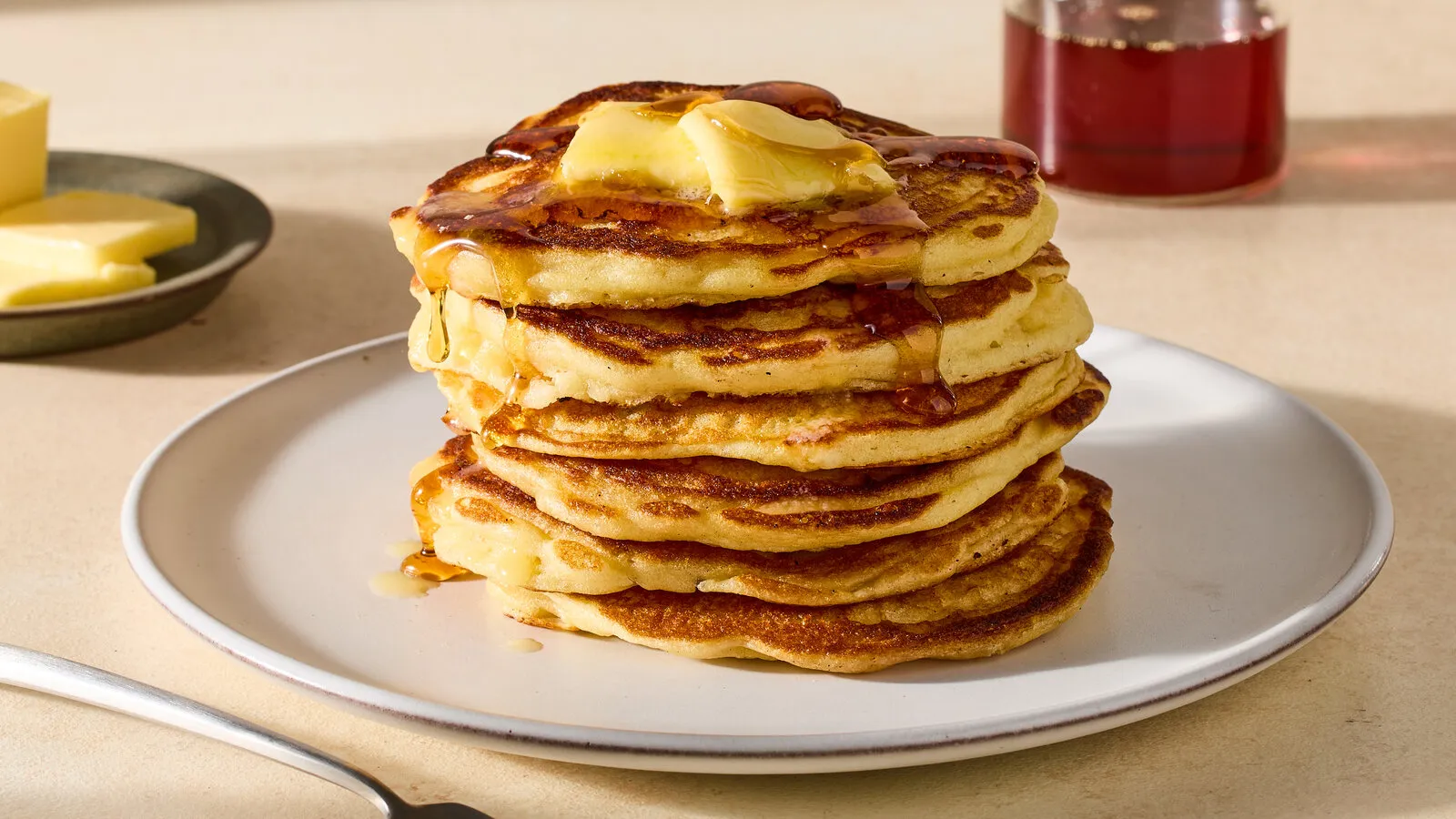
What baking soda does in batter
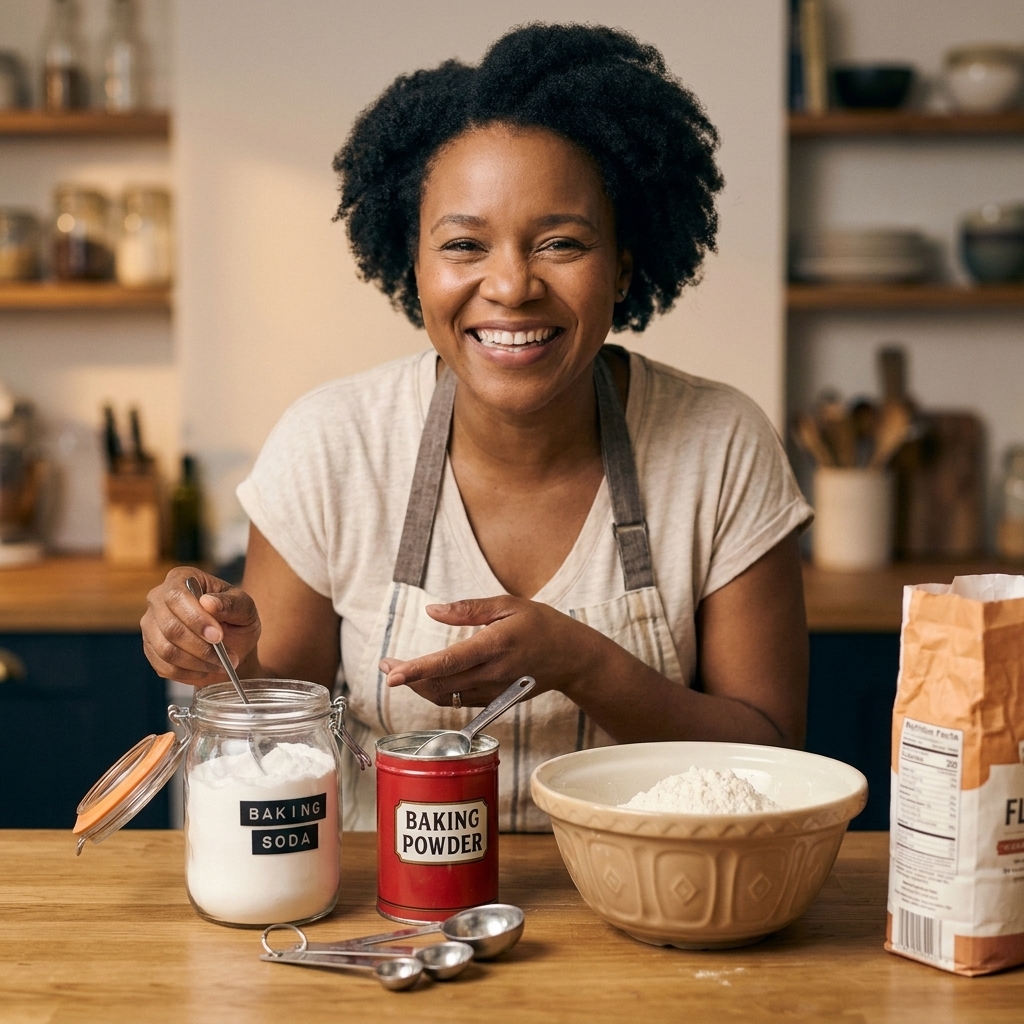
Baking soda is sodium bicarbonate, a base. In pancake batter, it will not do much for lift unless there is enough acid present. When it meets an acid (like buttermilk, yogurt, lemon juice, or vinegar), it reacts quickly and produces carbon dioxide bubbles.
Those bubbles are your pancake’s built-in elevator. If you can trap them in the batter long enough to hit the hot griddle, they expand with heat and you get:
- More height
- A lighter, airier crumb
- Tenderness (because you can mix less and still get lift)
If the batter is too alkaline (usually from too much baking soda or too little acid), you can get a soapy or metallic aftertaste, and pancakes may brown too fast before they cook through.
The trick: pair soda with acid
Here is my pancake rule of thumb: baking soda needs a buddy. If your recipe includes an acidic ingredient, baking soda is your best friend for fluffiness.
Acids that activate baking soda
- Buttermilk
- Plain yogurt or sour cream (thinned with a little milk if needed)
- Kefir
- Lemon juice
- Apple cider vinegar or white vinegar
Minor contributors (helpful, but not enough alone)
- Brown sugar (mildly acidic because of molasses, usually not enough to reliably activate soda by itself)
- Natural cocoa powder (more relevant in chocolate pancakes)
If your pancake recipe is milk-based with no acid, you can still use the trick by adding a small amount of acid, like lemon juice or vinegar, or by swapping in buttermilk.
How much baking soda to use
The most common issue I see is overdoing it. More baking soda does not mean more fluff. It usually means odd flavor and over-browning.
Easy ratio for classic pancakes
Use 1/4 teaspoon baking soda per 1 cup of flour, if your batter includes a solid acid source like buttermilk or yogurt.
If you are using a very acidic batter (for example, most of the liquid is buttermilk or yogurt and the recipe is built for that tang), you can sometimes go up to 1/2 teaspoon per cup of flour. I recommend starting at 1/4 teaspoon, because too much soda is where the soapy flavor lives.
Quick measuring note
Level your teaspoon measure and do not pack baking soda into the spoon. A little goes a long way.
If the recipe already has baking powder
Totally normal. Many pancake recipes use both:
- Baking powder provides reliable lift (often double-acting, so it lifts again on the griddle).
- Baking soda adds extra bubbles and better browning when acid is present.
If your recipe already has baking powder, you may not need extra baking soda unless you are adding or increasing acidic ingredients (like swapping milk for buttermilk).
If you do add baking soda, treat this as a starting point, not a universal law: for every 1/4 teaspoon baking soda you add, consider reducing baking powder by about 1/4 to 1/2 teaspoon, then adjust next batch based on rise and flavor.
Timing: cook while it is fresh
Once baking soda hits acid, the reaction starts right away. Translation: batter made with baking soda is happiest when you cook it within about 15 to 20 minutes.
My no-stress method
- Mix dry ingredients in one bowl (flour, sugar, salt, baking powder if using, and baking soda).
- Mix wet ingredients in another bowl (buttermilk or your acidic ingredient, eggs, melted butter or oil, vanilla).
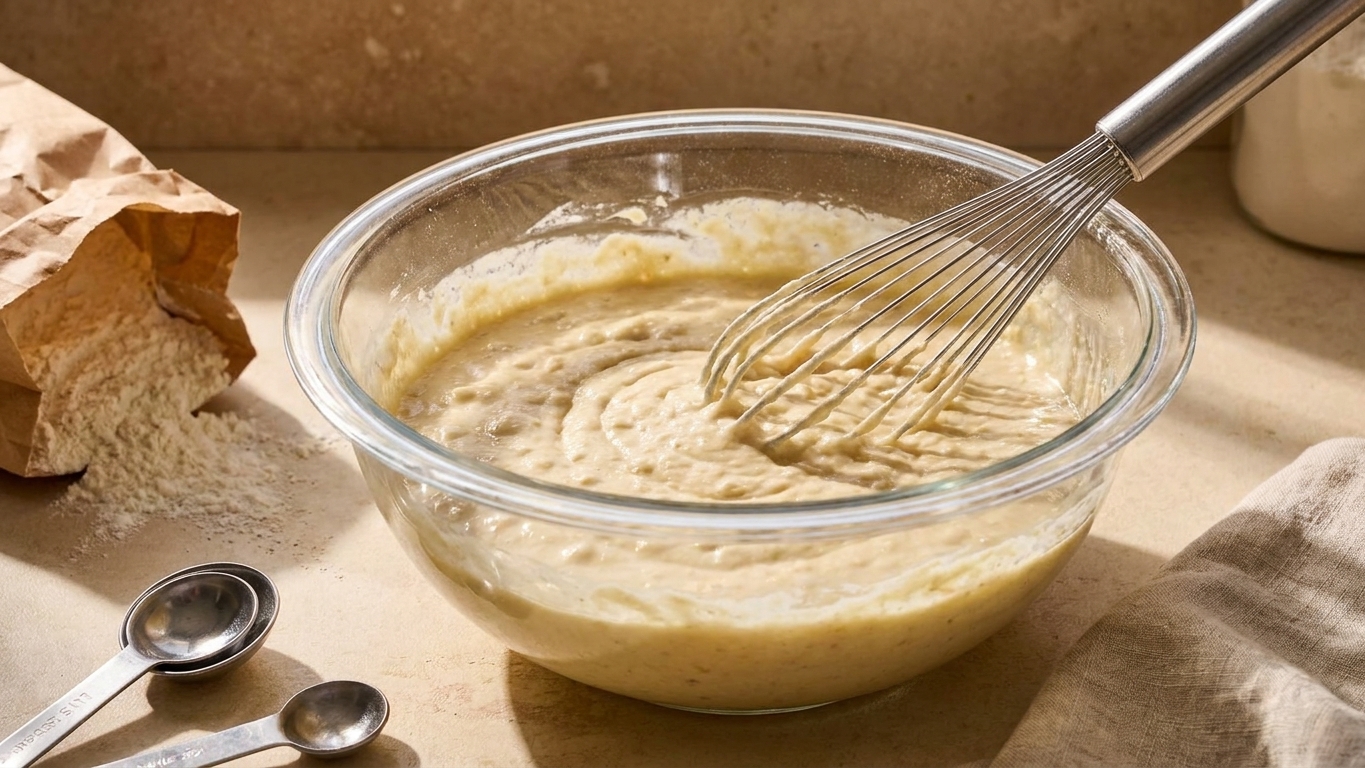
- Combine wet into dry and stir gently until you see no big pockets of flour. Lumps are fine.
- Rest 5 to 10 minutes while the griddle heats. This rest is mostly for hydration and thickening, which helps the batter hold onto the bubbles you already created.
- Cook right away. Try not to let the batter sit 30 minutes on the counter.
If your batter thickens a lot during the rest, you can loosen it with a small splash of milk or buttermilk. Stir gently, just enough to bring it back to a scoopable texture.
The biggest mixing mistake
If I could stand next to you for one step, it would be this: stop mixing sooner than you think.
Overmixing develops gluten, which makes pancakes chewy and dense. Baking soda can make bubbles, but strong gluten strands and aggressive stirring can pop them.
What “perfectly mixed” looks like
- Thick, scoopable batter
- Small and medium lumps throughout
- No streaks of dry flour
If your batter looks silky smooth like cake batter, you have probably mixed a bit too far. They will still be edible, but not as fluffy.
Easy ways to add acid
Buttermilk is wonderful, but I am not sending you back to the store. Here are quick options that activate baking soda beautifully.
Milk + lemon juice or vinegar
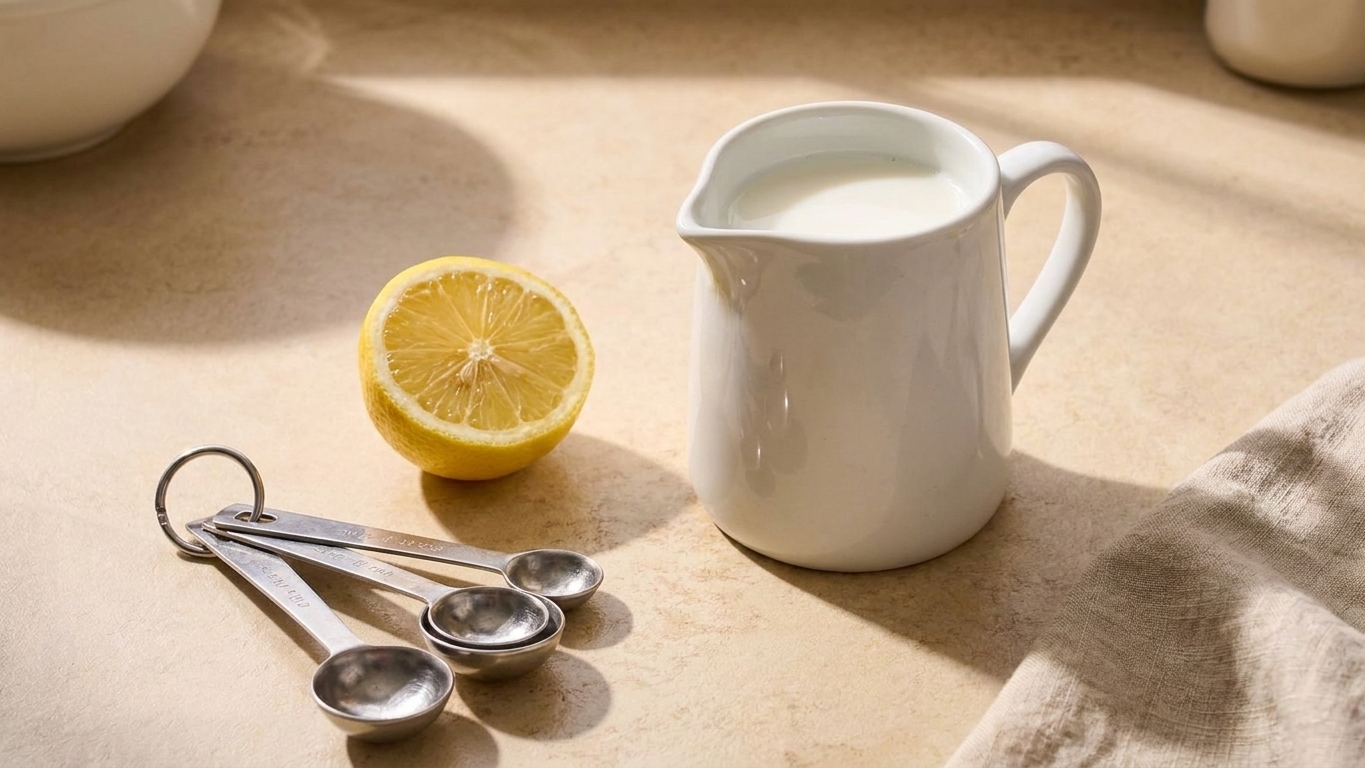
Add 1 tablespoon lemon juice or vinegar to 1 cup milk. Let it sit 5 minutes. It will look slightly curdled. That is perfect. It is not exactly the same as cultured buttermilk, but it works great for activation and gives you a similar tang.
Yogurt pancakes (my cozy favorite)
Use 3/4 cup plain yogurt + 1/4 cup milk in place of 1 cup buttermilk. The tang is gentle, the crumb is tender, and the lift is fantastic with baking soda.
Troubleshooting flat pancakes
You used baking soda but no acid
Fix: add buttermilk, yogurt, or 1 tablespoon lemon juice or vinegar per cup of milk.
Your baking soda is old
Fix: if it has been open for months, replace it. You can test it by adding a pinch to a spoonful of vinegar. It should fizz immediately.
The batter sat too long
Fix: cook within 15 to 20 minutes of mixing for best lift. If it must sit, keep it cool and expect slightly less rise.
The griddle is not hot enough
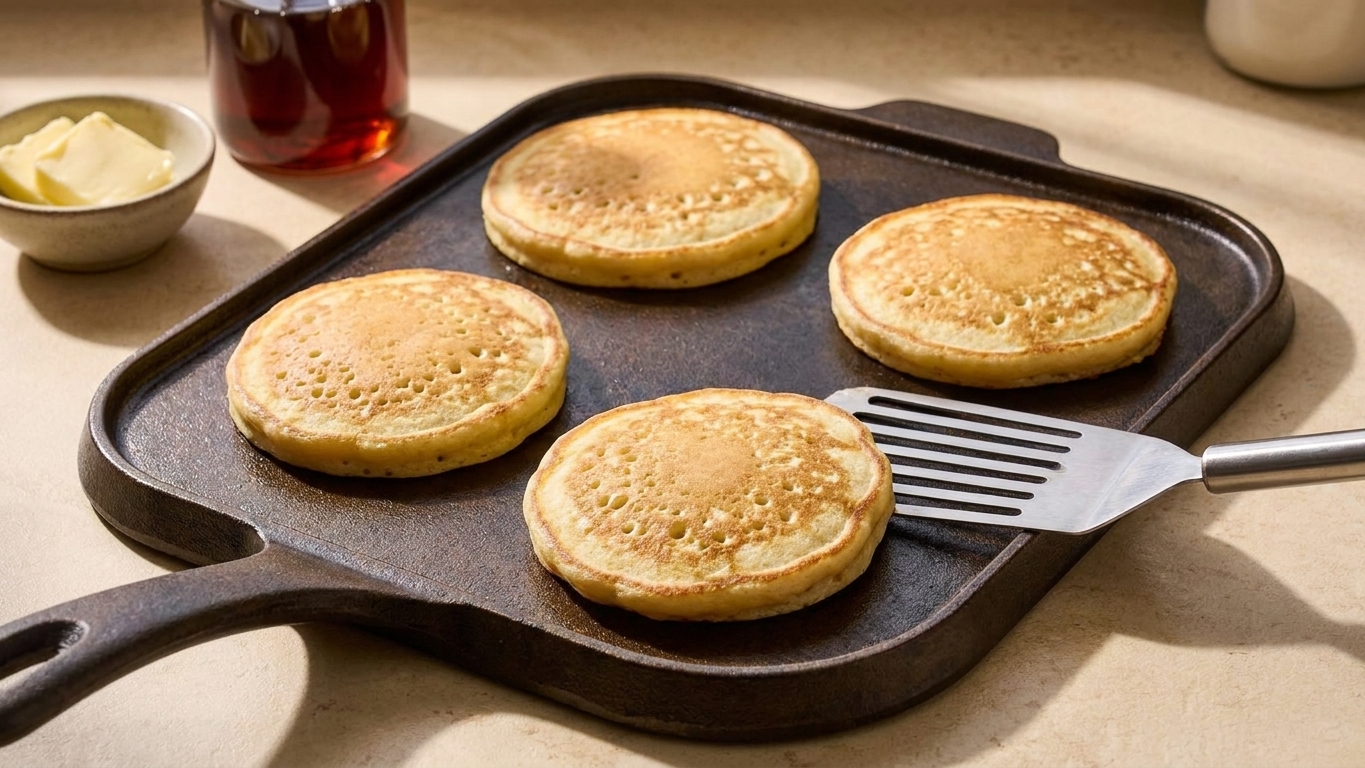
Fix: aim for steady medium heat. A drop of water should dance and evaporate quickly. If you use an electric griddle, a great target is about 375°F (190°C). If the pan is too cool, bubbles collapse before the pancake sets.
You pressed pancakes down
Fix: do not smash them with the spatula. You are squeezing out the air you worked to create.
Fluffy pancake base recipe
If you want an easy starting point, here is a reliable ratio you can adapt.
Ingredients (makes about 8 to 10 pancakes)
- 1 1/2 cups all-purpose flour
- 2 tablespoons sugar
- 2 teaspoons baking powder
- 1/2 teaspoon baking soda
- 1/2 teaspoon kosher salt
- 1 1/2 cups buttermilk
- 2 large eggs
- 3 tablespoons melted butter (or neutral oil)
- 1 teaspoon vanilla (optional)
Steps
- Whisk dry ingredients in a large bowl.
- Whisk buttermilk, eggs, butter, and vanilla in a second bowl.
- Pour wet into dry and stir gently until just combined. Lumps are fine.
- Rest 5 to 10 minutes while your pan heats.
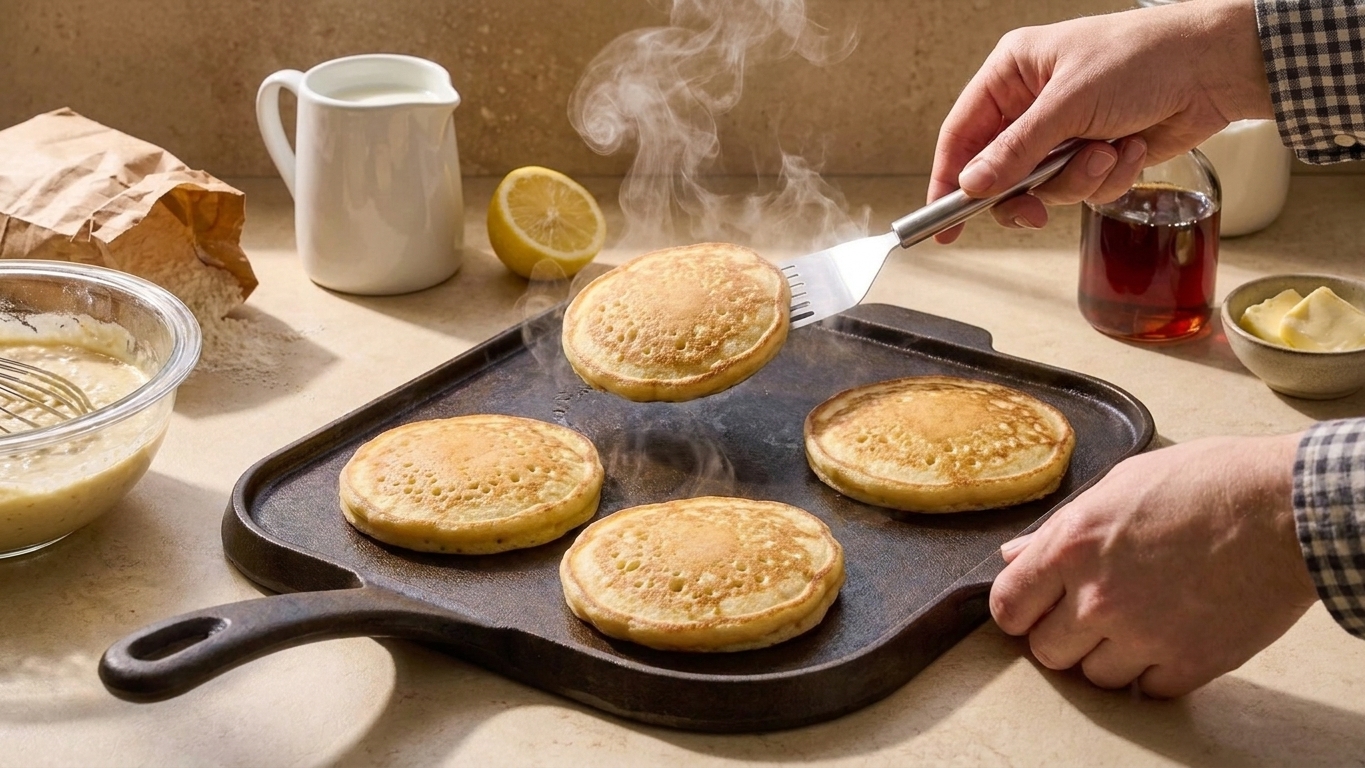
- Cook on a lightly greased griddle over medium heat. Flip when bubbles form on top and the edges look set, about 2 to 3 minutes. Cook 1 to 2 minutes more on the second side.
Little tip from my own kitchen: if the first pancake is pale and slow to brown, your pan needs another minute. If it browns too fast, lower the heat. Pancakes love patience.
FAQ
Can I use baking soda instead of baking powder in pancakes?
Not as a direct swap. Baking powder contains both a base and an acid, so it can rise on its own. Baking soda needs enough acid in the recipe. You can make pancakes with only baking soda if you have enough acid, but the amounts and flavor balance need to be right.
Why did my pancakes taste bitter after adding baking soda?
Usually too much baking soda or not enough acid to neutralize it. Start with 1/4 teaspoon per cup of flour and make sure you are using buttermilk, yogurt, or another acid.
Does resting pancake batter make them fluffier?
Yes, up to a point. A short rest (5 to 10 minutes) mainly helps hydration and thickening, which improves structure and bubble-holding power. A long rest can reduce lift when baking soda is doing most of the work.
What is the best pan for fluffy pancakes?
A preheated nonstick skillet or well-seasoned cast iron works great. The biggest factor is steady medium heat so the pancake sets before bubbles collapse.
My take: fluffier pancakes are chemistry
If you remember one thing, make it this: baking soda is powerful when the acid balance is right. Get that pairing right, keep your mixing gentle, and cook on a properly heated pan, and you will have pancakes that feel like a small weekend luxury even on a random Tuesday.
And yes, you can absolutely add a little extra vanilla and a little extra butter. That is not chemistry, that is just joy.