
A practical, baker-friendly comparison of almond flour and coconut flour, including measuring tips, cautious conversion ranges, moisture guidance, and the be...
Recipeva
Baking Soda vs. Baking Powder
Baking soda and baking powder both make baked goods rise, but they work differently. Learn when to use each, how substitutions affect results, and simple freshness tests.

Maya Reynolds
Maya Reynolds is a passionate home cook, recipe developer, and the creative voice behind Recipeva. With over a decade of experience translating complex culinary techniques into approachable weeknight meals, she focuses on creating dishes that bring joy to the dinner table without the stress.
Created September 21, 2026
Updated September 21, 2026
If you have ever pulled a pan of muffins from the oven and thought, “Why are you so… flat?” or “Why do you taste a little bitter?” there is a good chance the culprit is hiding in plain sight: your leavener. Baking soda and baking powder look similar in the pantry, but they behave very differently once they hit moisture and heat.
I am going to walk you through what each one does, how to tell which a recipe needs, and what really happens when you swap one for the other. No chemistry degree required, I promise.

The quick difference
Baking soda is pure sodium bicarbonate. It needs an acid in the recipe to create carbon dioxide bubbles (the lift).
Baking powder is a blend of sodium bicarbonate plus acid(s) and usually cornstarch. It can rise on its own once it is moistened and heated.
- Use baking soda when your batter has a clear acidic ingredient (buttermilk, yogurt, lemon juice, cocoa, vinegar, sour cream, molasses).
- Use baking powder when there is not enough acid in the recipe, or when you need a more reliable, steady rise.
How baking soda works
Baking soda is alkaline. When it meets an acid and moisture, it reacts quickly and releases carbon dioxide gas. Those tiny bubbles expand in the oven, giving you height and a lighter crumb.
Acids that activate baking soda
- Buttermilk
- Yogurt
- Sour cream
- Lemon juice or other citrus
- Vinegar
- Molasses
- Natural cocoa powder (not Dutch-processed)
- Brown sugar: can contribute mild acidity, but it is usually not enough on its own
- Honey: slightly acidic, but typically not enough by itself
Maya tip: If a recipe uses baking soda, do not dawdle once your wet and dry ingredients meet. That reaction starts right away. Get it in the oven so you capture the lift in the pan, not in your mixing bowl.

How baking powder works
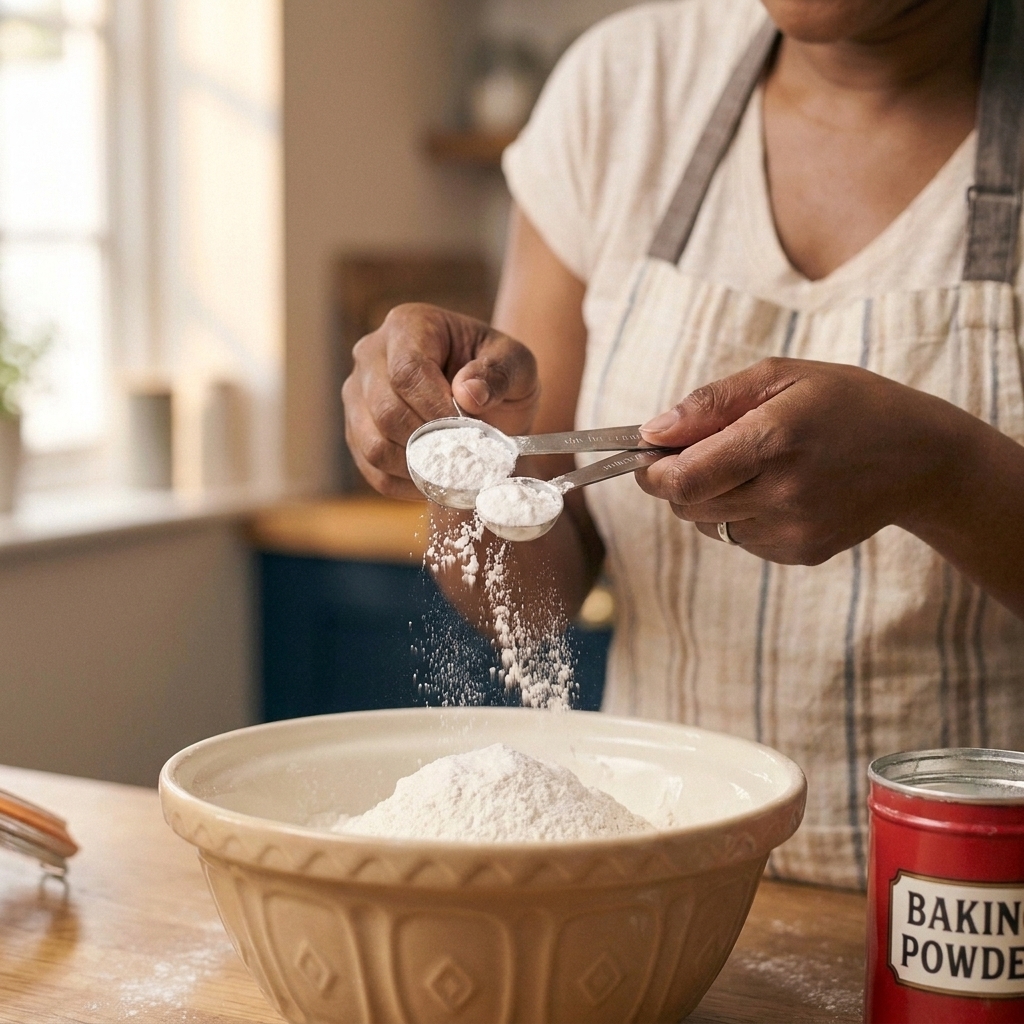
Baking powder contains baking soda plus one or more powdered acids. Most grocery-store baking powder is double-acting, which means it releases gas in two stages:
- Stage 1: When it gets wet (mixing time)
- Stage 2: When it gets hot (baking time)
That second stage is what makes baking powder so forgiving for cakes, pancakes, scones, and quick breads. You still want to bake promptly, but you typically have a little more breathing room than you do with baking soda.
What happens if you use the wrong one
Soda instead of powder
- Not enough lift: Without enough acid, baking soda cannot produce enough gas.
- Soapy or bitter taste: Excess baking soda can leave an alkaline flavor.
- Over-browning: Alkaline batters brown faster, sometimes before the center sets.
Powder instead of soda
- Weaker flavor and color: Baking soda helps neutralize acids and can deepen browning. Swapping in baking powder can make baked goods taste a little flat.
- Different texture: You may get a slightly cakier, more crumbly result.
- Potential metallic note: More likely with large amounts or some aluminum-based powders.

Can you substitute?
Sometimes. Not always. If you are mid-recipe and realize you are out of one, here are the swaps that generally work best.
Soda for powder
Rule of thumb: To replace 1 teaspoon baking powder, use 1/4 teaspoon baking soda plus 1/2 teaspoon cream of tartar.
No cream of tartar? You can add another acid instead, but you may need to account for the extra liquid. A common option is:
- 1/4 teaspoon baking soda + 1/2 teaspoon lemon juice or vinegar
In most batters, that tiny amount of extra liquid is negligible. If you are working with a very tight formula, reduce another liquid just a touch (about 1/2 to 1 teaspoon) to keep the consistency the same.
Powder for soda
This is trickier, because baking powder is weaker. To replace 1 teaspoon baking soda, you will generally need 3 teaspoons baking powder.
Two cautions:
- You may want to tweak salt in very sensitive recipes. Baking powder is not salty like table salt, but it does add sodium.
- The flavor and browning may change, especially in recipes with strong acids (think buttermilk pancakes or gingerbread).
My honest advice: In delicate bakes like angel food cake, chiffon cake, or a carefully tested layer cake, do not substitute if you can avoid it. Save substitutions for pancakes, muffins, quick breads, and casual cookies.
How to tell what you need
Look for acids
If you see buttermilk, yogurt, sour cream, citrus, vinegar, molasses, or natural cocoa, baking soda is probably there for a reason.
Look at the texture goal
- Chewy cookies: Often baking soda (promotes spread and browning).
- Fluffy biscuits and scones: Often baking powder (more lift).
- Light, tender cakes: Usually baking powder, sometimes a combo.
Sometimes recipes use both
This is very normal. The baking soda helps neutralize acid (better flavor and browning), and the baking powder adds extra lift. Think: buttermilk waffles, banana bread, and many muffins.
Storage and quick tests
Even perfectly measured leaveners cannot help you if they are old.
How to store them
- Keep both in a cool, dry cabinet.
- Close containers tightly.
- Keep them away from steam sources like the kettle or dishwasher vent.
How long they last
- Baking soda: Often stays potent well beyond a year if kept dry and tightly closed, but it can absorb odors over time.
- Baking powder: Typically best used within 6 to 12 months after opening.
Test baking soda
Put 1/2 teaspoon baking soda in a small bowl and add a splash of vinegar or lemon juice. It should fizz vigorously right away.
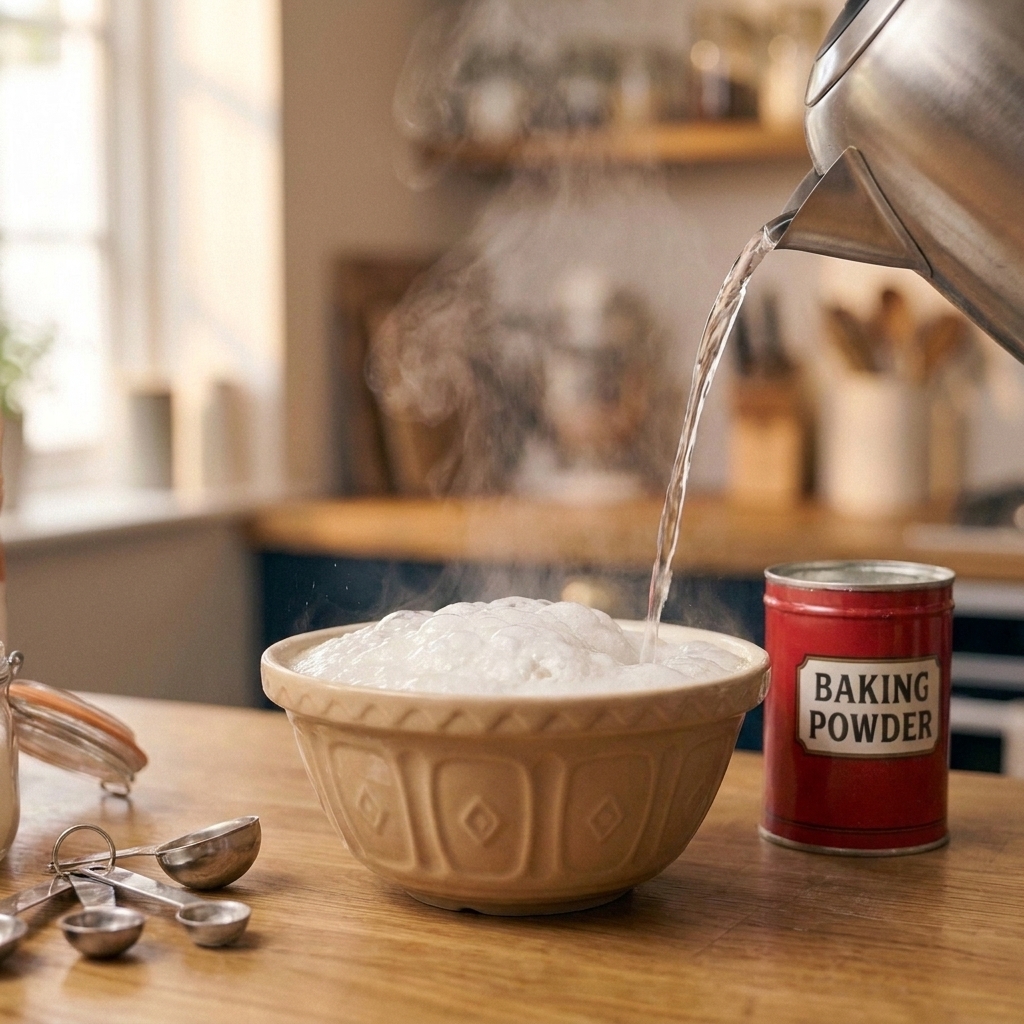
Test baking powder
Put 1/2 teaspoon baking powder in a small bowl and add a splash of hot water. It should bubble actively. If it just sits there looking sad, it is time to replace it.
Common baking situations
- Buttermilk pancakes: Usually both. Baking soda for the buttermilk, baking powder for extra fluff.
- Chocolate cake: Depends on the cocoa. Natural cocoa is more acidic and often pairs with baking soda. Dutch-process cocoa is less acidic (it has been neutralized), so it often needs baking powder unless another strong acid is present.
- Classic chocolate chip cookies: Often baking soda for spread and that golden, toasty flavor.
- Biscuits: Baking powder for lift and layers.
- Banana bread: Often both, especially if it includes yogurt or sour cream.
FAQ
Is baking powder the same as baking soda?
No. Baking soda is a single ingredient (sodium bicarbonate). Baking powder is a mixture that includes baking soda plus powdered acids and a drying agent.
Why do I taste bitterness?
Common causes are too much baking soda, not enough acid to balance it, or uneven mixing that leaves concentrated pockets. Measure carefully, whisk dry ingredients thoroughly, and make sure your recipe has enough acid if it calls for baking soda.
What is double-acting baking powder?
It bubbles once when it gets wet and again when it gets hot. That second lift is why it is so reliable for cakes and quick breads.
Can I use baking soda for pancakes without buttermilk?
You can, but you need an acid. If you only have regular milk, use baking powder or “sour” the milk with a little lemon juice or vinegar and then use baking soda as the recipe intends.
My final pantry pep talk
If you remember one thing, make it this: baking soda needs an acid, and baking powder brings its own. When your rise or flavor feels off, check those two little containers first. They are tiny, but they are powerful.
And if you want my extremely biased opinion from a lifetime of weeknight baking: keep both on hand, keep them fresh, and label the lids if your household is the type to put things back in the wrong spot. Future you will be very grateful.