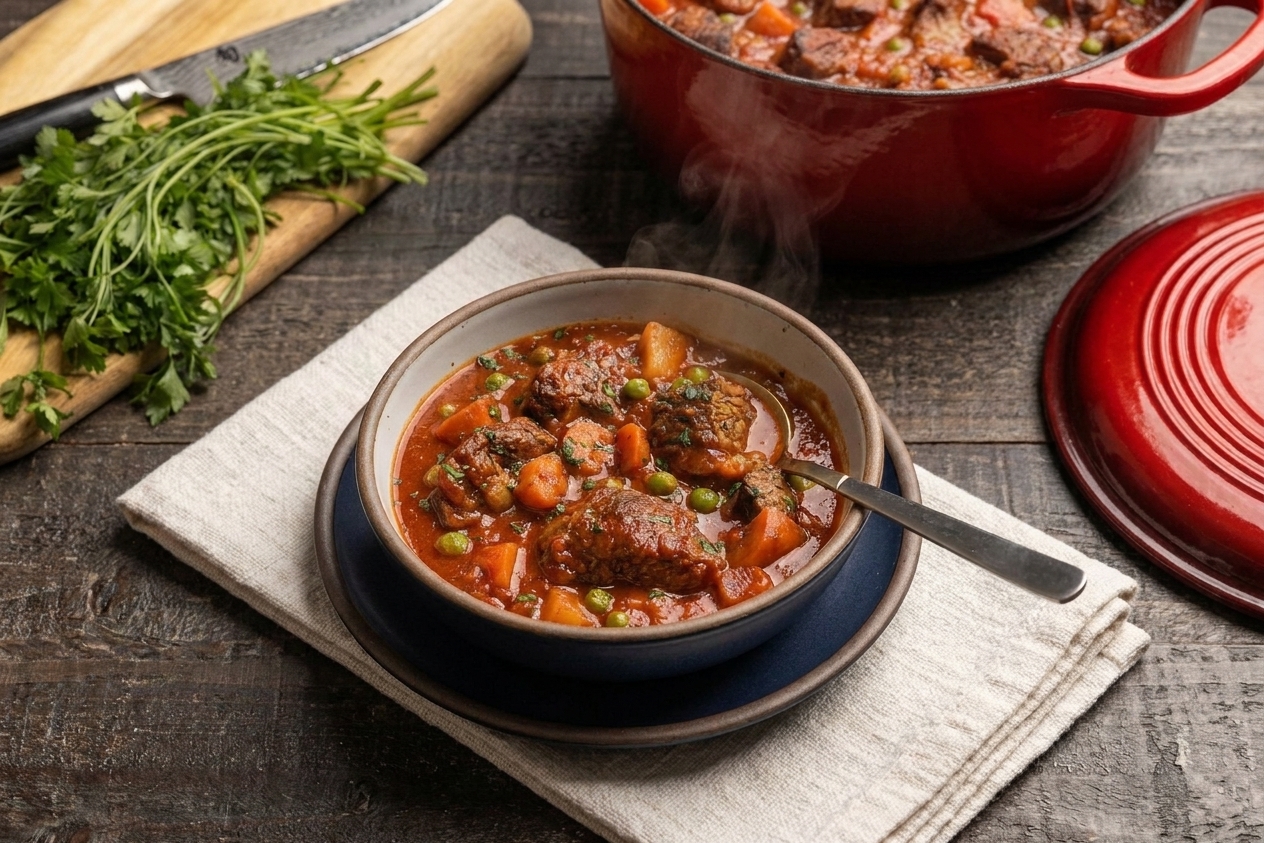

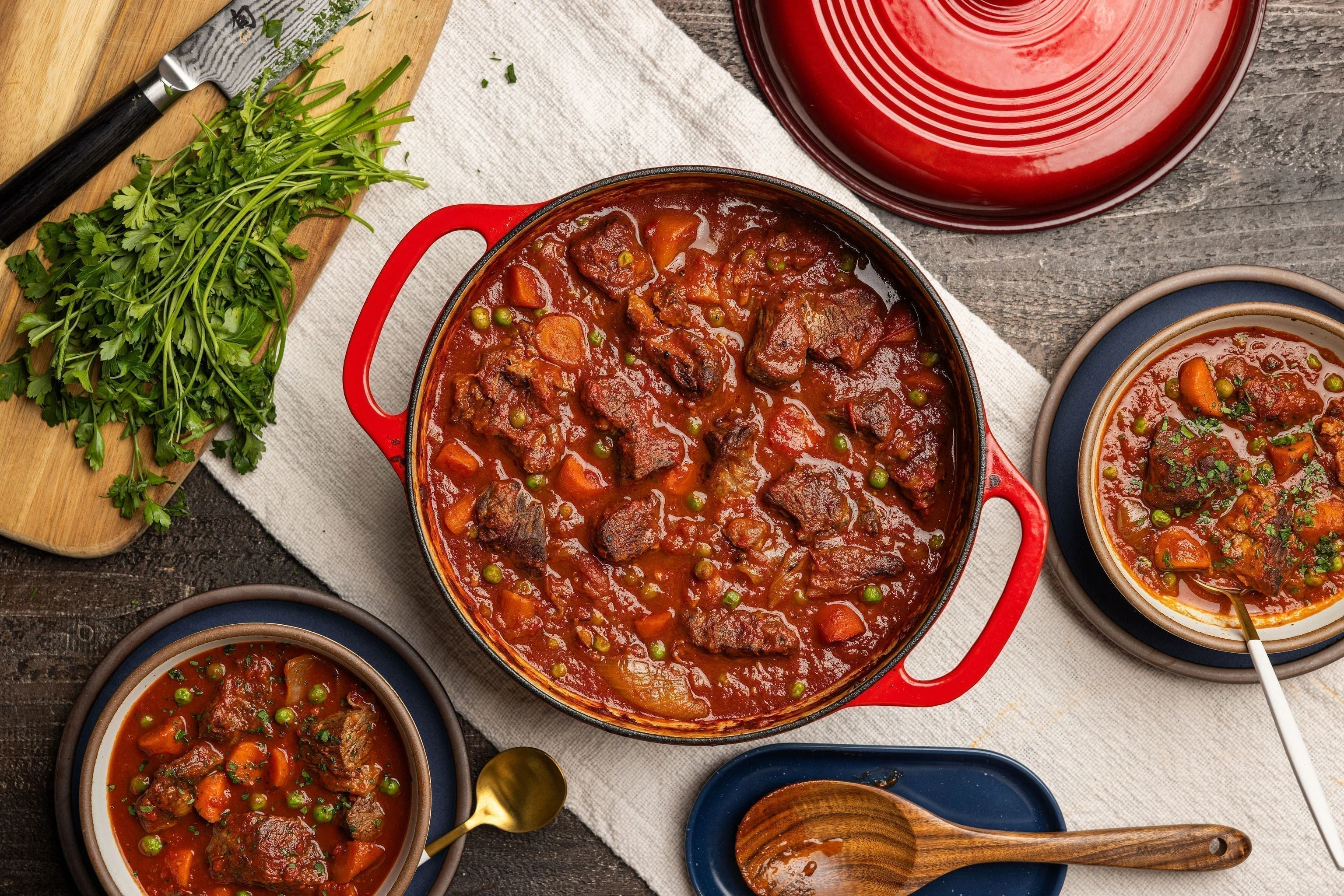
I grew up in the Pacific Northwest, where beef stew weather shows up early and lingers. In my family, the pot you chose was half the recipe. A Dutch oven meant you were home and could babysit a simmer. A slow cooker meant you had soccer practice, a late meeting, or you simply wanted dinner to handle itself. Both make a cozy, deeply savory stew, but they behave differently in a few key moments that matter.
This is your choose-your-own-adventure guide. I’ll help you decide before you cube the beef, peel the potatoes, and commit to a cooking method.

Quick pick
If you only read one section, make it this one.
- Choose a Dutch oven if you want deep roasted flavor from browning, a naturally thicker gravy, and you do not mind checking a pot once in a while.
- Choose a slow cooker if you want hands-off cooking, very forgiving tenderness, and a stew that can hold for a while without stress.
Still torn? Think about your evening: if you can be in the kitchen for 20 to 30 minutes up front, a Dutch oven rewards you. If you need dinner to cook while you live your life, slow cooker wins.
Best beef and size
Before we talk pots, a quick note on what you are cooking.
- Best all-purpose cut: chuck roast, cut into 1 1/2-inch cubes. It has the fat and collagen that turn silky and tender with time.
- Also great: brisket, short rib (boneless is easiest), or well-marbled stew meat from the shoulder.
- Proceed with caution: leaner cuts like round can work, but they are less forgiving and can dry out sooner, especially if you push the cook time.
If your cubes are small, everything happens faster. If they are big, the pot needs more time to do its collagen magic.
Browning
Dutch oven
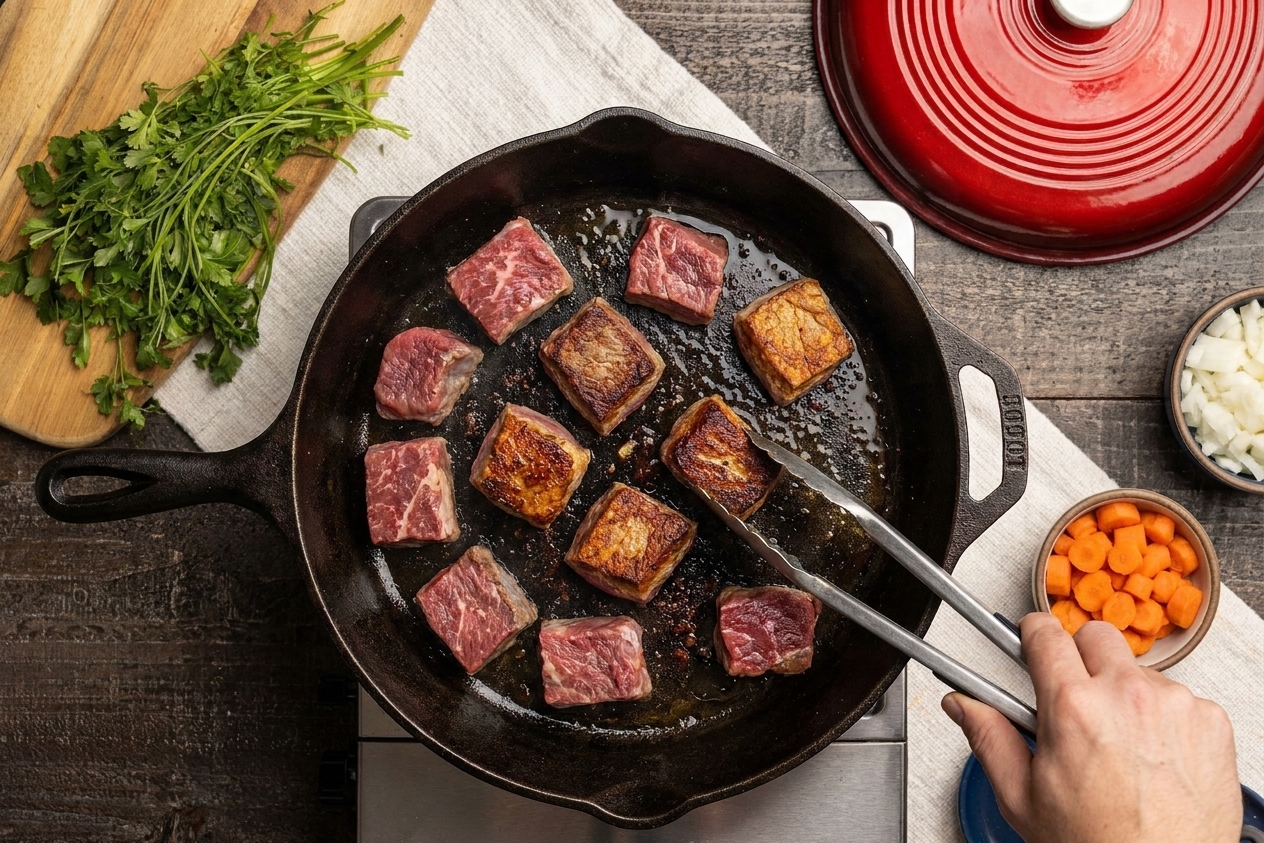
A Dutch oven is the easy winner for browning because you can sear beef directly in the pot, then build the stew in the same place. That browned crust is not just color. It is concentrated savory flavor that melts back into the broth when you deglaze.
Bottom line: If you care about that “restaurant stew” vibe with a darker, richer backbone, use the Dutch oven.
Slow cooker
Most slow cooker inserts do not brown well, and many models warn against using the crock on the stovetop. That means browning is either skipped or done in a separate skillet.
If you skip browning: Expect a lighter flavor. It will still be comforting, just less roasty and less complex. If you do brown first, you can get surprisingly close to Dutch oven depth.
Liquid level
Dutch oven
On the stovetop or in the oven, a Dutch oven loses moisture to evaporation. You will typically need enough liquid to cover ingredients partway and you may need to top up if the simmer is too lively.
If you love a reduced sauce: Dutch oven is perfect because evaporation concentrates everything.
Slow cooker
A slow cooker is mostly covered and very low evaporation, even though it is not truly sealed. Little moisture escapes, and vegetables and beef release liquid as they cook. This means you generally need less added broth than you think, especially in most 4 to 7 quart models.
Good to know: If your slow cooker stew turns out soupy, it is usually not your fault. Start with less liquid, because you cannot reduce it much later.
Cook time
Dutch oven
Dutch oven stew can be weeknight-friendly if you keep the simmer steady. After browning and sautéing aromatics, many stews reach “tender enough” in roughly 1 1/2 to 2 1/2 hours for 1 1/2-inch chuck cubes, depending on your cut and how gently you cook.
Choose this route if you want stew tonight and you can stay home.
Slow cooker
Slow cookers shine when you have time. Most beef stew setups run about 7 to 8 hours on Low or 3 1/2 to 5 hours on High, depending on your model, how full the crock is, and the size of your beef pieces.
Choose this route if you need dinner to be ready when you walk in the door.
Thickness
Dutch oven
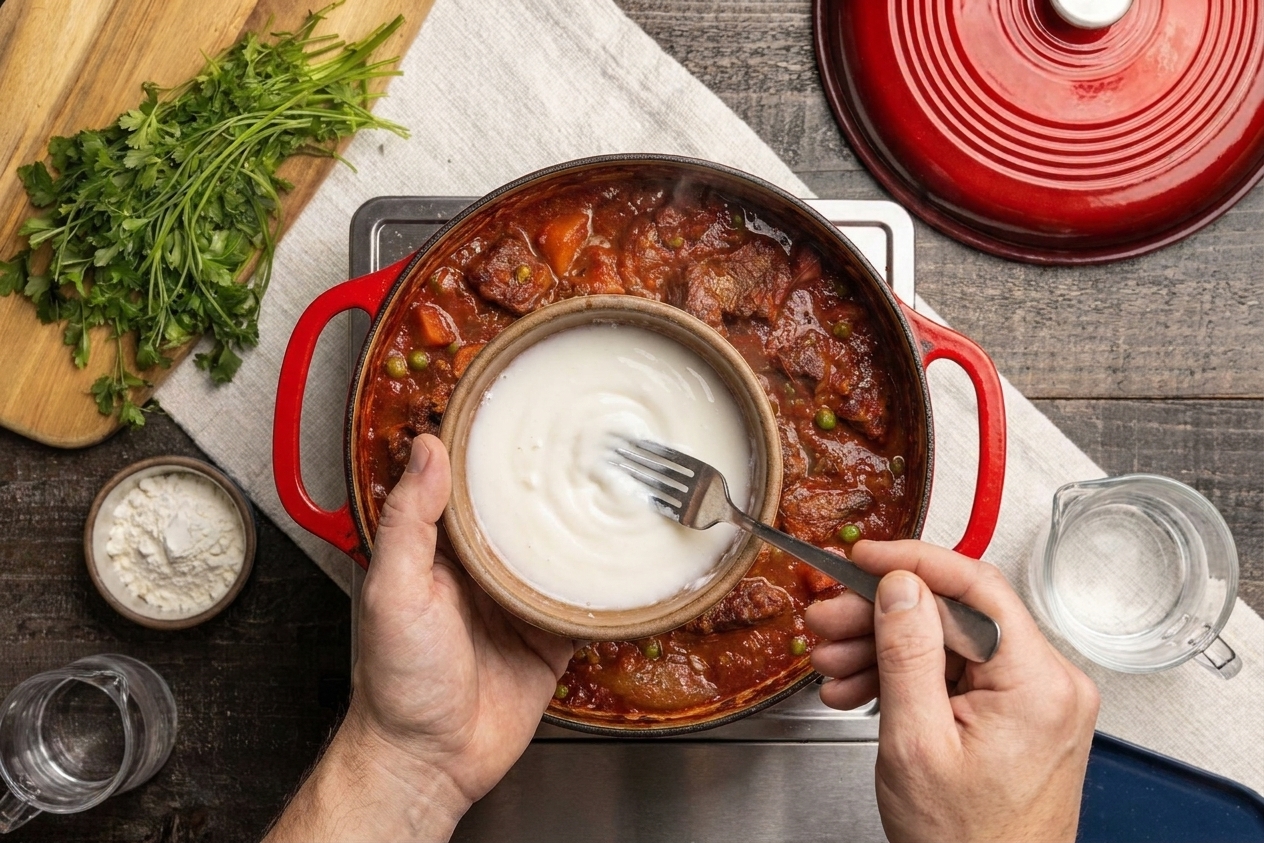
Because a Dutch oven evaporates as it cooks, the stew naturally thickens. Also, you can easily add a flour-coated beef step or stir in a slurry while everything is bubbling. A simmer makes thickeners work quickly.
If you want gravy: Dutch oven makes spoon-coating stew almost effortless.
Slow cooker
Slow cookers do not reduce much, so the base tends to stay more brothy. You can absolutely thicken at the end, but it takes a little strategy. Thickening works best when you:
- Vent the lid or crack it for the last 20 to 40 minutes on High. This may help a bit, but many cookers still will not reduce dramatically.
- Whisk a cornstarch slurry (or flour slurry) and give it time to fully heat and thicken.
- Mash a few potatoes in the crock for a rustic thickening boost.
If you hate fussing: Dutch oven is simpler. If you are fine with a quick end-of-cook tweak, slow cooker is totally workable.
Tenderness
Dutch oven
With steady, gentle heat, a Dutch oven makes beef tender and succulent, and it gives you excellent control. Keep the stew at a quiet simmer and avoid a hard boil, which can make the exterior seize, drive off liquid, and generally work against the slow process you want.
Best fit: If you are comfortable adjusting heat and checking occasionally, you will get beautifully tender beef with a Dutch oven.
Slow cooker
A slow cooker is incredibly forgiving for collagen-rich cuts because it holds a consistent low temperature for a long time. That slow, steady heat is exactly what breaks down connective tissue until the meat is fall-apart tender.
One important nuance: More time is not always better once the beef is tender. After a certain point, meat can go from tender to shreddy and dry, and you will notice that faster with leaner cuts than with chuck.
Vegetables
Dutch oven
Dutch oven stew tends to give vegetables a little more structure because the cooking environment is hotter and there is more evaporation. You can also add delicate vegetables later without losing much momentum.
- Best for: Potatoes that hold their shape, carrots with a little bite, and a stew that feels layered in texture.
Slow cooker
Slow cookers are gentle, but the long time can make vegetables very soft, especially if they are cut small. Some people love that melt-in-your-mouth texture. Others want more definition.
- Best for: Ultra-tender carrots and potatoes, and a very cozy, soft stew texture.
If you like firmer vegetables: Cut them larger for the slow cooker and consider adding peas or green beans near the end if your model allows it.
Slow cooker setup
If you are going the slow cooker route, a little layering goes a long way.
- Put root vegetables on the bottom (potatoes, carrots). They take longer and benefit from sitting closer to the heat.
- Meat on top is fine, especially if it is browned first. It will still cook through as the crock heats.
- Do not overfill. Staying under about two-thirds full helps everything heat more evenly and reduces spillover risks.
Ease and cleanup
Dutch oven
- Pros: One-pot cooking from sear to simmer, strong flavor development, easy to reduce and adjust seasoning as you go.
- Watch-outs: You are more on duty since it can stick or reduce too far if left unattended. Also, it is heavy.
Slow cooker
- Pros: Set-it-and-forget-it comfort, ideal for busy days, keeps stew warm for a serving window and potlucks.
- Watch-outs: Flavor can be lighter unless you brown first, and it is harder to fix a thin broth without extra steps.
Seasoning at the end
Slow cookers can mute seasoning a little, and long cooking can flatten bright flavors in any pot.
- Salt: Taste at the end and adjust.
- Acid: A small splash of vinegar or lemon juice right before serving can wake the whole pot up without making it taste sour.
- Fresh herbs: Parsley at the end makes stew taste like itself again.
Decision checklist
Pick the pot that matches your priorities today.
- I want the deepest flavor and a thicker gravy: Dutch oven.
- I need hands-off cooking while I am out: Slow cooker.
- I want to brown and build everything in one pot: Dutch oven.
- I do not want to watch the stove: Slow cooker.
- I like my veggies with a little structure: Dutch oven.
- I love soft, cozy, very tender vegetables: Slow cooker.
- I want dinner sooner, not all day: Dutch oven.
- I want dinner to hold for a while without worry: Slow cooker.
Common questions
Can I make slow cooker beef stew taste as rich as Dutch oven stew?
Yes. The biggest upgrade is browning the beef in a skillet first, then deglazing that skillet with broth, wine, or even a splash of water and scraping up the browned bits into the slow cooker. Also, do not be shy with aromatics. I believe there is no such thing as too much garlic, and stew is where that belief really shines.
Why is my slow cooker stew watery?
Slow cookers run low evaporation, so liquid does not reduce much. Start with less broth than you would use on the stove, and remember that beef and vegetables release liquid as they cook. To thicken, vent the lid near the end or use a slurry, then give it time to heat through.
Why is my Dutch oven stew tough?
Usually it is one of two things: the stew boiled too hard (which can make the exterior seize and can drive off too much liquid), or it simply has not cooked long enough for collagen to break down. Keep it at a gentle simmer and give it time. Tough-to-tender is a process.
Which is better for meal prep?
Both work, but the slow cooker is especially convenient for batch cooking because it frees up your stove and holds warm well. Dutch oven stew often reheats with an even thicker, more luxurious gravy the next day, which is a pretty great problem to have.
Do I have to use an oven for Dutch oven stew?
No. You can simmer on the stovetop, but the oven gives you very even heat and fewer hot spots, which helps prevent sticking. If you are prone to scorching the bottom, consider the oven route.
How long can stew sit on Warm?
Warm is great for a short serving window, but I would not treat it like an all-day holding zone. For safety, refrigerate leftovers promptly in shallow containers, and reheat until steaming hot when you are ready for round two.
My take
If it is a rainy Sunday and I want the house to smell like comfort, I grab my Dutch oven, take my time browning, and enjoy the gentle rhythm of checking the pot.
If it is a busy weekday and I still want real-deal stew for dinner, I reach for the slow cooker and let it carry the load. Either way, you are headed for a bowl of cozy.