

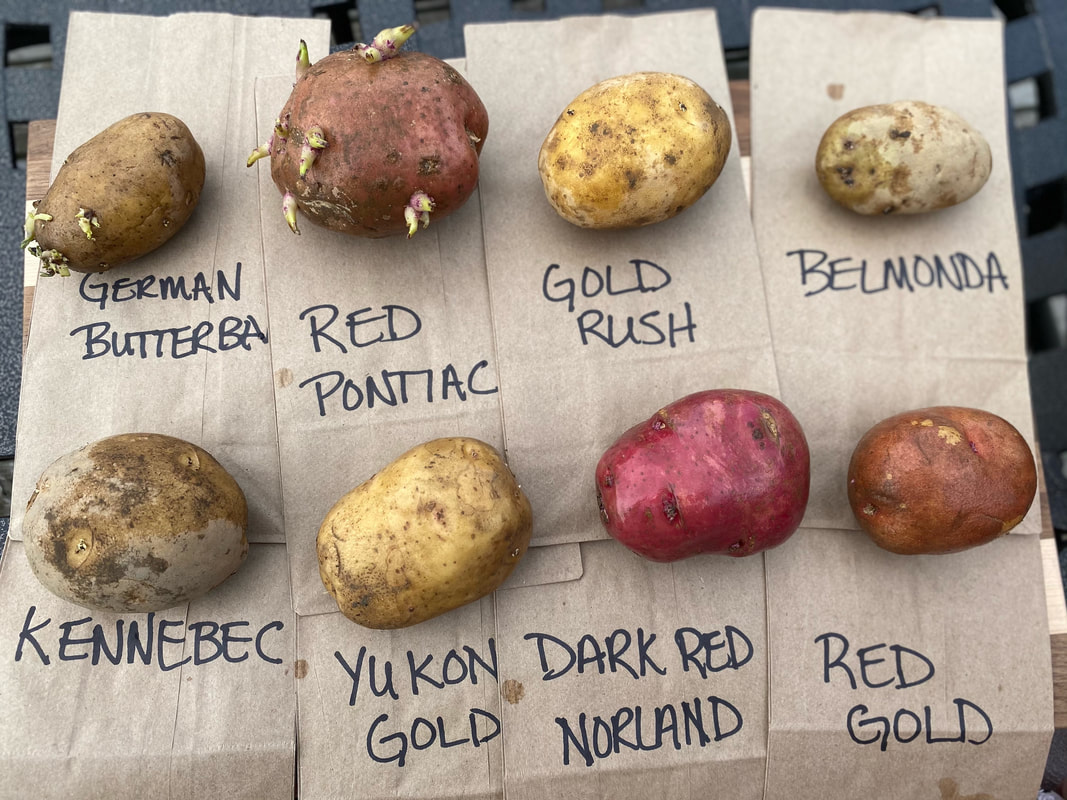
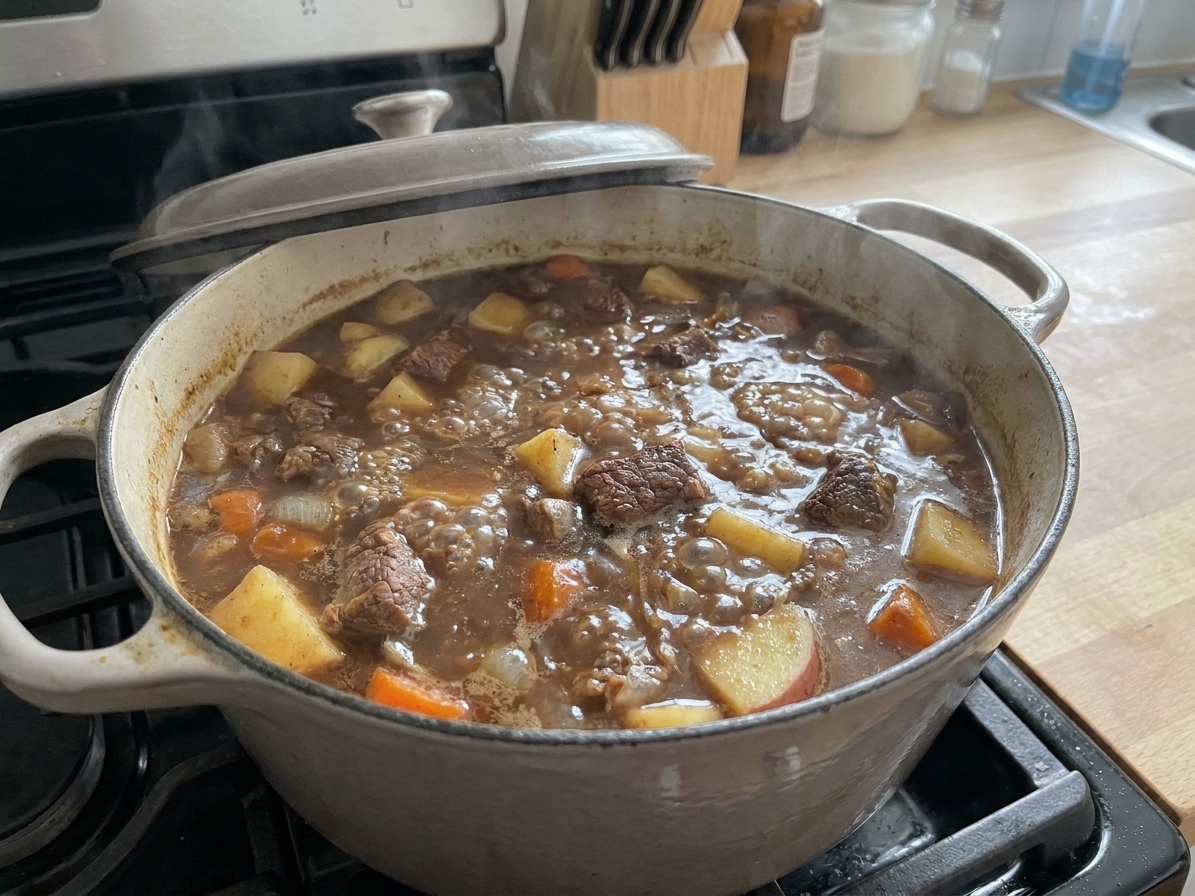
In my family, beef stew was the ultimate rainy Pacific Northwest dinner. Someone always asked the same question while the pot bubbled away: What kind of potato did you use? Because here is the truth: the potato you choose decides whether your stew has tidy, spoonable chunks or a cozy, thicker gravy that clings to everything. And with one small timing tweak, you can keep your stew rich and silky without it turning starchy or grainy.

The three potato types for stew
Most grocery store potatoes fall into one of three “behavior groups” in a stew: waxy (hold their shape), starchy (break down and thicken), and all-purpose (a little of both). For beef stew, the big three are Yukon Gold, russet, and red potatoes.
If you remember nothing else, remember this:
- Yukon Gold: creamy, sturdy, best all-around choice
- Russet: fall-apart tender, thickens the gravy, easiest to overcook into mush
- Red potatoes: stays intact in cubes, lighter thickening power
Yukon Gold: best overall
If I’m only buying one bag for stew night, it’s Yukon Gold. They have medium starch, which means they give you creamy edges and a naturally thicker broth, but they still hold together like a champ as long as you keep the simmer gentle.
What they do in the pot
- Texture: buttery and tender, with clean chunks that do not collapse
- Thickening: moderate, the stew looks glossy and lightly velvety
- Risk factor: low, very forgiving for longer simmering
When to add Yukon Golds
Add them when your stew is roughly 45 to 60 minutes away from done, or once the beef is already tender and you are simmering gently. Exact timing depends on cube size and how lively your simmer is, so use the doneness cue too: a knife should slide in easily with just a little resistance. For most 3/4-inch to 1-inch cubes, that is often around 25 to 40 minutes at a gentle simmer.
One note that saves my stew every time: if you have a lot of acidic ingredients in the pot (tomatoes, a big splash of wine, vinegar), potatoes can take longer to soften. Either add them a bit earlier or expect the knife test to take a little longer.
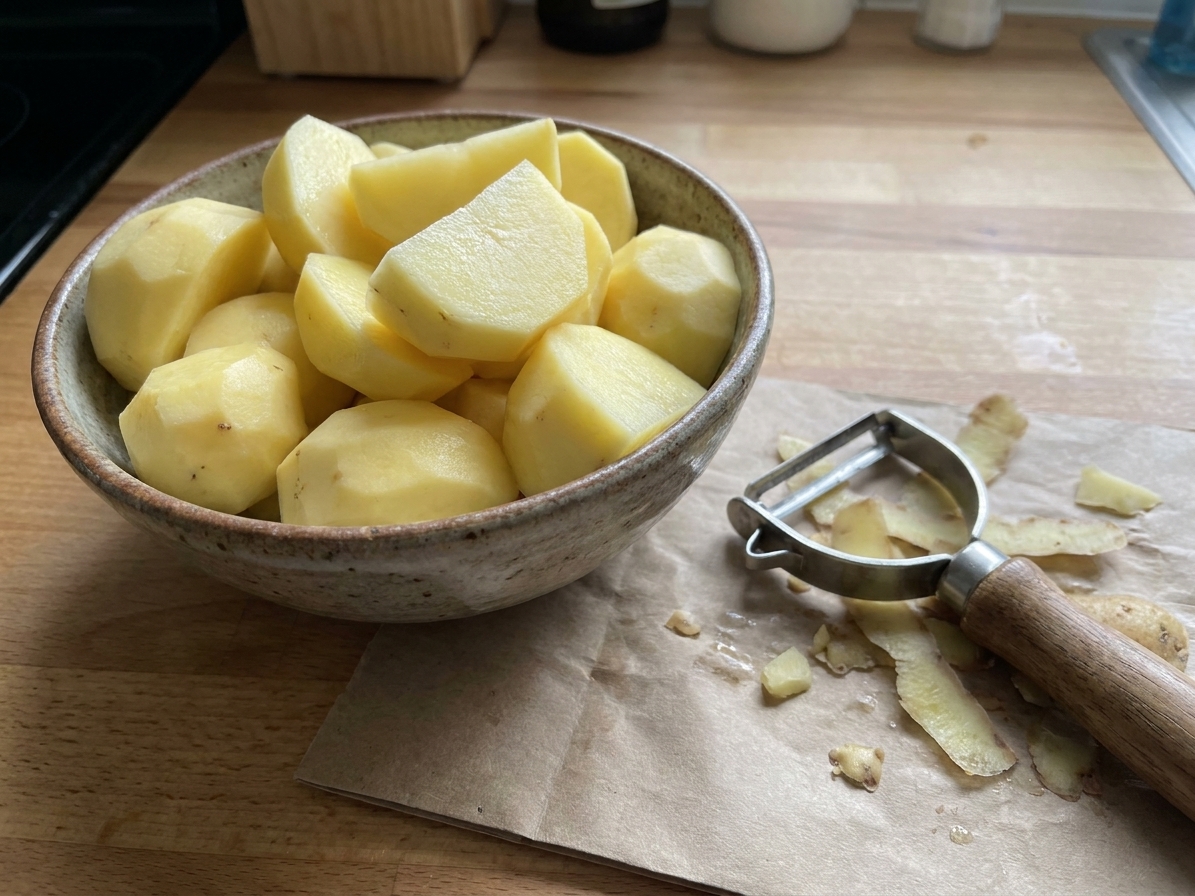
Russet: thickest stew
Russets are the big fluffy baking potatoes. They are high starch, which is wonderful if you want a stew that feels extra hearty and thick. The tradeoff is that russets can go from “perfectly tender” to “cloudy and falling apart” quickly, especially if the stew is boiling or you are stirring often.
What they do in the pot
- Texture: soft and fluffy, edges fray and break down
- Thickening: high, they release starch quickly and can make gravy noticeably thicker
- Risk factor: medium to high, they can turn grainy or mushy if overcooked or stirred a lot
When to add russets
Add russets later than you think. Aim for about 20 to 35 minutes before serving, then start checking early with a knife. The moment the knife slips in easily and the edges look just slightly softened, they are ready. Keep the simmer gentle and stir carefully. If you love the idea of russets but still want visible pieces, cut them a little larger and avoid aggressive bubbling.
My weeknight trick: Use russets when you want the potato to help do some of the thickening work. Once they are in, I stir from the bottom with a wooden spoon every 5 to 10 minutes, just enough to prevent sticking without beating the potatoes up.
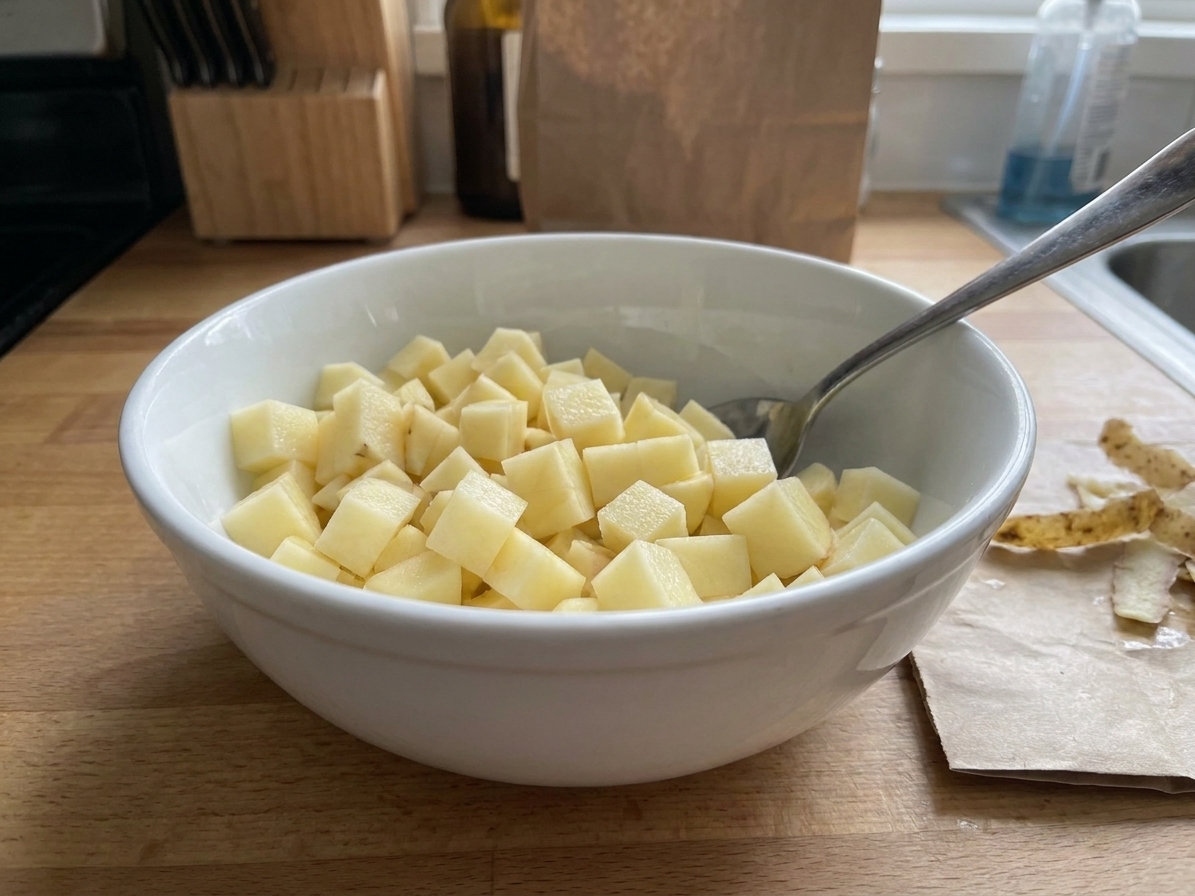
Red potatoes: neat chunks
Red potatoes are waxy. That means they are fantastic when you want that classic stew look: tidy cubes that stay intact even if the pot simmers a while. They do not release as much starch, so the broth stays more brothy unless you thicken it another way.
What they do in the pot
- Texture: firm-tender, stays intact
- Thickening: low, broth stays clearer and less creamy
- Risk factor: low, very hard to accidentally turn them into mush
When to add red potatoes
Add red potatoes 40 to 60 minutes before serving if you know your stew will sit and gently simmer awhile. For most 3/4-inch to 1-inch pieces at a steady simmer, they are often tender sooner than that, so start checking at 20 to 25 minutes. The nice thing about reds is that even if they stay in the pot longer, they tend to keep their shape.
If you keep the skins on, they hold together even better and add a little earthy flavor.
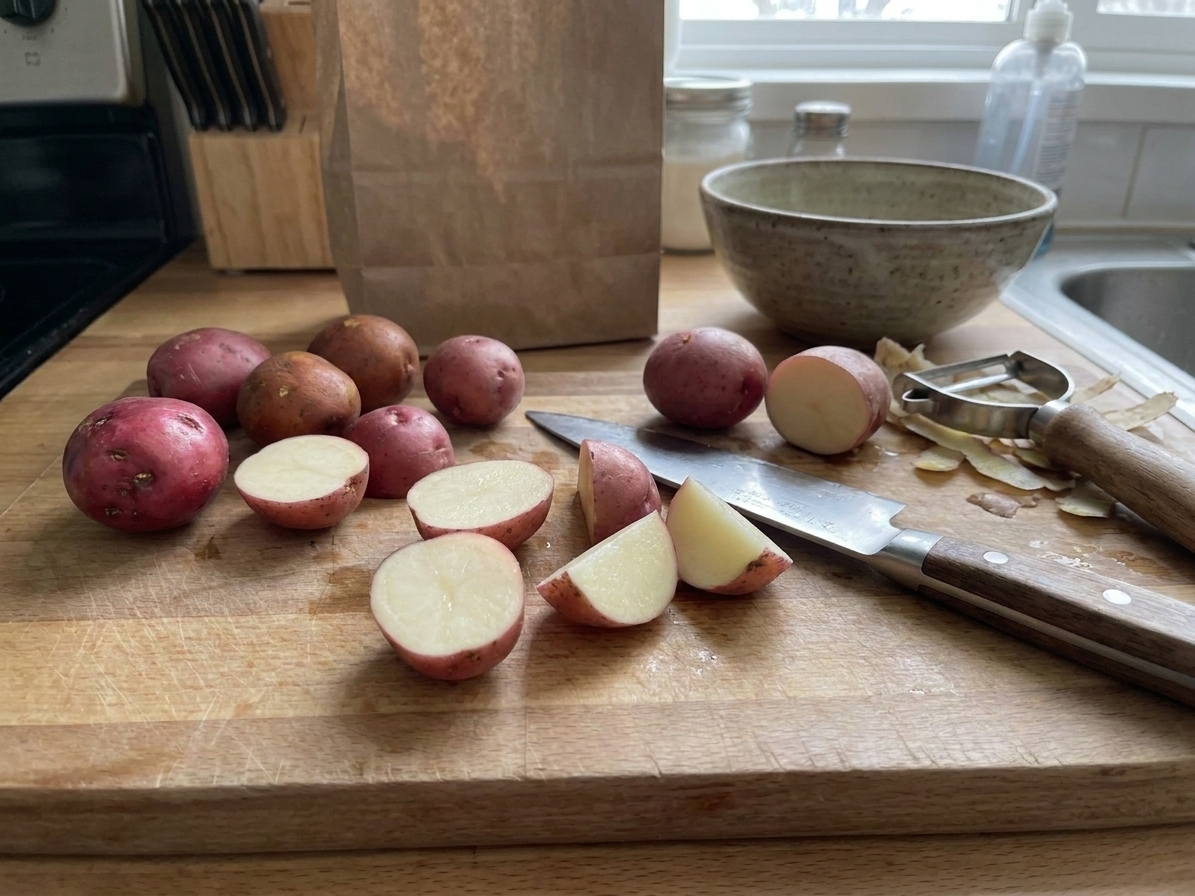
Quick potato guide
If you are standing in the produce aisle with a cart and a plan, this is the simplest way to decide.
| Potato | Best for | Stays intact | How much it thickens | When to add |
|---|---|---|---|---|
| Yukon Gold | Classic stew texture, creamy chunks | High | Medium | About 25 to 40 minutes of gentle simmering, or 45 to 60 minutes before serving for many stews |
| Russet | Extra-thick, hearty stew | Low to medium | High | About 20 to 35 minutes before serving, check early with a knife |
| Red | Neat cubes that stay intact | Very high | Low | Start checking at 20 to 25 minutes, they can tolerate longer simmering up to about an hour |
The timing rule for no mush
Potatoes do not need to cook as long as beef. The biggest mistake I see (and have absolutely made myself) is adding potatoes at the beginning because it feels efficient. What happens is they simmer for hours, soak up liquid, and their structure gets worked hard by time and stirring.
Instead, use this simple rule:
- Cook the beef until it is nearly tender first.
- Add potatoes near the end based on their starch level. Russets last, Yukon Golds in the middle, reds can go earlier.
- Keep it at a gentle simmer. A rolling boil breaks potatoes down fast and can make the broth cloudy.
- Use the knife test, not just the clock. When the knife slides in easily, stop cooking hard and shift to keeping warm.
How to thicken without graininess
That grainy or pasty feeling usually shows up when the broth gets overloaded with free starch and then cooked hard or stirred aggressively. It can also happen if flour or cornstarch is not fully dispersed, or if the stew reduces too fast. Since potatoes bring starch all by themselves, the best move is to manage three things: potato choice, simmer strength, and stirring style.
- Pick the right potato for your goal: If you want thickening from potatoes, choose Yukon Gold or russet, and add them later.
- Simmer, do not boil: Gentle bubbles keep potato chunks intact and the gravy smooth.
- Stir with intention: Once potatoes go in, stir from the bottom every 5 to 10 minutes to prevent sticking, not constantly.
- Cut evenly: Uneven cubes create a mix of overcooked crumbs and undercooked chunks.
If you love a thicker stew but still want distinct chunks, my favorite compromise is mostly Yukon Gold with a small russet mixed in. The russet helps thicken, while the Yukon Golds stay pretty.
Potato questions I get
Should I peel potatoes for beef stew?
Totally optional. I often leave skins on for red potatoes and Yukon Golds because they help the cubes stay intact and add a little rustic flavor. I am more likely to peel russets because the thicker skin can separate and float around.
What size should I cut stew potatoes?
Aim for 3/4-inch to 1-inch cubes. Smaller than that and they can dissolve. Larger than that and they can take so long to cook that the beef gets overdone while you wait.
Can I mix potato types in one stew?
Yes, and it is honestly one of the easiest ways to get the best of both worlds. Try Yukon Gold plus a little russet for thicker gravy, or Yukon Gold plus red for a mix of creamy and tidy chunks.
What about baby potatoes?
Baby Yukon Golds and baby reds are great. Halve them or quarter them so they cook evenly. Just remember “baby” is a size, not a type: a baby russet will still behave like a russet. Most bags sold as “creamers” tend to be waxier varieties, which is why they usually hold their shape so well.
Can I use sweet potatoes?
You can, but expect a different stew. Sweet potatoes bring sweetness and soften faster than most white potatoes, although they can still hold their shape depending on variety and how large you cut them. Add them late and start checking early, similar timing to russets, and keep the simmer gentle.
Any tips for slow cookers or pressure cookers?
Yes. In a slow cooker, potatoes can go mealy if they cook all day, especially russets. I like to add potatoes in the last 1 to 2 hours (high or low, depending on your model) or cook them separately and stir them in at the end. In a pressure cooker, potatoes can overcook quickly, so either cut them larger and use a short cook time, or pressure-cook the beef first and simmer the potatoes afterward using the sauté function until knife-tender.
My quick recommendation
If you want the simplest answer from a very potato-opinionated home cook: buy Yukon Golds. They give you that cozy stew creaminess while still holding their shape, and they are forgiving if dinner gets delayed by 10 minutes (or 30).
If you already know your household loves a super thick stew, grab russets and add them late, checking early with a knife. If you want picture-perfect cubes that stay intact, go red potatoes.