

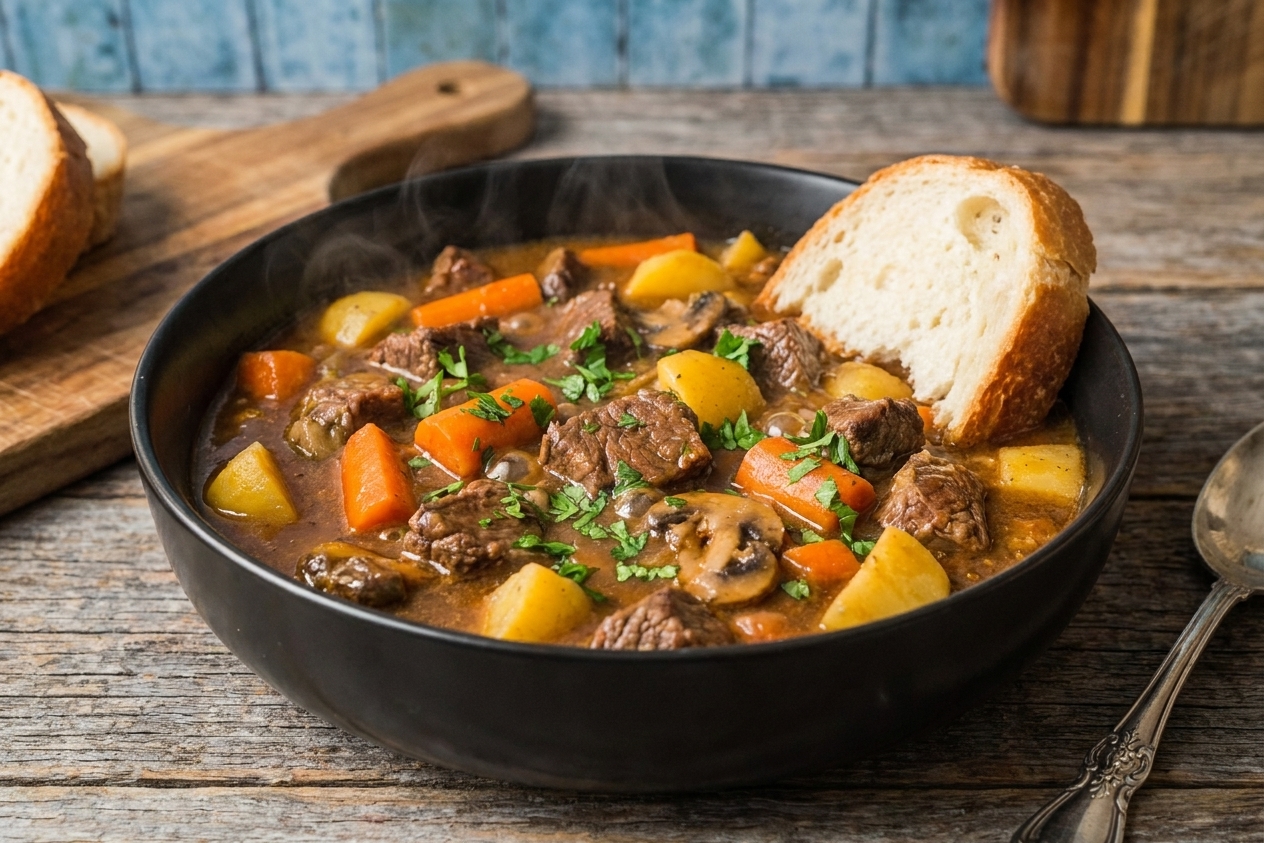
There are nights when I want dinner to feel like a warm blanket, and I don’t want to work for it. This is the beef stew I make on those nights: one pot from start to finish, familiar supermarket ingredients, and the kind of deep, slow-simmered flavor that makes the whole kitchen smell like someone’s been taking care of you.
We build flavor in the Dutch oven. It starts with a quick sear for the beef, then a little tomato paste to deepen the broth. If you’d like, you can deglaze with a splash of red wine for extra depth without making it fussy. From there, it’s a low, gentle simmer with classic thyme-and-bay coziness until the meat turns spoon-tender. Potatoes and carrots go in later so they stay hearty instead of sliding into mush. The finish is simple but important: a splash of vinegar to brighten the broth and a handful of peas for sweetness.

If you’re new to stew, I’ve got you. And if you’ve made a few that turned out bland or tough, you’re in the right place. This is the low-stress route to a stew you’ll be proud to ladle into bowls.
The idea
Why This Recipe Works
- Searing creates the base. Browning the beef adds deep roasted flavor and gives the broth a richer color without extra steps.
- Tomato paste plus flour is a built-in thickener. A quick cook of tomato paste and flour forms a flavorful paste that thickens the stew as it simmers, no slurry required unless you want it extra glossy.
- Low and slow makes the beef tender. Chuck roast is ideal because it has connective tissue that melts into silky richness when simmered gently.
- Vegetables are timed for texture. Carrots and potatoes go in after the beef has had a head start, so they finish tender and intact, not falling apart.
- A bright finish keeps it from tasting heavy. A small splash of vinegar at the end makes all the flavors pop and keeps the stew balanced.
Shopping
Ingredient Notes
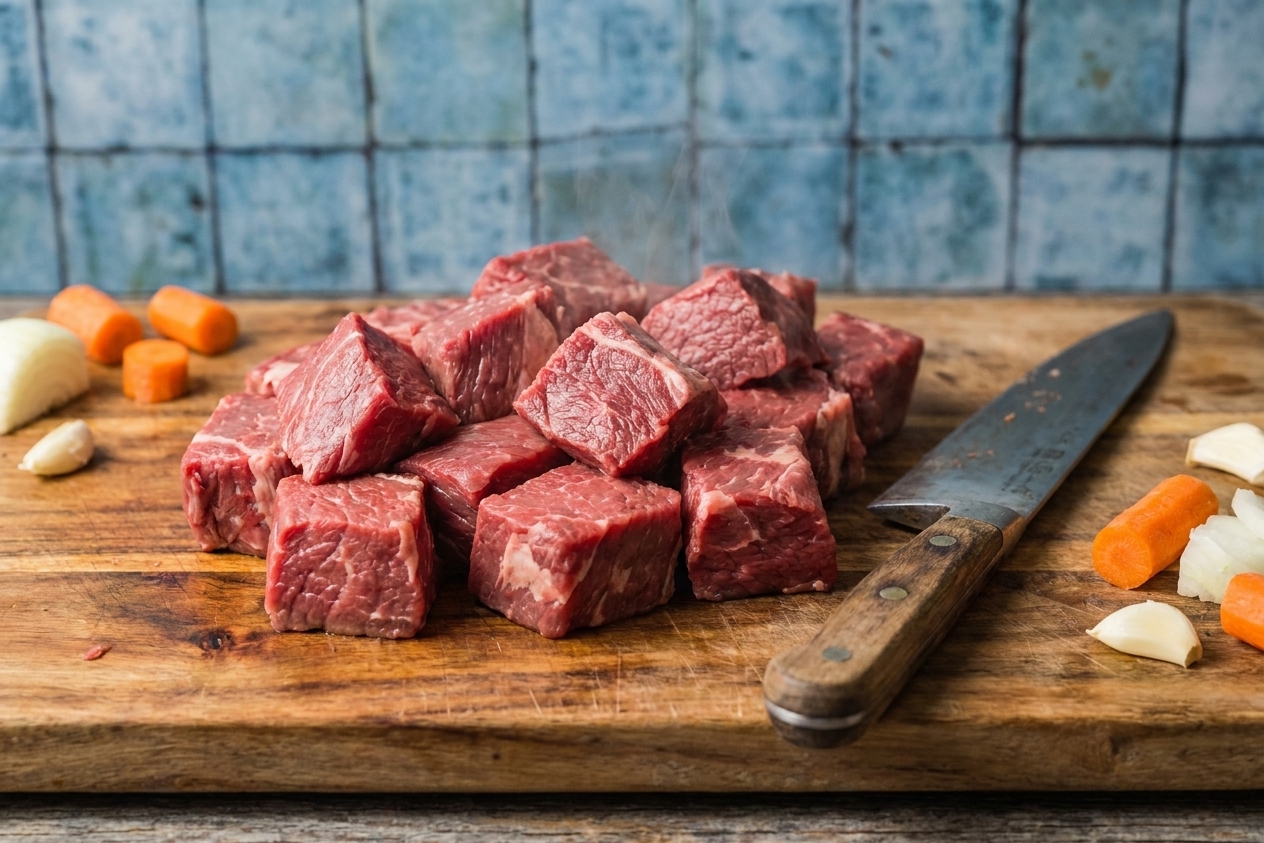
Beef
Chuck roast is the sweet spot for stew: affordable, flavorful, and it becomes fork-tender with simmering. Look for good marbling. Avoid very lean cuts here because they tend to dry out.
Broth and flavor builders
Beef broth is the main liquid. Use low-sodium if you can so you control the salt. Worcestershire sauce adds that savory, meaty depth. Tomato paste gives body and a subtle sweetness.
Vegetables
Yukon Gold potatoes hold their shape while still feeling creamy. Russets work too but will break down more. Carrots and celery add sweetness and aroma. Frozen peas are an easy last-minute pop of color and sweetness.
Herbs
I love a classic combo of bay leaves and thyme. Dried thyme is totally fine. Fresh thyme is lovely if you have it.
Garlic
Use as much as your heart desires. My baseline is four cloves, and I rarely regret adding two more.
Get set up
Equipment You Will Need
- Large Dutch oven or heavy pot (5 to 7 quarts)
- Tongs for turning beef while searing
- Wooden spoon for scraping up browned bits
- Chef’s knife and cutting board
- Measuring spoons
Optional but helpful: a fine-mesh strainer for skimming foam or excess fat, and an instant-read thermometer if you like checking doneness by feel. For stew, tenderness matters more than a specific temperature.
Technique
Tips for Getting It Right
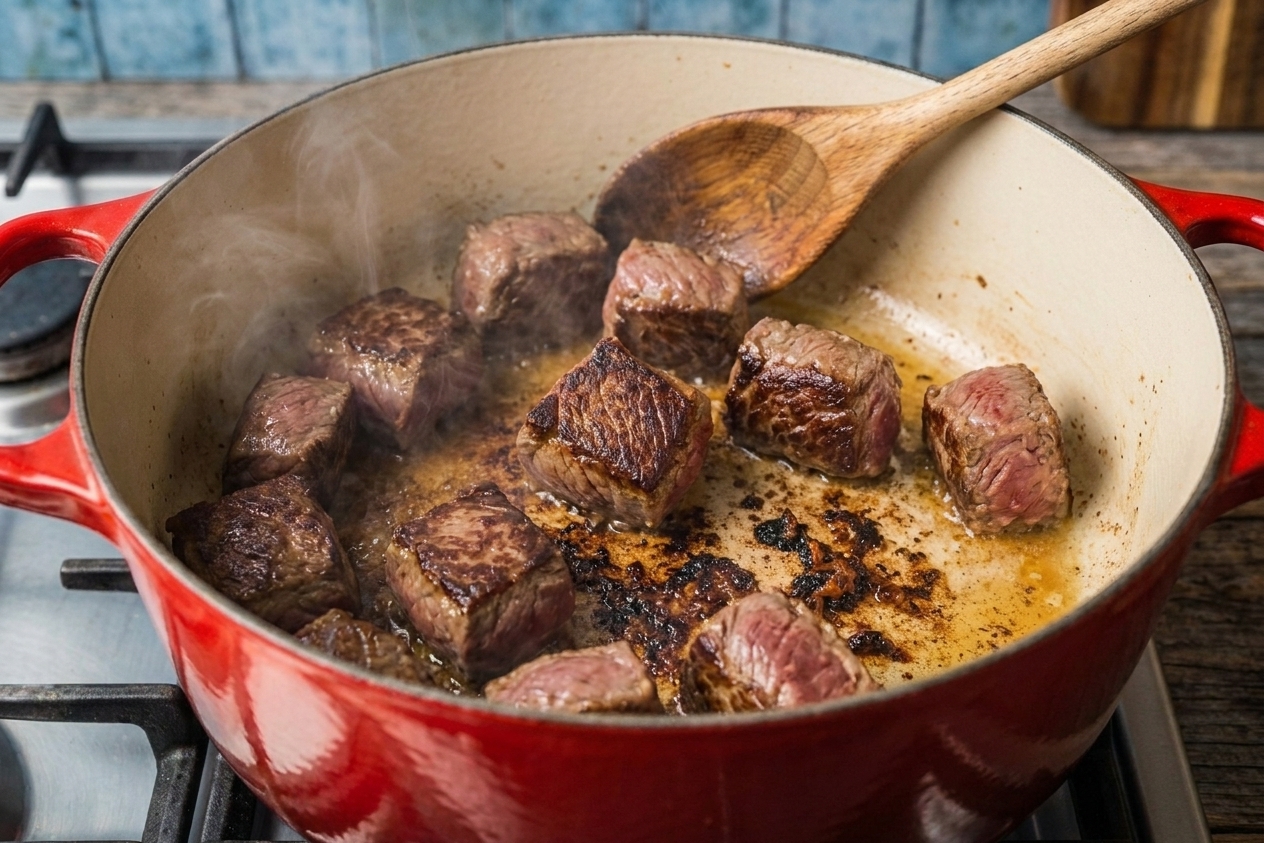
- Pat the beef dry before seasoning. Dry surface equals better browning. I blot with paper towels, then salt and pepper.
- Sear in batches. Crowding steams the meat. Give the beef space so it browns quickly and deeply.
- Scrape the pot when you add liquid. Those browned bits are pure flavor. Once the broth hits the pot, use your spoon to lift everything up.
- Keep the simmer gentle. You want small, lazy bubbles. A hard boil can make beef tougher and can break potatoes down faster.
- Add potatoes later if you prefer firmer chunks. If you like potatoes very intact, add them closer to the last 45 minutes.
- Taste at the end, then adjust. Salt, pepper, and acidity are your finishing tools. A little vinegar or lemon makes the stew taste more like itself.
Flexibility
Substitutes That Work
- No chuck roast? Use bottom round roast or brisket. Bottom round can be slightly drier, so keep the simmer gentle. Brisket is rich and excellent but may take a touch longer.
- No red wine? Use additional beef broth. If you want the same complexity, add 1 teaspoon balsamic vinegar or 1 teaspoon soy sauce along with the broth.
- Gluten-free thickening: Skip the flour. At the end, simmer uncovered to reduce, or mash a few potato pieces into the broth. You can also use 1 to 2 tablespoons cornstarch mixed with cold water and stirred in at the end.
- Baby potatoes: Halve or quarter them and use instead of diced Yukon Golds.
- Fresh herbs: Swap dried thyme for 4 to 6 sprigs fresh thyme. Remove stems before serving.
Make it yours
Variations to Try
- Mushroom beef stew: Add 8 ounces sliced cremini mushrooms with the onions. Let them brown a bit for extra umami.
- Smoky stew: Add 1 teaspoon smoked paprika with the garlic and tomato paste.
- Stout stew: Replace the wine with a dark beer or stout for a malty, cozy twist.
- Extra veggie: Stir in green beans during the last 15 minutes, or add parsnips with the carrots.
- Spicy: Add a pinch of red pepper flakes with the garlic, or finish bowls with hot sauce.
On the table
What to Serve It With
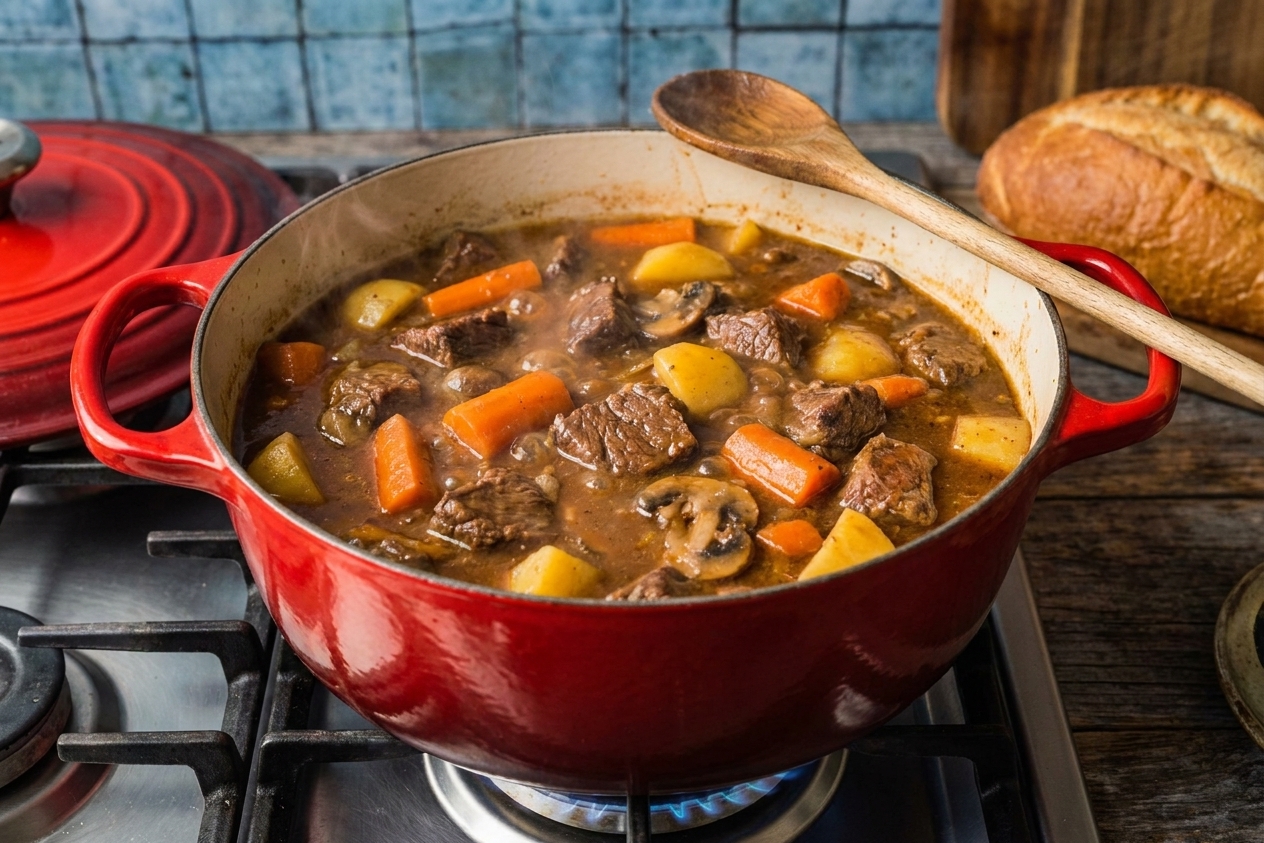
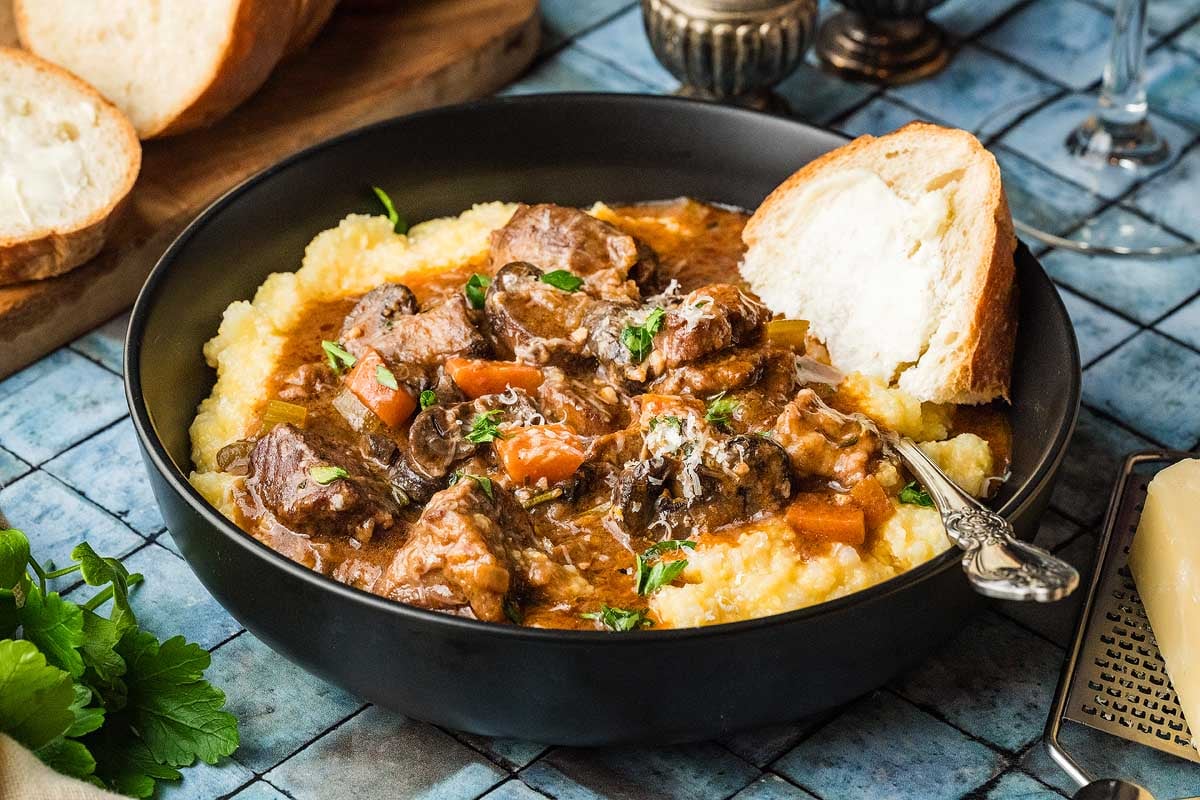
- Crusty bread for dunking. My forever favorite pairing.
- Buttered egg noodles if you want the stew to feel extra hearty.
- Mashed potatoes under the stew for maximum comfort.
- Simple green salad with a tangy vinaigrette to balance the richness.
- Roasted broccoli or Brussels sprouts for a crisp side that stands up to the stew.
Later
Storage, Freezing and Reheating
Refrigerator
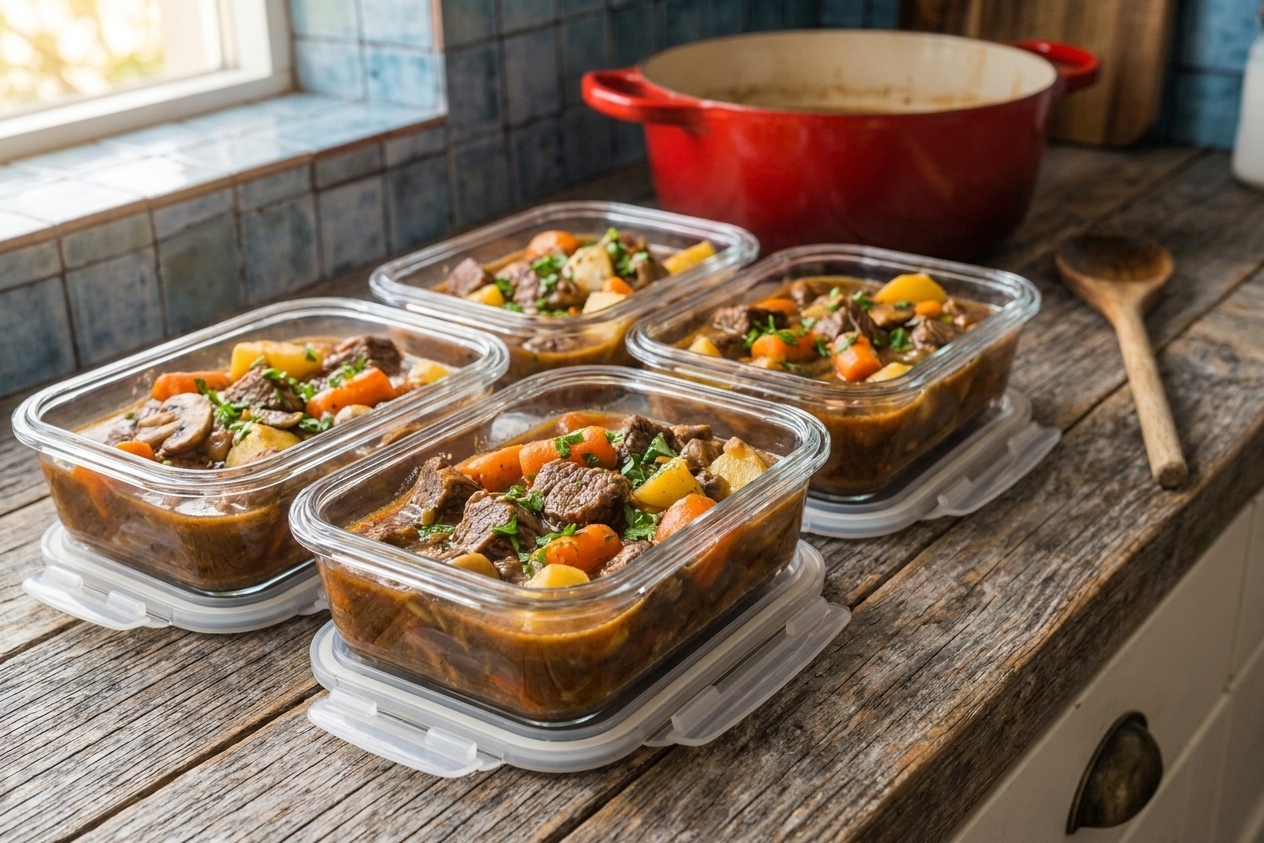
Cool the stew, then store in an airtight container for up to 4 days. The flavor gets even better by day two.
Freezer
Freeze for up to 3 months. Potatoes can soften a bit after freezing, but the stew is still delicious. For the firmest potato texture, you can freeze the stew without potatoes and add fresh potatoes when reheating.
Reheating
Reheat gently on the stovetop over medium-low heat, stirring occasionally, until hot. Add a splash of broth or water if it has thickened too much. You can also microwave in a covered bowl in 60 to 90 second bursts, stirring between.
Watch out
Common Mistakes to Avoid
- Skipping the sear. You can still make stew without browning, but it will taste flatter. Even a quick sear makes a big difference.
- Crowding the pot. If the beef is piled on top of itself, it steams and turns gray. Brown in batches and be patient.
- Boiling instead of simmering. Rapid boiling can make the beef chewy and can turn potatoes grainy.
- Adding potatoes too early. They can break down and thicken the stew in a gluey way. Add them after the beef has softened.
- Under-seasoning. Stew needs salt. Taste at the end and adjust until it tastes vibrant, not just warm.
- Forgetting acidity. If the stew tastes heavy or dull, a small splash of vinegar or lemon at the end usually fixes it.
Questions
Frequently Asked Questions
What is the best cut of beef for beef stew?
Chuck roast is the best all-around choice. It has enough fat and connective tissue to turn tender and silky after a long simmer. Stew meat packages can be mixed cuts, so I prefer buying chuck and cutting it myself when possible.
How do I make sure the beef gets tender?
Two things matter most: keep the heat at a gentle simmer and give it enough time. If the beef is still tough after the listed time, it usually just needs longer. Add 15 to 20 minutes and check again.
How do I thicken beef stew?
This recipe thickens naturally from the flour and reduction. If you want it thicker, simmer uncovered for 10 to 15 minutes. For a quicker boost, stir in a cornstarch slurry (cornstarch mixed with cold water) at the end and simmer 2 minutes.
Can I make this in a slow cooker?
Yes. Brown the beef and sauté the onion, garlic, and tomato paste first, then transfer to a slow cooker. Cook on low 7 to 8 hours or high 4 to 5 hours. Add potatoes and carrots for the last 3 to 4 hours on low so they don’t overcook.
Can I make beef stew ahead?
Absolutely. Beef stew tastes even better after a night in the fridge. Make it up to 2 days ahead, chill, then reheat gently with a splash of broth if needed.
The recipe
Ultimate Easy Beef Stew
A cozy, one-pot beef stew with tender chuck roast, carrots, potatoes, and a rich gravy-like broth. Simple technique, big flavor, and perfect for leftovers.
Ingredients
- 2 1/2 lb beef chuck roast, cut into 1 1/2-inch chunks
- 1 1/2 tsp kosher salt, plus more to taste
- 1 tsp black pepper, plus more to taste
- 2 to 3 tbsp olive oil (as needed)
- 1 large yellow onion, diced
- 4 to 6 garlic cloves, minced
- 2 tbsp tomato paste
- 2 tbsp all-purpose flour
- 1/2 cup dry red wine (optional)
- 4 cups low-sodium beef broth
- 1 tbsp Worcestershire sauce
- 2 bay leaves
- 1 1/2 tsp dried thyme
- 4 medium carrots, peeled and cut into 1-inch pieces
- 2 celery stalks, sliced
- 1 1/2 lb Yukon Gold potatoes, cut into 1 1/2-inch chunks
- 1 cup frozen peas
- 1 tbsp red wine vinegar (or apple cider vinegar), plus more to taste
- 2 tbsp chopped fresh parsley (optional, for serving)
Instructions
- Season and sear the beef. Pat beef dry, then season with salt and pepper. Heat 2 tablespoons oil in a large Dutch oven over medium-high heat. Sear beef in batches, browning on 2 to 3 sides, 6 to 8 minutes per batch. Transfer browned beef to a plate, adding a little more oil if the pot looks dry.
- Sauté the aromatics. Reduce heat to medium. Add onion and a pinch of salt. Cook 4 to 5 minutes, scraping the pot, until softened. Stir in garlic and cook 30 seconds.
- Build the base. Add tomato paste and cook 1 minute, stirring constantly. Sprinkle in flour and cook 1 minute more, stirring, until it forms a dark, sticky paste.
- Deglaze and add liquids. Pour in wine (if using) and scrape up any browned bits. Simmer 1 minute. Stir in broth, Worcestershire, bay leaves, and thyme.
- Simmer until the beef is starting to soften. Return beef and any juices to the pot. Bring to a gentle simmer, then cover and cook on low heat for 60 minutes, stirring once or twice.
- Add vegetables. Stir in carrots, celery, and potatoes. Return to a gentle simmer, cover, and cook 45 to 60 minutes more, until the beef is fork-tender and the potatoes are tender.
- Finish and serve. Stir in peas and simmer 2 to 3 minutes. Turn off heat. Stir in vinegar, then taste and adjust salt and pepper. Remove bay leaves. Serve hot, topped with parsley if desired.
Recipe notes
- Make it thicker: Simmer uncovered 10 to 15 minutes, or stir in a cornstarch slurry (1 tablespoon cornstarch mixed with 1 tablespoon cold water) and simmer 2 minutes.
- Wine is optional: The stew is still deeply flavorful without it. Just add extra broth.
- Tough beef? It simply needs more time. Simmer 15 to 25 minutes longer and check again.
- Garlic note: If you love a garlicky stew, use 6 cloves and don’t look back.
Nutrition (per serving, approximate)
- Calories: 520
- Protein: 40 g
- Carbohydrates: 34 g
- Fat: 24 g
- Saturated Fat: 7 g
- Fiber: 5 g
- Sugars: 6 g
- Sodium: 780 mg