
A cozy, practical comparison of Dutch oven and slow cooker pot roast, with tips for browning, timing, gravy, and getting truly tender results every time.
Recipeva
Beef Stew Thickeners Compared: Flour, Cornstarch, or Roux?
Flour, cornstarch, or roux? Learn how each beef stew thickener works, when to use it, and how to fix common stew texture problems. Includes gluten-free options.

Maya Reynolds
Maya Reynolds is a passionate home cook, recipe developer, and the creative voice behind Recipeva. With over a decade of experience translating complex culinary techniques into approachable weeknight meals, she focuses on creating dishes that bring joy to the dinner table without the stress.
Created September 21, 2026
Updated September 21, 2026
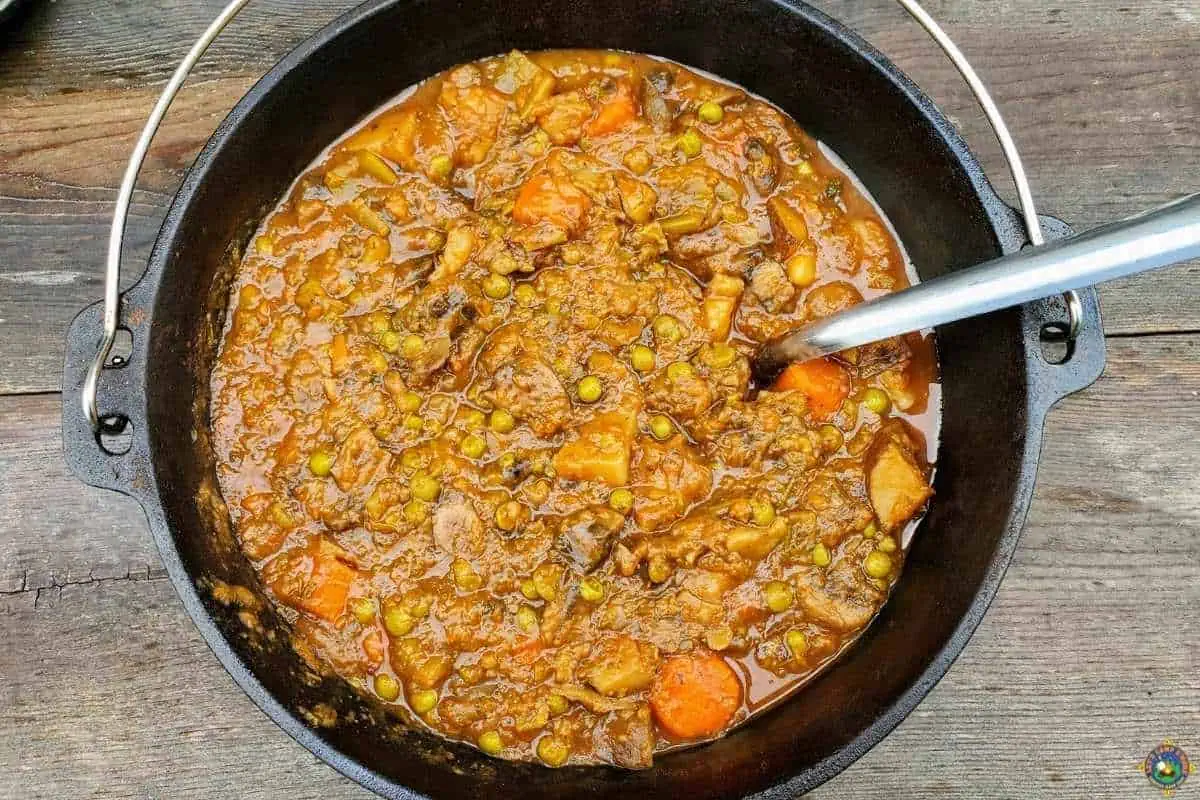
Nothing breaks my beef stew-loving heart like a pot that smells amazing but eats like broth with stuff floating in it. The good news is that stew thickness is not luck. It is a technique choice. Flour, cornstarch, and roux can all get you to that cozy, cling-to-the-spoon gravy, but they behave differently, taste different, and each has a best moment to jump in.
Below, I will walk you through how each thickener works, exactly how to use it (without lumps), and what to do if you accidentally go too far. I will also include gluten-free options that still taste like classic comfort food.
At a glance
If you just want the quick decision, here is my kitchen shorthand.
- Flour (dredge or slurry): Most classic stew vibe, slightly velvety and hearty. Best for long simmering. Not gluten-free.
- Cornstarch slurry: Fast, glossy, and strong thickening power. Best at the end. Gluten-free.
- Roux (butter + flour cooked): Deep, silky body and very stable. Best when you want extra richness. Not gluten-free unless you use GF flour.
What thick means
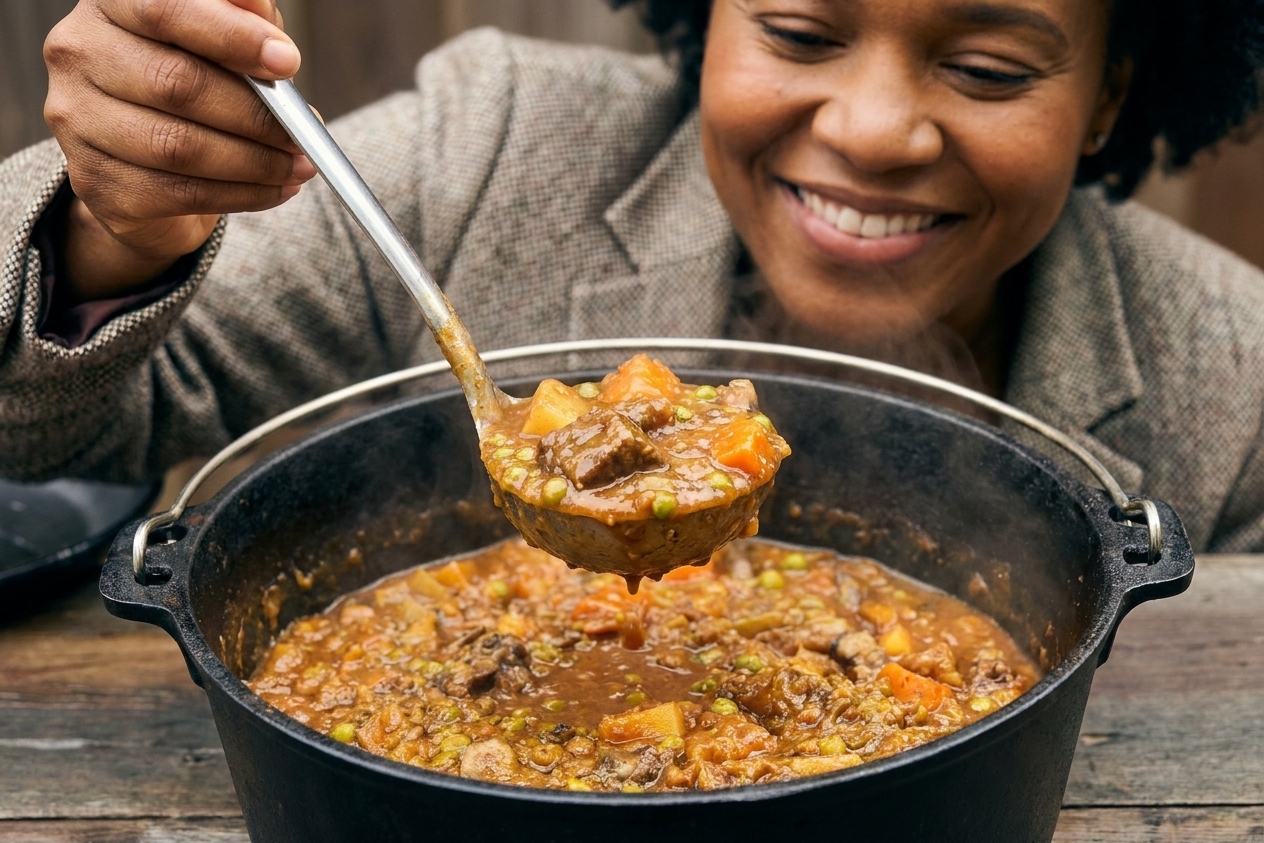
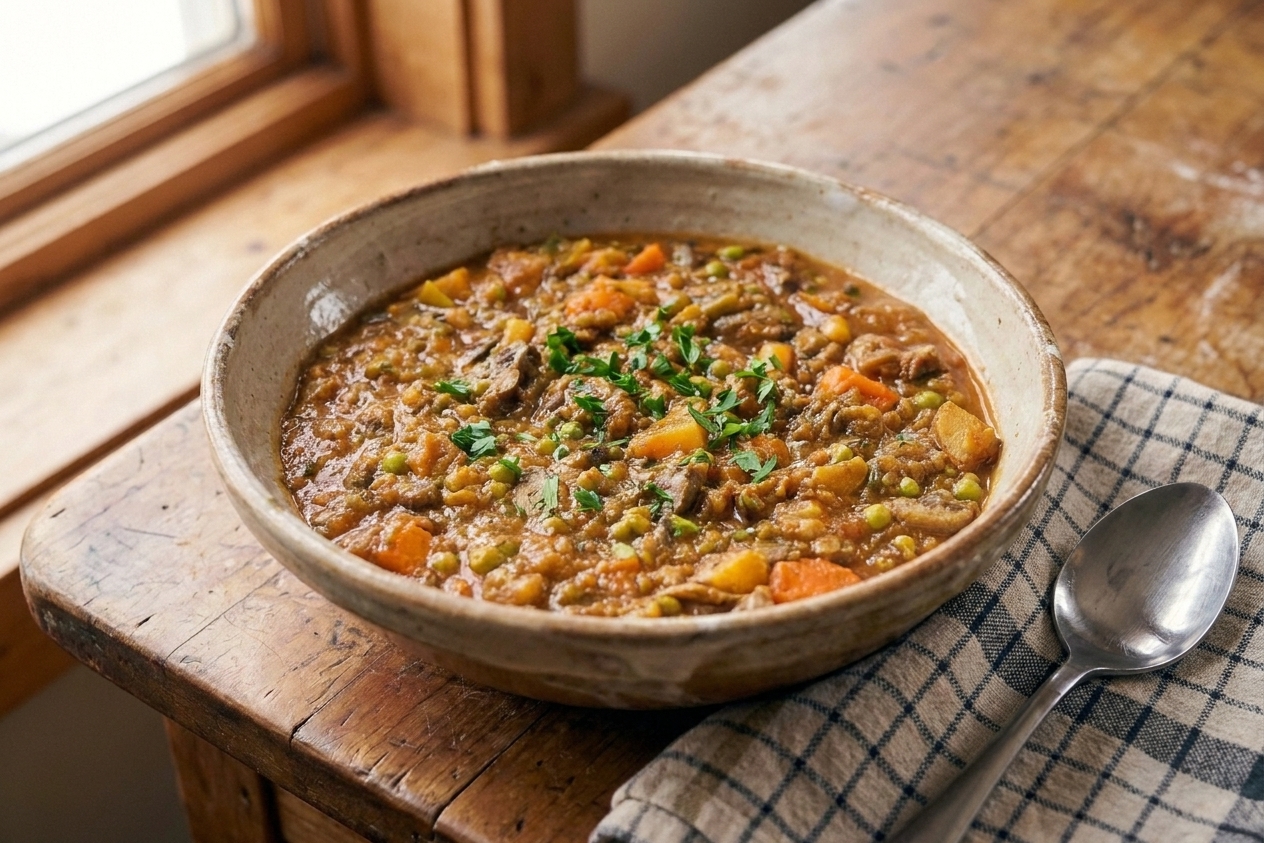
For a classic beef stew, I aim for a gravy that lightly coats the back of a spoon and clings to the beef and vegetables. You should be able to drag a spoon through the pot and briefly see the bottom before it fills back in.
Two reminders that save a lot of frustration:
- Collagen helps. Beef chuck and a long simmer naturally add body. Even with a thickener, an under-simmered stew can taste thin.
- Starch needs time. Flour needs simmer time to cook out raw flavor. Cornstarch thickens quickly, but it can thin out if it is boiled hard for a long time (and acidity can make it a little less reliable).
Method 1: Flour
Flour is the old-school approach for a reason. It builds a hearty, slightly opaque gravy that feels like the stew has been simmering all afternoon, even if it is a weeknight pot.
How flour thickens
Flour contains starch that swells as it simmers. The key is dispersing it well and giving it enough time to cook so you do not get a raw, pasty taste.
Best times to use flour
- When you are browning beef at the beginning
- When you want a stable, traditional texture that holds up to long simmering
Option A: Dredge the beef in flour
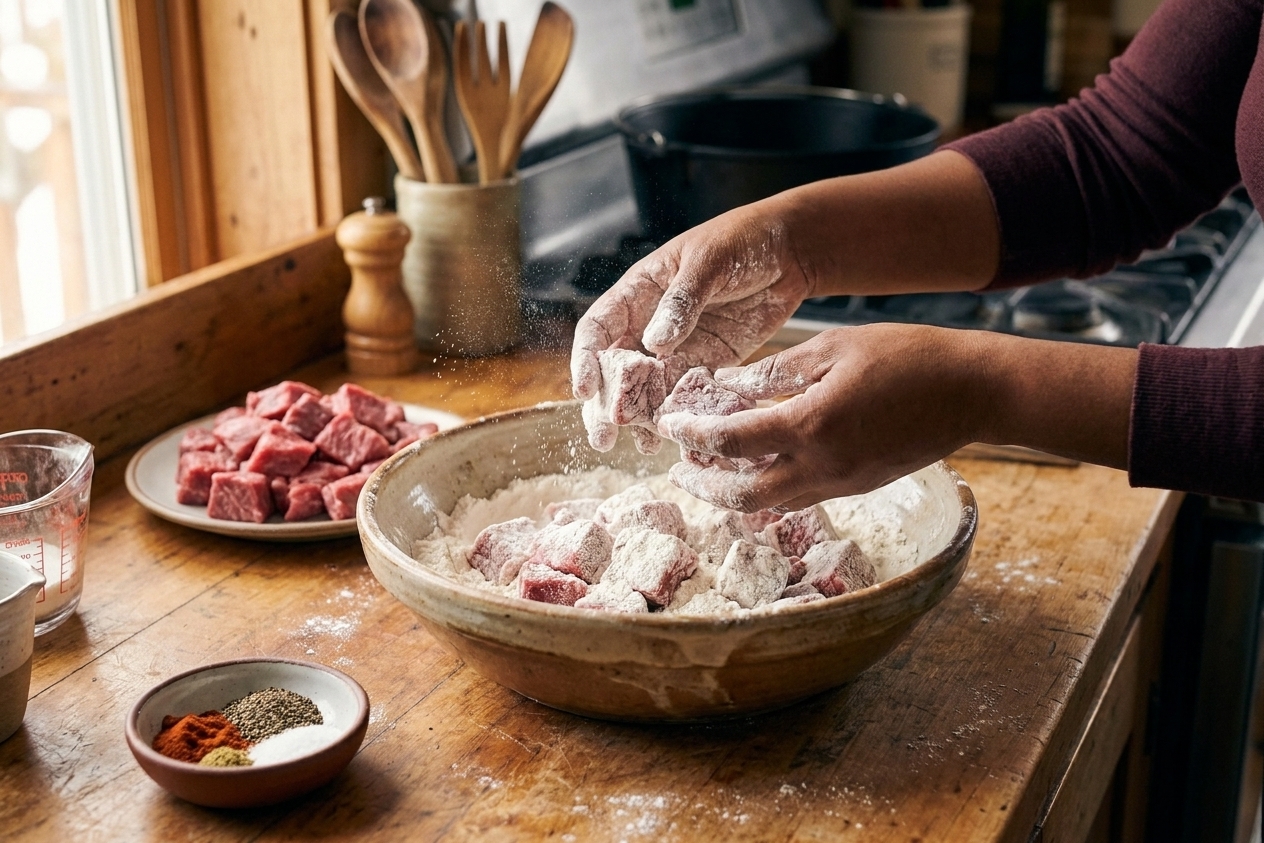
- Pat beef dry. Moisture is the enemy of browning.
- Toss with flour. Use about 2 to 3 tablespoons all-purpose flour per 2 pounds beef, plus salt and pepper.
- Brown well. Sear in batches in oil until deeply browned. The flour will toast a bit, which helps flavor.
- Deglaze. After sautéing aromatics, pour in broth or wine and scrape up the browned bits. Those bits are flavor gold, and the toasted flour helps the gravy come together.
- Simmer to finish. Once everything is in the pot, simmer gently. Give flour-thickened stew at least 20 to 30 minutes of simmer time after adding liquid to fully cook out.
Option B: Flour slurry
If your stew is nearly done and you realize it is too thin, you can whisk flour into cold water first. It works, but it needs more simmering time than cornstarch.
- In a small bowl, whisk 2 tablespoons flour with 1/3 cup cold water until smooth.
- Bring stew to a gentle simmer.
- Slowly whisk the slurry into the pot.
- Simmer 10 to 15 minutes, stirring occasionally, until thickened and the raw flour taste is gone.
Flavor and texture notes
- Texture: velvety, hearty, matte
- Flavor: neutral to slightly toasty if dredged and browned
- Downside: can taste pasty if undercooked; not gluten-free
Method 2: Cornstarch slurry
Cornstarch is the weeknight hero. It thickens quickly, it is naturally gluten-free, and it lets you adjust thickness at the end when you can actually see what your stew needs.
How cornstarch thickens
Cornstarch thickens quickly at simmering temperatures, often faster than flour. Once heated, it thickens fast and makes a slightly glossy sauce.
When cornstarch is best
- You need to thicken right now
- You want a gluten-free thickener without specialty ingredients
- You want to fine-tune thickness at the end
Step-by-step slurry
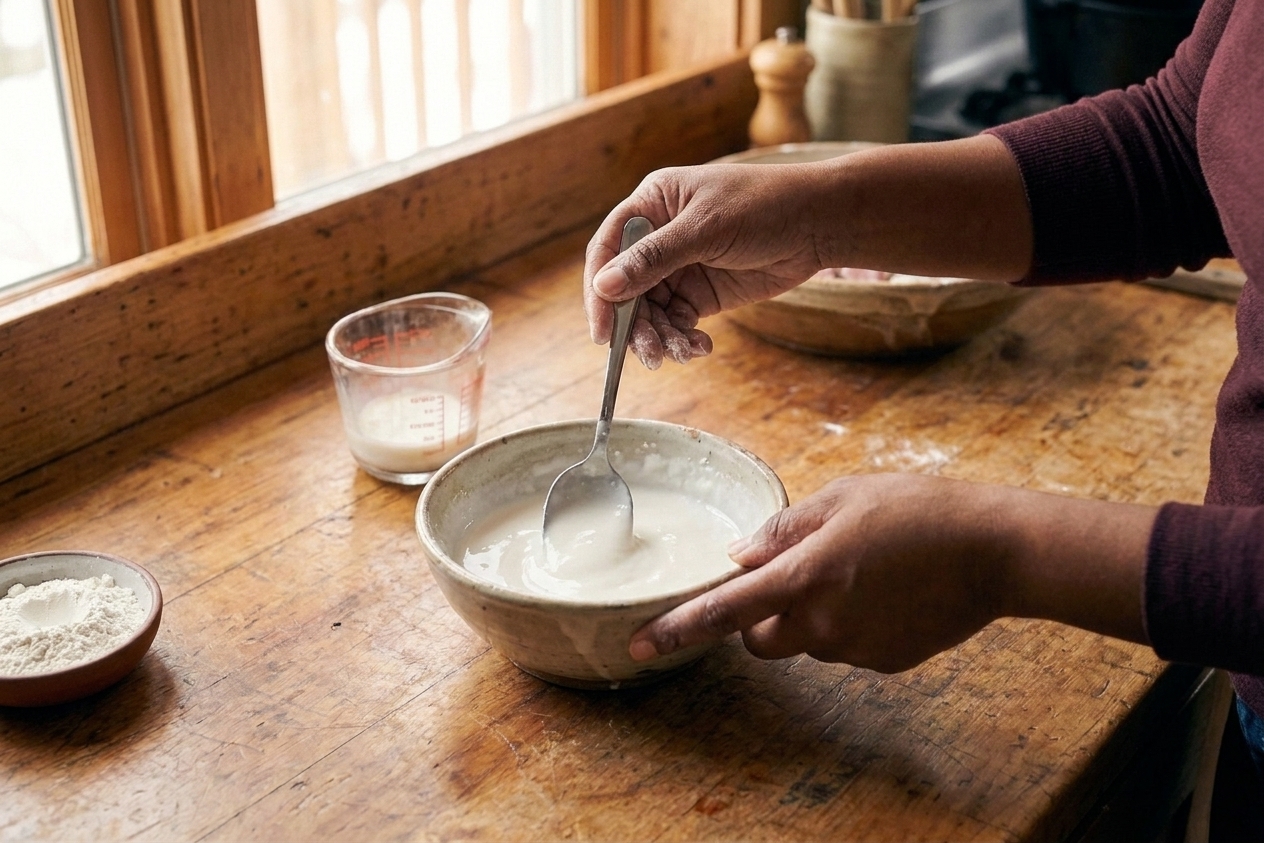
- Mix slurry: Whisk 1 tablespoon cornstarch with 1 tablespoon cold water (or broth) until smooth. This 1:1 ratio is easy to scale. If it feels too thick to drizzle, add an extra splash of cold water.
- Simmer the stew: Bring to a gentle simmer, not a rolling boil.
- Whisk it in slowly: Drizzle in the slurry while stirring.
- Cook briefly: Simmer 1 to 3 minutes until thickened. Cornstarch reaches full strength quickly.
- Stop once it is right: Add more slurry in small increments if needed.
Common mistakes
- Adding cornstarch directly to hot liquid: It clumps instantly. Always dissolve in cold liquid first.
- Boiling hard for a long time: It can thin out. Keep the stew at a gentle simmer after thickening.
- Overthickening: Cornstarch is powerful. Start small. You can always add more.
Flavor and texture notes
- Texture: smooth, slightly glossy, lighter on the palate
- Flavor: neutral
- Downside: not as rich and velvety as flour or roux; can thin out with prolonged boiling, especially in very acidic stews
Method 3: Roux
If you have ever had a stew that tasted like it came from a cozy little café, roux is often the secret. It is simply flour cooked in fat. The cooking step changes the flavor and makes thickening feel smooth and intentional.
How roux thickens
Cooking flour in fat coats the starch granules. When you whisk in liquid, the starch thickens without tasting raw. The longer you cook the roux, the toastier it gets, and the less thickening power it has.
When roux is best
- You want a luxurious, restaurant-style texture
- You want thickness that holds up to reheating
- You are okay adding a bit of butter richness
Easy roux options
Quick rule: 1 tablespoon butter + 1 tablespoon flour thickens about 1 cup of liquid to a light gravy (scale up for a whole pot).
Option A: Small pan
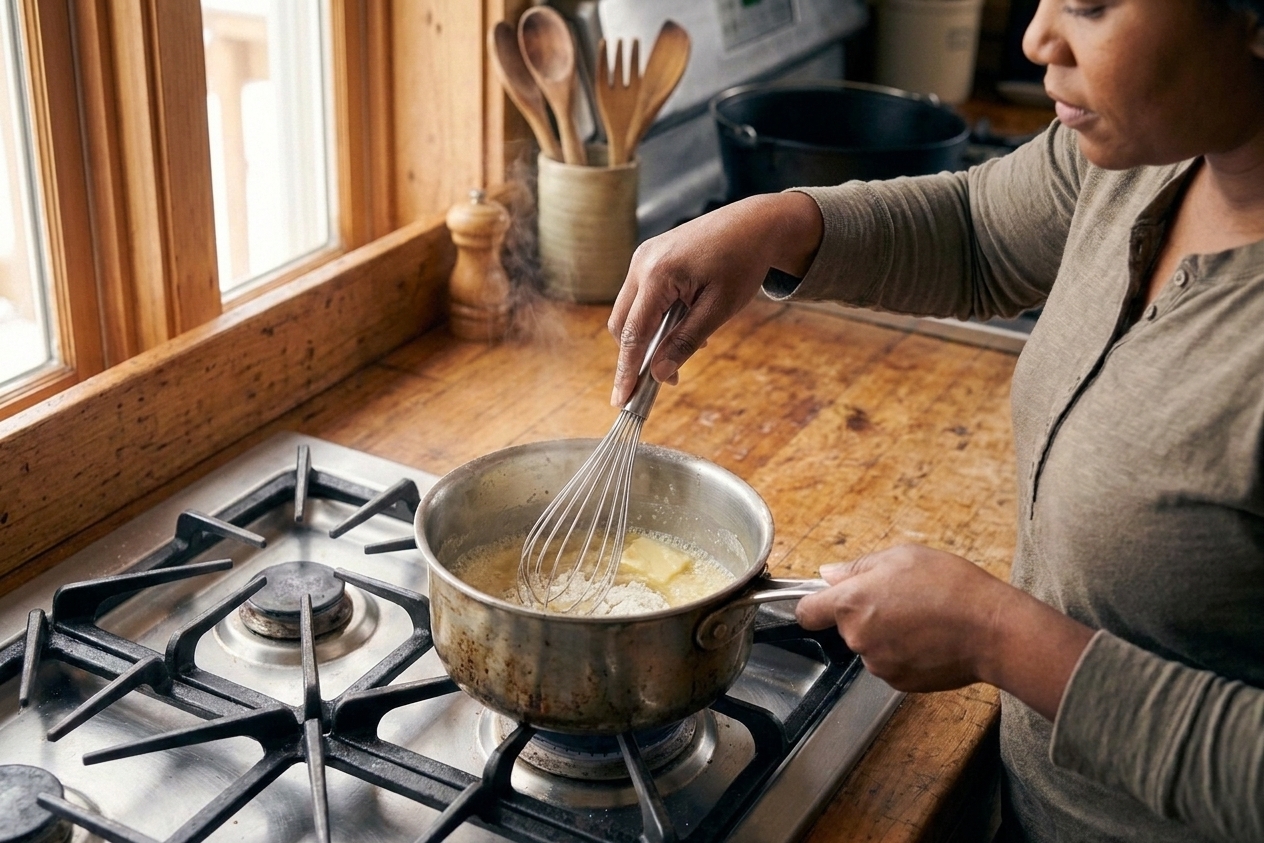
- Melt 3 tablespoons butter in a small saucepan over medium heat.
- Whisk in 3 tablespoons all-purpose flour.
- Cook, whisking, for 2 to 4 minutes until it smells lightly nutty and turns pale golden.
- Whisk in 1 cup hot broth gradually (start with a splash, whisk smooth, then add more) until smooth.
- Stir that mixture into the simmering stew and cook 5 to 10 minutes.
Option B: Stew pot
- After browning beef, remove it from the pot.
- Add butter to the drippings, then whisk in flour and cook 2 to 4 minutes.
- Slowly whisk in broth to avoid lumps, scraping up browned bits.
- Add beef back in and simmer until tender.
Flavor and texture notes
- Texture: silky, cohesive, spoon-coating
- Flavor: richer, slightly nutty if cooked to golden
- Downside: adds extra fat; not gluten-free unless you use GF flour
Gluten-free options
If gluten-free is your goal, you have more than one good option. My top pick for ease is cornstarch. My top pick for classic mouthfeel is a gluten-free flour blend used as a roux.
1) Cornstarch slurry
Use the slurry method above. It is reliable and available in basically every supermarket.
2) Arrowroot starch
Arrowroot thickens like cornstarch but can get a little slippery if cooked too long. Use it at the end and keep the simmer gentle. It can also lose some strength in very acidic stews, so if your pot is heavy on tomatoes or wine, you may need a touch more.
- Whisk 1 tablespoon arrowroot with 1 tablespoon cold water.
- Stir into simmering stew and cook 1 to 2 minutes.
3) Gluten-free roux
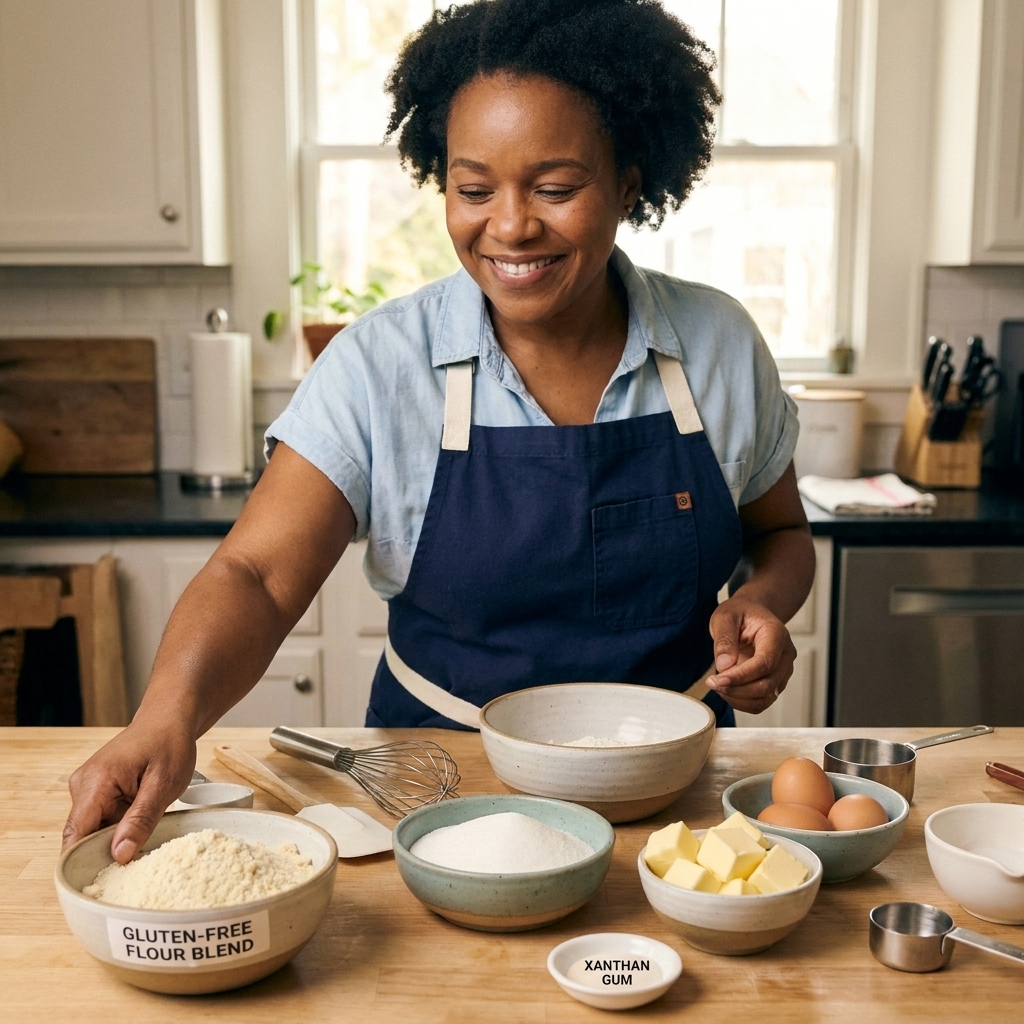
Many cup-for-cup gluten-free flour blends can work well for roux, but results vary by blend. For the smoothest texture, look for one labeled for sauces or roux, or a blend that includes sweet rice flour. If your blend has xanthan gum, whisk patiently and cook the roux a minute longer to avoid any gumminess.
4) Mashed potatoes
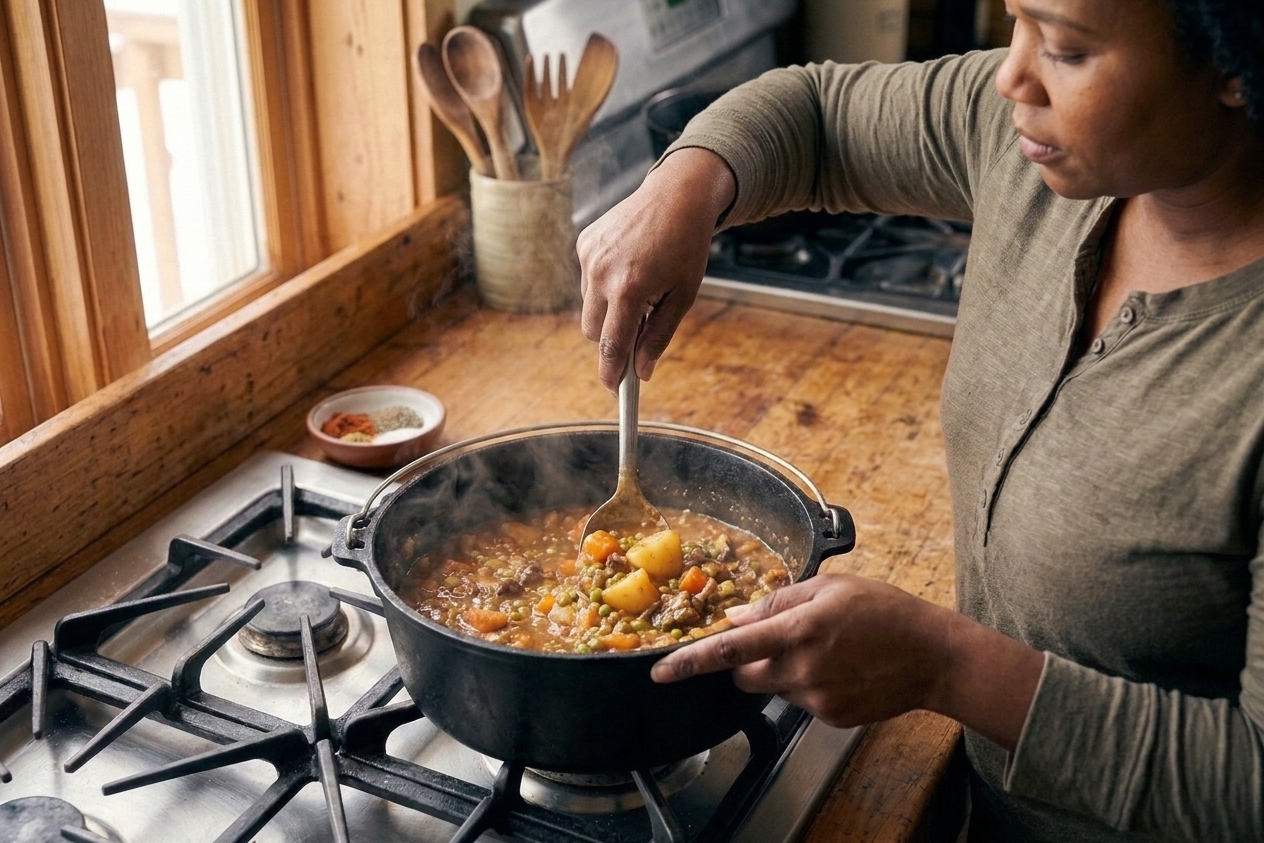
If your stew already has potatoes, you can mash a few pieces against the side of the pot and stir them in. This will not give you a glossy gravy, but it adds natural body and makes the stew feel extra homey.
Which one to choose
Here is how I decide in my own kitchen, usually with a wooden spoon in one hand and an obnoxious amount of garlic in the other.
- For the most classic beef stew: flour dredge or a light roux
- For the richest, silkiest texture: roux
- For the fastest fix at the end: cornstarch slurry
- For gluten-free: cornstarch slurry, or GF roux if you want a more traditional mouthfeel
Troubleshooting
My stew is still thin
- Simmer uncovered: Sometimes the answer is simply reducing liquid for 10 to 20 minutes.
- Add thickener in small steps: With cornstarch, add another 1:1 slurry a tablespoon at a time.
- Check your heat: Stew should gently bubble. Too low and thickening takes forever.
- Watch acidity: If you just added tomatoes, wine, or vinegar, give the stew a few minutes, then thicken. Very acidic stews sometimes need a little extra starch to reach the same thickness.
My stew is lumpy
- Whisk in a slurry slowly and keep the stew simmering.
- Blend a small portion: Scoop out 1 to 2 cups (mostly liquid and soft veggies), blend until smooth, then stir back in.
- Strain if needed: For a quick rescue, strain just the gravy through a fine mesh sieve, then return it to the pot.
My stew tastes floury
- Keep simmering: Flour needs time. Give it 10 more minutes and taste again.
- Boost seasoning: A pinch more salt, black pepper, and a splash of vinegar can wake up a dulled palate.
I overthickened it
- Thin with broth: Add warm broth a splash at a time until it loosens.
- Rebalance: If you add a lot of broth, recheck salt and acidity.
My workflow
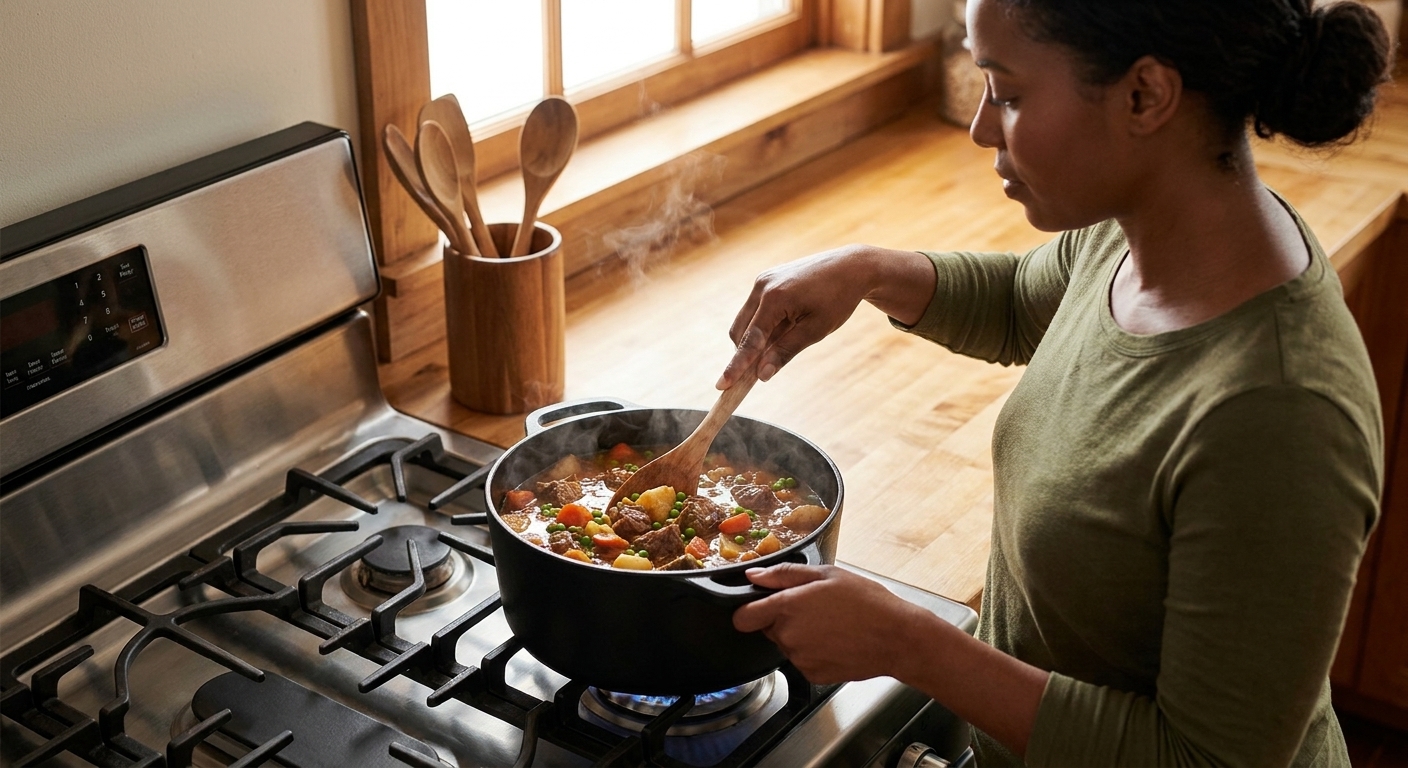
- Start with structure: Brown beef well and let the stew simmer long enough to develop natural body.
- Decide your finish: If it is close but not quite, I reach for a cornstarch slurry at the end.
- Adjust gently: Add thickener in small increments, simmer briefly, then stop and taste. This is the calm part.
FAQ
Can I use flour and cornstarch together?
Yes. If your stew starts with flour (like a dredge) but still needs a little help at the end, a small cornstarch slurry is an easy finishing move. Just add it gradually so you do not cross into gravy that is too gel-like.
How much thickener for a typical pot?
For a 6 to 8 cup pot of stew, I usually start with either 2 to 3 tablespoons flour (early in cooking) or 1 tablespoon cornstarch mixed with 1 tablespoon water (at the end). Then I adjust. Your vegetables and how much you reduce the liquid will change the exact amount.
Will thickened stew reheat well?
Roux and flour-thickened stews reheat beautifully. Cornstarch-thickened stew also reheats fine, but it can thin out if you boil it hard. Reheat gently and stir often.
Is there a low-carb thickener?
Yes. True low-carb options are reducing the stew uncovered to concentrate it, or using a small amount of xanthan gum. If you use xanthan gum, start with 1/8 teaspoon, whisk well, and wait a minute before adding more. A tiny amount goes a long way.
One last note
Whatever thickener you choose, remember this: you are not trying to wrestle stew into submission. You are just coaxing it. Simmer patiently, season boldly, and if anyone questions the garlic, tell them I said it is fine.