

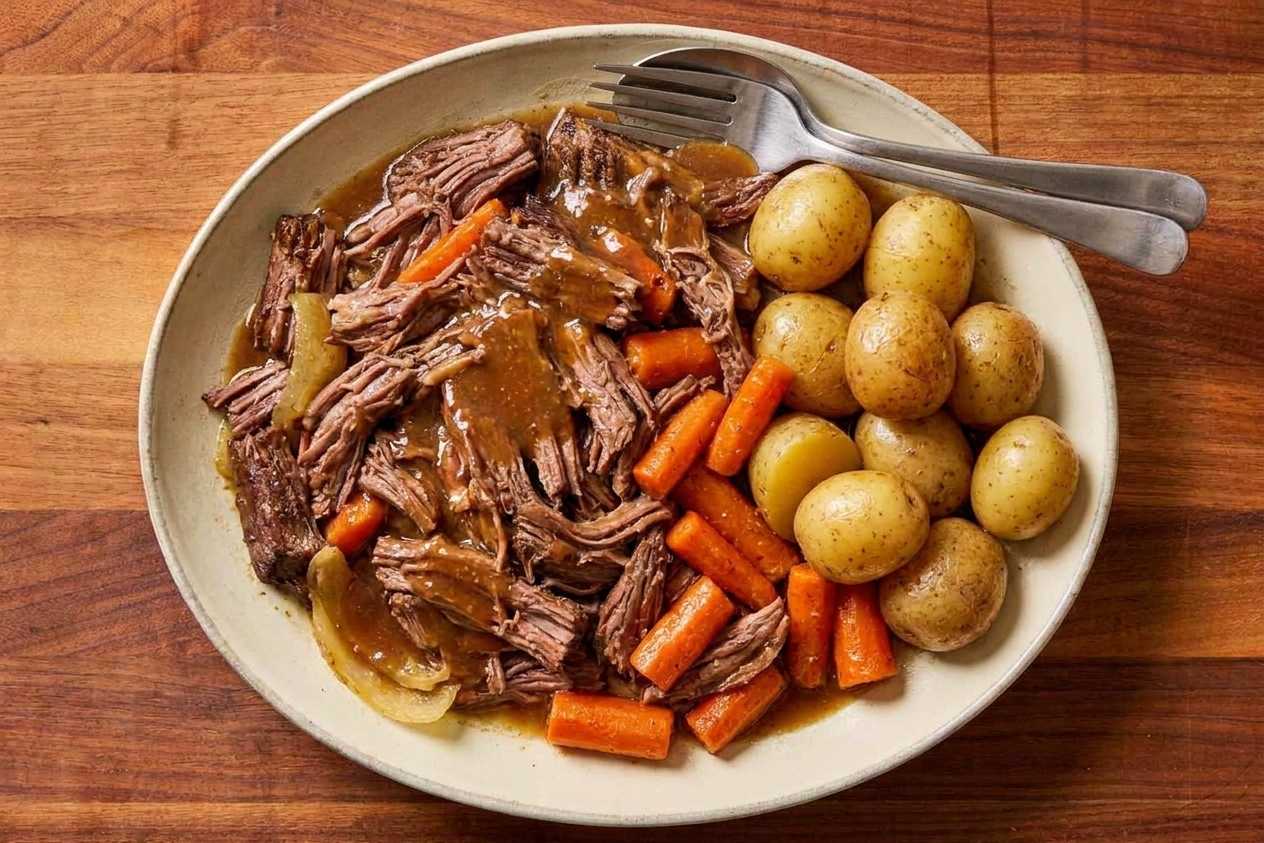
There are few dinners that feel as instantly comforting as a pot roast that practically falls apart and shreds with a fork. This is my weeknight-friendly slow cooker version: a quick sear for big flavor, a cozy mix of onions, carrots, and potatoes, and a broth base that turns into the kind of gravy you want to mop up with bread.

I grew up in the Pacific Northwest where rainy-day dinners were basically a love language, and pot roast showed up whenever the house needed to smell like someone was taking care of you. The slow cooker brings that same feeling, but without babysitting the oven.
Expect a beefy, garlicky roast (yes, we are being generous) with vegetables that soak up all those drippings. It is the kind of meal that tastes like you worked harder than you did.
Best cut
If you want that fall-apart, gravy-loving texture, go with chuck roast. It is nicely marbled, and that extra connective tissue is exactly what turns silky and tender after a long, gentle cook. A 3 to 4 pound chuck is the sweet spot for most slow cookers. Leaner cuts can taste fine, but they are more likely to end up dry or stringy.
Timing matters
The biggest pot roast truth is this: tenderness is not about being “done,” it is about being ready. A roast can be technically cooked through and still feel tough because the collagen has not had enough time to break down yet. When it is right, it shreds easily with a fork and feels almost buttery. If yours is fighting you, keep cooking and check again later.
Also, timing can vary based on roast size, how cold it is when it goes in, and how hot your slow cooker runs. That is normal. If you are the type who likes a cleaner gravy, you can trim larger, thicker pieces of surface fat before cooking, but leave a little behind for flavor.
The idea
Why This Recipe Works
- Chuck roast is built for the slow cooker. Its marbling and connective tissue melt into tenderness over a long, gentle cook.
- A quick sear adds real depth. Browning the roast creates roasted, savory flavor that you cannot get from slow cooking alone.
- Tomato paste plus Worcestershire builds a gravy base. You get richer color, more body, and that classic pot roast something without complicated steps.
- Vegetables are added in the right way. Placing potatoes and carrots underneath helps them cook evenly while lifting the roast slightly out of the liquid for better texture.
- Two easy thickening options. Finish with a cornstarch slurry for glossy gravy, or reduce on the stove for a more old-school, concentrated finish.
Shopping
Ingredient Notes
Beef
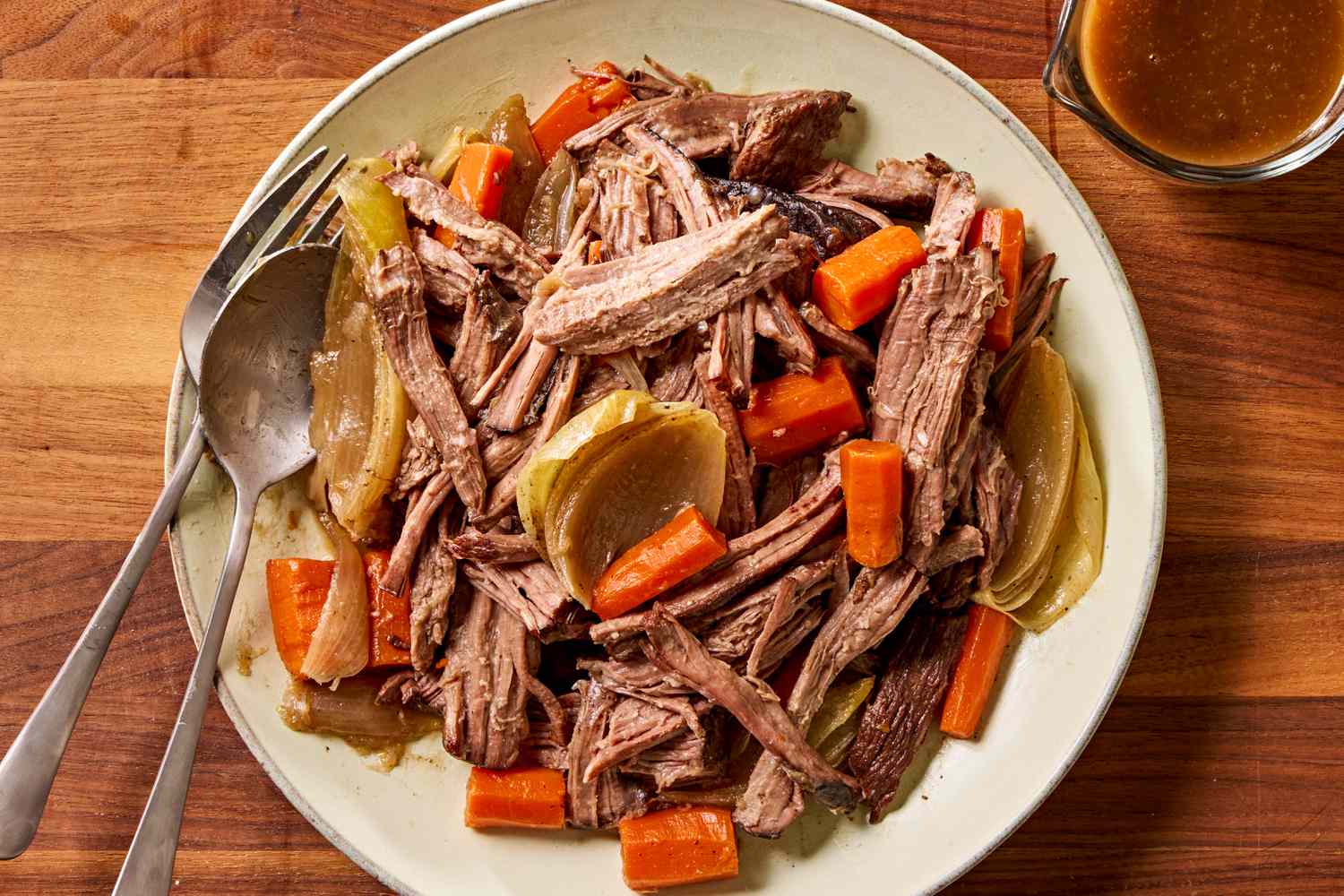
Chuck roast is the classic for a reason. Look for a well-marbled 3 to 4 pound roast. Avoid pre-cut stew meat here. The pieces cook unevenly and tend to dry out.
Broth and seasoning
Low-sodium beef broth gives you control over salt. Tomato paste deepens the gravy and helps it taste like it simmered all day. Worcestershire sauce adds that savory backbone I never skip.
Vegetables
Yukon gold potatoes hold their shape and stay creamy. If you use russets, they can break down into the liquid. Carrots add sweetness that balances the rich beef.
Herbs
Dried thyme and rosemary are reliable pantry choices. If you have fresh, great. Add fresh herbs in the last hour so they stay bright.
Get set up
Equipment You Will Need
- 6-quart slow cooker (or larger for a 4-pound roast)
- Large skillet for searing
- Tongs for flipping the roast
- Measuring spoons
- Small bowl and whisk (if thickening with cornstarch)
- Instant-read thermometer (optional, but helpful)
Technique
Tips for Getting It Right
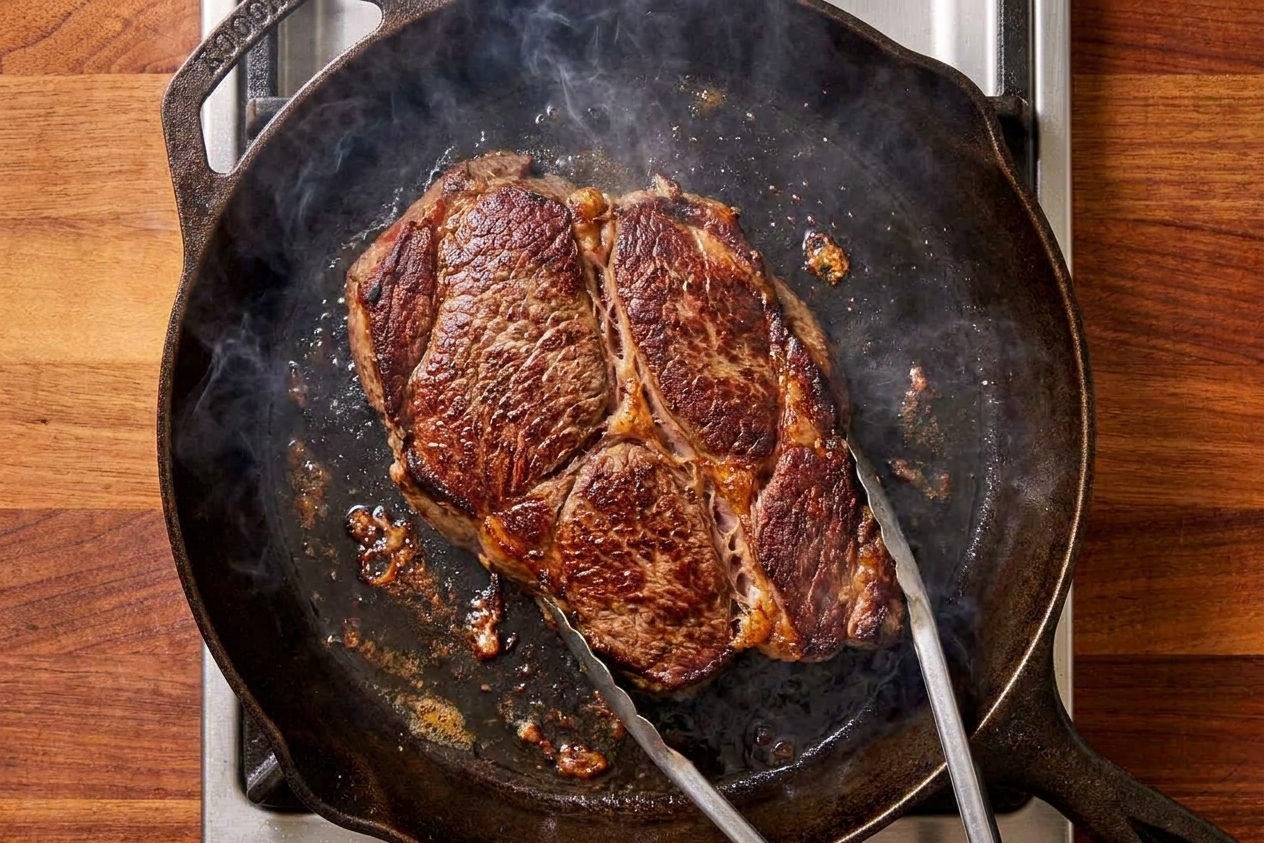
- Do not skip the sear. Even 3 to 4 minutes per side makes the final gravy taste deeper and less flat.
- Salt early, if you can. Salting the roast 30 to 60 minutes before searing helps it taste seasoned all the way through.
- Keep the liquid modest. Slow cookers trap moisture. You want enough for braising and gravy, not so much that the flavor turns watery.
- Cook until tender, not until the clock says so. Pot roast can be tough at 6 hours and suddenly perfect at 8. If it does not shred easily, keep going.
- Let it rest. Rest the roast 10 to 15 minutes before slicing or shredding so juices stay in the meat.
- For cleaner slices, chill briefly. If you want neat slices instead of shreds, chill the cooked roast 20 to 30 minutes, then slice and rewarm in gravy.
Flexibility
Substitutes That Work
- No chuck roast: Use bottom round roast or rump roast. They can be a little leaner, so do not undercook them. They need time to get tender.
- No beef broth: Use chicken broth plus 1 to 2 teaspoons soy sauce for a beefier edge.
- No Worcestershire: Use 1 tablespoon soy sauce plus 1 teaspoon apple cider vinegar.
- Gluten-free thickening: Use cornstarch or arrowroot slurry. Skip flour-based thickeners.
- Low carb: Swap potatoes for chunks of turnip or cauliflower florets added in the last 2 hours on LOW.
Make it yours
Variations to Try
- Mississippi-inspired: Add 6 to 8 pepperoncini peppers plus 2 tablespoons of the brine, and finish with a tablespoon of butter stirred into the gravy.
- Red wine pot roast: Replace 1 cup of broth with dry red wine. This makes the gravy especially rich.
- Mushroom and onion: Add 8 ounces sliced cremini mushrooms with the onions for an extra savory, almost steakhouse vibe.
- Garlic lover’s version: Add an extra 4 to 6 cloves. I am not here to stop you.
- Spicy-sweet: Add 1 to 2 teaspoons smoked paprika and a pinch of crushed red pepper.
On the table
What to Serve It With
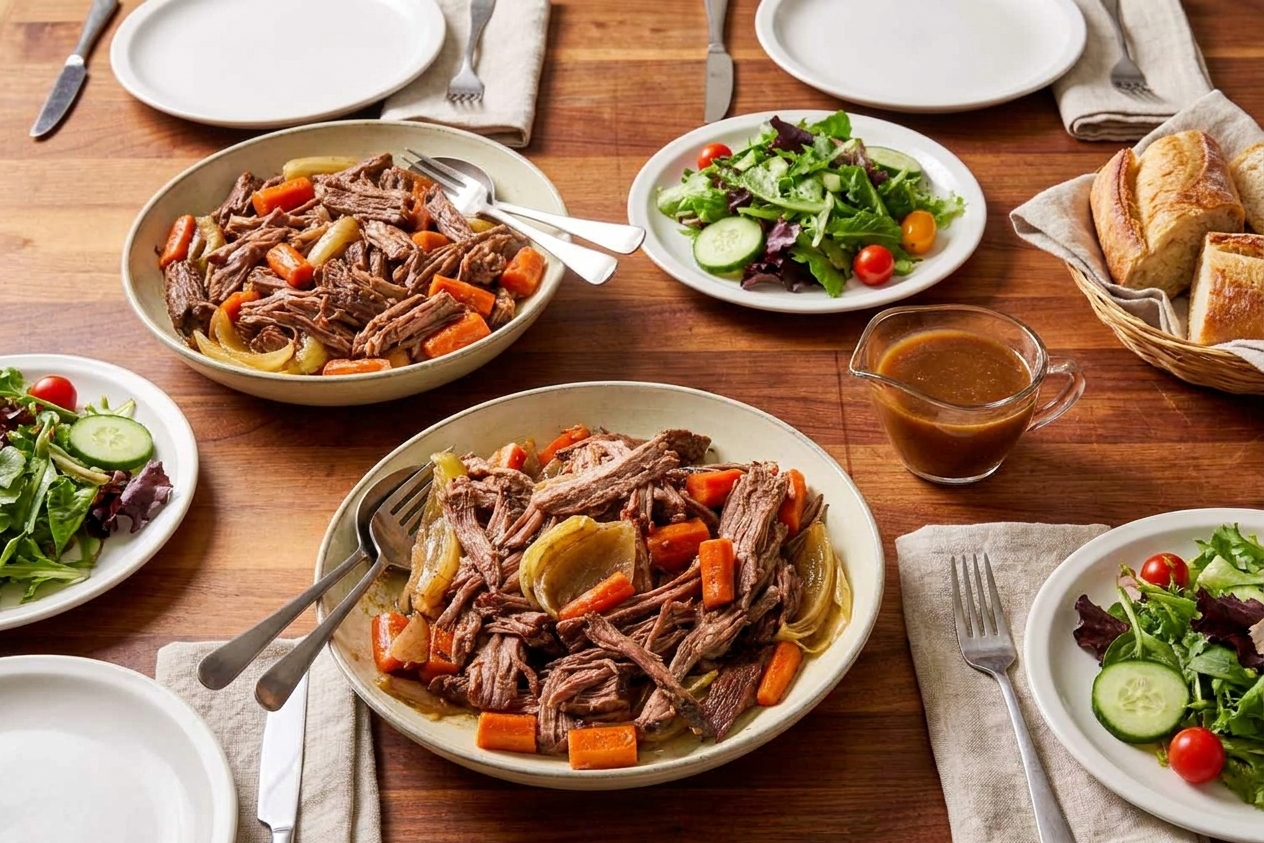
- Classic: Serve with the carrots and potatoes from the slow cooker and plenty of gravy.
- Cozy upgrade: Spoon the roast and gravy over mashed potatoes or buttered egg noodles.
- Green side: Add a simple salad, steamed green beans, or roasted broccoli to brighten everything up.
- Leftover magic: Pile shredded roast on toasted rolls with provolone, then dip in warmed gravy like a French dip.
Later
Storage, Freezing and Reheating
- Refrigerate: Store beef and vegetables in an airtight container with plenty of gravy for moisture. Refrigerate up to 4 days.
- Freeze: Freeze shredded or sliced roast in gravy for up to 3 months. For best texture, freeze potatoes separately or expect them to soften a bit after thawing.
- Reheat: Warm gently on the stovetop over medium-low, adding a splash of broth if needed. Microwave works too, but use 50 to 70% power so the beef stays tender.
- Make-ahead tip: The gravy tastes even better the next day. If you can, cook this the day before and reheat for an easy, stress-free dinner.
Watch out
Common Mistakes to Avoid
- Using the wrong cut. Lean cuts can end up dry and stringy. Chuck roast is the forgiving choice.
- Not cooking long enough. If it is tough, it is not done yet. Give it time to break down.
- Adding too much liquid. The slow cooker does not reduce like the oven. Too much broth equals bland gravy.
- Overcrowding the pot. If your roast is crammed in with vegetables to the brim, heat circulation suffers. Use a bigger slow cooker if needed.
- Over-thickening the gravy. Add slurry gradually. Gravy thickens as it cools, and you can always add more but you cannot undo gluey gravy easily.
Questions
Frequently Asked Questions
Do I have to sear the roast first?
You do not have to, but I strongly recommend it. Searing adds browned flavor that makes the gravy taste fuller and more roast-like. If you are truly in a rush, skip it and add an extra teaspoon Worcestershire plus a pinch more salt to help.
Should I cook pot roast on LOW or HIGH?
LOW is best for tenderness and more even cooking. HIGH can work, but the roast is more likely to tighten up and feel drier. If you must use HIGH, plan on 4 to 5 hours and check for tenderness, not just temperature.
What internal temperature is pot roast done?
Pot roast is done when it is tender, usually around 195 to 205 F in the thickest part. It may be safe to eat earlier, but it will not shred nicely until the collagen has fully softened.
Can I put raw potatoes and carrots in the slow cooker?
Yes. Cut them into larger chunks so they do not turn mushy, and keep them mostly under the roast so they cook evenly.
How do I thicken the gravy?
The easiest way is a cornstarch slurry: whisk cornstarch with cold water, stir it into the hot cooking liquid, then cook on HIGH until thickened. You can also reduce the liquid in a saucepan for a deeper flavor.
Why is my pot roast tough?
Almost always it just needs more time. Toughness is the connective tissue not fully broken down yet. Keep cooking on LOW in 30 to 60 minute increments until it shreds easily.
Can I cook it without vegetables?
Absolutely. Cook the roast with onions and the broth mixture, then serve with mashed potatoes, rice, or a separate veggie side. You may want to reduce the broth slightly since the vegetables will not absorb any liquid.
The recipe
Crock Pot Pot Roast
A classic crock pot pot roast made with chuck roast, potatoes, carrots, and a rich, savory gravy. Quick to prep, slow-cooked until fork-tender, and perfect for cozy dinners or make-ahead meals.
Ingredients
- 3 to 4 lb boneless beef chuck roast
- 2 tsp kosher salt, plus more to taste
- 1 tsp black pepper
- 2 tbsp all-purpose flour (optional, for dredging)
- 2 tbsp olive oil (for searing)
- 1 large yellow onion, sliced
- 4 to 6 cloves garlic, minced
- 1 tbsp tomato paste
- 2 cups low-sodium beef broth
- 2 tbsp Worcestershire sauce
- 1 tbsp balsamic vinegar (optional, for balance)
- 1 tsp dried thyme
- 1 tsp dried rosemary
- 1 1/2 lb Yukon gold potatoes, cut into 2-inch chunks
- 4 large carrots, cut into 2-inch chunks
- 2 bay leaves
- 2 tbsp cornstarch + 2 tbsp cold water (optional, to thicken gravy)
- Chopped parsley (optional, for serving)
Instructions
- Season the roast. Pat the chuck roast dry. Season all over with salt and pepper. If using flour, lightly dredge the roast and shake off excess.
- Sear for flavor. Heat olive oil in a large skillet over medium-high heat. Sear the roast 3 to 4 minutes per side until browned. Transfer to a plate.
- Build the base in the slow cooker. Add sliced onion to the slow cooker. Add potatoes and carrots, then nestle the seared roast on top.
- Mix the braising liquid. In a bowl, whisk garlic, tomato paste, beef broth, Worcestershire, balsamic (if using), thyme, and rosemary until smooth. Pour around the roast. Add bay leaves.
- Slow cook. Cover and cook on LOW for 8 hours (or until the roast shreds easily with a fork). Remove bay leaves.
- Rest and slice or shred. Transfer roast to a cutting board and rest 10 to 15 minutes. Slice against the grain or shred with forks. Keep vegetables warm in the slow cooker.
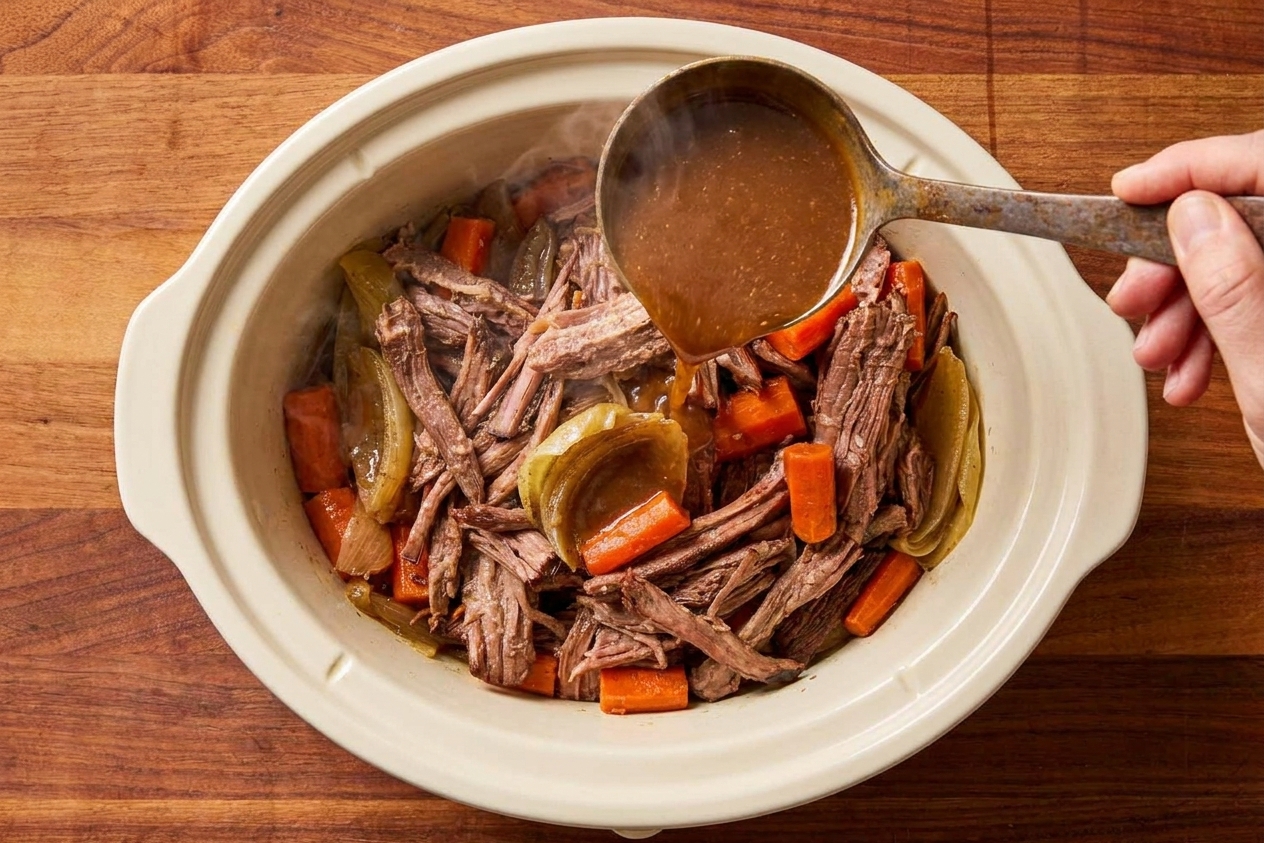
- Thicken the gravy (optional). Whisk cornstarch with cold water. Stir into the cooking liquid. Cover and cook on HIGH for 10 to 15 minutes, stirring once or twice, until thickened. Taste and adjust salt and pepper.
- Serve. Return beef to the slow cooker or plate with vegetables and spoon gravy over the top. Finish with parsley if you like.
Recipe notes
- Best timing: If your slow cooker runs hot, check at 7 hours on LOW. The roast is ready when it shreds easily, not when it hits a specific time.
- For a cleaner gravy: Skim fat off the surface or chill the liquid briefly so the fat solidifies and lifts off.
- Flavor boost: A splash of balsamic vinegar at the end perks up the gravy without making it taste like vinegar.
- Serving size note: A 3-pound roast usually feeds 6 with sides. If you need 8 servings, choose a 4-pound roast and add extra carrots and potatoes.
Nutrition (per serving, approximate)
- Calories: 560
- Protein: 46 g
- Carbohydrates: 28 g
- Fat: 30 g
- Saturated fat: 11 g
- Fiber: 4 g
- Sugars: 6 g
- Sodium: 820 mg