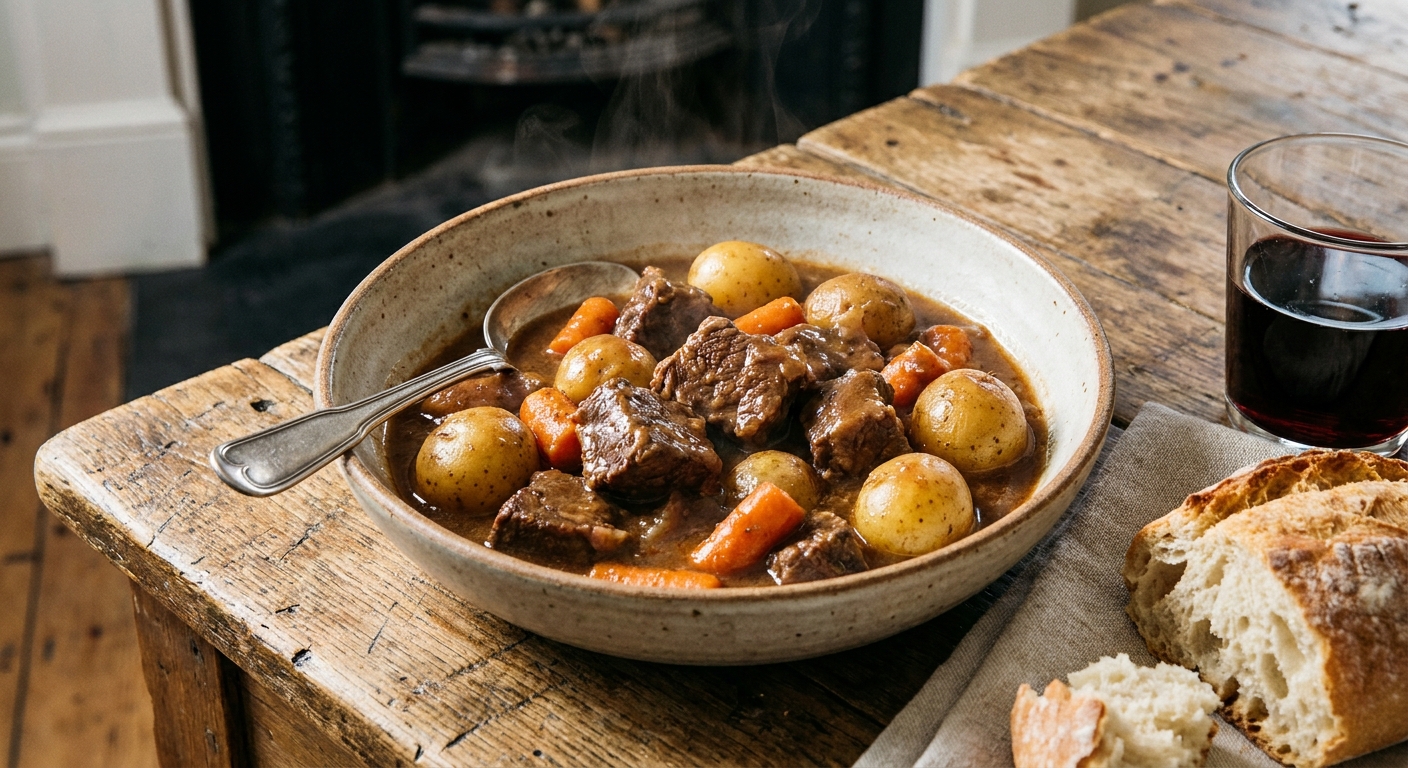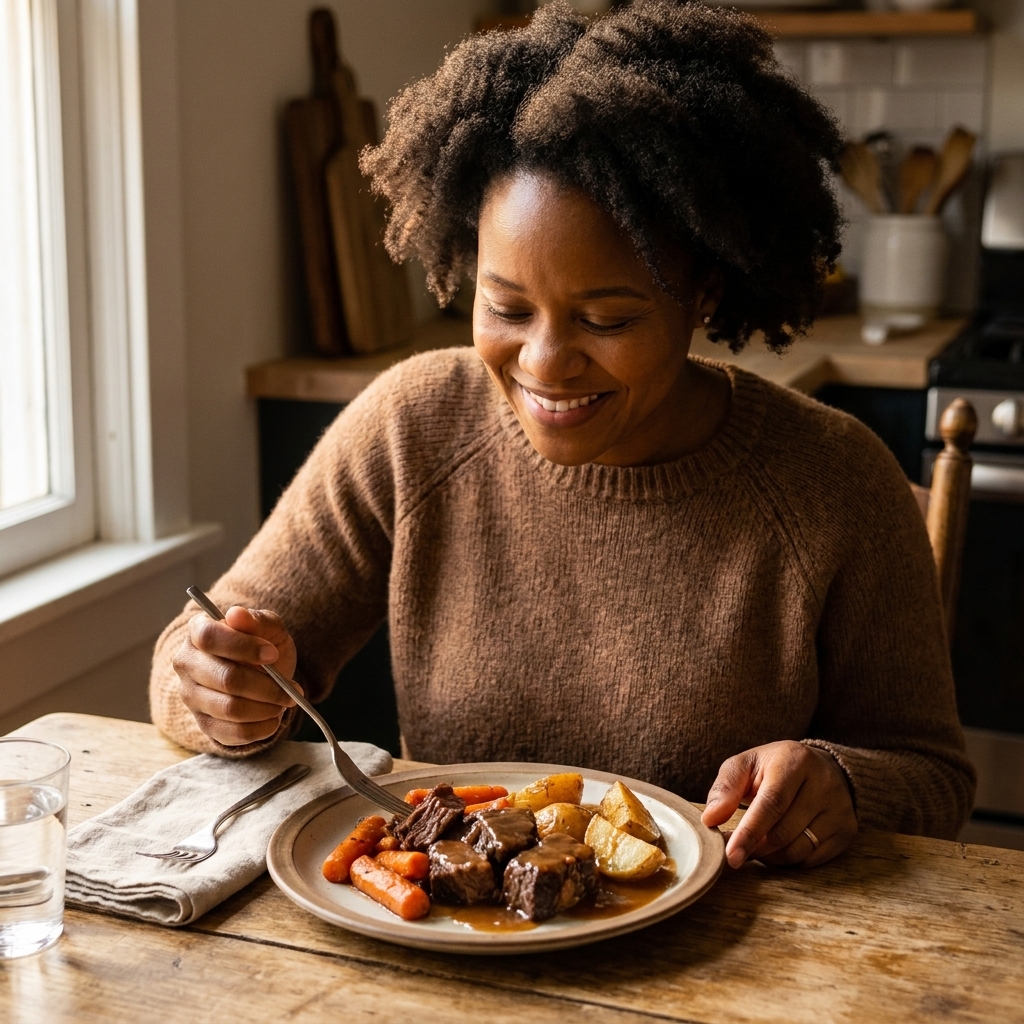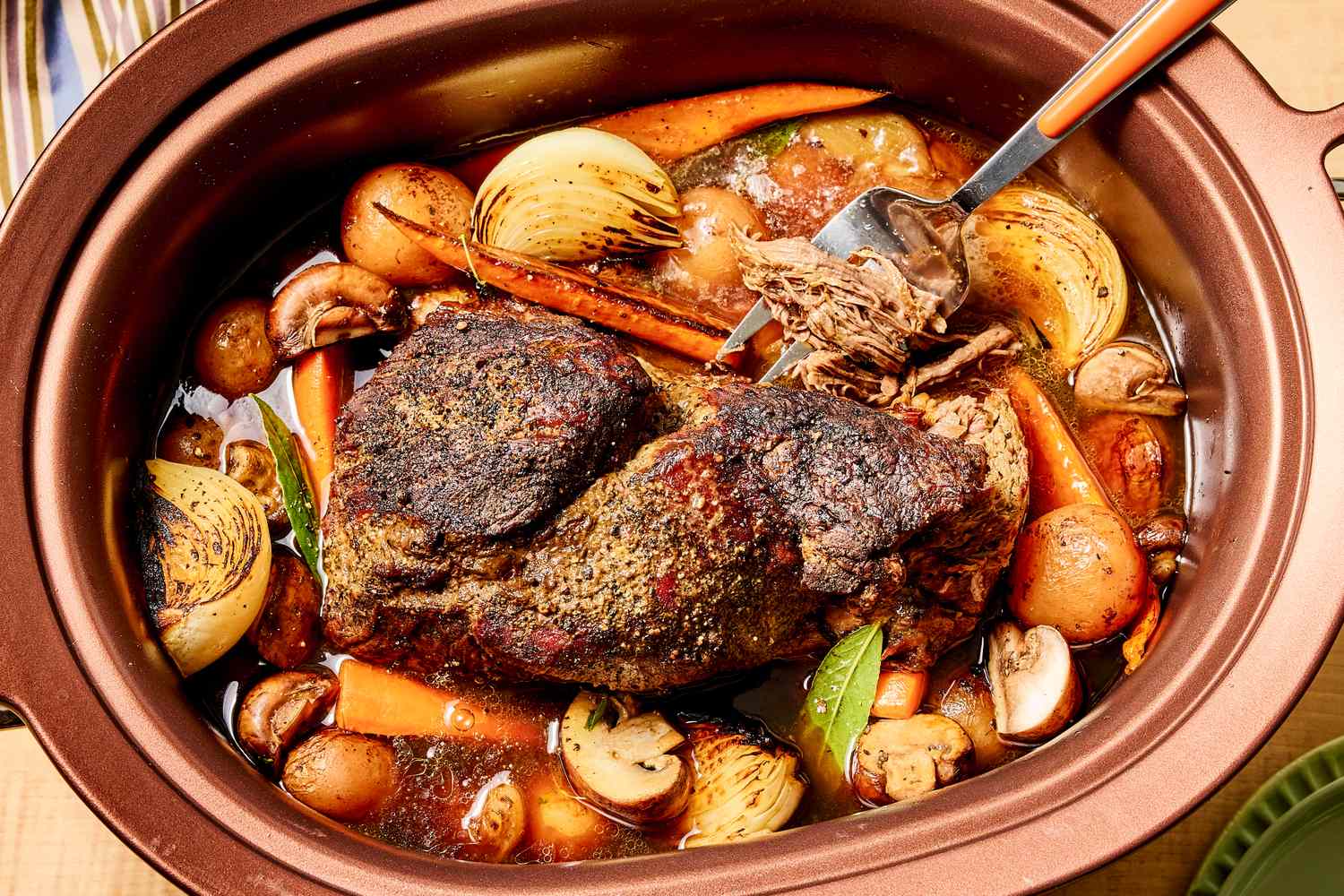
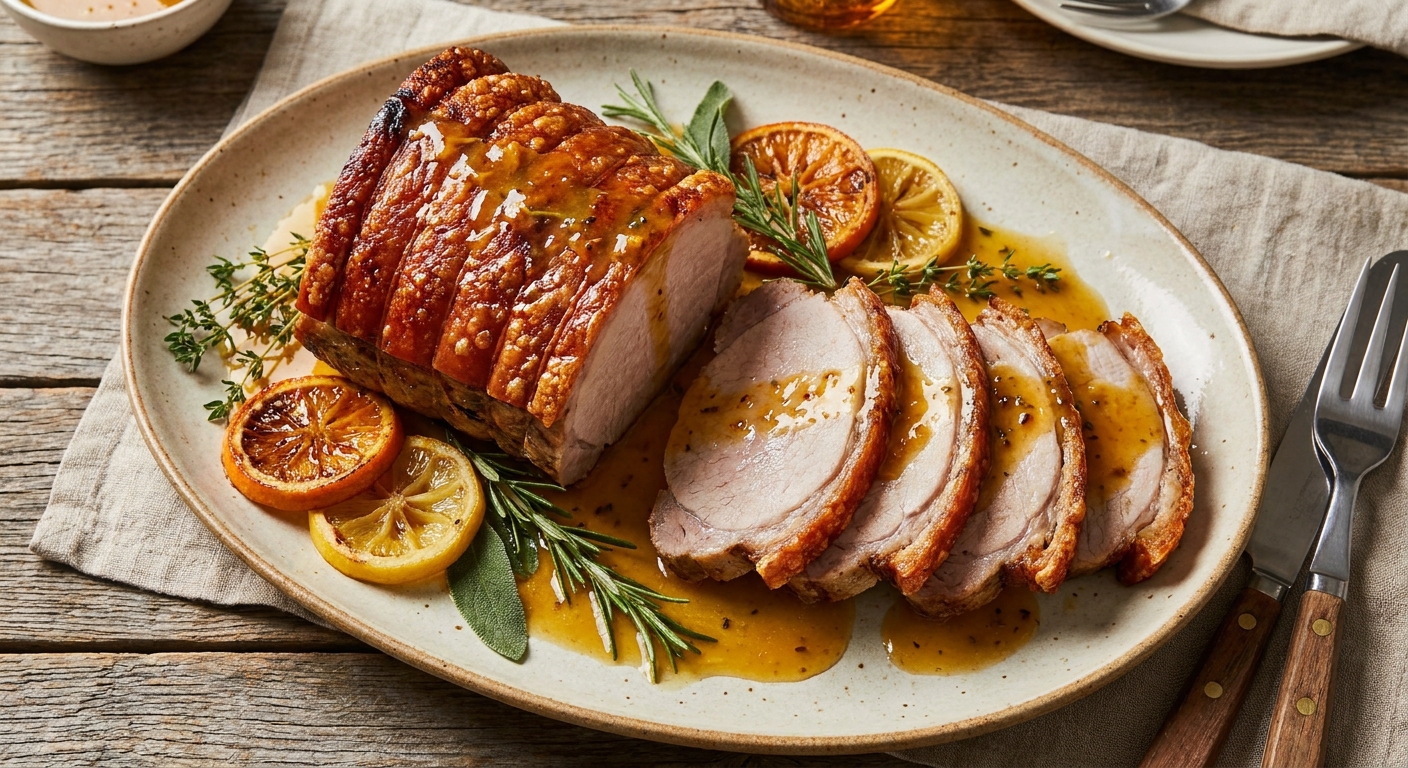
A tender pork roast with a sunny citrus and garlic glaze that turns into a glossy pan sauce. Simple steps, big flavor, and plenty of options for sides and le...
Recipeva
Crock Pot Pork Roast
This Crock Pot pork roast turns out tender with a savory gravy and simple pantry flavors. Step-by-step tips, timing by cut, and the best temperatures for juicy slices or shreddable pork.

Maya Reynolds
Maya Reynolds is a passionate home cook, recipe developer, and the creative voice behind Recipeva. With over a decade of experience translating complex culinary techniques into approachable weeknight meals, she focuses on creating dishes that bring joy to the dinner table without the stress.
Created September 24, 2026
Updated September 24, 2026
If you are craving that cozy, Sunday-dinner feeling but your schedule is screaming “Tuesday,” this Crock Pot pork roast is your answer. It is hands-off, deeply savory, and forgiving. You do a few minutes of setup, then the slow cooker takes it from there while your house starts smelling like you have your life fully together.
My goal here is simple: tender pork that slices or shreds easily, plus a real-deal gravy made right from the juices. No weird packets required, unless you love them, in which case I fully support your joy.
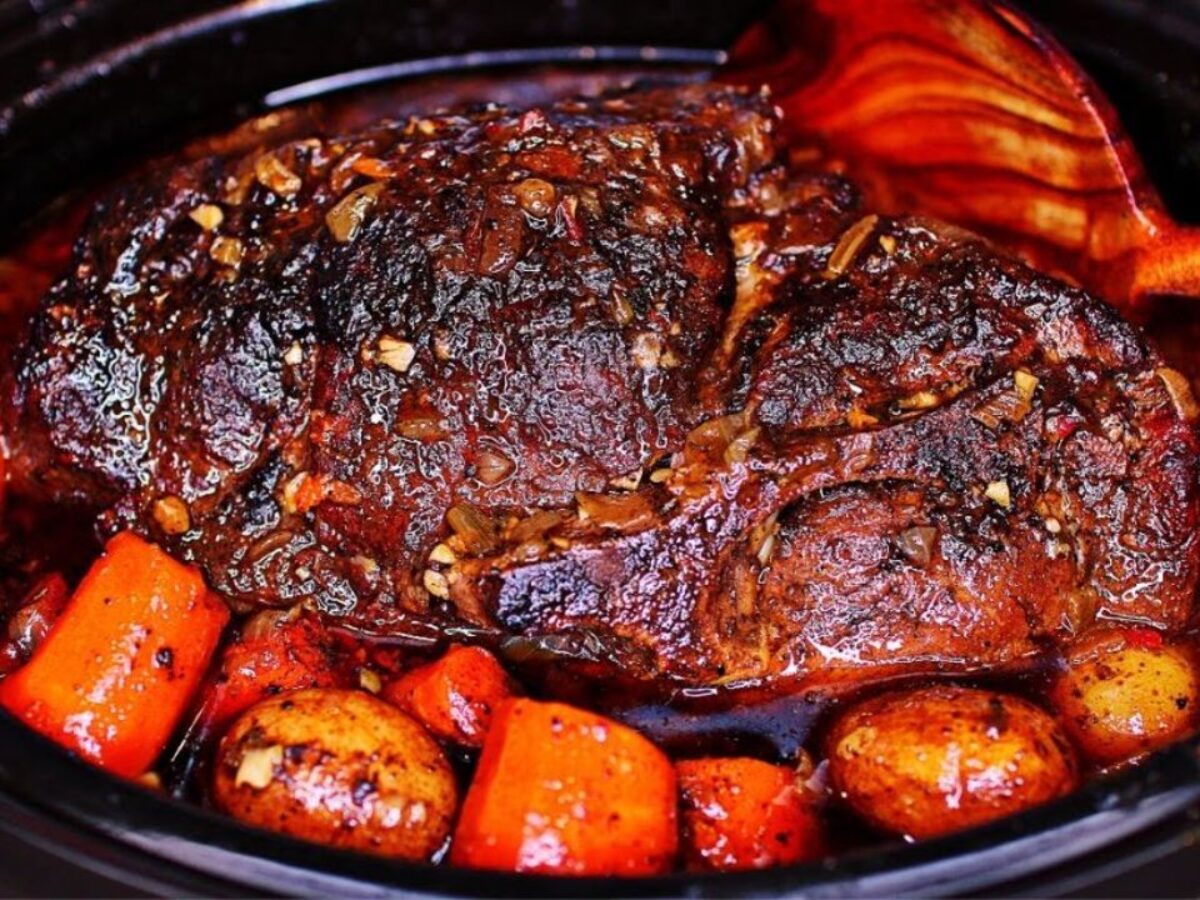
What makes this roast work
- Low and slow heat breaks down connective tissue so the roast becomes tender instead of dry.
- A flavorful braising liquid (broth, aromatics, and a few pantry staples) seasons the meat from all sides and gives you great juices for gravy.
- Enough salt and acid wakes everything up. Pork loves a little tang.
- Gravy at the end turns the pot juices into something you want to pour on everything.
Best cut of pork
For classic Crock Pot pork roast, you want a cut with some fat and connective tissue. Lean cuts can work, but they are much easier to overcook into a dry, sliceable sadness.
My top picks
- Pork shoulder (Boston butt): The most forgiving and the best for shredding. Rich and flavorful. (Boston butt is from the shoulder, and it is usually the winner here.)
- Picnic shoulder: Also from the shoulder, usually a bit tougher and can have skin. It still works great in the slow cooker, especially for shredding.
- Pork loin roast: Leaner, milder, more sliceable. It can still be juicy, but timing matters more.
What I usually skip
- Pork tenderloin: Too lean and too small for long slow cooking. It cooks quickly and can dry out.
Maya tip: If your goal is “fall-apart,” choose Boston butt or picnic shoulder. If your goal is “neat slices,” choose loin and cook to temperature, not just time.
Ingredients you will need
This is a supermarket-friendly list, and you can tweak it based on what you have. The main thing is a good roast and enough liquid to create a flavorful braise and gravy.
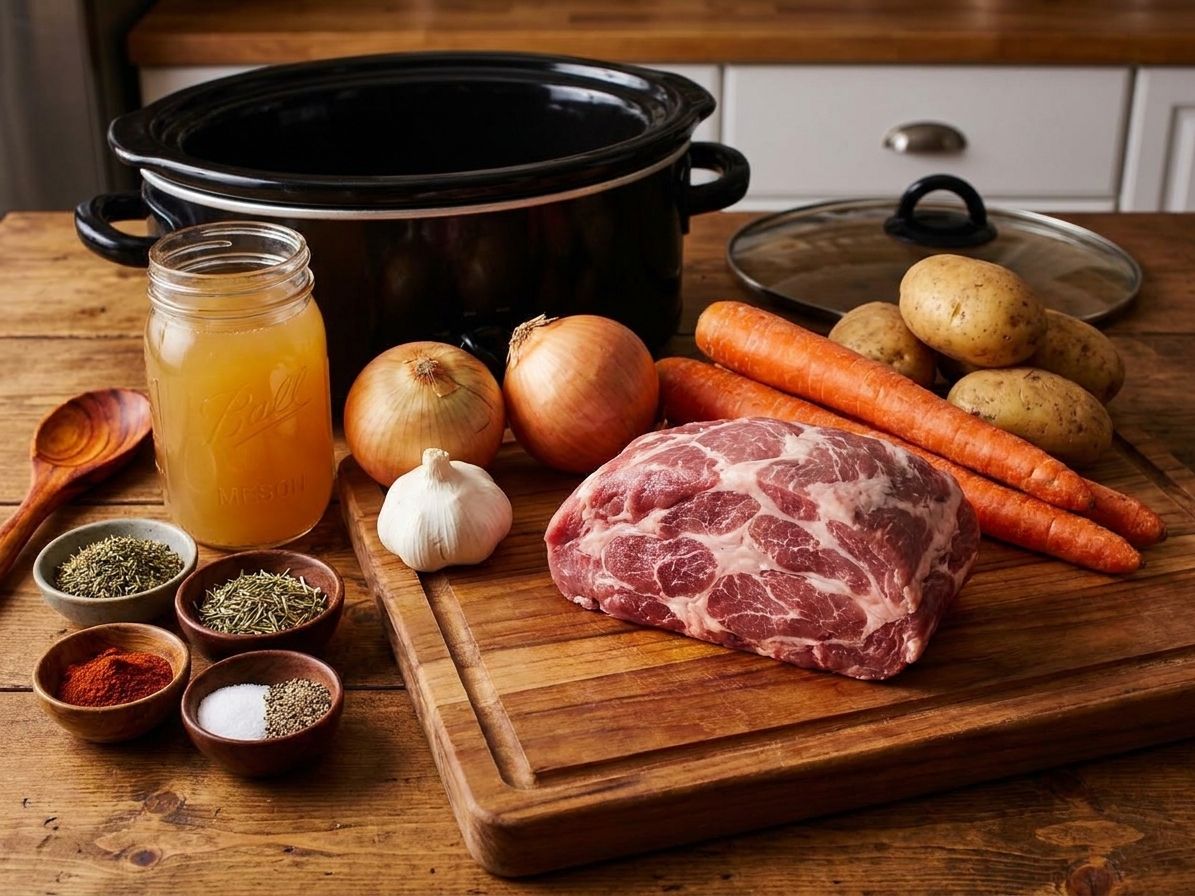
- Pork roast (3 to 5 pounds pork shoulder, picnic shoulder, or pork loin)
- Salt and black pepper
- Garlic (4 to 8 cloves, minced or smashed, because no such thing as too much)
- Yellow onion (1 large, sliced)
- Chicken broth (1 to 1 1/2 cups)
- Worcestershire sauce (1 to 2 tablespoons)
- Dijon mustard (1 tablespoon, optional but delicious)
- Fresh thyme or rosemary (about 4 to 6 sprigs total, or 1 teaspoon dried)
- Carrots and baby potatoes (optional for a full one-pot dinner)
- Cornstarch (for gravy)
Easy swaps: Beef broth works great. Apple cider or apple juice (a small splash) is lovely with pork. Soy sauce can stand in for Worcestershire in a pinch.
Slow cooker size
A 6-quart slow cooker is ideal for a 3 to 5 pound roast. Try not to fill your slow cooker more than about two-thirds full so it cooks evenly.
How to make Crock Pot pork roast
This is the method I use when I want dependable results without hovering. If you have 10 extra minutes and want deeper flavor, sear the roast first. If you do not, you are still going to get a delicious dinner.
1) Season the roast
Pat the pork dry with paper towels. Season generously with salt and pepper on all sides.
If there is a very thick exterior fat cap, trim it down a bit. Leave some fat for flavor, but you do not need an inch of it.
2) Optional but worth it: sear
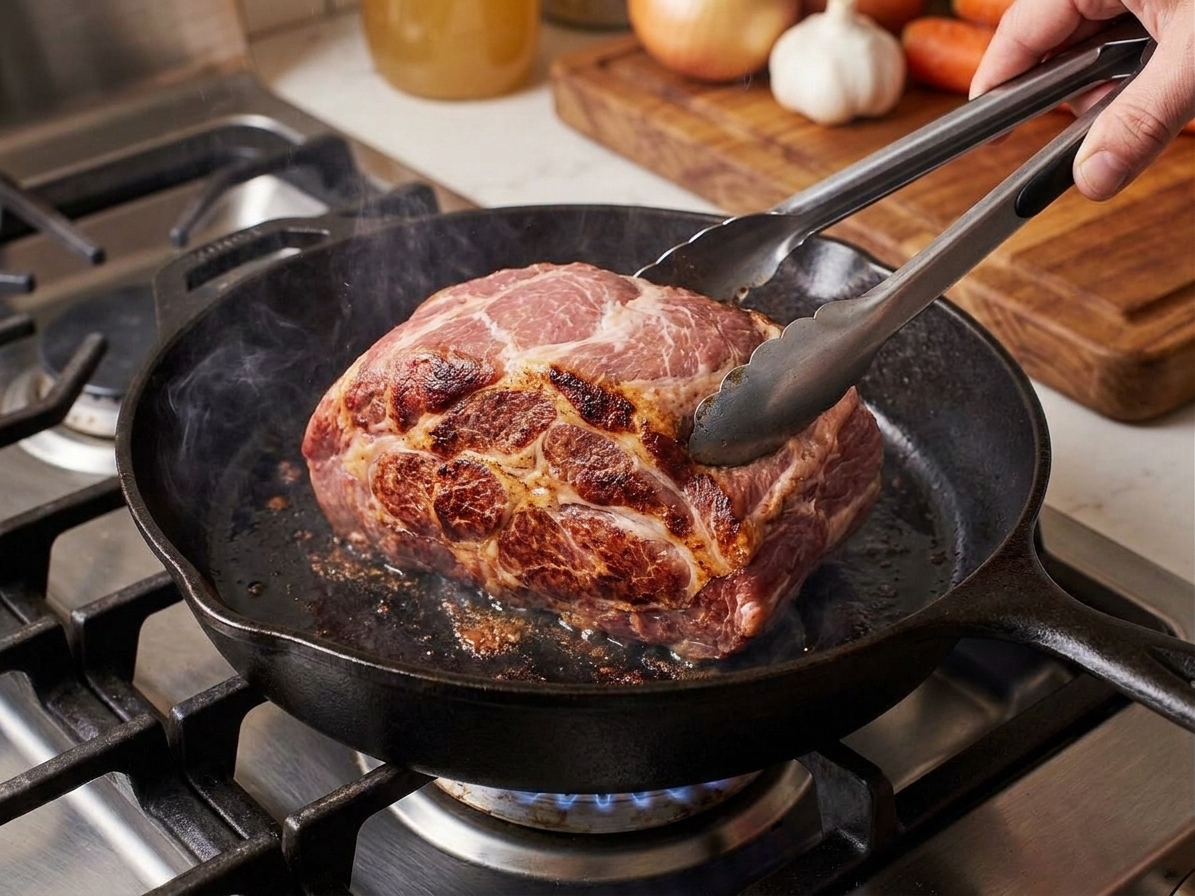
Heat a large skillet over medium-high heat with a little oil. Sear the roast 2 to 4 minutes per side until browned. This adds depth to the finished juices and gravy.
3) Build the slow cooker base
Add sliced onions to the bottom of the slow cooker. Nestle the pork on top, fat-cap up if it has one. Scatter in garlic and herbs (sprigs or dried).
Add carrots and potatoes around the roast if using.
Veggie note: If you are using pork loin and you like your vegetables firmer, add them halfway through cooking so they do not turn to mush while you wait on the loin to hit the right temperature.
4) Add the liquid
Whisk the broth, Worcestershire, and Dijon (if using), then pour it down the side of the slow cooker so you do not rinse off all that seasoning. The liquid should come partway up the roast, not fully submerge it.
5) Cook
- Low: 8 to 10 hours for shoulder, 4 to 6 hours for loin (start checking early)
- High: 4 to 6 hours for shoulder, 2 1/2 to 3 1/2 hours for loin (check early)
The roast is done when it is fork-tender or at the temperature you want. For shoulder, you should be able to twist a fork and it starts to shred. For loin, it should slice easily and stay juicy.
6) Rest, then slice or shred
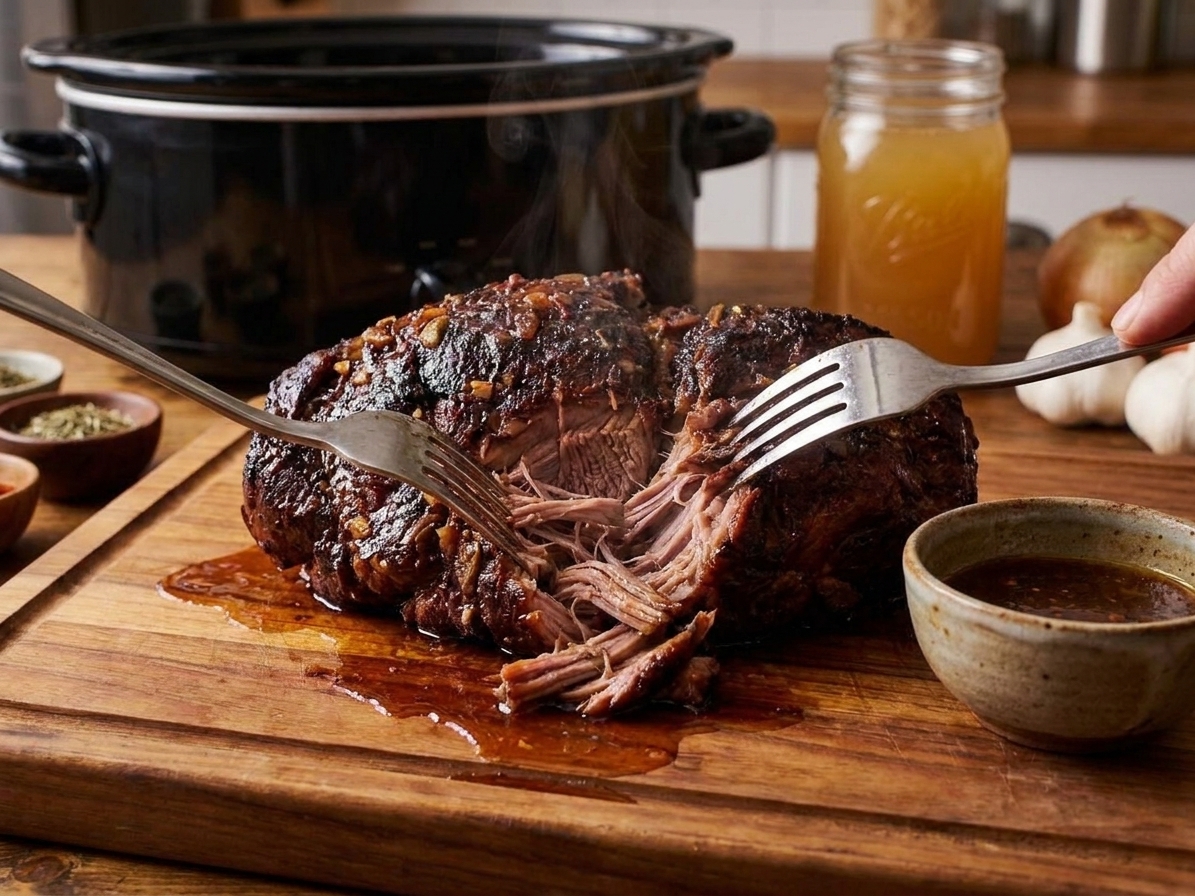
Transfer pork to a cutting board and tent loosely with foil for 10 to 15 minutes. Slice (loin) or shred (shoulder) with two forks.
7) Make the gravy
Remove the pork (and vegetables, if you want) so you can work with the juices. Skim excess fat off the top if needed.
How much slurry? For about 2 cups cooking juices, whisk 1 tablespoon cornstarch with 1 tablespoon cold water until smooth. Stir it into the hot juices, cover, and cook on High for 10 to 15 minutes until thickened.
If you have more liquid, scale up the slurry and add it gradually until the gravy looks right. If you want it faster, pour the juices into a saucepan and simmer while whisking in the slurry.
Taste and adjust salt and pepper.
Maya tip: If you like a smoother gravy, strain the juices first. If you like it hearty, leave the onions in and whisk well.
Timing and doneness
Slow cookers are wonderfully low-stress, but a couple of small choices make a big difference.
Internal temperature
- Pork shoulder: For shreddable texture, it is often best around 195 to 205°F because collagen has time to break down.
- Pork loin: For juicy slices, pull it around 145 to 150°F, then rest. You can take it closer to 160°F if you prefer it more well-done, but it will be drier.
Why pork turns out tough
- Not enough time: Tough usually means it needs longer, especially shoulder.
- Wrong cut for the goal: Loin will not shred like shoulder.
- Too little seasoning: Salt is not optional for good flavor.
Why pork turns out dry
- Overcooking a lean cut: Loin goes from perfect to dry pretty quickly.
- Cooking too hot: High can work, but Low is more forgiving.
- Not resting: Resting helps juices redistribute.
Maya tip: The liquid in a slow cooker keeps things moist, but it cannot rescue an overcooked loin. If you are cooking loin, let the thermometer be the boss.
Flavor variations
Once you have the method down, you can take the flavor in a bunch of directions.
- Garlic herb: Add lemon zest, extra rosemary, and a pat of butter at the end.
- Apple onion: Replace 1/2 cup broth with apple cider and add sliced apples in the last 2 hours.
- BBQ pulled pork vibes: Cook with onion and broth, then toss shredded pork with your favorite BBQ sauce and broil for crispy edges.
- Mexican-inspired: Add cumin, oregano, and a jar of salsa verde. Finish with lime.
What to serve with it
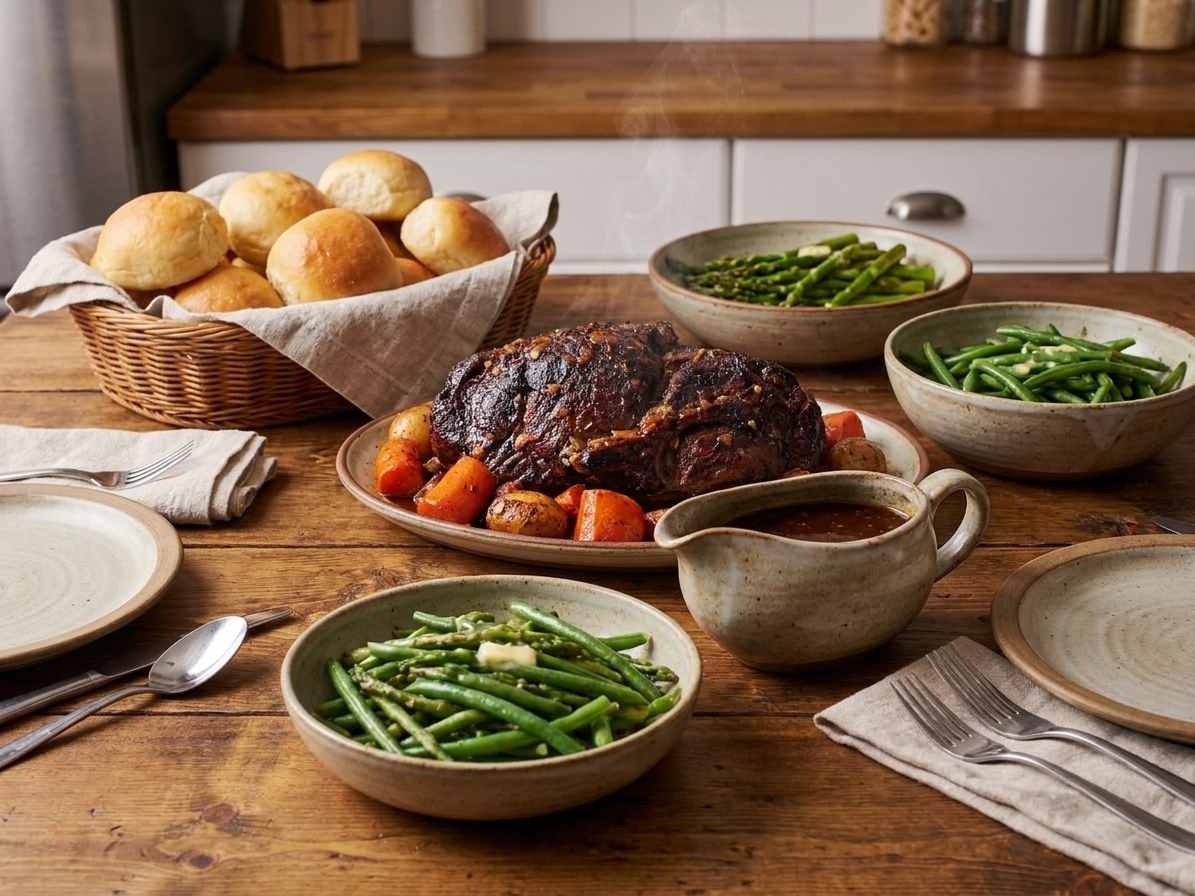
This roast is basically begging for cozy sides that catch the gravy.
- Mashed potatoes or buttery egg noodles
- Roasted green beans or broccoli
- Simple side salad with a tangy vinaigrette
- Warm dinner rolls
- Coleslaw if you are leaning pulled-pork style
Storing and reheating
Storage
- Refrigerator: Store pork with some juices or gravy in an airtight container for up to 4 days.
- Freezer: Freeze shredded or sliced pork with a little gravy for up to 3 months.
Reheating
- Stovetop: Warm gently in a covered skillet with a splash of broth or gravy.
- Microwave: Add a spoonful of gravy, cover, and heat in short bursts.
Maya tip: Keeping the meat in its juices is the best insurance policy against dryness the next day.
Troubleshooting
My pork roast is tough. What do I do?
Keep cooking. Especially with pork shoulder, tough usually means the connective tissue has not fully broken down yet. Give it another 45 to 90 minutes and check again.
My gravy is thin.
Mix another teaspoon or two of cornstarch with cold water, stir in, and heat 10 minutes more. Add it gradually, since the total amount of juice in the pot can vary a lot.
It tastes bland.
Add salt first, then a little acid like a splash of apple cider vinegar or lemon juice. Seasoning at the end can save the whole pot.
Can I cook it from frozen?
I do not recommend it for a slow cooker because the meat can sit too long in an unsafe temperature zone. For best results and food safety, thaw in the fridge first.
FAQ
Do I have to sear the pork roast?
No, but it adds a deeper, roasted flavor and improves the richness of the gravy. If you have the time, do it. If you do not, dinner will still be delicious.
How much liquid should I add?
Usually 1 to 1 1/2 cups is perfect for a 3 to 5 pound roast. You want a braise, not a soup, and enough flavorful juices for gravy.
Can I put potatoes and carrots in at the beginning?
Yes, especially with shoulder. Cut potatoes into large chunks so they do not disintegrate. If you are cooking pork loin and want firmer vegetables, add them partway through.
Should I use Low or High?
Low is more forgiving and tends to produce the best texture. High works when you need it, but check early, especially with pork loin.
A cozy note
If you are newer to slow cooking, pork roast is one of the best confidence-builders I know. It is hearty, budget-friendly, and makes the kind of leftovers that feel like a gift to your future self. And if you accidentally add extra garlic, just know you are cooking with me in spirit.