

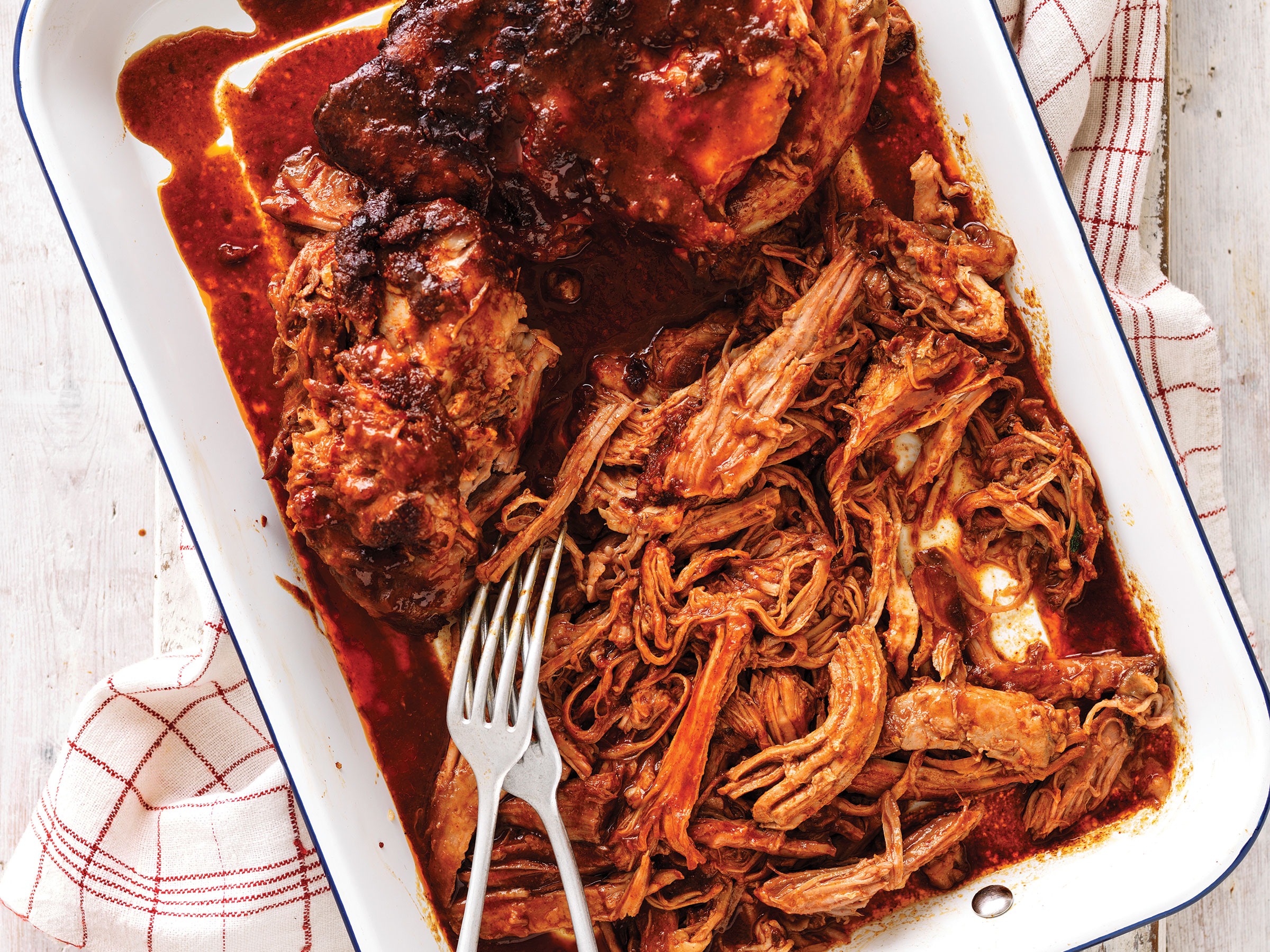

If you have ever lifted the slow cooker lid, poked the pork, checked the clock, and thought it should be done by now, you are not alone. Pulled pork is one of those magical recipes that feels simple, but the finish line can be surprisingly fuzzy.
Here is the good news: you do not have to guess. The most reliable sign of doneness for slow cooker pulled pork is not the timer. It is that the meat is probe-tender and shreds with almost no resistance. Temperature helps too, especially if you know what it is telling you.
What “done” means for pulled pork
For pulled pork, “done” does not just mean safe to eat. Whole cuts of pork are considered safe at 145°F with a 3-minute rest, but at that temperature the meat will slice, not pull. To get that juicy, shreddable texture, you need time for the collagen and connective tissue to melt into gelatin.
That is why pulled pork is considered done when it is:
- Probe-tender in the thickest parts
- Easy to shred with a fork with minimal pressure
- Often in the 195 to 205°F internal temperature range
The best test: probe-tender
If you only remember one thing, make it this: pulled pork is done when a probe slides in and out with almost no resistance, like pushing into soft butter.
How to do the probe-tender test
You can use an instant-read thermometer probe, a metal skewer, or even the tip of a thin knife. You are not measuring temperature in this moment. You are measuring feel.
- Open the lid quickly.
- Insert the probe into the thickest part of the pork (usually the center of the shoulder).
- Slide it out and try a second spot.
- If it catches, feels tight, or needs pressure, it is not ready yet.
When it is ready, the probe goes in smoothly and comes out smoothly in multiple places, not just one lucky tender pocket.
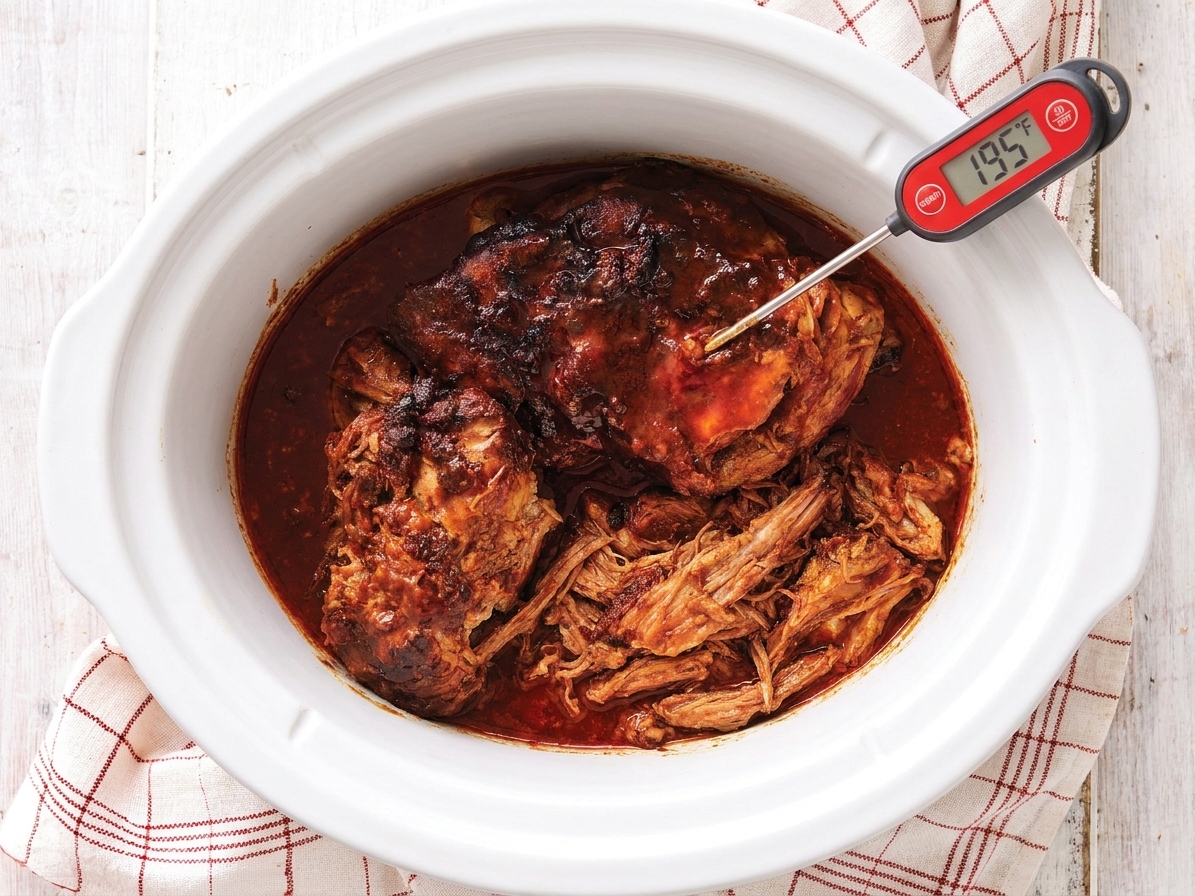
Target temperature: 195 to 205°F
Temperature is a helpful backup check, especially when you are learning what “probe-tender” feels like. In a slow cooker, pulled pork most often shreds well when the internal temperature is in the 195 to 205°F range.
What different temperatures mean
- 165 to 185°F: Cooked, but still firm. The meat may slice and will fight you when you try to shred.
- 190 to 195°F: Getting close. Some shoulders will shred here, but many still need more time.
- 195 to 205°F: Collagen is breaking down fully. This is the sweet spot for easy shredding.
- Over 205°F: Can still be delicious, especially if the pork is sitting in its juices. The risk of dry, stringy meat goes up the longer it keeps cooking past tender, particularly with leaner pieces or very little liquid in the pot.
Important: Use temperature as a guide, not a finish line. If you hit 198°F but the probe still drags, it needs more time. If it reads 193°F and the probe slides in like butter, you can shred.
One more practical note: slow cookers vary, and thermometer placement matters. If your reading seems oddly low or high, you might have landed in a fat pocket or too close to the surface. Take a second reading in another thick spot.
Why the clock can be wrong
I love a slow cooker because it gives you your evening back. But the timer is not a promise. Two pork shoulders with the same weight can finish hours apart.
Common reasons your pulled pork cooks faster or slower than the recipe time:
- Shape matters more than weight: A thick, compact roast takes longer than a flatter one.
- Starting temperature: Meat straight from the fridge takes longer than meat that has been out just a few minutes while you season and set up.
- Slow cooker runs hot or cool: Some models on “Low” behave like another model’s “High.”
- How full the pot is: A very full slow cooker heats differently than one with lots of open space.
- Lid lifting: Every peek drops the heat and extends cooking time.
Stall vs. done
On a smoker, pork shoulder often “stalls” around the 150 to 170°F range as moisture evaporates and cools the surface. In a slow cooker, you are less likely to see that classic stall because the environment is humid and covered, but you can still hit a frustrating phase where the temperature creeps slowly and the meat feels stubborn.
Signs it is not done yet
- The probe meets resistance, especially in the center.
- You can tug with a fork but it only breaks into chunks, not strands.
- The bone (if bone-in) feels stuck and does not wiggle easily.
Signs it is done
- A probe slides in and out easily in several spots.
- The roast has softened and looks like it is slumping slightly.
- The bone (if present) twists or pulls out cleanly.
- When you press with tongs, the meat gives and starts to separate.
If you are hovering in that in-between zone, give it 30 to 60 more minutes and test again. That last stretch is where tough turns into tender.
How to check without losing heat
This is the part I wish someone had drilled into me when I was teaching myself: doneness checks should be fast and targeted. A slow cooker loses heat quickly when the lid is off, and repeated long checks can prolong cooking time and let steam escape.
My low-stress method
- Get everything ready first. Have your thermometer, skewer, or fork right next to the slow cooker so you are not hunting through drawers with the lid off.
- Open the lid only as wide as needed. You do not need to fully remove it if you can avoid it.
- Probe the thickest part first. That center is the truth-teller. If the center is tender, the rest is almost always tender too.
- Take the temperature while you are there. If you are already probing, you might as well grab a reading for context.
- Close the lid immediately. If it is not done, do not keep poking. Set a timer for 30 minutes and walk away.
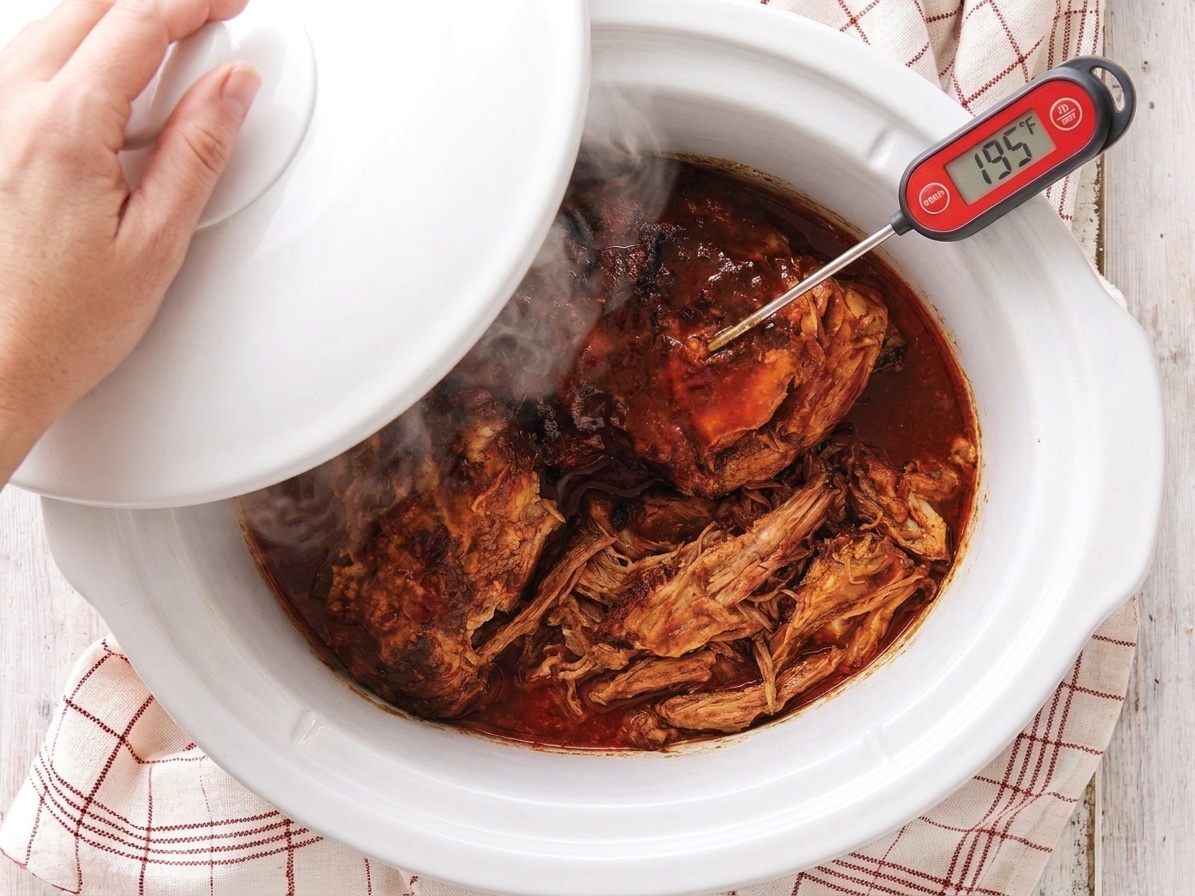
Where to stick the thermometer
For pulled pork, accuracy matters because the edges can get tender sooner than the middle.
- Insert the probe into the thickest part of the roast.
- Aim for the center, not the surface.
- Avoid touching the slow cooker insert and avoid resting on the bone, both can give a false high reading.
- Take a second reading in another thick spot if the first number surprises you.
If you have a very large shoulder, it is normal for one side to read a bit higher than the other depending on how it sits in the crock. That is another reason the probe-tender test is so useful.
Using the right cut
This article assumes you are cooking a cut that actually wants to shred. Pork shoulder (Boston butt) and picnic shoulder are the classic pulled-pork choices because they have enough fat and connective tissue to turn silky with time.
Pork loin is much leaner. You can cook it in a slow cooker, but it will not pull the same way and it dries out more easily.
If it is tender at 190°F
Shred it. Seriously.
Temperature ranges are averages, not rules carved in stone. Some pork shoulders become beautifully tender a bit earlier, especially if they are smaller, have more intramuscular fat, or have been cooking for a long time at a steady gentle heat.
Do the fork test: if you can twist a fork and the meat separates into strands easily, it is done for pulled pork.
If it is 200°F but still tough
This can happen, and it does not mean you ruined it. It usually means the connective tissue has not fully relaxed yet. In other words, it needs more time, not less.
What to do:
- Keep cooking on Low or High (whichever you are already using) and check again in 30 to 45 minutes.
- Make sure there is still some liquid in the bottom. You do not need to submerge the pork, but you do want a moist environment.
- Stop lifting the lid between checks.
Counterintuitive kitchen truth: tough pulled pork is often undercooked, not overcooked.
Quick shred test
If you are not sure, try this:
- Use tongs to lift the roast slightly and steady it.
- Use a fork to drag across the surface and twist gently.
- If it shreds into long strands with almost no effort, you are done.
If it breaks into chunks or feels rubbery, it needs more time.
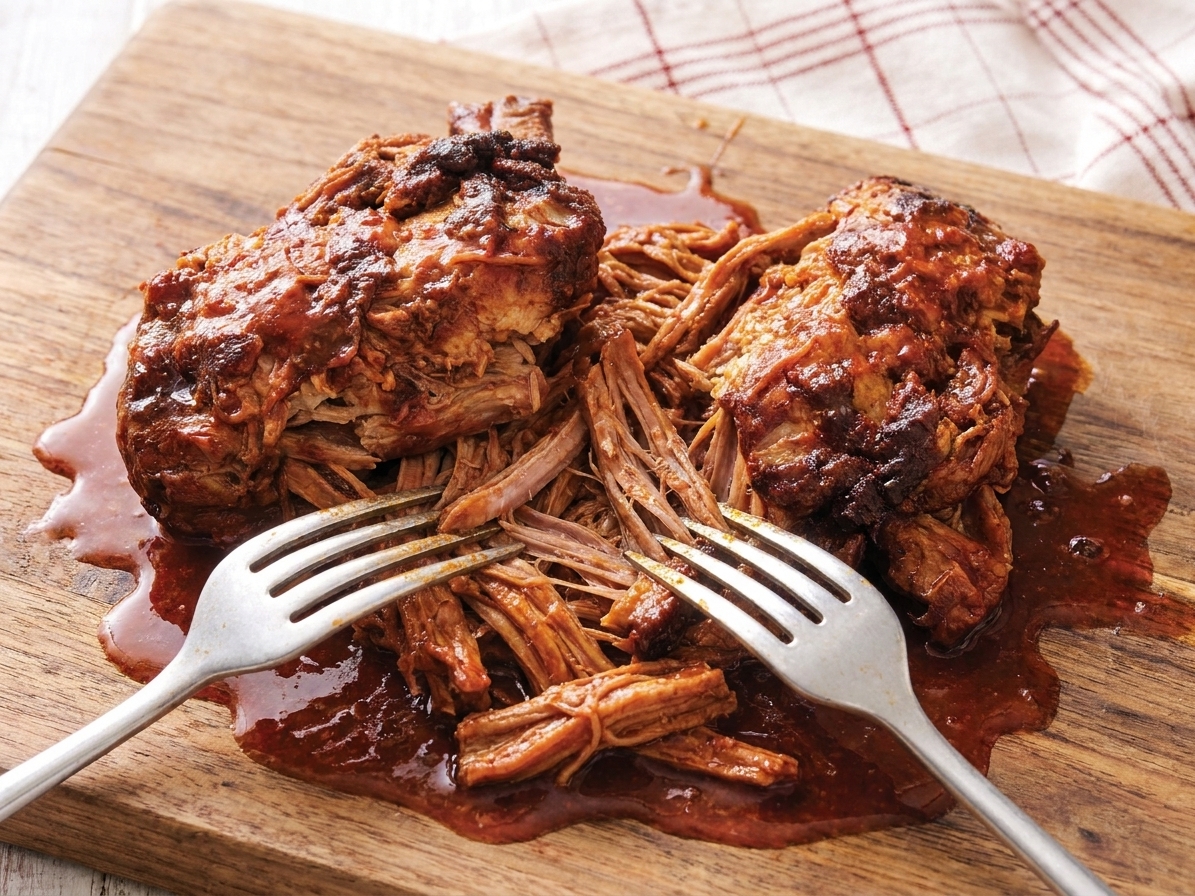
Let it rest before shredding
Even in a slow cooker, a short rest helps the meat hold onto its juices. If you shred the moment it is done, the juices can run out and you lose that luscious texture.
What I do at home:
- Turn off the slow cooker.
- Let the pork rest in the crock (lid on) for 15 to 30 minutes.
- Then shred, and mix some of the cooking juices back in.
FAQ
Can I overcook pulled pork in a slow cooker?
Yes, but it is harder than most people think. Overcooked pulled pork tends to become dry and stringy, especially if the cooker runs hot or it sits cooking past tender for a long time. The best prevention is to cook until probe-tender, then switch to Warm and shred when you are ready.
How long does pulled pork take in a slow cooker?
It depends on the thickness of the roast, your slow cooker, and whether you are cooking on Low or High. As a rough anchor, many pork shoulders take 8 to 10 hours on Low or 5 to 7 hours on High, but use time as a guide only. Rely on probe-tender feel and the 195 to 205°F range to confirm doneness.
Do I need to add liquid to the slow cooker?
It is often helpful, but not always required. Pork shoulder releases a lot of liquid as it cooks, especially once it starts rendering. That said, adding a small amount of broth, apple juice, or a sauce ingredient can help create flavorful juices to mix back into the shredded pork and provide a little extra buffer if your cooker runs hot.
Should I shred pulled pork in the slow cooker or on a board?
Either works. If the roast is very tender, shredding in the slow cooker is convenient and keeps it juicy. If you want cleaner strands or need to remove large pockets of fat, lift it to a cutting board, shred, then return the meat to the juices.