

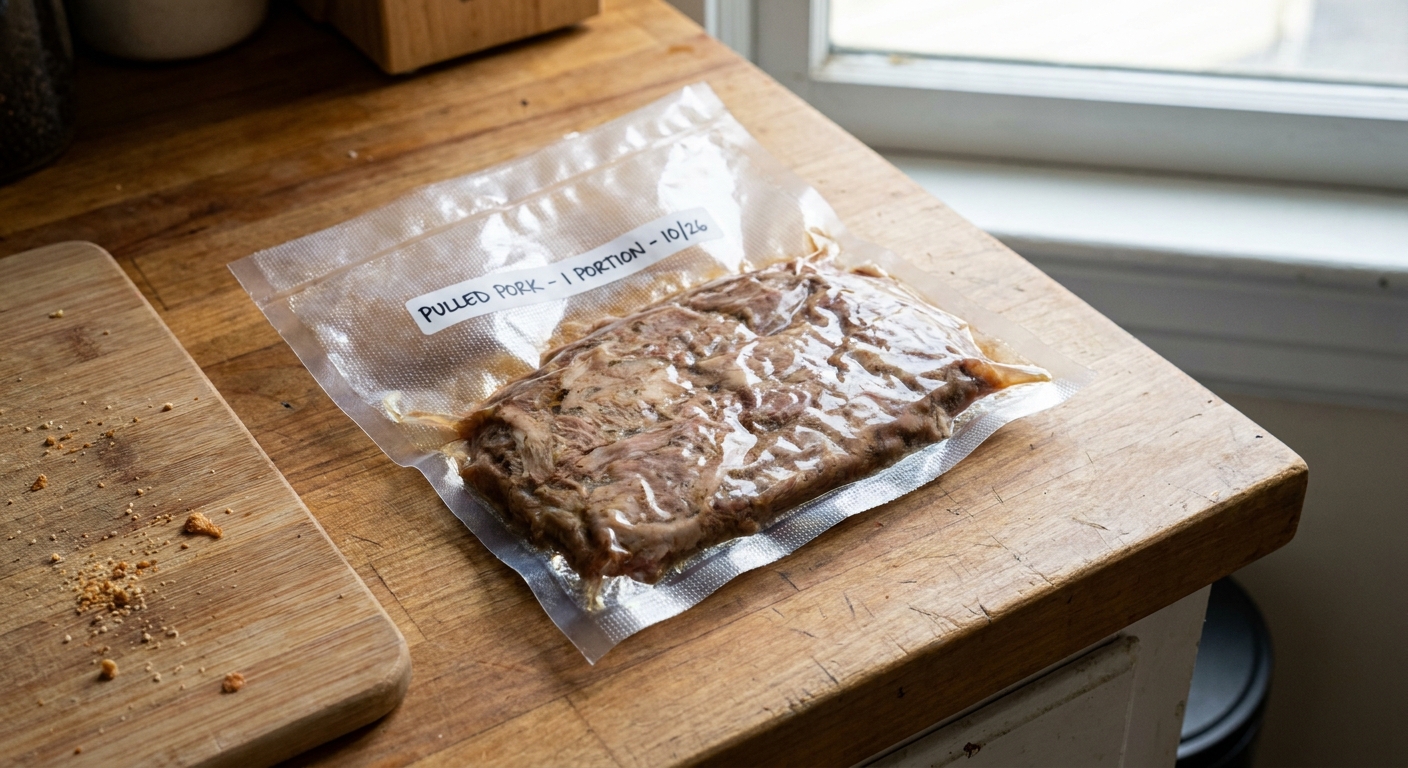

Yes, you can absolutely freeze pulled pork, and it is one of my favorite ways to turn a long cooking day into multiple easy dinners later. The trick is not just freezing it. It is cooling it quickly and packing it with a little protection so the meat stays juicy and the bark does not turn into a sad, soggy memory when you reheat it.
Below is exactly how I freeze pulled pork in a way that still tastes like you meant to make it tonight, not three weeks ago.
How long does it keep?
For best flavor and texture, use frozen cooked pulled pork within 2 to 3 months. If it is tightly sealed and your freezer stays at 0°F, it can still be good at around 6 months, but quality slowly slides as freezer burn and stale flavors creep in.
Food safety-wise, properly frozen cooked meat can remain safe for much longer at 0°F. It is the quality that takes the hit.
- Best quality: 2 to 3 months
- Still good (well sealed, 0°F): about 6 months
- Watch out for: lots of trapped air, flimsy deli containers, or containers with a weak seal and a lot of headspace
Cool it fast
Hot meat in the freezer is a double problem. It warms the freezer (not great for everything else in there) and the escaping steam can condense into surface moisture that later freezes into bigger ice crystals. Bigger crystals mean a wetter, softer texture when you reheat.
My quick-cool method
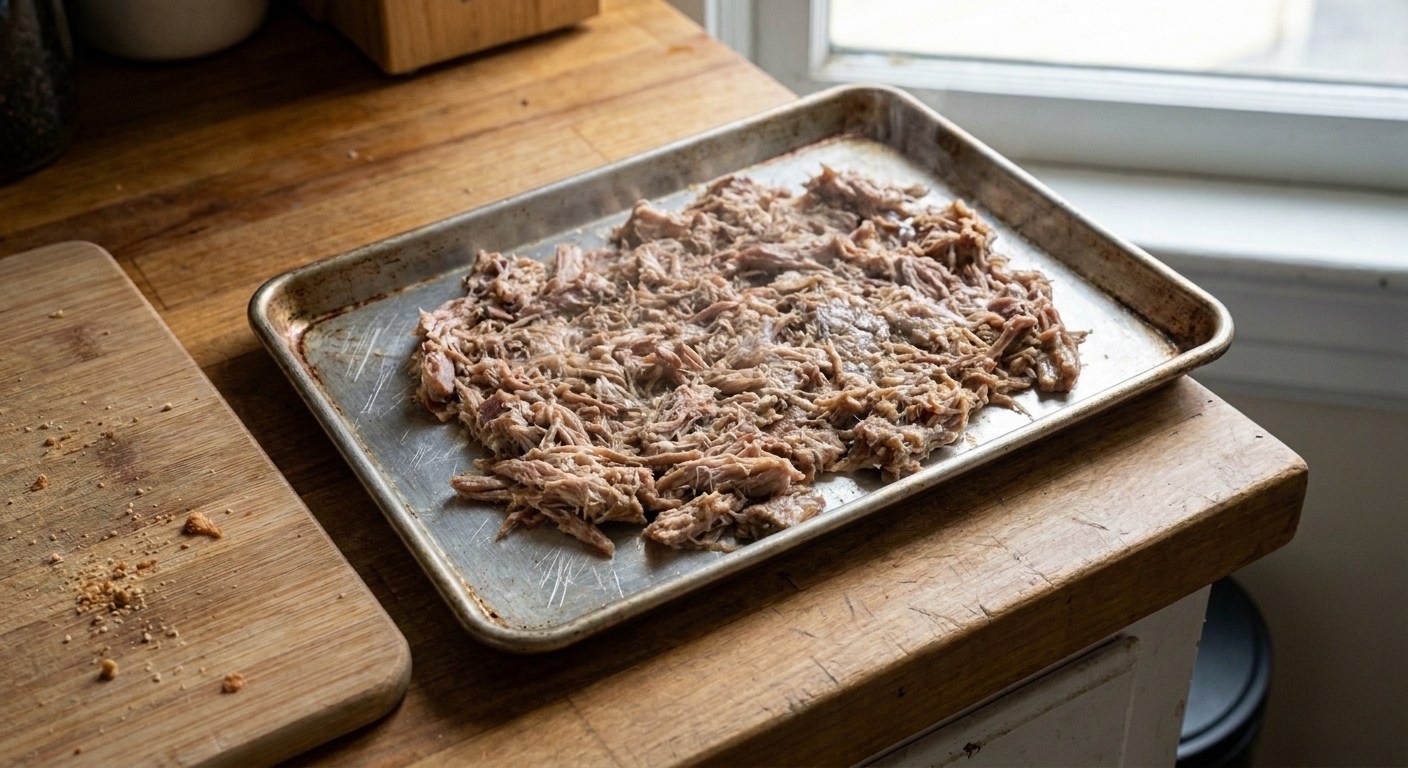
- Pull the pork while it is warm (it is easier), but do not let it sit out too long.
- Spread it out on a rimmed sheet pan in a thin layer so heat escapes fast.
- Cool until it is no longer steaming, then get it into the fridge promptly so it chills fast and safely.
- Freeze once fully chilled (or at least thoroughly cold). This protects texture and keeps your freezer from sweating out ice.
Timing note: As with any leftovers, aim to get cooked pork cooling and into the refrigerator within 2 hours (or 1 hour if your kitchen is very warm).
If your pork has a lot of rendered fat, you can spoon off some excess before freezing, but leave a little behind. Fat helps protect flavor and moisture.
Freeze it with sauce?
This depends on how you like to serve pulled pork later. Here is my honest take after many batches and many freezer experiments.
Freezing plain
If you care about keeping some of that smoky, seasoned exterior texture, freeze the pork mostly plain and add sauce after reheating.
- Pros: better bark texture, works for tacos, grain bowls, sliders, fried rice, nachos
- Cons: you need a splash of liquid when reheating if it looks dry
Freezing with sauce
If your future self wants the easiest possible meal, freeze it already mixed with sauce. Sauced pork reheats very forgivingly because the sauce helps protect it from drying out. The tradeoff is that bark will soften.
- Pros: super juicy, almost impossible to dry out, great for sandwiches
- Cons: bark gets softer, flavor is locked in to that sauce style
My sweet spot
My favorite compromise is to freeze pulled pork unsauced but packed with a few spoonfuls of defatted cooking juices. It keeps the meat succulent and helps it reheat like it was freshly pulled, without turning everything saucy.
How to pack it
Air is the enemy. So is freezing one giant brick that takes forever to thaw.
Portion it first
Freeze in the portions you actually use:
- 1 to 2 cups (or about 8 to 12 oz) for tacos, bowls, and nachos
- 3 to 4 cups (or about 1 to 1 1/2 lb) for a family sandwich night
- 8 to 10 cups only if you regularly feed a crowd
Best packaging options
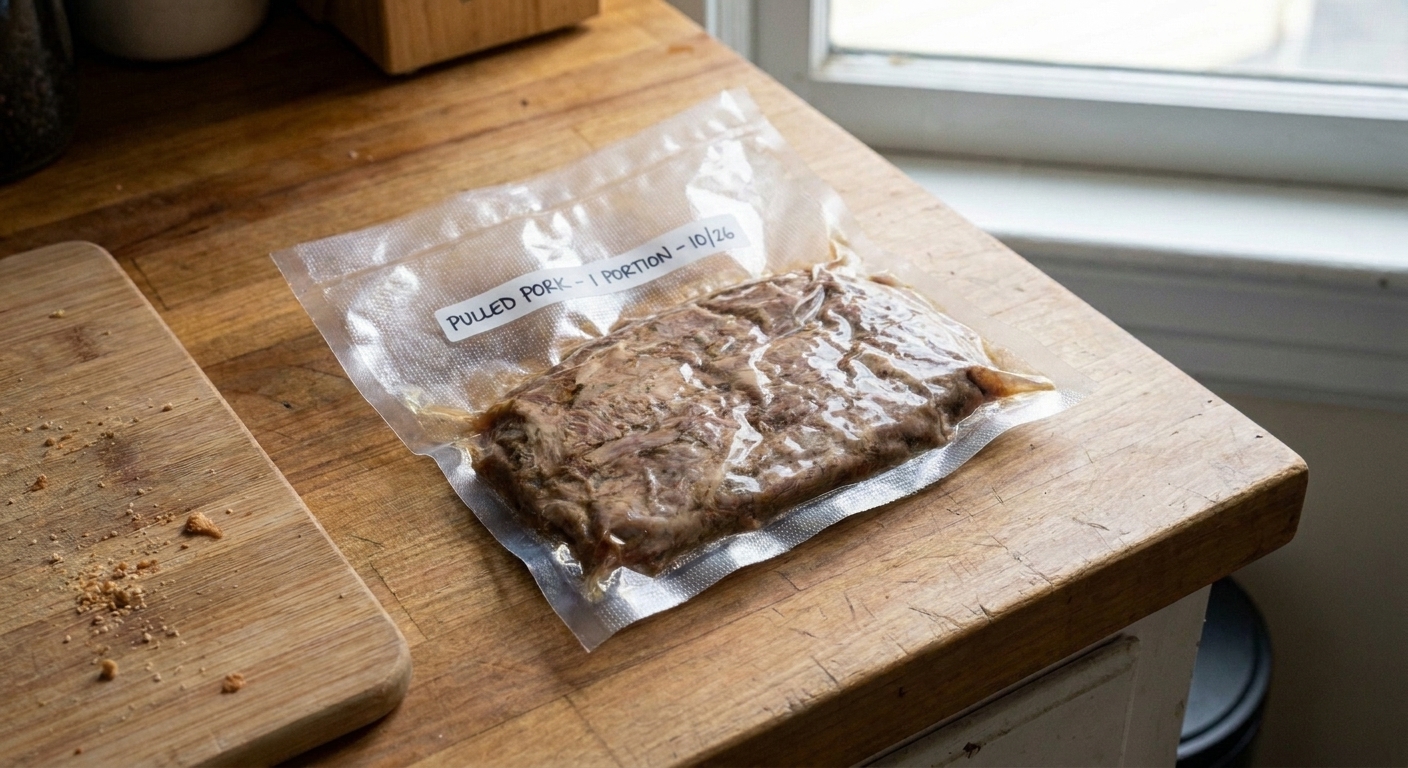
- Vacuum sealer: best protection and longest quality. Seal in a flat layer so it thaws quickly.
- Freezer zip-top bags: excellent if you press out air well. Lay flat to freeze.
- Freezer-safe containers: convenient, but try to minimize headspace and use tight-fitting lids.
My flat pack method
- Spoon fully chilled pulled pork into a freezer bag.
- Add 2 to 4 tablespoons cooking juices (or a splash of broth) per 2 cups pork.
- Press into a thin, even layer so it freezes and thaws fast.
- Press out air: zip most of the way, then use the water displacement method (lower the bag into a bowl of water to push air up and out), and finish sealing.
- Freeze flat on a sheet pan, then file it vertically like a book.
Label it. Date + “sauced” or “unsauced” saves you from freezer mysteries later.
How to thaw it
Thawing is where pulled pork can get watery if you rush it. Here are your best options.
Best method: fridge thaw
Put the bag or container on a plate (to catch drips) and thaw overnight. Thin flat packs often thaw in 12 to 18 hours, larger portions may take closer to 24 hours.
Faster method: cold water
If you are short on time, submerge the sealed bag in cold water and change the water every 30 minutes. Most flat packs thaw in 60 to 90 minutes.
Skip: counter thaw
It is not worth the food safety risk. Keep thawing cold, then reheat promptly.
How to reheat it
Let us be real: bark will never be quite as crisp as day one. But you can keep it from turning mushy by using a two-part approach: rewarm gently, then re-crisp quickly.
Step 1: Rewarm gently
Your goal is juicy meat, not overcooked shreds.
- Oven method (my favorite): Put pork (plus any juices in the bag) in a covered baking dish. Add a splash of broth or cooking juices if it looks dry. Warm at 300°F until hot in the center. For a 1 to 2 cup portion in a shallow dish, expect roughly 20 to 35 minutes, depending on thickness and starting temp.
- Stovetop method: Warm in a covered skillet over low heat with a splash of liquid, stirring occasionally. Small portions often take 8 to 12 minutes.
- Microwave method: Put pork in a microwave-safe bowl, add a spoonful of juices or broth, cover loosely, and heat at 50 to 70 percent power in 60-second bursts, stirring between rounds. If you want texture, finish a small portion in a hot skillet for crisp bits.
Target temperature: Heat until steaming hot throughout (food safety guidelines typically recommend reheating leftovers to 165°F).
Step 2: Re-crisp a little
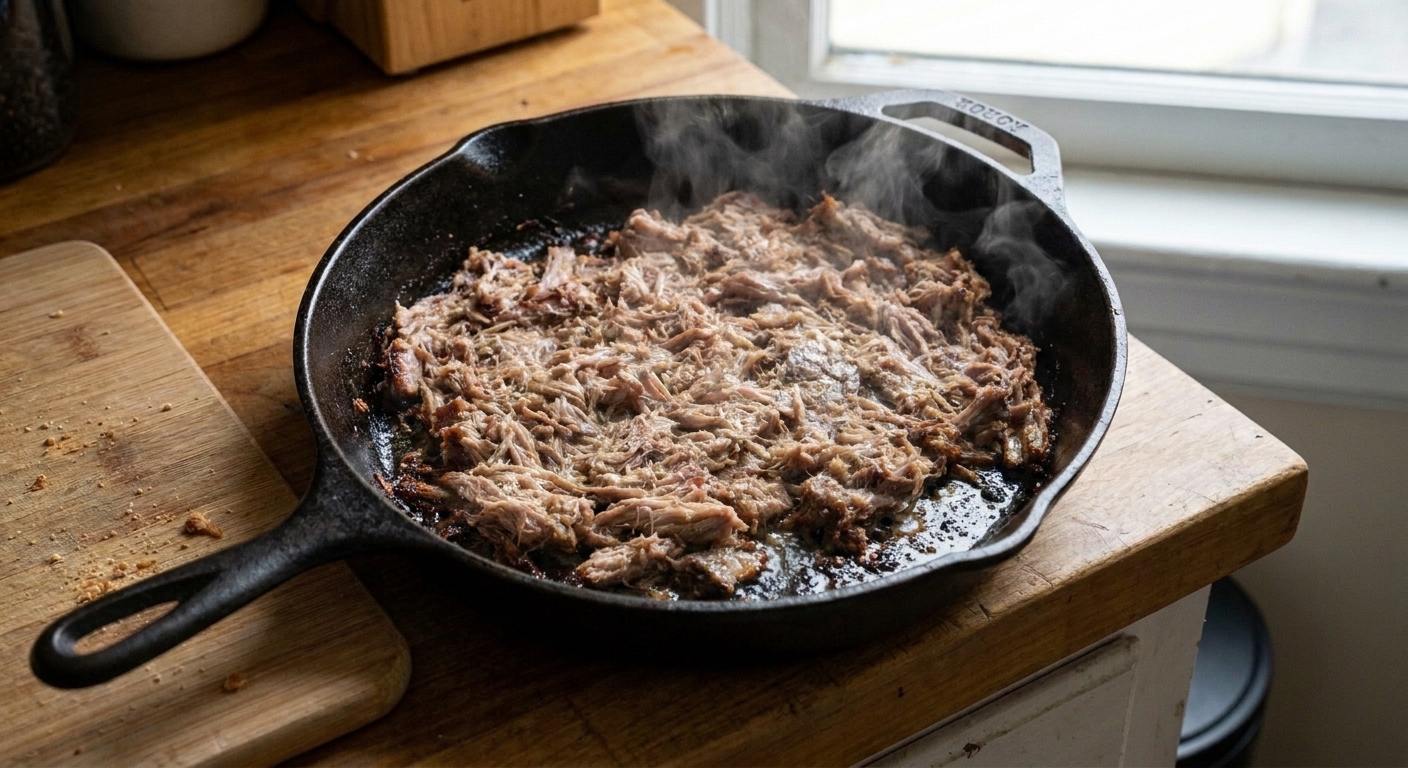
This is the move that keeps dinner from tasting like freezer leftovers.
- Heat a skillet (cast iron is great) over medium-high heat.
- Add a tiny bit of oil or reserved pork fat.
- Press a thin layer of pork into the pan and let it sit without stirring for 60 to 90 seconds.
- Flip and crisp another 30 to 60 seconds.
Do this for just a portion of the meat and then mix it back in. You get little crispy bits throughout without drying everything out.
When to add sauce
- If frozen unsauced: rewarm first, then toss with sauce at the end, then crisp a little in the skillet if you like.
- If frozen sauced: rewarm gently and skip aggressive crisping. If you want texture, crisp a small amount of unsauced meat separately (if you have any) and combine.
Common mistakes
- Freezing it warm: warms your freezer and encourages more surface ice. Cool quickly, chill, then freeze.
- No liquid at all: makes the pork reheat dry. Add a small splash of juices or broth in the bag.
- Too much air in the package: freezer burn happens fast. Press it out or vacuum seal.
- One huge portion: takes forever to thaw and reheat evenly. Portion it first.
- Mixing in a sauce you are not sure about: if you like variety, freeze mostly plain and sauce later.
FAQ
Can you freeze pulled pork twice?
I do not recommend it. Each freeze-thaw cycle costs you moisture and texture. If you thaw a big batch, portion it and use it over the next few days instead of refreezing.
Should I remove fat before freezing?
Remove excess fat if there is a lot, but leaving a little helps protect flavor and keeps the meat tasting richer after reheating.
What if I froze it without juices?
You can still save it. Thaw, then reheat gently with a splash of broth, apple juice, or a little water plus a pinch of salt. Finish with a quick skillet crisp for better texture.
Can I freeze pulled pork with mayo or dairy sauces?
You can, but creamy and mayo-based sauces can separate or turn grainy after freezing and reheating. I prefer freezing the pork on its own (or with juices), then adding creamy sauces fresh after it is hot.
My freezer plan
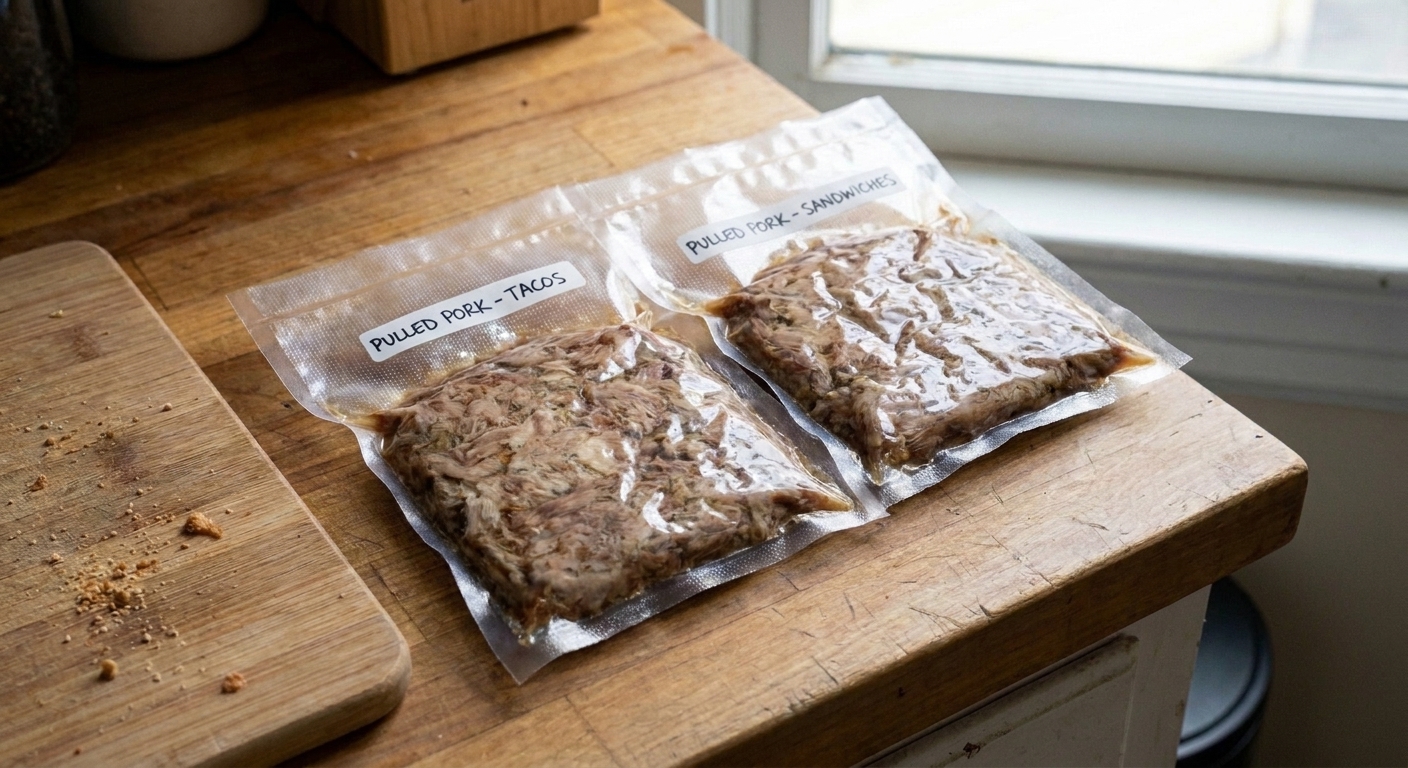
When I make pulled pork, I usually freeze it in two ways:
- Two unsauced flat packs with a few spoonfuls of cooking juices for tacos, rice bowls, and baked potatoes.
- One sauced pack for the easiest possible sandwich night.
That way you get both convenience and flexibility, and you are never stuck eating the exact same style of pulled pork for a week straight.