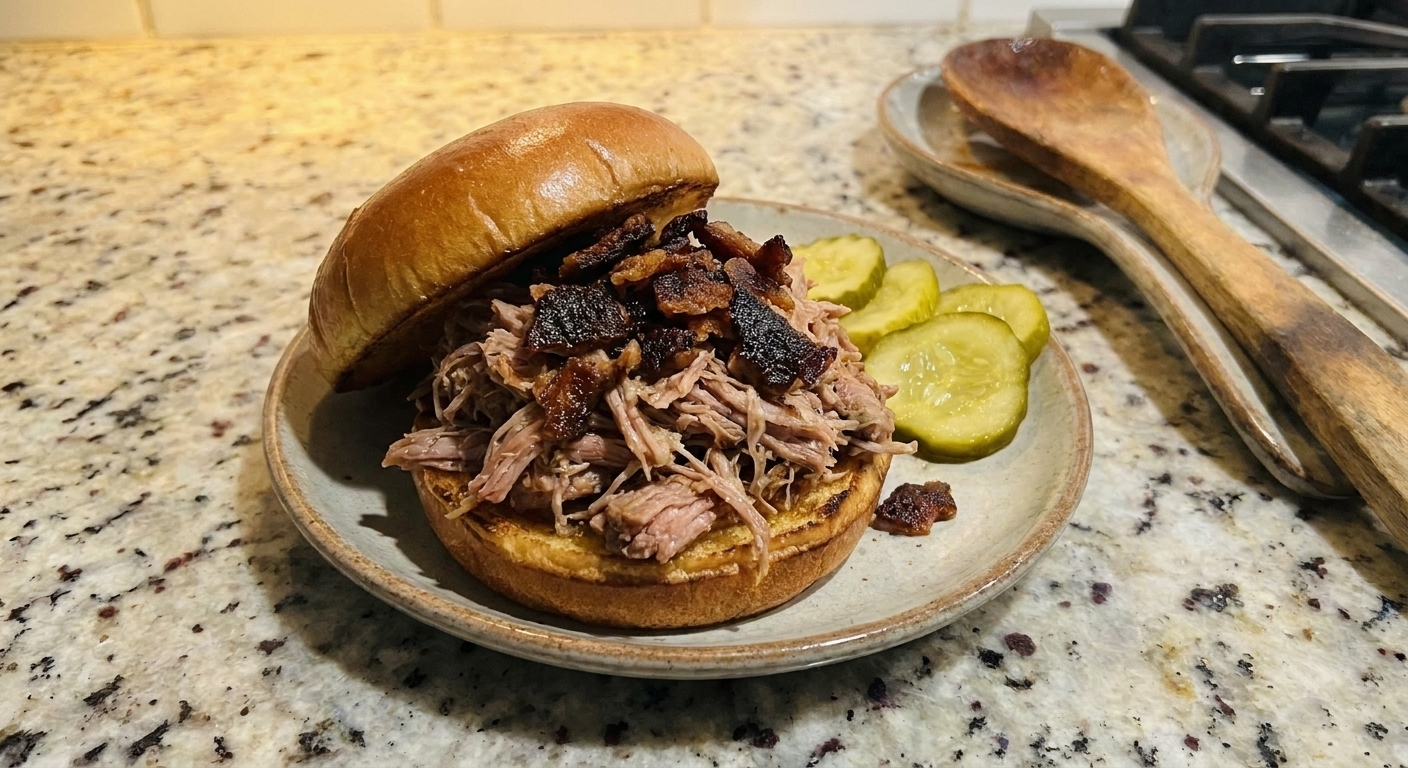

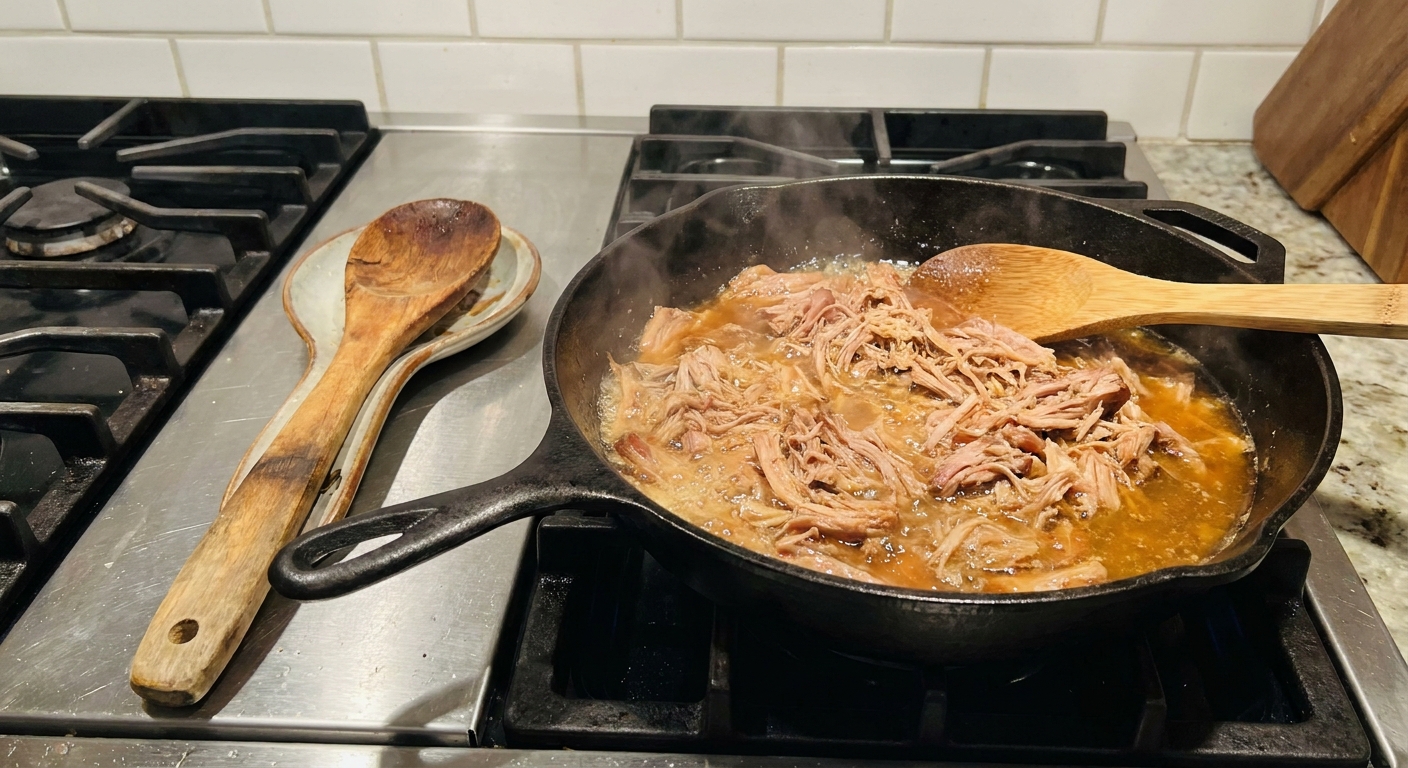
The first time I reheated pulled pork for a weeknight dinner, I did what many of us do when we are hungry and impatient. I tossed it in the microwave, walked away, and came back to meat that was both hot and somehow dry at the same time. Since then, I have reheated a truly unreasonable amount of pulled pork for sandwiches, rice bowls, tacos, and potlucks. The good news is this: you do not need fancy equipment to keep it juicy. You just need gentle heat, a little moisture, and one tiny strategy for the bark.

Before you reheat: 3 rules
Pulled pork dries out for two reasons: it gets overheated, and it loses moisture while warming. These quick habits fix both.
- Reheat low and slow-ish. You are not cooking it again, you are warming it. Keep the heat moderate so the proteins do not tighten up.
- Add moisture on purpose. Even saucy pork benefits from a splash of liquid to create steam and protect the meat. Start small. You can always add more.
- Separate the bark (if you have it). Bark is the dark, flavorful crust from smoking or roasting. It turns soft when it sits in sauce or steams too long. If you want it punchy, treat it like a topping, not part of the reheat.
Quick food safety note: These tips are for pulled pork that was refrigerated promptly and stored in the fridge. Reheat until it is steaming hot throughout. If you like using numbers, aim for 165°F in the center. As a general rule, refrigerate leftovers within 2 hours and use them within 3 to 4 days, or freeze for longer storage.
How much liquid to add
The right amount depends on how your pork was stored and how dry it looks. Use this as a starting point, then add more a tablespoon at a time if it still looks thirsty. Lean pork or very finely shredded pork usually needs a little more.
- For 1 cup pulled pork: start with 1 to 2 tablespoons liquid
- For 1 pound pulled pork (about 3 to 4 cups): start with 1/4 to 1/3 cup liquid
- For 2 pounds pulled pork: start with 1/2 to 2/3 cup liquid
Best liquids: drippings from the original cook, warmed BBQ sauce, low-sodium broth, apple juice, a splash of cider vinegar plus broth, or a little water in a pinch.
Maya tip: If your pork is already pretty saucy, use broth or water instead of more sauce at first. Too much sauce early can make reheated pork taste heavy and overly sweet.
Stovetop method
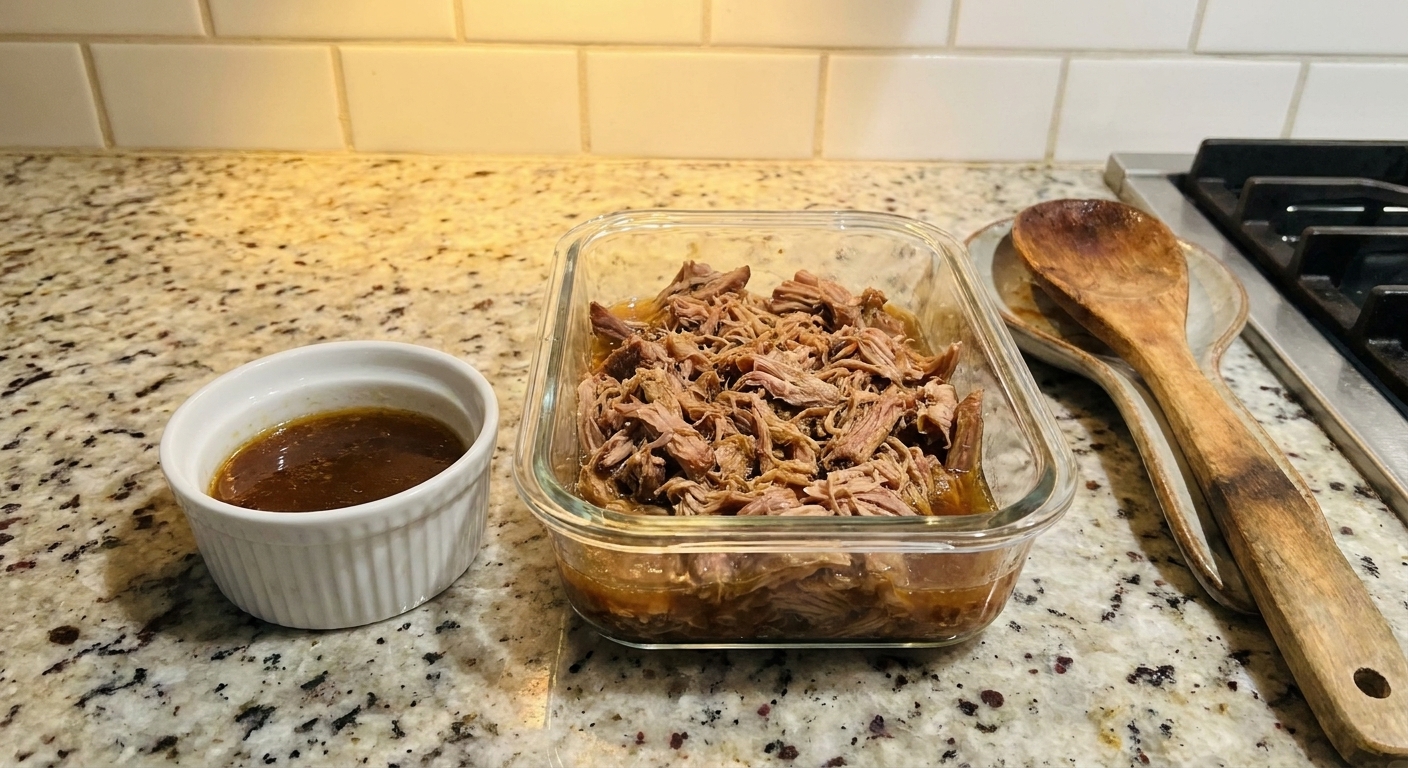
If I have 10 minutes and want the most control, I go stovetop. It warms evenly, you can adjust moisture as you go, and you can keep some pork unsauced if you are feeding picky eaters.
Steps
- Take the edge off the chill (optional). If you have time, let the container sit out for 10 to 15 minutes so it reheats more evenly. Keep it brief and do not leave it out longer than 2 hours total.
- Add pork to a skillet. Use any skillet you can cover with a lid. No lid is fine too, just cover snugly with foil.
- Add liquid. For each pound of pork, start with about 1/4 cup broth, drippings, or water. If you want it sauced, add 2 to 4 tablespoons BBQ sauce now and the rest later.
- Cover and warm gently. Set heat to low or medium-low. Cover and heat 5 to 8 minutes, stirring once or twice.
- Finish uncovered if needed. If it looks too wet, remove the lid for 1 to 2 minutes so excess liquid reduces into a glossy coating.
- Taste and adjust. Add salt, pepper, a splash of vinegar, or more sauce to taste.
Keep bark crisp on the stove
Pick out the barky chunks before you start, if you can. Reheat the softer interior meat with the liquid. Then, in a second dry skillet, warm the bark pieces over medium heat for 1 to 2 minutes until they smell toasty again. Pile them on top right before serving.
Oven method
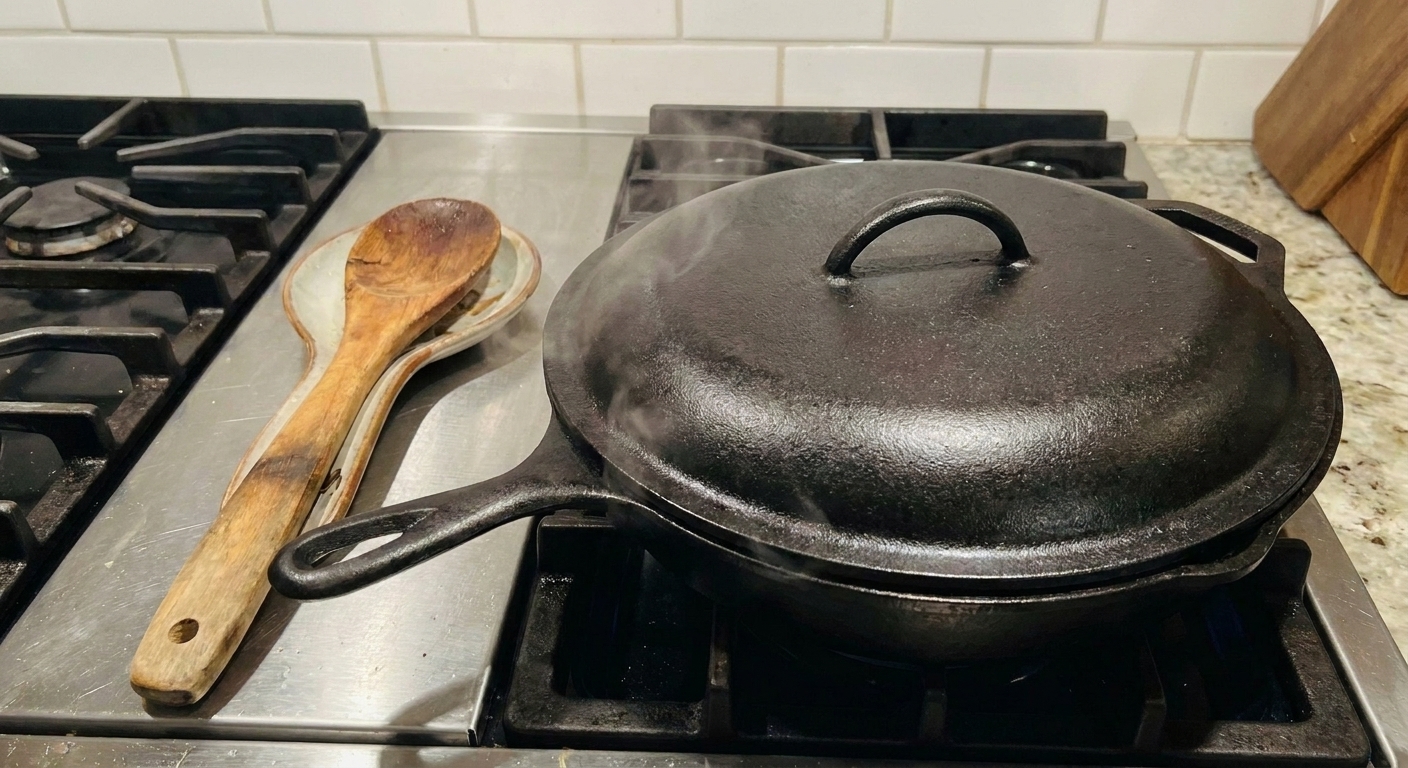
If you are reheating pulled pork for a crowd, the oven is your friend. The key is creating a moist environment so the meat warms through without drying. Think gentle braise, not roast.
Steps
- Preheat to 300°F. This temperature warms efficiently without blasting the meat.
- Spread pork in a baking dish. A 9 x 13-inch dish works well for 2 to 3 pounds.
- Add liquid. For about 2 pounds of pork, start with 1/2 cup liquid, or enough to lightly moisten the bottom of the dish. Toss gently to distribute.
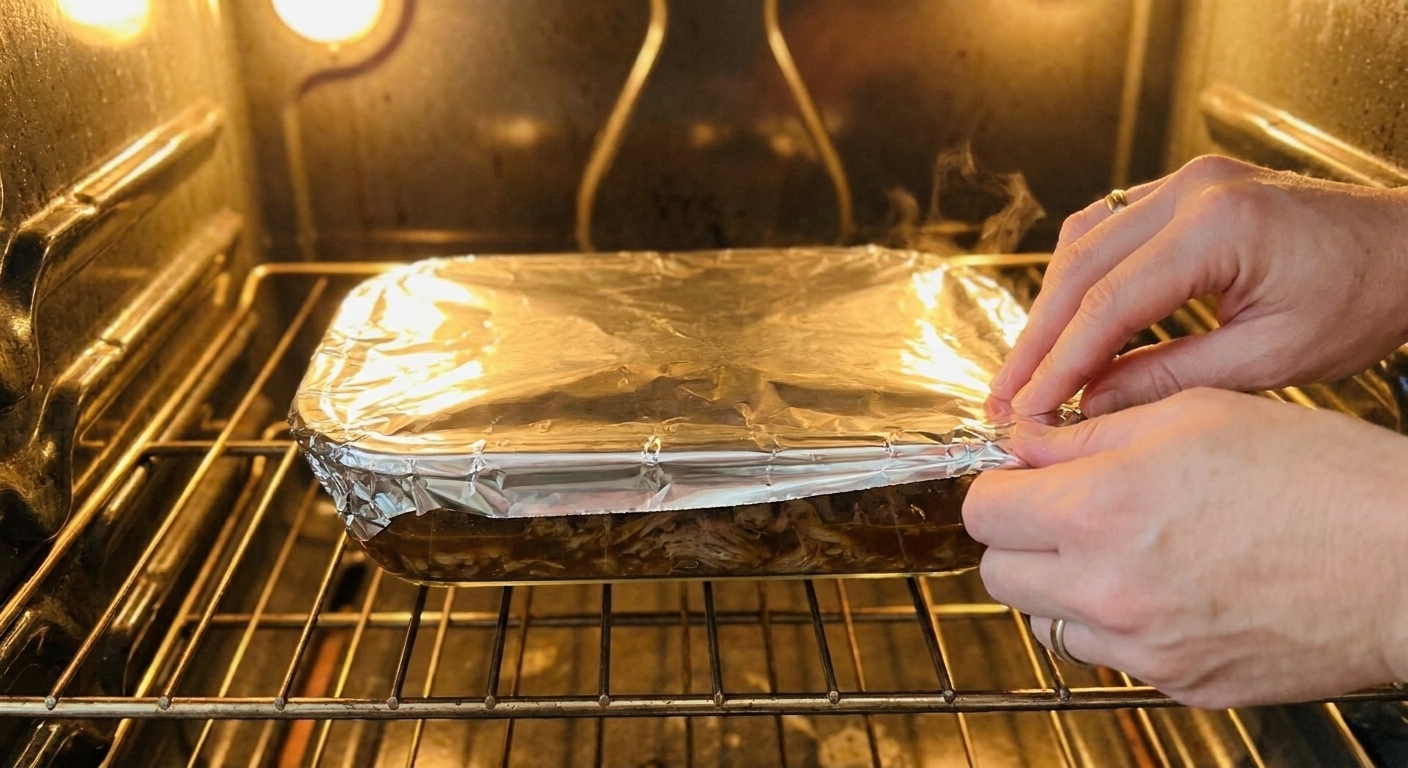
- Cover tightly. Use foil pressed snug to the dish, or a tight-fitting lid. Trapped steam is what keeps it juicy.
- Heat until steaming hot. Plan on 20 to 30 minutes for an average pan, stirring once halfway through. Cold, heavy ceramic or glass dishes may take closer to 35 minutes.
- Sauce at the end. Stir in BBQ sauce during the last 5 minutes so it stays bright and does not bake onto the edges.
Keep bark crisp in the oven
Use the two-pan approach.
- Pan 1: Reheat the majority of the pork covered with liquid (juicy base).
- Pan 2: Spread barky pieces on a sheet pan and warm uncovered for 5 to 8 minutes during the last part of reheating. If you want extra crisp edges, broil for 30 to 60 seconds at the very end, watching closely.
Microwave method
The microwave is not the enemy. It just needs a little strategy because microwaves heat unevenly and can overcook edges quickly.
Steps
- Put pork in a microwave-safe bowl. Spread it out, do not mound it up.
- Add liquid. Start with 1 tablespoon liquid per cup of pork. Toss.
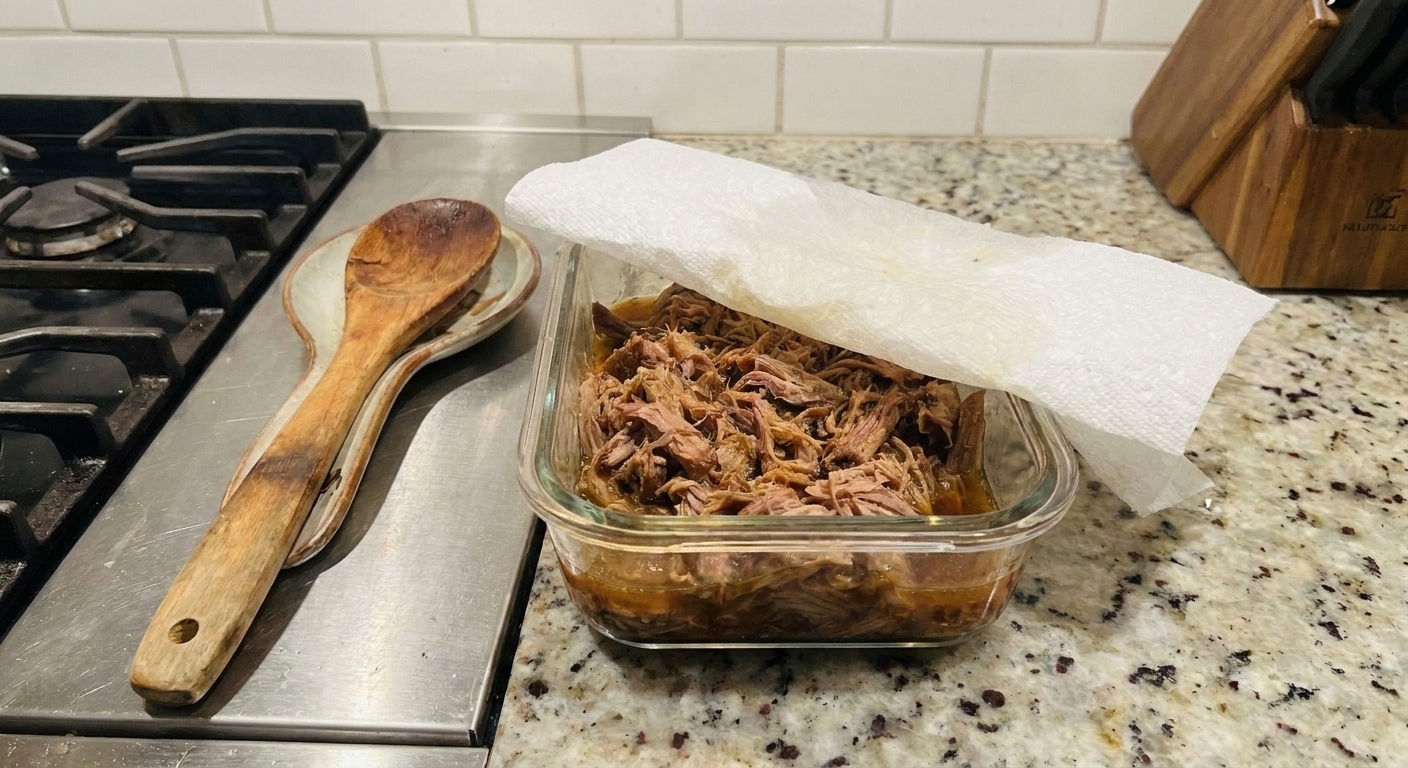
- Cover loosely. Use a microwave-safe lid or a damp paper towel. This traps steam without creating a pressure situation.
- Heat at 50 to 70% power. This is the big secret. Use 1 minute bursts, stirring each time. (For 1 cup, it is often 2 to 3 bursts. For 3 to 4 cups, plan on 4 to 6 bursts.)
- Stop when it is hot throughout. Once it is steaming and hot, stop. If you are unsure, check the center with a thermometer and aim for 165°F. Microwave hot spots are real.
- Add sauce after. Stir in sauce at the end so it tastes fresher and you do not scorch sugars.
Keep bark crisp in the microwave
Microwaves soften bark. If bark texture matters to you, microwave the main pork without bark, then crisp bark pieces separately in a skillet for a minute or two. If you only have the microwave, keep bark pieces on top and heat loosely covered so they steam less.
If your pork is already sauced
Sauced pulled pork reheats well, but it can still dry out because sauce thickens as it cools.
- Add a splash of water or broth first, not more sauce. For 1 pound sauced pork, try 2 to 3 tablespoons liquid.
- Reheat covered whenever possible. Lid, foil, or a loose cover in the microwave.
- Brighten at the end. A tiny splash of vinegar, hot sauce, or lemon can wake up leftover sauce that tastes flat.
If your pork is not sauced
Unsauced pork is my favorite kind of leftover because you can take it in any direction. But it needs moisture while reheating.
- Use broth or drippings. That keeps flavor savory and not sweet.
- Season after reheating. Salt reads stronger once the meat is warm.
- Finish with a little fat if it tastes lean. A teaspoon of butter, a drizzle of olive oil, or a spoonful of pan drippings can make it feel lush again.
Reheat from frozen
If your pulled pork is frozen, the best move for texture is to thaw it overnight in the fridge, then reheat using the stovetop or oven method above with a splash of extra liquid.
If you need to reheat from frozen, do it gently and covered. Put the frozen pork in a covered baking dish with a few tablespoons of broth, heat at 300°F, and stir and break it up as it softens. Once it is fully loosened and steaming hot, you can sauce it and finish as usual. Expect it to take longer than fridge leftovers.
Best method by meal
Sandwiches
Reheat on the stove with a lid and just enough liquid to keep it juicy, then stir in sauce at the end. Pile bark on top for texture. Toast the buns so they do not get soggy.
Tacos and rice bowls
Reheat mostly unsauced with broth, then season with cumin, chili powder, and lime at the end. This keeps flavors punchy instead of muddled.
Nachos or baked potatoes
Reheat in the oven covered until hot, then uncover for a few minutes to reduce excess moisture. Wet pork makes soggy chips and watery potatoes.
Pulled pork reheating FAQ
Why did my pulled pork turn dry?
Usually it is a combo of too-high heat and not enough moisture. Reheat at lower heat, keep it covered so steam can circulate, and add a measured splash of liquid. Also stop heating as soon as it is hot. Overheating is what makes it feel stringy and tough.
What liquid is best to add?
Best options are pork drippings (if you saved them), broth, or a little BBQ sauce thinned with water or broth. Apple juice works nicely for BBQ-style pork. Plain water works too, but it adds moisture without adding flavor.
How do I reheat without making it mushy?
Use the minimum liquid needed and avoid aggressive stirring. For bark, reheat it separately so it stays textured. If your pork is very finely shredded, oven or stovetop on low heat tends to keep better texture than microwaving on full power.
How long is leftover pulled pork good for?
If it was refrigerated promptly, pulled pork is generally best used within 3 to 4 days. For longer storage, freeze it. Reheat leftovers until steaming hot throughout (165°F in the center if you want to verify).
Can I reheat pulled pork more than once?
You can, but quality drops each time. I recommend reheating only what you will eat. If your leftovers are in one big container, portion them before reheating so you are not warming and cooling the whole batch repeatedly.
Covered or uncovered?
Covered is better for keeping it juicy because it traps steam. Uncovered can be useful only at the very end to reduce excess liquid or concentrate sauce.
My go-to method
If you want my most reliable, weeknight-proof approach, it is this: stovetop, covered, with about 1/4 cup broth per pound. Warm gently, then add sauce at the end. If you have bark, treat it like a crunchy topping and re-crisp it separately. It is one extra pan, yes, but the payoff is pulled pork that tastes like you just made it, not like you rescued it.
Maya tip: If you are reheating for a party, keep the pork a touch on the “juicy” side in the oven, then let it sit covered for 5 minutes. The meat will soak up a little liquid as it rests, and it stays forgiving on a buffet.