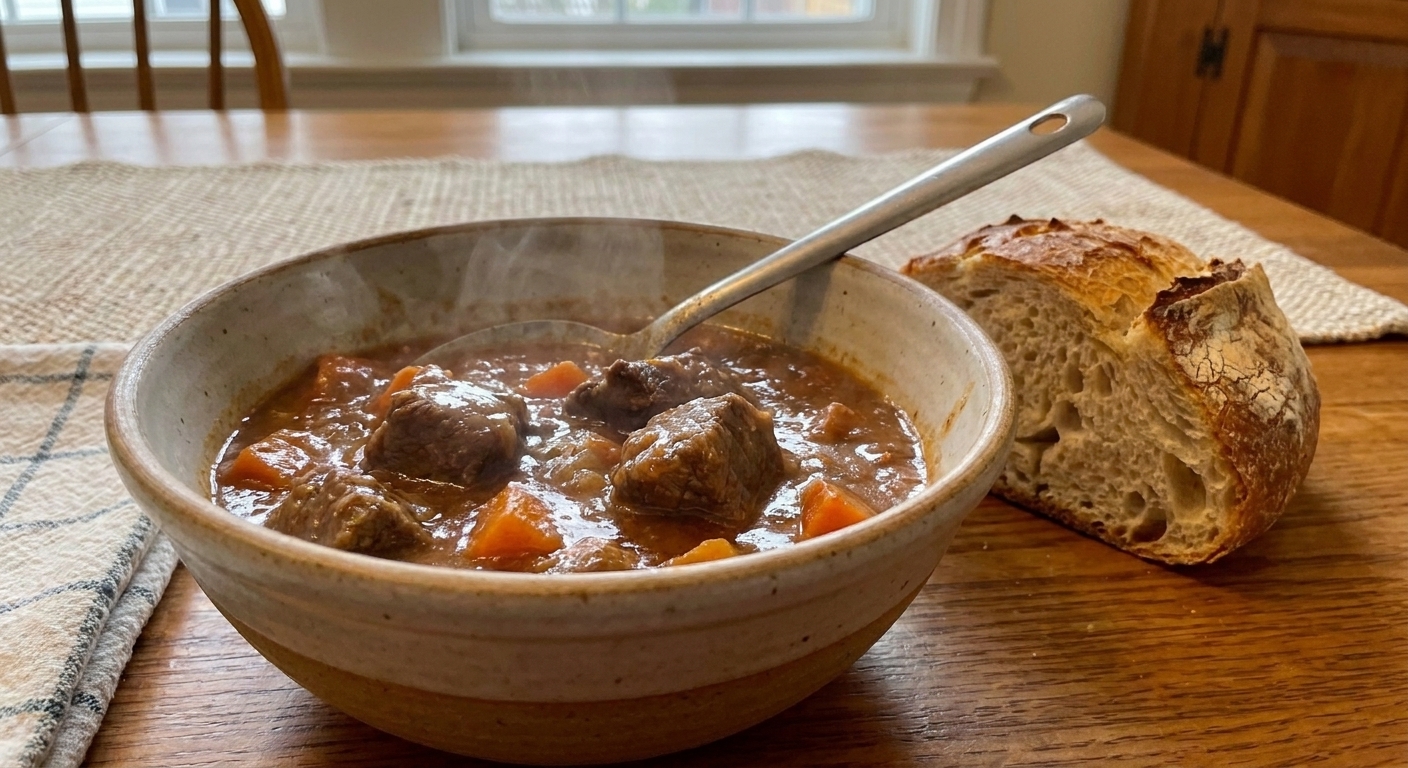

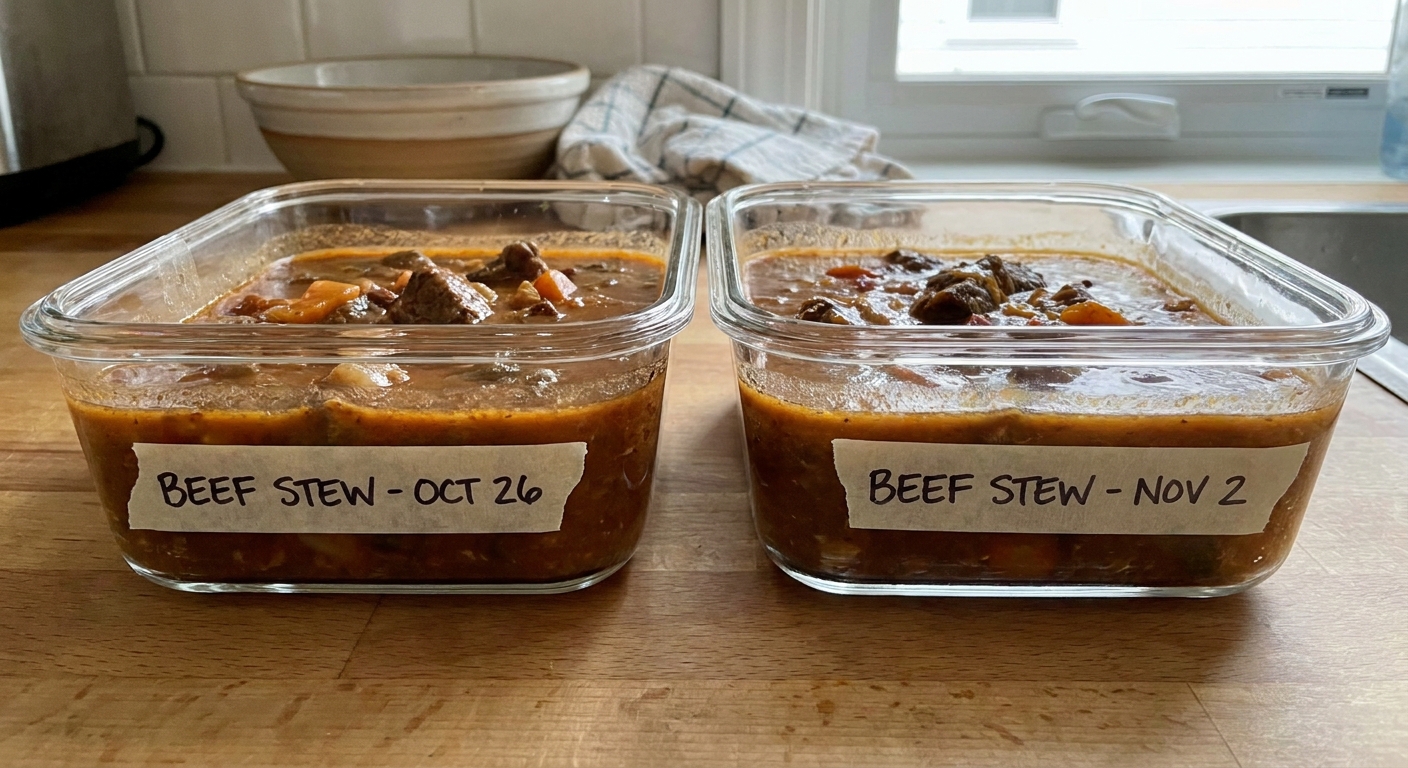
Beef stew is one of my favorite “future me will be so happy” meals, right up until I thaw it and discover the potatoes turned soft and grainy and the gravy looks a little broken. The good news is you do not need a different recipe. You just need a slightly different freezing strategy. With a few small tweaks, you can pull a container of stew from the freezer and have it taste like it was made on purpose for that night.

Why potatoes go mushy
Potatoes are basically little water balloons filled with starch. When they freeze, ice crystals form and damage the potato’s cell structure. When you reheat, that structure collapses, and you end up with potatoes that can be mealy, grainy, or just plain mushy.
The workaround: freeze the stew base and add potatoes after thawing, or freeze with potatoes only when they are cooked to just-tender and you reheat gently.
Best option: freeze the base
If you want the closest-to-fresh texture, this is the method I recommend most often.
Veg to leave out
- Potatoes (all types, but especially russet and Yukon Gold)
- Quick-cooking vegetables that you like with a little bite: peas, green beans, zucchini
- Mushrooms if you are sensitive to their texture after freezing (they can become a bit spongy)
Veg that freeze well
- Carrots
- Celery (softens, but still fine)
- Onion
- Parsnips
- Turnips or rutabaga (excellent potato stand-ins)
Weeknight reality check: If the stew is already made with potatoes, do not panic. You can still freeze it. I have a “already has potatoes” section below, plus reheating tips that give them their best chance.
Cool it safely
This part matters. Big pots of stew hold heat for a long time, and we want leftovers to cool quickly and safely before freezing.
Rule of thumb: get it into the refrigerator within 2 hours of cooking (within 1 hour if your kitchen is very warm).
Cool fast in shallow layers
- Turn off the heat and let the stew sit 10 to 15 minutes so it stops actively steaming.
- Divide into shallow containers (about 2 to 3 inches deep, or 5 to 7.5 cm). Shallow cools faster than a deep pot.
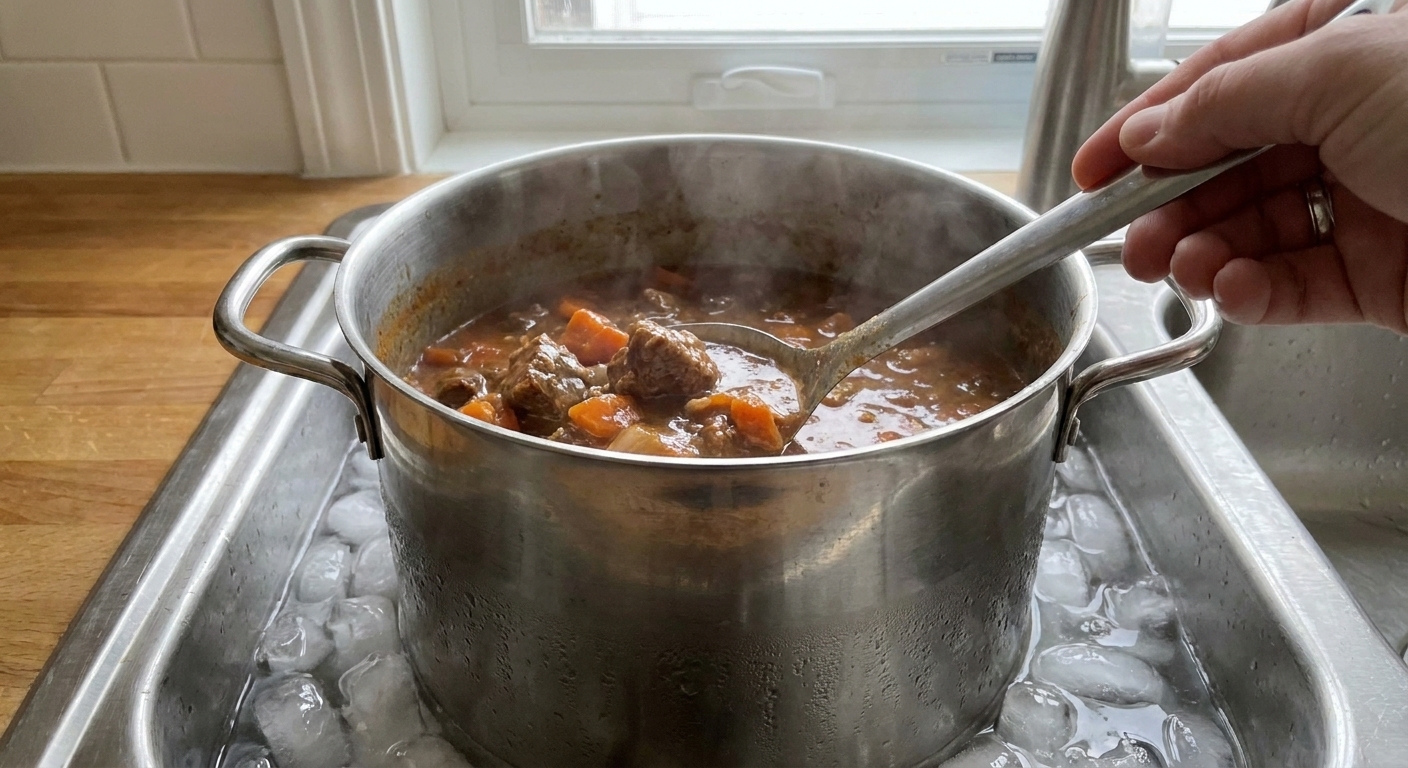
- Use an ice bath if you want it even faster: set the containers in a rimmed sink or large roasting pan filled with ice water, and stir the stew occasionally until it is no longer hot.
- Chill in the fridge, then seal: you can cool it with the lid cracked or loosely covered to let heat escape. Once it is no longer steaming and fully chilled, cover tightly before freezing. (This helps with fridge odors and cross-contamination.)
Safety goal: cool it promptly and get it into the refrigerator on time, rather than letting it linger on the counter. If you made a huge batch, shallow containers plus an ice bath is the move.
Pack it so gravy stays smooth
Gravy can look a little separated after freezing, especially if it is thickened with flour or cornstarch. The trick is to cool it properly, avoid excess air, and reheat it gently so it comes back together.
Pick a good container
- Freezer-safe deli containers (my favorite for stacking and portioning)
- Wide-mouth mason jars (only straight-sided, freezer-safe jars, with plenty of headspace)
- Heavy-duty freezer bags (great for flat freezing and quick thawing)
Leave headspace
Liquids expand when frozen. Leave about 1 inch (2.5 cm) of space at the top of a container, or press air out of a freezer bag and lay it flat.
Glass jar specifics (to prevent cracking)
- Use straight-sided wide-mouth jars that are labeled freezer-safe.
- Cool completely before freezing.
- Do not fill past the shoulder (the curve near the top). Leave headspace.
Keep it from turning gluey
- Do not over-reduce before freezing. Very thick stew can reheat unevenly and feel pasty. If it is already thick, loosen with a splash of broth when reheating.
- Cool completely before sealing. Warm stew creates condensation inside the lid, which can lead to icy crystals and watery separation.
- Freeze in meal-size portions. Smaller portions freeze faster and thaw faster, which helps texture.
Quick freezing steps
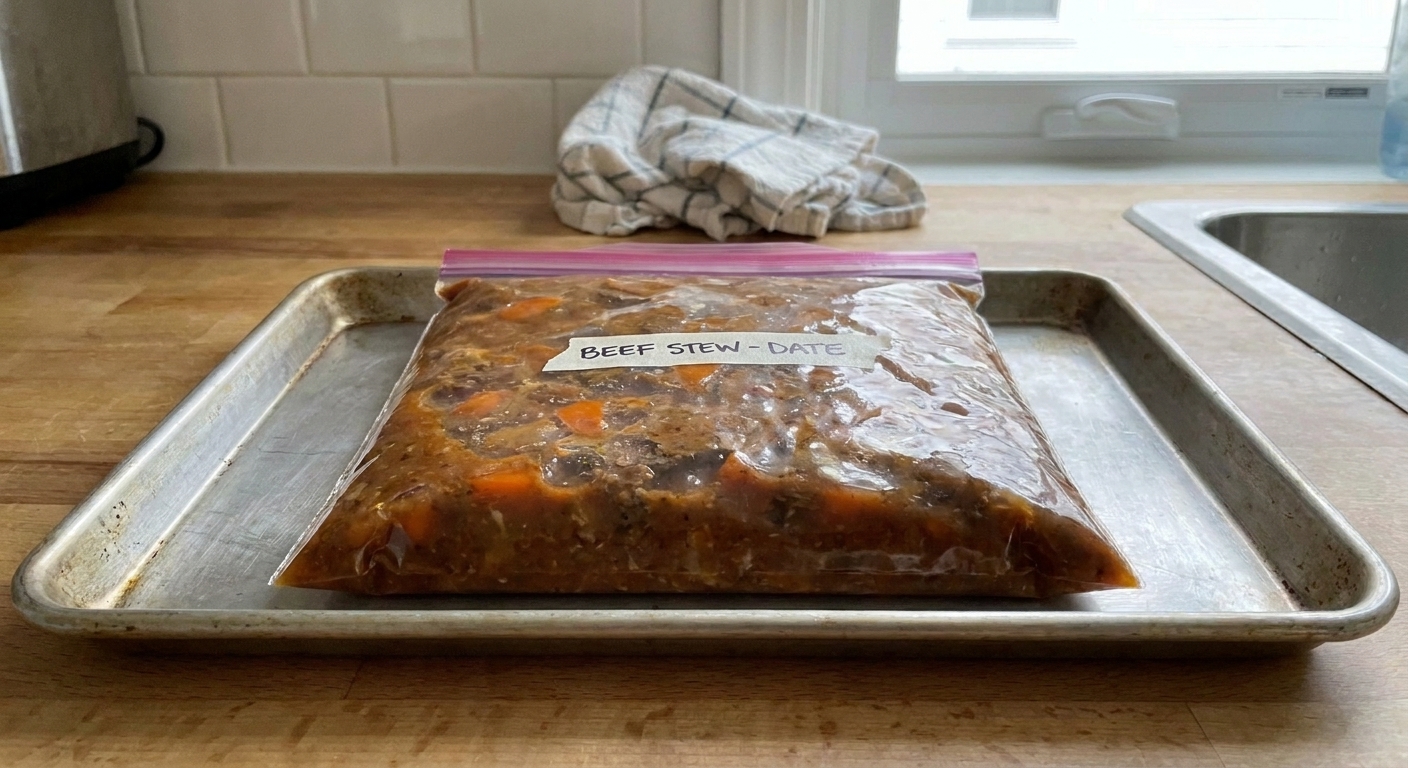
- Portion it: fill containers with headspace, or fill freezer bags and press out as much air as you can.
- Remove extra air from bags: if you do not have a vacuum sealer, use the water-displacement method. Seal the bag almost all the way, lower it into a bowl of cold water until the water pressure pushes air up and out, then finish sealing.
- Freeze flat first: lay bags flat on a baking sheet so they freeze in thin slabs.
- File upright: once solid (often overnight), stand them up like files to save space and make thawing easier.
Labeling and storage time
Labeling is not glamorous, but it saves you from mystery containers later.
- Label with: “Beef stew base” or “Beef stew with potatoes,” plus the date.
- Best quality: aim to use within 2 to 3 months for the best texture and flavor.
- Still safe longer: if it stays frozen at 0°F (-18°C), it can remain safe beyond that, but quality slowly declines.
- Placement: freeze flat portions in a single layer until solid, then store upright like files.
Thawing the right way
Best: overnight in the fridge
Slow thawing helps everything warm more evenly later and gives the gravy the best chance to look smooth again.
Faster: cold water for sealed bags
If you froze in a well-sealed freezer bag, submerge it in a bowl of cold water and change the water every 30 minutes until pliable, then reheat right away.
Microwave thawing
It works in a pinch, but microwave thawing can create hot spots that overcook potatoes and veggies. If you use it, thaw on low power and stir often.
Skip the counter: thawing stew at room temperature is not a great plan for food safety. Stick to the fridge, cold water, or the microwave.
Reheat without grainy potatoes
High heat is the enemy of good potato texture, especially after freezing. Gentle heat plus a little patience wins every time.
Food-safety target: reheat leftovers to 165°F (74°C) and keep the simmer gentle.
Stovetop (best for texture)
- Pour thawed stew into a saucepan or Dutch oven.
- Add a splash of broth or water if it looks very thick.
- Warm over medium-low, stirring occasionally, until it reaches a steady simmer.
- Once simmering, cook 5 to 10 minutes to heat through, keeping the simmer gentle, not a hard boil.
Slow cooker (hands-off)
Use LOW and give it time. Stir once or twice if you can. Avoid HIGH if your stew contains potatoes.
Microwave (fine for lunch)
Use a microwave-safe bowl, cover loosely, and heat in short bursts, stirring every 60 to 90 seconds. This prevents the gravy from overheating while the center stays cold.
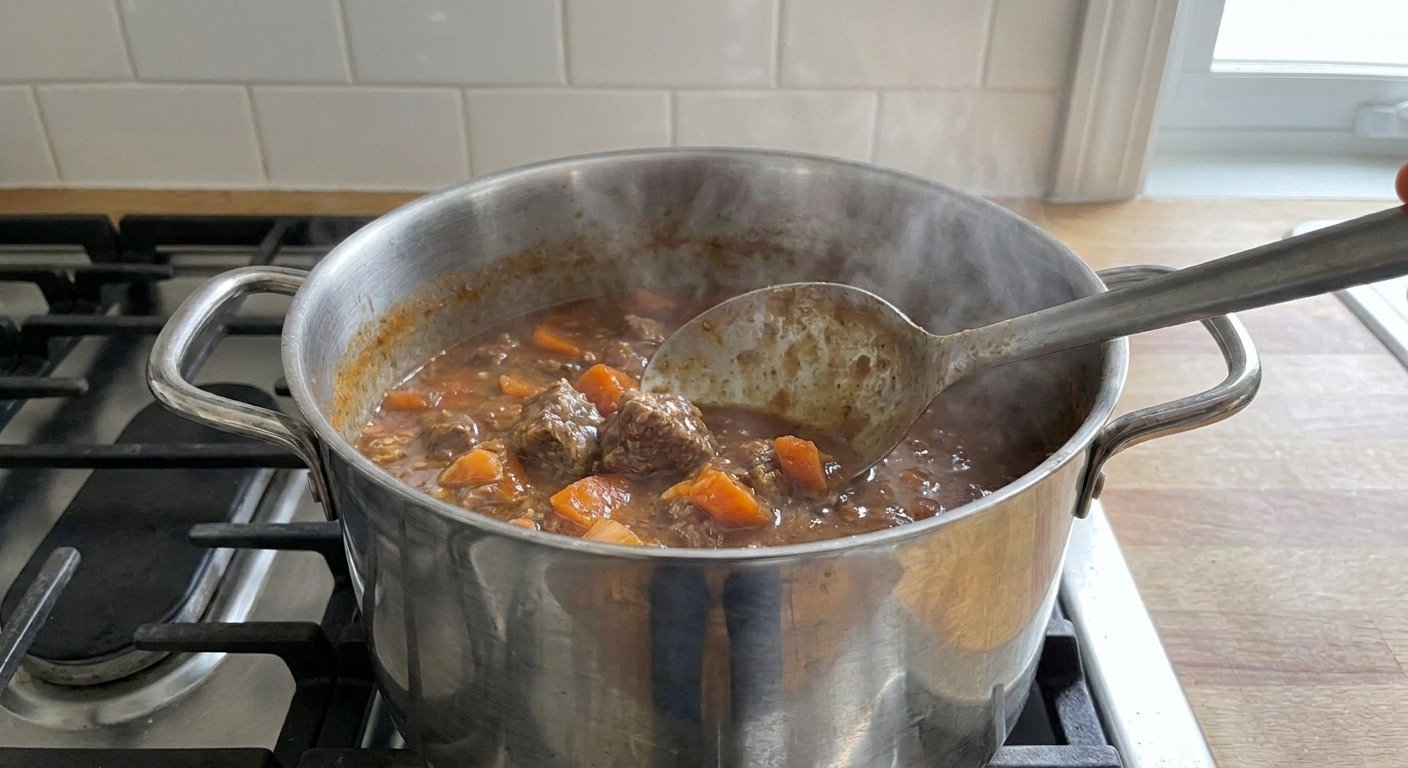
Add potatoes after thawing
If you froze the stew base without potatoes, you get to choose your own adventure on reheating night.
Option 1: add fresh potatoes
- Thaw and warm the stew base to a gentle simmer.
- Meanwhile, peel and dice potatoes into 3/4-inch (2 cm) chunks.
- Add potatoes to the simmering stew and cook until just tender, usually 12 to 18 minutes depending on variety and size.
- Rest the stew off heat for 5 minutes before serving so the gravy settles.
Option 2: swap in a freezer-friendlier veg
If you want a similar cozy vibe without the potato risk, use parsnips or turnips. They hold up beautifully and taste amazing with beef and gravy.
If it already has potatoes
Sometimes the stew is already made, potatoes and all. You can still freeze it. Here is how to give those potatoes their best chance.
- Freeze sooner rather than later. The longer potatoes sit in stew, the softer they get even before freezing.
- Reheat gently. Medium-low heat, stir carefully, and avoid a hard boil.
- Add liquid as needed. A splash of broth helps the gravy warm evenly so you do not overcook the potatoes while trying to heat the center.
- Try a salvage move if they go grainy. Mash a few potato pieces into the broth to thicken the stew and make the texture feel intentional.
- Next time, pull some potatoes out. If you know you will freeze half, fish out a portion of potatoes and freeze the base, then add fresh potatoes later.
Keep gravy from separating
A little separation is normal. It does not mean your stew is ruined.
Fix it while reheating
- Warm slowly and stir often as it comes up to temperature.
- Whisk briefly once the stew is hot, especially around the edges of the pot where thickened gravy likes to cling.
- Add a splash of broth if it seems too thick or starchy.
If it is thin after thawing
Simmer uncovered for a few minutes, stirring, until it thickens back up. Keep the heat moderate so you do not beat up the vegetables.
Freezing beef stew FAQ
Can you freeze beef stew in glass jars?
Yes, if the jar is freezer-safe. Use straight-sided, wide-mouth jars, cool the stew completely first, leave generous headspace, and do not fill past the shoulder.
Should I freeze beef stew with the potatoes in it?
You can, but texture is better if you freeze the stew base and add potatoes after thawing. If you do freeze with potatoes, reheat gently and avoid boiling.
What potatoes hold up best if I freeze them?
Waxy potatoes tend to fare better than very starchy ones. Red potatoes often stay more intact than russets, but any potato can turn grainy if overheated during reheating.
Why did my potatoes turn grainy after reheating?
Freezing damages potato cells, and then high heat pushes the starches to tighten and crumble. Gentle reheating and adding a little broth to help heat evenly can reduce graininess.
Can I freeze stew thickened with flour or cornstarch?
Yes. Expect minor separation, then reheat slowly and stir or whisk to bring it back together. If it becomes too thick, thin with broth. If it is too thin, simmer uncovered briefly.
Best results checklist
- Cool stew quickly in shallow containers and get it into the fridge within 2 hours (1 hour in a hot kitchen), then freeze once cold.
- Freeze the stew base without potatoes when you can.
- Pack in meal-size portions with headspace and minimal air.
- Freeze bags flat, then store upright.
- Thaw overnight in the fridge for the smoothest texture.
- Reheat low and slow to 165°F (74°C). No hard boil if potatoes are involved.
- Add fresh potatoes and quick vegetables after thawing for the best texture.
If you want, tell me what kind of potatoes you used and how thick your stew gravy is, and I can suggest the best reheat time and method for your exact pot.