
Beef stew is one of those magical meals that somehow tastes even better the next day. But because it is a big pot of warm, thick food, it also needs a little extra care when you cool and store it. I grew up in a Pacific Northwest house where a stew pot felt like a permanent resident on the stove, and I learned early that the goal is not just delicious leftovers. The goal is safe leftovers.
Here is exactly how long beef stew lasts in the refrigerator, how to cool it fast (without stressing), and the clear signs it is time to throw it out.

Quick answer: 3 to 4 days in the fridge
For cooked beef stew stored in the refrigerator at 40°F / 4°C or colder, the typical safe window is:
- 3 to 4 days for best safety and quality
This timeline matches the general leftover guidance from the USDA (including its FoodKeeper recommendations).
If you are on day 5 and you are debating it, my gentle but firm kitchen advice is: do not risk it. When in doubt, toss it.
Cool it safely: time matters
The biggest food safety issue with stew is not the fridge. It is the cooling step. Bacteria grow fastest when food hangs out in the “danger zone” between about 40°F and 140°F.
Two guidelines help here, and they work together.
The 2-hour rule (1 hour if it is hot out)
- Get beef stew into the refrigerator within 2 hours of cooking or serving.
- If the room is very warm (think a summer party or no AC), use 1 hour as your limit.
The cooling target (extra helpful)
If you want a more specific cooling goal (this is a standard used in many food safety settings), aim for:
- 140°F to 70°F within 2 hours
- 70°F to 40°F within 4 more hours (so 6 hours total)
That is why a deep, heavy pot can be a problem. It cools slowly in the center. It is not that your fridge cannot handle warm food. It is that a large, dense pot cools too slowly as-is and can warm nearby foods while it tries.
How to cool a big pot fast
When I make a full Dutch oven of stew, I treat cooling like part of the recipe. Here is the safest, most practical way to do it at home.
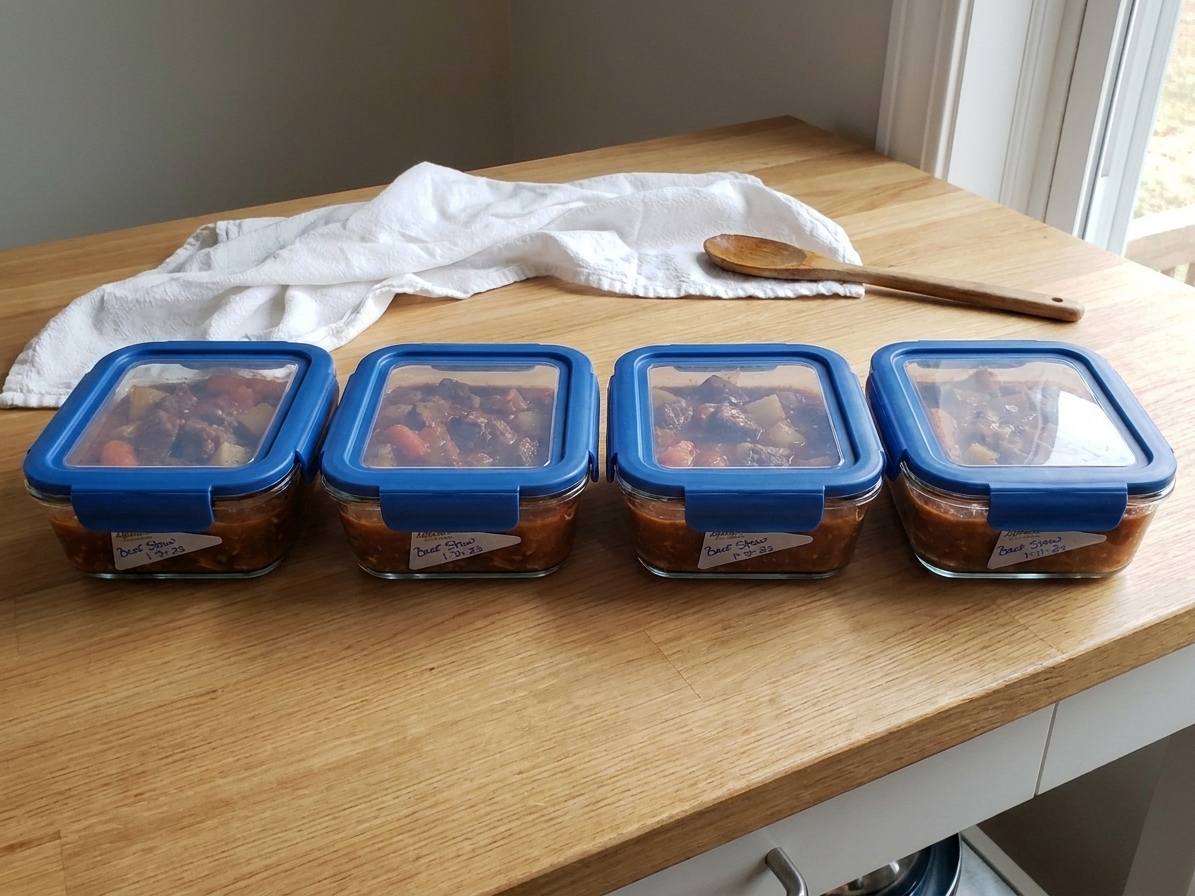
1) Portion into shallow containers
Shallow containers cool faster because there is more surface area and less depth.
- Aim for 2 inches deep or less if you can.
- Use several smaller containers instead of one large one.
2) Vent briefly, then cover
Let the heat escape for a short time, then seal it up.
- Leave lids slightly ajar for 15 to 30 minutes on the counter while it stops steaming intensely.
- Then cover tightly and refrigerate.
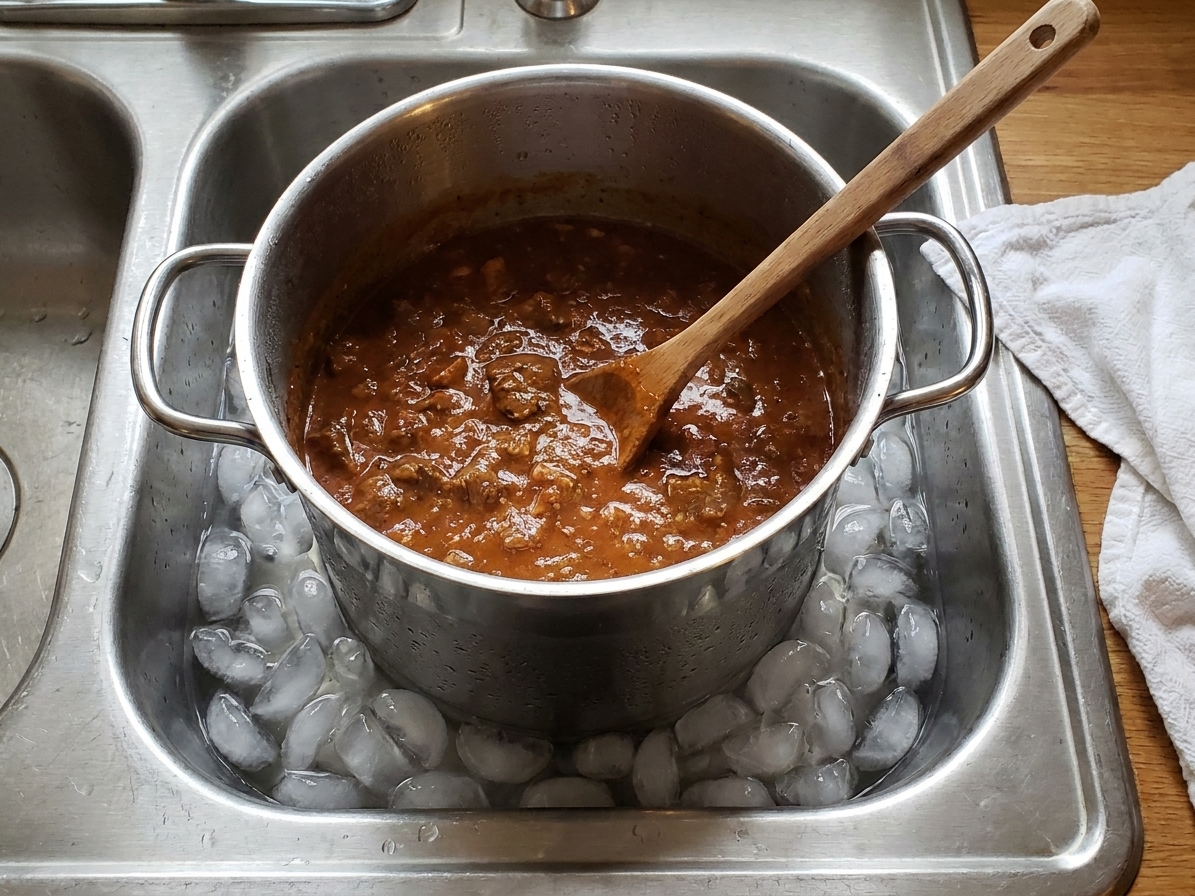
3) Use an ice bath if it is still very hot
If you have a lot of stew and it is piping hot, an ice bath is your best friend.
- Set the pot (or your containers) in a larger pan or sink filled with ice water.
- Stir the stew every few minutes to release heat.
Skip the “leave it on the stove overnight” method. I know it is tempting after a long day, but it is not food safe.
How to store beef stew well
Once the stew is cooled, storage is straightforward. A few small habits make a big difference.
Use airtight containers
- Choose containers with tight-fitting lids to limit odors and keep the stew from drying out.
- If using a bowl, press plastic wrap directly onto the surface, then cover with a lid.
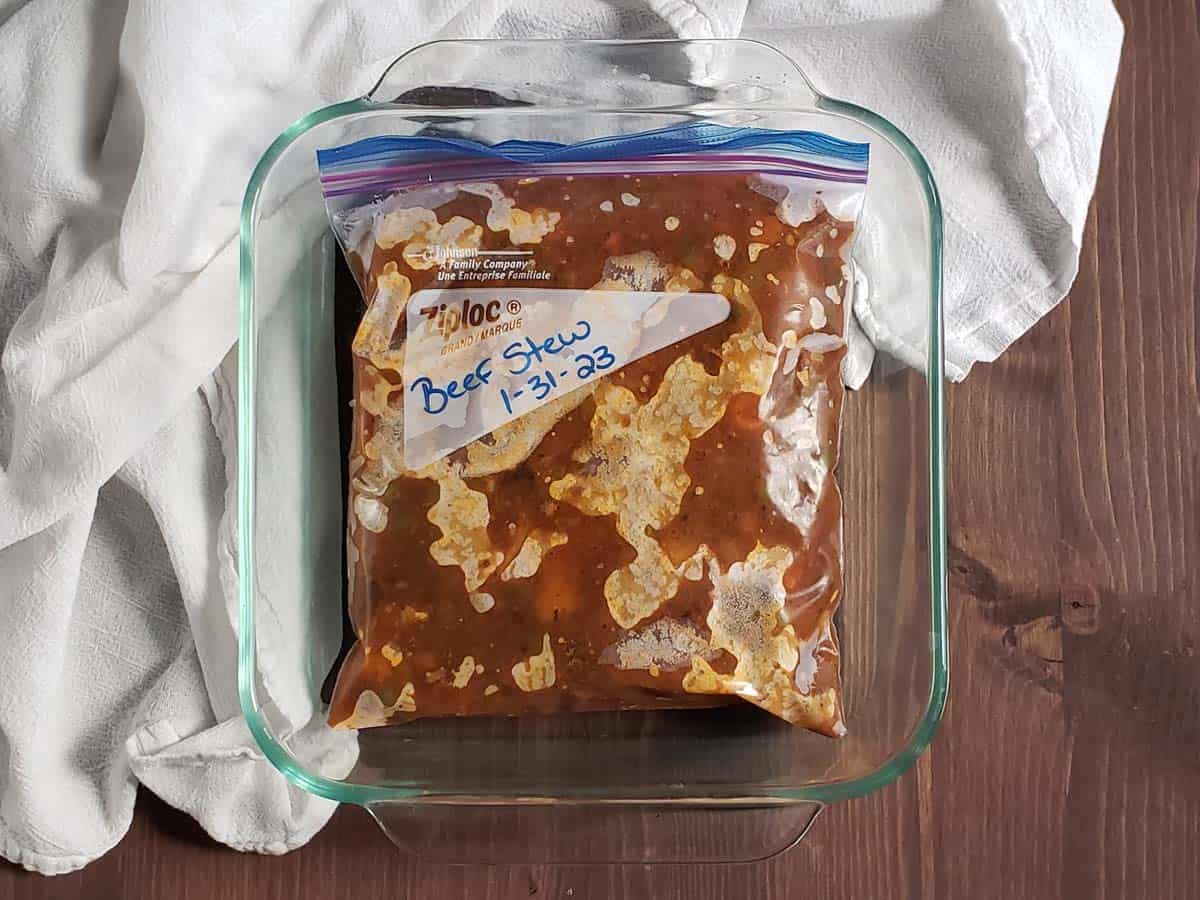
Label it
This is my teacher-brain showing, but labeling saves so much guessing.
- Write the date you cooked it or brought it home.
- Plan to eat it by day 3 or 4 (assuming it was cooled promptly and your fridge runs cold enough).
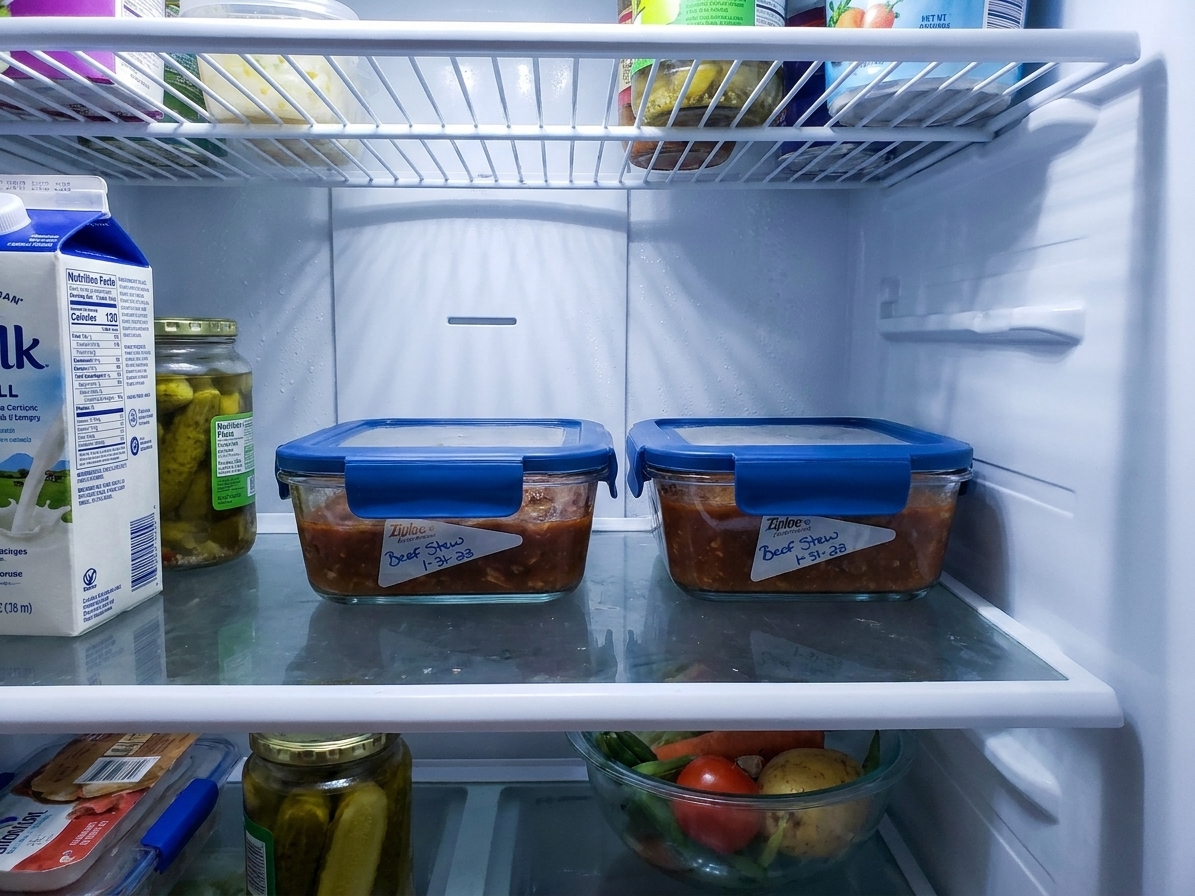
Store it in the coldest part of the fridge
Fridge doors run warmer because they are opened constantly. Keep stew on an interior shelf toward the back.
If you are not sure how cold your fridge really is, a simple fridge thermometer can be eye-opening.
Signs beef stew has gone bad
Beef stew can look hearty and fine even when it is no longer safe. Use a combination of time and your senses.
Smell: sour, rancid, or off
- A tangy, sour smell is a common warning sign.
- If it smells funky or unpleasant in any way, do not taste it. Toss it.
Look: mold, bubbles, or discoloration
- Mold anywhere means the whole container is done.
- Grayish or greenish tints, or an oddly dull appearance, can signal spoilage.
- If it looks like it is actively bubbling when cold, do not eat it.
Texture: slimy meat, stringy sauce, or separation plus odor
- Some separation (fat rising to the top) is normal, especially after chilling.
- What is not normal is a slimy or sticky feeling on the meat or vegetables.
- If the gravy turns ropey or unusually thick in a weird way, that is a red flag.
Important: You cannot rely on reheating to “fix” spoiled stew. Some bacteria can leave toxins that are not destroyed by heat. If you suspect it is bad, throw it out.
Potatoes and gravy: safe, but texture changes
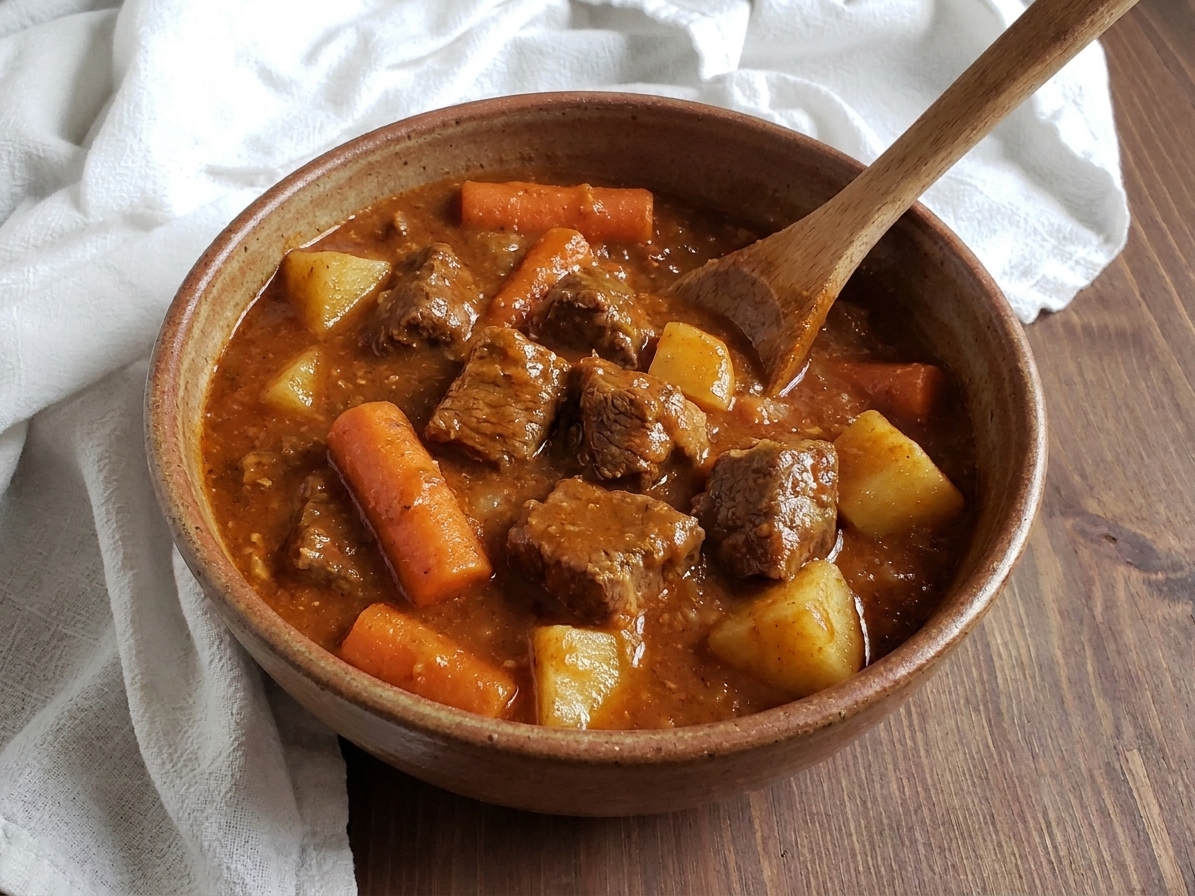
This is the part that trips people up: stew with potatoes is typically just as safe for 3 to 4 days when stored properly, but the texture often changes sooner.
What happens to potatoes
- Potatoes absorb liquid, so the stew can get thicker and less brothy each day.
- Potatoes can turn grainy or crumbly, especially if they were very soft to begin with.
- If your stew is made with a flour-thickened gravy, it may feel gelled after chilling, then loosen when reheated. That is normal.
Quality issue vs safety issue
- Quality issue: potatoes are mealy, sauce is very thick, flavors are slightly muted. Still smells normal and looks normal. Likely safe within 3 to 4 days.
- Safety issue: sour smell, slimy texture, mold, or you are past day 4. Toss it.
If you already know you love firmer potatoes in leftovers, store stew in shallow containers and reheat gently. Hard boiling during reheating can break potatoes down even more.
If the stew was left out
If your beef stew sat on the counter too long after dinner, use time as your guide, not optimism.
- Left out more than 2 hours: discard.
- Left out more than 1 hour in a hot room or outdoors: discard.
This includes stew that was kept warm on the stove but not held at a consistently hot temperature. Warm is not the same as safely hot.
Can you refrigerate stew in the pot?
You can, but I do not recommend it for either safety or fridge efficiency.
- A large pot cools slowly in the center.
- A hot pot can raise the temperature of nearby foods.
- It takes up a ton of space and often does not seal well.
If you must refrigerate in the pot, cool it down first with an ice bath, stir to release heat, and transfer to shallow containers as soon as you can.
Freezing beef stew
If you know you will not finish your stew within a few days, freeze it. Beef stew freezes beautifully.
- For best quality, use within about 2 to 3 months.
- Keep it in airtight, freezer-safe containers with a little headspace for expansion.
Thaw overnight in the refrigerator when possible for the easiest, safest reheat.
Reheating beef stew
Reheat only what you plan to eat, and bring it up to a safe temperature.
- Reheat to an internal temperature of 165°F / 74°C.
- On the stove, reheat gently and stir often so it heats evenly.
- In the microwave, use a microwave-safe bowl, cover loosely, and stir partway through.
Beef stew storage FAQ
Does beef stew last longer if it has more salt or is very thick?
Salt and thickness can affect texture and moisture, but they do not magically make stew food safe for longer. Stick with 3 to 4 days in the refrigerator.
What is the best container for storing stew?
Shallow, airtight containers are ideal. Glass or sturdy BPA-free plastic both work well. The key is cooling quickly and sealing tightly.
Is it safe if I reheat beef stew every day and put it back?
It is safer to reheat only the portion you plan to eat. Repeated heating and cooling adds more time in the temperature danger zone and can shorten the stew’s practical shelf life.
Can I tell if beef stew is bad by tasting a little?
Please do not. If you suspect it has spoiled based on smell, appearance, texture, or time, discard it. Even a small taste can make you sick.
My no-stress leftovers plan
If you want a simple routine you can repeat every time, here it is:
- Portion stew into shallow containers within 2 hours.
- Refrigerate promptly at 40°F / 4°C or colder.
- Eat within 3 to 4 days (or freeze it).
- Throw it out if anything smells off, looks suspicious, or feels slimy.
Leftovers should feel like a gift to your future self, not a game of fridge roulette.