

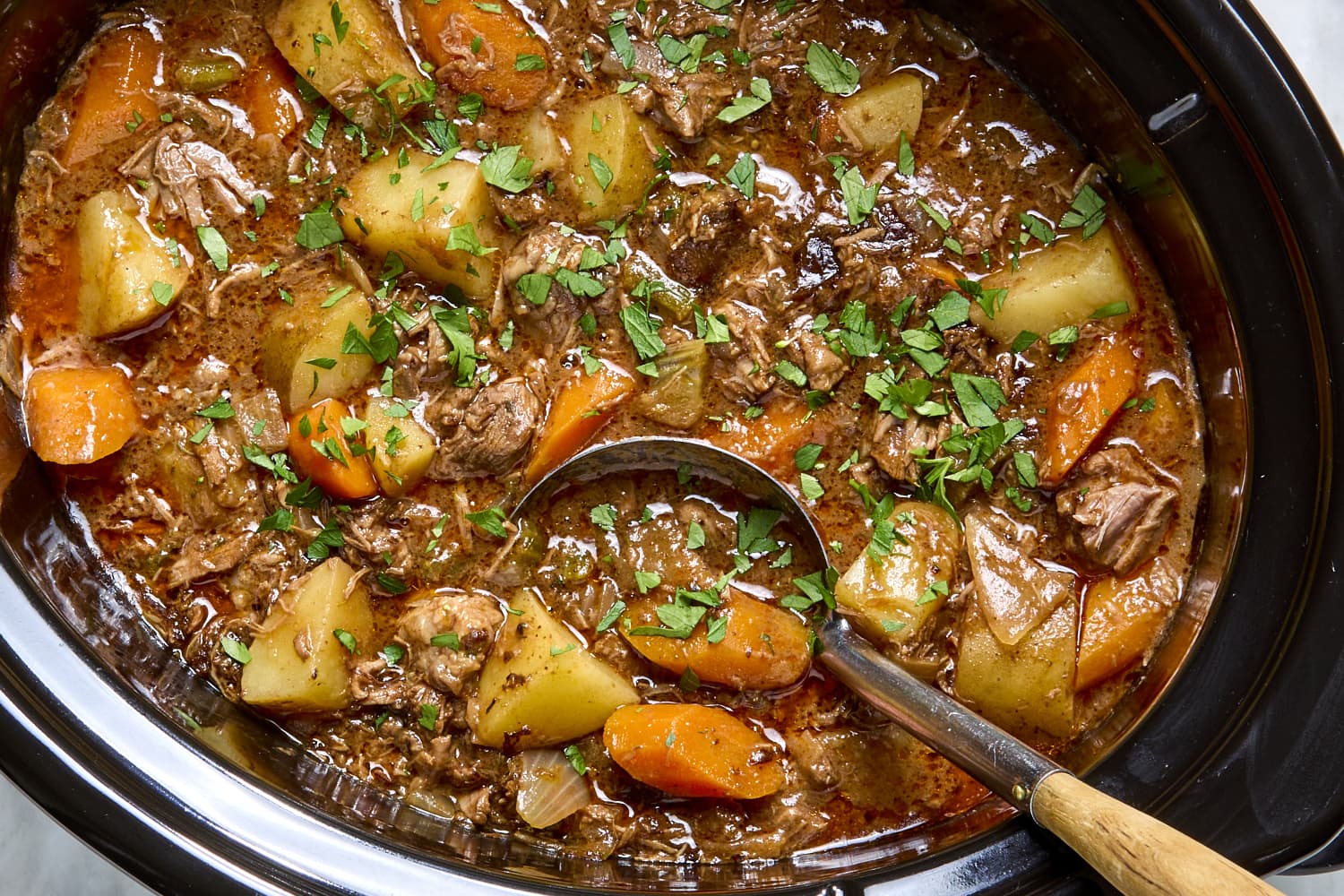
If you love the kind of dinner that makes the whole house smell like you have your life together, this slow cooker beef and vegetable stew is for you. It is cozy, deeply savory, and built from everyday supermarket basics: stew beef, potatoes, carrots, onions, and a broth that turns into a silky gravy while you go live your day.
This is also one of my favorite budget stretchers. A couple pounds of beef plus a whole lot of vegetables equals a big pot of comfort, and leftovers somehow taste even better. Below you will get the easy prep, exactly how to adjust seasoning so it tastes bold instead of bland, plus freezing tips so Future You is thrilled.

Quick overview
- Prep time: 20 minutes (less if you skip browning)
- Cook time: about 8 hours on Low (or 4 to 6 on High)
- Serves: 6 (hungry) to 8 (with bread or salad)
- Slow cooker size: 6-quart recommended; do not fill past about 3/4 full
- Doneness cue: Beef should be easily pierced and start to shred with a fork, and potatoes should be fully tender
- What you get: fork-tender beef, vegetables that still have some shape, and a rich broth that thickens into gravy at the end
Ingredients
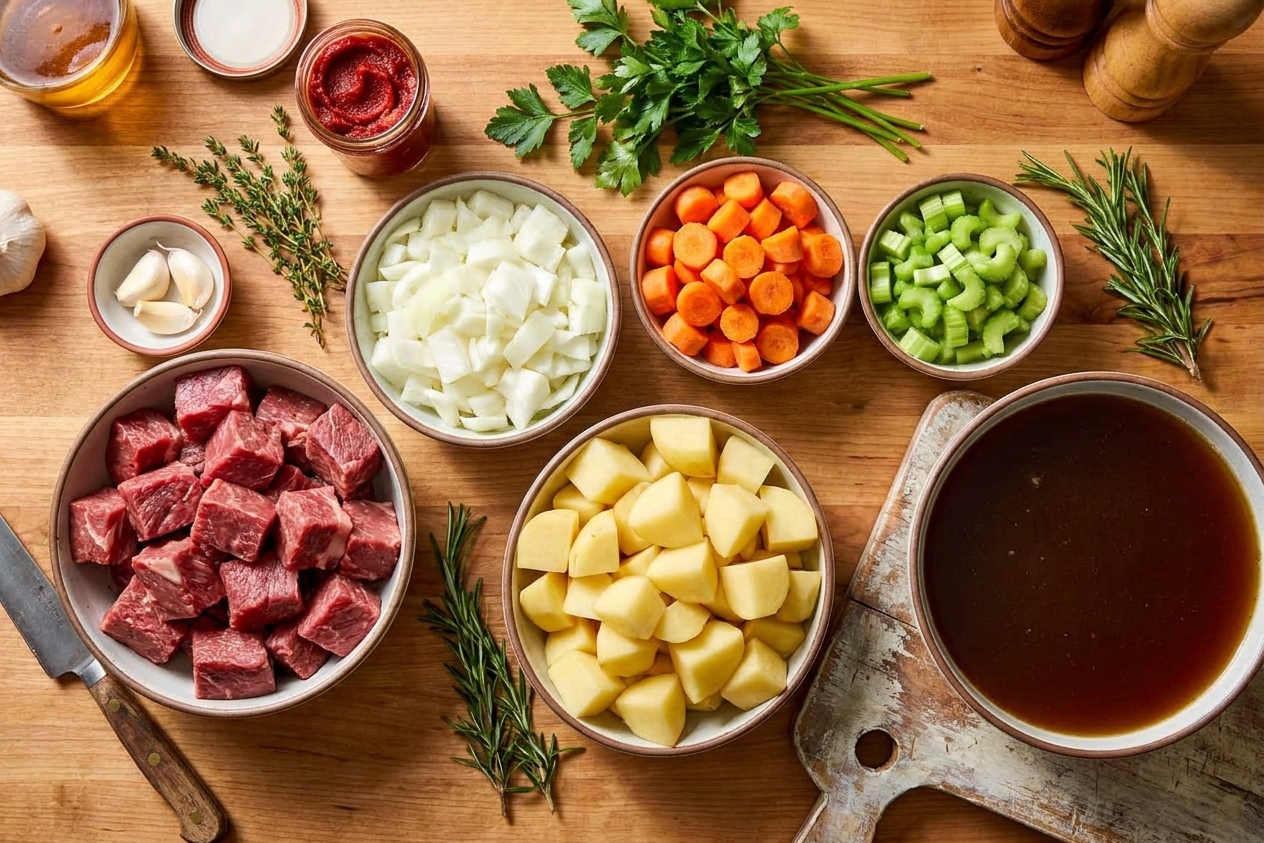
- 2 lb beef chuck roast, cut into 1 1/2-inch cubes (or stew meat)
- 1 1/2 tsp kosher salt, plus more to taste
- 1 tsp black pepper, plus more to taste
- 2 tbsp olive oil (only if browning beef)
- 1 large yellow onion, chopped (about 2 cups)
- 4 carrots, peeled and cut into 1-inch pieces
- 3 celery stalks, cut into 1-inch pieces
- 1 1/2 lb Yukon Gold potatoes, cut into 1 1/2-inch chunks
- 5 cloves garlic, minced
- 2 tbsp tomato paste
- 4 cups low-sodium beef broth
- 2 tbsp Worcestershire sauce
- 1 tsp dried thyme
- 1 bay leaf
- Thickener (choose one):
- Option A (most foolproof): 1 1/2 tbsp cornstarch + 2 tbsp cold water
- Option B (classic): 2 tbsp all-purpose flour + 2 tbsp cold water
- 1 tbsp chopped fresh parsley (optional, for serving)
How to make it
- Season the beef. Pat beef dry, then season with salt and pepper.
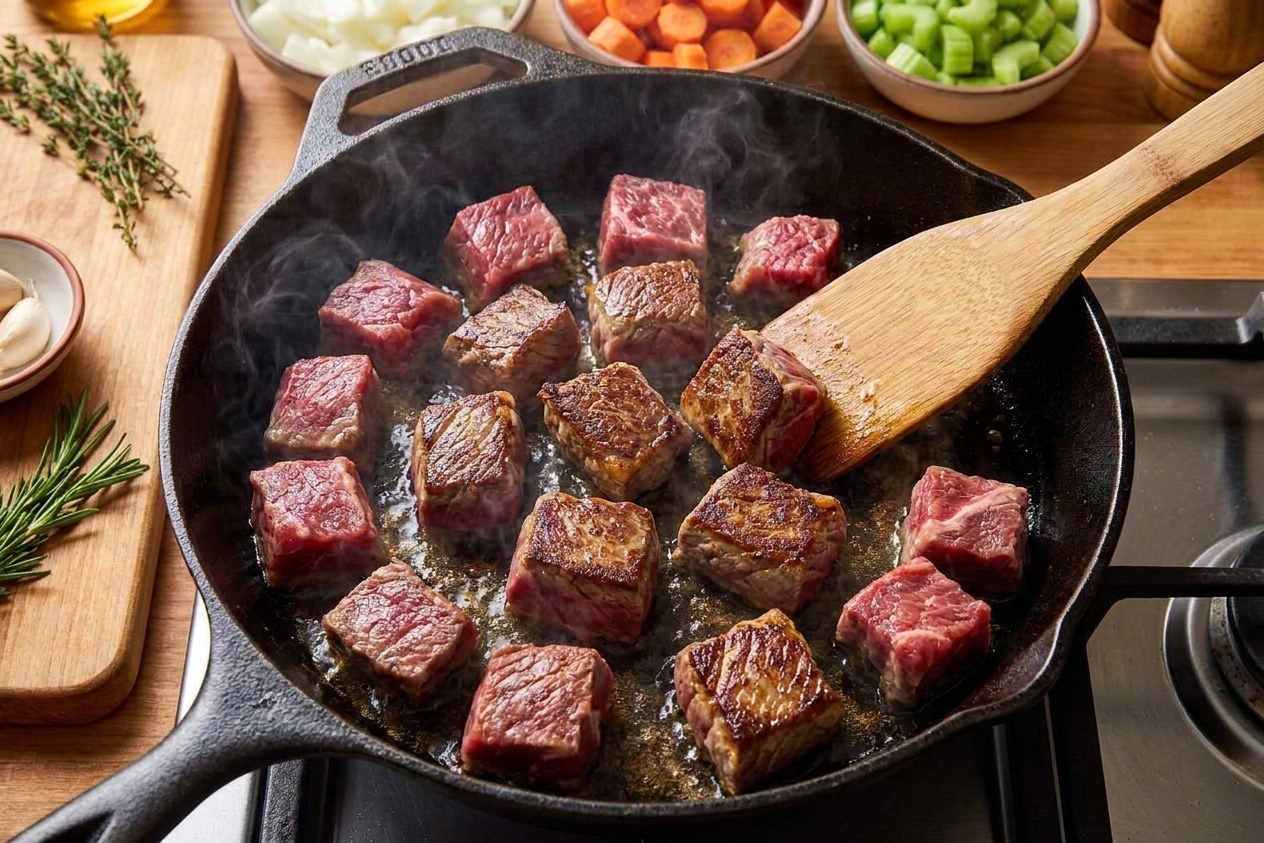
- Optional: brown the beef. Heat olive oil in a large skillet over medium-high heat. Brown beef in batches, 2 to 3 minutes per side, then transfer to the slow cooker. (Do not crowd the pan, or it will steam.)
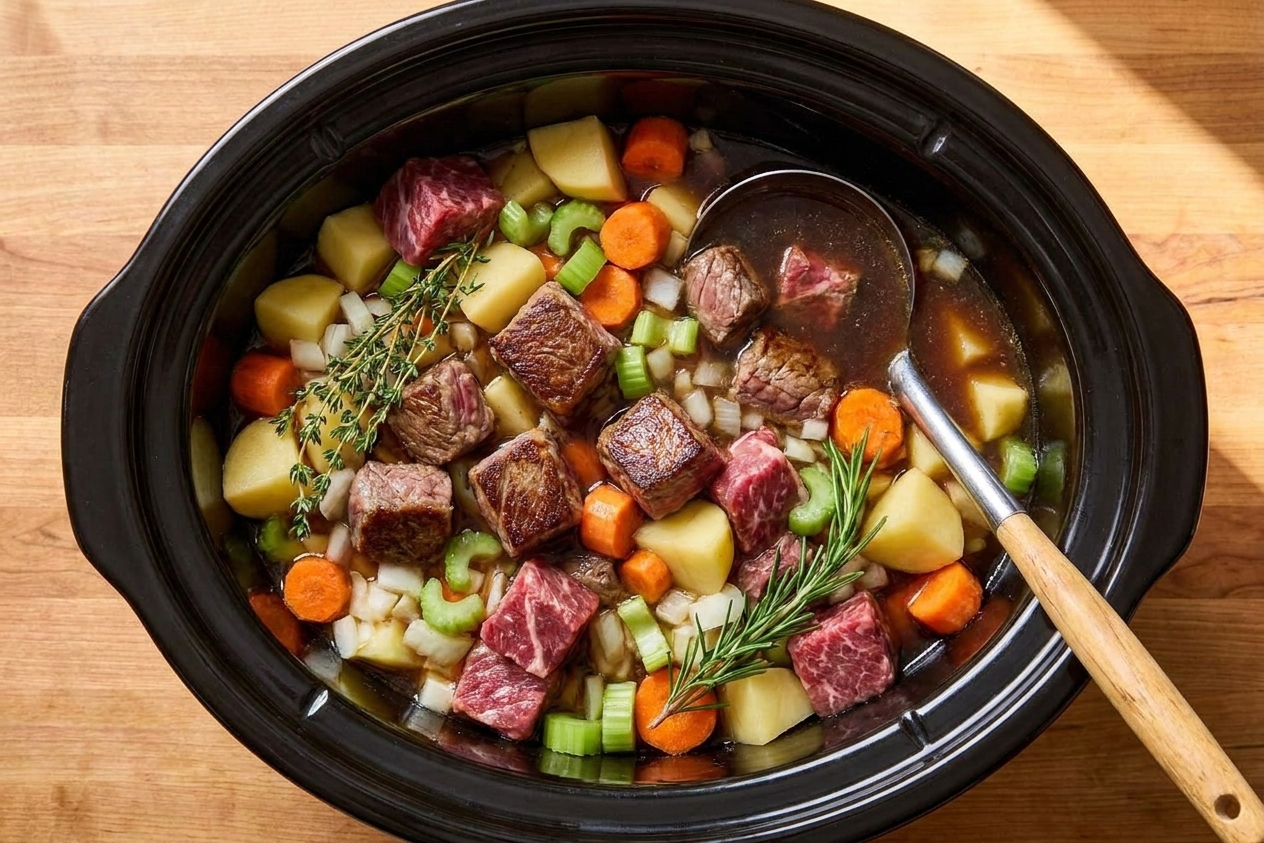
- Load the slow cooker. Add potatoes, carrots, celery, and onion to the slow cooker (root vegetables on the bottom helps them cook through). Add the beef on top. Add garlic and tomato paste.
- Add liquids and herbs. Pour in beef broth and Worcestershire. Add thyme and bay leaf. Stir gently to combine, doing your best to nudge the tomato paste into the liquid so it dissolves as it cooks.
- Cook. Cover and cook on Low for about 8 hours (or High for 4 to 6 hours), until the beef is fork-tender and the potatoes are tender all the way through. Slow cookers vary, so use tenderness as your finish line.
- Thicken. In a small bowl, whisk your chosen thickener with cold water until smooth. Stir into the stew. Cover and cook on High for 15 to 25 minutes, until thickened. If using flour, cook until the stew tastes fully cooked and there is no floury taste.
- Finish and serve. Remove bay leaf. Taste and adjust salt, pepper, and Worcestershire if needed. Serve hot, topped with parsley if you like.
Seasoning fixes
Slow cooker food can taste softer than stovetop food, which is code for: you might need a little help at the finish line. Here is how I make sure this stew tastes bold instead of bland.
- Step 1: Add salt first. Stir, taste, and add more in small pinches. Stew needs enough salt to make the beef taste beefy.
- Step 2: Add umami if it still tastes flat. Try an extra teaspoon of Worcestershire, or a small splash of soy sauce.
- Step 3: Add brightness. A teaspoon or two of apple cider vinegar or a squeeze of lemon wakes the whole pot up without making it taste sour.
- Step 4: Add pepper and garlic if you want more “stew energy.” Fresh black pepper goes a long way. If you love garlic, stir in a little extra minced garlic during the last 15 minutes so it stays punchy.
My rule: Adjust after thickening. A thicker stew tastes saltier and richer, so I wait until the end to do the final taste test.
Easy prep
This is not a fussy recipe. You can do the full flavor version with browning, or you can do the “dump and go” version and still end up with a very good dinner.
- Dump and go steps: Add potatoes, carrots, celery, and onion to the slow cooker, then add the beef. Whisk tomato paste into the broth (it mixes easier this way), then pour it in with Worcestershire, thyme, and bay leaf. Cook on Low until beef is fork-tender and potatoes are tender, then thicken at the end.
- Best flavor: Brown the beef, then deglaze the pan with a splash of broth and add those browned bits to the slow cooker. That is the difference between good and wow.
- Cut things hearty: Larger chunks help vegetables keep their shape through a long cook.
Step photos (optional)
If you like a little visual reassurance, these are the moments worth capturing.
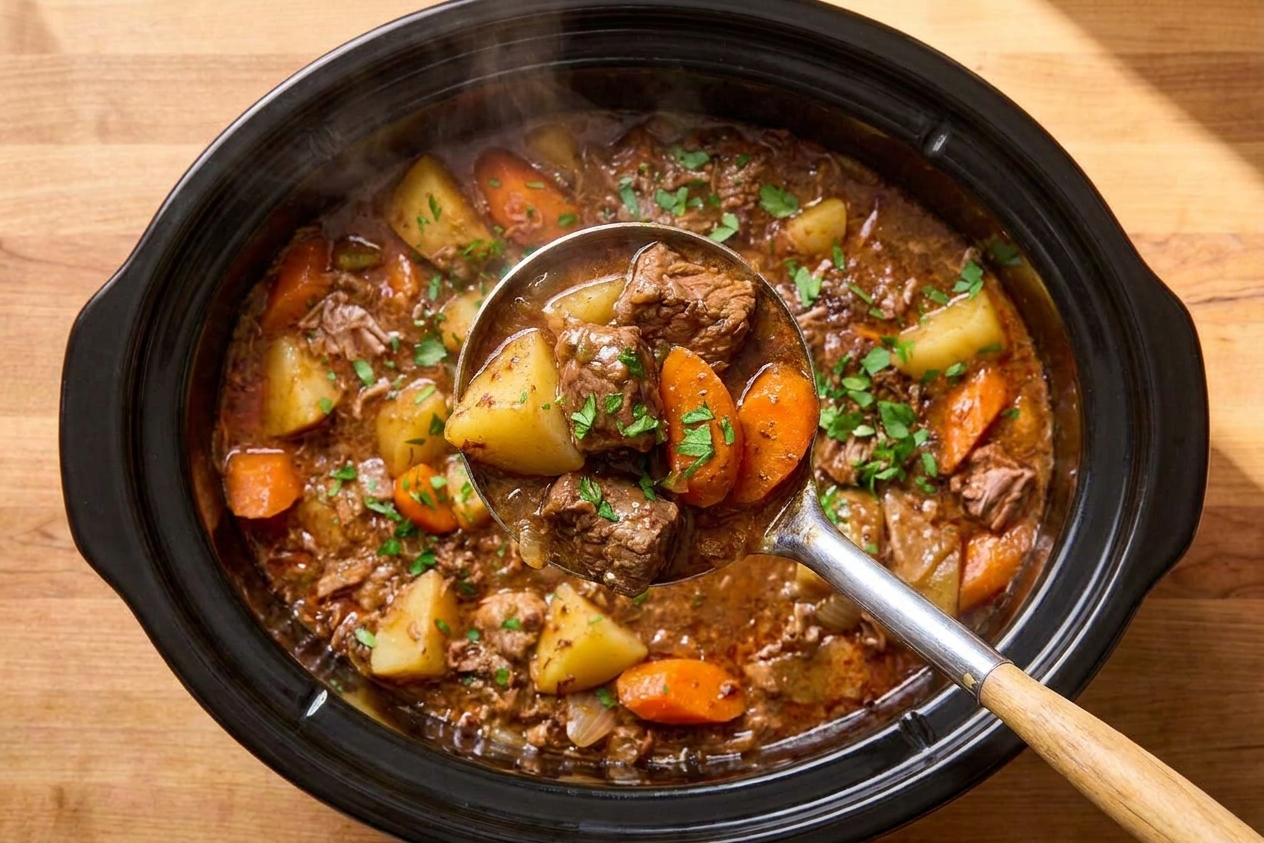
Leftovers that feel new
I am a big believer that leftovers should feel like a gift, not a repeat. This stew reheats beautifully, and it is easy to turn into something new.
- Stew pot pie: Pour hot stew into a baking dish, top with puff pastry or biscuit dough, and bake until golden.
- Stew over mashed potatoes: It is like comfort food squared.
- Beef stew toast: Ladle thick stew over buttered toast, then sprinkle with parsley.
- Quick “stew soup”: Add a splash of broth or water when reheating for a lighter bowl.
Storage and freezing
Refrigerating
Cool stew to room temperature (no more than 2 hours), then store in airtight containers in the fridge for up to 4 days. The flavor gets even better overnight.
Freezing
This stew freezes well for up to 3 months. Portion into freezer containers or zip-top bags (lay flat to save space). Potatoes can soften a bit after freezing, but the stew is still delicious.
Reheating
- Stovetop: Simmer gently over medium-low, stirring occasionally. Add a splash of broth or water if it has thickened a lot.
- Microwave: Cover loosely and heat in 1-minute bursts, stirring between rounds for even heating.
- From frozen: Thaw overnight in the fridge if you can, then reheat. In a pinch, warm on the stovetop over low heat with a little extra liquid.
Freezing tip I actually use: Freeze in flat zip-top bags laid on a sheet pan. Once frozen, they stack like books and thaw faster.
Freezer note
If you know you are freezing most of the batch, keep potatoes on the larger side and stick with waxy potatoes like Yukon Gold or red potatoes. That helps them hold up after thawing without messing with the beef cook time. If you want an even firmer potato, you can add the potatoes during the last 2 to 3 hours on Low, but only if you will be home to do it.
Ingredient notes
Beef: Look for chuck roast cut into 1 1/2-inch cubes, or pre-cut stew meat. Chuck is ideal because it has enough marbling to stay juicy after hours in the slow cooker.
Potatoes: Yukon Gold hold their shape and taste buttery. Russets work too but break down more, which can thicken the stew (not a bad thing).
Carrots and celery: Classic stew base. If your celery is looking sad, it is still perfect here.
Onion and garlic: I use a full onion and plenty of garlic. If you measure garlic with your heart, you are in the right place.
Tomato paste: Just a couple tablespoons boosts savory depth. It makes the broth taste “cooked” even though the slow cooker does the work.
Broth: Beef broth gives the richest flavor. Low-sodium is your friend so you can salt to taste at the end.
Worcestershire sauce: Adds that background umami. Soy sauce can pinch-hit in a smaller amount.
Herbs: Dried thyme and bay leaf are the cozy combo. If you have rosemary, a small pinch is lovely, but do not overdo it.
Thickener: Cornstarch slurry is the most foolproof for a glossy gravy. Flour slurry works too, but it needs a little time to cook off so the finish tastes clean.
Tips
- Brown in batches. You want a crust, not steamed beef. Also, those browned bits are flavor, so deglaze if you can.
- Root vegetables on the bottom. Potatoes and carrots do best when they sit closer to the heat and stay submerged.
- Do not guess doneness. The stew is ready when beef is fork-tender and potatoes are fully tender. Some slow cookers run hot, others run sleepy.
- Thicken at the end. Thickeners work better once everything is tender, and you can taste and season accurately after.
Common mistakes
- Skipping the end taste test. Slow cookers can mute salt and acid. Taste at the end and adjust with salt, pepper, and a small splash of vinegar or lemon if needed.
- Using extra-lean beef. Very lean stew meat can turn dry and chewy. Chuck is the sweet spot.
- Cutting vegetables too small. Tiny pieces can disappear after a long cook. Keep them hearty.
- Thickening too early. Flour or cornstarch added at the start can clump and dull flavors. Thicken at the end for the best texture.
- Lifting the lid repeatedly. Each peek drops the temperature and can add time. Trust the process.
Serving ideas
- Crusty bread: A warm loaf for dunking is the easiest win.
- Buttered egg noodles: Spoon stew over noodles for a cozy twist.
- Simple green salad: Something crisp with a tangy vinaigrette balances the richness.
- Roasted broccoli or green beans: If you want an extra vegetable on the plate.
- Finish like a pro: Sprinkle chopped parsley and add a tiny drizzle of olive oil right before serving.
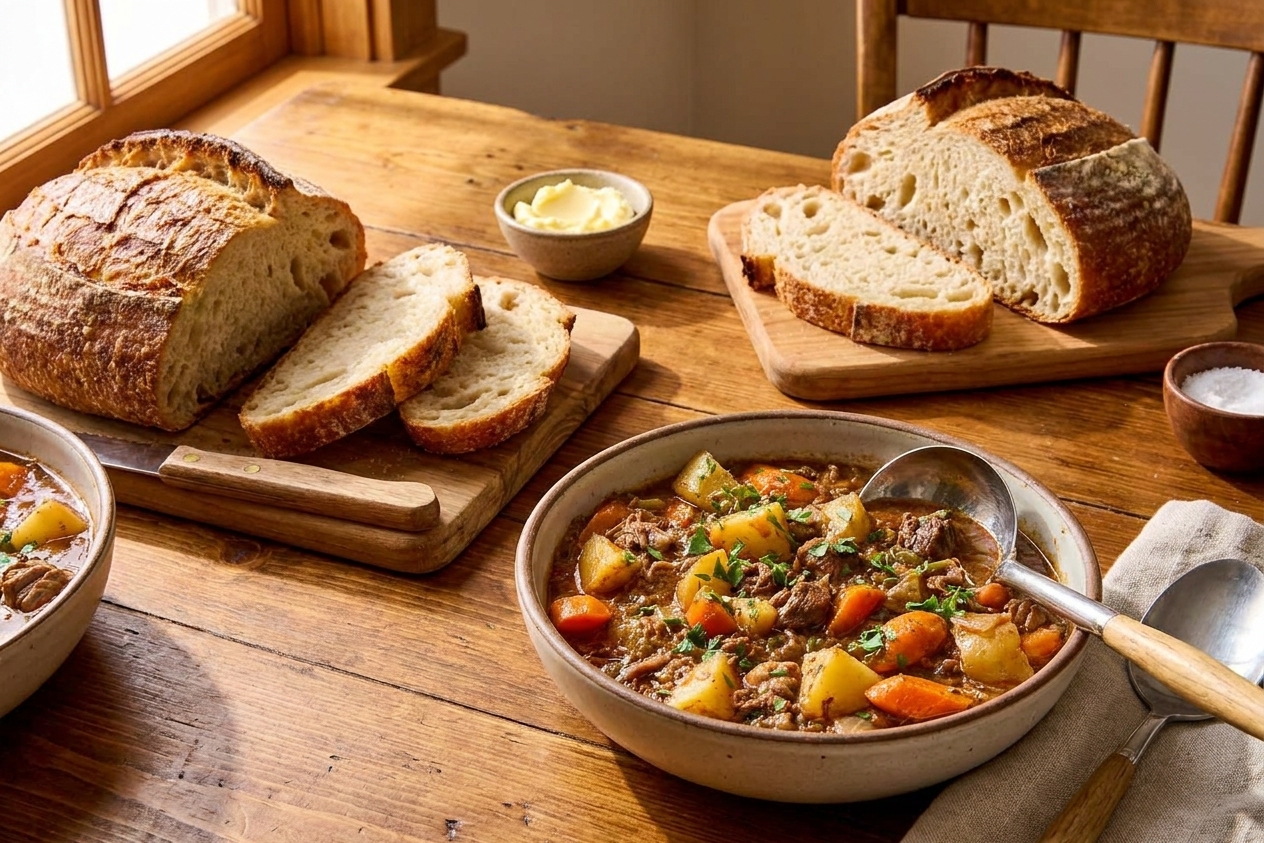
Substitutes
- No Worcestershire? Use 2 teaspoons soy sauce plus 1 teaspoon apple cider vinegar.
- No tomato paste? Substitute 1/2 cup canned crushed tomatoes, or just skip it and add an extra pinch of salt at the end.
- Gluten-free thickening: Use a cornstarch slurry instead of flour.
- More vegetables, less beef: You can reduce beef to 1 1/2 pounds and add 1 extra cup potatoes or a cup of mushrooms.
- Different potatoes: Red potatoes work great and hold their shape.
Variations
- Old-fashioned mushroom beef stew: Add 8 ounces sliced mushrooms with the onions.
- Peas at the end: Stir in 1 cup frozen peas during the last 10 minutes on High for a pop of sweetness.
- Smoky stew: Add 1/2 teaspoon smoked paprika and a diced poblano or bell pepper.
- Guinness-style: Replace 1 cup of broth with stout beer (add it at the beginning). The bitterness mellows as it cooks.
- Spicy-warm: Add a pinch of red pepper flakes and extra black pepper, then finish with a squeeze of lemon.
Why it works
- Low and slow breaks down tough cuts. Chuck turns fork-tender after a long cook, and the broth turns rich without babysitting.
- A quick sear adds big flavor. Browning is optional, but it builds a deeper, roast-like taste that makes the stew feel special.
- Thickening at the end keeps it clean. You get classic stew texture without clumps, and you can cook the thickener just long enough for a glossy finish.
- Flexible vegetables keep it budget-friendly. Use what is affordable or what needs using up. This recipe is forgiving.
The idea
Why This Recipe Works
- Low and slow breaks down tough cuts. Stew meat becomes fork-tender after a long simmer, and the broth turns rich without constant babysitting.
- A quick sear adds big flavor. Browning the beef is optional, but it builds a deeper, roast-like taste that makes the stew feel special.
- Thickening at the end keeps the flavor bright. You avoid clumps, and you can cook the thickener just long enough for a clean, glossy finish.
- Flexible vegetables keep it budget-friendly. Use what is affordable or what needs using up. This recipe is forgiving.
Shopping
Ingredient Notes
Beef: Look for chuck roast cut into 1 1/2-inch cubes, or pre-cut stew meat. Chuck is ideal because it has enough marbling to stay juicy after hours in the slow cooker.
Potatoes: Yukon Gold hold their shape and taste buttery. Russets work too but break down more, which can thicken the stew (not a bad thing).
Carrots and celery: Classic stew base. If your celery is looking sad, it is still perfect here.
Onion and garlic: I use a full onion and plenty of garlic. If you measure garlic with your heart, you are in the right place.
Tomato paste: Just a couple tablespoons boosts savory depth. It makes the broth taste “cooked” even though the slow cooker does the work.
Broth: Beef broth gives the richest flavor. Low-sodium is your friend so you can salt to taste at the end.
Worcestershire sauce: Adds that background umami. Soy sauce can pinch-hit in a smaller amount.
Herbs: Dried thyme and bay leaf are the cozy combo. If you have rosemary, a small pinch is lovely, but do not overdo it.
Thickener: Cornstarch slurry is the most foolproof for a glossy gravy. Flour slurry works too, but it needs time to cook off.
Get set up
Equipment You Will Need
- 6-quart slow cooker (or similar size)
- Large skillet for browning the beef (optional but recommended)
- Cutting board and sharp knife
- Measuring spoons
- Small bowl or jar for mixing the slurry
- Ladle for serving
Technique
Tips for Getting It Right
- Brown in batches. You want a crust, not steamed beef. Deglaze the pan if you can.
- Root vegetables on the bottom. Potatoes and carrots cook more evenly when they sit closer to the heat and stay submerged.
- Use tenderness as your timer. The stew is done when beef is easily pierced and potatoes are fully tender, even if your slow cooker runs a little fast or slow.
- Thicken at the end. Then taste and season once you know the final texture.
Flexibility
Substitutes That Work
- No Worcestershire? Use 2 teaspoons soy sauce plus 1 teaspoon apple cider vinegar.
- No tomato paste? Substitute 1/2 cup canned crushed tomatoes, or just skip it and add an extra pinch of salt at the end.
- Gluten-free thickening: Use cornstarch slurry (1 1/2 tablespoons cornstarch mixed with 2 tablespoons cold water) instead of flour.
- More vegetables, less beef: You can reduce beef to 1 1/2 pounds and add 1 extra cup potatoes or a cup of mushrooms.
- Different potatoes: Red potatoes work great and hold their shape.
Make it yours
Variations to Try
- Old-fashioned mushroom beef stew: Add 8 ounces sliced mushrooms with the onions.
- Peas at the end: Stir in 1 cup frozen peas during the last 10 minutes on High for a pop of sweetness.
- Smoky stew: Add 1/2 teaspoon smoked paprika and a diced poblano or bell pepper.
- Guinness-style: Replace 1 cup of broth with stout beer (add it at the beginning). The bitterness mellows as it cooks.
- Spicy-warm: Add a pinch of red pepper flakes and extra black pepper, then finish with a squeeze of lemon.
On the table
What to Serve It With
- Crusty bread: A warm loaf for dunking is the easiest win.
- Buttered egg noodles: Spoon stew over noodles for a cozy twist.
- Simple green salad: Something crisp with a tangy vinaigrette balances the richness.
- Roasted broccoli or green beans: If you want an extra vegetable on the plate.
- Finish like a pro: Sprinkle chopped parsley and add a tiny drizzle of olive oil right before serving.
Later
Storage, Freezing and Reheating
Refrigerating
Cool stew to room temperature (no more than 2 hours), then store in airtight containers in the fridge for up to 4 days. The flavor gets even better overnight.
Freezing
This stew freezes well for up to 3 months. Portion into freezer containers or zip-top bags (lay flat to save space). Potatoes can soften a bit after freezing, but the stew is still delicious.
Reheating
- Stovetop: Simmer gently over medium-low, stirring occasionally. Add a splash of broth or water if it has thickened a lot.
- Microwave: Cover loosely and heat in 1-minute bursts, stirring between rounds for even heating.
- From frozen: Thaw overnight in the fridge if you can, then reheat. In a pinch, warm on the stovetop over low heat with a little extra liquid.
Freezer-friendly note
If you are freezing most of the batch, keep potatoes cut large and use waxy potatoes like Yukon Gold or red potatoes for the best texture after thawing. Avoid shortening the cook time just to “save” the potatoes, because the beef still needs time to turn tender.
Watch out
Common Mistakes to Avoid
- Skipping the end taste test. Slow cookers can mute salt and acid. Taste at the end and adjust with salt, pepper, and a small splash of vinegar or lemon if needed.
- Using extra-lean beef. Very lean stew meat can turn dry and chewy. Chuck is the sweet spot.
- Cutting vegetables too small. Tiny pieces can disappear after a long cook. Keep them hearty.
- Adding the thickener too early. Flour or cornstarch added at the start can clump and dull flavors. Thicken at the end for the best texture.
- Lifting the lid repeatedly. Each peek drops the temperature and can add time. Trust the process.
Questions
Frequently Asked Questions
Do I have to brown the beef first?
No. You can put everything straight into the slow cooker and it will still be good. Browning adds deeper flavor and a slightly richer broth, but on a busy morning I skip it and do not feel guilty.
Can I cook this on High instead of Low?
Yes. Cook on High for 4 to 6 hours or until the beef is fork-tender and the potatoes are fully tender. Low (about 8 hours) is more forgiving and usually gives the most tender beef. Slow cookers vary, so use tenderness as your finish line.
How do I thicken slow cooker stew?
My go-to is a slurry stirred in at the end. For the most foolproof thickening, whisk 1 1/2 tablespoons cornstarch with 2 tablespoons cold water, stir into the stew, then cook on High for 15 to 25 minutes. You can also use a flour slurry, but cook it long enough so there is no floury taste.
My stew tastes bland. What should I add?
First add salt in small pinches and taste again. Then try one of these: an extra teaspoon Worcestershire, more black pepper, an extra clove of garlic, or 1 to 2 teaspoons apple cider vinegar or lemon juice for brightness.
Can I add frozen vegetables?
Yes. Stir in frozen peas, corn, or green beans during the last 20 to 30 minutes so they stay bright and do not overcook.
Can I prep this the night before?
Absolutely. Chop vegetables and store them in the fridge (keep potatoes in cold water). You can also cube and season the beef. In the morning, dump everything into the slow cooker and go.
The recipe
Slow Cooker Beef and Vegetable Stew
Tender beef, potatoes, and vegetables slow-cook in a garlicky, savory broth that thickens into classic stew comfort. Easy prep, flexible ingredients, and excellent leftovers.
Ingredients
- 2 lb beef chuck roast, cut into 1 1/2-inch cubes (or stew meat)
- 1 1/2 tsp kosher salt, plus more to taste
- 1 tsp black pepper
- 2 tbsp olive oil (only if browning beef)
- 1 large yellow onion, chopped (about 2 cups)
- 4 carrots, peeled and cut into 1-inch pieces
- 3 celery stalks, cut into 1-inch pieces
- 1 1/2 lb Yukon Gold potatoes, cut into 1 1/2-inch chunks
- 5 cloves garlic, minced
- 2 tbsp tomato paste
- 4 cups low-sodium beef broth
- 2 tbsp Worcestershire sauce
- 1 tsp dried thyme
- 1 bay leaf
- Thickener (choose one):
- Option A: 1 1/2 tbsp cornstarch + 2 tbsp cold water
- Option B: 2 tbsp all-purpose flour + 2 tbsp cold water
- 1 tbsp chopped fresh parsley (optional, for serving)
Instructions
- Season the beef. Pat beef dry, then season with salt and pepper.
- Optional: brown the beef. Heat olive oil in a large skillet over medium-high heat. Brown beef in batches, 2 to 3 minutes per side. Transfer to the slow cooker.
- Load the slow cooker. Add potatoes, carrots, celery, and onion to the slow cooker, then add beef. Add garlic and tomato paste.
- Add liquids and herbs. Pour in beef broth and Worcestershire. Add thyme and bay leaf. Stir gently to combine.
- Slow cook. Cover and cook on Low for about 8 hours (or High for 4 to 6 hours), until beef is fork-tender and potatoes are tender.
- Thicken the stew. Whisk chosen thickener with cold water until smooth. Stir into the stew. Cover and cook on High for 15 to 25 minutes, until thickened. If using flour, cook until no floury taste remains.
- Finish and serve. Remove bay leaf. Taste and adjust salt, pepper, and Worcestershire if needed. Serve hot, topped with parsley if you like.
Recipe notes
- Make-ahead: Chop vegetables up to 24 hours ahead. Store potatoes submerged in cold water in the fridge to prevent browning, then drain before adding.
- Extra flavor: After browning, deglaze the skillet with 1/2 cup broth, scraping up browned bits, and pour it into the slow cooker.
- Thickener note: Cornstarch slurry is the most foolproof for a glossy gravy. Flour slurry works too, but cook it long enough to eliminate any floury taste.
- Seasoning adjustment: If it tastes flat, add salt first, then a small splash of vinegar or lemon juice for brightness.
Nutrition (per serving, approximate)
- Calories: 430
- Protein: 34 g
- Carbohydrates: 32 g
- Fat: 18 g
- Saturated Fat: 6 g
- Fiber: 5 g
- Sugars: 6 g
- Sodium: 780 mg