

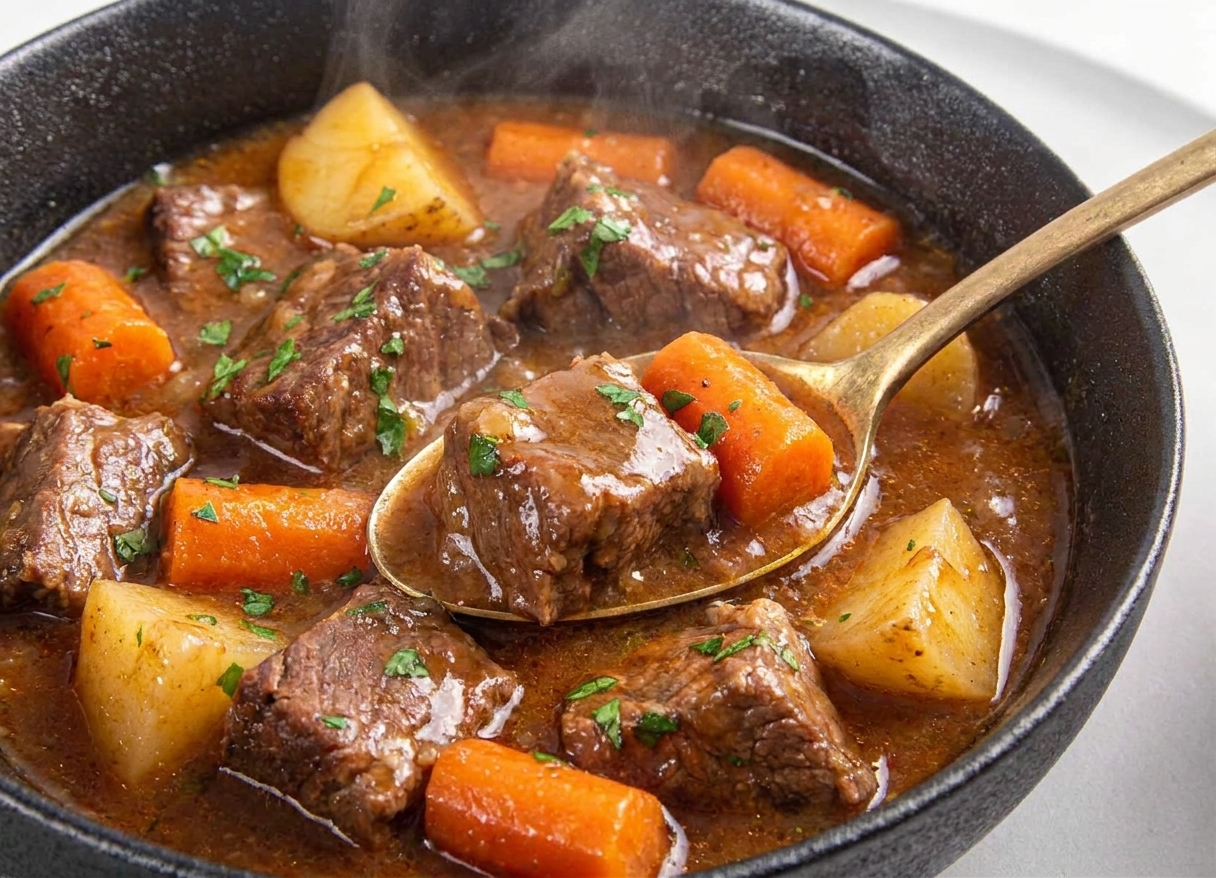
I grew up in a Pacific Northwest family where beef stew was basically a love language. Someone was always chopping onions, someone was always sneaking a carrot, and there was always one person (me) insisting we needed more garlic. These days, I still want that same cozy, all-day-simmered flavor, but I also want it on the table before everyone starts rummaging for snacks.
This Instant Pot beef stew is my dependable answer. We sear the beef right in the pot for that browned, savory base, then pressure cook with enough thin liquid to build steam and keep things moving, all while staying under the Max line.
After cooking, I like a 15-minute natural release because it helps the beef stay tender and keeps the steam calm and non-splattery. Then we finish on Sauté with a quick cornstarch slurry for gravy that turns glossy and spoon-coating instead of thin. Doing the thickening at the end is also key for avoiding a burn notice, since starchy thickeners do not play nicely at pressure.

If you have ever made pressure cooker stew and thought: Why is it watery? Why is my meat a little dry? this one is for you. The beef turns spoon-tender, and the vegetables stay hearty, not sad and squishy. Let’s make a pot that tastes like you babysat it all afternoon, even if you absolutely did not.
The idea
Why This Recipe Works
- Searing first builds the stew’s backbone. Browning the beef and softening the onions creates fond, which becomes the rich, roasty base once we deglaze.
- Smart pressure cuts stay tender. Collagen-rich cuts like chuck roast, boneless short ribs, and brisket flat turn silky under pressure instead of tightening up.
- Natural release protects texture. Letting pressure drop on its own helps keep the beef juicy and prevents a violent boil that can shred vegetables.
- Thickening happens after pressure. Cornstarch breaks down under long high heat. Adding a slurry at the end gives you a gravy that actually stays thick.
- Flour on the beef helps, but does not do all the work. A light coating adds body, while the slurry guarantees that spoon-coating finish.
Shopping
Ingredient Notes
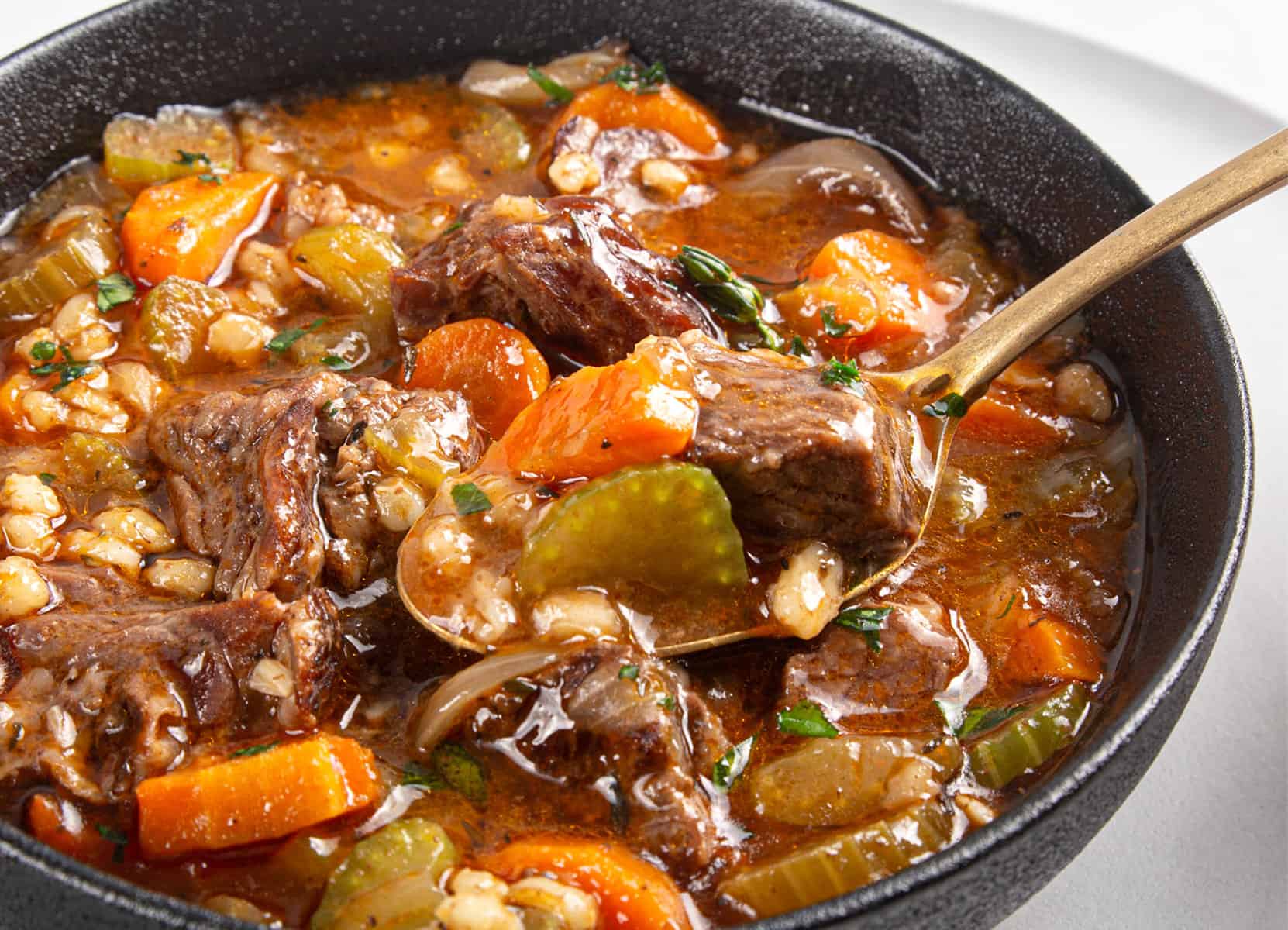
Best beef cuts for the Instant Pot
For pressure cooker stew, you want a cut with plenty of connective tissue that can melt into tenderness:
- Chuck roast (my first choice): Rich, beefy, reliably tender after pressure cooking.
- Boneless beef short ribs: Extra luxurious and buttery. Often pricier, but incredible.
- Brisket flat: Slices nicely and stays tender if you do a natural release.
Avoid very lean “stew meat” packages when you can. They are often mixed cuts and can cook unevenly.
Potatoes and carrots
I like Yukon gold potatoes for their creamy texture. Russets work too, but they break down more. Cut potatoes and carrots into larger chunks so they do not turn to mush under pressure.
Broth and flavor builders
Use low-sodium beef broth so you can adjust salt at the end. A little tomato paste adds depth, and Worcestershire brings that savory, slow-cooked vibe in one spoonful.
Thickening
Cornstarch slurry is the cleanest way to finish. If you prefer a more rustic look, you can mash a few potato pieces into the broth, but the slurry gives you consistent results.
Get set up
Equipment You Will Need
- 6-quart electric pressure cooker (Instant Pot or similar)
- Instant-read thermometer (optional, but helpful for checking beef tenderness)
- Wooden spoon for scraping up browned bits
- Small bowl for cornstarch slurry
- Tongs for turning beef
Technique
Tips for Getting It Right
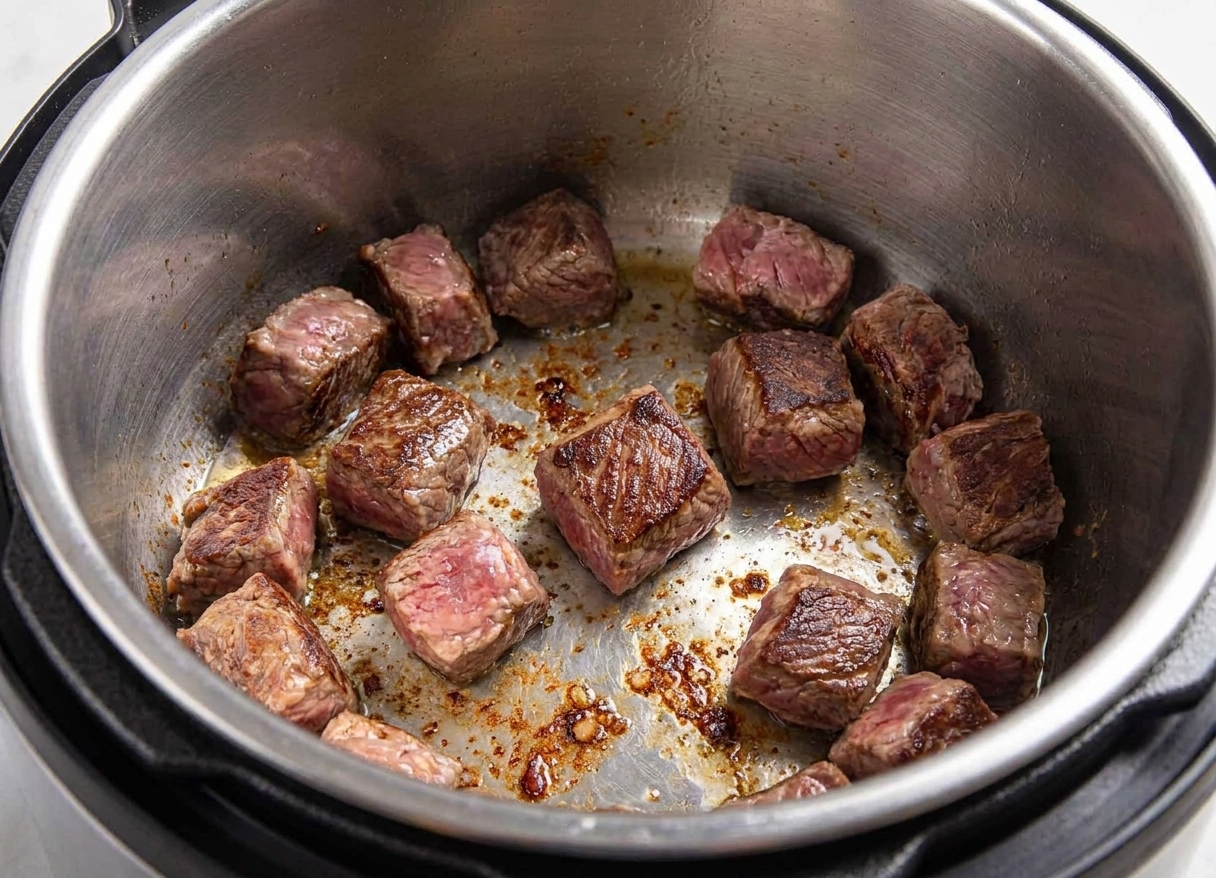
- Dry beef browns, wet beef steams. Pat the cubes dry before salting and searing.
- Sear in batches. Give the beef breathing room so you get color. Crowding makes gray meat and weaker flavor.
- Deglaze like you mean it. After sautéing the aromatics, pour in the broth and scrape every browned bit from the bottom. This prevents burn warnings and adds huge flavor.
- Watch the fill line. Keep everything at or under the Max line. This recipe is written to stay safely below it in a 6-quart.
- Cut veggies big. Think 1-inch chunks for potatoes and thick carrot coins, so they survive pressure cooking.
- Natural release is part of the cook. Plan for it. If you quick release, the stew can boil aggressively and toughen the beef.
- Thicken on Sauté, then rest. After adding slurry, simmer a minute or two until glossy, then let it sit 5 minutes to finish tightening up.
Flexibility
Substitutes That Work
- No red wine? Use extra beef broth plus 1 teaspoon balsamic vinegar for a little brightness.
- No Worcestershire? Use 1 tablespoon soy sauce or tamari, plus a tiny splash of vinegar or lemon.
- Gluten-free: Skip the flour coating and thicken only with cornstarch at the end.
- Lower carb: Swap potatoes for turnips or cauliflower florets. Add cauliflower after pressure cooking and simmer on Sauté until tender.
- Peas: Frozen peas are easiest. Stir them in after pressure cooking so they stay bright.
Make it yours
Variations to Try
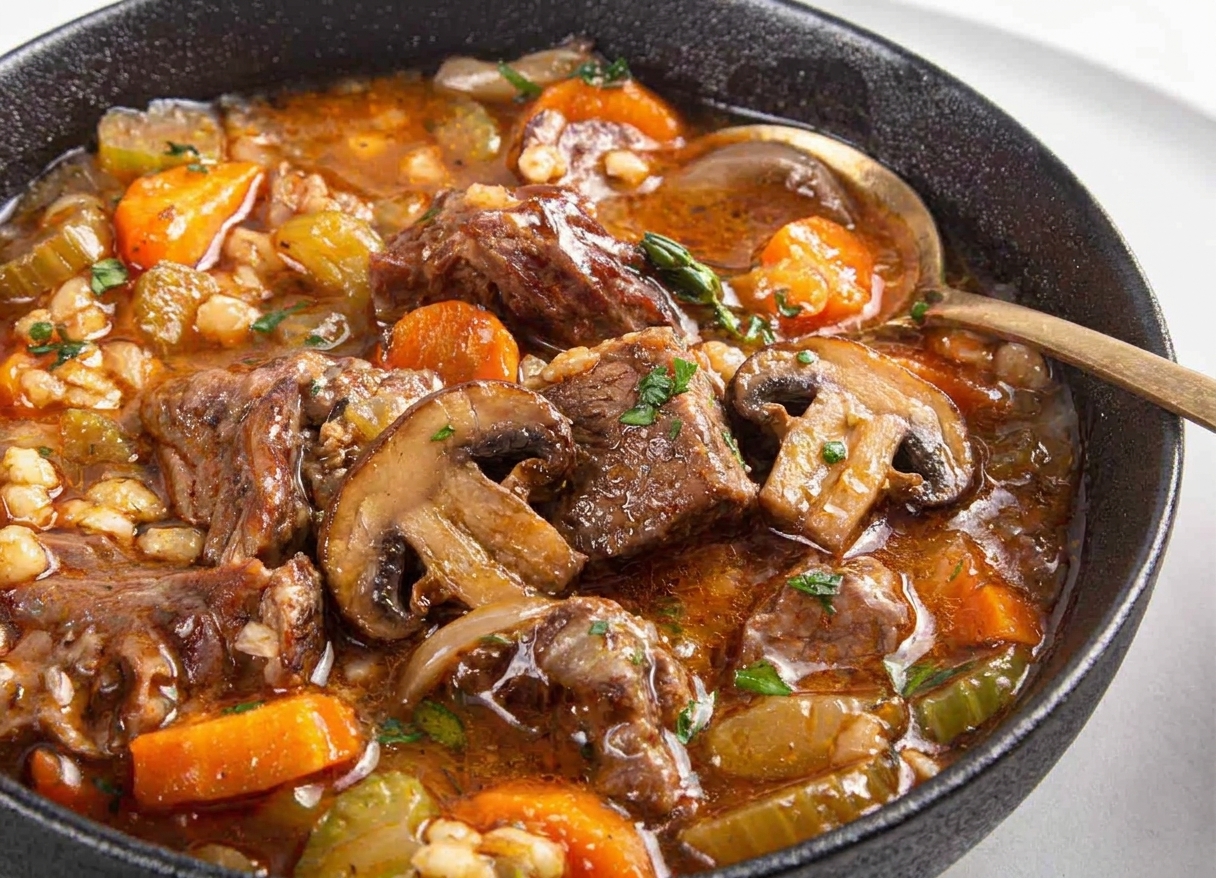
- Mushroom beef stew: Add 8 ounces sliced cremini mushrooms with the onions.
- Herby stew: Add fresh rosemary or thyme after cooking for a brighter finish.
- Smoky stew: Add 1 teaspoon smoked paprika with the tomato paste.
- Spicy cold-night version: Add a pinch of red pepper flakes with the garlic.
On the table
What to Serve It With
- Crusty bread for dunking in that thick gravy
- Buttered egg noodles for a cozy, old-school bowl
- Mashed potatoes if you want maximum comfort on comfort
- Simple green salad with a tangy vinaigrette to balance the richness
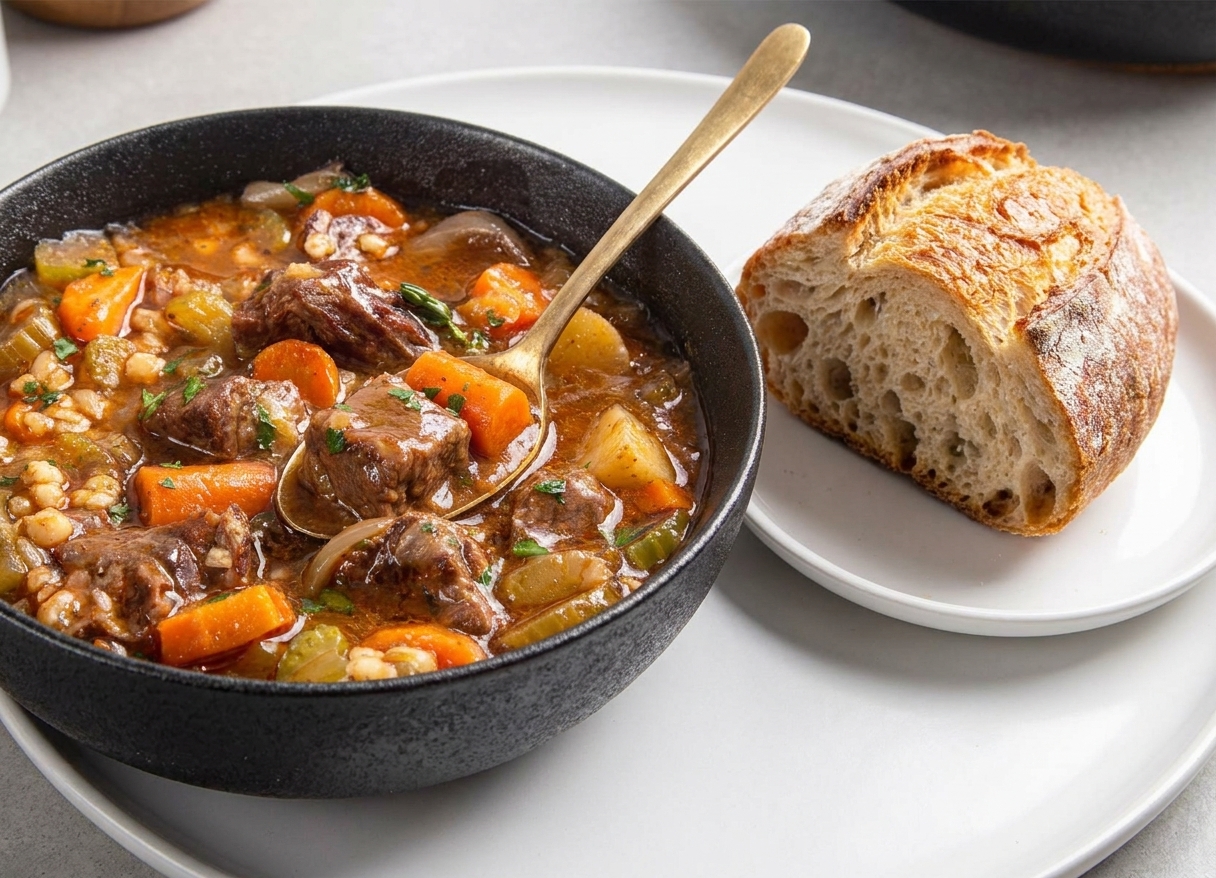
Later
Storage, Freezing and Reheating
- Refrigerate: Cool, then store in an airtight container for up to 4 days. The gravy thickens as it chills, which I consider a gift.
- Freeze: Freeze up to 3 months. Potato texture can soften after freezing, but it is still tasty. For the best texture, you can freeze without potatoes and add fresh ones when reheating.
- Reheat: Warm gently on Sauté (or in a saucepan on another day) with a splash of broth or water to loosen. Stir often so the thickened gravy does not stick.
Watch out
Common Mistakes to Avoid
- Skipping the deglaze: Those browned bits are flavor, but if you do not scrape them up with broth, you risk a burn warning.
- Too much liquid: Pressure cookers do not reduce like a simmering pot. Start with the amount in the recipe and thicken after.
- Quick releasing: Fast release can make the stew bubble violently and toughen meat. Natural release is worth the wait.
- Adding the slurry too early: Thickener added before pressure cooking can scorch and will not thicken properly.
- Cutting vegetables too small: Tiny pieces can disappear. Keep them chunky.
Questions
Frequently Asked Questions
How much liquid do I need for beef stew in the Instant Pot?
Most electric pressure cookers need at least about 1 to 1 1/2 cups of thin liquid to come to pressure. This recipe uses 4 cups total liquid (broth plus optional wine) to comfortably build steam and create plenty of gravy, while still staying under the Max line in a 6-quart.
Why is my Instant Pot beef stew watery?
Pressure cookers trap moisture, so there is very little evaporation during the cook. The fix is finishing the stew on Sauté and thickening with a cornstarch slurry after the pressure cycle.
What pressure time makes beef stew meat tender?
For 1 1/2-inch chunks of chuck roast, 35 minutes on High Pressure plus a 15 minute natural release is my sweet spot. If your pieces are larger, you may need a few extra minutes on High Pressure.
Can I overcook beef in the Instant Pot?
Yes. Even tough cuts can go from tender to dry and stringy if they cook too long. Stick to chuck, short ribs, or brisket, keep chunks large, and use natural release.
How do I thicken beef stew in the Instant Pot without lumps?
Mix cornstarch with cold water first, then stir the slurry into the hot stew while on Sauté. Simmer 1 to 2 minutes, stirring, until glossy and thick.
The recipe
Instant Pot Beef Stew
Tender, cozy Instant Pot beef stew with carrots and potatoes in a rich, thick gravy. Sear first for deep flavor, pressure cook on High, use a natural release, then finish with a quick slurry so the stew is never watery.
Ingredients
- 2 1/2 to 3 pounds beef chuck roast, cut into 1 1/2-inch cubes
- 1 1/2 teaspoons kosher salt, plus more to taste
- 1/2 teaspoon black pepper
- 3 tablespoons all-purpose flour
- 2 tablespoons olive oil
- 1 large yellow onion, diced
- 4 cloves garlic, minced
- 2 tablespoons tomato paste
- 1 teaspoon dried thyme
- 1 teaspoon paprika
- 1 tablespoon Worcestershire sauce
- 1/2 cup dry red wine (optional)
- 3 1/2 cups low-sodium beef broth
- 3 medium carrots, cut into thick coins
- 1 1/2 pounds Yukon gold potatoes, cut into 1-inch chunks
- 2 bay leaves
- 1 cup frozen peas (optional)
- 2 tablespoons cornstarch
- 2 tablespoons cold water
- 2 tablespoons chopped fresh parsley (optional, for serving)
Instructions
- Season and lightly coat the beef. Pat beef dry. In a large bowl, toss with salt, pepper, and flour until the cubes are lightly coated.
- Sear the beef. Select Sauté on the electric pressure cooker. When hot, add olive oil. Working in batches, sear beef on 2 to 3 sides until well browned, about 6 to 8 minutes per batch. Transfer browned beef to a plate.
- Sauté aromatics. Add onion to the pot and cook, stirring, until softened, about 3 to 4 minutes. Add garlic and cook 30 seconds, just until fragrant.
- Toast the tomato paste and spices. Stir in tomato paste, dried thyme, and paprika. Cook 1 minute, scraping the bottom of the pot as you go.
- Deglaze thoroughly. Pour in red wine (if using) and scrape up all browned bits from the bottom. Stir in Worcestershire, then add beef broth. Keep the liquid level under the Max line.
- Add beef and vegetables. Return beef and any juices to the pot. Add carrots, potatoes, and bay leaves. Stir gently to combine.
- Pressure cook. Lock the lid and set the valve to Sealing. Cook on High Pressure for 35 minutes.
- Natural release. When the cook time ends, let the pressure release naturally for 15 minutes. Then carefully turn the valve to Venting to release any remaining pressure.
- Thicken the gravy. Remove bay leaves. Select Sauté. In a small bowl, whisk cornstarch with cold water until smooth. Stir slurry into the bubbling stew and simmer 1 to 2 minutes, stirring often, until thick and glossy.
- Finish and serve. Stir in frozen peas (if using) and cook 1 to 2 minutes until hot. Taste and add more salt and pepper if needed. Let the stew sit 5 minutes to settle and thicken slightly more. Serve topped with parsley, if you like.
Recipe notes
- Best beef for pressure cooking: Chuck roast is the most consistent. Boneless short ribs and brisket flat also stay tender under pressure.
- Cut size matters: Aim for 1 1/2-inch beef cubes and chunky vegetables. Smaller pieces cook faster and can turn dry (beef) or mushy (veg).
- Gravy control: If you want it even thicker, add an additional slurry using 1 tablespoon cornstarch plus 1 tablespoon cold water, simmering after each addition until it looks right.
- Salt at the end: Broths vary a lot. Start modestly, then adjust after thickening when flavors are concentrated.