
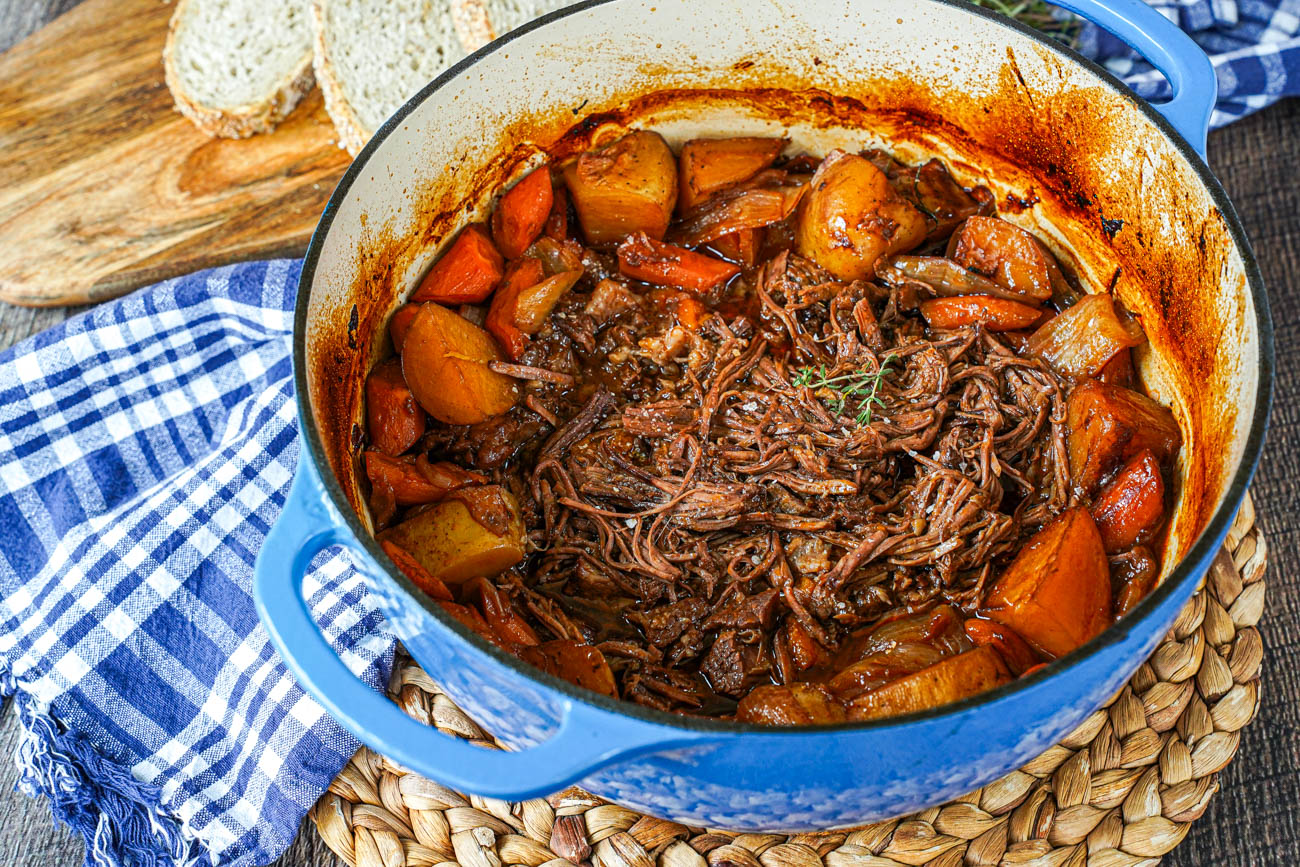
If you have ever stood at the meat case holding a package of “stew meat” in one hand and a chuck roast in the other, you are not alone. I grew up in a loud, hungry Pacific Northwest family where beef stew was practically a rainy-day sport, and the biggest difference between a rich, spoon-tender pot and a disappointing one usually came down to one choice: the cut. Let’s walk through chuck roast vs. round (plus what “stew meat” often really is) so you can pick the right package before you even turn on the stove.

The quick verdict
If you want the simplest, most reliable choice for a long simmer, buy chuck roast and cut it yourself.
- Best overall for stew: Chuck roast (stays tender and juicy after hours)
- Works if you are careful: Round (leaner, can turn dry or chewy if pushed too far)
- Most unpredictable: Packaged “stew meat” (quality depends on what cut they used)
Why stew gets tender (or tough)
For a long, cozy simmer, you are not shopping for “tender right now.” You are shopping for meat that becomes tender later.
Two things matter most at the meat case:
- Connective tissue (collagen): Cuts from hardworking muscles have more collagen. With time and gentle heat, collagen melts into gelatin, which is what gives stew that silky, rich texture.
- Fat and marbling: Intramuscular fat keeps the meat from tasting dry and gives you better flavor without doing anything fancy.
Lean cuts with little collagen can still be used, but they have a narrower “perfect window.” Stay in that window and they are fine. Miss it and they go from okay to chewy fast.
One more big factor that people underestimate: temperature. A gentle simmer keeps meat tender. A hard boil can tighten proteins and make lean cuts feel tough, even if you cook them for a long time.
Chuck roast
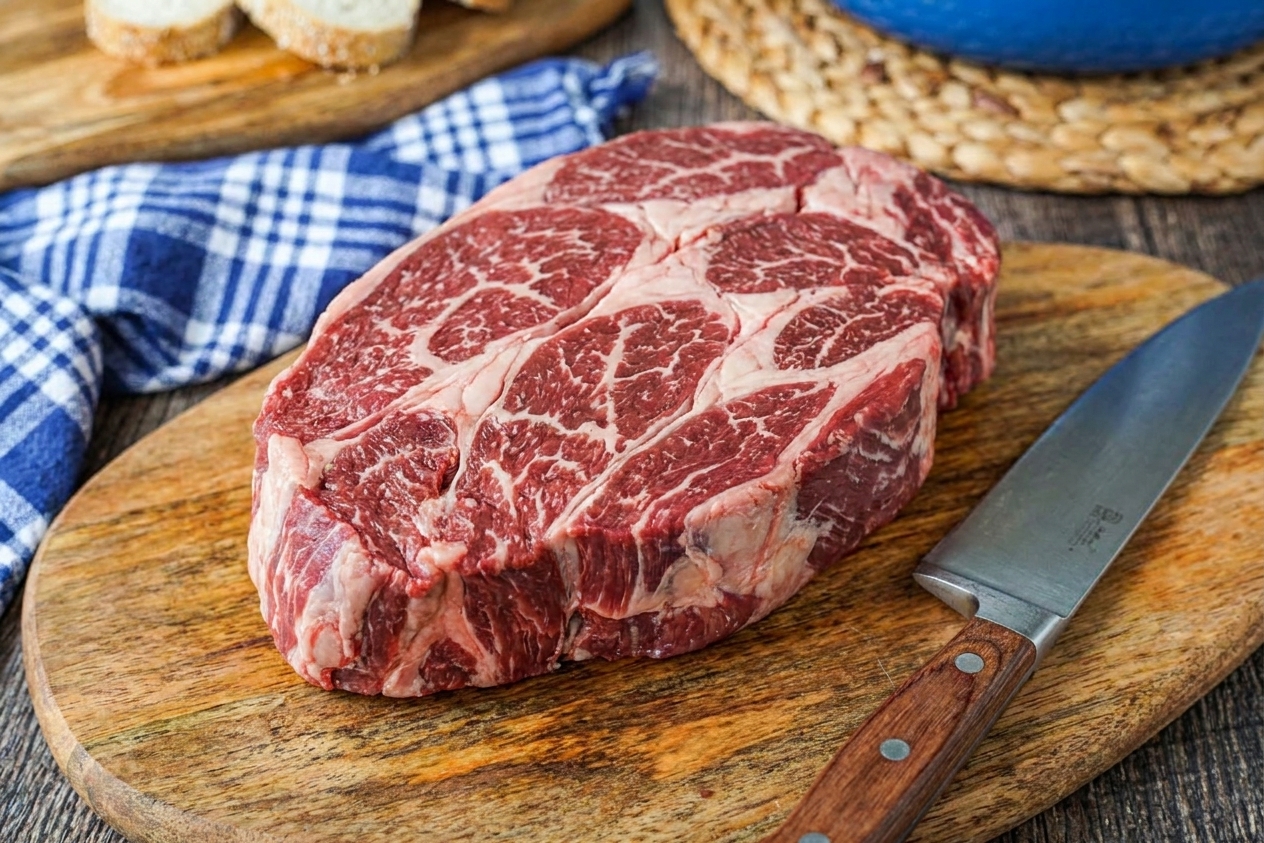
Chuck comes from the shoulder area, which means it is naturally built for braising. It typically has a mix of marbling, collagen, and beefy flavor that holds up beautifully in stew.
What chuck looks like
- Marbling: Look for thin white streaks of fat running through the meat, not just a thick fat cap around the edge.
- Grain: Chuck often has a looser, more varied muscle structure. It might look like a few muscles grouped together. That is normal.
- Color: Bright cherry-red is common in the case, but some dulling or gray-brown on the surface can simply be oxidation. I pay more attention to the use-by date and whether it smells clean and feels firm, not sticky or slimy.
How chuck behaves in stew
- Tenderness after simmering: Excellent. It is forgiving if it goes a little longer.
- Texture: Plush and shreddable in spots, with satisfying chunks that stay juicy.
- Flavor: Richer, beefier. The combo of marbling plus the gelatin you get from collagen is what gives that cozy, stew-house depth.
Trimming notes (quick and practical)
I do not trim chuck like I am sculpting a steak. I just take off what will never get pleasant.
- Keep: small streaks of fat inside the meat.
- Trim: thick hard outer fat and any silverskin or tough seams that look shiny and rubbery.
Round
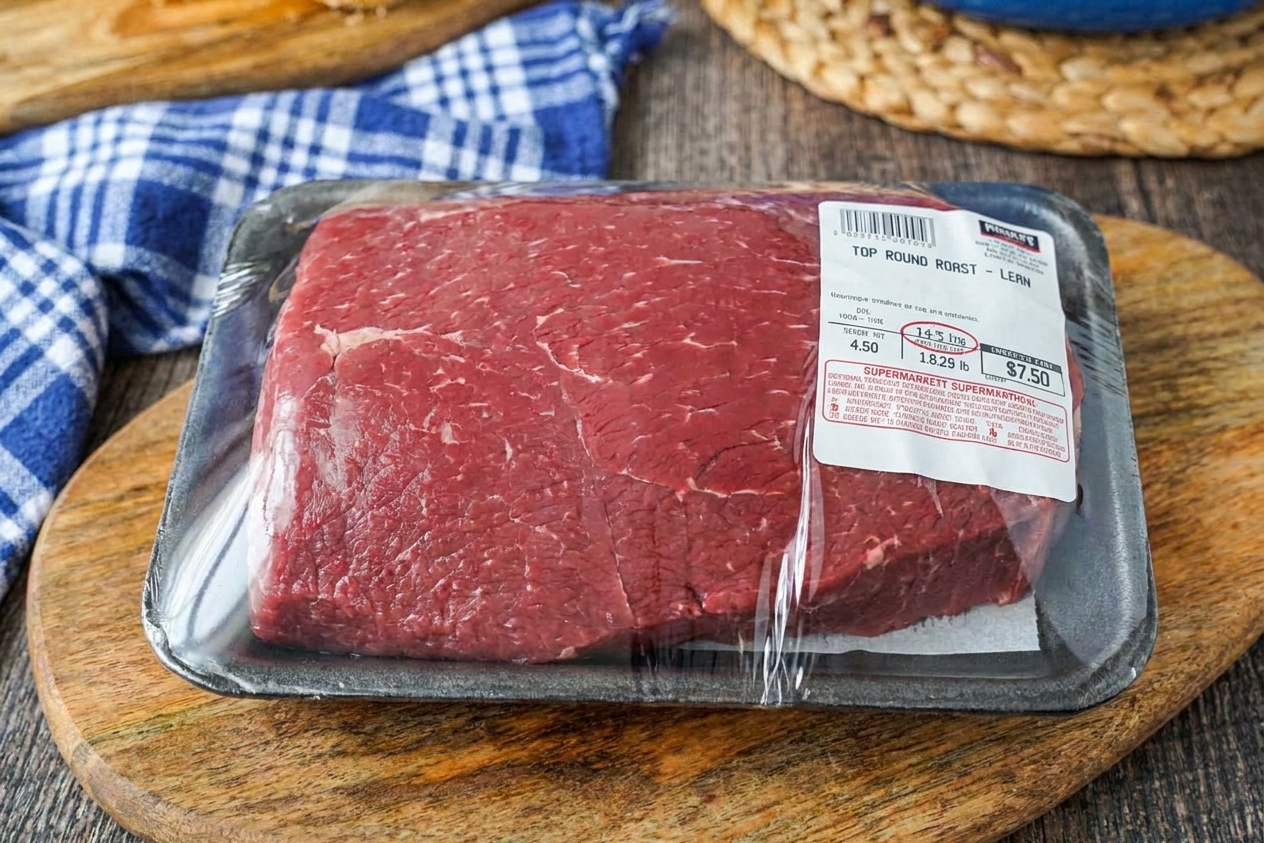
Round comes from the back leg, so it is leaner and has a tighter muscle grain. Common labels include top round, bottom round, and eye of round.
Round can absolutely be used for stew, but it helps to know what you are signing up for: it has less internal fat, and depending on the specific piece, it can have a “sliceable roast” personality rather than a “melts into stew” personality.
What round looks like
- Marbling: Minimal. Expect a smoother, more uniform red piece of meat.
- Grain: Tighter and more consistent. Often looks like one solid muscle.
- Fat: Usually a thin edge or almost none.
How round behaves in stew
- Tenderness after simmering: Variable. It can soften, but it is easier to end up with dry or slightly chewy cubes.
- Texture: More “firm bite” than chuck, especially if simmered hard or cooked too long.
- Flavor: Beefy but less rich. You may notice the difference more in simpler stews.
How to succeed with round
- Keep it at a gentle simmer: no rolling boil.
- Cut a little larger: about 1 to 1 1/2 inch cubes so the outside does not dry out before the inside relaxes.
- Do not chase “fall-apart”: round often tastes best when it is just fork-tender, not cooked until shreddable.
- Help the broth: a gelatin-rich stock, a spoonful of tomato paste, or a little extra collagen from a bone-in stock can make a lean cut eat richer.
If you choose round: look for pieces with at least a little marbling and avoid super-lean, perfectly smooth eye of round if your goal is that fall-apart stew texture.
Packaged stew meat
“Stew meat” is usually a pile of pre-cut cubes, and it is tempting because it is ready to dump into the cart. The catch is that stew meat is not one specific cut. It can be trimmings from chuck, round, sirloin, or a mix.
How to judge it fast
- Look for marbling: Choose packages with some white streaks of fat in the cubes, not all uniformly lean pieces.
- Check cube size: Aim for fairly even pieces so they cook at the same pace. If half the package is tiny scraps and half is big chunks, the small pieces can dry out and shred before the rest is done.
- Read the label if it lists a cut: If it says “chuck stew meat,” that is a good sign. If it just says “beef for stew,” assume it is mixed.
- Watch the liquid: A little purge in the tray is normal. A lot of liquid can be a sign of older meat, previously frozen meat, or longer time sitting in the package, and it also makes browning harder.
My honest take: if you want the best odds of a tender stew, stew meat is my third choice after chuck and then round. It can be great, but it is less predictable.
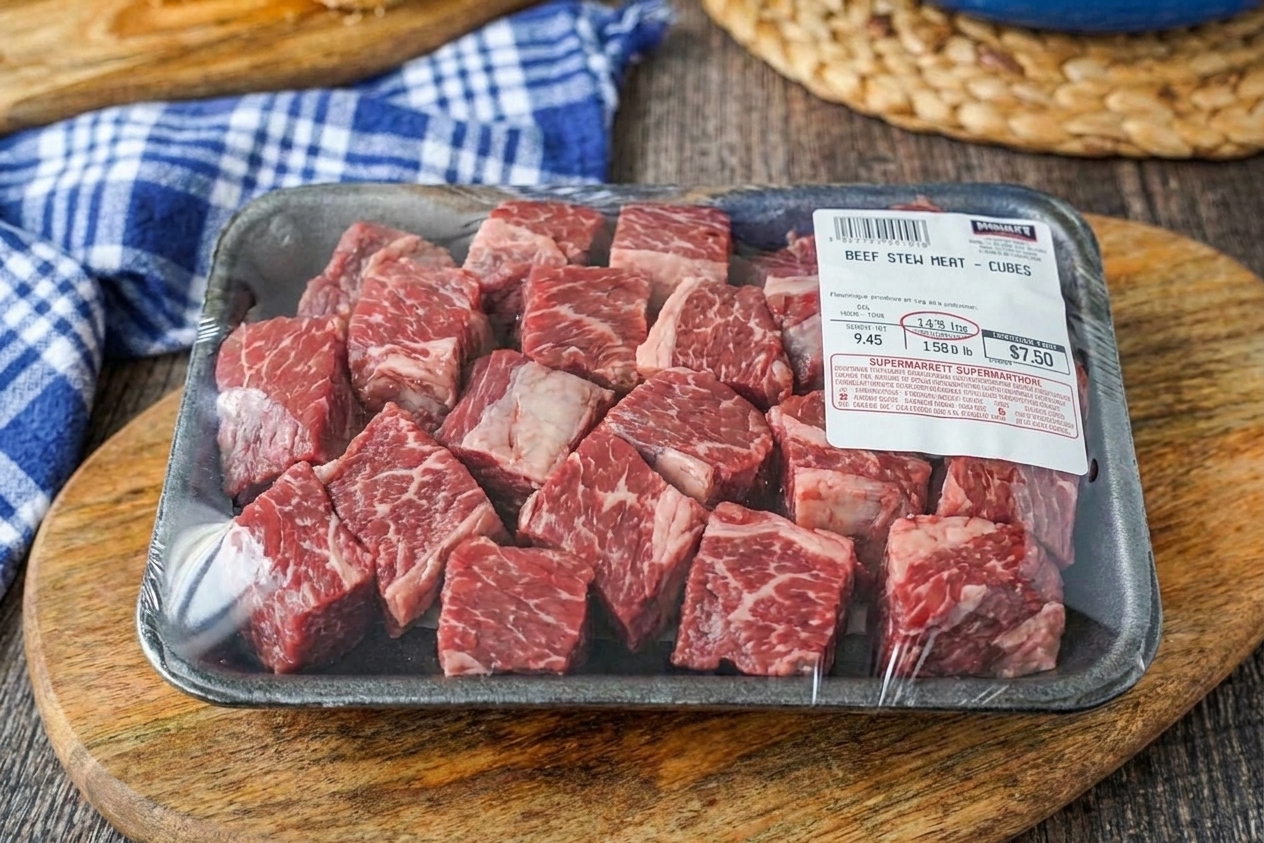
What you are paying for
| What you care about | Chuck roast | Round | Packaged stew meat |
|---|---|---|---|
| Fat and marbling | Moderate to high, great for flavor | Low, can eat “drier” | Varies widely by package |
| Muscle grain | More varied, braise-friendly | Tighter grain, firmer bite | Mixed pieces, inconsistent |
| Tender after long simmer | Most reliable | Can get tender, but easier to overcook into dryness | Unpredictable |
| Typical price | Often mid-range | Often cheaper than chuck | Sometimes higher per pound for convenience |
| Best reason to buy | Quality, flavor, forgiving texture | Budget-friendly, lean preference | Time-saving, no cutting |
Choosing chuck for stew
If you are going to cut it yourself, a few small details make a big difference.
- Choose thicker roasts when possible: Thicker usually means you will get nicer, larger cubes instead of a bunch of thin edge pieces.
- Pick marbling over a big fat cap: Intramuscular fat helps every bite. A huge exterior fat cap often gets trimmed away.
- Avoid “enhanced” if you can: Some roasts are injected with a salt solution. It is not unsafe, but it can change browning and seasoning control. The label will say something like “contains up to X% solution.”
- Bone-in vs boneless: For most shoppers, boneless is easier and plenty flavorful. Bone-in can be wonderful, but you are paying for bone weight and extra trimming work.
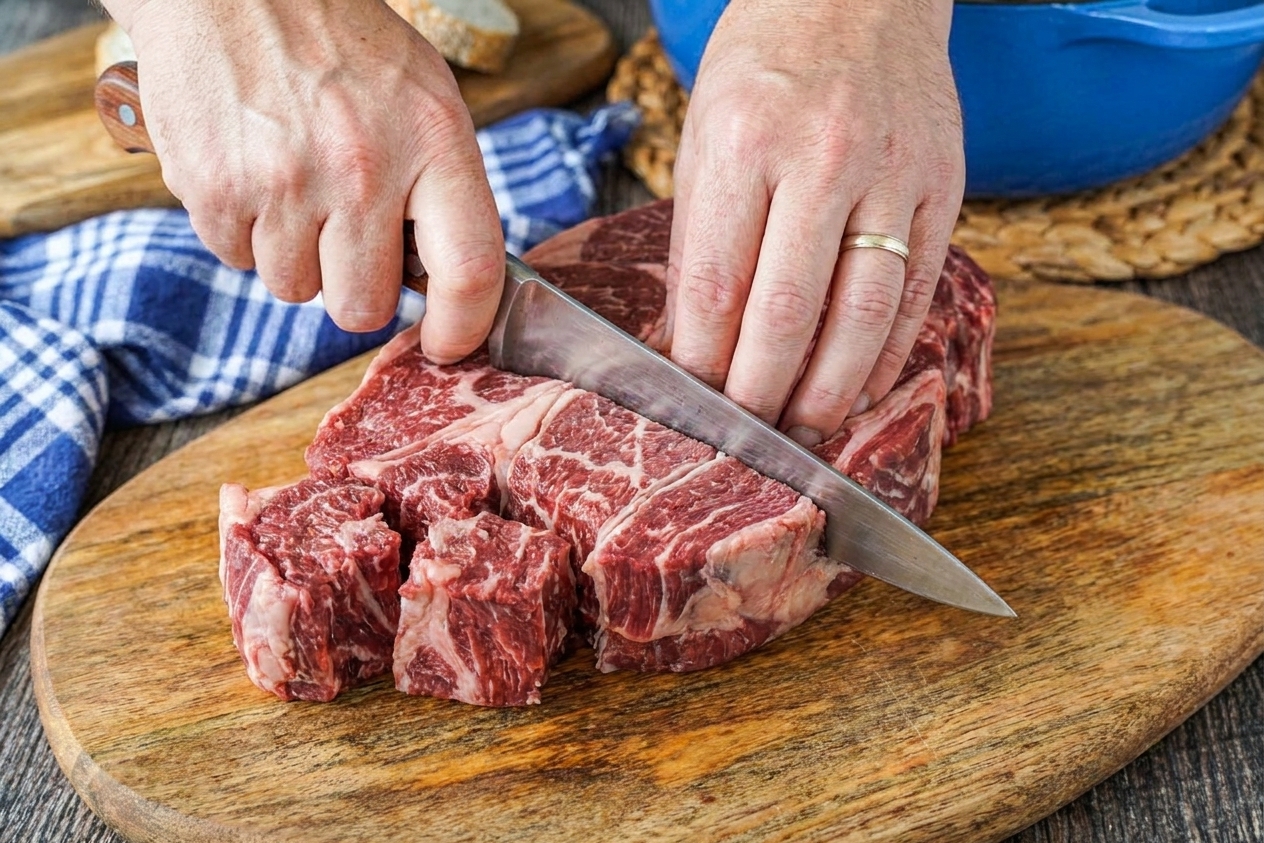
Cube size tip: For most stews, I aim for 1 to 1 1/2 inch cubes. Smaller cooks faster but can dry out. Bigger gives you that hearty, spoon-worthy chunk.
If the store is out of chuck
Sometimes the meat case has everything except what you actually want. If chuck is gone, here is how I would choose next, keeping stew tenderness in mind.
- Best backup: Brisket (excellent collagen, rich flavor, can be a bit fattier)
- Also great if you see it: Short ribs (incredible texture and flavor, typically pricier)
- Works but leaner: Bottom round (often better than eye of round for braising)
- Depends on the cut: Sirloin (some sirloin cuts do fine, but very lean pieces can dry out with a long simmer; if the label says sirloin tip, expect it to behave more like round in many stores)
If you spot a package labeled “beef shoulder” or “shoulder roast”, that is often chuck by another name, but not always. If you are unsure, check the fine print for “chuck,” or ask the butcher which part of the shoulder it is from.
How much to buy
When you buy chuck roast, you may trim a little thick exterior fat or a few chewy silverskin patches, but you usually keep most of what you paid for.
When you buy packaged stew meat, you are paying for the convenience of pre-cut pieces and the store has already decided what counts as “usable.” That can be great, or it can mean you get lots of small scraps that cook unevenly.
Rule of thumb for shopping (this is raw weight): if you want hearty bowls and possible leftovers, plan on roughly 1/2 pound per person. If your household loves big chunks of beef and you want it extra meaty, nudge closer to 3/4 pound per person.
FAQ
Is chuck roast the same as pot roast?
Chuck roast is a cut. “Pot roast” is often a label used for a roast that is good for braising, and it is very commonly chuck. Still, it is worth reading the smaller print to see if it says chuck, bottom round, or another cut.
Why does round get chewy in stew?
Round is lean with a tighter muscle grain. It has less intramuscular fat to keep it feeling juicy, and depending on the specific piece, it may not have the same collagen payoff as chuck. Long simmering, especially at a hard boil, can leave it dry and firm instead of lush.
What is “stew meat” usually made from?
It depends on the store. Some butchers use chuck trimmings, which can be great. Others use round or a mix of cuts. The best clue is marbling and whether the label specifies a cut like “chuck stew meat.”
Should I buy lean stew meat if I do not like fatty bites?
You can, but know that fat is a big part of what makes stew taste rich and feel tender. If you prefer leaner meat, round may suit you, but it is extra important to choose pieces with at least a little marbling, keep the simmer gentle, and avoid packages full of tiny cubes.
Does grass-fed vs grain-fed matter for stew cuts?
It can. Grass-fed beef often has less fat overall, which can make round feel even leaner. For stew, grass-fed chuck can still be excellent, but I pay extra attention to marbling and choose the best-looking piece in the case.
Shopping checklist
- Grab: Chuck roast with visible marbling and a thicker shape.
- Grab: Stew meat labeled chuck, with evenly sized cubes and some fat streaks.
- Maybe: Bottom round if it has a bit of marbling and chuck is unavailable.
- Skip: Very lean, perfectly smooth round (often eye of round) if you want fall-apart stew.
- Skip: Stew meat trays full of tiny scraps or totally uniform, lean cubes.
If you want the most dependable, cozy, tender result, chuck is the cut that shows up for you every time. And if you are already in the store, you are about five minutes of simple cutting away from giving your future stew the best possible start.