

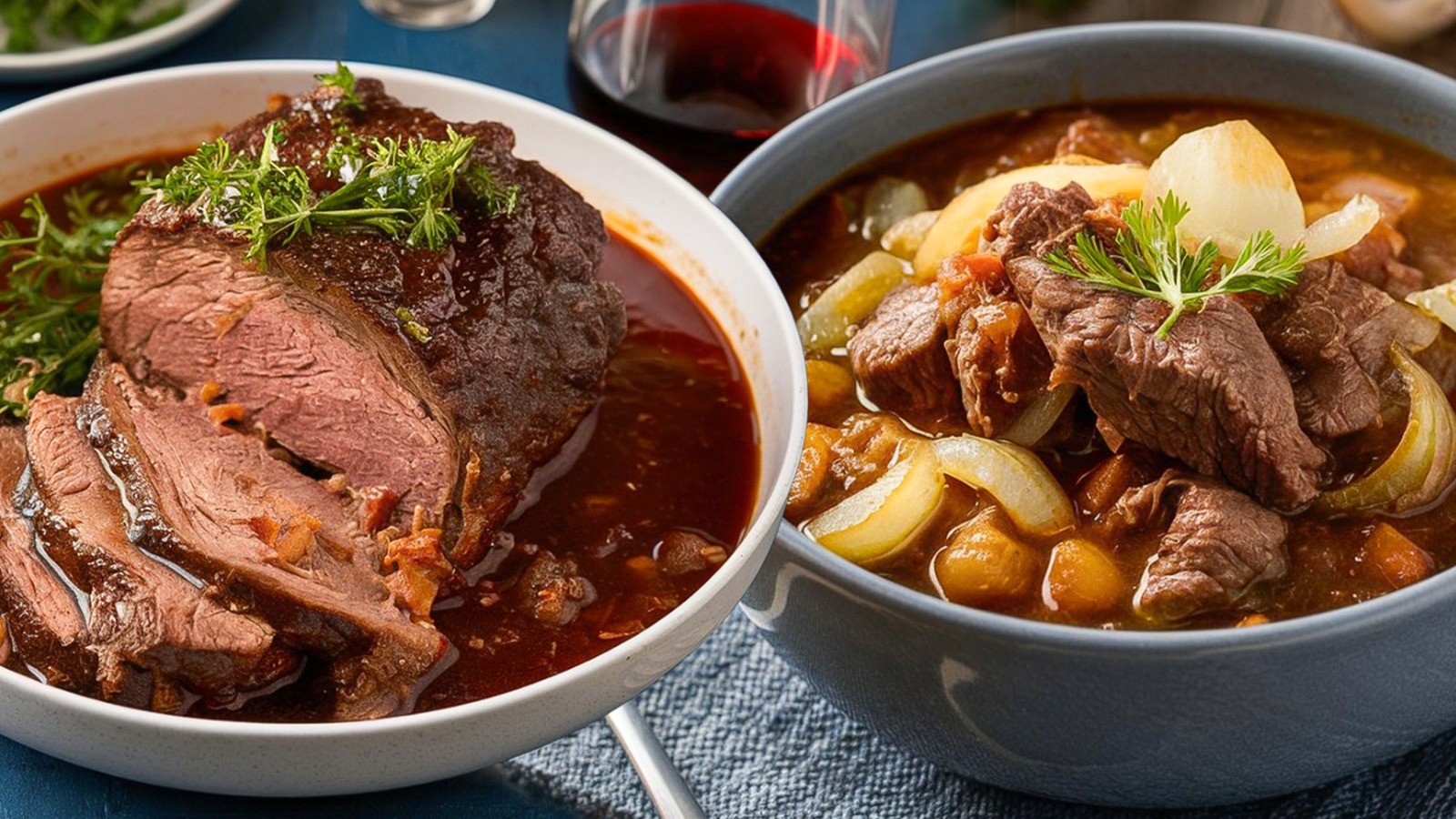
If you have ever stood in front of the beef case thinking, “Do I want beef stew or pot roast?” you are in very good company. They share the same cozy energy, the same low-and-slow magic, and the same promise of a house that smells like someone loves you.
But they are not interchangeable. The biggest difference is what you want to serve at the end: a bowl of spoonable, gravy-rich bites (stew) or a sliceable, fork-tender roast with a side of vegetables (pot roast). Once you decide what you want on the plate, the shopping list basically writes itself.
At a glance

When I am helping friends choose between these two, I ask one question: Do you want to eat this with a spoon or a fork?
- Choose beef stew if you want lots of evenly sized bites of beef and vegetables in a thick, spoonable gravy. Everyone’s bowl looks the same, and it is easy to serve seconds.
- Choose pot roast if you want a centerpiece piece of meat that turns shreddable or sliceable, plus vegetables you can serve alongside. It feels a little more “Sunday dinner,” even on a Tuesday.
The shopping difference
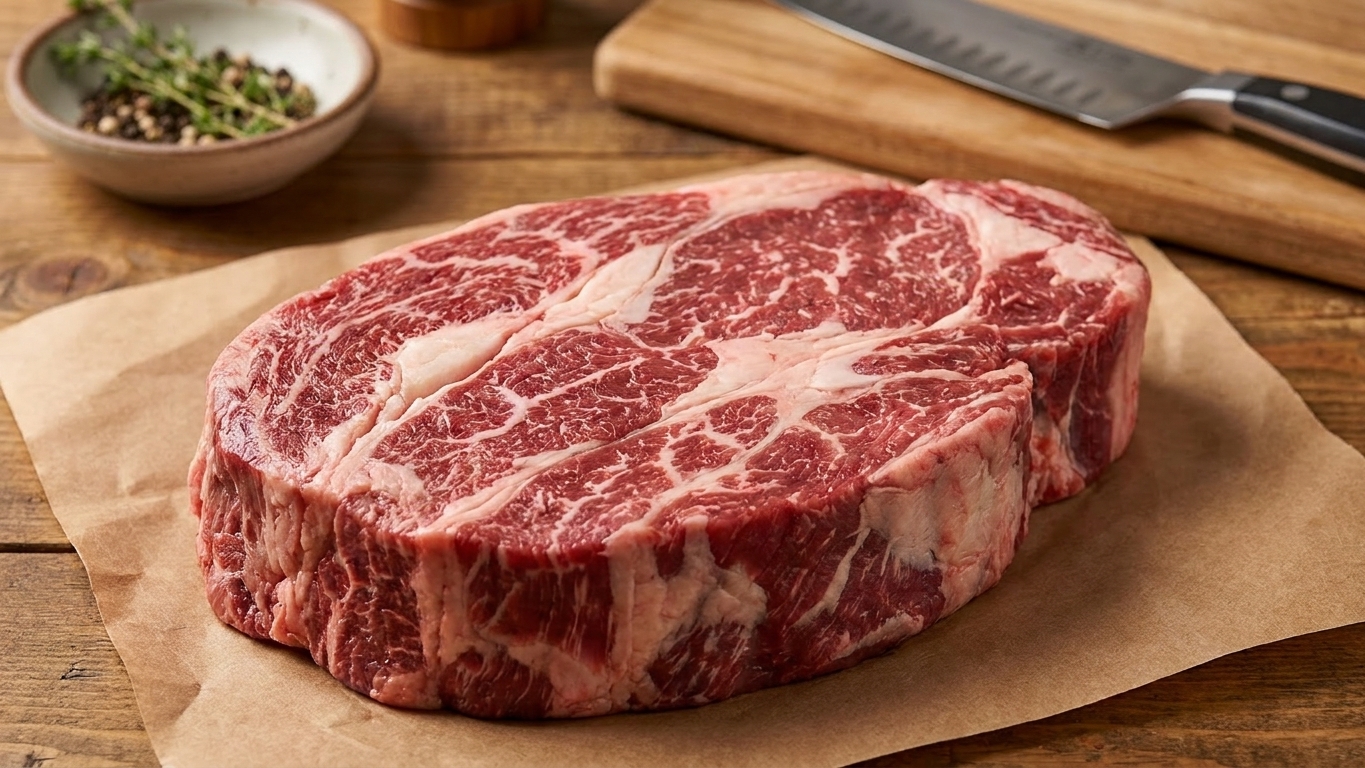
This is the decision that usually changes everything at the store: are you buying cubes or a whole roast?
Beef stew: smaller chunks
For stew, you are aiming for 1 to 2 inch cubes that can be browned and then simmer into tender bites. You can buy:
- Pre-cut “stew meat”: convenient, but the pieces can be uneven and sometimes come from mixed cuts.
- A chuck roast you cut yourself: my preference when I have five extra minutes. You control the size, trim, and consistency.
What to look for: good marbling, not too lean. Collagen breaks down into gelatin and gives stew that rich, silky feel. The classic thick, gravy-like body usually comes from a thickener (flour, cornstarch, or even starchy potatoes doing a little work in the pot).
Pot roast: one big piece
For pot roast, you want a single, well-marbled roast that can braise until it turns fork-tender. The classic is chuck roast, but brisket and bottom round are also common choices depending on your budget and texture preference.
Quick note on bottom round: it is leaner and can be less forgiving. It still works, but it benefits from careful braising, slicing across the grain, and not letting it overcook into dryness.
What to look for: a roast that feels thick and substantial, with visible marbling. Pot roast is at its best when it has time to break down slowly.
Liquid level
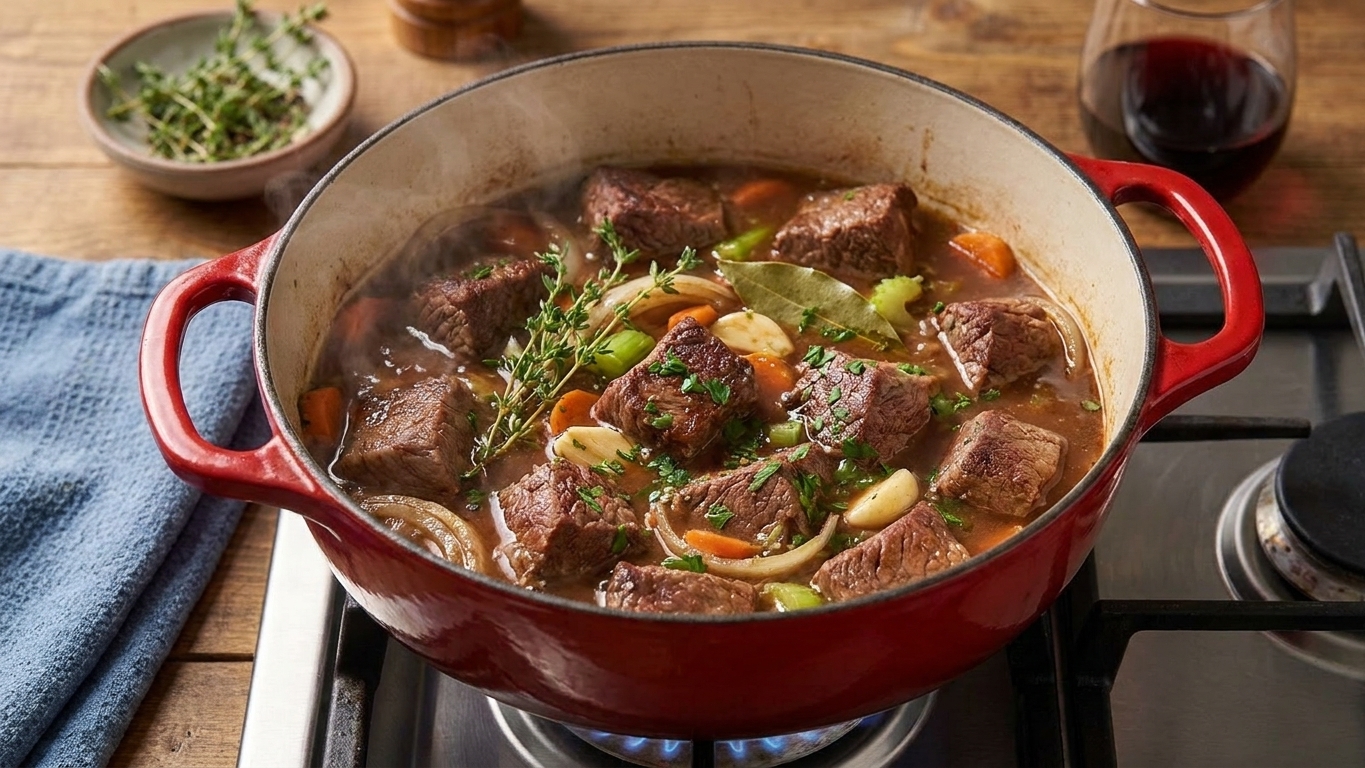
The liquid decision is a quiet fork in the road because it changes texture and serving style.
- Beef stew typically uses more liquid because the end goal is a bowl with plenty of gravy-broth to carry every bite. Think: beef and vegetables surrounded by thickened liquid.
- Pot roast typically uses less liquid. It is often a shallow braise, meaning the liquid comes partway up the roast. The meat cooks through gentle steam and bubbling sauce, then you spoon that concentrated gravy over slices or shreds.
Shopping tip: Stew often needs a bit more stock or broth. Pot roast can often get away with less because you are not filling bowls with liquid.
Vegetables
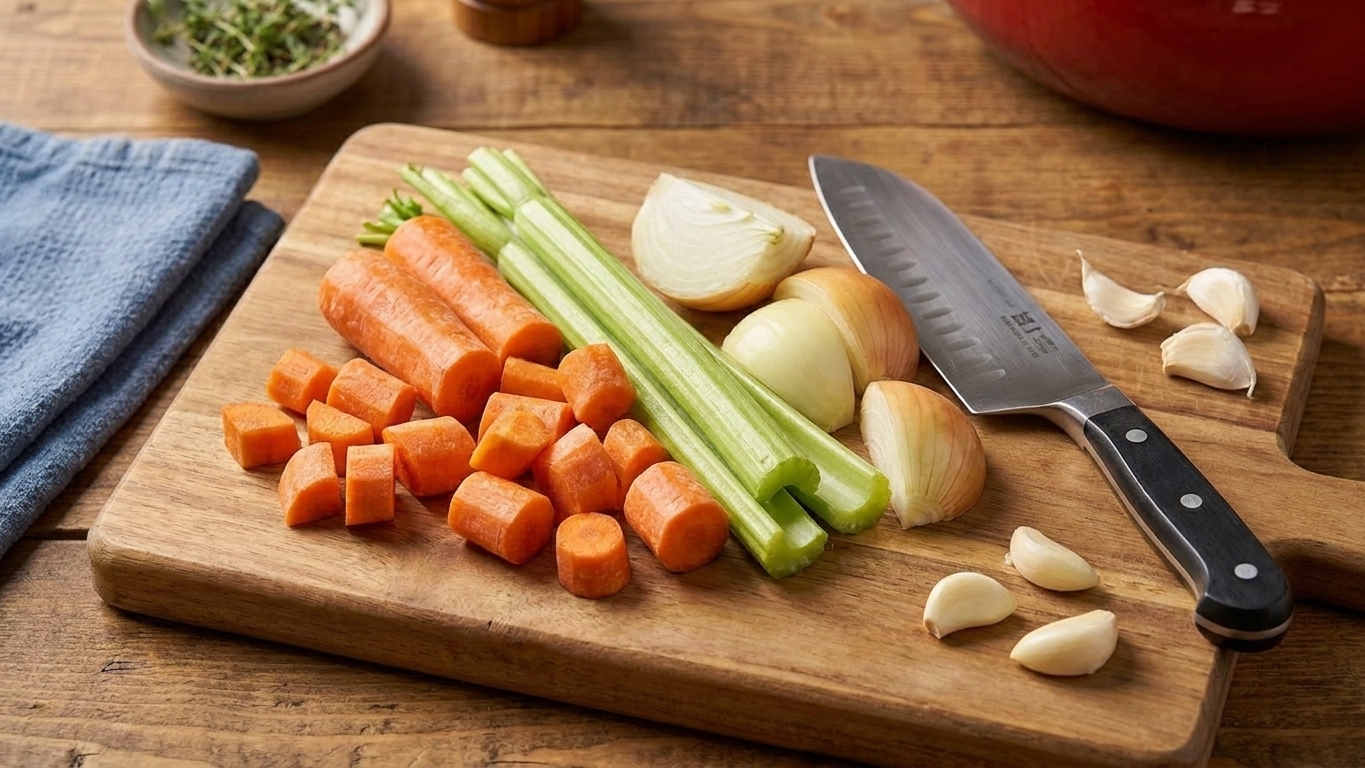
This is where the two meals start to look different in your cart.
Beef stew vegetables
Stew vegetables are usually cut into bite-size pieces so you get a little of everything in each spoonful. Common choices:
- Carrots and celery (the cozy classic)
- Onion and lots of garlic (I will never apologize)
- Potatoes cut into chunks that hold their shape
- Mushrooms, parsnips, or peas as add-ins
Shopping mindset: buy enough vegetables to feel like the stew is generously packed, not just “meat in gravy.”
Pot roast vegetables
Pot roast vegetables are often bigger, sometimes even left in large pieces, so they do not completely melt into the sauce while the roast cooks for hours. Common choices:
- Baby potatoes or halved Yukon Golds
- Big carrot chunks
- Onion wedges
- Celery pieces for aroma (they may be served or discarded depending on preference)
Shopping mindset: choose vegetables that can act like a built-in side dish. You are setting up a meat-and-sides plate, not a bowl.
Timing and tenderness
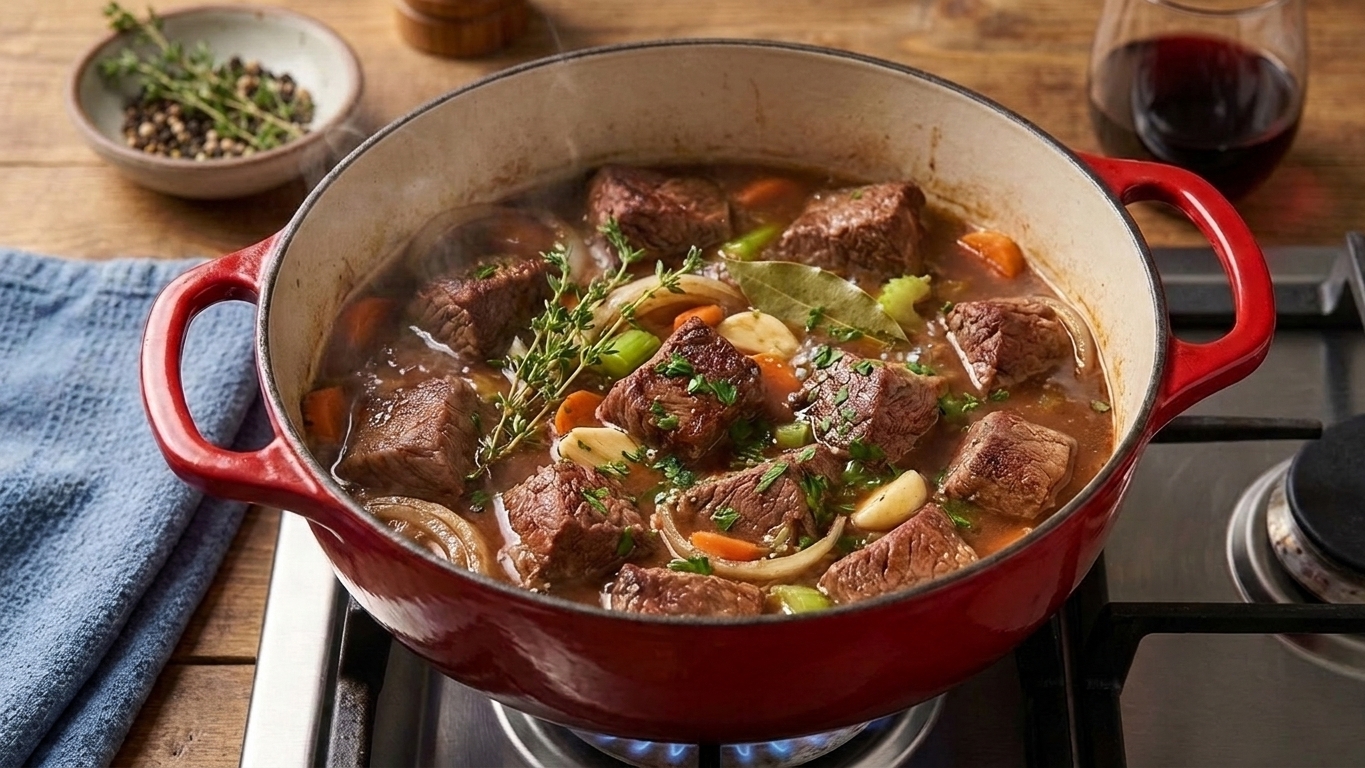
Both dishes are slow-cooked, but the texture target is different.
- Stew timing is about the cubes. You are waiting for chunks to turn tender without falling completely apart. In a typical Dutch-oven or stovetop simmer, many stews land in the 1.5 to 3 hour range depending on cut, cube size, and method.
- Pot roast timing is about the center of the roast. A whole chuck roast needs enough time for connective tissue to break down so it becomes shreddable or sliceable. In a typical oven braise, that is often 3 to 5 hours, and can be longer for larger roasts or leaner cuts.
The practical takeaway: If you are starting late and want the quickest path to “tender beef,” stew often wins because smaller pieces soften faster.
Technique cues
This is not a full recipe situation, but a couple technique details do affect what you need to buy.
Searing and thickening
- Stew: cubes are often lightly floured before browning, or the stew is thickened later with a flour slurry or cornstarch. If you love that classic, glossy gravy, make sure you have your thickener in the pantry.
- Pot roast: you are usually searing one large roast, then braising and reducing the liquid into a spoonable gravy. You might still use flour or cornstarch at the end, but you often can rely on reduction plus the roast drippings for body.
How to tell when it is done
- Stew is done when the cubes are fork-tender but still hold their shape when you stir.
- Pot roast is done when it is tender enough to pull or slice easily. Many roasts hit their best texture when the internal temperature is roughly 195 to 205°F, followed by a short rest so the meat stays juicy on the plate.
What you serve
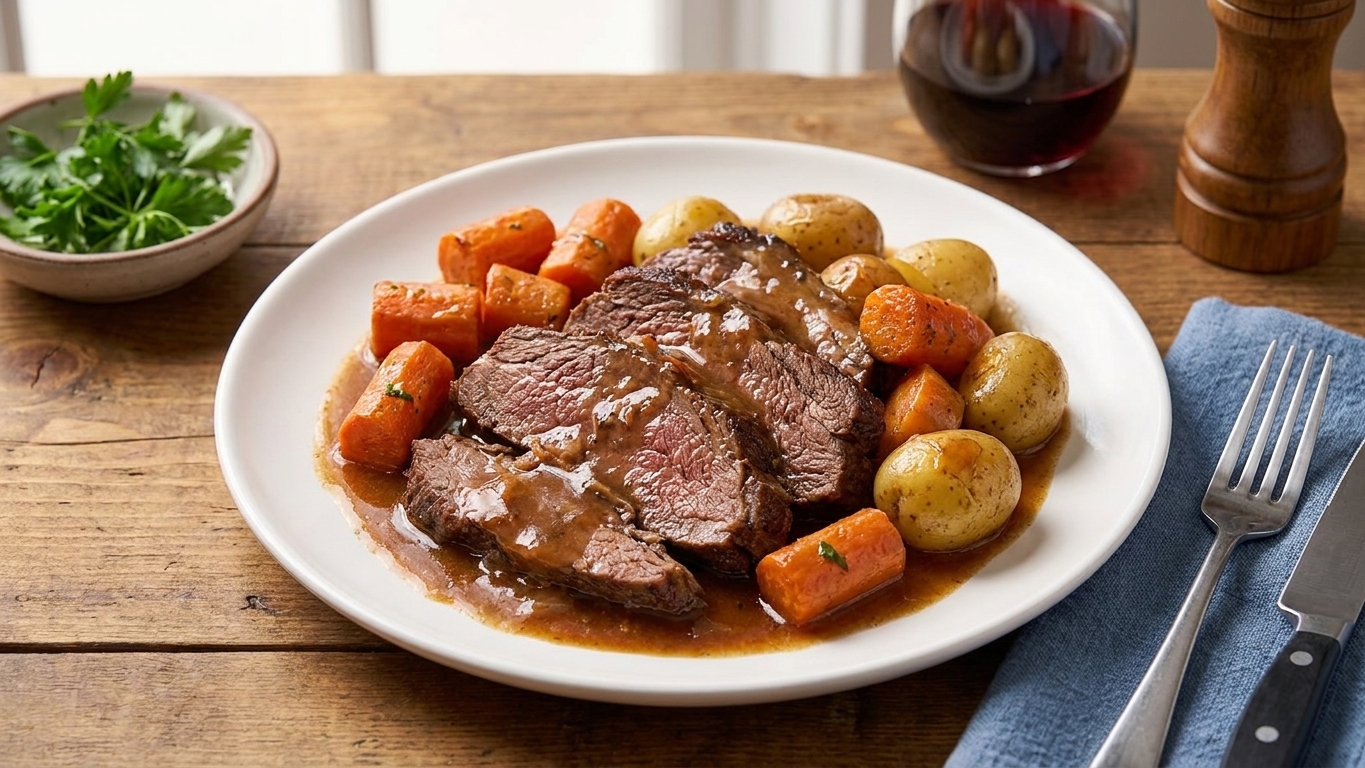
Here is the part I wish more people said out loud: these are two different types of dinner service.
Beef stew serving style
- Served in bowls, usually with plenty of gravy.
- Great with crusty bread, biscuits, buttered noodles, or rice.
- Easy to portion for kids or guests because everything is already in bite-size pieces.
Pot roast serving style
- Served on plates: meat as the star, vegetables alongside.
- Pairs naturally with mashed potatoes, buttered egg noodles, or a simple green salad.
- Feels a little more “serve and carve,” even if you end up shredding it.
Quick checklist
If you want a fast gut-check before shopping, use this list.
Choose beef stew if you want:
- Smaller, evenly tender pieces of beef in every bite
- More gravy-broth to spoon up
- Vegetables mixed throughout, all bite-size
- A meal that serves easily from one pot into bowls
Choose pot roast if you want:
- A big piece of beef that turns sliceable or shreddable
- A concentrated sauce you spoon over the meat
- Larger vegetables that act like built-in side dishes
- A plate-style dinner with a “main plus sides” vibe
Questions I get a lot
Is stew meat the same as pot roast?
Not exactly. “Pot roast” refers to a whole roast cut meant for slow braising. “Stew meat” is usually beef already cut into chunks, and it can come from different parts of the animal. You can absolutely cut a chuck roast into cubes and make your own stew meat, which gives you more consistent results.
Can I turn a pot roast into stew halfway through?
You can, with a few adjustments. If you start with a whole roast and decide you want stew, you will need to remove the meat once it is tender enough to handle, cut or shred it, then return it to a higher liquid level with bite-size vegetables. It works, but it is easier to decide before you shop.
Which one is better for leftovers?
Both are excellent, but in different ways. Stew often tastes even better the next day because the flavors meld. Pot roast leftovers are great for sandwiches, tacos, hash, or tossing shredded beef into pasta.
Which is more budget-friendly?
They can be similar if you are using chuck roast for either. Stew sometimes lets you stretch the beef further by increasing the vegetables and gravy. Pot roast feels meatier per serving because the roast is the centerpiece.
Which is best in a slow cooker or Instant Pot?
Both work well in either appliance. Slow cookers are especially forgiving for pot roast because the roast has time to gently relax into tenderness. Instant Pots can make either dish much faster, but the big difference remains the same: stew is about cubes and bowls, pot roast is about a whole roast and plates.
No stress shopping lists
Not full recipes, just the cart essentials so you can commit with confidence.
If you are shopping for beef stew
- 2 to 3 pounds chuck roast (to cube) or quality stew meat
- Beef broth or stock (often more than pot roast)
- Onions, garlic
- Carrots, celery
- Potatoes (chunked)
- Thickener if you like a classic gravy texture (flour or cornstarch)
If you are shopping for pot roast
- 3 to 4 pound chuck roast (whole)
- Beef broth or stock (often less than stew)
- Onions, garlic
- Carrots (bigger pieces)
- Baby potatoes or halved Yukon Golds
- Something to serve with the gravy, like mashed potatoes, noodles, or bread
If you tell me how many people you are feeding and whether you are using the oven, slow cooker, or Instant Pot, I can help you pick the better option for your exact weeknight.