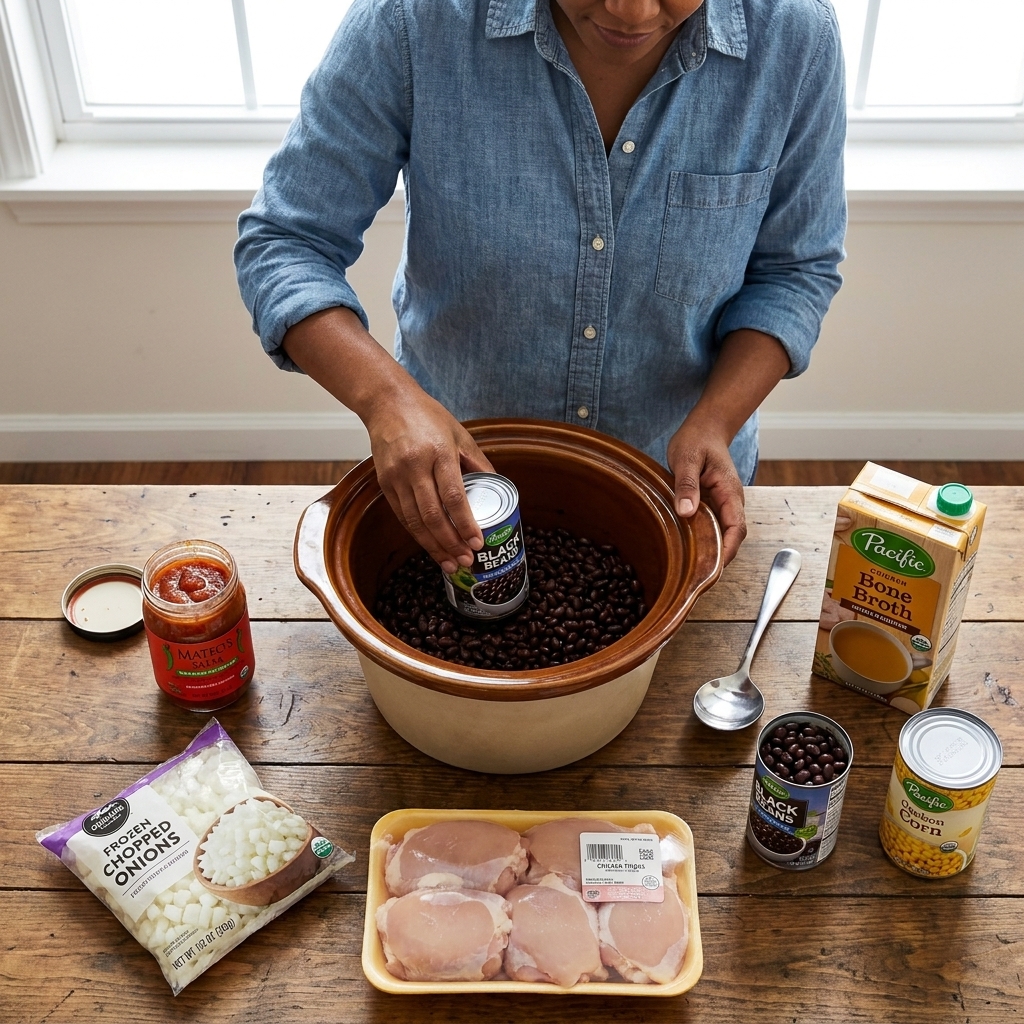
These 5-minute slow cooker meals are truly dump-and-go: no pre-browning, no chopping, no fuss. Just pantry-friendly ingredients and comforting results.
Recipeva
Dutch Oven vs. Slow Cooker Pot Roast
Dutch oven or slow cooker for pot roast? Learn the real pros and cons of each method, plus best practices for deeply flavored, fall-apart tender Sunday pot roast.

Maya Reynolds
Maya Reynolds is a passionate home cook, recipe developer, and the creative voice behind Recipeva. With over a decade of experience translating complex culinary techniques into approachable weeknight meals, she focuses on creating dishes that bring joy to the dinner table without the stress.
Created September 21, 2026
Updated September 21, 2026
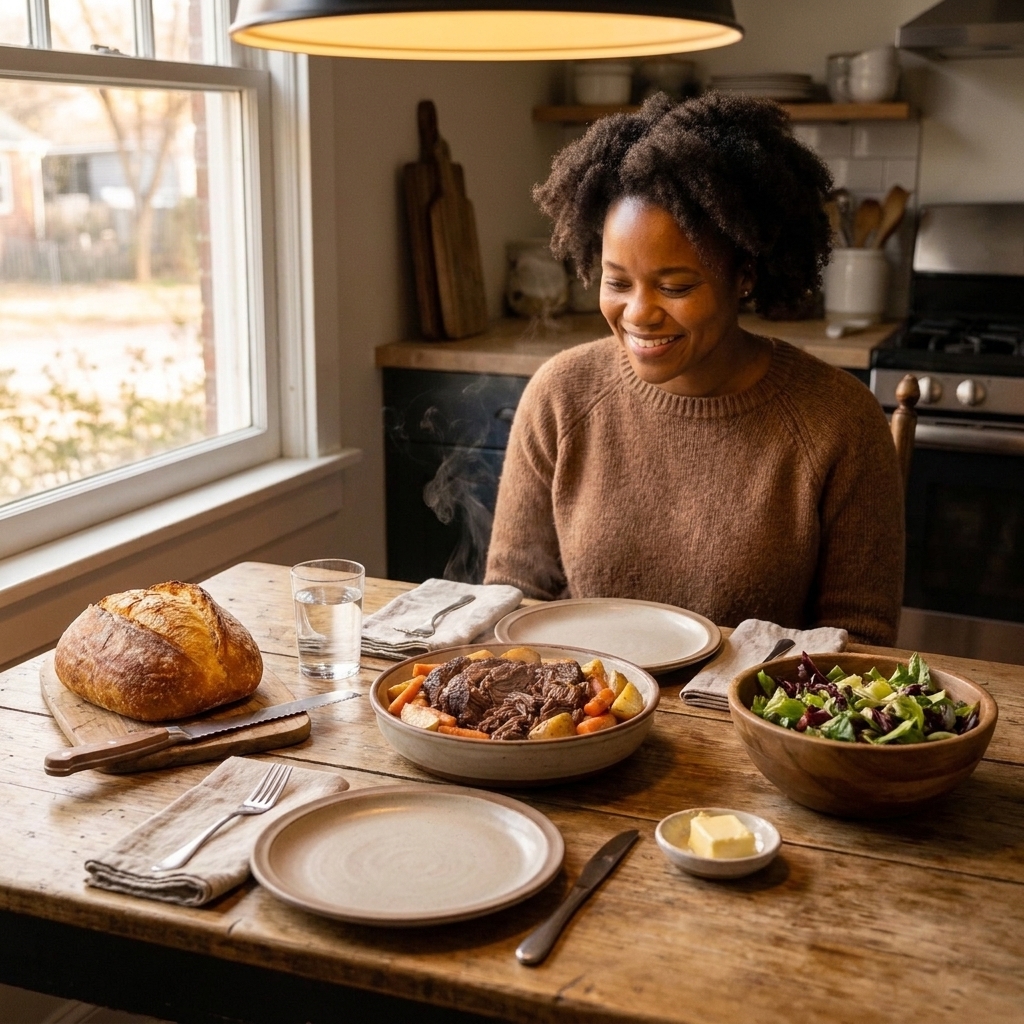
Pot roast is one of those meals that makes the whole house feel calmer. You get the savory aroma, the tender beef, the soft carrots and potatoes, and that rich gravy that begs for a hunk of bread. But the method matters. A Dutch oven and a slow cooker can both make a beautiful roast, yet they shine in different ways.
Below, I’ll walk you through how each method works, what it does best, what can go wrong, and the small tweaks that take your roast from “fine” to “where has this been all my life?”
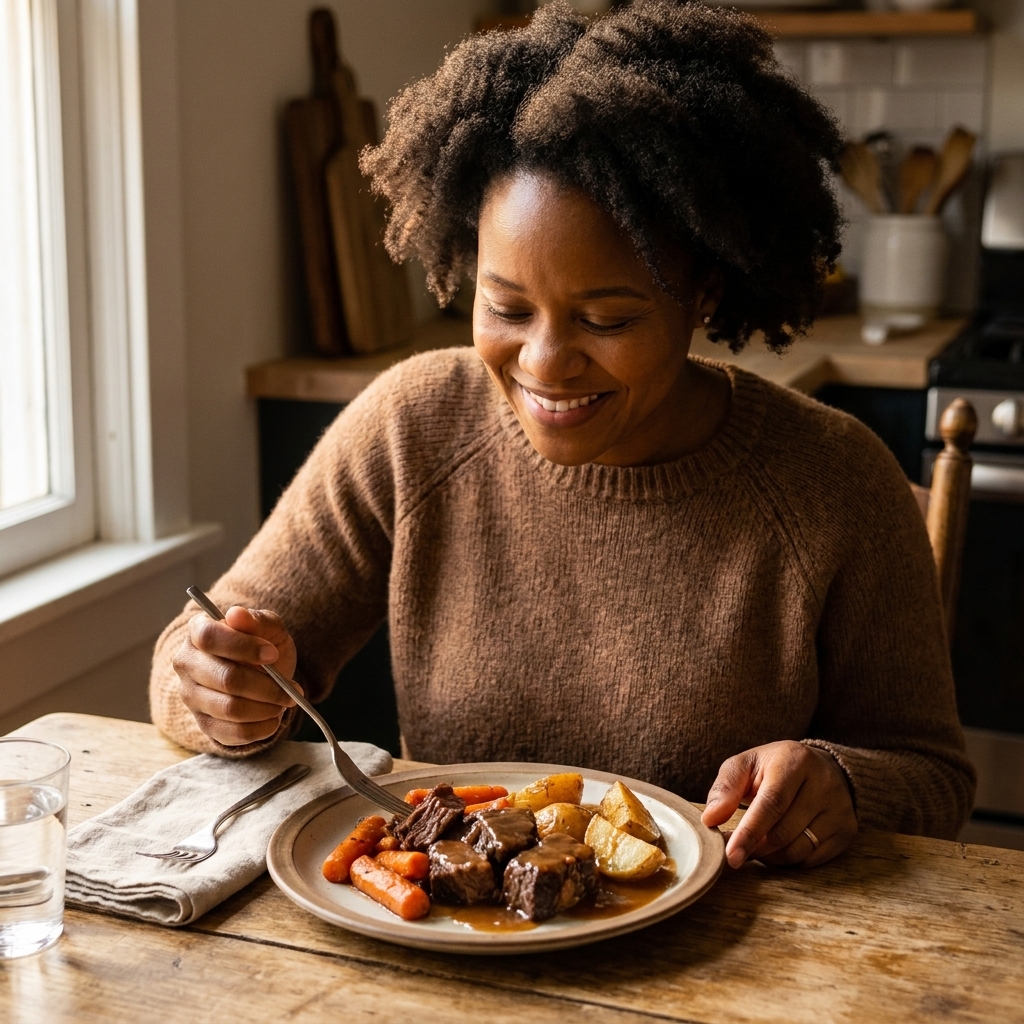
The quick answer
- Best overall flavor and gravy: Dutch oven (you get better browning and richer pan juices).
- Most hands-off and schedule-friendly: Slow cooker (set it and walk away, less babysitting).
- Best if you love a thick, luxurious gravy: Dutch oven (fond is your best friend).
- Best if you want to avoid heating the oven: Slow cooker (especially in summer or in a small kitchen).
If you are cooking for a classic Sunday dinner and you have the time, I reach for the Dutch oven. If it is a busy day and you need dinner to be ready when you are, slow cooker wins. No guilt either way.
What makes it tender
Pot roast is all about collagen. Tougher cuts like chuck roast are loaded with connective tissue. Low, gentle heat over time melts that collagen into gelatin, which gives you that “spoon-tender” texture and a sauce that tastes like it simmered all day because it did.
The three big rules
- Choose the right cut: chuck roast is the classic. Brisket and bottom round can work, but chuck is the most forgiving.
- Low and slow: too hot and you can tighten the meat before it has time to break down and tenderize.
- Enough time: most “my pot roast is tough” problems are solved by cooking longer, not shorter.
Also, there is no such thing as too much garlic. I said what I said.
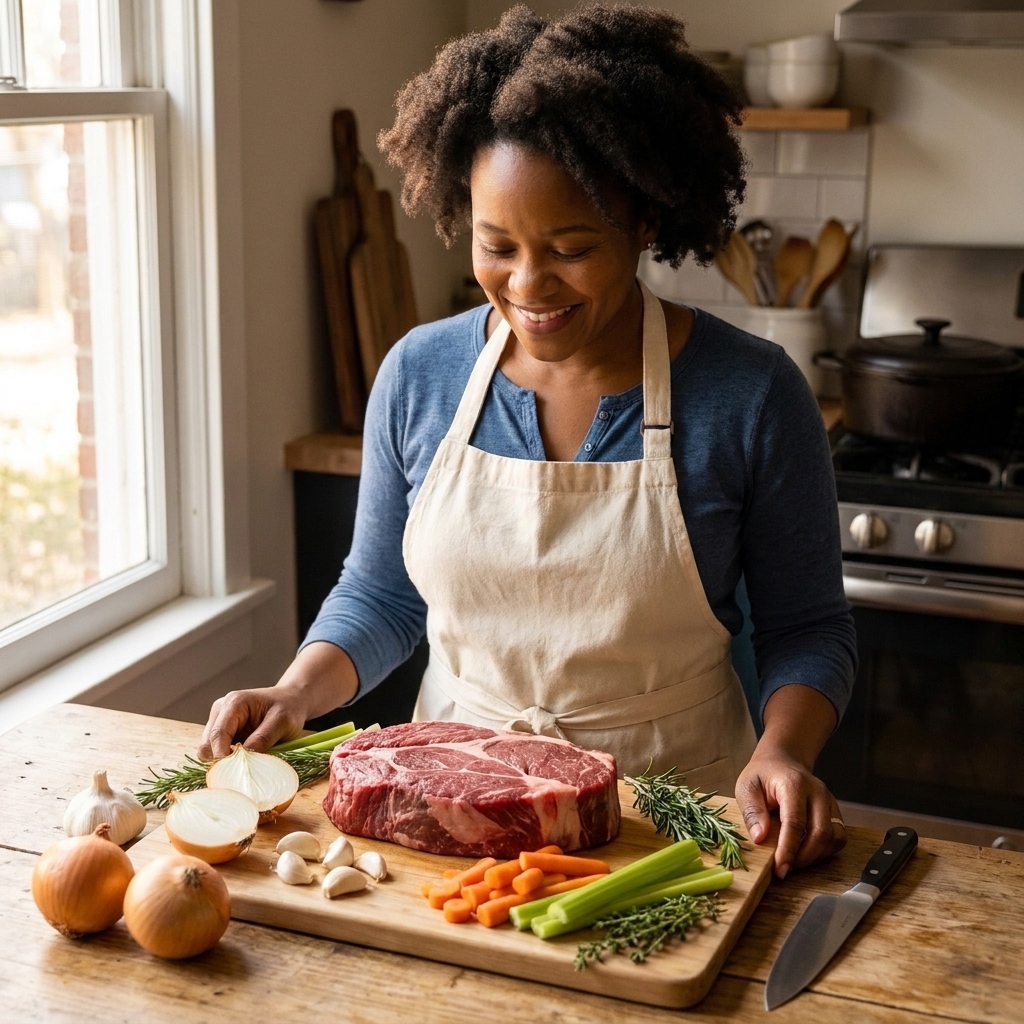
Dutch oven method
A Dutch oven pot roast is essentially a braise. You brown the meat on the stovetop, build a flavorful base in the same pot, then cook it covered in the oven at a steady, gentle temperature.
Why people love it
- Deep flavor: Browning creates fond, those browned bits that melt into the braising liquid and taste like magic.
- Better texture control: The oven gives even heat all around the pot, and you can adjust liquid level easily.
- Built-in gravy: The pot juices are already concentrated and begging to be thickened.
Where it can go sideways
- You skip browning: You can still make a tender roast, but it will taste flatter.
- Too much liquid: A braise is not a soup. Too much liquid dilutes flavor and can make the veggies overly soft.
- Overcooking the vegetables: If you add potatoes and carrots too early, they can turn into baby food.
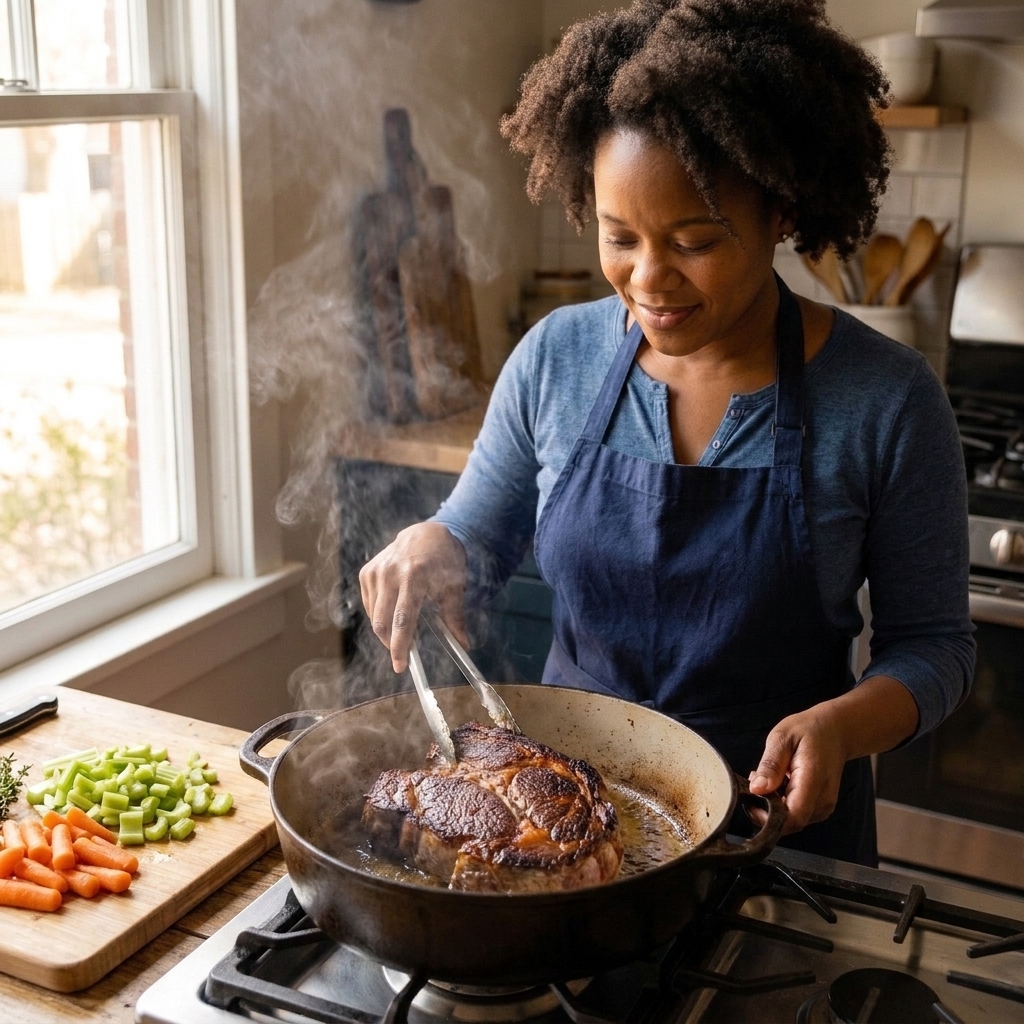
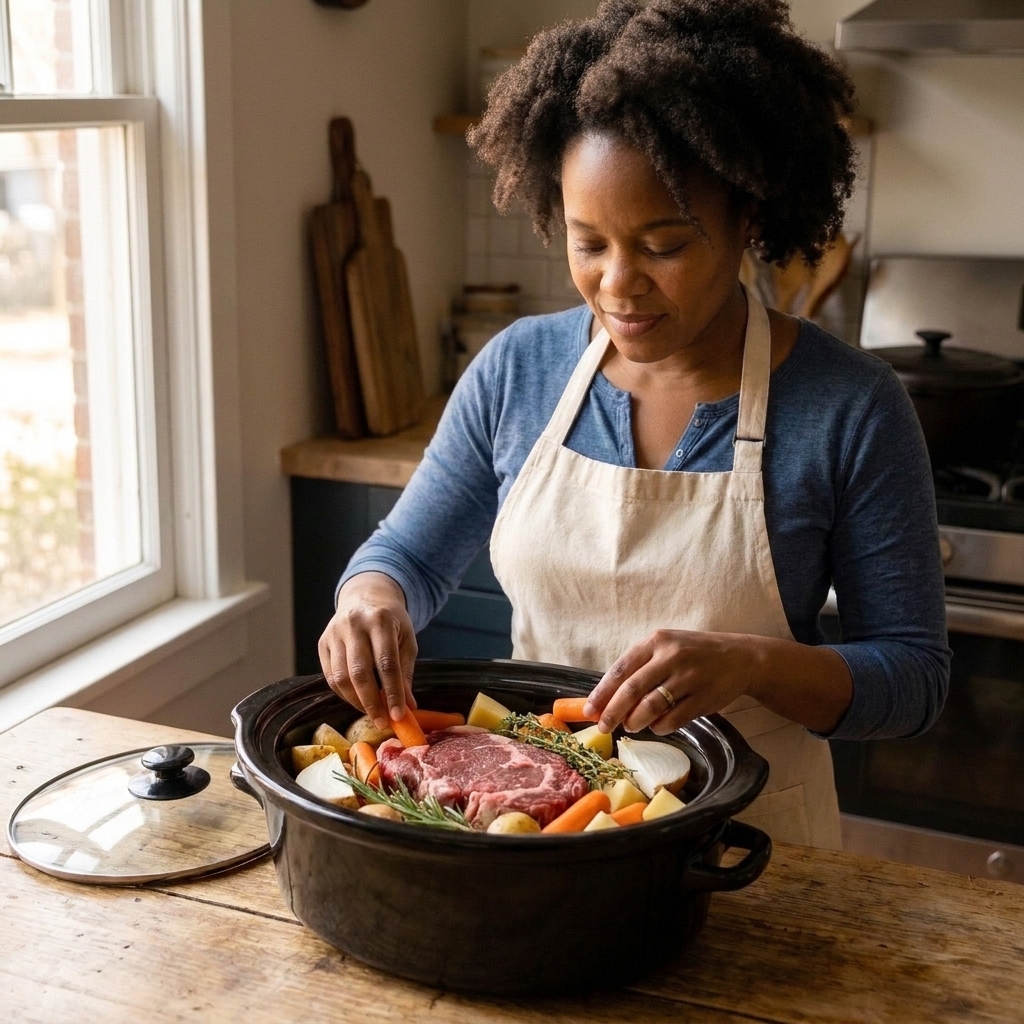
Slow cooker method
A slow cooker is gentle, steady, and moist. It is basically designed for the exact kind of long, low cooking that tough cuts need. The trade-off is that you do not naturally get the same browning or evaporation you get in an oven.
Why people love it
- It is truly hands-off: Great for busy days, errands, or when you just do not want to hover in the kitchen.
- Very forgiving: It is harder to scorch anything, and the moist environment helps prevent drying out.
- Great for meal prep: Make it, portion it, and enjoy it for days.
Where it can go sideways
- Less browned flavor: Unless you sear first, the flavor can taste softer and more “stewed.”
- Watery sauce: Slow cookers trap moisture, so your liquid rarely reduces on its own.
- Mushy vegetables: Especially if your slow cooker runs hot or you leave it all day.
Head-to-head
Flavor
Dutch oven wins for the deepest, roasty flavor because browning and fond development are built into the process, and the oven allows some reduction and concentration.
Tenderness
It is a tie if you give either method enough time. Slow cookers are very gentle, which helps. Dutch ovens do a gorgeous braise when kept at a low oven temp.
Gravy
Dutch oven is easier for a thick, glossy gravy because your braising liquid is usually more concentrated. In a slow cooker, plan on thickening at the end.
Convenience
Slow cooker wins on pure convenience. If you need dinner ready right when you walk in the door, it is hard to beat.
Vegetables
Dutch oven gives you more control. You can add carrots and potatoes later, or pull them when tender. In a slow cooker, timing can be trickier, but totally manageable with a few tweaks.
Best practices
1) Salt early if you can
If you have the time, salt your chuck roast 8 to 24 hours ahead. For a dry brine, refrigerate it uncovered, ideally on a rack so air can circulate. If your fridge runs very dry, loosely drape with parchment or plastic to keep the surface from over-drying. If you do not have the time, salt it generously right before cooking. It will still be delicious.
2) Sear for flavor
If you can spare 10 minutes, sear the roast in a hot skillet or in your Dutch oven first. Browning is the difference between “tender” and “tender with wow flavor.”
3) Use the right amount of liquid
Aim for liquid coming about one-third to halfway up the roast. That visual cue matters more than any exact cup measurement since roasts and pots vary.
- Dutch oven: start with about 2 to 3 cups, then adjust.
- Slow cooker: start with about 1 1/2 to 2 cups. Remember, very little evaporates.
4) Do not rush tenderness
If you poke the roast and it still feels tight, it is not done yet, even if it is “up to temperature.” Pot roast tenderness is about collagen breakdown, not hitting a steak temp.
If you like a number as a backup check, pot roast is often shreddably tender around 195°F to 205°F. Still, the fork test wins every time.
5) Let it rest
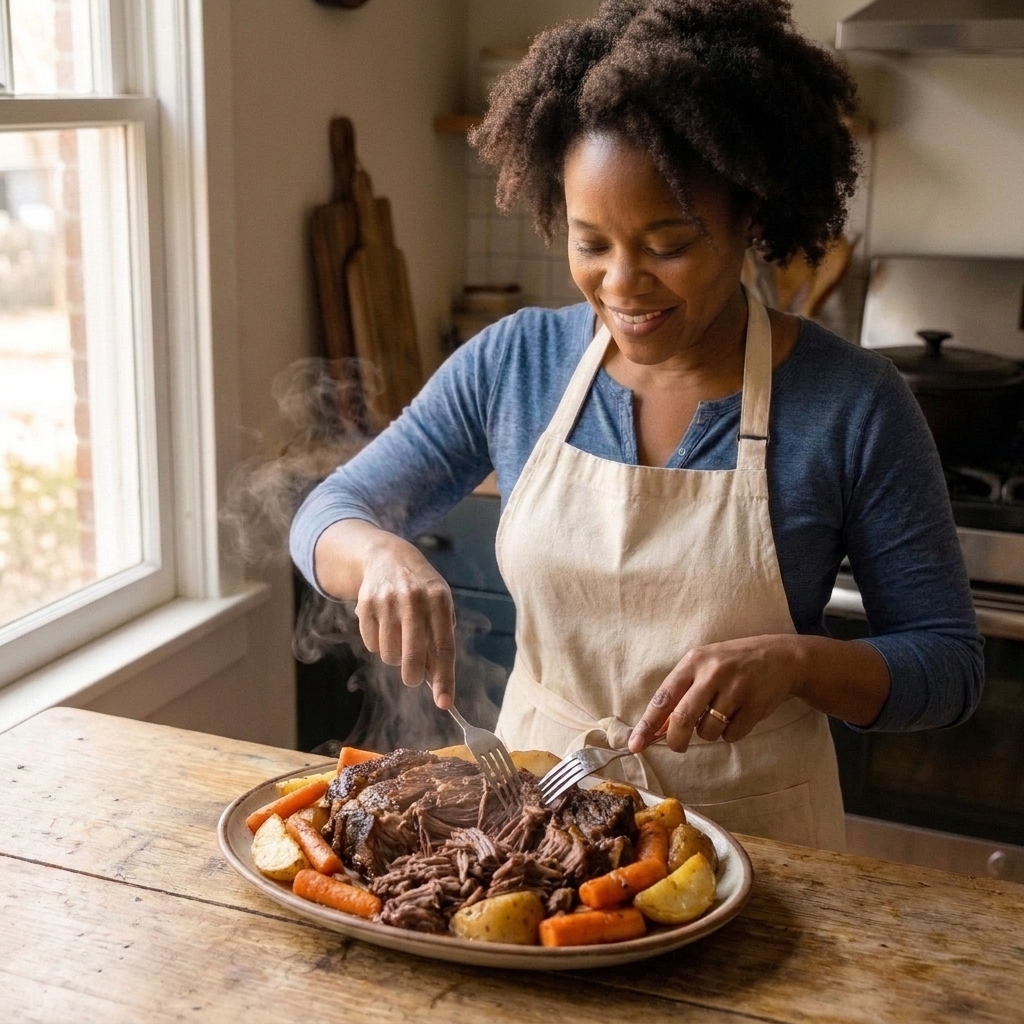
Rest the meat 15 to 20 minutes before slicing or shredding. It helps the juices settle, and it makes serving calmer.
Dutch oven timing
If you want a reliable Dutch oven approach, here is the rhythm I use for a 3 to 4 pound chuck roast.
Suggested oven temp
300°F to 325°F. Lower is gentler, higher is faster. I usually choose 300°F when I have time.
Basic roadmap
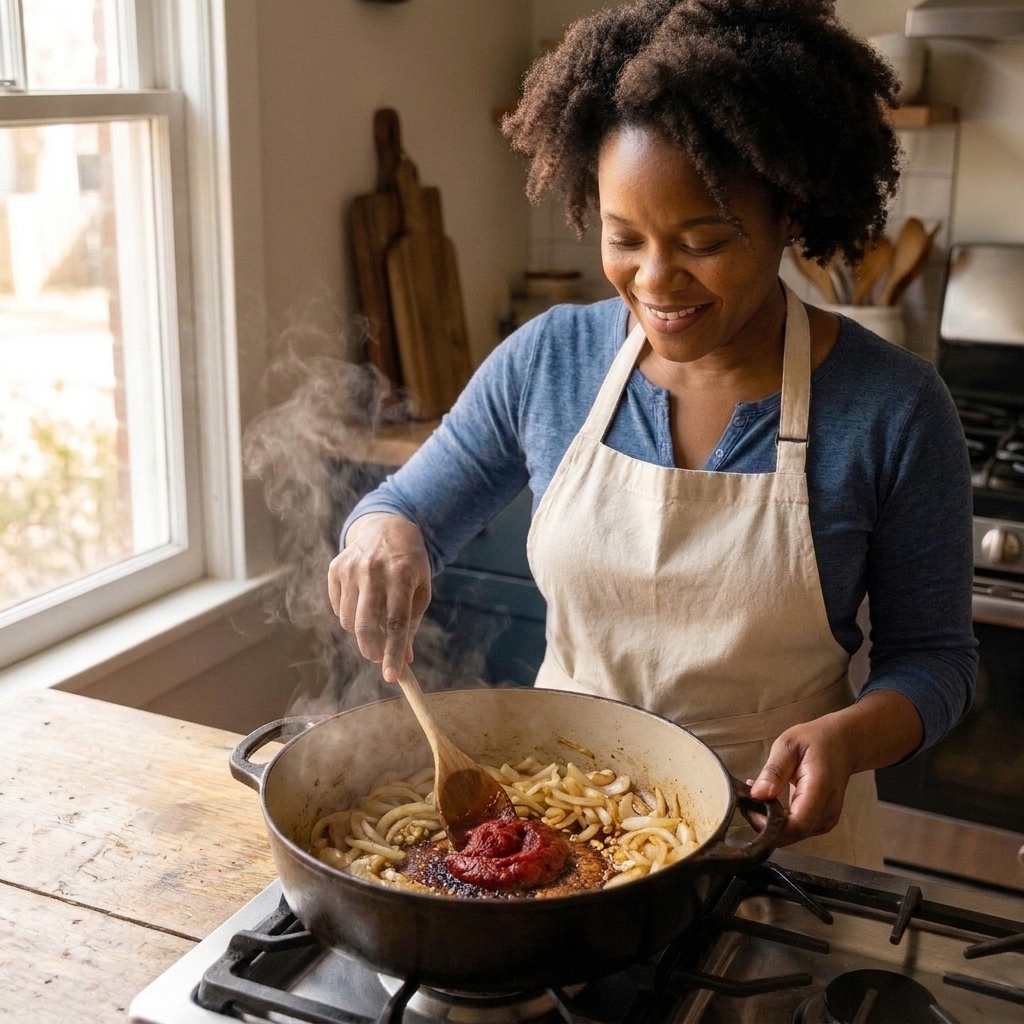
- Sear the roast in a little oil until deeply browned on all sides. Remove.
- Sauté onion, carrots, and celery (if using) until lightly softened.
- Add garlic and tomato paste and cook 1 to 2 minutes.
- Deglaze with beef broth, wine, or a splash of balsamic. Scrape up the fond.
- Add herbs (thyme, rosemary, bay leaf) and return roast to the pot.
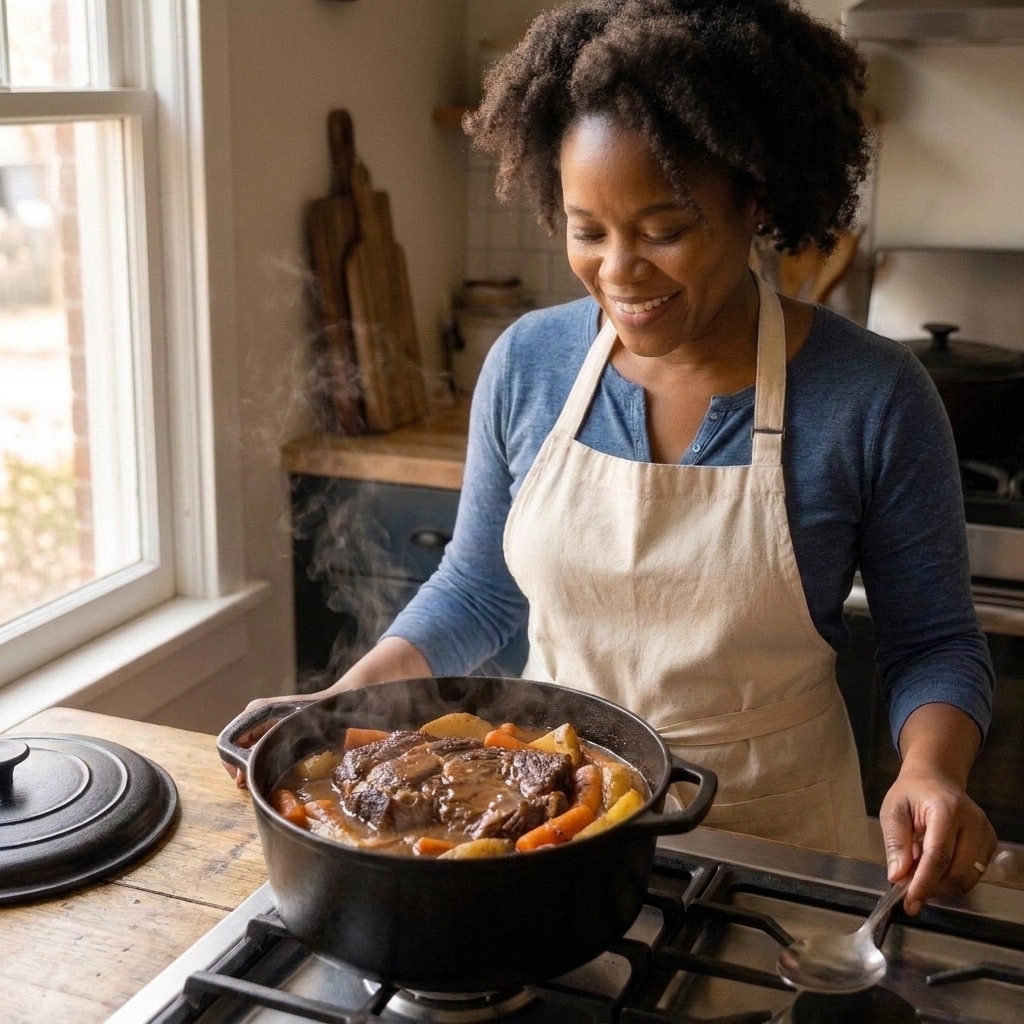
- Cover tightly and braise 2 1/2 to 3 1/2 hours, until fork-tender.
- Add potatoes and carrots during the last 60 to 90 minutes so they do not overcook.
Maya’s Dutch oven tip
Crack the lid slightly for the last 20 to 30 minutes if your liquid seems thin. That little bit of evaporation helps concentrate flavors without babysitting a saucepan.
Slow cooker tips
Slow cooker pot roast is a lifesaver, and it can be just as satisfying as the oven version with two simple upgrades: sear first and thicken at the end. Also, try not to lift the lid. Every peek lets out heat and can stretch your cook time.
Suggested timing
- Low: 8 to 10 hours for a 3 to 4 pound chuck roast, or until fork-tender
- High: 4 to 6 hours, or until fork-tender (less forgiving, watch the vegetables)
Veggie strategy
- Put potatoes and carrots on the bottom (they handle heat well).
- Keep pieces large so they do not disintegrate.
- If your slow cooker runs hot: add carrots in the last 2 to 3 hours on Low, or use baby potatoes whole.
How to thicken gravy
Once the roast is tender, move meat and veggies to a platter and tent with foil. Pour liquid into a saucepan and simmer 10 to 15 minutes to concentrate flavor. Then whisk in a slurry:
- Cornstarch slurry: 1 tablespoon cornstarch + 1 tablespoon cold water (scale up as needed)
- Flour slurry: 1 tablespoon flour + 2 tablespoons cold water (simmer at least 3 to 5 minutes after adding so it does not taste raw)
Simmer until glossy and thickened, then taste and adjust salt.
Maya’s slow cooker tip
If you want a little more roasty flavor without extra work, stir 1 to 2 teaspoons Worcestershire into the cooking liquid before you start. It is the smallest “why is this so good?” upgrade.
Which should you choose?
Choose a Dutch oven if...
- You want the deepest, roasty flavor and a sauce that tastes restaurant-level.
- You enjoy cooking as a cozy weekend ritual.
- You want more control over vegetable texture.
Choose a slow cooker if...
- You need dinner to cook while you work, run errands, or shuttle kids around.
- You want minimal active time and easy cleanup.
- You are fine doing a quick gravy finish on the stove.
My honest kitchen confession: I use both. Dutch oven for classic Sunday dinner vibes. Slow cooker for weekday sanity and meal prep wins.
Common problems
My pot roast is tough
It needs more time. Keep cooking at a gentle temperature until a fork slides in easily and the meat wants to pull apart.
My pot roast is dry
- Make sure you used a marbled cut like chuck.
- Keep the lid on and avoid frequent peeking.
- Do not cook on High unless you have to.
My gravy tastes bland
- Add salt gradually and taste.
- Stir in a teaspoon of Worcestershire or a splash of balsamic vinegar.
- Add more garlic, then add a little more garlic.
My vegetables turned mushy
- Cut them larger.
- Add them later (especially in a Dutch oven).
- In a slow cooker, consider using baby potatoes whole and thick carrot chunks.
Flavor boosters
You do not need anything fancy to make pot roast taste complex. Here are a few supermarket staples that add big payoff.
- Tomato paste: browned for 1 to 2 minutes for deeper savory flavor.
- Worcestershire sauce: adds umami and a little tang.
- Red wine: great for deglazing in a Dutch oven, optional but lovely.
- Fresh rosemary or thyme: one or the other is plenty.
- Bay leaf: subtle but classic.
FAQ
Is it better to cook pot roast on Low or High in a slow cooker?
Low is usually better for tenderness and for keeping the meat juicy. High works, but it is easier to overcook vegetables and end up with a slightly drier texture.
Do you need to brown the roast first?
You do not need to, but I strongly recommend it, especially for slow cooker pot roast. Browning builds the roasty flavor that makes pot roast taste like pot roast.
Should the roast be fully submerged?
No. Aim for liquid coming about one-third to halfway up the roast. You want braising, not boiling.
When should I add potatoes and carrots in a Dutch oven?
Add them in the last 60 to 90 minutes, depending on how big you cut them and how hot your oven is. This keeps them tender, not mushy.
Can I cook pot roast the day before?
Yes, and it is often even better. Cool it, refrigerate overnight, skim fat if you want, then reheat gently in the braising liquid so it stays moist. For best food safety, refrigerate within 2 hours in shallow containers, and reheat until steaming hot.
My final vote
If you are chasing the most classic, deeply flavored Sunday pot roast with rich gravy, the Dutch oven is my pick. If you want comforting, reliable results with the least effort and a flexible schedule, the slow cooker is your best friend.
Either way, give it time, do not be shy with seasoning, and please, promise me you will sear the meat if you can. Your future self, holding a forkful of tender beef and a potato slicked with gravy, will be very grateful.