

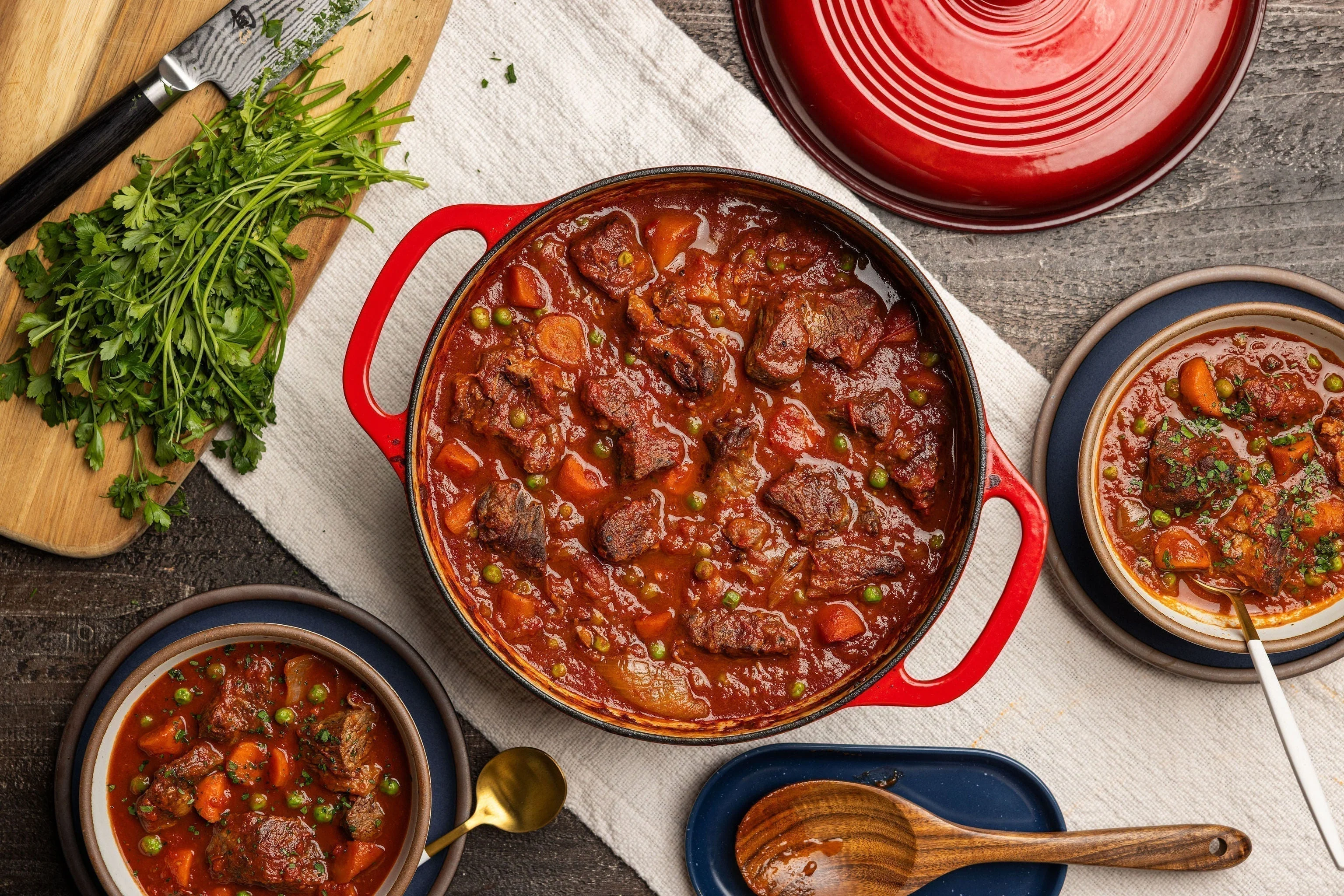
I have absolutely stood over a pot of stew thinking, “How is this still chewy?” The vegetables are melting, the broth tastes great, and yet the beef is… stubborn. The good news is that tough stew meat is usually not a seasoning problem. It is almost always a time, temperature, or cut problem. And in many cases, you can rescue it without starting over.

First, name the kind of tough
Before you change anything, pull out one piece of beef, let it cool for a minute, and take a bite. You are trying to identify the texture, because the fix depends on it.
- Chewy and firm, like it resists your teeth: It probably needs more time at a gentle simmer to melt connective tissue (collagen).
- Dry and stringy, like it is “overcooked”: It may be a lean cut (or heat that has been too high). Lean meat can dry out and still feel tough.
- Rubbery with a springy bite: Often caused by too much heat or agitation (a hard simmer/boil) or simply not enough low, slow time yet.
- Grainy and crumbly: More common with overcooked lean meat, or meat cut too small that got hammered by heat.
Most stew disasters are the first one: chewy and firm. That one is usually fixable.
Fast rescue for a pot in progress
If your stew is on the stove right now and the beef is tough, do this in order. It is my “stop the damage, then tenderize” routine.
1) Stop boiling
A hard boil is not automatically a total disaster, especially for collagen-rich cuts, but it often makes stew meat tougher in the short term by tightening muscle fibers and banging the pieces around. For the best shot at tender beef, you want a calm simmer.
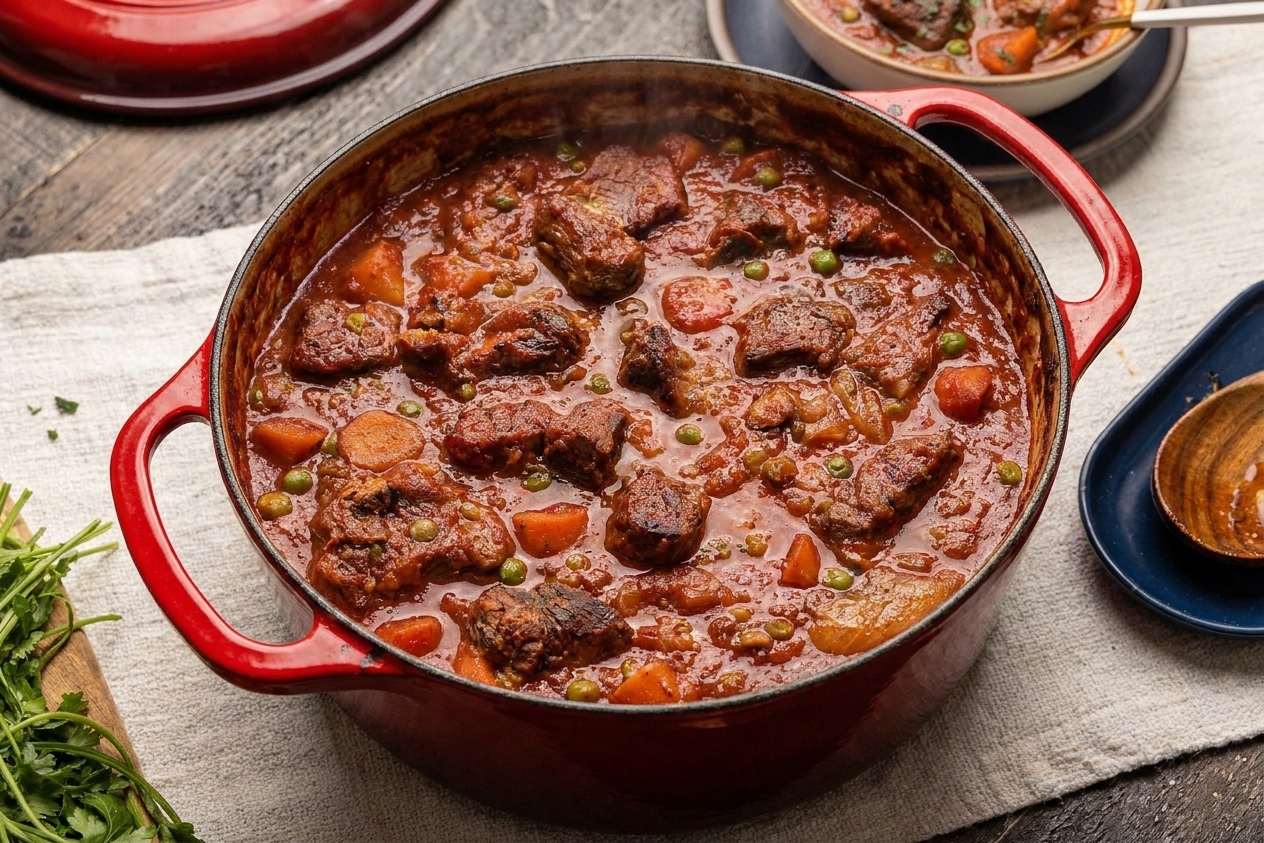
What a gentle simmer looks like: a few small bubbles breaking the surface every couple seconds, with only light movement in the pot.
- Turn the heat down until you see only an occasional bubble, not constant agitation.
- If the pot is still too lively even on low, crack the lid and move it to the smallest burner.
2) Add liquid if it looks thick or dry
Stew meat tenderizes best when it is surrounded by moist heat. If the liquid level has dropped, add 1/2 to 1 cup of warm stock, water, or even a little tomato juice. You just want enough liquid so the meat is mostly submerged.
3) Keep a low simmer until it softens
This is the part nobody wants to hear when dinner is already late, but it is the real fix: time. For collagen-rich cuts, tough meat often means it is not done yet, even if it has technically cooked through.
- Simmer gently for 30 minutes, then test a piece.
- If it is still chewy, go another 30 minutes.
- For larger chunks or very connective cuts, you may need 60 to 120 minutes more.
My best tip: If your vegetables are already very soft, scoop them out into a bowl, keep them covered, and let the beef finish cooking in the broth alone. Add the vegetables back near the end to warm through. This prevents “baby food stew” while you wait for the beef to tenderize.
4) Use the oven for steadier heat
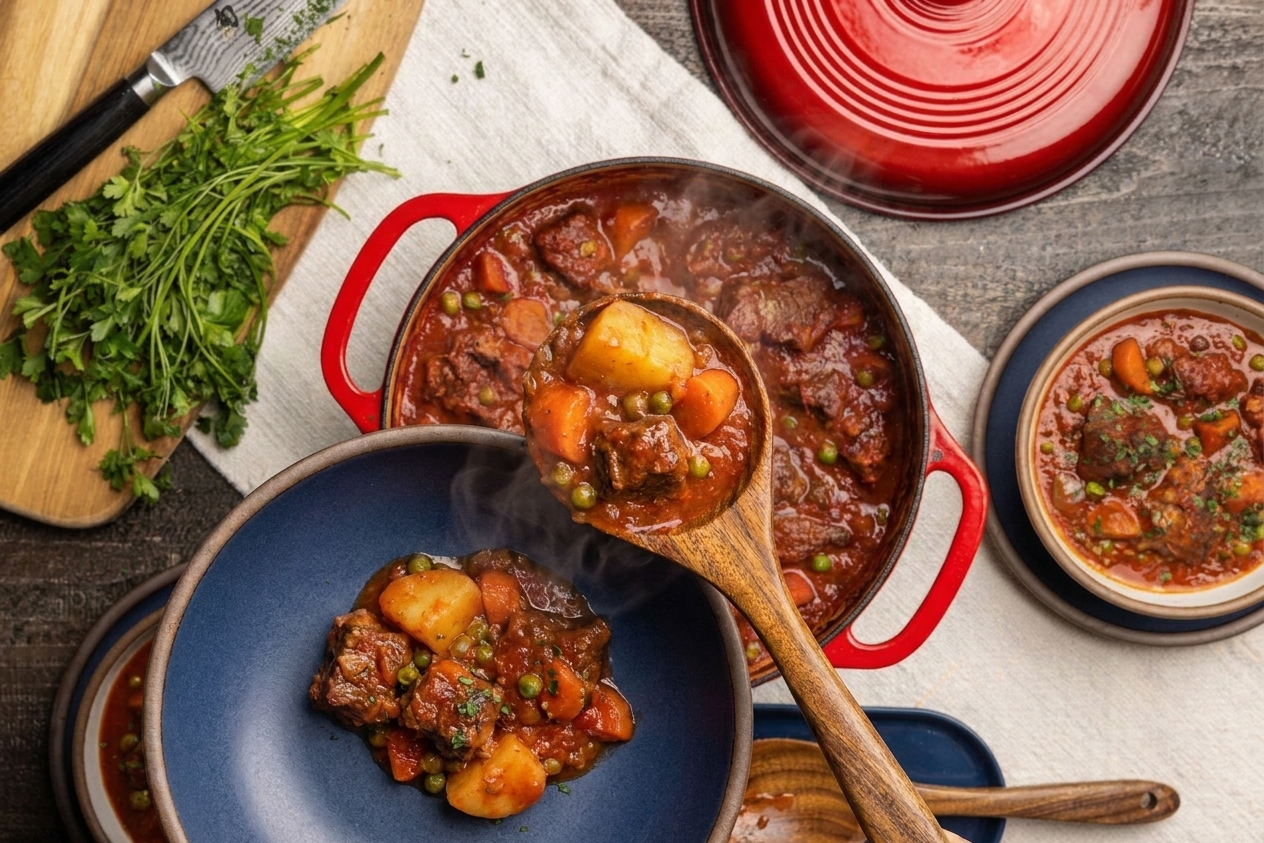
If you struggle to maintain a steady low simmer, the oven is your friend.
- Preheat to 300°F.
- Put a tight lid on your Dutch oven or heavy pot.
- Cook for 60 to 90 minutes, checking tenderness once or twice.
Oven braising gives you gentle, even heat with far less risk of an accidental boil.
Why stew meat turns tough
Cause 1: It has not cooked long enough
This is the most common scenario, especially with chuck. Collagen takes time to melt into gelatin. Before it melts, it feels chewy. After it melts, it feels spoon-tender and silky.
Clue: Your broth tastes great, the beef tastes beefy, but the texture is tight and bouncy.
Fix: Low simmer, longer time. There is no shortcut that beats physics here.
Cause 2: The cut stays firm
Some cuts are built for quick cooking, not braising. If they go into a stew, they can end up dry and tough instead of tender.
Cuts that often disappoint in stew: top round, bottom round, sirloin tip, eye of round, most “stir-fry” beef, and very lean stew cubes.
Clue: The meat is dry and tight even after a long simmer, and the chunks may feel a bit chalky rather than juicy.
Fix: You can sometimes improve them with gentle heat and time, but they rarely become luscious. See the “what cannot be saved” section below for realistic expectations.
Cause 3: The pot boiled too hard
When stew boils hard, the exterior of the meat tightens and the chunks bang around. Collagen-rich cuts can still become tender eventually, but you are fighting unnecessary moisture loss and tougher texture along the way.
Clue: You saw a rolling boil for a while, or the pot was bubbling aggressively around the edges.
Fix: Lower heat, add a bit of liquid, and continue cooking gently.
Cause 4: The pieces are too small
Small cubes cook through quickly and can dry out before collagen has time to melt, especially if the cut is lean. Even with chuck, very small pieces can go from “tough” to “shreddy” fast.
Clue: The beef is in tiny pebbles and the vegetables are still in larger chunks.
Fix: Keep the simmer very gentle and shorten future cooking time. For this batch, you are limited. You may gain some tenderness, but the longer you cook, the more the texture can tip into dry and stringy.
Cause 5: You are chasing browning
One quick note because I have seen people blame themselves for this: not browning the beef does not make it tough. Searing builds flavor, not tenderness. So do not crank the heat trying to “fix” texture with browning. That usually makes the problem worse.
Best cuts for stew
If you are making stew again soon and want an easy win, these cuts are the ones I trust for that fall-apart texture:
- Chuck roast (classic for a reason)
- Brisket
- Beef short ribs (bones optional)
- Beef shank (great flavor, needs time)
Slow cooker and Instant Pot fixes
Slow cooker: tough beef
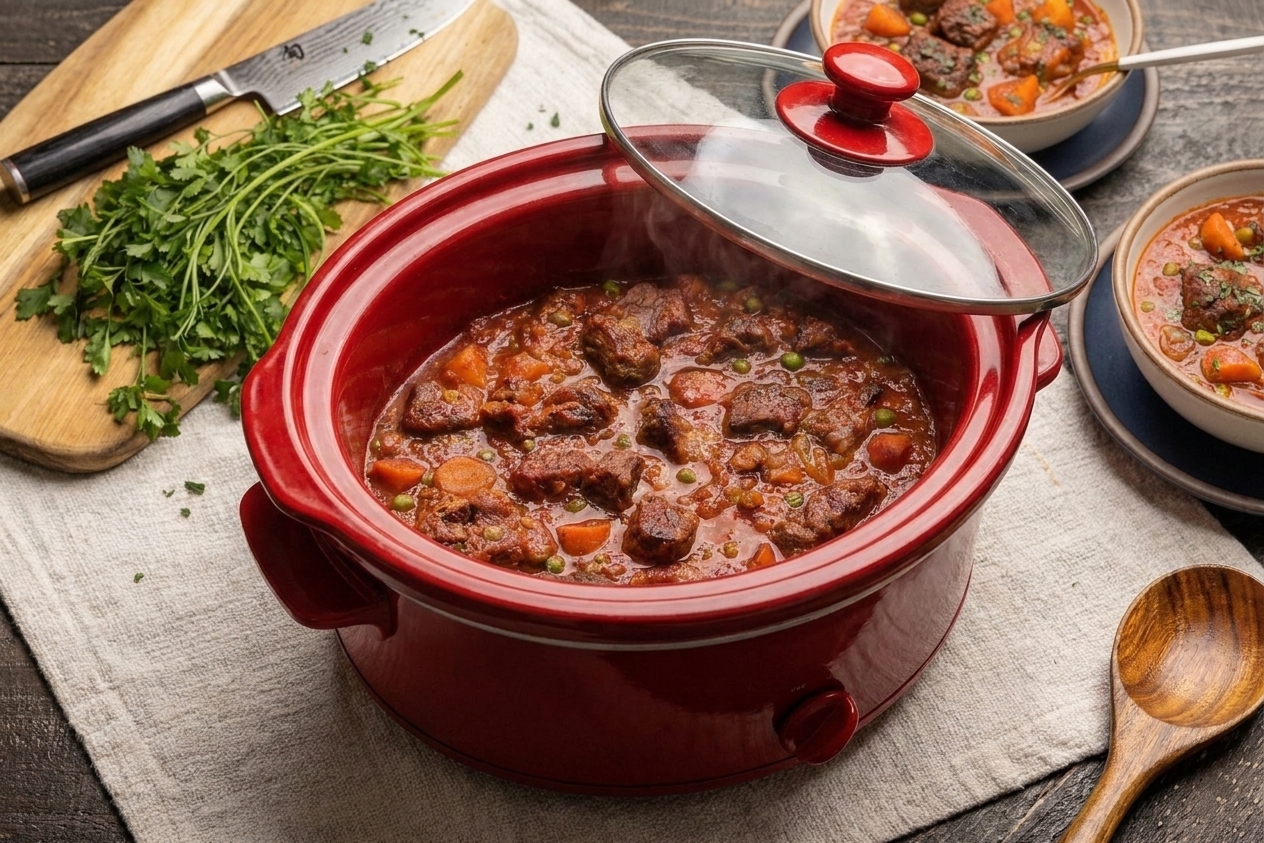
Slow cookers vary a lot, and some run hotter than you think. Tough beef in a slow cooker is still usually an under-tenderized collagen issue.
- Do not lift the lid repeatedly. Each peek drops the temperature and extends the cook.
- Switch to LOW if it has been bubbling on HIGH.
- Keep cooking in 45 to 60 minute chunks until tender.
Vegetable tip: If everything is getting too soft, scoop vegetables out and keep them warm, then add back at the end just like you would on the stove.
Instant Pot: tough beef
Pressure cooking can produce tender stew fast, but if the beef is still tough after pressure cooking, it usually needs more time at pressure, not less. Collagen softens in stages.
- Run another 10 to 15 minutes at high pressure.
- Use a natural release for at least 10 minutes. A quick release can sometimes leave meat feeling tighter and can increase moisture loss.
Important: If your liquid is very thick, the pot may not come to pressure properly and you may get scorching. Thin it with a bit of broth before you add more pressure time.
If dinner is in 20 minutes
If the beef is chewy and you are out of runway, your best move is to stop trying to make it “stew tender” tonight and pivot the texture.
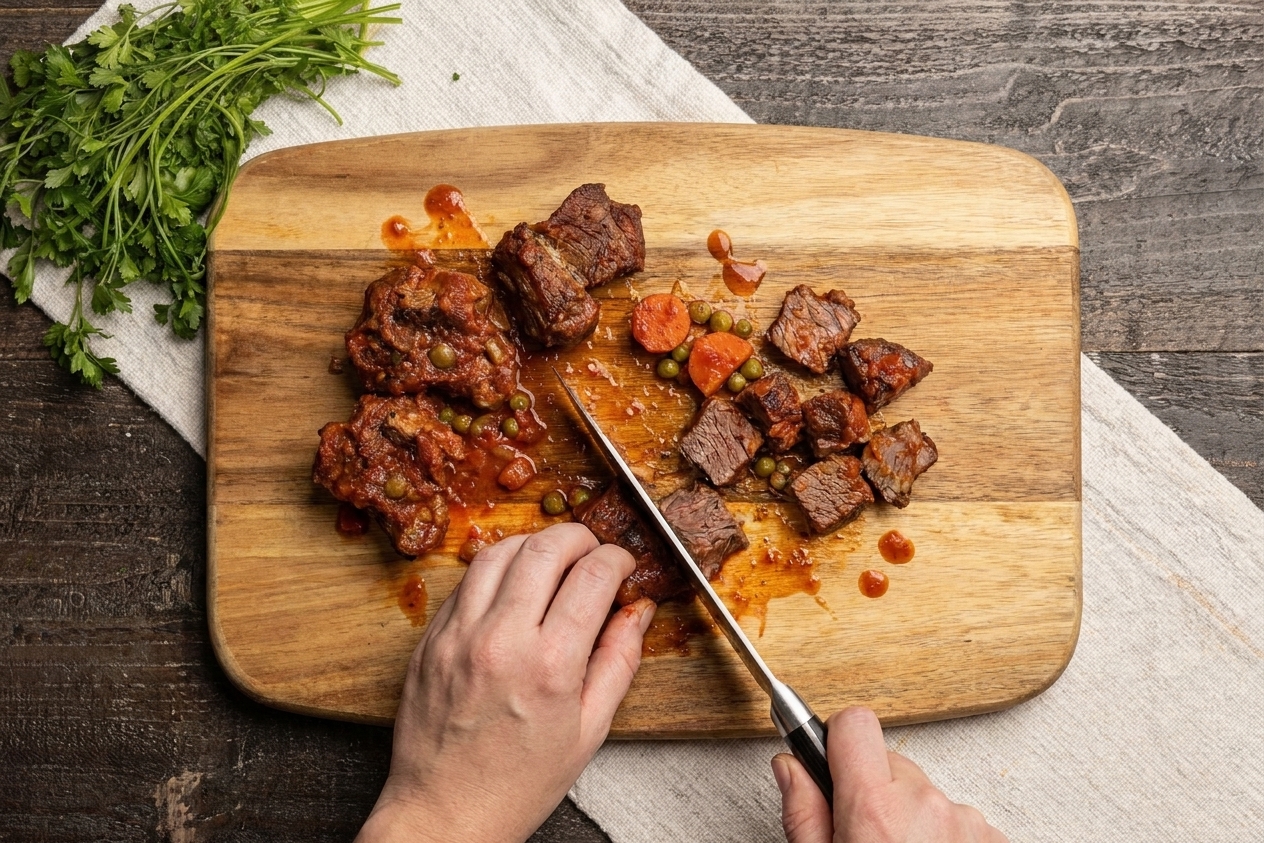
- Slice the beef thinner. Pull the beef out, let it cool a bit, slice across the grain into thinner pieces, and return to the pot. It will not be as tender as a perfect stew, but it will feel less like you are chewing forever.
- Shred what you can. If some pieces will shred and others will not, shred the tender ones into the broth and slice the rest thin.
- Serve it like a soup. Ladle more broth, fewer beef chunks per bowl. Add crusty bread. The eating experience is gentler while the leftovers continue to tenderize tomorrow.
And yes, leftovers often taste better and the beef often gets more tender after another gentle reheat the next day.
When tough stew meat cannot be saved
I am a big believer in kitchen optimism, but there are a few scenarios where the stew will never become that fall-apart, velvety beef you are hoping for.
1) Very lean beef that is already dry
If you started with round or a very lean “stew meat” mix and it is now dry and cottony, more cooking can make it more dry. You can soften the eating experience by slicing thin, serving in more broth, or repurposing it (see below), but it may never become luscious.
2) Tiny cubes cooked hard for a long time
If the meat is cut very small and has been boiled or cooked on too high heat, it can cross into a crumbly, depleted texture. More simmering does not bring the moisture back.
3) You keep reducing an already salty stew
Salt does not make beef tough, but chasing tenderness by evaporating the liquid can make the stew unpleasantly salty before the texture improves. If you are already near the edge on seasoning, you have less room to reduce and concentrate flavors.
If you think you are in one of these camps: stop cooking the stew as-is, and pivot to a repurpose plan below.
Repurpose tough stew
When a pot is not going to turn into dreamy beef stew, I shift to dishes where texture matters less.
- Beef and barley soup: Add more broth and barley or rice. Slice the beef thin before adding back.
- Pot pie filling: Chop the beef finer, add more gravy-like liquid, top with biscuits or puff pastry. Smaller pieces read as “hearty” instead of “tough.”
- Shredded beef hash: Pull out the beef, shred whatever will shred, crisp it in a skillet with potatoes and onions, then top with a fried egg.
- Tacos or quesadillas: Chop the beef small, simmer briefly with salsa or enchilada sauce, then use as a filling with lots of toppings.
Common questions
Does tough stew meat mean it is overcooked?
Not necessarily. With collagen-rich cuts like chuck, tough often means under-tenderized. There is a stage where the meat is cooked through but still chewy. Keep it at a gentle simmer long enough and it usually turns tender.
Why is my beef stew tough even after 2 hours?
Usually one of three things is happening: the pot has been boiling, the meat pieces are large, or the cut is lean. Lower the heat to a true simmer and give it more time. If it is a lean cut, it may not ever become fall-apart tender.
Will adding vinegar, wine, or tomatoes tenderize tough beef fast?
Acid can help a little over time, but it is not an instant tenderizer for stew. If your beef is tough, the most effective fix is still low heat and enough time. Add acidic ingredients for flavor, not as a rescue button.
Should I simmer covered or uncovered?
Mostly covered is best for tender beef. A cracked lid is great if you need a little reduction, but fully uncovered can drop the liquid level too far and dry out the meat.
Can I simmer it all day?
If the cut has collagen (like chuck), longer gentle cooking can absolutely save it. If the cut is very lean and already dry, cooking all day can make it worse. When in doubt, taste a piece every 30 to 45 minutes and stop when it is acceptable.