

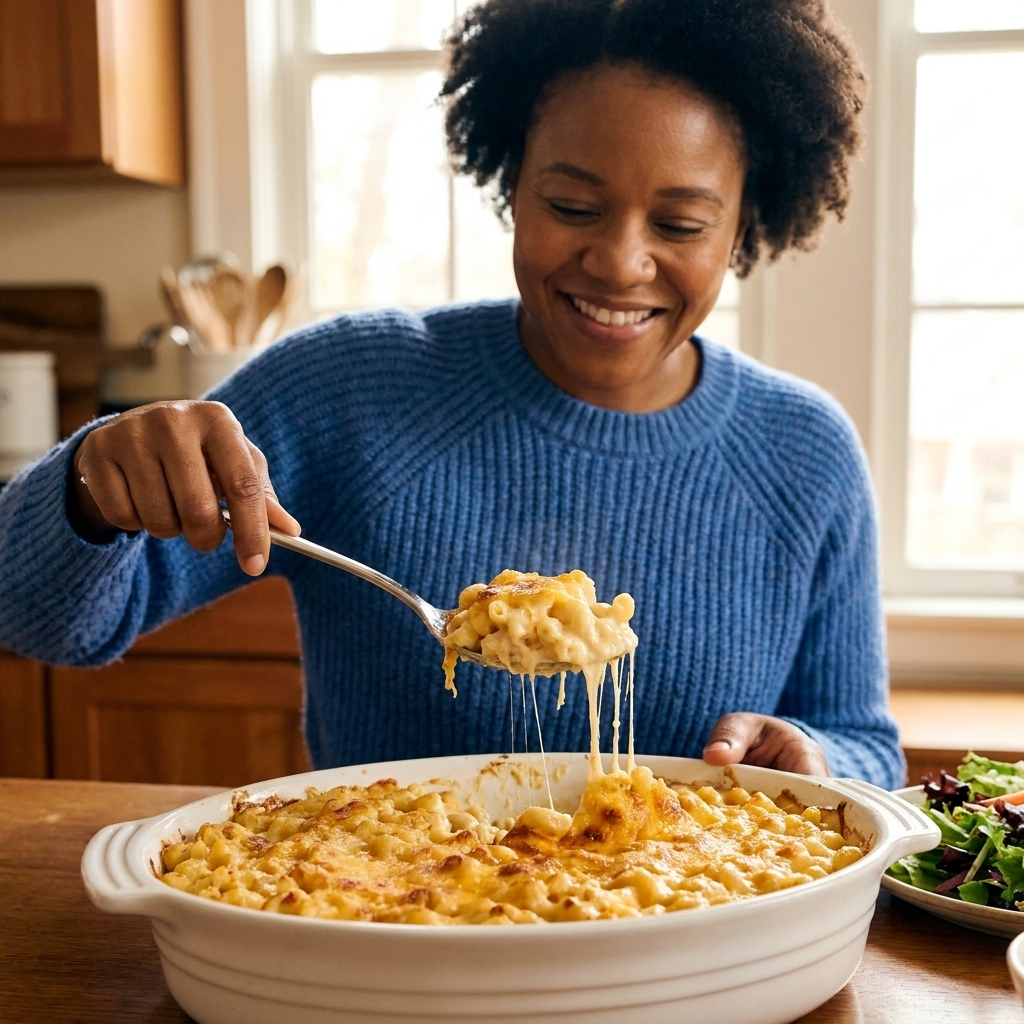

If you have ever pulled a pan of baked mac and cheese from the oven and thought, why is it dry, you are not alone. Baking is wonderful for that bubbly top and cozy casserole vibe, but it can also steal moisture if the sauce is not built to handle heat.
The not-so-secret solution here is a roux-based cheese sauce (classic, reliable, and weeknight-friendly) plus a few small choices that make a big difference: the right pasta shape, the right cheese blend, and a gentle bake.
Grab your biggest pot, preheat the oven, and let’s do this together.
The idea
Why This Recipe Works
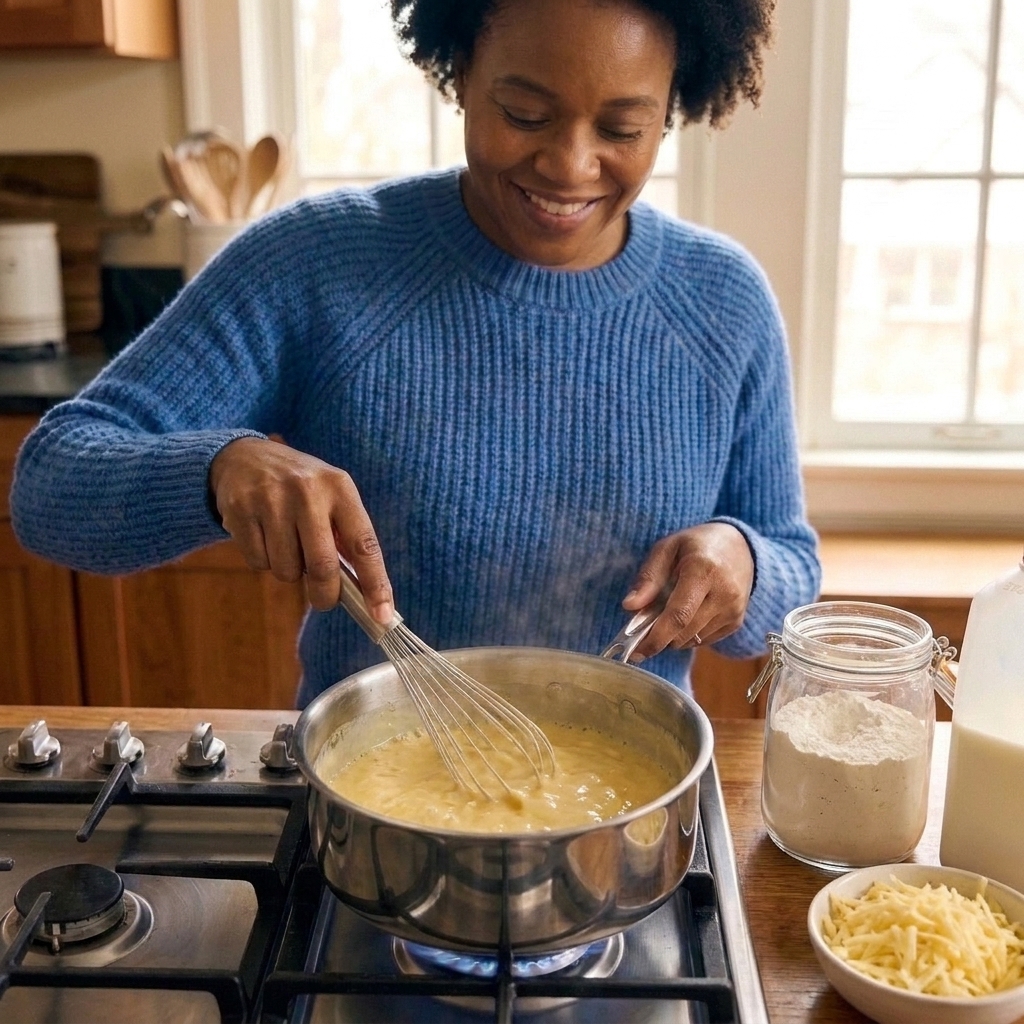
A roux is simply butter + flour cooked together, then whisked with milk to make a thickened base (a béchamel). That base is what keeps your sauce silky and stable when it hits the oven.
- Stability: The sauce thickens without relying only on melted cheese, which can split or get grainy.
- Creaminess: The starch in the roux helps the sauce cling to every noodle.
- Consistency control: You can adjust thickness before you bake, which is where creaminess is won or lost.
Shopping
Ingredient Notes
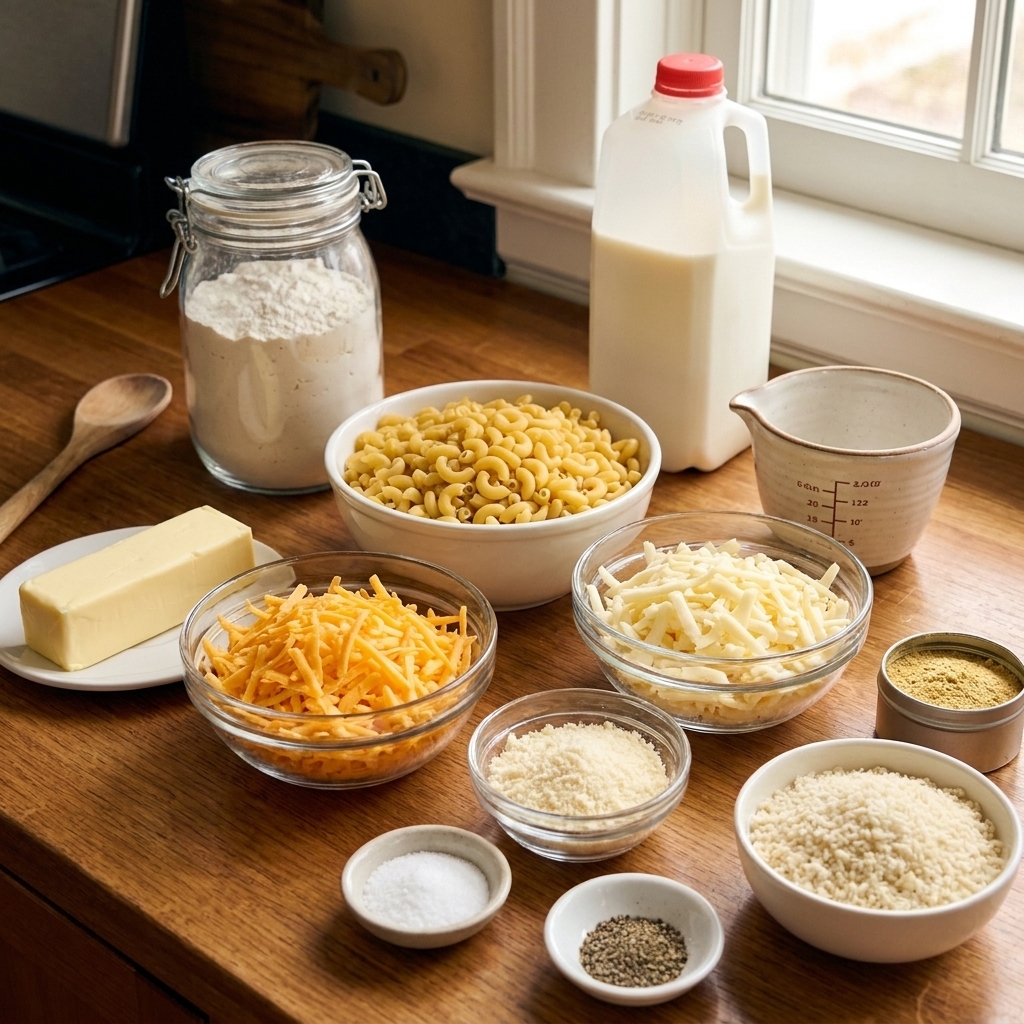
- Pasta: Elbow macaroni, cavatappi, or shells all work well.
- Milk: Whole milk is creamiest; 2 percent works too.
- Cheese blend: Cheddar brings flavor, Monterey Jack brings melt, and Parmesan brings depth (best as an accent, not the main cheese).
- Mustard: Use mustard powder, or swap in Dijon for similar flavor.
- Hot sauce (optional): Adds tang.
- Topping: Panko gives a crisp, light crunch; crushed buttery crackers are a richer, nostalgic option.
Biggest cheese note: If you can, shred your own. Pre-shredded cheese is often coated with anti-caking agents, which can make sauces a little less smooth.
Get set up
Equipment You Will Need
- Large pot (for boiling pasta)
- Medium saucepan (or the same pasta pot, wiped dry) for the sauce
- Whisk
- 9x13-inch baking dish (or similarly sized casserole)
- Measuring cups and spoons
Technique
Tips for Getting It Right
- Undercook the pasta: Cook it 1 to 2 minutes shy of al dente so it finishes in the oven.
- Keep the sauce slightly loose: For baked mac, the sauce should look a bit looser than you think; the pasta absorbs moisture while baking and resting.
- Melt cheese off the heat: High heat can make cheese sauces grainy or oily. Add cheese in small handfuls so it melts smoothly.
- Do not overbake: The goal is hot and bubbly, not reduced and dry.
- Foil insurance: If your oven runs hot or the topping browns fast, tent loosely with foil for the first 10 to 15 minutes, then uncover to finish.
- Rest before serving: Let it sit 10 minutes so the sauce settles and thickens slightly without turning into a brick.
Flexibility
Substitutes That Work
- Pasta shape: Use elbow macaroni, cavatappi, or shells.
- Milk: Whole milk is creamiest; 2 percent works too.
- Mustard: Use 1 teaspoon mustard powder or 1 tablespoon Dijon.
- Topping: Use 1 cup panko breadcrumbs or crushed buttery crackers.
- Cheese options: You can swap in other cheeses you like (see the cheese choices guidance), but keep Parmesan as an accent.
Make it yours
Variations to Try
- Cheese swaps (customize the blend): Try adding Gruyère (nutty and special) or Fontina (ultra creamy melt) alongside cheddar and Jack.
- Topping twist: Add Parmesan to the panko for extra savory crunch and a more golden top.
- Everything bagel seasoning: Use it as part of the topping for an unexpected, very good finish.
- One-pan dinner: Tuck broccoli florets into the mac before baking.
On the table
What to Serve It With
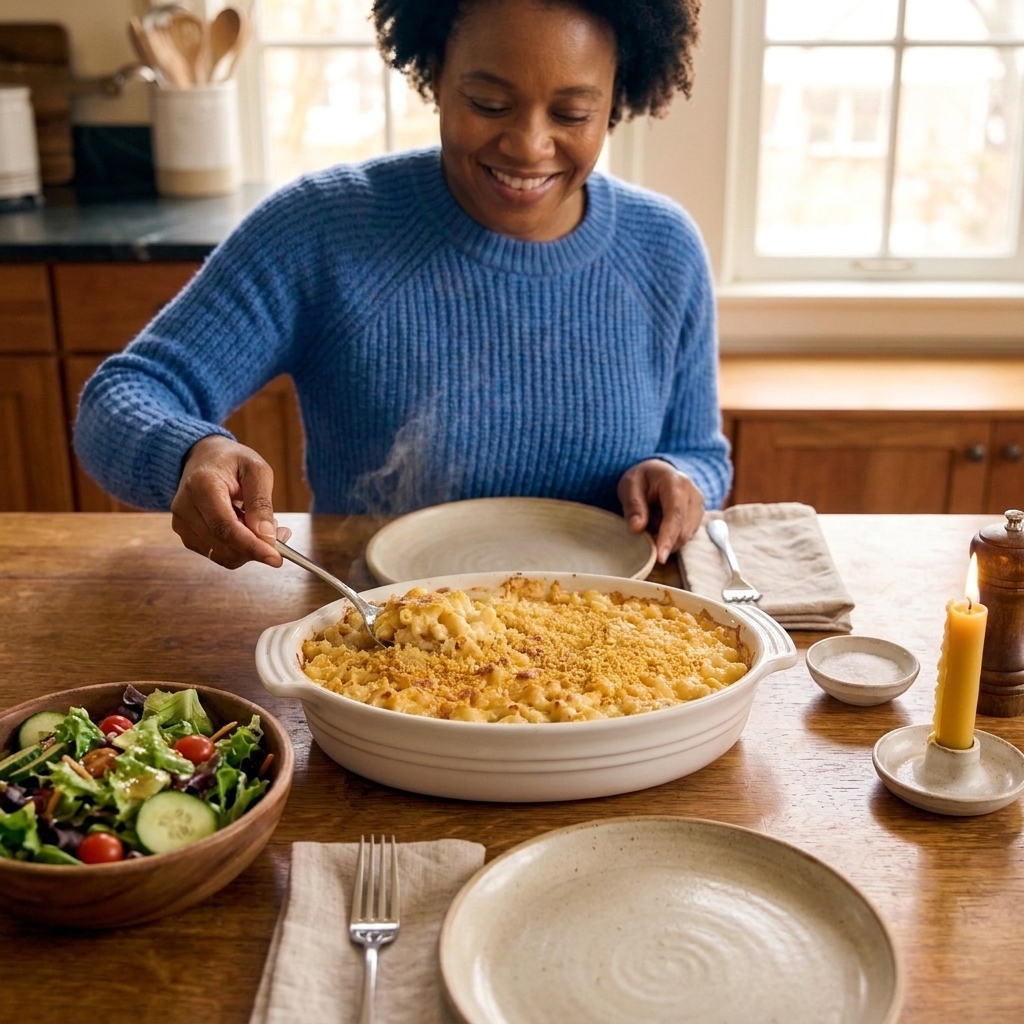
Serve hot after the 10-minute rest for the creamiest texture.
Later
Storage, Freezing and Reheating
Make ahead
You can assemble the mac and cheese (without baking), cover tightly, and refrigerate for up to 24 hours. When ready to bake, let it sit out for 20 to 30 minutes while the oven heats, then bake promptly. For food safety, do not leave it at room temperature for more than 2 hours total.
Timing note: A chilled casserole often needs 10 to 20 minutes longer than the standard bake time. If the top is browning too quickly, tent loosely with foil and keep baking until the edges are bubbling and it is hot throughout.
If it looks a little dry before baking, splash 2 to 4 tablespoons of milk over the top and gently wiggle the dish.
Store leftovers
Refrigerate in an airtight container for up to 4 days.
Reheat without drying out
Stovetop method: add a splash of milk to a saucepan, warm gently, and stir until creamy again. Microwave method: add a small splash of milk and heat in short bursts, stirring in between.
Watch out
Common Mistakes to Avoid
- Overcooking the pasta: If the pasta is cooked too long before baking, it can turn soft and bloated.
- Making the sauce too thick before baking: For baked mac, the sauce should be slightly loose since the pasta absorbs moisture in the oven.
- Adding cheese over high heat: Cheese can seize if the sauce is boiling or too hot, leading to graininess or oiliness.
- Overbaking: Baking too long is the fastest path to dryness; pull it when it is bubbly at the edges and golden on top.
Questions
Frequently Asked Questions
Why is my cheese sauce grainy?
Usually it is heat. Cheese can seize if the sauce is boiling or too hot when the cheese goes in. Keep the heat low, remove from the burner, and melt the cheese gradually.
Why did my mac and cheese turn oily?
That can happen when the cheese breaks from high heat or from overbaking. A gentler bake and a mixed-cheese approach (cheddar plus a good melter like Jack) helps a lot.
Why is baked mac and cheese dry?
Most often it is one of three things: pasta was cooked too long, sauce was too thick before baking, or it baked too long. Next time, undercook the pasta slightly, loosen the sauce with a splash of milk, and pull it when it is bubbly at the edges.
The recipe
Creamiest Baked Mac and Cheese (From Scratch)
This baked mac and cheese stays creamy thanks to a roux-based cheese sauce, a cheddar-Jack-Parmesan blend, and a gentle bake at 350°F until bubbly and golden.
Ingredients
- 1 pound elbow macaroni, cavatappi, or shells
- 6 tablespoons butter (for sauce)
- 2 tablespoons butter, melted (for topping)
- 1/3 cup all-purpose flour
- 4 cups milk (whole milk is creamiest; 2 percent works too)
- 3 cups shredded sharp cheddar
- 1 1/2 cups shredded Monterey Jack
- 1/2 cup finely grated Parmesan
- 1 to 2 teaspoons kosher salt, to taste
- Black pepper, to taste
- 1 teaspoon mustard powder (or 1 tablespoon Dijon)
- 1/2 teaspoon garlic powder (optional)
- 1/2 teaspoon hot sauce (optional)
- 1 cup panko breadcrumbs (or crushed buttery crackers)
- Optional: 1 handful shredded cheddar (for extra bronzing)
Instructions
- Preheat the oven to 350°F. Butter a 9x13-inch baking dish (or similarly sized casserole).
- Bring a large pot of well-salted water to a boil. Cook the pasta 1 to 2 minutes shy of al dente. Drain and set aside. If needed to prevent sticking, toss with a small pat of butter or a quick drizzle of neutral oil.
- In a medium saucepan (or the same pasta pot wiped dry), melt 6 tablespoons butter over medium heat. Sprinkle in the flour and whisk constantly for 1 to 2 minutes, until it smells lightly nutty and looks like a smooth paste (do not brown it).
- Slowly pour in the milk while whisking. Bring to a gentle simmer and cook until silky and thickened, about 3 to 6 minutes, until it coats the back of a spoon.
- Turn the heat to low. Season with salt, pepper, mustard powder (or Dijon), garlic powder (if using), and hot sauce (if using). Taste and adjust.
- Remove the pot from the heat. Add the cheeses in small handfuls, whisking until melted before adding more.
- Fold the drained pasta into the cheese sauce until every noodle is glossy and coated.
- Pour into the prepared baking dish. Mix the panko with the 2 tablespoons melted butter and scatter over the top. (If using, add a handful of shredded cheddar on top for extra bronzing.)
- Bake uncovered at 350°F until bubbly around the edges and the top is golden, about 20 to 25 minutes. Do not overbake. If the topping browns fast, tent loosely with foil for the first 10 to 15 minutes, then uncover to finish.
- Let stand for 10 minutes before serving.
Recipe notes
- Sauce consistency: For baked mac, the sauce should be slightly looser than you think; the pasta absorbs moisture in the oven.
- Cheese melting: Melt the cheese off the heat and add it gradually to avoid graininess or oiliness.
- Cheese choices: Sharp cheddar, Monterey Jack, Gruyère, Fontina, and Parmesan (as an accent) work well. Use pre-shredded cheese in a pinch, but it can melt less smoothly; very aged hard cheeses can separate and taste overly salty if overused; fresh mozzarella can turn stretchy and watery.
- Topping ideas: Buttery panko, crushed crackers, Parmesan + panko, or everything bagel seasoning.
- Make-ahead: Assemble (do not bake), cover and refrigerate up to 24 hours. Let sit out 20 to 30 minutes while the oven heats, then bake promptly. A chilled casserole may need 10 to 20 minutes longer; tent with foil if browning too fast. If it looks dry before baking, splash 2 to 4 tablespoons milk over the top.
- Storage: Refrigerate leftovers airtight up to 4 days. Reheat with a splash of milk (stovetop gently, or microwave in short bursts, stirring between).
Nutrition (per serving, approximate)
- Calories: ~610
- Fat: ~30 g
- Carbs: ~55 g
- Protein: ~28 g
- Fiber: ~2 g
- Sugar: ~9 g
- Sodium: ~780 mg
Nutrition values are approximate and will vary by brands, exact cheese choices, and how much salt is used.