

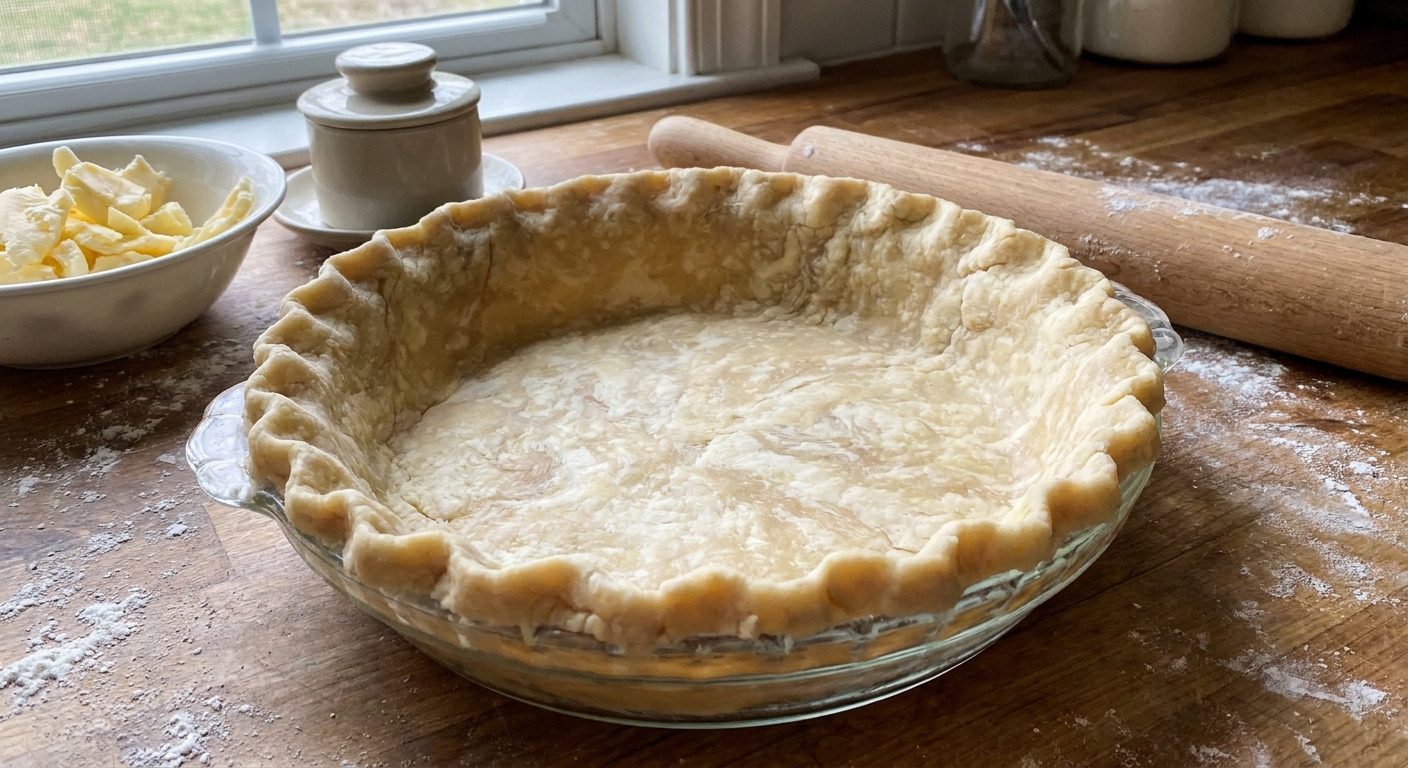

The first time a pie crust slid down the sides of my pan like it was trying to escape, I just stood there for a second holding my fork, deeply offended. I had visions of a tall, proud edge and a tidy base. Instead, I got a sad little dough puddle at the bottom.
If this has happened to you, you did not fail. Pie crust shrinkage is almost always a predictable combination of gluten, temperature, and how the dough was fitted into the pan. The good news is that once you know what caused it, you can stop it from happening. And if your crust has already slumped, you can still salvage dinner.
What "shrinking" actually is
When a pie crust “shrinks,” it usually means one (or more) of these things happened:
- The sides slid down during baking, leaving thick dough at the bottom edge.
- The rim pulled inward, so you lose that nice overhang and crimp.
- The base tightened up, which can make the shell look smaller and sometimes buckle.
All of those are forms of dough contraction. As heat hits the crust, any tension you built into the dough relaxes and retracts. Your job is to keep the dough cold, relaxed, and well-supported until it sets.
The most common reasons pie crust shrinks
1) The dough was overworked (too much gluten)
Even though pie crust is not “bread,” it still contains flour, and flour contains proteins that form gluten when mixed with water. The more you knead, press, or aggressively roll, the stronger and stretchier the gluten network becomes. Strong gluten is great for chewy bread. In pie, it translates to a crust that springs back and shrinks.
Clues this is the culprit: The dough felt elastic while rolling, it kept shrinking back on the counter, or it was tough instead of flaky after baking.
2) The dough was not chilled long enough
Warm butter melts early in the oven before the structure of the crust has time to set. When butter melts too soon, the sides lose support and slide. Also, chilling lets gluten relax. Skip the chill, and you bake tension right into the crust.
Clues this is the culprit: The dough felt soft and bendy going into the oven, or you could see butter smearing instead of staying in little pieces.
3) The dough was stretched to fit the pan
This is the sneakiest one because it happens at the last second. If you pull the dough to reach the corners, you create tension. Then the oven heat encourages the dough to snap back, and your sides slump.
Clues this is the culprit: The crust looked perfect raw, but quickly slid down early in baking, especially around the upper sides.
4) The edges were hanging in midair (not anchored)
If your dough is not pressed gently against the pan, it can droop as it warms. Think of it like fabric. If it is not sitting flush, gravity will win.
5) Not enough pie weights or not enough time with weights
For blind baking, weights are the scaffolding. If you do not use enough, or you remove them too early, the sides can collapse before the crust has set.
6) Pan choice and surface can contribute
Glass, ceramic, metal, disposable foil pans, and tart pans all conduct heat differently. A slick disposable pan can be more prone to slumping if the dough warms quickly or was stretched. This is not the main cause, but it can amplify the problem.
How to prevent shrinkage next time (my no-stress checklist)
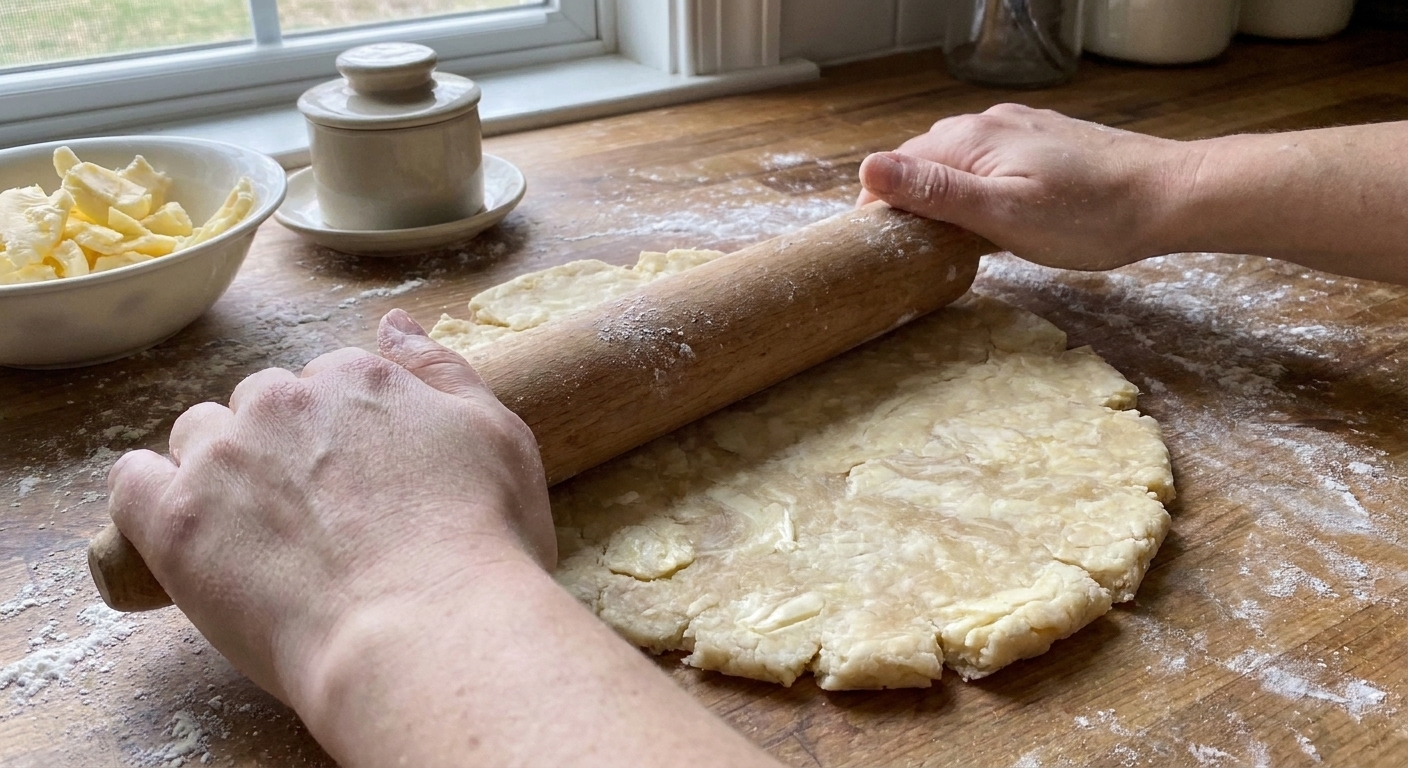
Keep gluten low from the start
- Mix just until it holds together. Stop the moment the dough can form a cohesive mass when squeezed.
- Use cold water and add it gradually. Too much water encourages gluten development.
- Do not knead. A couple of gentle folds is fine. No full-on workout.
Chill like you mean it
- Chill after mixing: wrap and refrigerate until the dough feels firm, not merely cool.
- Chill after rolling and fitting: once the crust is in the pan, refrigerate again. This is the step most people skip, and it matters.
If your kitchen is warm or your hands run hot, this second chill is non-negotiable. I would rather wait 20 minutes than watch a crust slide.
Fit the dough without stretching it
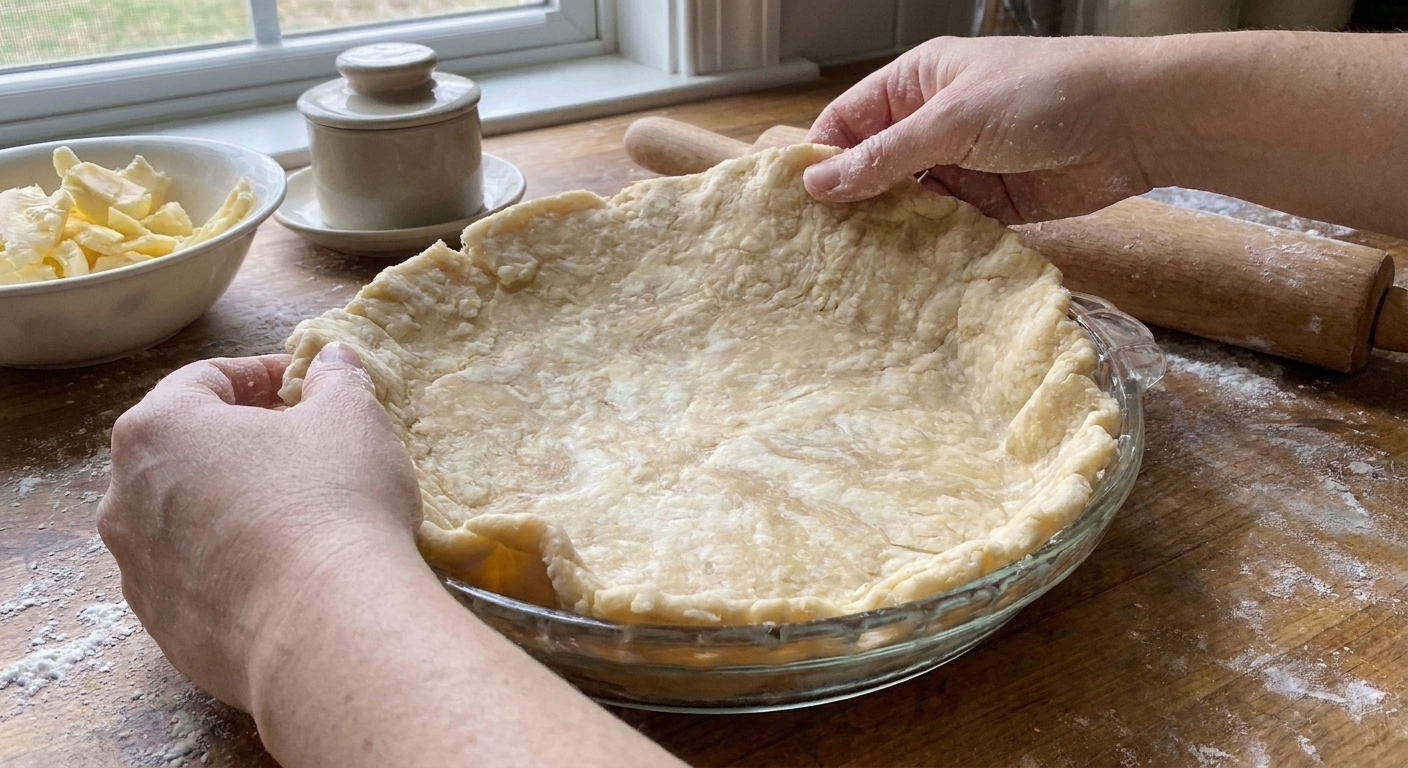
- Lift, do not pull: lower the dough into the pan, then lift the edges and let the center fall into place.
- Press gently into the corners: use your knuckles to ease it in, not your fingertips tugging outward.
- Leave a little overhang: that extra dough gives you wiggle room and helps prevent the rim from pulling inward.
Dock and weigh properly for blind baking
- Dock the bottom: poke holes with a fork to reduce bubbling.
- Use plenty of weights: you want an even layer, all the way up the sides if possible.
- Keep weights in long enough: leave them until the edges look set and dry, not pale and floppy.
Freeze briefly if you are short on time
If the crust is already shaped in the pan and you need a quick chill, a short trip to the freezer helps firm the butter and calm down the dough. Just do not forget it in there until it becomes rock solid unless your recipe accounts for it.
How to save a pie crust that already shrank or slumped
Let’s talk rescue plans. What you can do depends on when you notice the shrinkage.
If you notice before baking (raw dough slid down)
- Reposition it now: lift the dough gently and settle it back into the corners without stretching.
- Patch thin spots: pinch on small scraps of dough where it looks bare, then smooth the seam with a fingertip dipped in cold water.
- Chill again: refrigerate until firm before baking.
If it slumped early in the oven (partially baked)
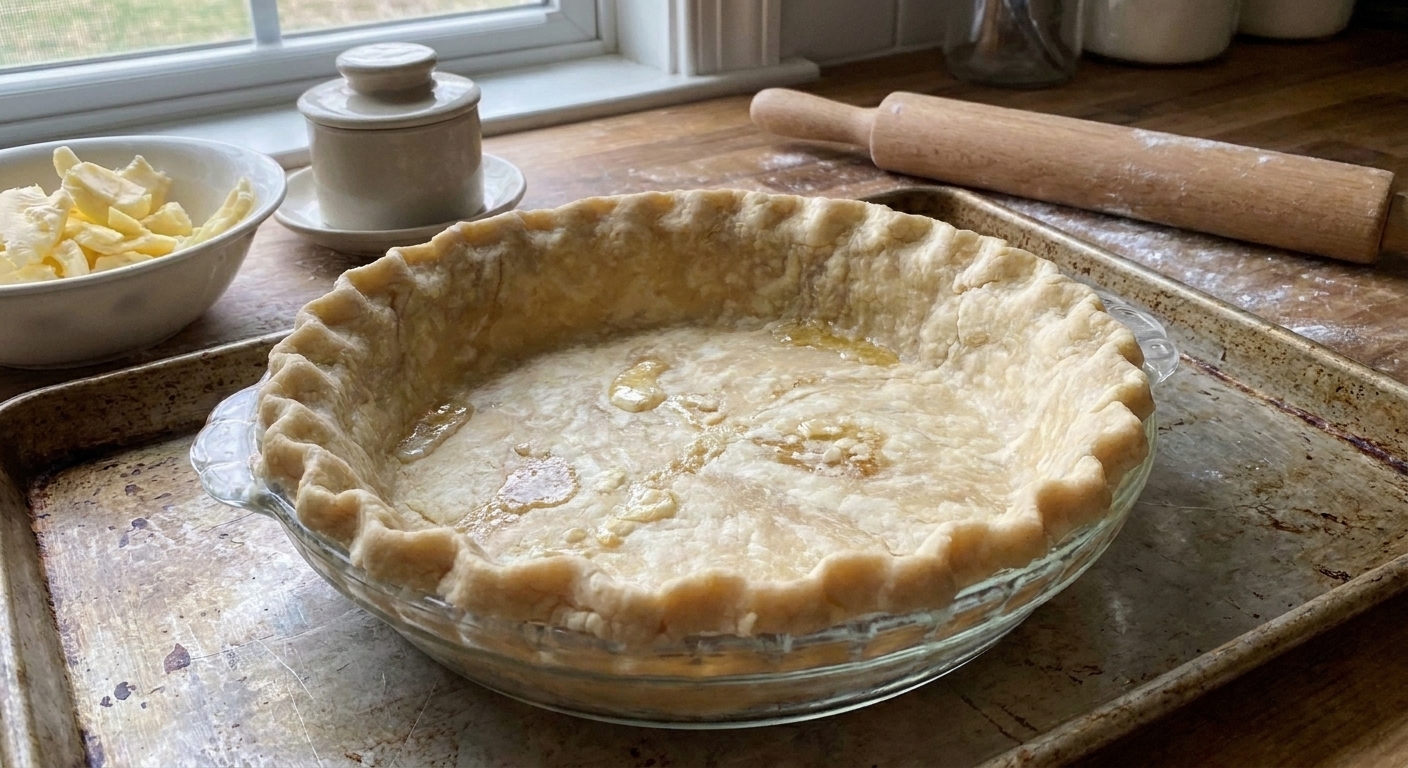
This is the moment for a fast, calm intervention.
- Pull the shell out carefully.
- Use the back of a spoon to nudge the dough back up the sides while it is still pliable. You are not trying to create a perfect crimp. You are rebuilding wall height.
- Add weights again (if blind baking), especially pushing them right up against the sides.
- Return to the oven and let the crust set fully before removing weights.
Is it a little rustic? Yes. Will it still hold filling and taste amazing? Also yes.
If the rim shrank below the lip of the pan
If the edge pulled down so far you cannot crimp or it looks too low to hold filling, do this:
- Make a quick dough “rope” patch: roll a thin rope of leftover dough and press it onto the top edge to rebuild height.
- Seal with egg wash or a little water where it meets the baked crust, then press firmly.
- Continue baking until that patch looks set and dry.
This works best for custard pies, quiches, and any filling that is not going to boil aggressively over the edge.
If the sides are too short but the bottom is fine
Sometimes the base is perfectly baked and the walls are just… not tall. You have options:
- Switch to a slightly smaller volume of filling and bake any extra in a buttered ramekin.
- Turn it into a “tart-style” pie and embrace a lower profile.
- Add a crumb barrier (a thin layer of crushed cookies or nuts, or a brushed-on egg white for fruit pies) if you worry about seepage.
Quick troubleshooting: match the symptom to the fix
| What you see | Most likely cause | Fix for next time |
|---|---|---|
| Sides slide down, bottom gets thick | Dough too warm or not enough weights | Chill shaped crust; use more weights and keep them in longer |
| Rim pulls inward, crimp disappears | Dough stretched when fitting; gluten too developed | Lower dough in gently; lift to settle; mix less and chill more |
| Dough fights you while rolling and springs back | Overworked dough | Use less water, handle less, rest and chill before rolling |
| Crust tastes tough | Too much gluten and/or too much flour added while rolling | Light flouring; roll with gentle strokes; stop mixing earlier |
Pie crust shrinkage FAQ
How long should I chill a crust after it is in the pan?
Long enough that it feels firm and cold to the touch, especially around the sides and rim. If your dough feels soft or you can leave fingerprints easily, it is not ready. This post-pan chill is one of the best shrinkage preventers.
Does all-butter crust shrink more than shortening crust?
All-butter crust can be a little more sensitive to warmth because butter melts quickly. That does not mean it is destined to shrink. It just means chilling and gentle handling matter even more.
Do I need to let pie dough “rest” like bread dough?
Yes, in its own way. Resting in the fridge relaxes gluten and re-firms the fat. Even 15 to 30 minutes can make the dough easier to roll and less likely to snap back.
Can I fix shrinkage by rolling the dough thicker?
Thicker dough can give you a bit more insurance, but it does not solve the underlying cause. If you roll thicker but still stretch the dough into the pan or skip chilling, it can still slump. Aim for relaxed, cold dough first, then adjust thickness if needed.
Why did my crust shrink even with pie weights?
Usually it is one of three things: the dough was stretched when fitted, it was too warm going into the oven, or you did not use enough weights or removed them before the sides fully set. Weights help, but they cannot fully overcome warm, tense dough.
My best encouragement (and a tiny pep talk)
Pie crust is one of those kitchen skills that looks like magic when it goes right and feels personal when it goes wrong. I promise it is not personal. Shrinkage is just physics plus a little flour science.
Next time, focus on three things: mix less, chill more, and never stretch to fit. And if your crust still decides to scoot down the pan, remember: patch it, press it, bake it, and call it charming. Dessert does not need perfection to be delicious.