

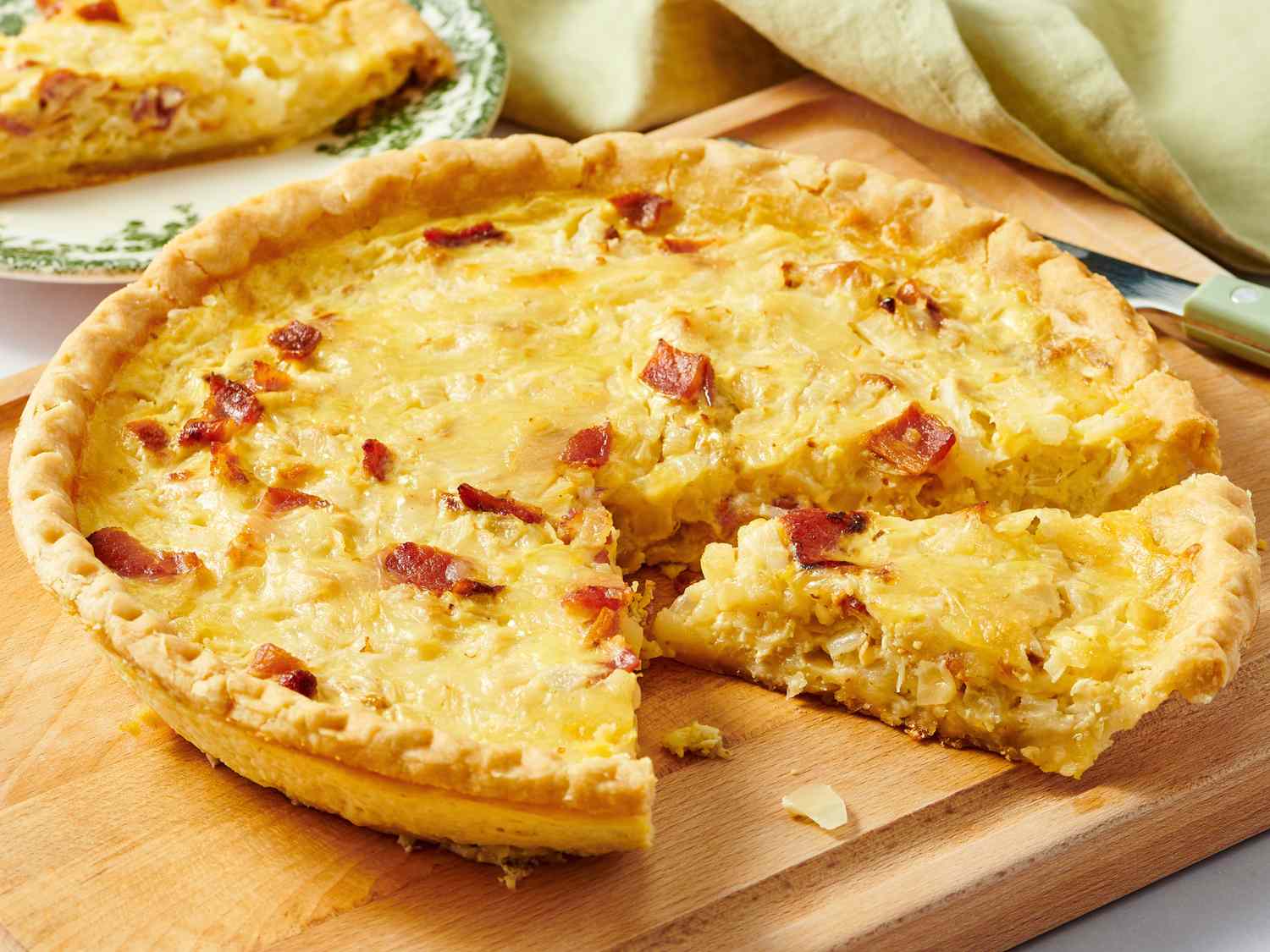
If you have ever had quiche that was dense, rubbery, or weeping around the edges, I am here with very good news. A classic quiche can be tender and custardy, still rich, with a center that slices cleanly and a buttery crust that can stay crisp.
This is the quiche I make when I want something that feels a little special but does not require a whole Sunday project. It is equally happy on a brunch table with fruit and coffee or on a Tuesday night with a simple salad. And once you learn the handful of small moves that matter, you can swap in whatever cheese, veggies, or leftover bits you have without losing that dreamy texture.
Think: a properly pre-baked crust , a balanced egg-to-dairy custard, and pulling it from the oven while the center still has a gentle wobble.

In the recipe below, I keep the filling classic with a gentle allium base, a savory bite of ham or bacon, and melty cheese. But consider this your base recipe. Master the custard, and the rest becomes play.
The idea
Why This Recipe Works
- Higher dairy-to-egg ratio for tenderness: Using a balanced mix of eggs and dairy gives you a custard that is set but not firm, so it eats tender instead of bouncy.
- A little flour for insurance: A small amount of flour helps stabilize the custard and reduces the chance of weeping, especially if your fillings have any moisture.
- Blind-baked crust stays crisp: Prebaking the crust prevents the dreaded soggy bottom and gives you clean, confident slices.
- Gentle baking temperature: Quiche likes a moderate oven so the eggs set softly without curdling. No dry, scrambled-egg texture here.
- Rest time equals better texture: A short rest lets the custard finish setting and keeps the slices neat and creamy.
Shopping
Ingredient Notes
Crust
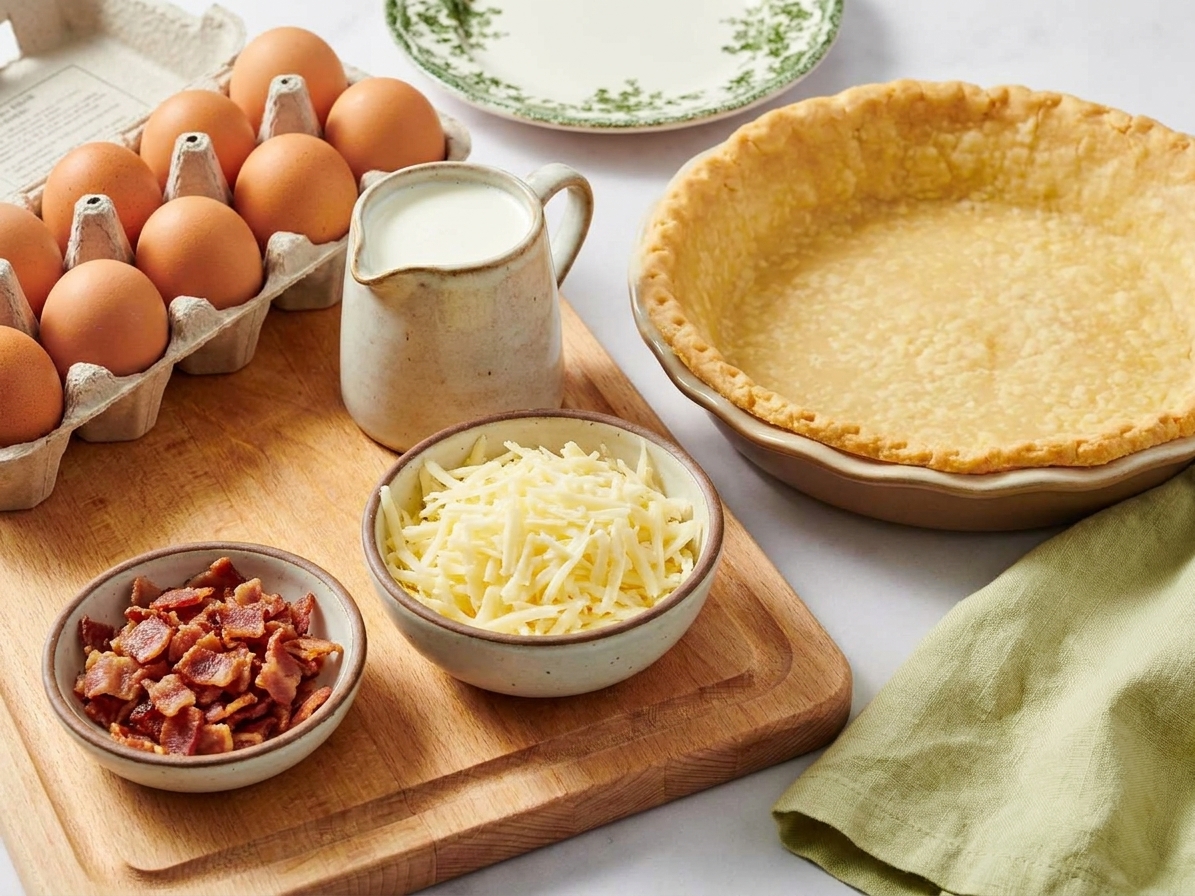
You can use a homemade all-butter pie crust or a quality store-bought refrigerated crust. The key is blind baking it until the bottom looks dry and lightly golden.
Eggs
Use large eggs. If your eggs are extra-large, the custard can set a bit firmer. Stick with large for the fluffiest texture.
Dairy
I love a mix of whole milk and heavy cream. Milk keeps the custard light, cream adds that classic quiche richness. Half-and-half can replace both.
Cheese
Gruyere is the classic for a reason: nutty, melty, and not oily. Swiss, sharp cheddar, fontina, or a blend all work. For best melt and flavor, shred your own if you can.
Mix-ins
Cooked bacon or ham adds savory depth. If using vegetables, cook them first to remove moisture. Wet fillings are the number one cause of watery quiche.
Get set up
Equipment You Will Need
- 9-inch pie dish (glass, ceramic, or metal all work)
- Sheet pan (for easy transfer and catch any butter drips)
- Pie weights or dried beans (for blind baking)
- Parchment paper or foil (to hold the weights)
- Whisk and mixing bowl
- Skillet (for sautéing onion and cooking bacon if needed)
Technique
Tips for Getting It Right
- Blind bake like you mean it. The crust should look dry and lightly golden on the bottom before you add custard. If it is pale and raw-looking, give it a few more minutes.
- Warm fillings, cool crust, room-temp custard. Let hot fillings cool slightly so they do not start cooking the eggs on contact.
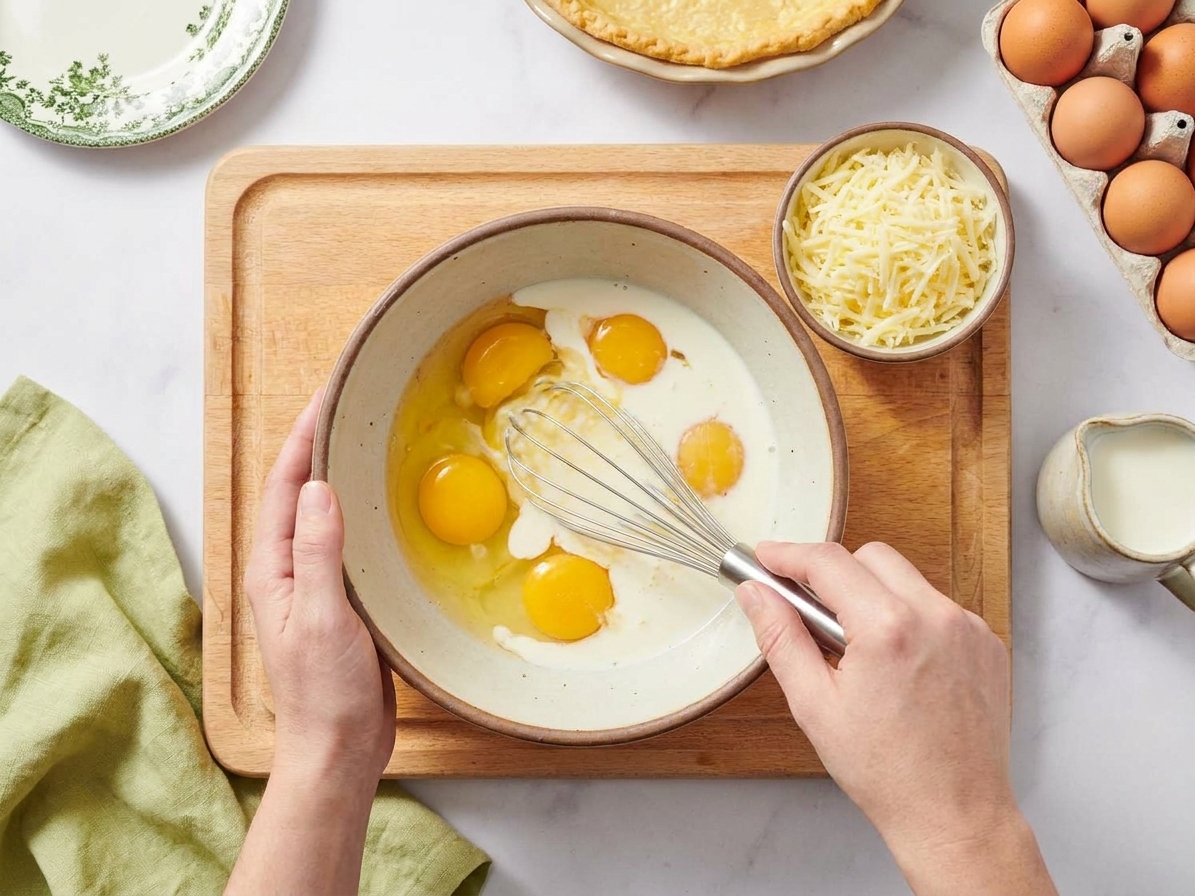
- Do not whip air into the eggs. Whisk until smooth and combined, but do not foam it up. Too much air can cause puffing and then sinking, which can squeeze out moisture.
- Use a sheet pan. Set the pie dish on a sheet pan before filling. It is steadier going into the oven and protects your oven floor from spills.
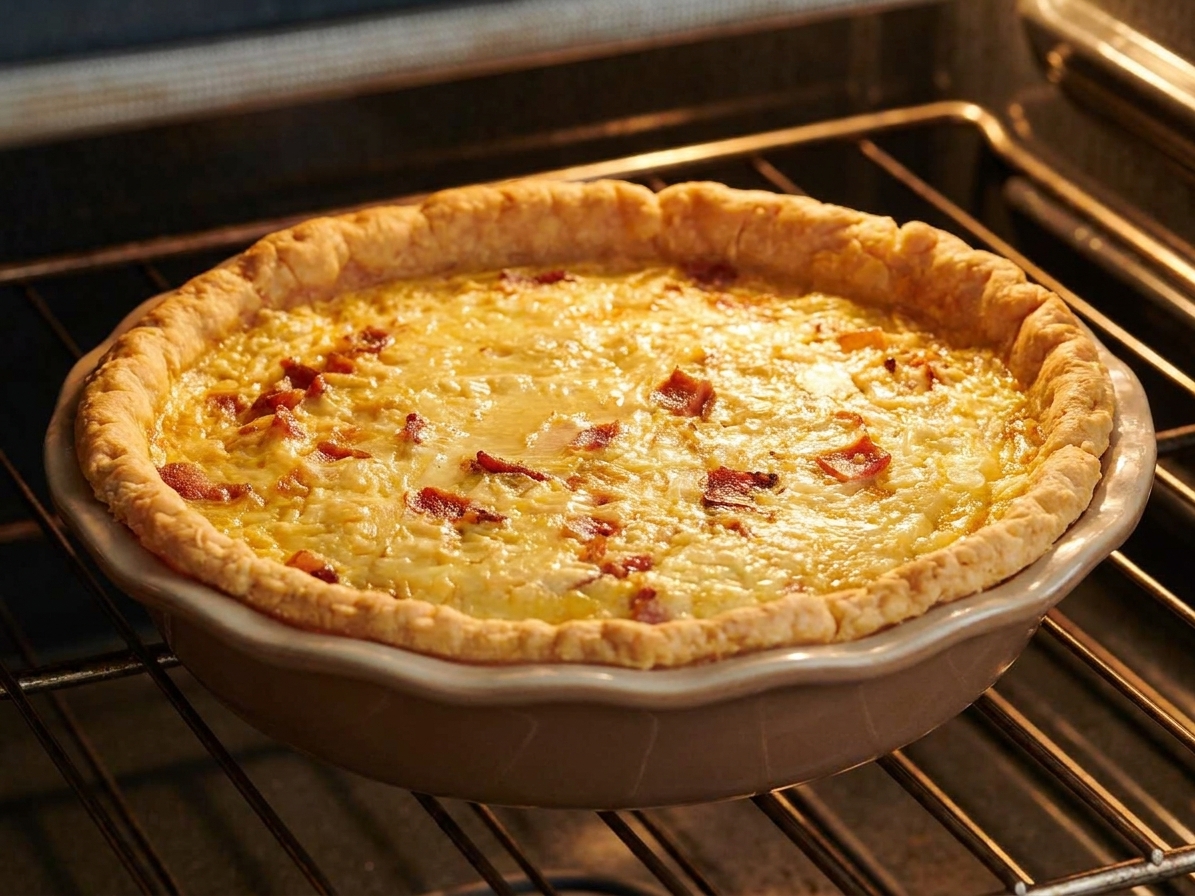
- Know what done looks like. The edges should be set, and the center should wobble like set gelatin, not slosh like liquid. A knife inserted about 1 inch from the center should come out mostly clean.
- Rest before slicing. Give it 10 to 15 minutes. This is the difference between clean wedges and a custard puddle.
Flexibility
Substitutes That Work
- Half-and-half: Replace the milk and cream with 2 cups half-and-half for an easy one-carton option.
- No pork: Swap bacon or ham for sautéed mushrooms, cooked spinach that has been squeezed very dry, or diced roasted red peppers that have been patted dry.
- Gluten-free: Use a gluten-free pie crust. For the custard, you can replace the flour with a 1:1 gluten-free flour blend (or omit it, but be extra careful about moisture from fillings).
- Lower fat: You can use all whole milk, but the texture will be a bit less silky. I do not recommend low-fat milk, which tends to bake up more watery.
- Cheese swaps: Gruyere, Swiss, cheddar, Gouda, fontina, or a mix. Avoid super fresh cheeses with lots of moisture unless you use them sparingly.
Make it yours
Variations to Try
- Quiche Lorraine style: Use bacon and Gruyere, skip the onion if you want it extra classic, and add a pinch of nutmeg.
- Garden veggie: Sauté bell pepper, zucchini, and onion until very tender and moisture cooks off. Add a handful of chopped herbs at the end.
- Caramelized onion and thyme: Slowly caramelize 2 onions until deep golden, then fold in with Swiss or Gruyere and a teaspoon fresh thyme leaves.
- Broccoli cheddar: Use small broccoli florets steamed until just tender, then patted dry. Pair with sharp cheddar.
- Smoked salmon and dill: Use small pieces of smoked salmon with dill and chives, and swap cheese for a milder option like Swiss.
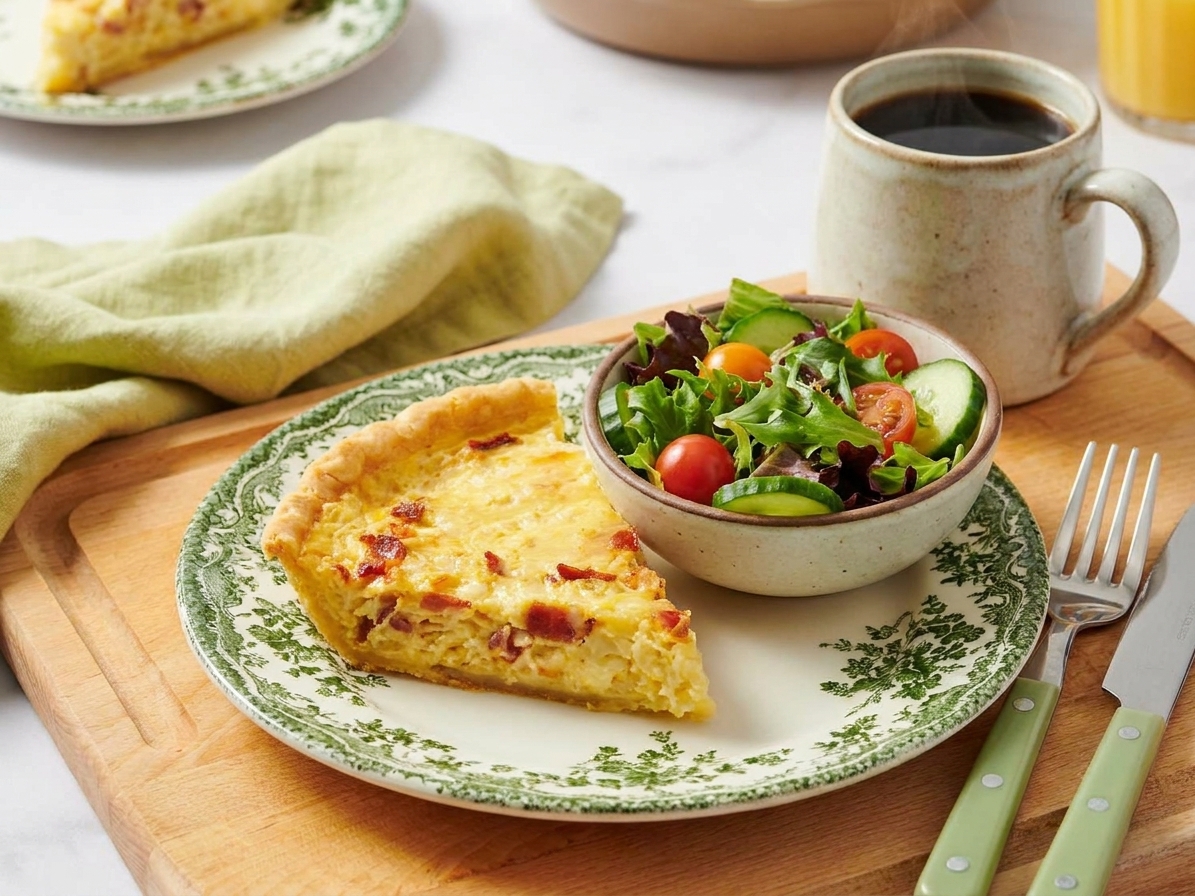
On the table
What to Serve It With
- Simple greens: Arugula or mixed greens with a lemony vinaigrette cuts the richness perfectly.
- Brunch board vibes: Fresh fruit, jam, and a basket of toasted bread or muffins.
- Soup and quiche night: Tomato soup, roasted red pepper soup, or a light vegetable soup alongside.
- Something crisp: Quick pickled onions or cornichons add brightness.
Later
Storage, Freezing and Reheating
Refrigerator
Cool completely, then cover and refrigerate for up to 4 days. Quiche is one of my favorite make-ahead meals because it slices even better when chilled.
Freezer
Wrap cooled slices tightly and freeze for up to 2 months. Thaw overnight in the fridge for best texture.
Reheating
- Oven (best): Reheat slices at 325°F until warmed through, about 12 to 18 minutes. Cover loosely with foil if the top is browning.
- Microwave (fast): It works, but the crust softens. Use medium power in short bursts.
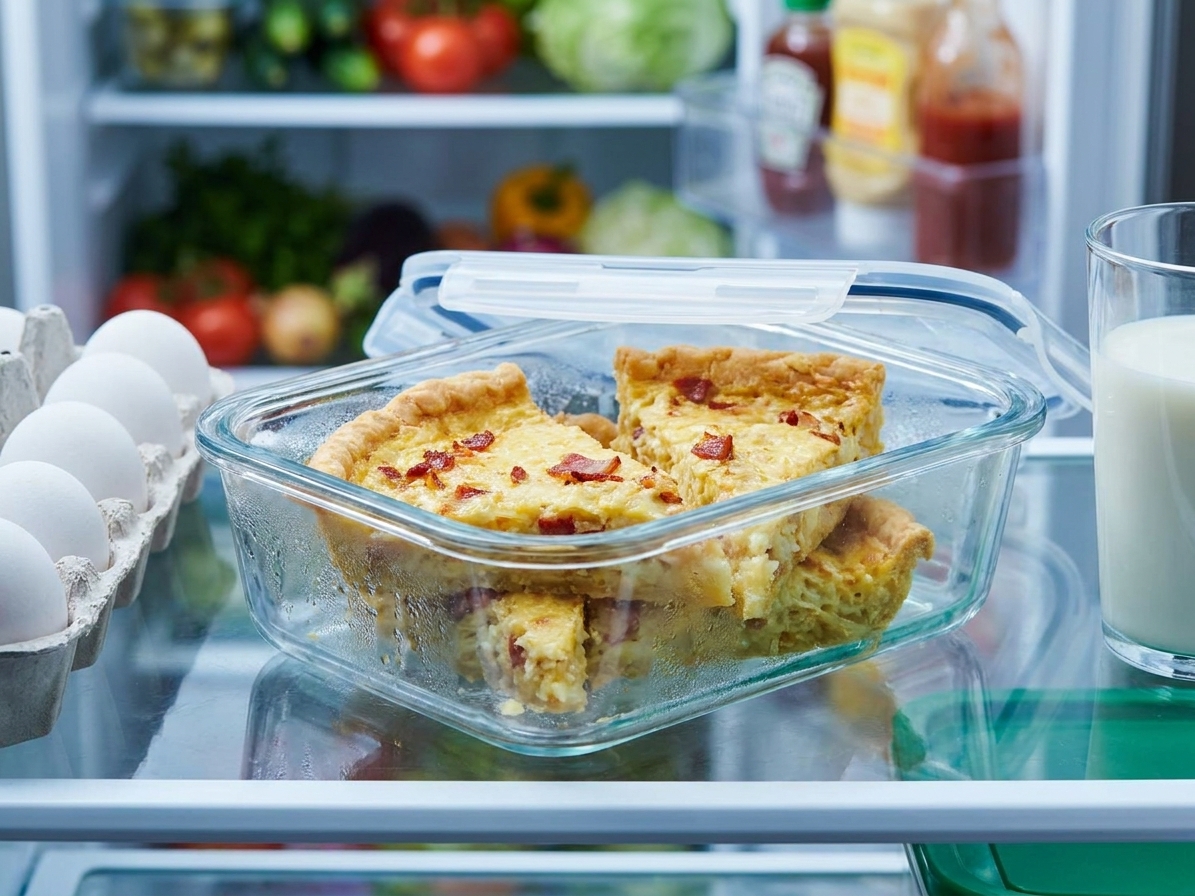
Watch out
Common Mistakes to Avoid
- Skipping blind baking: This is how you get a soggy bottom, even if your custard is perfect.
- Adding wet vegetables: Raw tomatoes, raw mushrooms, or spinach that has not been squeezed dry will release water and make the quiche weep.
- Overbaking: If the center is fully firm in the oven, it will be dry by the time it cools. Pull it when the center still has a gentle wobble.
- Too much filling: Overloading with cheese or mix-ins can prevent the custard from setting evenly and can make slices fall apart.
- Cutting too soon: The custard needs a rest to finish setting. Patience pays off here.
Questions
Frequently Asked Questions
How do I make quiche extra fluffy?
That light texture comes from a tender custard and gentle baking. Use the milk and cream ratio as written, avoid over-whisking until foamy, and pull the quiche when the center still wobbles slightly. Carryover heat finishes the set without drying it out.
What temperature should quiche be baked at?
I like 350°F for a standard 9-inch quiche. It is hot enough to set the custard reliably, but gentle enough to keep it creamy.
How do I know when quiche is done?
The outer 2 inches should look set and lightly puffed, and the center should jiggle like set gelatin. If you insert a knife about 1 inch from the center, it should come out mostly clean.
Why is my quiche watery?
Usually it is moisture from fillings, like vegetables that were not cooked down or spinach that was not squeezed dry, or underbaking. Overbaking can also cause weeping as the eggs tighten and squeeze out liquid.
Can I make quiche the night before?
Yes, and it is wonderful. Bake it fully, cool, refrigerate, and reheat at 325°F until warmed through. The slices are often even cleaner the next day.
Can I use a deep-dish pie plate?
You can, but you will likely need a bit more custard and a slightly longer bake time. Watch for the same doneness cues: set edges and a gentle wobble in the center.
The recipe
Classic Light and Fluffy Quiche
A classic, foolproof quiche with a light, fluffy custard and crisp crust. This base recipe uses simple supermarket ingredients and bakes up beautifully for brunch, dinner, or make-ahead lunches.
Ingredients
- 1 (9-inch) pie crust, homemade or refrigerated
- 1 tablespoon unsalted butter
- 1/2 cup yellow onion, finely chopped
- 1 cup cooked bacon or ham, chopped (about 6 slices bacon)
- 1 cup (about 4 ounces) Gruyere cheese, shredded
- 4 large eggs
- 1 cup whole milk
- 1 cup heavy cream
- 1 tablespoon all-purpose flour
- 1/2 teaspoon kosher salt
- 1/4 teaspoon black pepper
- Pinch ground nutmeg (optional but classic)
Instructions
- Preheat and prep. Heat the oven to 375°F. Place a sheet pan in the oven while it preheats.
- Blind bake the crust. Fit the pie crust into a 9-inch pie dish and crimp the edges. Line with parchment or foil and fill with pie weights or dried beans. Bake 15 minutes. Remove the weights and liner, then bake 8 to 10 minutes more, until the bottom looks dry and lightly golden. Reduce oven temperature to 350°F.
- Sauté the onion. In a skillet over medium heat, melt the butter. Add onion and cook 4 to 6 minutes until softened and lightly golden. Let cool for a few minutes.
- Build the filling in the crust. Sprinkle onion, bacon or ham, and shredded Gruyere evenly into the warm crust.
- Make the custard. In a large bowl, whisk eggs until smooth. Add milk, cream, flour, salt, pepper, and nutmeg (if using). Whisk just until fully combined.
- Fill and bake. Place the pie dish on the hot sheet pan (carefully). Pour custard into the crust. Bake at 350°F for 35 to 45 minutes, until the edges are set and the center still has a gentle wobble.
- Rest, then slice. Cool 10 to 15 minutes before slicing. Serve warm or at room temperature.
Recipe notes
- Crust protection: If the edge browns too quickly, cover the rim with a strip of foil or a pie shield during the last 15 minutes.
- Moisture rule: If you add vegetables, cook them first and cool, then pat dry. Your future self will thank you.
- Make-ahead: Bake completely, cool, and refrigerate. Reheat at 325°F until warmed through for the best texture.
Nutrition (per serving, approximate)
- Calories: 420
- Protein: 14 g
- Carbohydrates: 18 g
- Fat: 32 g
- Saturated Fat: 16 g
- Fiber: 1 g
- Sugars: 3 g
- Sodium: 640 mg