

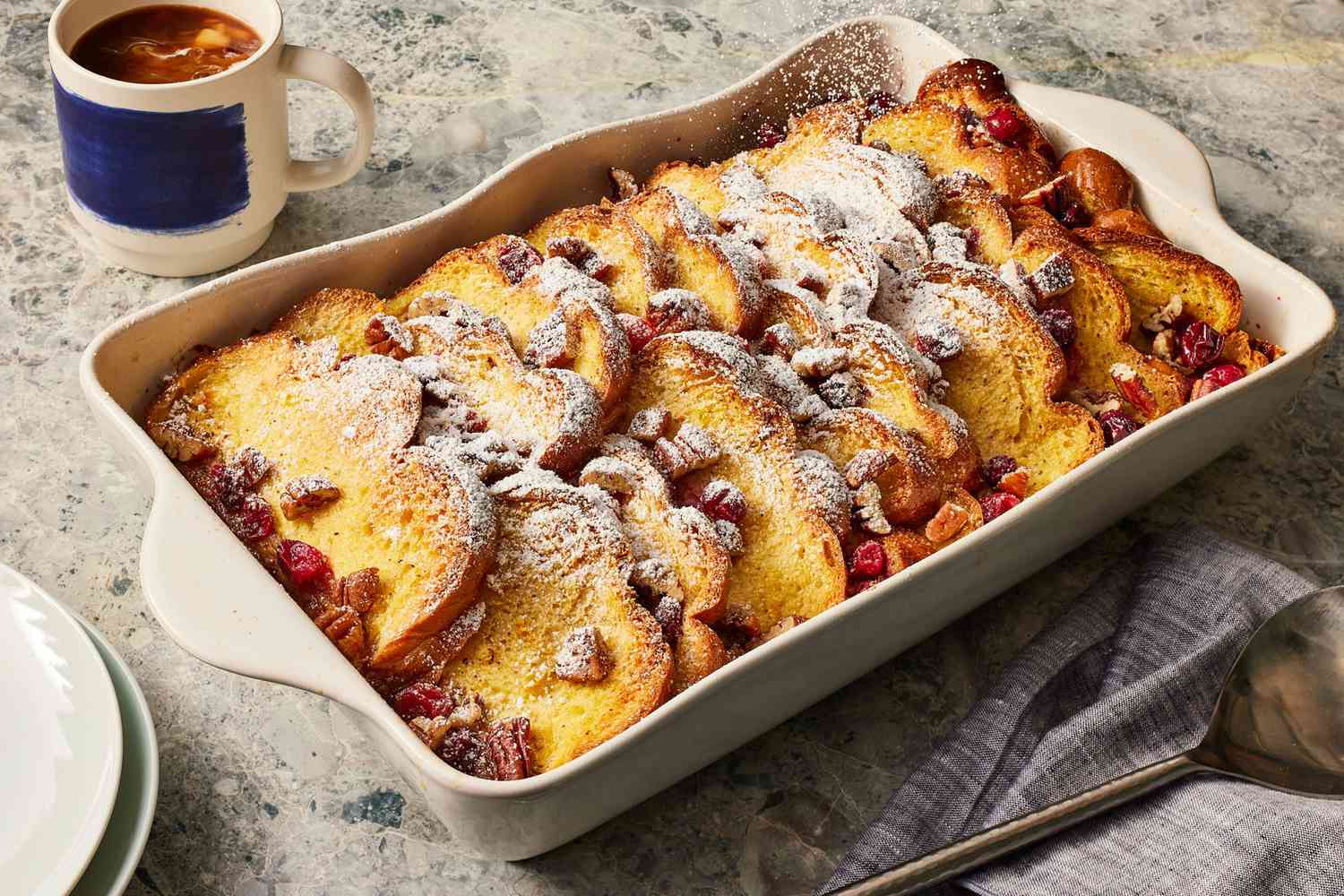
If you love French toast but do not love standing at the stove flipping slice after slice, baked French toast is your new best friend. You soak cubes of bread in a warmly spiced custard, let everything mingle, then bake until the top turns golden and the inside stays soft and custardy. It feels special enough for brunch, but it is easy enough for a random Tuesday morning when you want something cozy.

The idea
Why This Recipe Works
- Hands-off cooking: the oven does the work while you make coffee, set the table, or just breathe.
- Make-ahead friendly: assemble the night before, bake in the morning, and look like a brunch genius with minimal effort.
- Better texture than stovetop for a crowd: custardy center, caramelized edges, and a lightly crisp top.
- Flexible: works with many breads and mix-ins, and it is easy to scale up.
Shopping
Ingredient Notes
This is a classic baked French toast base. Once you have it memorized, you can riff forever.
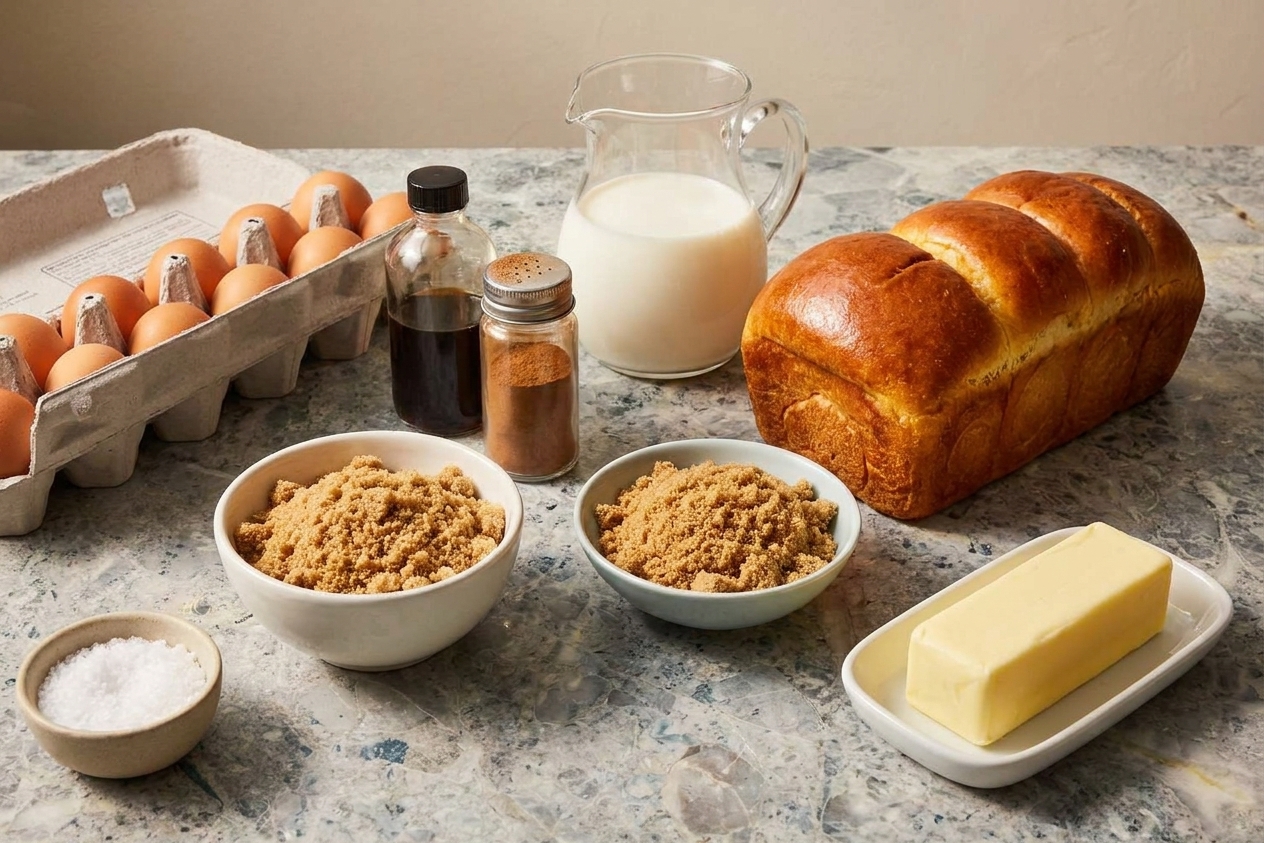
- Bread: brioche, challah, French bread, or sturdy sandwich bread. Slightly stale bread is ideal.
- Eggs: the backbone of the custard.
- Milk and cream: I like a mix for richness. All milk works too, it will just be a bit lighter.
- Sugar: brown sugar adds a hint of caramel flavor, but white sugar is fine.
- Vanilla and cinnamon: classic, cozy flavor. Nutmeg is lovely too.
- Salt: a small amount makes everything taste more like itself.
- Butter: for the pan and extra richness.
Best bread for baked French toast
My top pick is brioche or challah because they soak up custard like champs and bake up tender. French bread is a close second for a slightly chewier bite.
- Use day-old bread if you can: it absorbs custard without turning to mush.
- Only have fresh bread? Cube it and dry it on a sheet pan at 300°F for 10 to 15 minutes, tossing once, until the outside feels a little dry.
- Avoid very soft bread: super fluffy sandwich bread can bake up gummy unless you dry it first.
Get set up
Equipment You Will Need
- 9x13-inch baking dish (glass, ceramic, or metal)
- Large mixing bowl
- Whisk
- Spatula (for gently pressing the bread into the custard)
- Sheet pan (helpful for drying fresh bread at 300°F for 10 to 15 minutes)
- Foil (for tenting if the top browns too quickly)
- Oven thermometer (optional, but helpful for confirming a true 350°F oven)
- Instant-read thermometer (optional, for checking 160°F to 165°F in the center)
Technique
Tips for Getting It Right
- Do not skimp on the soak: time in the fridge is where the magic happens.
- Press the bread down: especially the corners so the top layer starts soaking evenly.
- Look for “set,” not “dry”: the center should be custardy but not liquid. For precision, check for about 160°F to 165°F in the middle.
- Rest before cutting: let it sit 10 minutes before slicing so it finishes setting.
- Salt matters: a little salt keeps the dish from tasting flat or overly sweet.
- Pan note: metal pans tend to brown faster and crisper at the edges than glass or ceramic, so start checking a few minutes early if you switch materials.
- Foil when needed: if the top browns too quickly, tent loosely with foil for the last 10 to 15 minutes.
Overnight vs same-day
Overnight gives you the most custardy interior and the easiest morning. I love it for holidays, brunch guests, or any time you want breakfast to feel effortless.
Same-day still works beautifully. Give it at least 30 minutes in the fridge so the bread can drink in the custard. If you are in a hurry, even 15 minutes helps, just expect a slightly more bread-forward center.
Flexibility
Substitutes That Work
- All milk instead of cream: you can make this without cream by using all milk. It will be slightly less rich, but still custardy and satisfying.
- More milk in place of cream: replace the 1/2 cup heavy cream with more milk.
- Non-dairy milk: use an unsweetened, higher-fat option like extra creamy oat milk for the closest texture. You can also replace the cream with more non-dairy milk; the flavor will be a bit lighter, still delicious.
- Sugar swap: brown sugar adds a caramel hint, but white sugar is fine.
- Bread options: brioche, challah, French bread, or sturdy sandwich bread (dry very soft fresh bread first).
Make it yours
Variations to Try
Once you have the base, you can have fun with it. Here are a few repeat favorites.
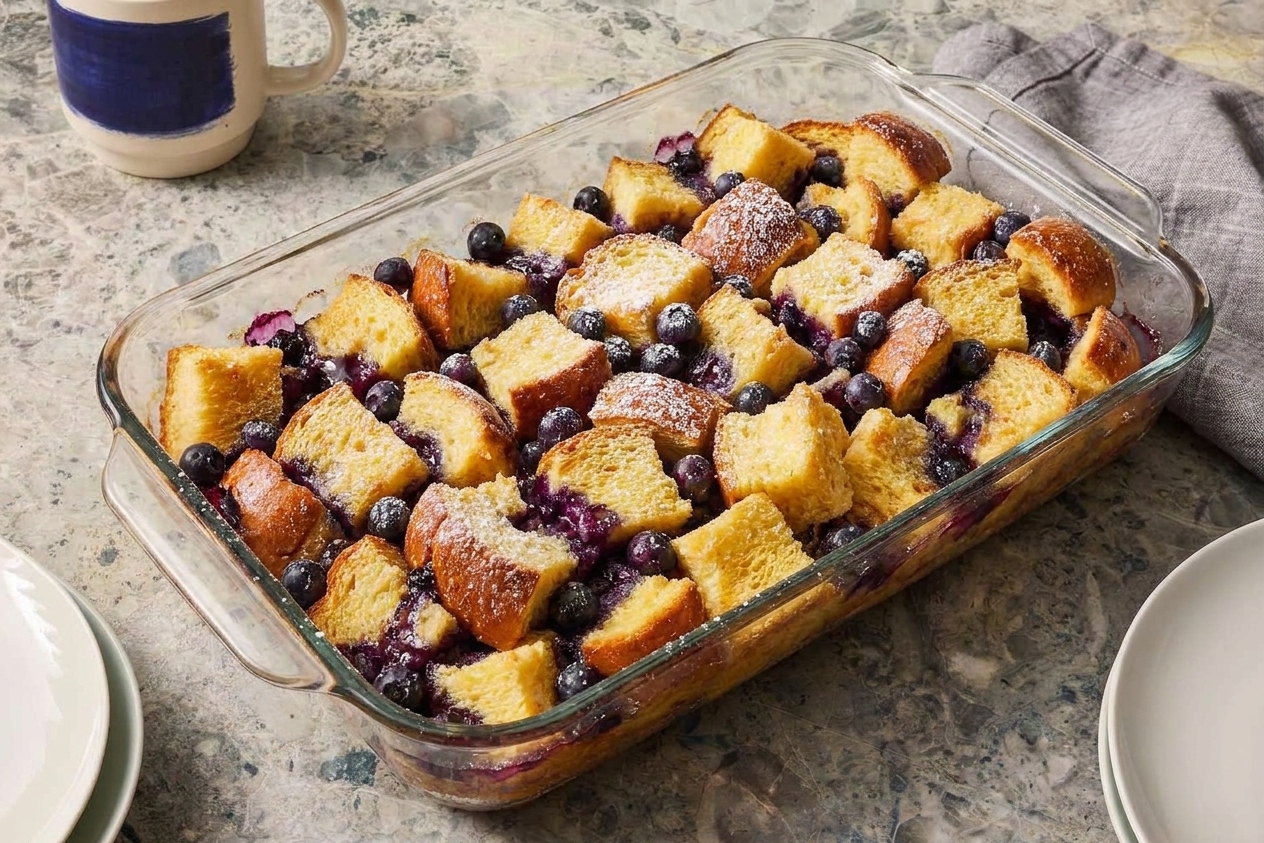
- Berry vanilla: fold in blueberries or raspberries and add a little lemon zest to the custard.
- Apple cinnamon: layer thin sliced apples with the bread and add an extra pinch of cinnamon.
- Pecan praline: sprinkle chopped pecans on top for the last 15 minutes of baking so they toast.
- Orange cardamom: swap nutmeg for cardamom and add orange zest.
- Chocolate chip: scatter mini chips throughout for a kid-friendly brunch treat.
If you are adding a lot of sweet mix-ins (chocolate chips, sweetened dried fruit, a very sweet bread), you can reduce the granulated sugar by 1 tablespoon without hurting the texture.
On the table
What to Serve It With
I like pairing something sweet and cozy with something fresh or savory so breakfast feels balanced.
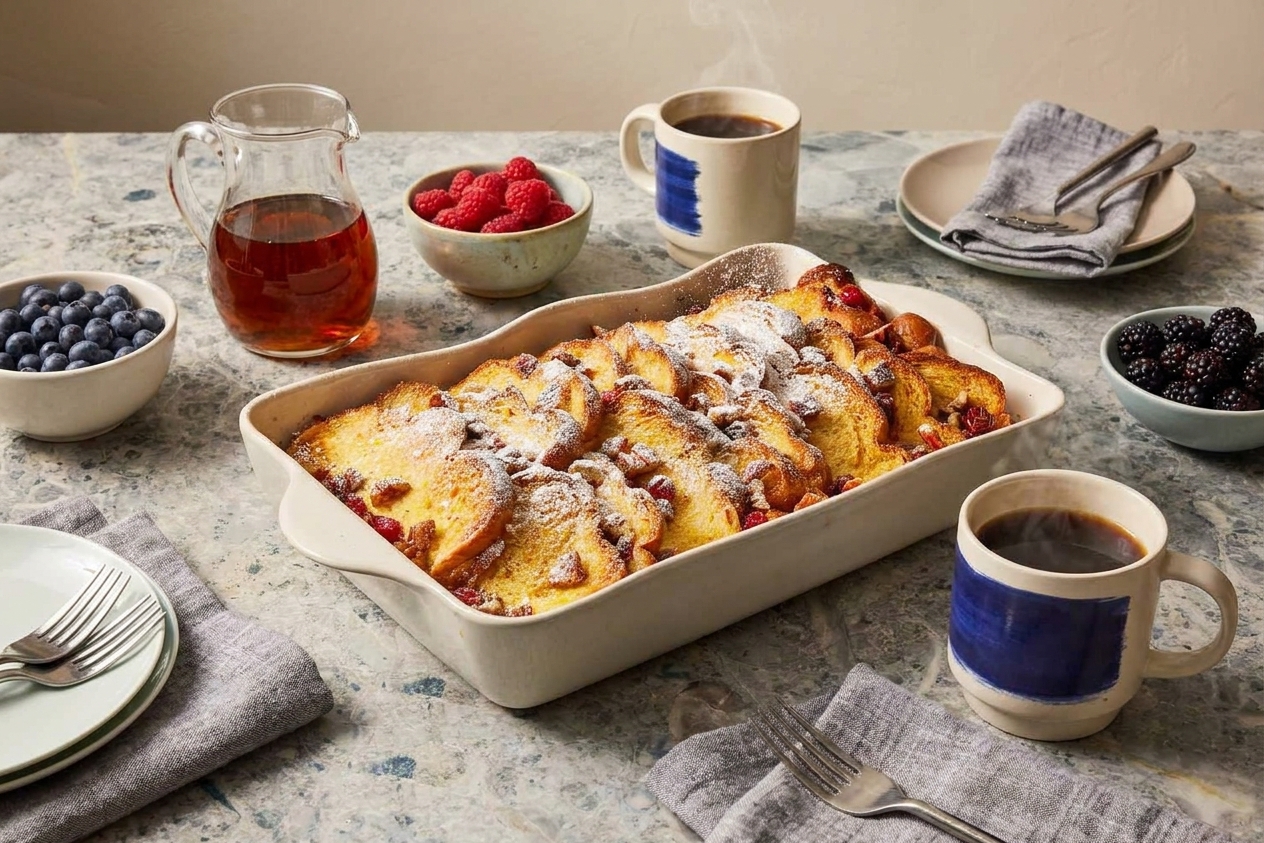
- Fresh fruit salad or citrus wedges
- Greek yogurt with honey
- Scrambled eggs or a veggie frittata
- Breakfast sausage or bacon for a salty counterpoint
- Strong coffee or a big pot of tea
Later
Storage, Freezing and Reheating
Make-ahead
Assemble, cover, and refrigerate up to 12 hours. If your fridge runs cold, pull the dish out while the oven preheats so the glass or ceramic does not go from very cold to very hot too quickly.
Storing leftovers
- Fridge: for best quality, store covered up to 4 days. Cool leftovers and refrigerate within 2 hours.
- Freezer: cut into portions, wrap well, and freeze up to 2 months for best quality.
Reheating
- Oven: 325°F until warmed through, about 10 to 15 minutes for a slice, 20 to 25 minutes for a larger portion.
- Microwave: works in a pinch, but the oven keeps the top from turning soft.
Watch out
Common Mistakes to Avoid
- Using bread that is too fresh and soft: it can turn soggy. Day-old bread is ideal, or dry fresh cubes at 300°F for 10 to 15 minutes, tossing once.
- Not soaking long enough: the fridge time helps the bread absorb the custard; aim for at least 30 minutes, or overnight for best texture.
- Skipping the press-down step: unsoaked corners can stay dry; press gently so the top layer starts soaking, especially around the corners.
- Too much liquid from add-ins: very juicy fruit can make the center wet; if using very juicy fruit, keep it closer to 1 cup so the center stays custardy, not wet.
- Letting the top get too brown before the center sets: tent with foil once the top is golden, then keep baking until the center is set.
- Baking by color alone: you want a center that looks set with no liquid custard pockets; for extra certainty, aim for about 160°F to 165°F in the center.
- Cutting too soon: resting 10 minutes helps it finish setting before slicing.
Questions
Frequently Asked Questions
Can I make baked French toast without cream?
Absolutely. Use all milk instead. It will be slightly less rich, but still custardy and satisfying.
How do I know when it is done?
The casserole will be puffed and golden, and the center will look set instead of wet. If you jiggle the pan, the center should not slosh. If you like numbers, aim for about 160°F to 165°F in the center.
What size pan should I use?
A 9x13-inch pan is the standard for this recipe. If you use a smaller, deeper dish, you may need a longer bake time. If you use a larger dish, it may bake faster and come out less custardy.
Can I halve the recipe?
Yes. Use an 8x8-inch pan and start checking around 30 to 35 minutes.
Why is my baked French toast soggy?
Usually it is one of three things: bread that is too fresh and soft, not enough bake time, or too much liquid in the add-ins (very juicy fruit can do it). Dry your bread first, keep juicy add-ins in check, and bake until the center is set with no liquid custard pockets.
Why is the middle not cooked but the top is brown?
Tent with foil once the top is golden, then keep baking until the center sets. Also make sure your oven is actually at 350°F if you can. An oven thermometer helps.
Can I use non-dairy milk?
Yes. Choose an unsweetened, higher-fat option like extra creamy oat milk for the closest texture. You can also replace the cream with more non-dairy milk. The flavor will be a bit lighter, still delicious.
The recipe
Baked French Toast
Cubes of brioche or challah are soaked in a warmly spiced vanilla custard, chilled, then baked until puffed and golden with a soft, custardy center. Ideal for hands-off brunch and easy make-ahead mornings.
Ingredients
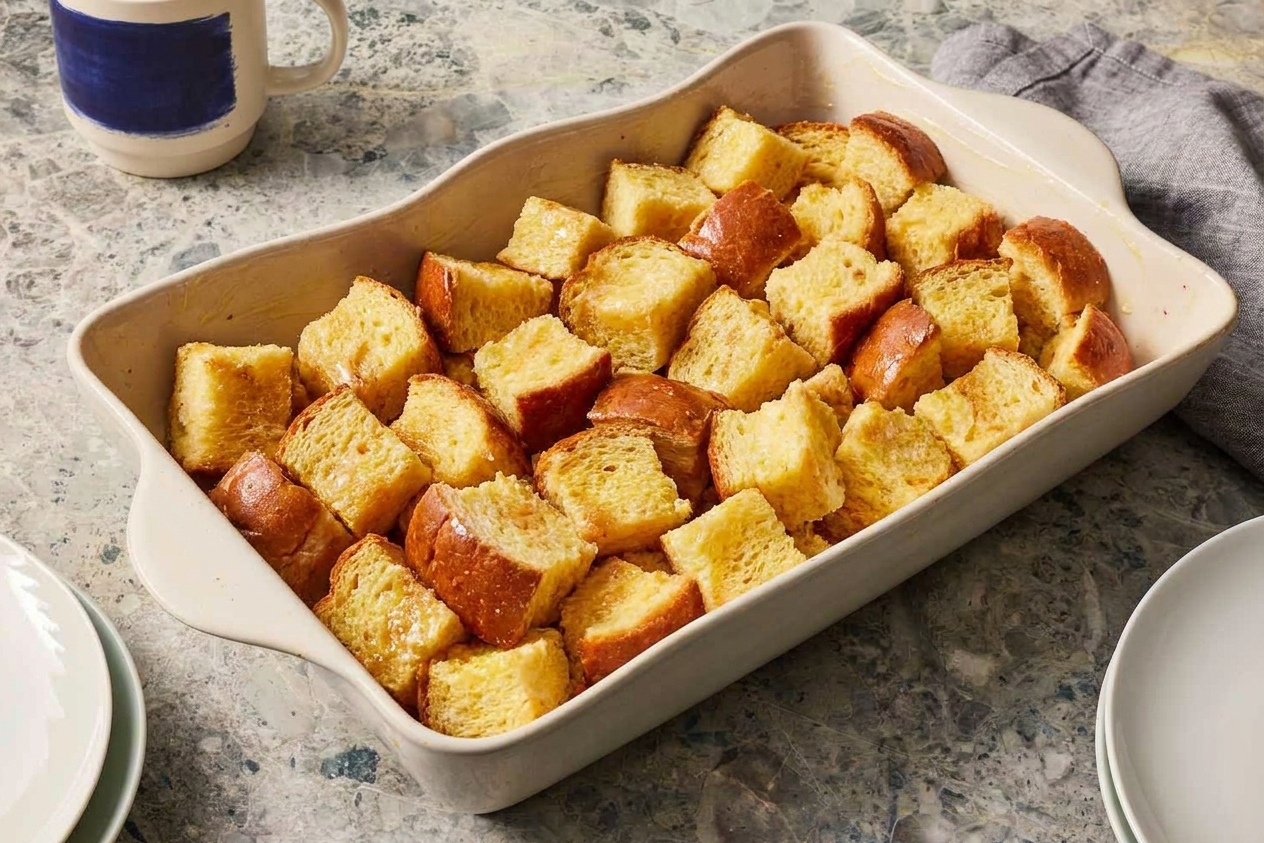
- 1 (14 to 16 ounce) loaf brioche or challah, cut into 1-inch cubes (about 10 to 12 cups)
- 6 large eggs
- 2 cups whole milk
- 1/2 cup heavy cream (or use more milk)
- 1/2 cup packed brown sugar
- 2 tablespoons granulated sugar
- 2 teaspoons vanilla extract
- 1 1/2 teaspoons ground cinnamon
- 1/4 teaspoon ground nutmeg (optional)
- 3/4 teaspoon kosher salt
- 3 tablespoons butter, melted
- About 1 tablespoon softened butter for the pan
- Optional toppings and add-ins: 1 to 2 cups berries (fresh or frozen)
- Optional toppings and add-ins: 1/2 cup chopped pecans or walnuts
- Optional toppings and add-ins: 3/4 cup mini chocolate chips
- Optional toppings and add-ins: powdered sugar, maple syrup, or a dollop of yogurt
Instructions
- Prep the pan: Butter a 9x13-inch baking dish.
- Add the bread: Spread bread cubes evenly in the dish. If using berries or nuts, scatter some between layers so every scoop gets the good stuff. If you are using very juicy fruit, keep it closer to 1 cup so the center stays custardy, not wet.
- Butter the bread: Drizzle the melted butter evenly over the bread cubes.
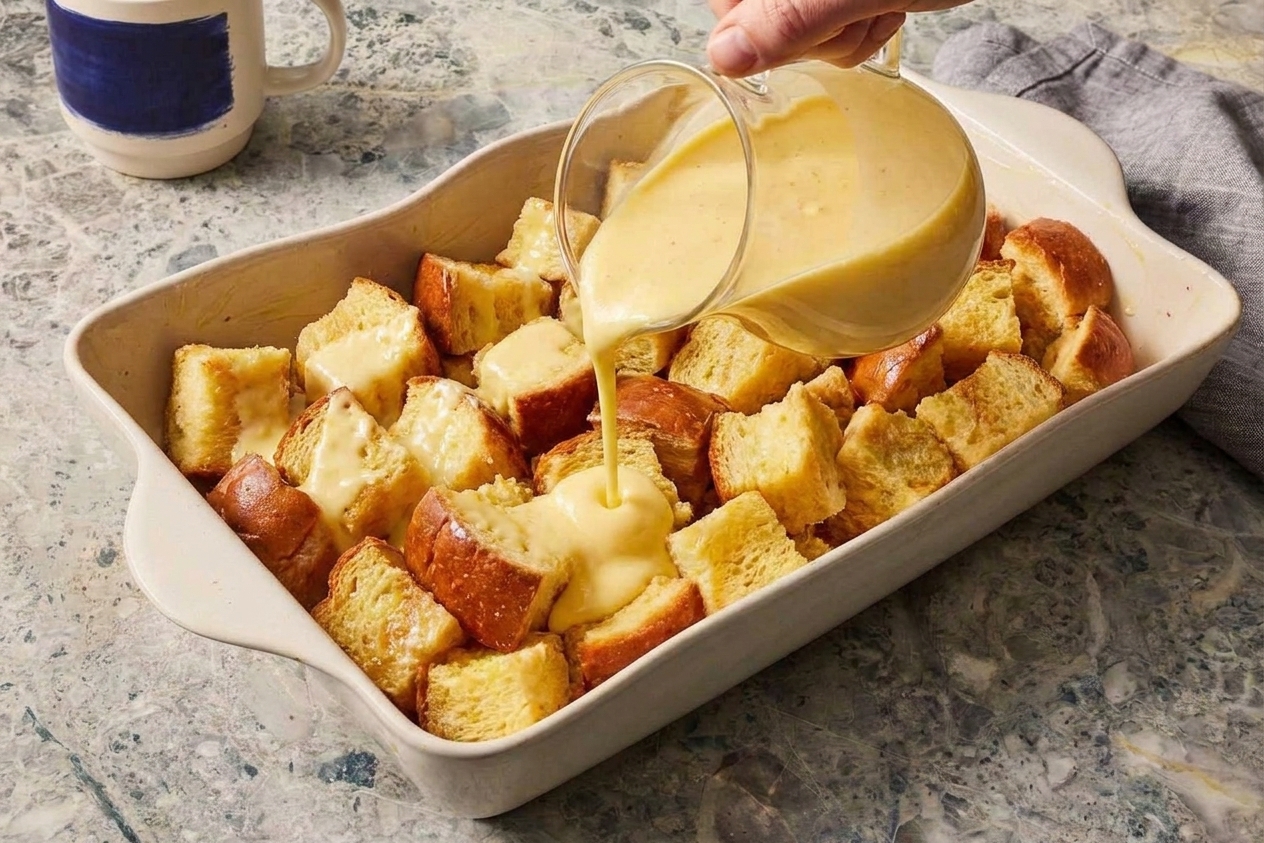
- Make the custard: In a large bowl, whisk eggs, milk, cream, brown sugar, granulated sugar, vanilla, cinnamon, nutmeg (if using), and salt until smooth.
- Soak: Pour custard evenly over the bread. Press gently with a spatula so the top layer starts soaking, especially around the corners.
- Chill: Cover and refrigerate for at least 30 minutes, or overnight for the best texture.
- Bake: Heat oven to 350°F. If the dish is very cold (especially glass or ceramic), let it sit on the counter while the oven preheats, about 20 to 30 minutes. Uncover and bake 40 to 55 minutes, until puffed, golden, and the center is set. If the top browns too quickly, tent loosely with foil for the last 10 to 15 minutes.
- Rest and serve: Let it sit 10 minutes before slicing. The center should look set with no obvious liquid custard pockets. For extra certainty, aim for about 160°F to 165°F in the center. Serve warm with syrup, fruit, and an extra pinch of salt if you want to taste everything more clearly.
Recipe notes
Fresh bread tip: If you only have fresh bread, cube it and dry it on a sheet pan at 300°F for 10 to 15 minutes, tossing once, until the outside feels a little dry.
Make-ahead: Cover and refrigerate at least 30 minutes, or overnight for the best texture. You can assemble and refrigerate up to 12 hours.
Cold dish caution: If the dish is very cold (especially glass or ceramic), let it sit on the counter while the oven preheats, about 20 to 30 minutes.
Doneness: Bake until puffed, golden, and the center is set with no liquid custard pockets. For extra certainty, aim for about 160°F to 165°F in the center.
Browning control: If the top browns too quickly, tent loosely with foil for the last 10 to 15 minutes.
Pan choice: Metal pans tend to brown faster and crisper at the edges than glass or ceramic, so start checking a few minutes early if you switch materials.
Nutrition (per serving, approximate)
- Calories: ~420
- Fat: ~18 g
- Carbs: ~50 g
- Protein: ~13 g
- Fiber: ~1 g
- Sugar: ~15 g
- Sodium: ~450 mg
Nutrition values are approximate and will vary by bread brand and any optional add-ins or toppings.