Everything you need to know about replacing eggs, butter, and milk in everyday baking. Get the right swap for the job, avoid gummy cakes and dry cookies, and...
Recipeva
Flaky Pie Crust (Butter + Shortening)
Learn how to make a flaky pie crust from scratch with butter and shortening. Step-by-step instructions, chilling times, rolling tips, blind baking, and easy troubleshooting for beginners.

Maya Reynolds
Maya Reynolds is a passionate home cook, recipe developer, and the creative voice behind Recipeva. With over a decade of experience translating complex culinary techniques into approachable weeknight meals, she focuses on creating dishes that bring joy to the dinner table without the stress.
Created September 21, 2026
Updated September 21, 2026
If pie crust has ever made you nervous, come on in. We are going to make a flaky, tender, totally dependable pie crust from scratch using butter for flavor and shortening for easy flake and forgiveness. This is the crust I reach for when I want a stress-free roll-out and a crisp, golden bake, even on a weeknight.
My promise: If you can keep your fat cold and resist the urge to overwork the dough, you can make an incredible crust. Today is butter’s day.
Why butter and shortening work
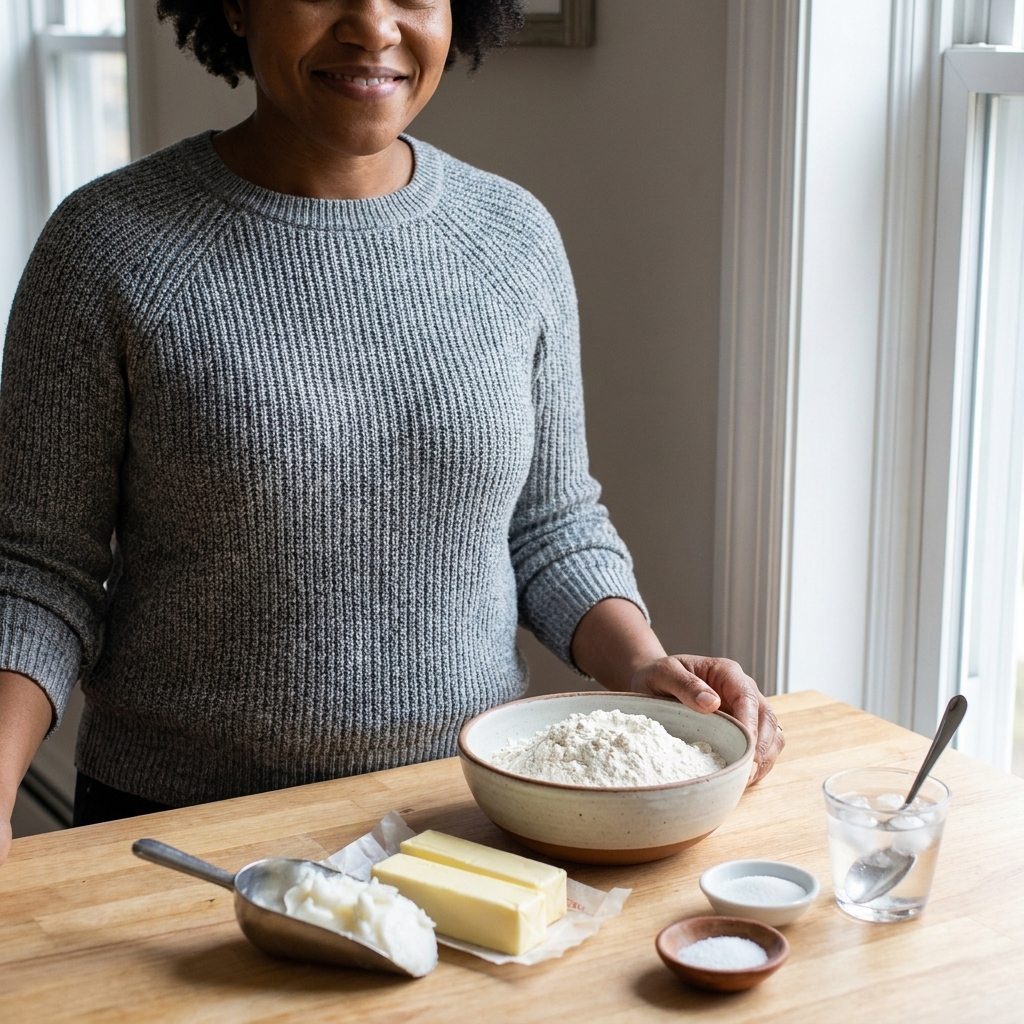
Butter tastes amazing, but it melts quickly. Shortening has a higher melting point, which helps the crust hold its shape and stay flaky, especially if your kitchen runs warm or you are new to rolling dough.
- Butter: flavor and those gorgeous golden browned notes.
- Shortening: tenderness, flake, and easier handling.
- Cold water: brings the dough together without melting the fat.
What you need
Ingredients (for one standard 9-inch double crust, or two single crusts)
This amount is designed for a standard-depth 9-inch pie plate. If you are using an extra-deep dish, you may want to scale up by about 25%.
- 2 1/2 cups (300g) all-purpose flour, plus more for rolling
- 1 teaspoon fine salt
- 1 tablespoon sugar (optional, but lovely for most sweet pies)
- 8 tablespoons (113g) unsalted butter, very cold, cut into 1/2-inch cubes
- 1/2 cup (96g) vegetable shortening, very cold
- 6 to 10 tablespoons ice water (usually 8 is the sweet spot)
- 1 tablespoon apple cider vinegar or lemon juice (optional, for extra forgiveness)
Tools that help
- Large mixing bowl
- Pastry cutter, fork, or clean fingers
- Measuring cups and spoons (or a kitchen scale)
- Plastic wrap
- Rolling pin
- 9-inch pie plate
Non-negotiables: keep everything cold, and stop mixing the moment the dough holds together.
Step-by-step
1) Chill first
Pop your butter cubes and shortening in the freezer for 10 to 15 minutes. If your kitchen is warm, chill your mixing bowl too. Cold fat equals flaky layers.
Maya tip: If your butter is bending, it is too warm. You want it firm and cold.
2) Mix the dry ingredients
In a large bowl, whisk together flour, salt, and sugar (if using) to evenly distribute everything.
3) Cut in the butter and shortening
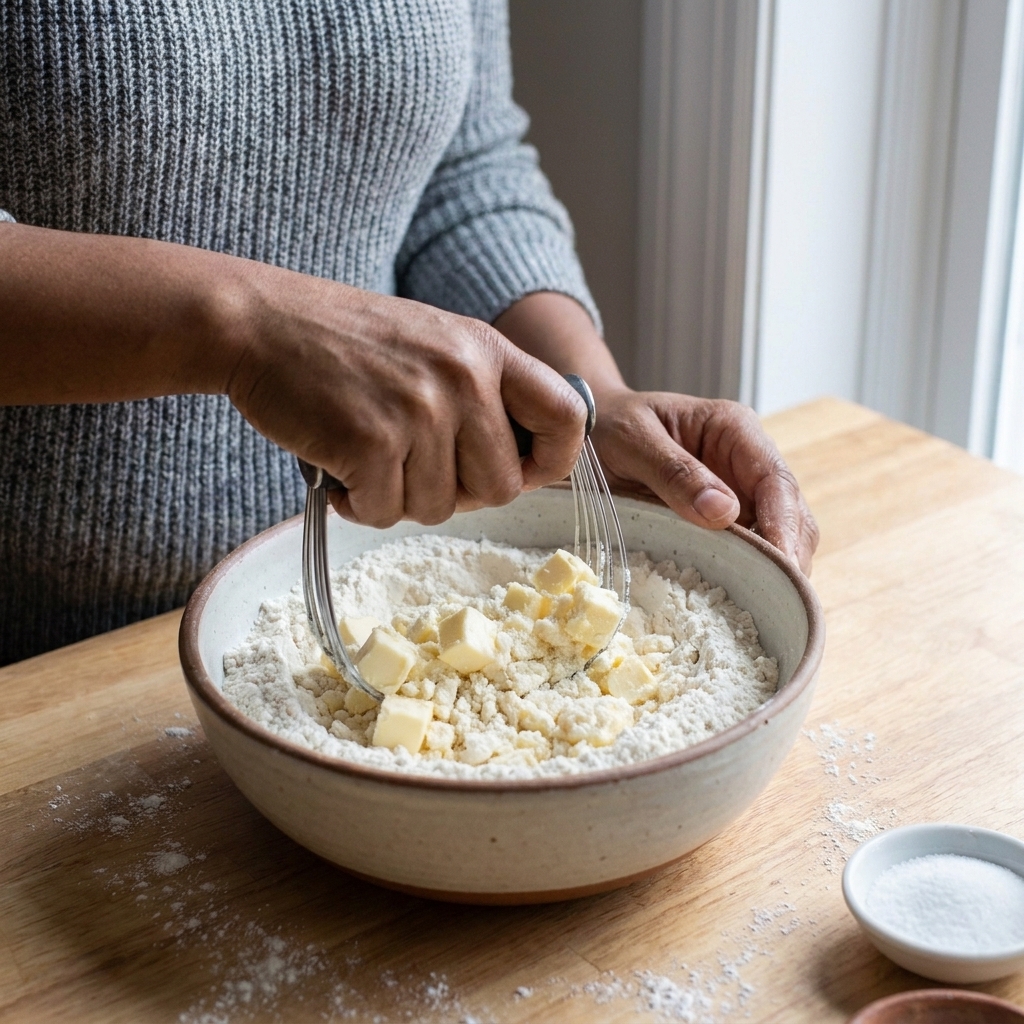
Add cold butter and cold shortening to the flour. Use a pastry cutter (or your fingertips) to work the fats in until you have a mix of:
- some pea-size pieces
- some 1/2-inch pieces (about nickel-size)
- and a bit of sandy flour
Those larger pieces are the future flakes. Do not erase them.
Maya tip: If the bowl starts feeling warm, pause and chill it for 10 minutes. There is no prize for speed.
4) Add ice water gradually
Start by stirring the vinegar (if using) into your ice water. Then drizzle in 6 tablespoons total liquid (that is 5 tablespoons ice water + 1 tablespoon vinegar, or all water if skipping vinegar). Toss gently with a fork. Add more ice water 1 tablespoon at a time until the dough looks shaggy and holds together when you squeeze a handful.
Maya tip: The dough should not look smooth in the bowl. Shaggy is perfect. Smooth usually means overmixed.
5) Form discs (do not knead)
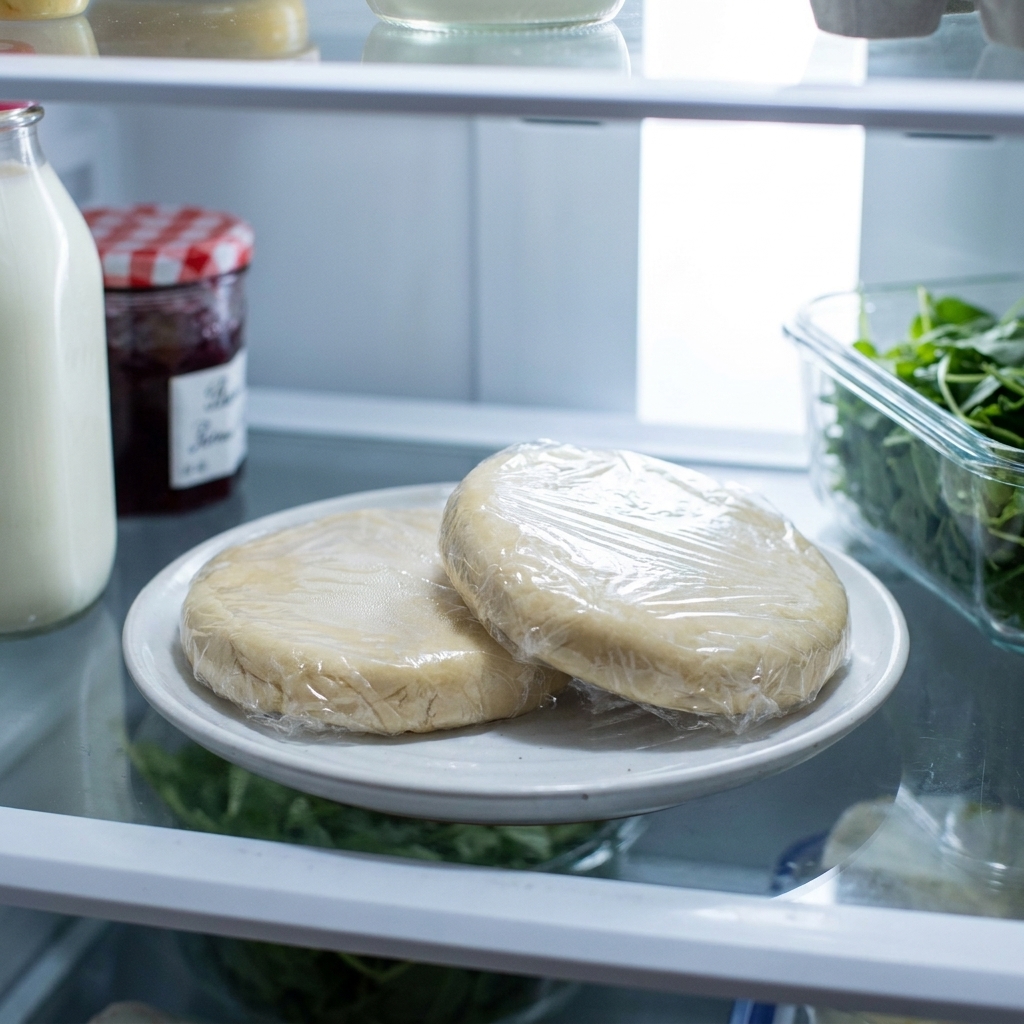
Turn the shaggy dough onto the counter. Divide into two equal portions for a double crust. Press each into a 1-inch-thick disc, wrapping tightly in plastic wrap.
6) Chill the dough
Refrigerate for at least 1 hour. For best texture, 2 hours is even better. This relaxes the gluten and re-chills the fat so rolling is easier.
Rolling tips
Let it sit briefly
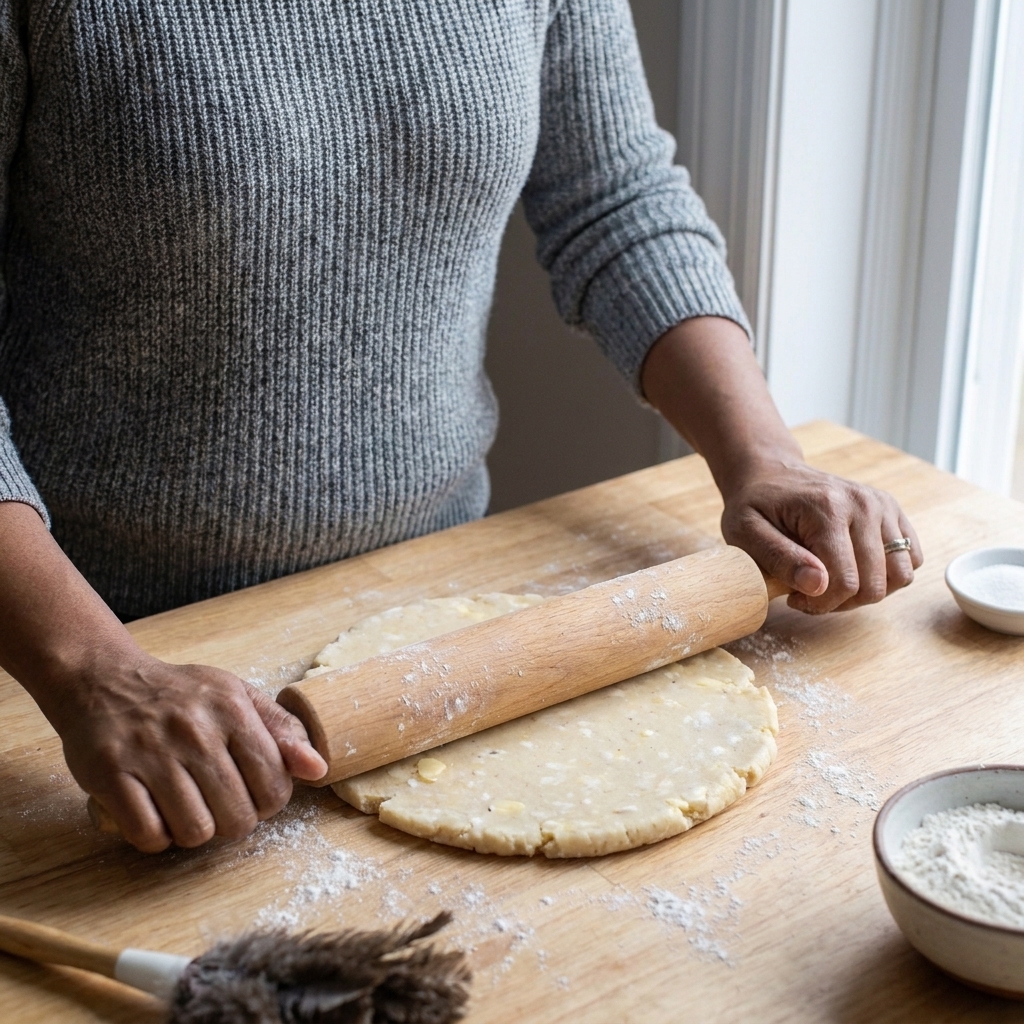
Take one dough disc from the fridge and let it sit 5 to 10 minutes so it is rollable but still cold. If it cracks badly, it is too cold. If it feels sticky or soft, it is too warm.
Flour smart
Lightly flour the counter and rolling pin. Too much flour dries the crust. I keep a small bowl of flour and use a pinch at a time.
Roll from the center out
Roll outward in short passes, rotating the dough a quarter turn every few rolls. Aim for a circle about 12 inches wide for a 9-inch pie plate.
Transfer without tearing
Gently roll the dough around the pin, then unroll over the pie plate. Lift and ease it into the corners without stretching.
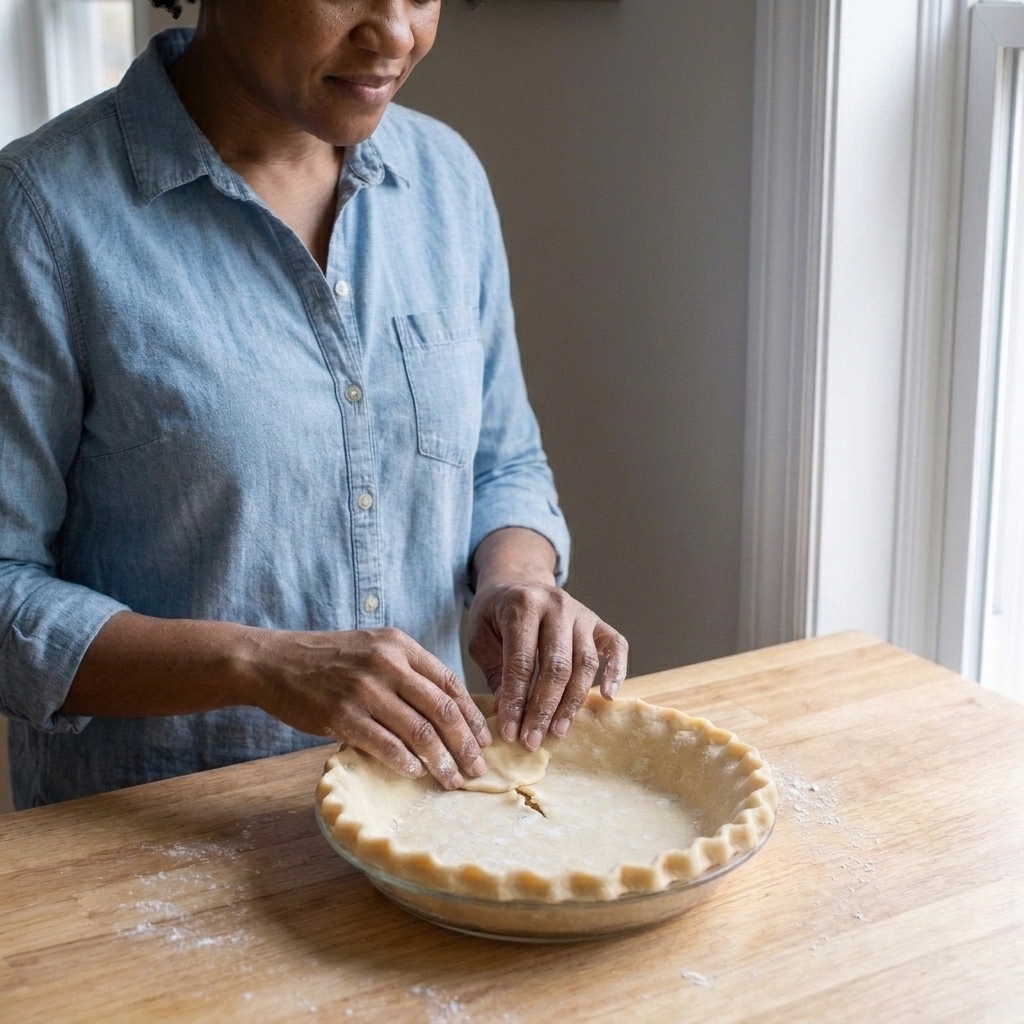
If it tears: patch it. Truly. Pinch a little dough over the tear and move on. Pie is forgiving.
Chilling timelines
- 10 to 15 minutes: chill butter and shortening before mixing
- 1 to 2 hours: chill dough discs before rolling
- 15 to 30 minutes: chill shaped crust in the pie plate before baking (highly recommended)
Make-ahead: Dough discs keep in the fridge for 3 days or freezer for 3 months. Thaw overnight in the fridge.
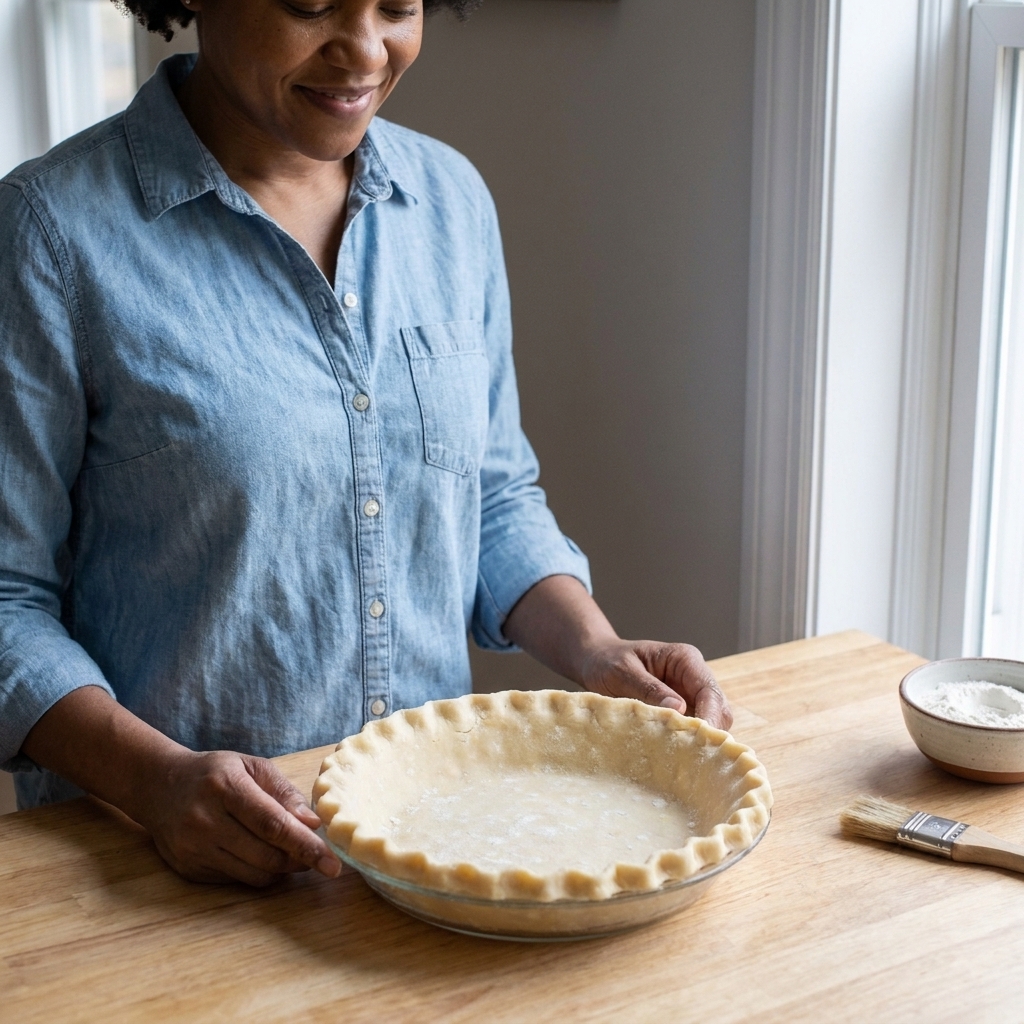
Finish the edges
Once your crust is in the pie plate:
- Trim overhang to about 1 inch.
- Tuck the overhang under itself to create a thicker rim.
- Crimp with fingers or press with a fork.
Blind baking
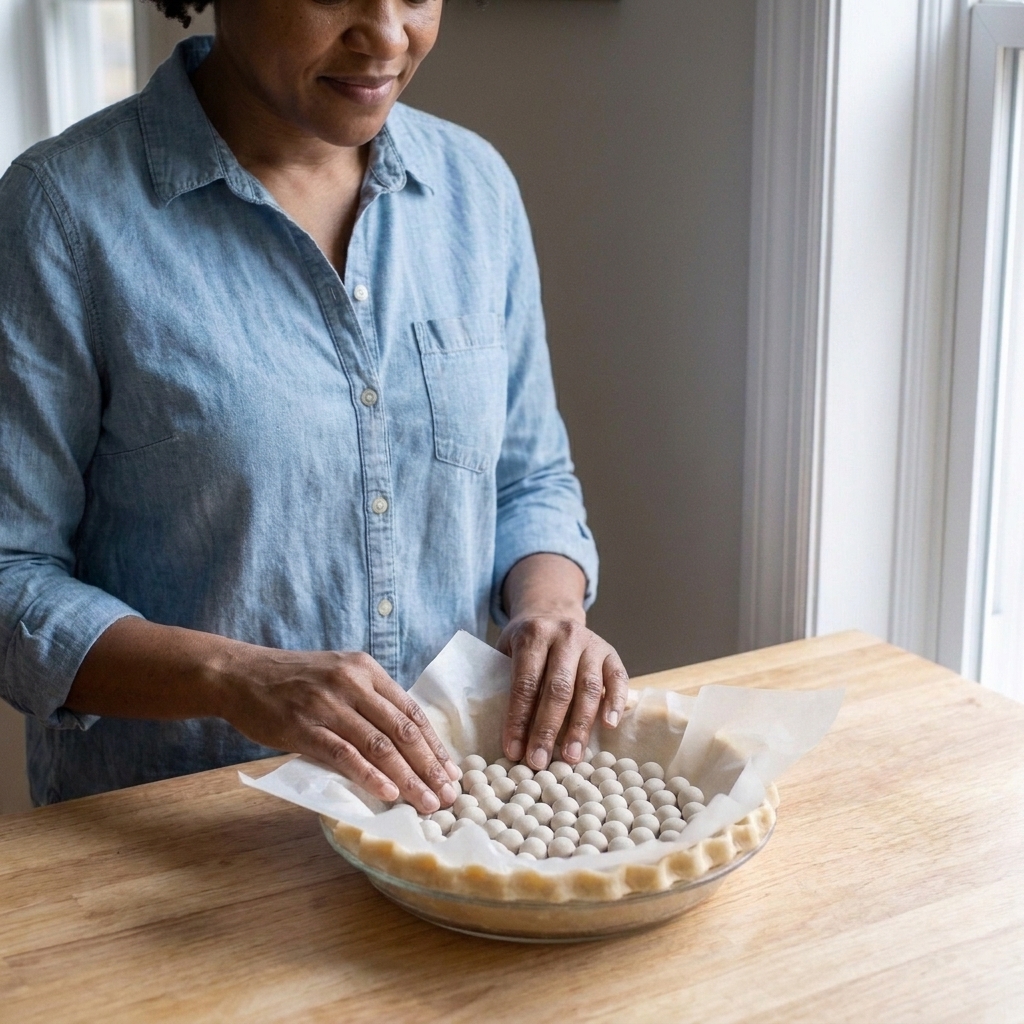
Blind baking means baking the crust before adding filling. You will want this for custard pies, cream pies, and anything with a no-bake filling.
How to blind bake
- Chill the shaped crust for 15 to 30 minutes.
- Preheat oven to 400 to 425°F.
- Line crust with parchment paper (or foil), then fill with pie weights or dried beans.
- Bake 15 to 18 minutes, or until the edges look set and are just starting to take on color.
- Remove weights and parchment. Dock the bottom with a fork.
- Bake 5 to 10 minutes more, until the bottom looks dry and lightly golden.
For a fully baked crust: Continue baking another 5 to 10 minutes, watching closely, until evenly golden.
Baking with filling
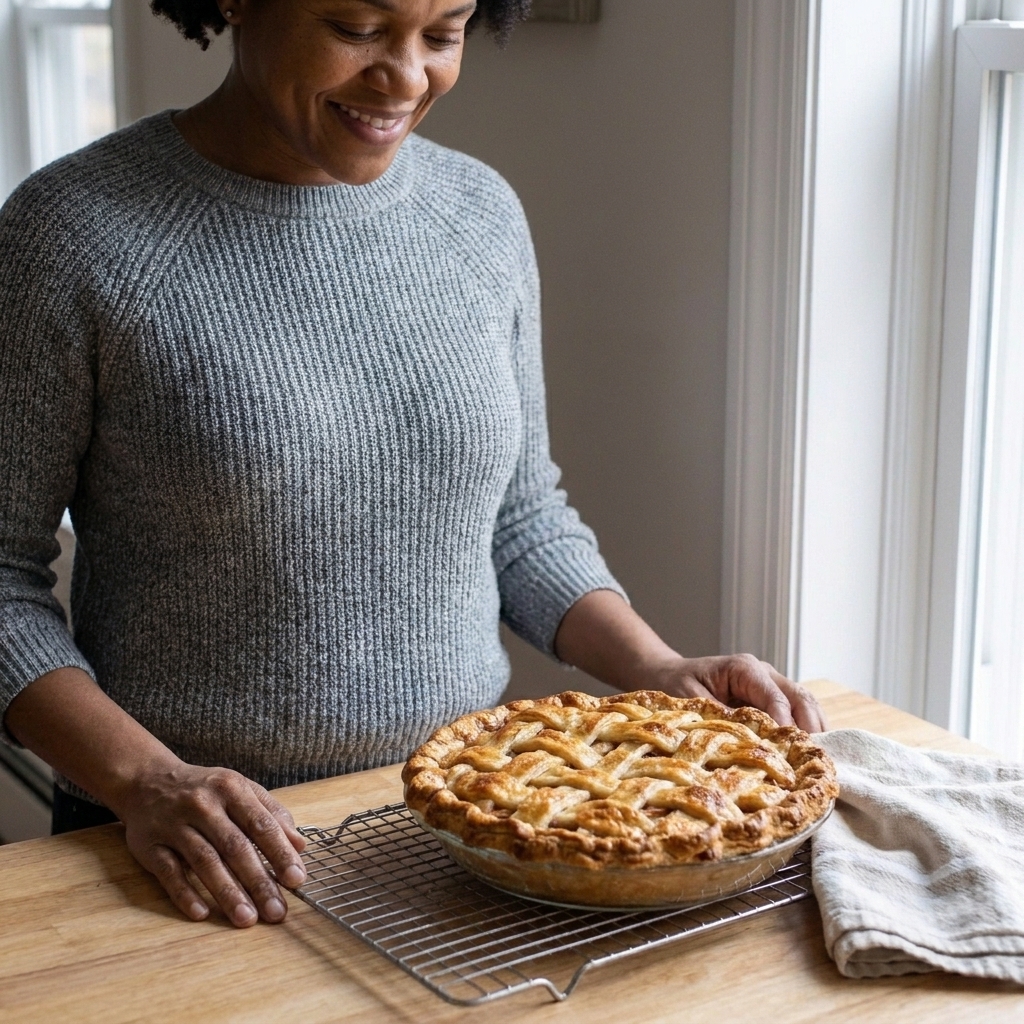
If your pie will bake with filling, follow your pie recipe for temperature and time. These small moves help almost every pie:
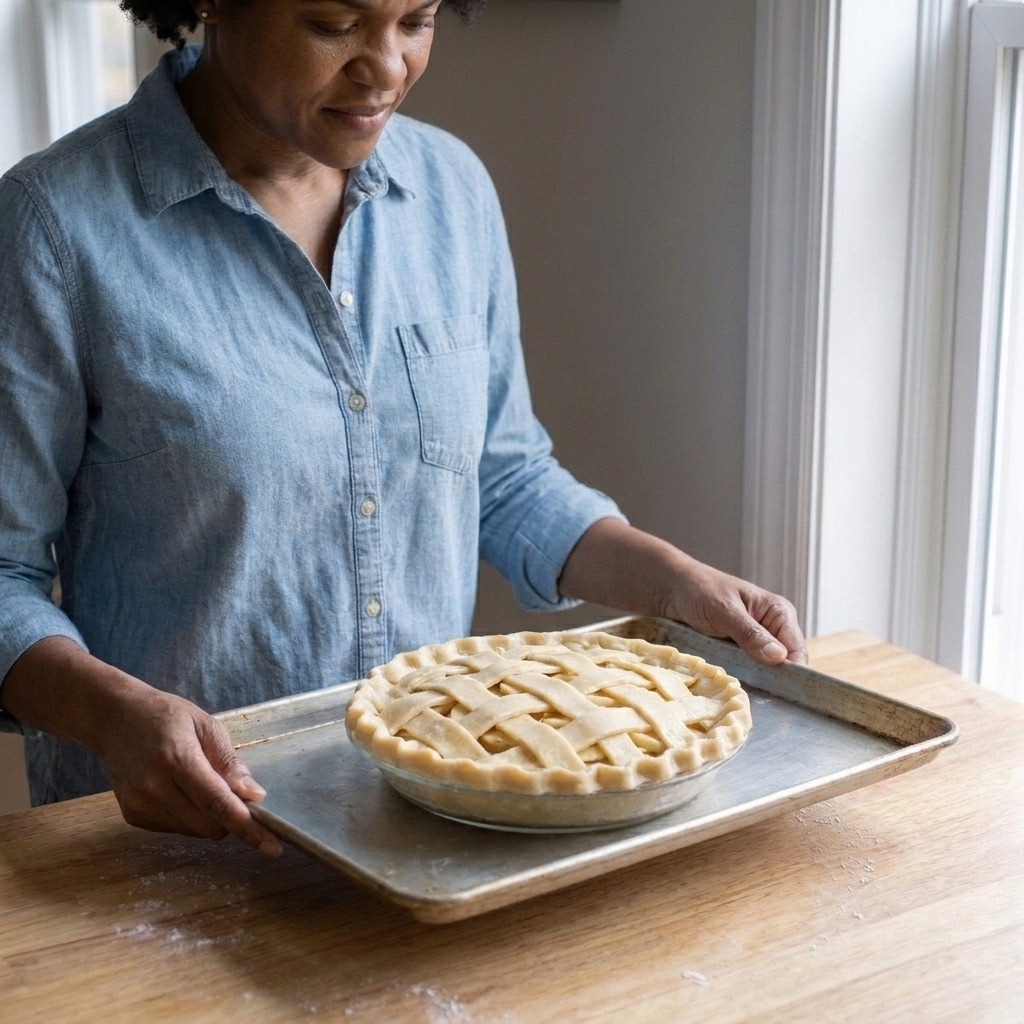
- Use a preheated sheet pan: Set a rimmed baking sheet in the oven while it preheats, then bake the pie on that hot pan for a crispier bottom.
- Consider an egg wash: Brush the top crust with beaten egg (or egg plus a splash of water) for shine and color.
- Shield the rim if needed: If the edges brown too fast, cover them with foil partway through baking.
Troubleshooting
My dough is too crumbly
- Cause: not enough water.
- Fix: sprinkle 1 tablespoon ice water at a time and toss gently. Stop as soon as it holds when squeezed.
My dough is sticky
- Cause: too warm or too much water.
- Fix: chill 20 to 30 minutes, then flour the counter lightly. If it is very wet, sprinkle a little flour while rolling, not while mixing.
It cracks when I roll it
- Cause: dough is too cold or too dry.
- Fix: let it rest 5 to 10 minutes, then roll with gentle pressure. You can also pinch cracks together as you go.
My crust shrank
- Cause: stretched dough, not enough chill time, or overworked gluten.
- Fix: never stretch to fit the pan, chill shaped crust before baking, and mix less next time.
My crust is tough
- Cause: too much water or overmixing.
- Fix: handle less, keep visible butter bits, and add water slowly.
My bottom crust is soggy
- Cause: wet fillings or underbaking.
- Fix: bake on a lower rack, use a preheated sheet pan under the pie, and consider brushing the bottom crust with egg white before filling for extra insurance.
Beginner tips
- Use cold fat, not just cool fat. If your butter is bending, it is too warm.
- Leave some bigger pieces. Flakes come from chunks.
- Think “toss,” not “stir.” Gentle mixing keeps it tender.
- Chill between steps. When in doubt, chill.
- Patch with confidence. A patched crust still bakes beautifully.
FAQ
Can I make this crust without a food processor?
Absolutely. I actually love the control of a pastry cutter or your fingertips. Just work quickly so the fats stay cold.
Can I use all butter instead?
You can, and it will be delicious. It will also be a bit fussier to roll and more sensitive to warmth. If you are new to pie, this butter and shortening combo is my go-to for confidence.
How do I know I added enough water?
Squeeze a handful of dough. If it holds together and the bowl looks mostly dry with some shaggy bits, you are there. If it crumbles apart, add 1 more tablespoon ice water.
What is the best way to store pie dough?
Wrap each disc tightly. Refrigerate up to 3 days. Freeze up to 3 months. Thaw overnight in the fridge before rolling.
Why add vinegar?
A little acid can slightly inhibit gluten formation, which can make the dough more tender and a bit more forgiving to handle. You will not taste it.
One last pep talk
Pie crust is not a test of worthiness. It is a skill, and skills get easier with repetition. Your first crust does not need to be perfect to be delicious. Keep it cold, keep it gentle, and you are going to pull a flaky, golden crust out of the oven that makes you feel like you have been doing this forever.