

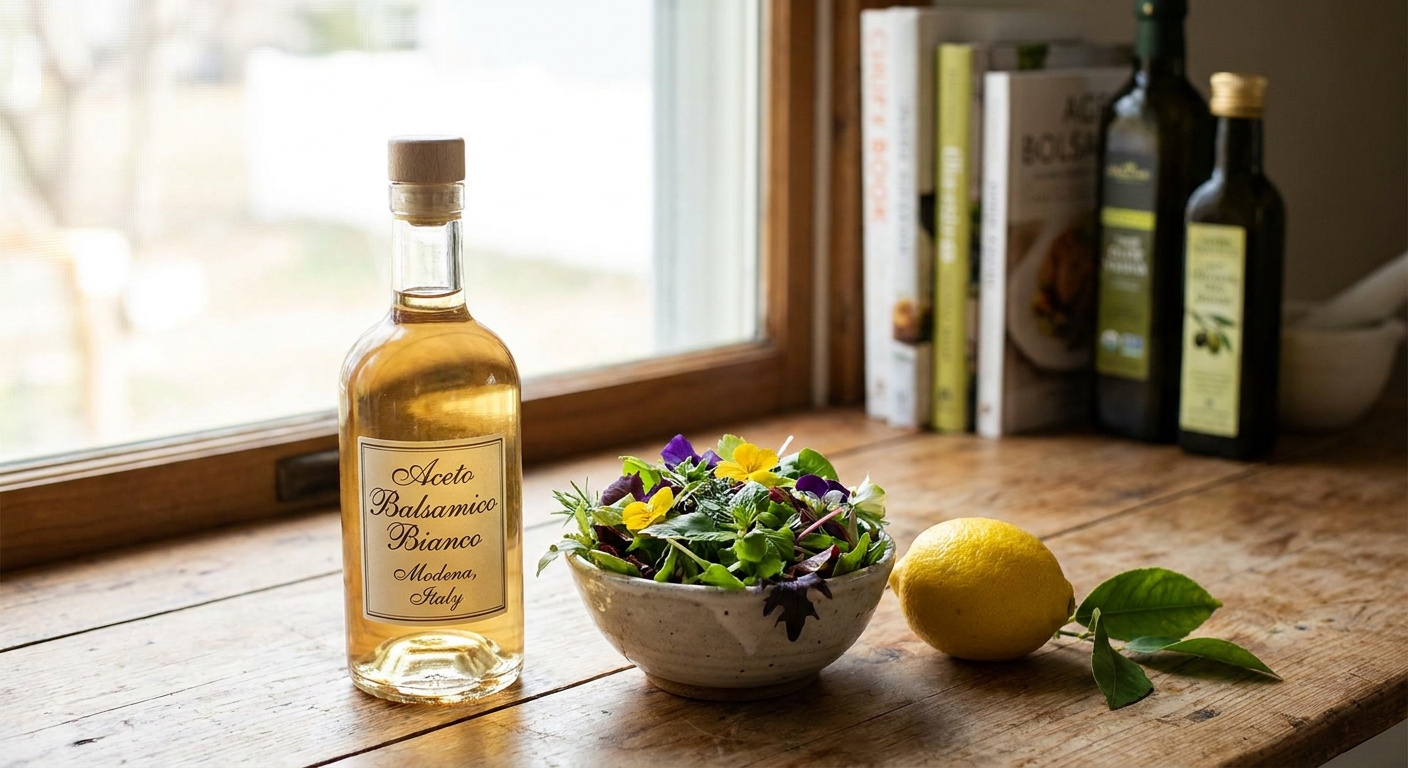
If you have ever poured a gorgeous vinaigrette over a bright green salad and watched it turn a little… muddy, you are not alone. I love dark balsamic for its rich sweetness, but I also keep white balsamic on hand for the nights I want a dressing that tastes lively and keeps my greens looking fresh. The good news is you do not need two complicated recipes. You just need to know what each vinegar brings to the bowl, and how to adjust your oil ratio so your vinaigrette tastes balanced, not syrupy.

The quick difference
Dark balsamic is typically deeper, sweeter, and more concentrated in flavor. It makes a bold vinaigrette that clings well and plays nicely with hearty ingredients.
White balsamic is lighter in color and usually a bit brighter and cleaner tasting. It is my pick when I want the salad to stay crisp-looking and the flavors to feel lifted.
One important note: both “white balsamic” and “dark balsamic” vary a lot by brand, and “white balsamic” is not a protected term. Some bottles are tangy, some are very sweet, and some are thick. The ratios below are starting points you can tweak no matter what you brought home.
Color and green salads
Color is the most obvious difference, and yes, it matters for certain salads.
- Dark balsamic can tint delicate greens (like butter lettuce, spring mix, and baby spinach) brownish-purple. It is not wrong, it is just a look. If you are serving guests or taking salad to a potluck, that color change can read as “wilted” even when it tastes great.
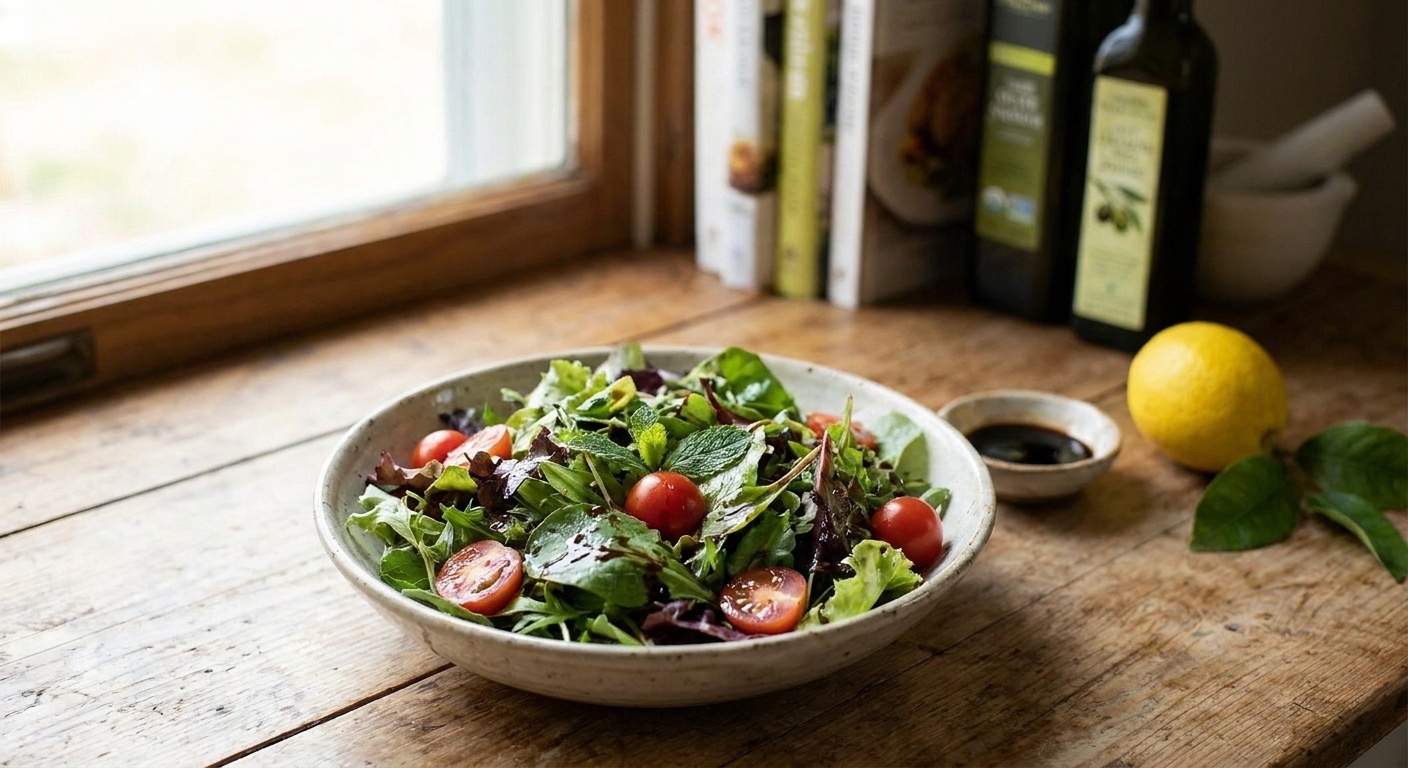
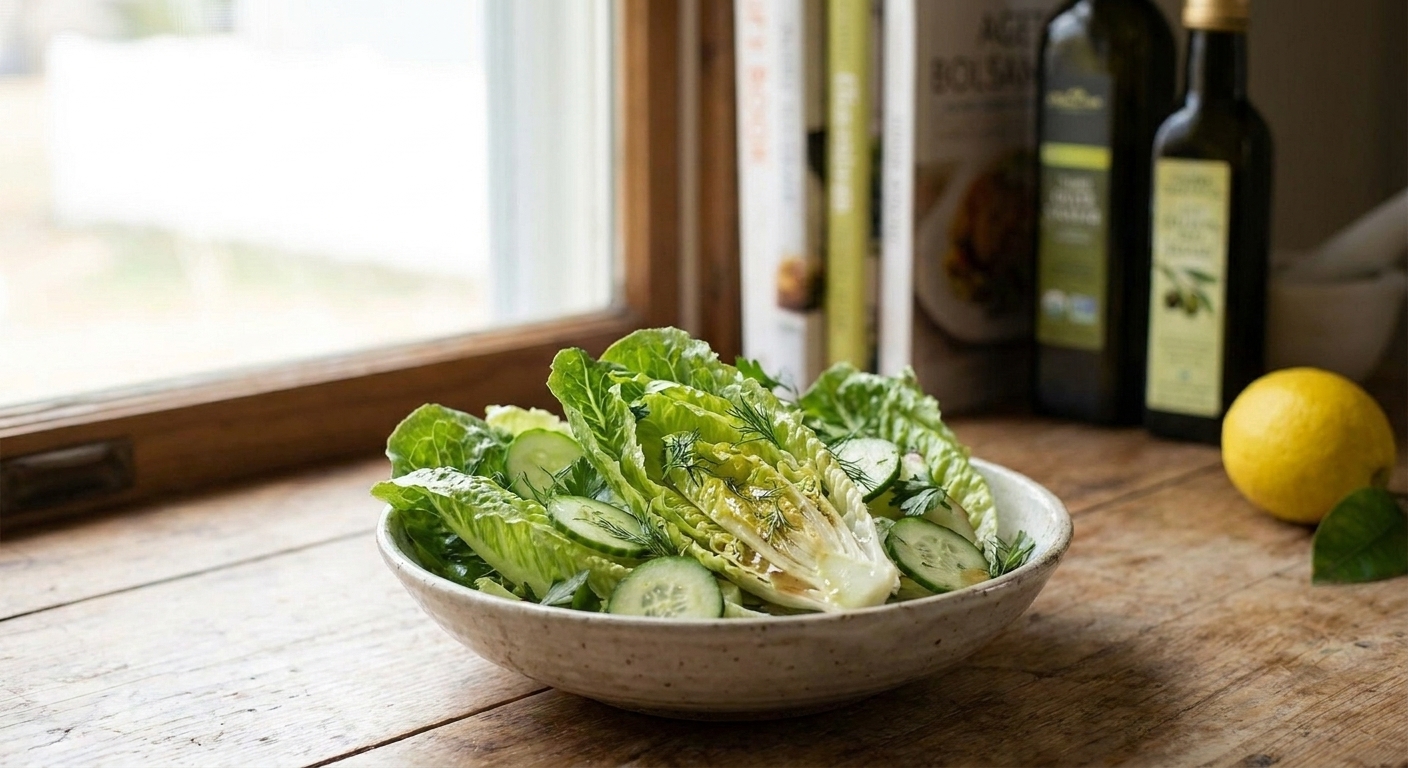
- White balsamic is the “no visible footprint” option. It lightly glosses greens and keeps everything looking bright, especially when you have pale ingredients like shaved fennel, pears, cucumber, or mozzarella.
Sweetness in dressing
In vinaigrette, balsamic sweetness can be a gift or a problem depending on your salad mix.
Dark balsamic usually reads sweeter. That sweetness can come from concentrated grape must, longer aging, or (in cheaper bottles) added sweeteners that push it into a more syrupy direction. It pairs beautifully with:
- peppery greens like arugula
- bitter greens like radicchio
- salty cheeses like feta, parmesan, or blue cheese
- roasted vegetables (beets, squash, Brussels sprouts)
- fruit (strawberries, figs, pears)
White balsamic tends to feel lighter and less caramel-like. I love it with:
- tender greens like butter lettuce and romaine
- cucumber, celery, snap peas
- herbs (basil, dill, chives)
- chicken or shrimp salads where you want clean flavors
- summer salads with peaches, melon, or berries when you do not want a dark tint
If your balsamic tastes very sweet straight from the bottle, treat it like a sweetener. That means using a little less of it, or adding a touch more salt and mustard to bring it back into balance.
Acidity and bite
Both are acidic, but the experience is different.
- Dark balsamic often feels softer because sweetness and concentration round off the sting. It can taste plush and mellow in a vinaigrette, even when it is still plenty acidic.
- White balsamic usually feels brighter and more direct. That makes it fantastic for salads that need a pop, especially if your ingredients are mild (think cucumber, avocado, mozzarella, or shredded chicken).
My simple test: dip the tip of a lettuce leaf in your mixed vinaigrette and taste. If it makes you blink, add a drizzle more oil or a pinch more salt. If it tastes flat or too sweet, add a few drops of vinegar or a squeeze of lemon.
Oil ratios that stay balanced
A classic vinaigrette starts around 3 parts oil to 1 part vinegar, but balsamic is not classic vinegar. It is sweeter and often thicker, so the dressing can swing into sticky if the vinegar is very concentrated or the oil is too low.
Starting ratio for dark balsamic
Because dark balsamic tends to be sweeter and more intense, I usually start with:
- 4 parts oil to 1 part dark balsamic for a balanced everyday vinaigrette
- 5 parts oil to 1 part dark balsamic if your balsamic is thick and noticeably sweet
Example for a single salad: 4 tablespoons olive oil + 1 tablespoon dark balsamic, plus salt, pepper, and a small dab of Dijon.
Starting ratio for white balsamic
White balsamic is usually lighter and less syrupy, so you can often use a more traditional ratio:
- 3 parts oil to 1 part white balsamic for a bright, clean vinaigrette
- 3 1/2 parts oil to 1 part white balsamic if you want it a little rounder and less tangy
Example for a single salad: 3 tablespoons olive oil + 1 tablespoon white balsamic, plus salt and pepper.
Two fast fixes for too sweet
If your vinaigrette tastes syrupy (this happens most often with dark balsamic), you do not need to throw it out. Try one of these:
- Dijon mustard: 1/2 teaspoon at a time. It adds bite and helps emulsify.
- Fine salt: a pinch at a time. Sweetness drops back when the seasoning is right.
Which bottle for which salad?
If you are standing in the vinegar aisle and you just want someone to tell you what to buy, here is how I decide at home.
Choose white balsamic for
- Green salads you want to stay bright: spring mix, butter lettuce, romaine, spinach
- Delicate add-ins: cucumber, shaved fennel, celery, fresh herbs
- Light proteins: chicken, turkey, shrimp
- Fresh summer salads: peaches, berries, melon, mozzarella
Choose dark balsamic for
- Hearty greens: arugula, kale, radicchio
- Roasted vegetables: beets, sweet potatoes, squash, Brussels sprouts
- Big flavors: goat cheese, blue cheese, parmesan, toasted nuts
- Fruit + savory combos: pears and walnuts, strawberries and feta
Base formulas I use
When I am making dinner salads on a weeknight, I use these reliable formulas and adjust to taste.
Dark balsamic base
- 4 tablespoons olive oil
- 1 tablespoon dark balsamic
- 1/2 teaspoon Dijon mustard
- 1 small grated garlic clove (optional, but you know my stance on garlic)
- Pinch of fine salt and lots of black pepper
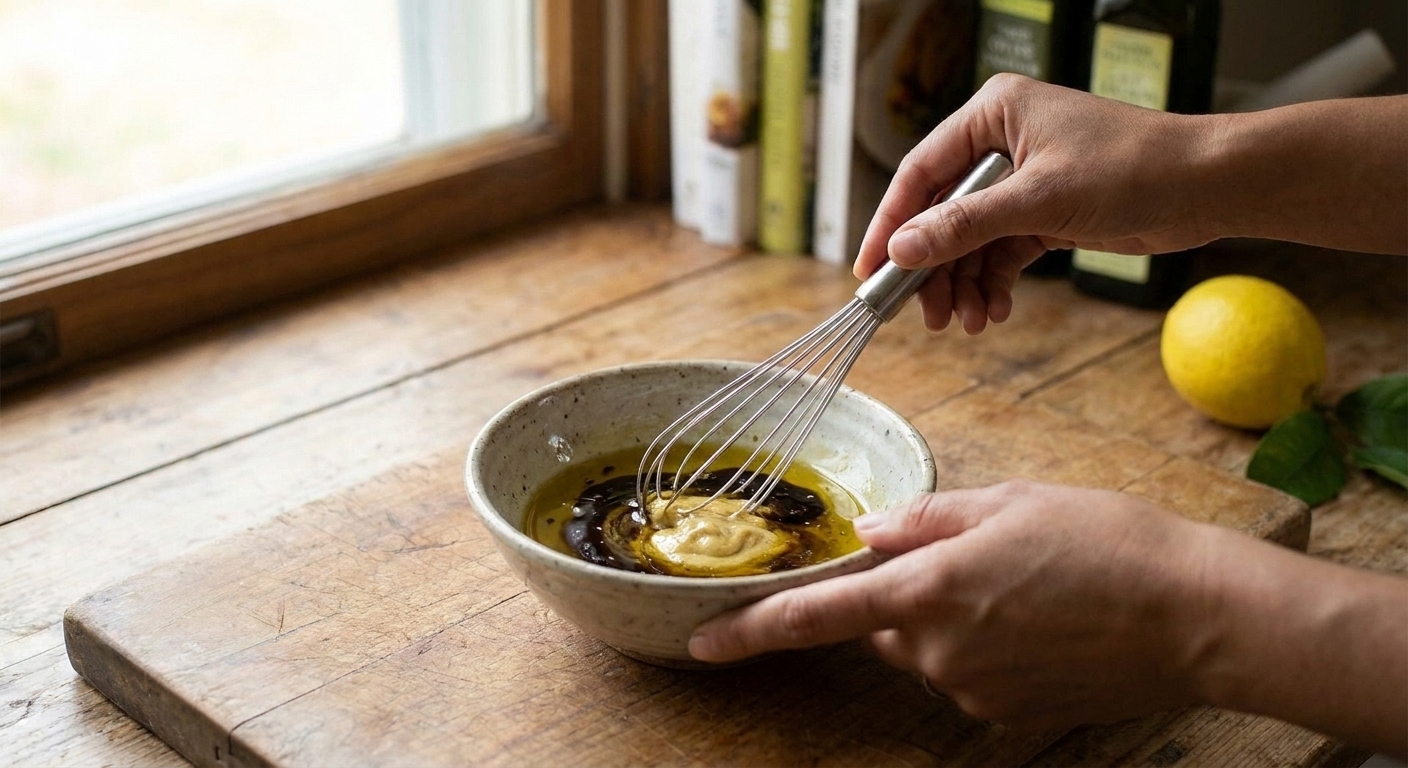
Whisk until glossy. Taste on a leaf. If it feels heavy or sweet, whisk in another tablespoon of oil or a pinch more salt.
White balsamic base
- 3 tablespoons olive oil
- 1 tablespoon white balsamic
- Pinch of fine salt and black pepper
- Optional: a squeeze of lemon, or a teaspoon of honey if your bottle is very sharp
Whisk and taste. White balsamic vinaigrette should feel zippy, not harsh.
No-measuring version
If you do not feel like grabbing a spoon, do this: pour oil while you count to four, then pour vinegar while you count to one. Add a pinch of fine salt and a small squeeze of Dijon. Shake it in a jar, then taste and adjust.
Label tips that actually help
If you want a quick clue about what is in the bottle, the label can give you a hint about how sweet and thick it might be.
- Balsamic Vinegar of Modena (IGP): common and usually reliable for everyday dressing. It can range from sharp to sweet depending on the producer.
- Condimento: often a balsamic-style vinegar that may be aged or blended, with a wide range of sweetness and thickness. Taste and adjust your ratio.
- Very cheap balsamic: more likely to taste thin and sharply acidic, or oddly sweet. If it tastes intense in a harsh way, bump up the oil, salt, and Dijon.
Mixing and storage
I usually whisk in a bowl, but a jar works even better. Add vinegar, salt, pepper, and Dijon first, then oil, then shake hard. Vinaigrette will separate as it sits, especially without mustard. Just shake or whisk again before using. If you are meal prepping, store dressing separately when you can and dress right before eating.
FAQ
Can I swap white balsamic for dark balsamic?
Yes, but expect the flavor to shift. If a recipe was written for dark balsamic, it may taste a little sharper with white balsamic. Start with a slightly higher oil ratio (or add a tiny touch of honey) and adjust after tasting.
Why did my balsamic vinaigrette turn out thick and sweet?
Usually it is one of three things: your balsamic is naturally very concentrated (or sweetened), you used a low oil ratio, or the dressing is under-seasoned. Add a bit more oil, a pinch of fine salt, and a small spoon of Dijon, then taste again.
Is white balsamic just white wine vinegar?
No. White balsamic is usually made from white grape must and or white wine vinegar, then aged or treated to stay pale. The methods vary a lot by brand, so always taste your bottle and adjust your ratio.
Which one is better for meal prep salads?
For salads you are storing for a day or two, I lean white balsamic for lighter greens and dark balsamic for sturdy greens like kale. Either way, keep dressing separate when possible to prevent sogginess.
What oil works best with each?
Extra-virgin olive oil is great with both. For white balsamic, I also love a lighter olive oil or avocado oil when I want the vinegar to shine. For dark balsamic, a fruitier olive oil stands up nicely to the richer sweetness.