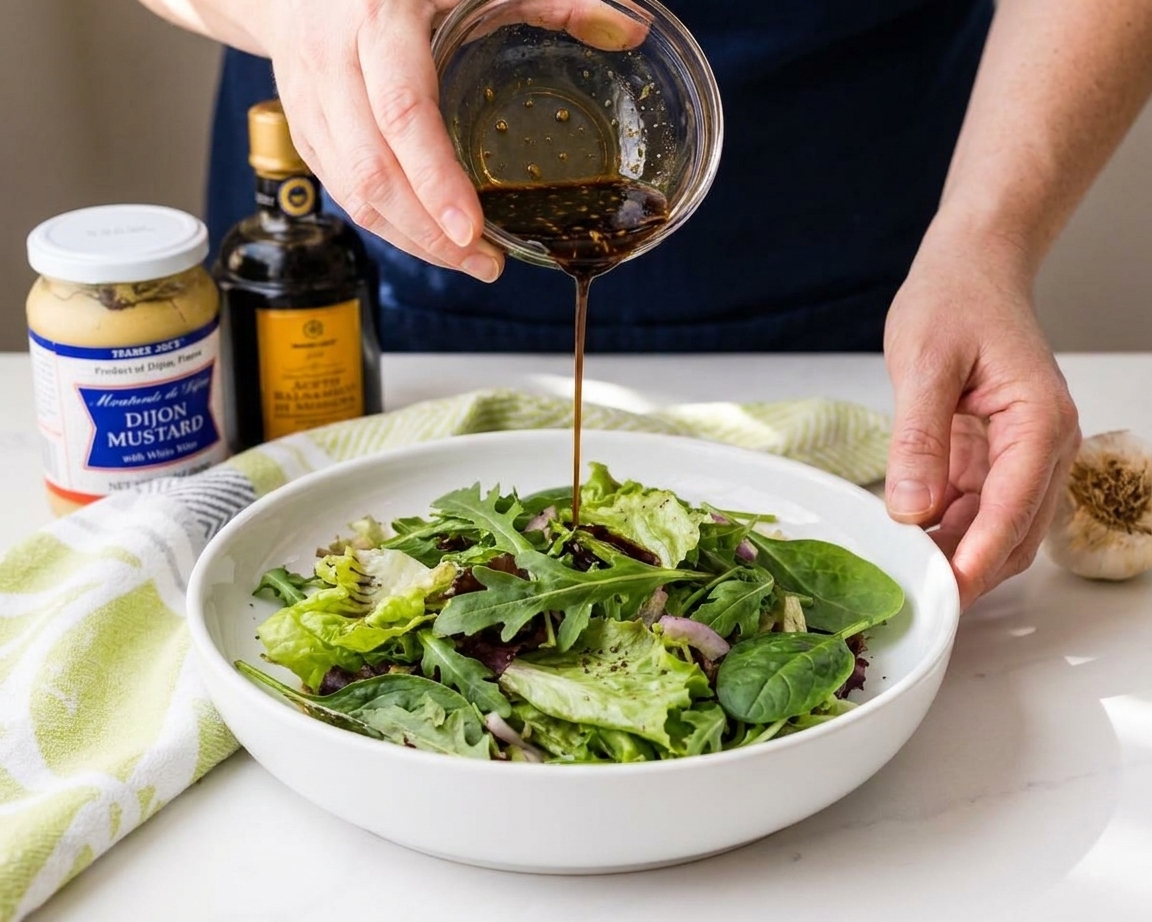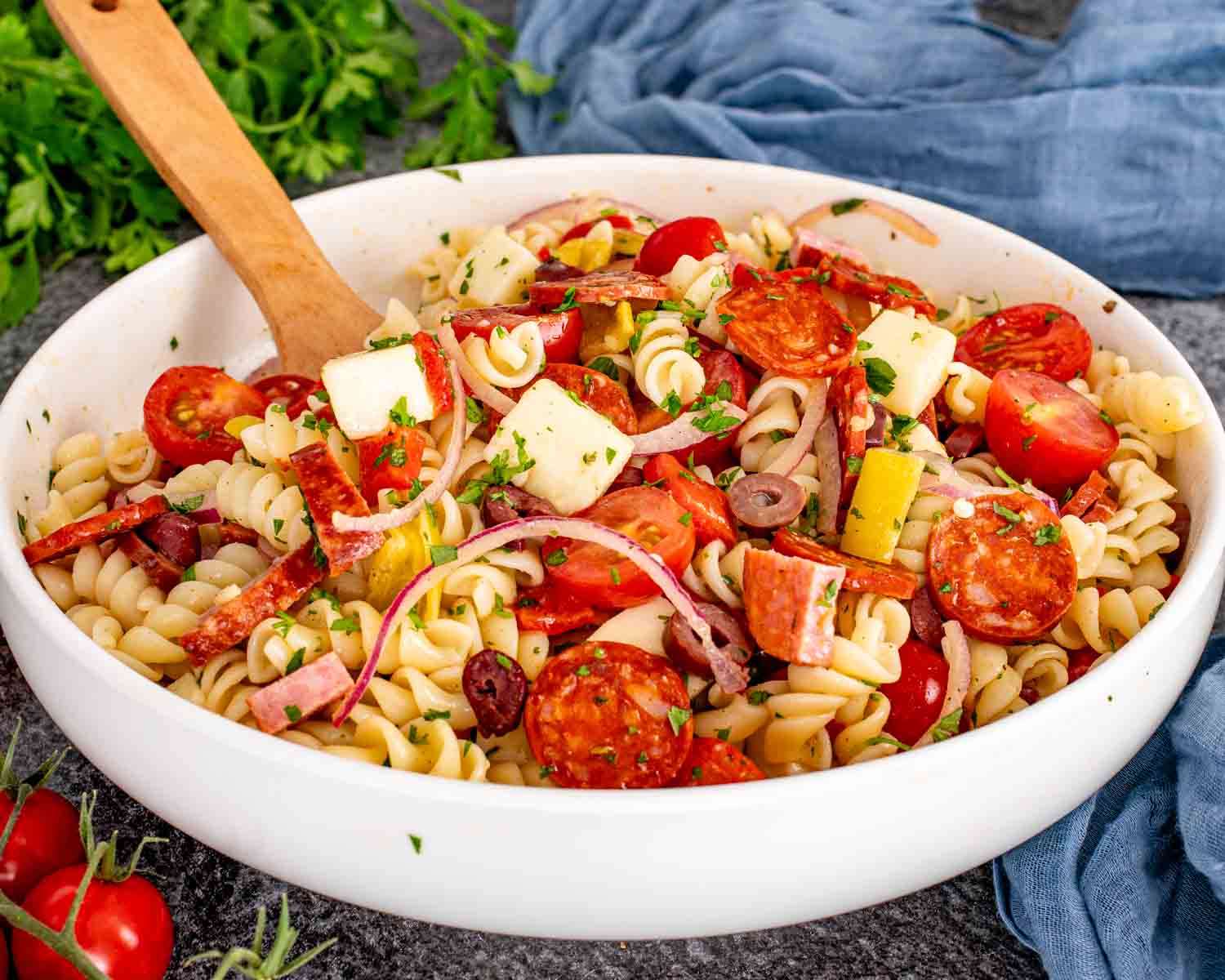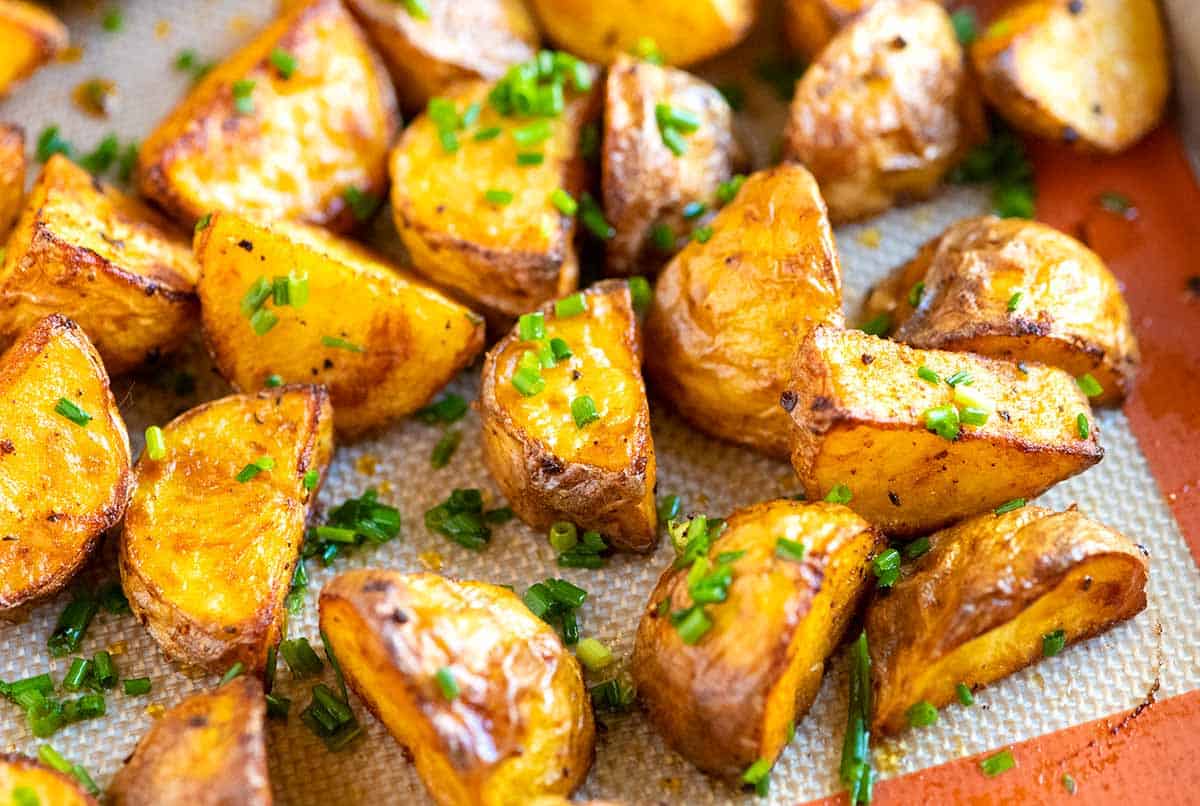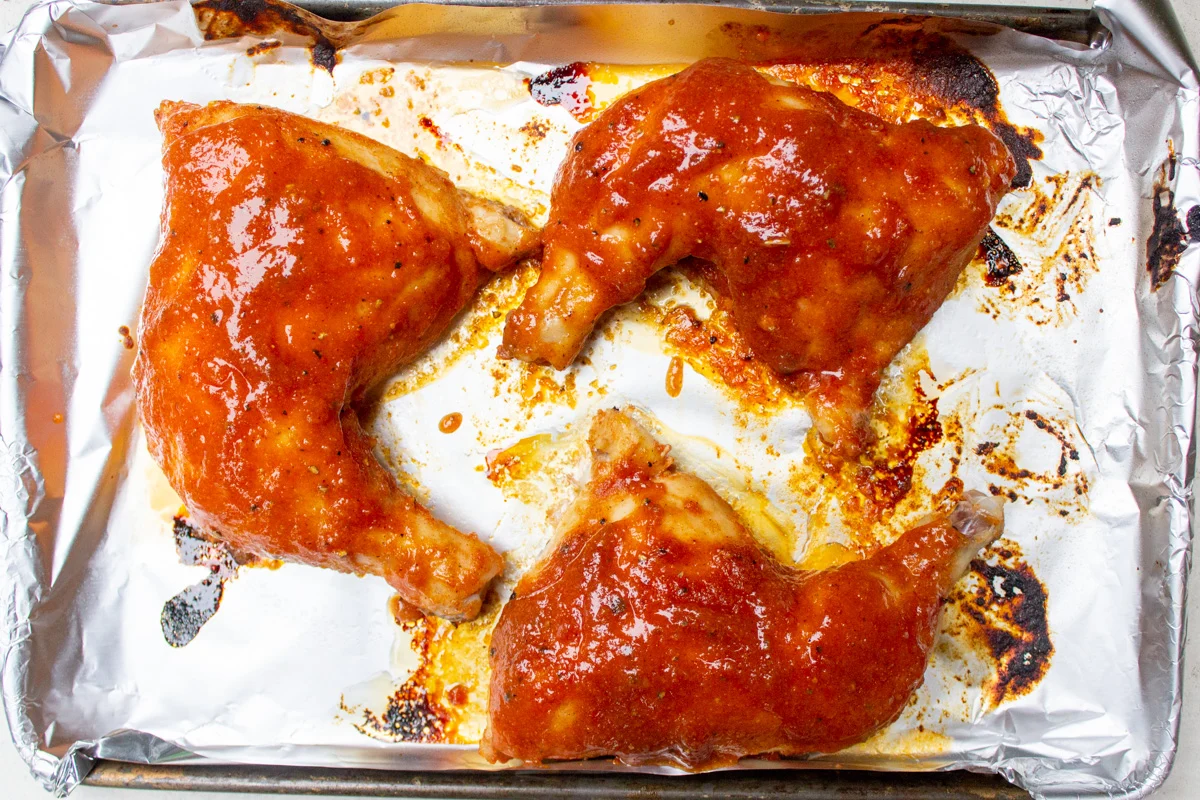
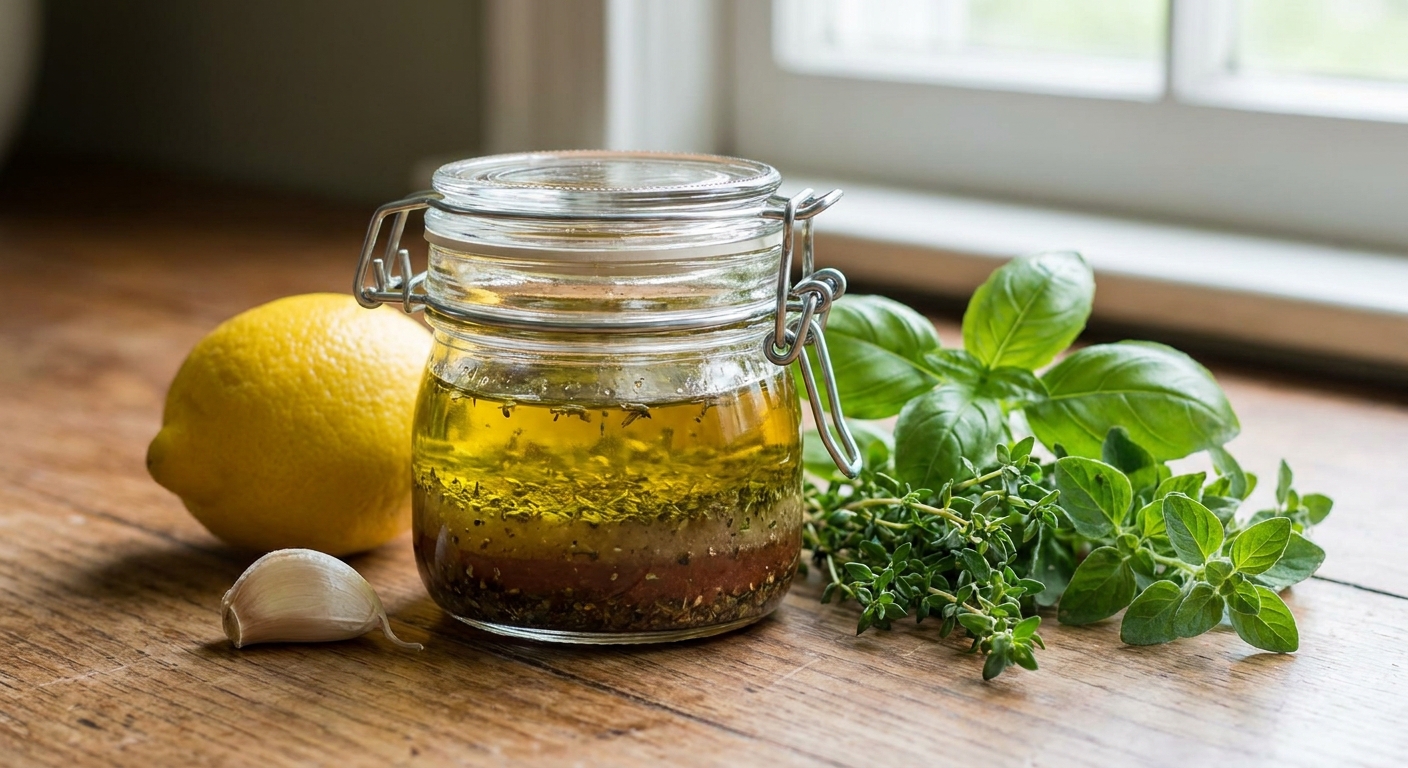
This 5-minute homemade dressing is tangy, lightly sweet, and endlessly customizable. Plus my no-fail ratios, storage tips, and quick variations for any salad.
Recipeva
Luxurious Balsamic Vinaigrette
A rich, glossy balsamic vinaigrette that tastes restaurant-worthy but takes minutes. Learn the best ratios, whisking tricks, and variations for salads, veggies, and more.

Maya Reynolds
Maya Reynolds is a passionate home cook, recipe developer, and the creative voice behind Recipeva. With over a decade of experience translating complex culinary techniques into approachable weeknight meals, she focuses on creating dishes that bring joy to the dinner table without the stress.
Created September 22, 2026
Updated September 22, 2026
There is something quietly magical about a really good balsamic vinaigrette. Not the thin, overly sour kind that slides right off your greens, but the glossy, clingy, perfectly balanced kind you get at a favorite little restaurant and then spend the rest of the week thinking about.
This is my go-to “luxurious” version. It is bold with balsamic, gently sweet, nicely tangy, and yes, unapologetically garlicky. The secret is simple: a great ratio, a touch of Dijon for stability, and whisking like you mean it.
What makes it feel luxurious
Luxury in a vinaigrette is less about fancy ingredients and more about texture and balance. Here is what we are aiming for:
- Silky body: enough oil, properly emulsified, so it coats lettuce instead of pooling at the bottom.
- Balanced sweetness: balsamic has natural sweetness, but a small spoonful of honey or maple rounds everything out.
- Gentle bite: Dijon and garlic give it structure without harshness.
- Seasoned correctly: salt makes the flavors pop and tames sharp vinegar notes.
Recipe: Luxurious Balsamic Vinaigrette
Makes: about 3/4 cup (6 to 8 servings)
Time: 5 to 10 minutes
Ingredients
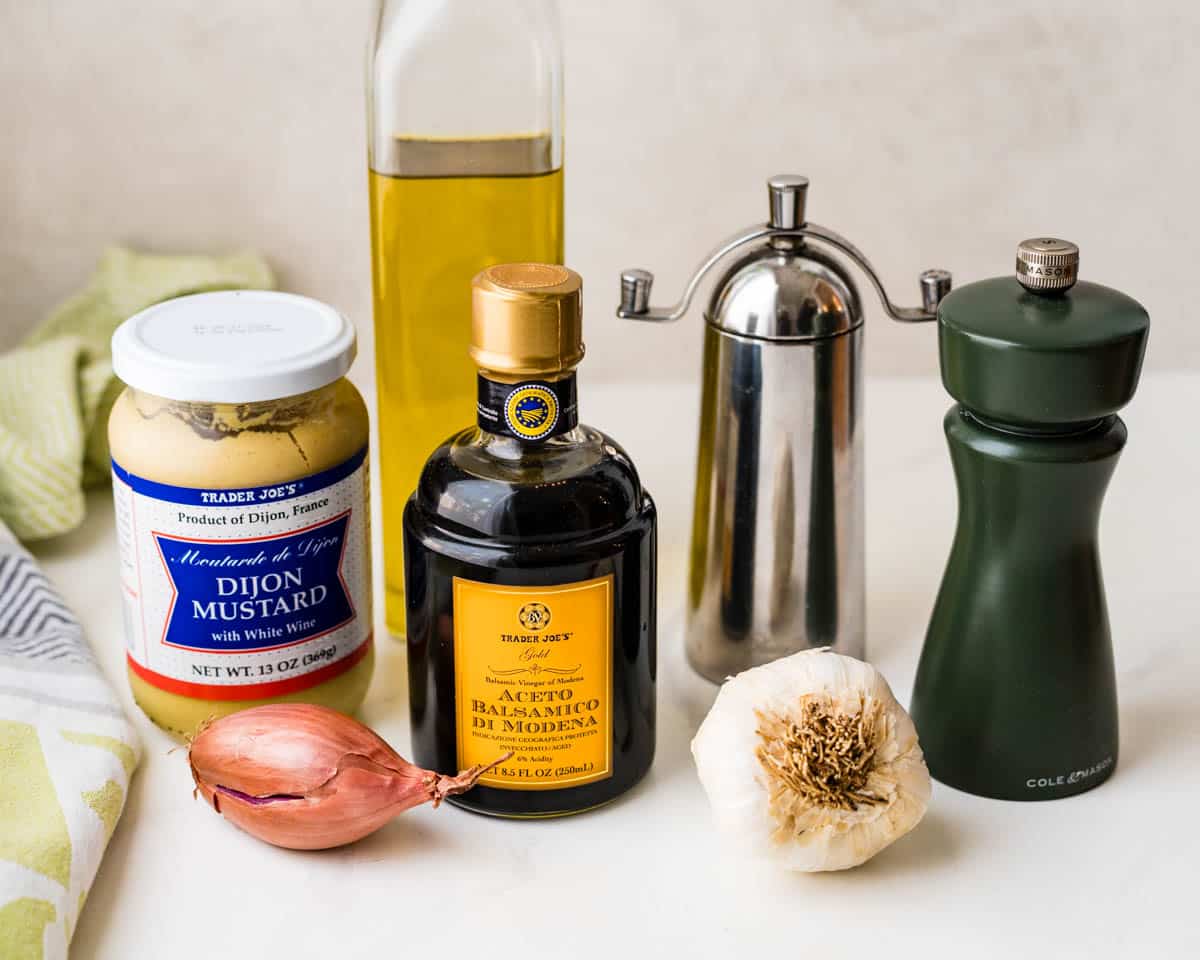
- 1/4 cup balsamic vinegar
- 1 tablespoon Dijon mustard
- 1 to 2 tablespoons honey (start with 1)
- 1 small garlic clove, finely grated or minced (or 2 cloves if you are in my camp)
- 1/2 teaspoon kosher salt, plus more to taste
- 1/4 teaspoon freshly ground black pepper
- 1/2 cup extra-virgin olive oil
- Optional: 1 to 2 teaspoons finely grated Parmesan for extra richness
Instructions
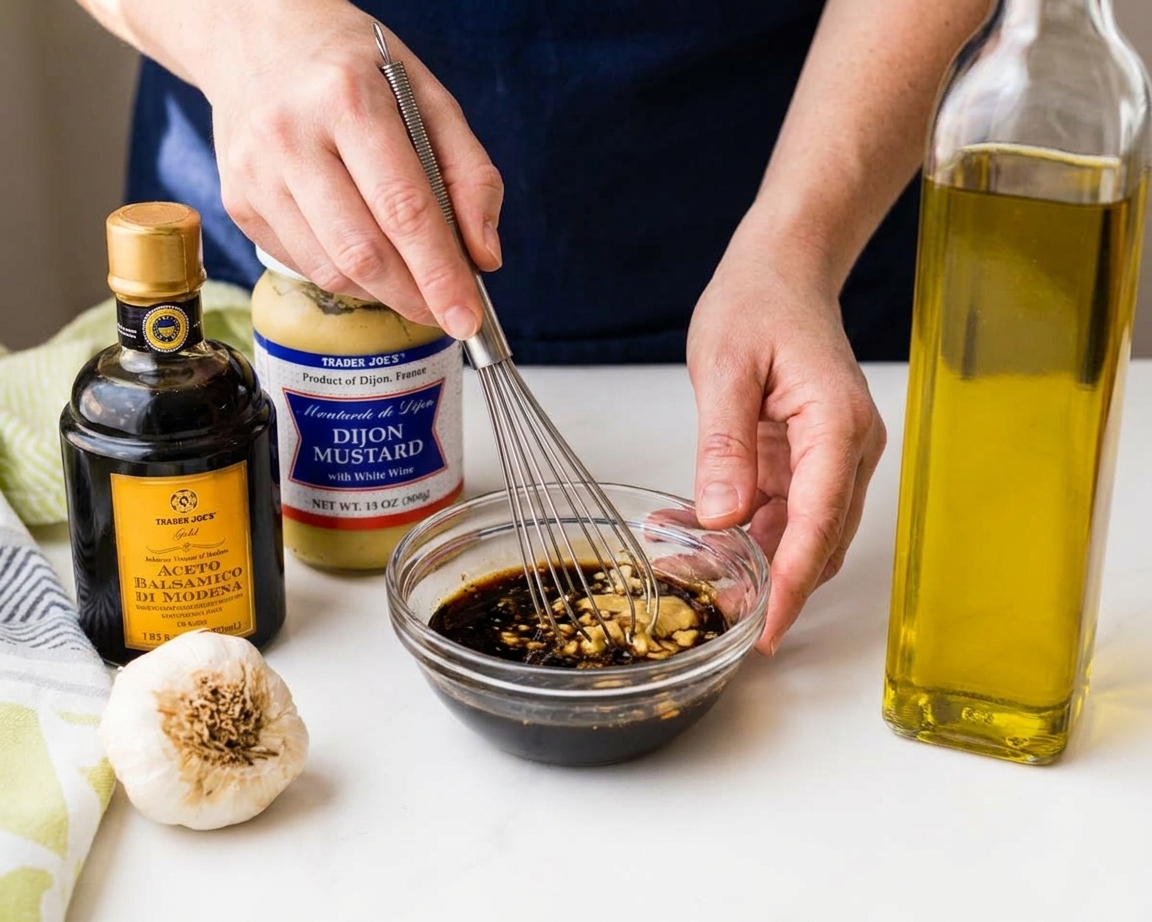
- Build the base. In a medium bowl, whisk together the balsamic vinegar, Dijon, honey, garlic, salt, and pepper until the honey dissolves.
- Emulsify. While whisking constantly, slowly drizzle in the olive oil in a thin stream. Keep whisking until the dressing looks slightly thickened and glossy.
- Taste and adjust. Add more honey for sweetness, a pinch more salt for balance, or a splash more vinegar if you want it brighter.
- Optional luxury move. Whisk in Parmesan for a slightly thicker, savory finish.
Jar method: Combine everything in a jar with a tight lid and shake vigorously for 30 seconds. It works, but whisking usually gives a smoother, more stable emulsion.
My best tips for a vinaigrette that stays emulsified
Use Dijon like your insurance policy
Dijon mustard is an emulsifier, which means it helps oil and vinegar stay together longer. Even 1 tablespoon makes a noticeable difference in texture.
Drizzle the oil slowly
If you dump the oil in all at once, it is harder to create that creamy, cohesive dressing. A thin stream while whisking is the classic technique for a reason.
Grate the garlic
A microplane (or very fine mince) gives you garlic flavor without chunky bits. It also blends more evenly, which makes the whole dressing taste smoother.
Do a 30-second re-shake before serving
Even well-emulsified vinaigrettes can separate after sitting. A quick shake or whisk brings it right back.
Choose the right balsamic and olive oil
Balsamic vinegar
You do not need an expensive bottle, but avoid the watery, super sharp ones if you can. A good everyday balsamic should smell a little sweet and feel slightly syrupy when you swirl it.
If your balsamic is very tart: bump honey to 2 tablespoons and consider adding 1 teaspoon of warm water to soften the edges.
Extra-virgin olive oil
Use one you like the taste of, because you will absolutely taste it. If your olive oil is very peppery or bitter, that can be lovely, but it will read more “bold” than “soft and luxurious.”
Easy variations (same luxurious vibe)
- Shallot balsamic vinaigrette: swap garlic for 1 tablespoon finely minced shallot.
- Lemon-balsamic: replace 1 tablespoon of balsamic with fresh lemon juice for brightness.
- Herby: add 1 to 2 tablespoons chopped basil, parsley, or chives.
- Creamy: whisk in 1 tablespoon mayo or Greek yogurt for a thicker, creamy-style dressing.
- Smoky-sweet: use maple syrup instead of honey and add a pinch of smoked paprika.
What to serve it with
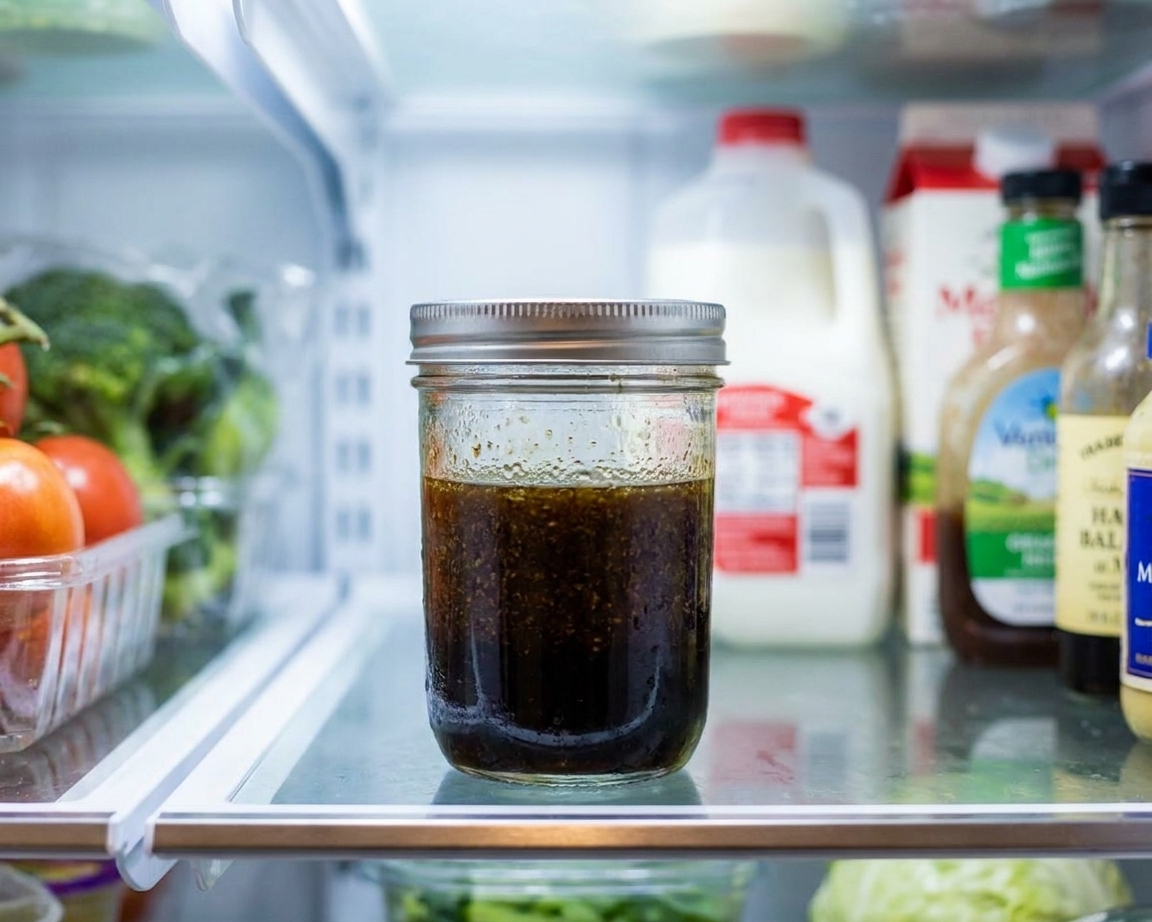
This vinaigrette is a weeknight workhorse. I keep a jar in the fridge and use it as a “make everything taste like dinner is handled” button.
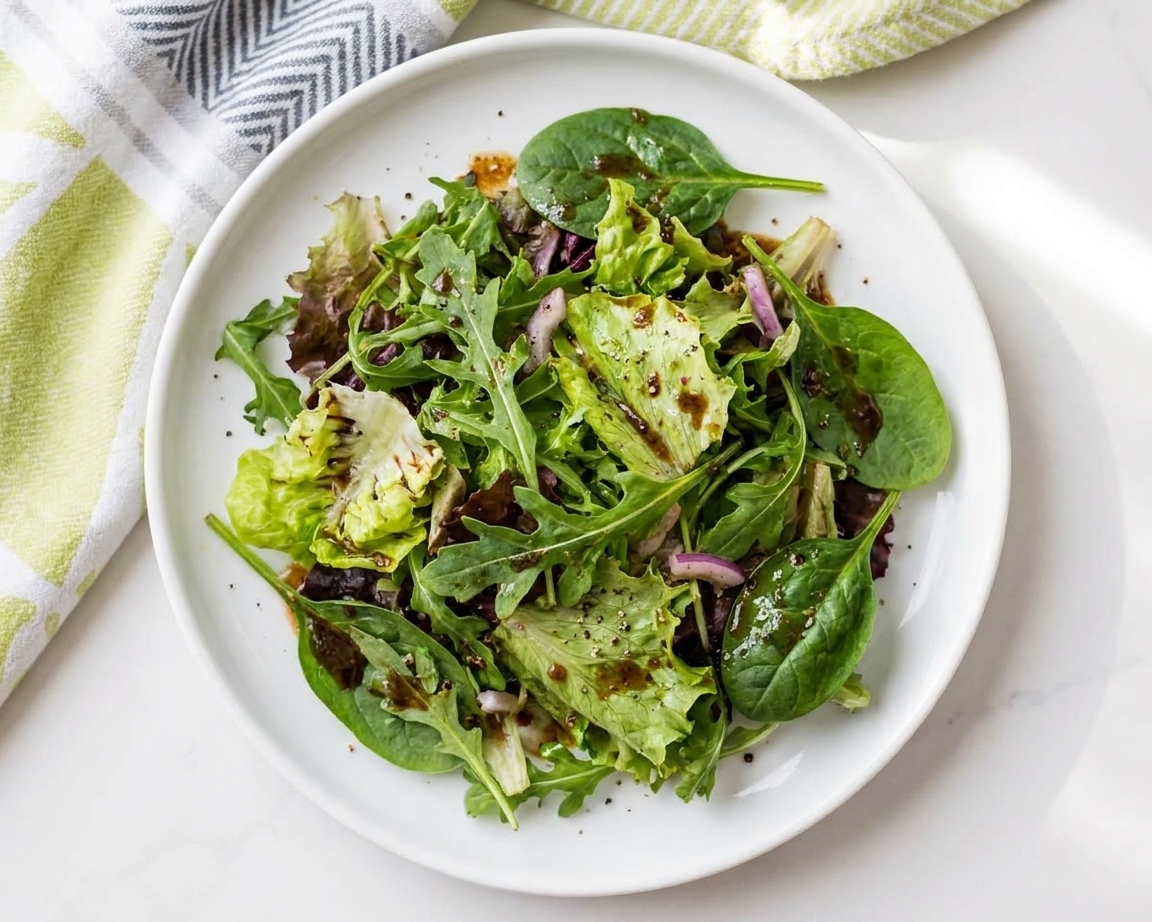
- Salads: spring mix with pears and toasted walnuts, arugula with Parmesan shavings, spinach with strawberries.
- Roasted vegetables: drizzle on roasted Brussels sprouts, carrots, or beets right before serving.
- Grain bowls: farro or quinoa with roasted veggies and chickpeas.
- Protein: spoon over sliced steak, grilled chicken, or roasted salmon.
- Bread moment: use as a dip with crusty bread when you want something snacky but still grown-up.
Storage and make-ahead
How long it lasts: 7 to 10 days in the refrigerator in a sealed jar.
Olive oil note: Olive oil can solidify when chilled. Just let the jar sit at room temperature for 10 to 15 minutes, then shake well.
Make it ahead for guests: You can whisk it 1 to 2 days in advance. Taste again right before serving and adjust salt and sweetness if needed.
Troubleshooting
It tastes too sharp
- Add 1 teaspoon more honey.
- Add a pinch more salt.
- Whisk in 1 to 2 teaspoons warm water to mellow the vinegar.
It is too sweet
- Add 1 to 2 teaspoons more balsamic vinegar.
- Add more black pepper to balance sweetness.
It is not emulsifying
- Make sure Dijon is fully whisked in before adding oil.
- Drizzle oil more slowly and whisk continuously.
- Try shaking in a jar for 30 to 45 seconds, then let it sit 1 minute and shake again.
It is bitter
- Some extra-virgin olive oils lean bitter. Swap to a milder one or blend: half EVOO, half avocado oil.
FAQs
What is the best ratio for balsamic vinaigrette?
A reliable starting point is 1 part vinegar to 2 parts oil for a richer, more “restaurant” texture. If you prefer a sharper vinaigrette, move closer to equal parts, like 1:1 or 1:1.5 (vinegar:oil). If you prefer it milder, go more oil-forward, like 1:3. This recipe uses 1/4 cup vinegar to 1/2 cup oil.
Can I make it without mustard?
Yes, but it will separate faster and feel a little less creamy. If you skip Dijon, consider adding 1 teaspoon mayo or a small spoonful of Greek yogurt to help emulsify.
Is balsamic vinaigrette gluten-free?
Typically yes, but check your balsamic vinegar and Dijon labels if you are highly sensitive, since manufacturing varies by brand.
Can I use minced garlic from a jar?
You can, but the flavor is usually milder and sometimes a bit harsh. If it is what you have, use about 1 teaspoon and let the dressing sit 10 minutes so the flavors can mingle.
If you take one thing from this recipe, let it be this: salt and a slow drizzle of oil are what turn “basic” into “luxurious.” You have this.