

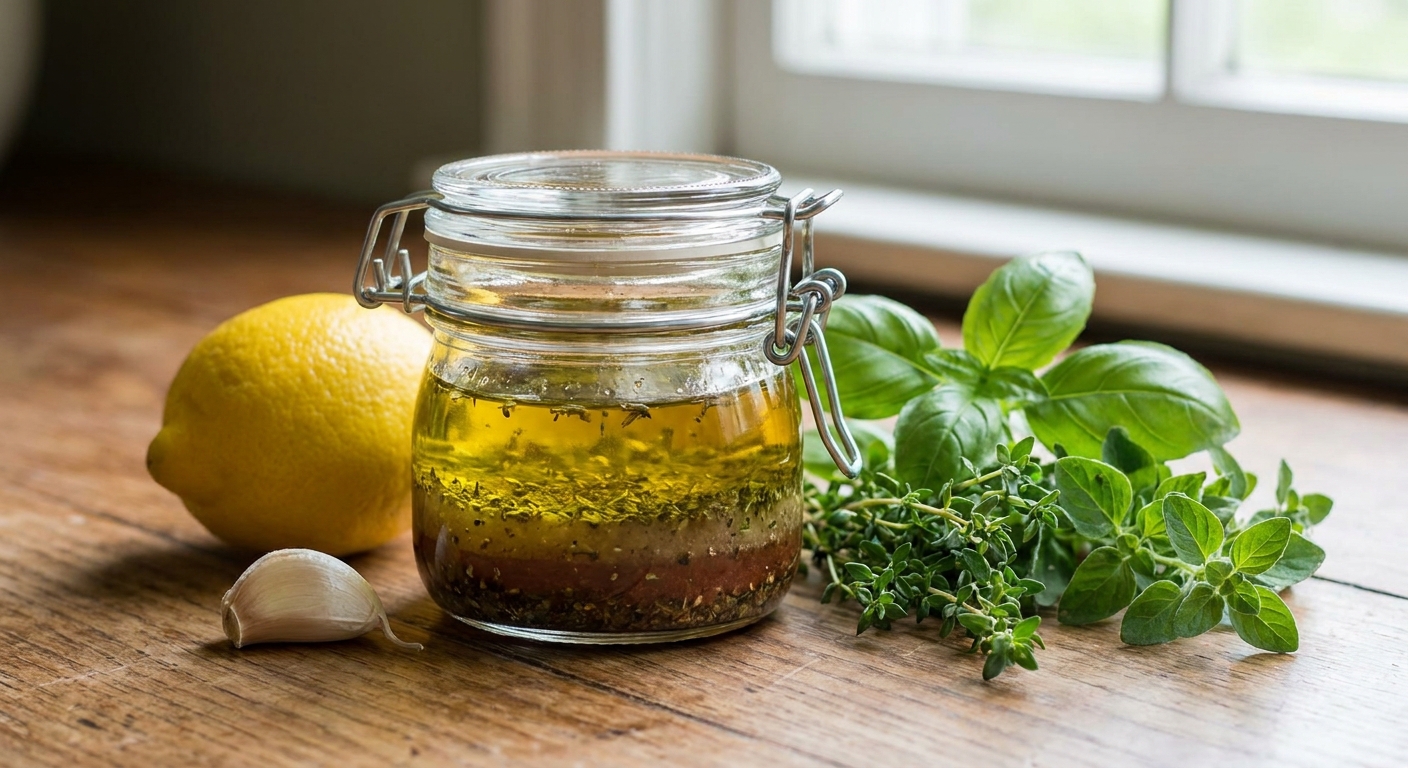
If you have ever stood in front of the fridge with a bowl of greens and thought, “I just need something quick that actually tastes good,” this is for you. This sweet and simple fresh salad dressing is a weeknight workhorse: bright, balanced, and made from ingredients you probably already have.
It is lightly sweet, not candy sweet. Think of it as the little bit of sweetness that rounds out the tang of vinegar and makes even basic romaine and cucumber feel like a real salad.

The idea
Why This Recipe Works
This dressing is built on a no-fail structure that keeps the flavor balanced: oil for richness, vinegar or citrus for tang, a small amount of sweetener to round everything out, plus salt and mustard for body.
- 3 parts oil
- 1 part vinegar or citrus (or a mix)
- Sweetener to taste (start small, then add more)
- Salt and a little mustard for body and balance
In real kitchen terms, that usually looks like 6 tablespoons oil + 2 tablespoons acid + 1 to 2 teaspoons honey. For the acid, use all vinegar, or do 1 tablespoon vinegar + 1 tablespoon lemon juice. Dijon is the “tiny secret weapon” because it helps the dressing cling to greens instead of sliding right off.
Shopping
Ingredient Notes
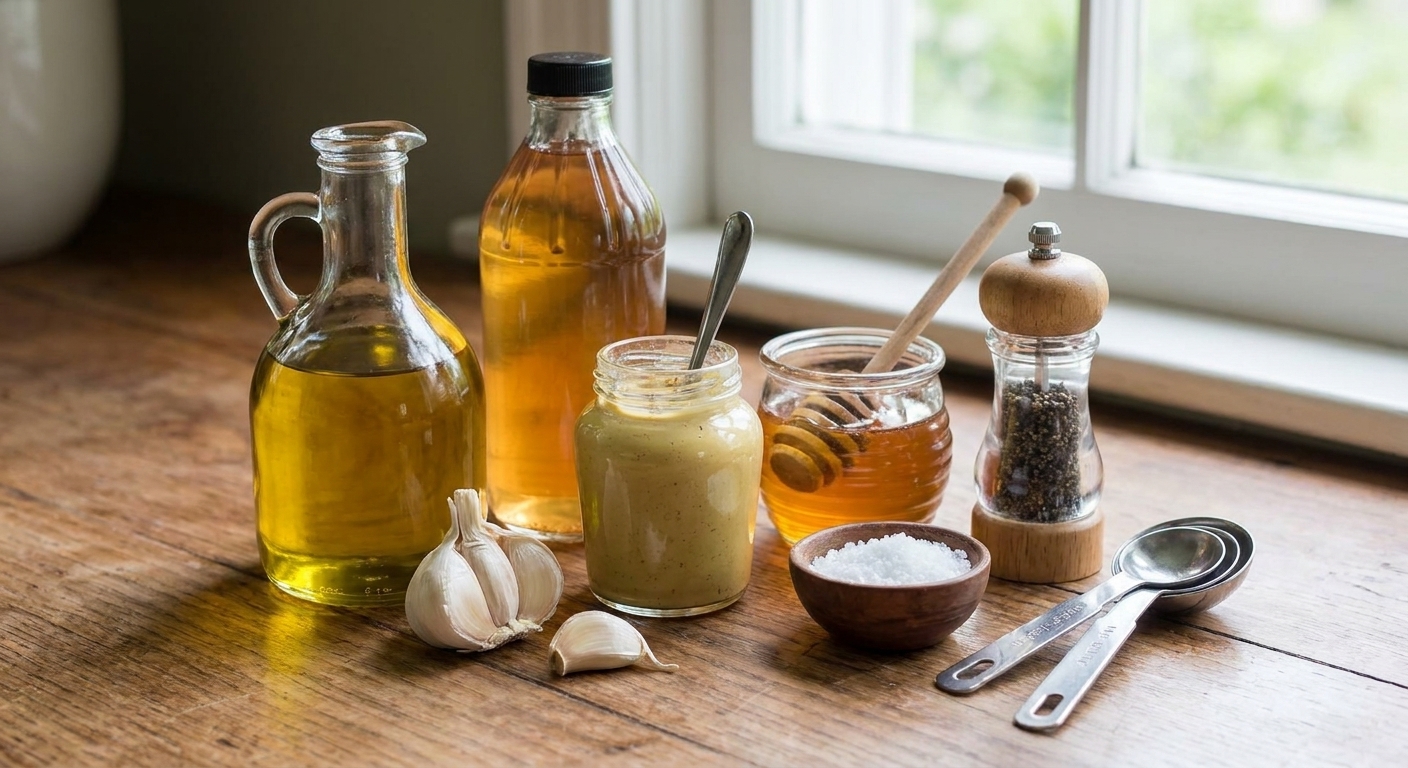
Vinegar options
- Apple cider vinegar: fruity, mellow, great all-purpose choice.
- White wine vinegar: clean and bright, perfect with delicate greens.
- Red wine vinegar: bolder, great with tomatoes, olives, and feta.
- Balsamic: naturally sweeter, so start with less honey (and you might not need any).
- Rice vinegar: super gentle, lovely for cucumber salads.
Oil options
- Extra virgin olive oil: classic, peppery, pairs with almost everything.
- Avocado oil: neutral and buttery, great if you want the vinegar and herbs to shine.
- Neutral oil (grapeseed, canola): works in a pinch, especially for picky eaters.
Sweetener options
- Honey: the go-to for balanced sweetness.
- Maple syrup: slightly warmer flavor, delicious with mustard.
- Brown sugar: dissolves best if you whisk it into the vinegar first.
Quick tip: Start low with sweetener and build. You can add more easily, but it is annoying to chase down “too sweet” with extra vinegar.
Get set up
Equipment You Will Need
- Small bowl or a small jar with a tight lid
- Whisk (if using a bowl)
- Measuring spoons
- Microplane or knife for finely grating or mincing garlic (optional)
Technique
Tips for Getting It Right
- Dissolve the sweetener first: Whisk or shake the vinegar (and lemon, if using) with honey, Dijon, salt, pepper, and garlic until the honey dissolves before adding the oil.
- Emulsify fast in a jar: Add everything to a jar and shake hard for 15 to 20 seconds until it looks slightly creamy and unified.
- Adjust with purpose: If it tastes flat, add a pinch more salt. If it tastes too sharp, add a drizzle more honey. If it tastes too rich, add a splash more vinegar or lemon.
Flexibility
Substitutes That Work
- Oil: Use olive oil or avocado oil; a neutral oil like grapeseed or canola works in a pinch.
- Acid: Use apple cider vinegar or white wine vinegar, or do 1 tablespoon vinegar + 1 tablespoon lemon juice as the 2 tablespoons total acid.
- Sweetener: Swap honey for maple syrup; if using brown sugar, whisk it into the vinegar first so it dissolves well.
- Garlic: If you are sensitive to raw garlic bite, use a smaller clove or swap in a pinch of garlic powder.
Make it yours
Variations to Try
Once the base is made, you can steer it in a dozen directions with quick swaps.
Lemon herb
- Use 2 tablespoons total acid, but make it half vinegar, half lemon juice
- Add 1 to 2 tablespoons chopped parsley or dill
- Optional: a pinch of dried oregano
Honey mustard
- Increase Dijon to 1 tablespoon
- Use 2 teaspoons honey
- Optional: a pinch of smoked paprika
Balsamic sweet
- Use balsamic vinegar for your acid
- Start with 1/2 teaspoon honey, then taste (you may not need more)
- Optional: add a small pinch of Italian seasoning
Strawberry dressing
- Mash 2 to 3 ripe strawberries into the vinegar and honey
- Whisk in oil and a tiny pinch of salt
On the table
What to Serve It With
This is one of those “make once, keep reaching for it” dressings.
- Marinade: Toss with chicken thighs for 20 to 30 minutes before roasting.
- Vegetable booster: Drizzle over roasted carrots or sweet potatoes.
- Grain bowls: Spoon over quinoa, rice, or farro with veggies and beans.
- Quick slaw: Mix with shredded cabbage and carrots for a fast side.
My favorite simple salads
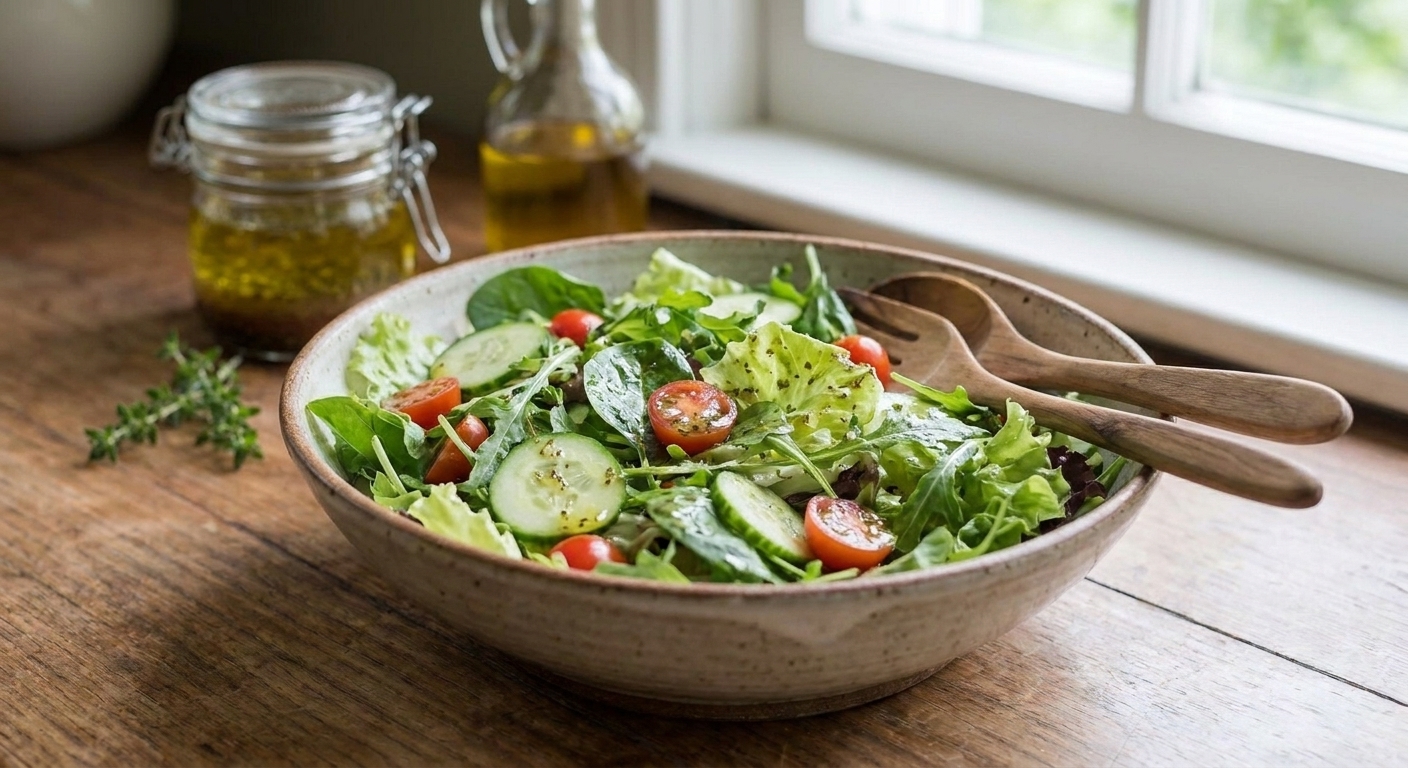
- Romaine + cucumber + shredded carrots (kid-friendly and crisp)
- Spring mix + strawberries + goat cheese (extra good with the balsamic variation)
- Spinach + apple + walnuts (honey mustard all day)
- Tomato + mozzarella + basil (use balsamic for the acid)
If you try it, give yourself permission to adjust as you go. That is not “messing it up,” that is learning your own perfect balance. And yes, you can add another clove of garlic.
Later
Storage, Freezing and Reheating
Homemade dressing keeps well, but it does behave like real food.
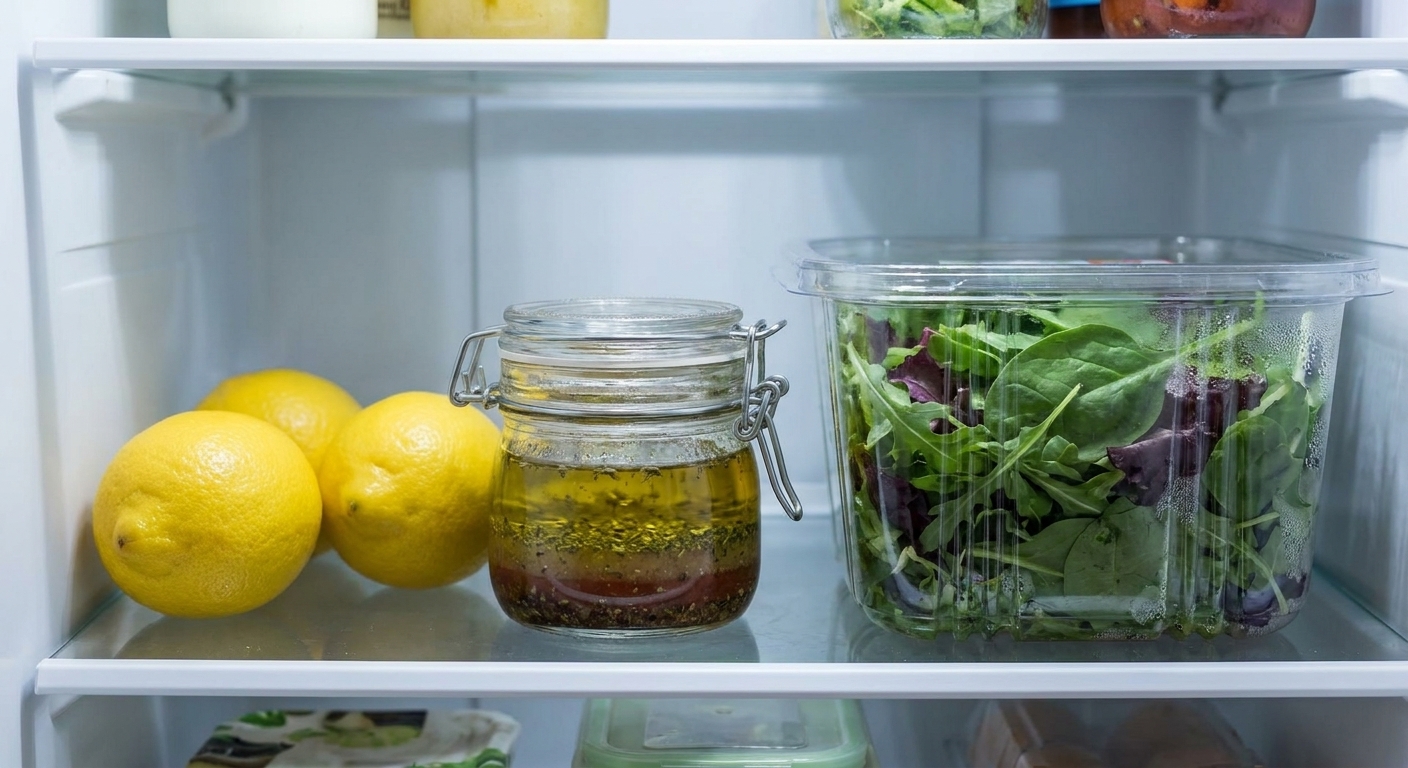
- Refrigerate in a sealed jar for 3 to 5 days for best flavor. It can last up to 7 days, but if you use raw garlic, it is usually best sooner.
- Shake before using. The oil and vinegar will separate as it sits.
- If it solidifies: Olive oil can thicken in the fridge. Let the jar sit at room temperature for 10 minutes, then shake.
Watch out
Common Mistakes to Avoid
- Making it too sweet too fast: Start small with sweetener and build, since it is hard to fix an overly sweet dressing without adding more vinegar.
- Not dissolving the honey (or sugar) first: Whisk or shake the vinegar mixture until the sweetener dissolves before adding the oil.
- Skipping the shake: Oil and vinegar separate as they sit, so always shake before using.
Questions
Frequently Asked Questions
Why add Dijon mustard?
Mustard helps the dressing cling to the greens instead of sliding right off, and it adds balance and body.
What if it tastes too tangy?
Add 1/2 teaspoon honey (or a little more oil) and a small pinch of salt. Salt is often what makes “sharp” taste “balanced.”
What if it tastes flat?
Add a pinch more salt or a squeeze of lemon. Acidity and salt work together.
What if it will not emulsify?
Add a little more Dijon, then whisk again. Shaking in a jar also helps, especially when you are in a hurry.
What if it is too oily?
Whisk in a teaspoon of vinegar or lemon juice at a time until it perks up.
The recipe
Sweet & Simple Fresh Salad Dressing
A sweet and simple fresh salad dressing that is bright, balanced, and flexible. Made in about 5 minutes with oil, vinegar (and optional lemon), honey, Dijon, and simple seasonings. Makes about 1/2 cup, enough for 1 large salad or 2 smaller ones.
Ingredients
- 6 tablespoons olive oil (or avocado oil)
- 2 tablespoons acid: apple cider vinegar (or white wine vinegar), or 1 tablespoon vinegar + 1 tablespoon lemon juice
- 1 to 2 teaspoons honey (or maple syrup), plus more to taste
- 1 teaspoon Dijon mustard
- 1 small garlic clove, finely grated or minced (optional but highly encouraged)
- 1/4 teaspoon fine salt, plus more to taste
- Freshly ground black pepper, to taste
Instructions
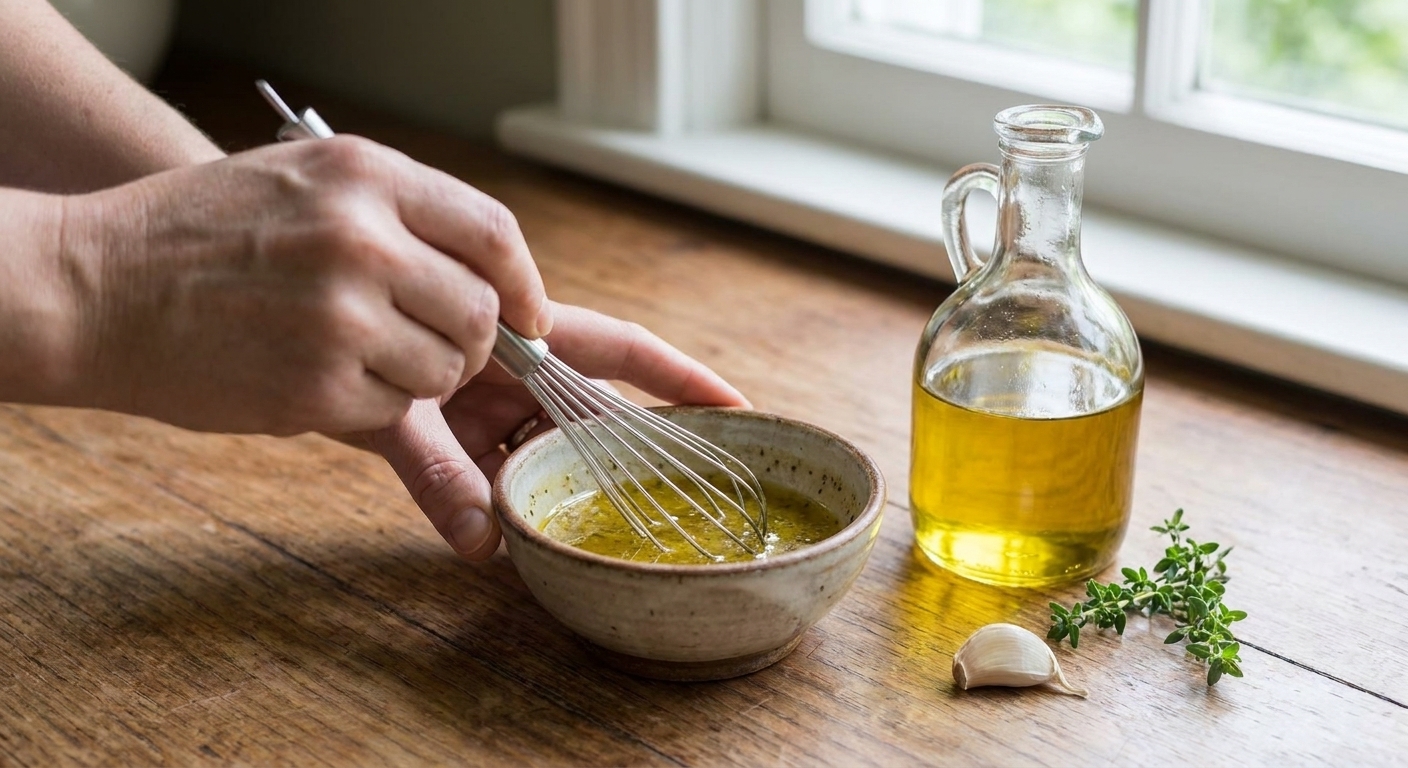
- Combine the base. In a small bowl or jar, add vinegar (and lemon juice, if using), honey, Dijon, salt, pepper, and garlic (if using). Whisk or shake until the honey dissolves.
- Emulsify. Slowly whisk in the oil (or add it to the jar and shake hard for 15 to 20 seconds) until the dressing looks slightly creamy and unified.
- Taste and adjust. Add a pinch more salt if it tastes flat, a drizzle more honey if it tastes too sharp, or a splash more vinegar or lemon if it tastes too rich.
Recipe notes
- Formula: A simple structure is 3 parts oil to 1 part vinegar or citrus, plus sweetener to taste, salt, and a little mustard for body.
- Acid option: For the 2 tablespoons acid, you can use all vinegar or do 1 tablespoon vinegar + 1 tablespoon lemon juice.
- Jar method: Shaking hard for 15 to 20 seconds is a quick way to emulsify.
- Garlic note: If you are sensitive to raw garlic bite, use a smaller clove or swap in a pinch of garlic powder.
Nutrition (per serving, approximate)
- Calories: 125
- Fat: 14 g
- Carbs: 2 g
- Protein: 0 g
- Fiber: 0 g
- Sugar: 2 g
- Sodium: 95 mg
Nutrition values are approximate and will vary by ingredients and amounts used (especially oil, sweetener, and mustard).