

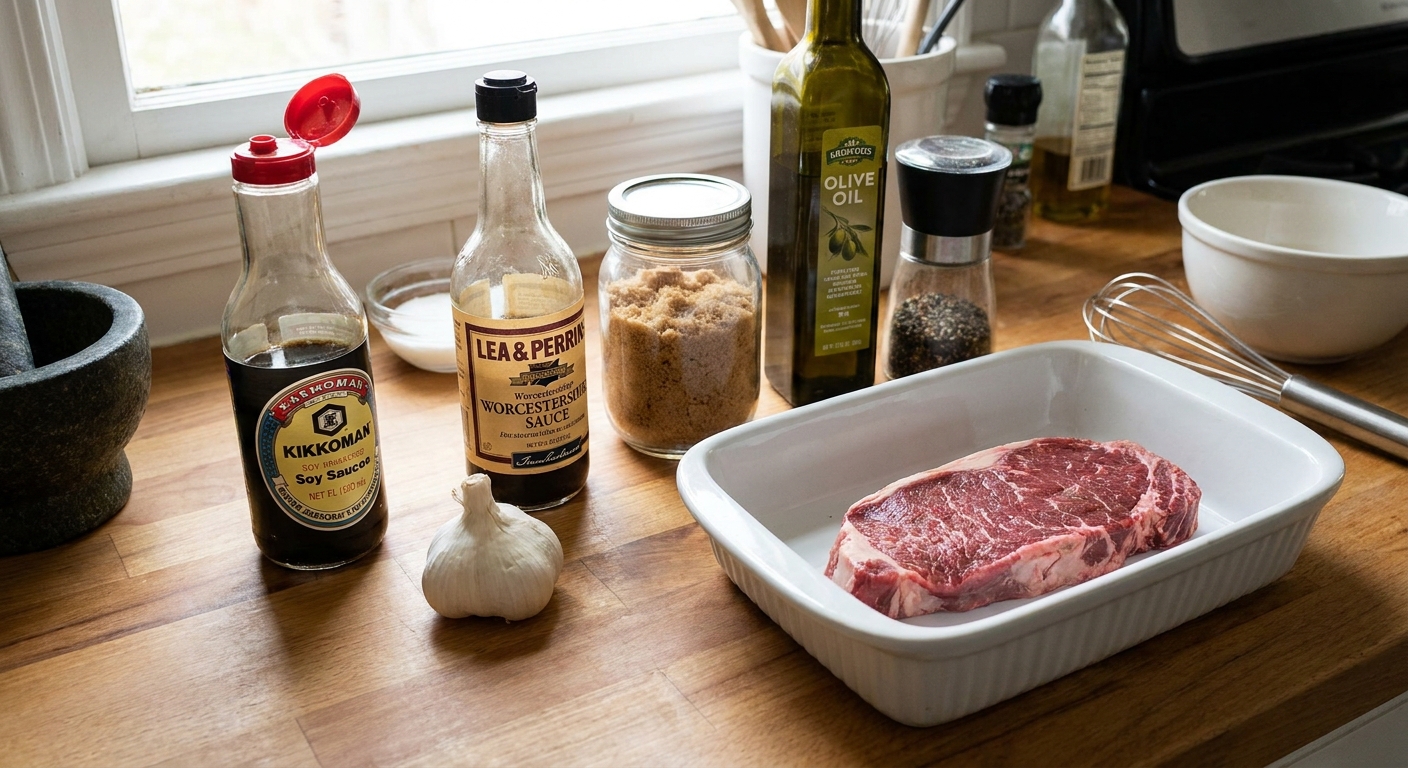
London broil is one of those cuts that loves a good marinade, but it also loves to punish you if the marinade is too salty or if it sits too long. I have absolutely been the person who confidently poured in a generous glug of something salty, walked away, and then wondered why my beautiful lean steak cooked up a little tight and hammy.
So let’s talk about the two most common “salty bottles” people reach for: soy sauce and Worcestershire. They are both fantastic. They just behave differently, especially on a lean steak like top round (a very common “London broil” cut in the U.S.).

What “London broil” means
Quick clarification that matters for marinating time: “London broil” is often a preparation (marinate, cook hot, slice thin against the grain), not one single cut. Depending on where you shop, it might be top round, bottom round, or sometimes flank steak. Thickness varies a lot too, and that directly affects how fast salt and acid change the surface texture.
The guidance below is written for a typical London-broil-thickness steak, around 1 to 1 1/2 inches thick, and as general home-kitchen timing rather than a hard rule.
What a marinade needs
Because London broil is lean, your marinade’s job is mostly about flavor and surface tenderness, not turning the steak into something it is not. The best marinades for this cut usually balance:
- Salt (for seasoning and a little moisture retention)
- Acid (vinegar, citrus, wine) in a gentle amount
- Sweetener (brown sugar, honey, maple) for browning and balance
- Aromatics (garlic, onion, pepper, herbs)
- Fat (oil) to carry flavor and help the surface cook evenly
Soy sauce and Worcestershire can both be the salty base, but they bring different levels of salt, different sugars, and different flavor “shapes.”
Soy vs. Worcestershire
Salt level
Soy sauce is usually the saltier starting point in most kitchens, especially if you are using regular soy sauce. That is great when you are stir-frying, but in a longer soak, it can take you from “deeply seasoned” to “whoa” fast. (Brands and styles vary, so checking the label is never a bad idea.)
Worcestershire is often less salty per tablespoon and more complex tasting. It gives you savory depth (that anchovy, tamarind, molasses magic) without feeling like pure salt.
- If you want the marinade to read as classic steakhouse savory, Worcestershire makes that easy.
- If you want the marinade to read as bold and punchy, soy sauce gets you there quickly.
Browning and crust
Both sauces help browning, but in different ways. Also, a quick reality check: sugar plus high heat browns fast, and that same fast browning can turn into burning under a broiler.
- Soy sauce contributes amino acids and some sugars that can boost browning. It tends to create a darker, more assertive, almost lacquered look when there is also sugar in the marinade. It is especially helpful if you are broiling or grilling hot and fast.
- Worcestershire brings some sweetness (often from molasses or sugar) and lots of savory compounds. It browns nicely, but usually in a more subtle, “roasty” way.
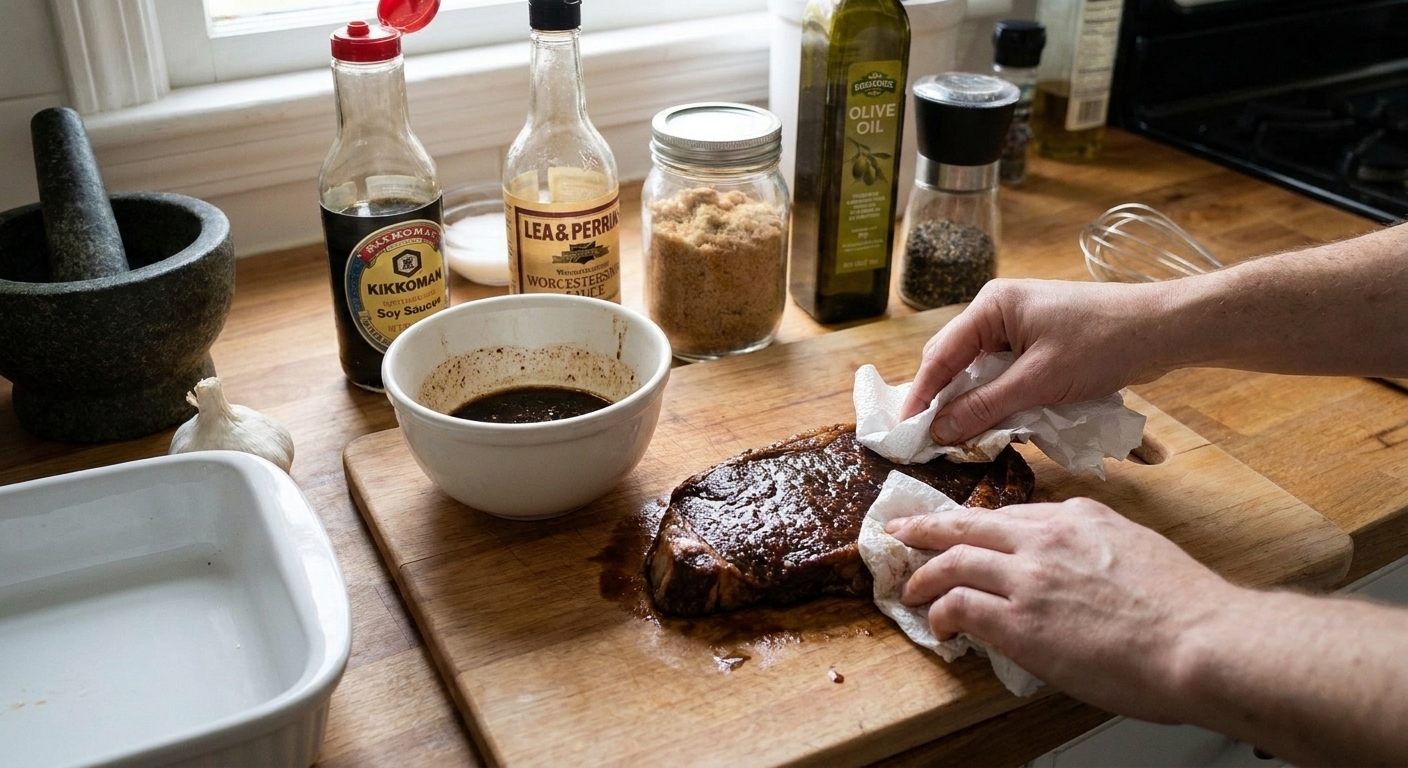
Important: Marinades that contain sugar, soy sauce, or both can scorch quickly under a broiler. Pat the steak dry before cooking and consider brushing off excess garlic bits so the surface browns instead of burning.
Flavor profile
This is where personal preference really rules.
- Soy sauce: salty, fermented, straightforward umami. It pulls the flavor in an Asian-inspired direction easily, especially with ginger, sesame oil, or scallions.
- Worcestershire: tangy, slightly sweet, savory, and layered. It plays beautifully with garlic, Dijon, black pepper, and herbs for a more traditional grilled steak vibe.
How long to marinate
London broil is lean, so you want enough time for seasoning and flavor to move in a bit, but not so long that the outer layer gets mealy or “cured.” Texture trouble typically comes from too much salt for too long and from acid sitting too long.
These windows are general home-kitchen guidelines for a 1 to 1 1/2 inch steak. If your steak is thinner, your marinade is very salty, or you are heavy-handed with vinegar or citrus, go shorter.
If soy sauce is the base
- Best window: about 4 to 10 hours.
- Practical max for most typical recipes: around 12 hours, especially if the marinade also includes acid (vinegar, lemon, lime).
Why the shorter window? Soy sauce is efficient at seasoning, and on a lean cut, that can tip into a firmer, slightly cured texture if left too long. It is not unsafe, it is just not the tender result most of us want.
If Worcestershire is the base
- Best window: about 6 to 12 hours.
- Practical max for most typical recipes: around 18 to 24 hours if the marinade is not overly acidic.
Worcestershire-based marinades tend to be a bit more forgiving because they often bring less salt per tablespoon and a different balance of tang and sweetness.
The bigger factor is the whole marinade
If your marinade has a lot of acid (for example, a heavy pour of vinegar or citrus), keep your marinating time tighter no matter which sauce you choose. For a lean steak, more time is not always better.
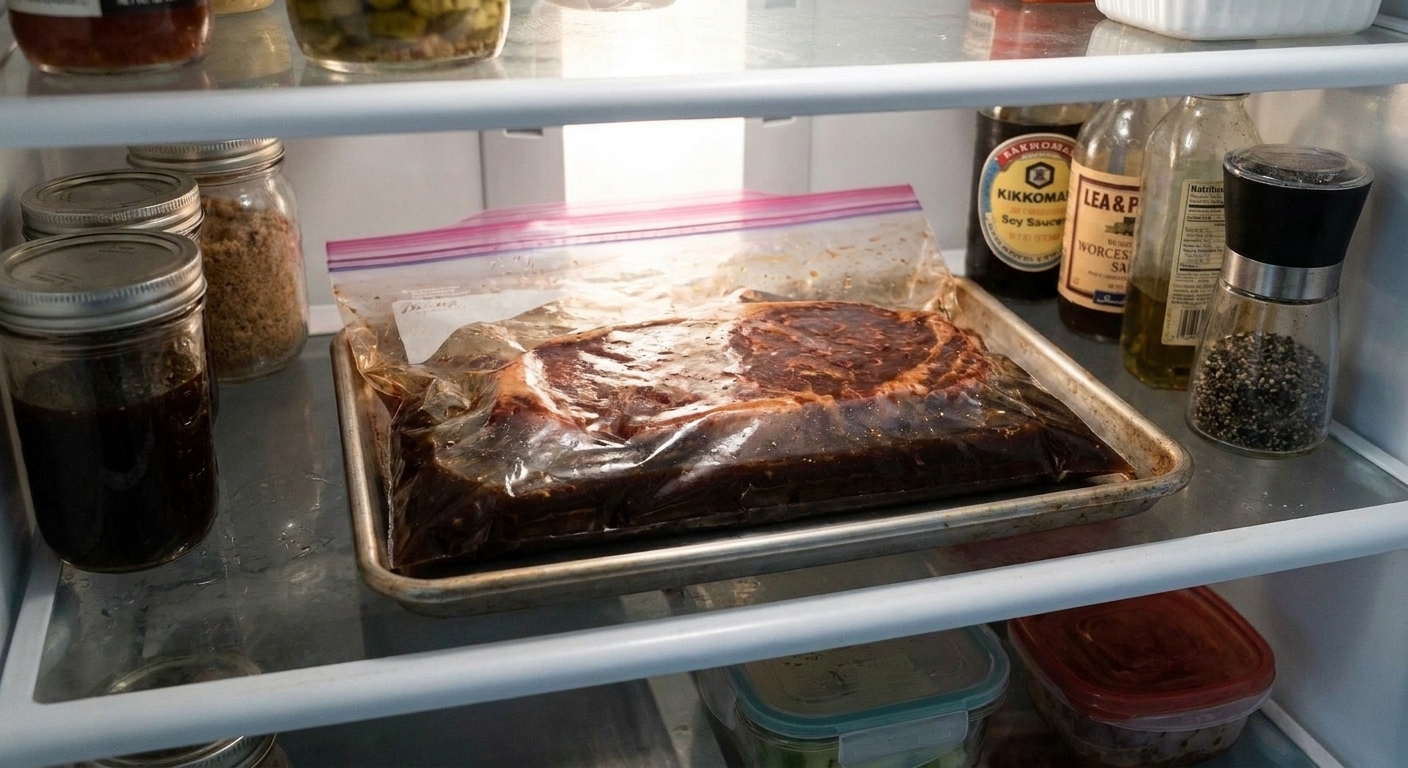
My weeknight rule: For a lean London broil, I aim for 8 hours whenever I can. It is long enough to taste marinated, short enough to avoid weird texture.
Which one to use
Choose soy sauce if you want:
- A bolder, salt-forward, deeply savory flavor
- More dramatic browning and a darker crust
- A marinade that pairs well with ginger, sesame, scallions, chili, or honey
Choose Worcestershire if you want:
- Steakhouse-style savory depth without as much salt intensity
- A forgiving marinade for longer marinating windows
- A great match with garlic, Dijon, herbs, and black pepper
My favorite compromise
If you keep both in the pantry, a blend is wonderful: use mostly Worcestershire and a smaller amount of soy sauce. You get the complexity plus a little fermented punch, and it is easier to keep the salt in check.
A solid starting point for about 1 1/2 to 2 pounds of London broil:
- 2 tablespoons Worcestershire
- 1 tablespoon soy sauce (low-sodium is extra forgiving)
Fix a too-salty marinade
Good news: if you catch it before the steak goes in, you can fix a too-salty marinade almost every time. The key is to avoid “fixing” salt with more salt-like ingredients (more soy, more Worcestershire, more bouillon, and so on).
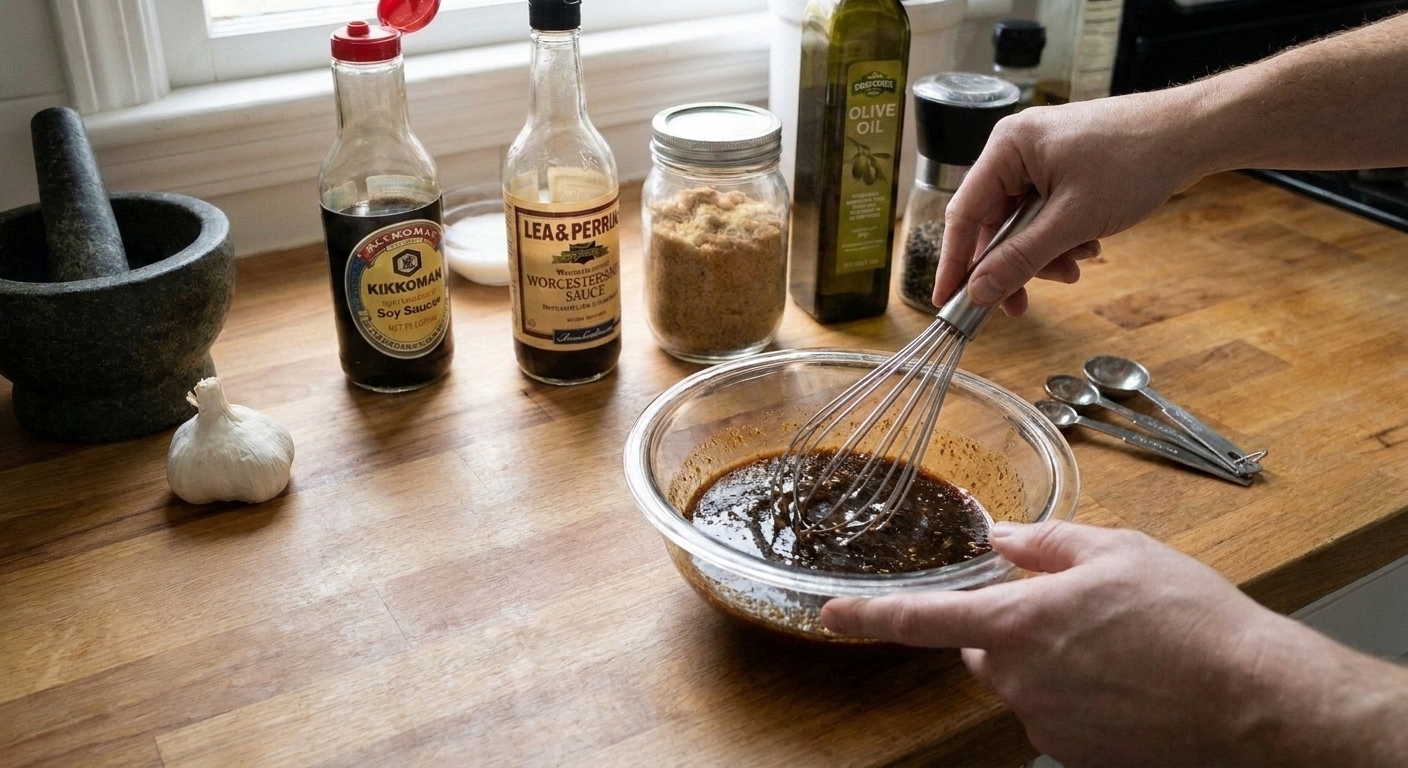
Step 1: Dilute with unsalted liquid
Add a small amount, whisk, taste, repeat. Great choices:
- Water (simple and effective)
- Unsalted beef broth (adds body without extra salt)
- Unsalted pineapple juice or orange juice in small amounts (sweet and tangy, but do not go overboard)
Step 2: Rebalance with a little sweetness
Sweetness does not remove salt, but it can make the marinade taste balanced again.
- Brown sugar, honey, or maple syrup in small increments
Step 3: Add more aromatics, not more salt
If the marinade tastes salty and flat, it often needs volume and aroma:
- More garlic, black pepper, onion, herbs
- A spoonful of Dijon or tomato paste (both add depth, but go easy because they can contain salt)
Step 4: If you already have oil, add more oil
Oil can soften the perception of salt and helps the marinade coat evenly. It will not “unsalt” the mixture, but it can make it feel less sharp.
One fix to avoid
Do not try to fix it by adding more acid. Acid can make the salt taste louder, and too much acid is one of the quickest ways to mess with the surface texture of a lean steak.
Salt sanity check
Marinade should taste a little punchier than a finished sauce, but it should not taste like straight brine. Here is how I check it:
- Dip a raw onion slice or a piece of bread into the marinade, then taste. If it makes you immediately reach for water, it is too salty.
- If you have time, sear a tiny bit of the marinade in a skillet (just a teaspoon) and taste once it is cooked. Cooking concentrates flavors and gives you a more realistic preview of how intense it will be on the steak.
More tender London broil tips
- Pat the steak dry before cooking. Better browning, less steaming, less scorching.
- Do not reuse marinade as a sauce unless you boil it. If you want a drizzle, reserve a little marinade before adding the raw meat.
- Slice thinly against the grain. This matters as much as the marinade, sometimes more.
- Rest after cooking. Ten minutes is great for a larger, thicker piece.
Common questions
Can I substitute soy sauce for Worcestershire 1:1?
You can, but I usually would not do it 1:1 unless you are using low-sodium soy sauce. Regular soy sauce tends to be saltier, so start by swapping in less soy sauce, then taste and adjust.
Is low-sodium soy sauce worth it?
Yes, especially for lean cuts. Low-sodium soy sauce gives you the fermented, savory flavor with a wider margin of error on timing. It is one of my favorite small pantry upgrades for stress-free marinating.
Will Worcestershire tenderize better than soy?
Neither one is a magical tenderizer on its own. Both help the steak taste better and can help it retain moisture when used in a balanced marinade. For tenderness, your biggest wins are reasonable marinating time, hot cooking to your target doneness, and slicing against the grain.
What if the steak already went into a too-salty marinade?
Pull it out sooner rather than later, pat it dry, and skip any additional salt before cooking. Discard that used marinade (or boil it hard if you plan to use it as a sauce). If you want, you can lightly brush the surface with a little oil and pepper right before broiling or grilling. Next time, dilute and rebalance the marinade first so you can marinate longer without worry.
Which is better for broiling vs. grilling?
Both work for both methods. Under a broiler, marinades with soy sauce and sugar can brown very fast, so dry the surface well and keep a close eye. On a grill, Worcestershire-based marinades give a classic char-grilled steak flavor, but soy sauce also shines if you want a darker, bolder crust.