

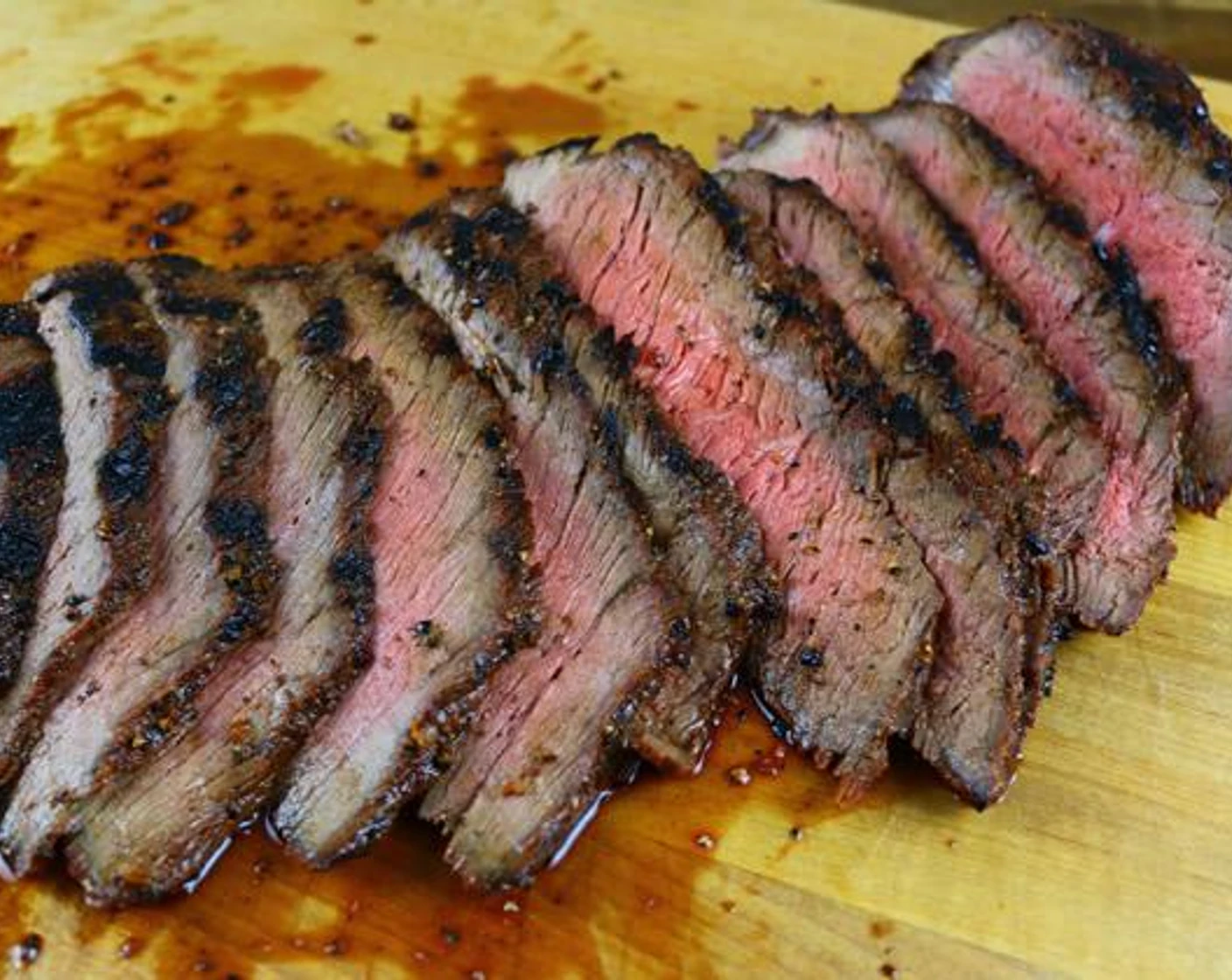
London broil is one of those cuts that can taste like steakhouse magic or like you are chewing on a belt. The difference is usually internal temperature, plus a couple of other make-or-break details like slicing across the grain and not overcooking a lean piece of beef. Because it is typically a lean, thick cut (often top round or flank), London broil has a narrow window where it stays juicy and slices tender. Hit that window and you are golden.

The best internal temperature for London broil
For most London broil, I recommend aiming for medium-rare. It keeps this lean cut tender and lets your marinade and sear do the heavy lifting for flavor.
- Pull at 125 to 130°F for medium-rare (final after resting: about 130 to 135°F)
- Pull at 135°F for medium (final after resting: about 140 to 145°F)
- For best tenderness, try not to pull above 140°F unless you truly prefer medium-well or well-done
One quick note: “London broil” is often a preparation and store label, not one single cut. Depending on your market, it might be top round, flank steak, top sirloin, or sirloin tip. The temperature targets above still hold up, but the tenderness can vary cut to cut.
Carryover cooking
When you take London broil off the grill, out of the oven, or off the stovetop, it keeps cooking for a few minutes. That is carryover cooking, and it is especially noticeable with thicker pieces.
As a general rule, the internal temperature often rises about 5 to 10°F while it rests. For very thick roasts, an oven finish, or a tight foil tent, it can climb even more.
So if you want a final medium-rare around 133°F, you do not cook it to 133°F in the pan. You pull it at 125 to 130°F and let the rest do the final gentle cooking.
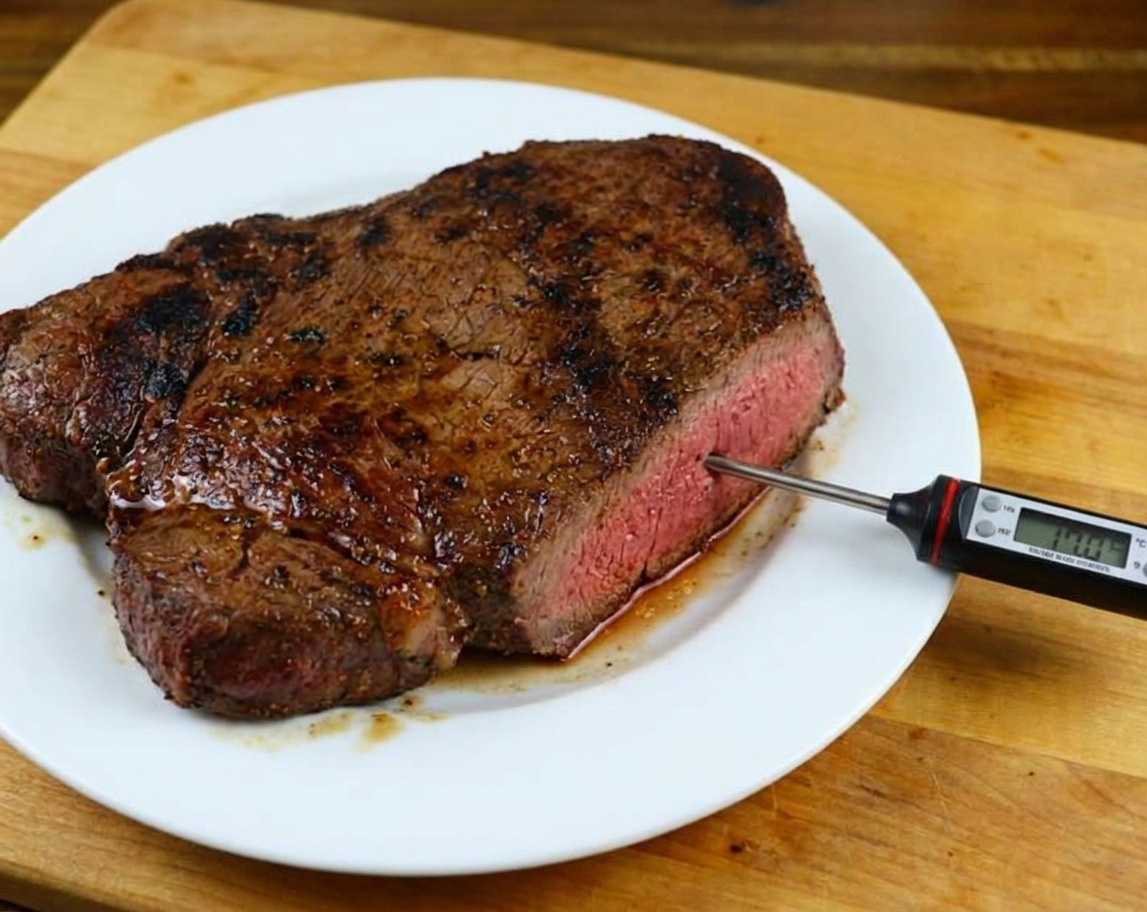
Why it gets chewy past medium
London broil is often cut from top round, which is quite lean and has long muscle fibers. Here is what happens as you keep cooking it:
- Moisture loss: The hotter it gets, the more juices squeeze out, leaving the meat drier.
- Fiber tightening: Those long muscle fibers contract with heat, which makes each bite feel tougher.
- Not enough fat to buffer: Ribeye has internal fat that stays luscious even if you overshoot. Top round does not.
Marinades help a lot with flavor and surface tenderness, but they cannot fully make up for an overcooked interior. The thermometer is your best friend here.
How long to rest
Resting is not optional for London broil. It is what keeps the slices juicy and gives carryover heat time to finish the center.
- Rest 10 minutes for thinner pieces (about 1 to 1.25 inches thick)
- Rest 10 to 15 minutes for thicker London broil (1.5 to 2+ inches thick)
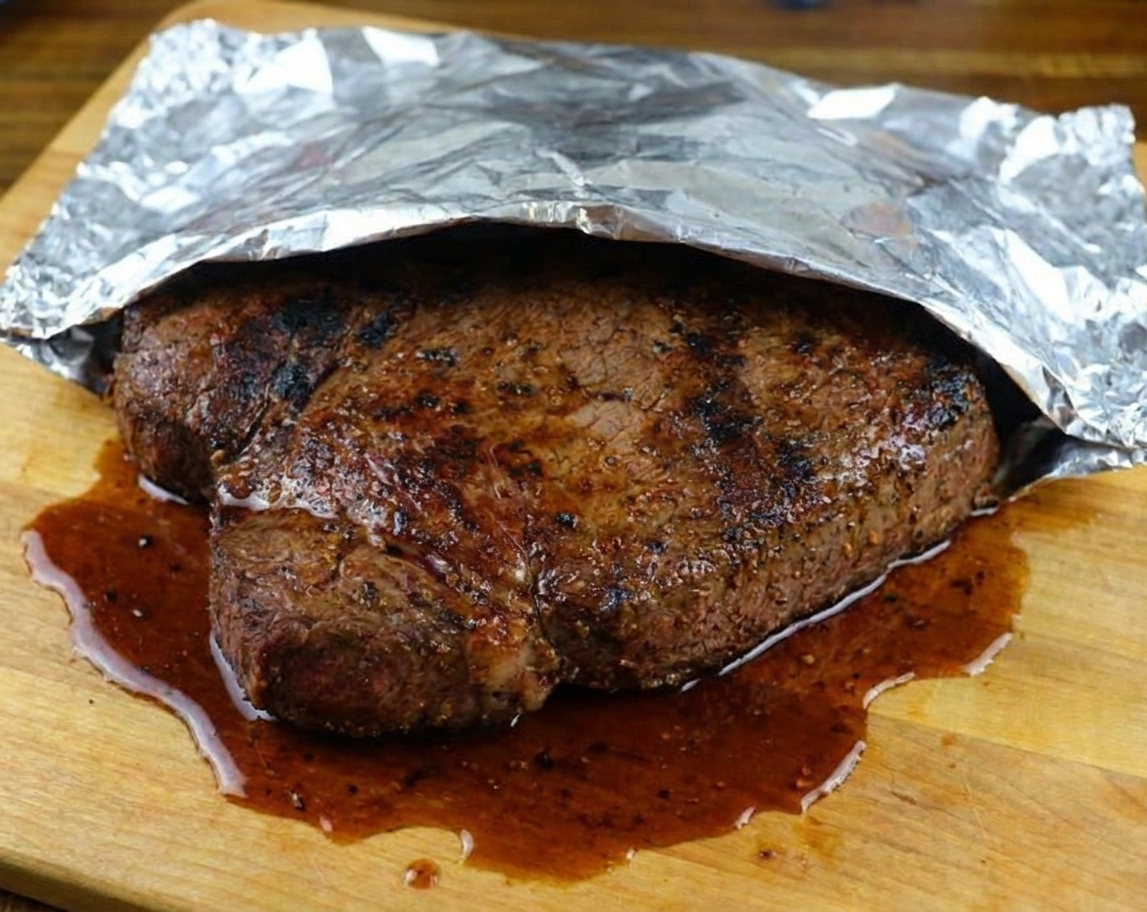
I like to rest it on a cutting board or platter. You can loosely tent with foil, but do not wrap it tightly. A tight wrap traps too much heat and can push your temperature up more than you wanted.
How to check the temperature
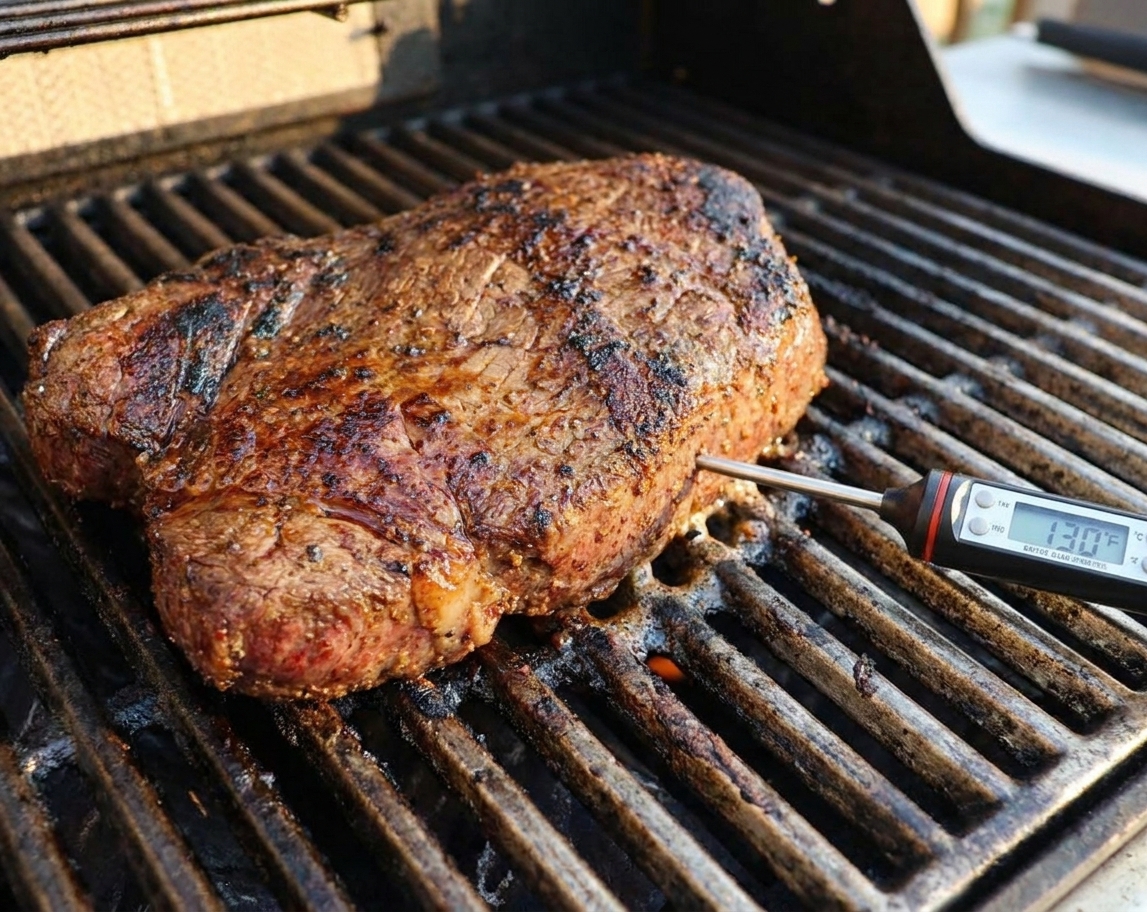
A thick cut is exactly where thermometer technique matters. If you measure the wrong spot, you can think you are at medium-rare when the center is still rare, or you can overshoot trying to compensate.
Use the side-entry method
For steaks and roasts that are 1.5 inches thick or more, I recommend inserting your thermometer from the side, not straight down from the top. Side entry helps you land the tip right in the center.
Aim for the coldest spot
The true reading is the lowest number you find in the thickest part. Insert the probe, then slowly sweep it around a little until you find the coolest area. That is your target.
Watch out for false highs
- Do not touch bone (if your cut has one) or the hot pan.
- Do not measure near the surface. The edges will always be hotter.
- If you are using a leave-in probe, place it before cooking, centered, and double-check with an instant-read near the end.
Slicing rules
If temperature is the first key, slicing is the second. London broil can be cooked perfectly and still eat tough if it is sliced the wrong way.
- Slice across the grain: Look for the lines running through the meat, then cut perpendicular to them.
- Slice thin: Thinner slices shorten those long muscle fibers and make each bite feel more tender.
- Use a sharp knife: A clean slice beats sawing through it and squeezing out juices.
Method notes
Most “London broil” recipes are some version of high heat plus a quick cook, then a rest and thin slicing. Grilling, broiling, and hard searing all work great.
If you finish in the oven (or cook it more like a small roast), just remember two things: the temperature can rise more during the rest, and the center can lag behind the edges. Use your thermometer, pull a touch earlier than you think, and let the rest do its job.
Quick doneness guide
| Doneness | Pull temperature | Final after resting |
|---|---|---|
| Rare | 120 to 125°F | 125 to 130°F |
| Medium-rare | 125 to 130°F | 130 to 135°F |
| Medium | 135°F | 140 to 145°F |
| Medium-well | 145°F | 150°F+ |
| Well-done | 155°F+ | 160°F+ |
Note: The temperatures above are pull temps versus final temps after resting. Some food safety guidance and cookbooks list doneness by final temperature.
Maya tip: For London broil, I almost always choose medium-rare. It is the sweet spot for tenderness, especially if you plan to slice it super thin across the grain.
London broil temperature FAQs
Is it safe to eat at medium-rare?
London broil is typically a whole muscle cut, so medium-rare is commonly enjoyed when cooked properly and handled safely. A good sear helps reduce risk on the surface. If you are more comfortable with medium, pull at 135°F and rest to finish around 140 to 145°F.
If your beef is mechanically tenderized (needle-bladed) or you are cooking for someone pregnant, immunocompromised, or otherwise higher risk, follow the guidance you trust for your household, since those situations can call for a higher endpoint.
What if it is cooking unevenly?
That is normal with thick cuts. Use the thermometer in a few spots in the thickest area and go by the lowest reading. If one end is thinner, it will cook faster. You can position the thicker end toward a cooler zone on the grill, or angle it so the thicker part gets more gentle heat.
Should I slice it right away if I am in a hurry?
I get it, but even 8 to 10 minutes of rest makes a big difference. If you slice too soon, the juices run out onto the board instead of staying in the meat.
How thin should I slice it?
As thin as you can manage, and always across the grain. Thin slicing shortens those long muscle fibers, which is the other key to tender London broil along with the right temperature.