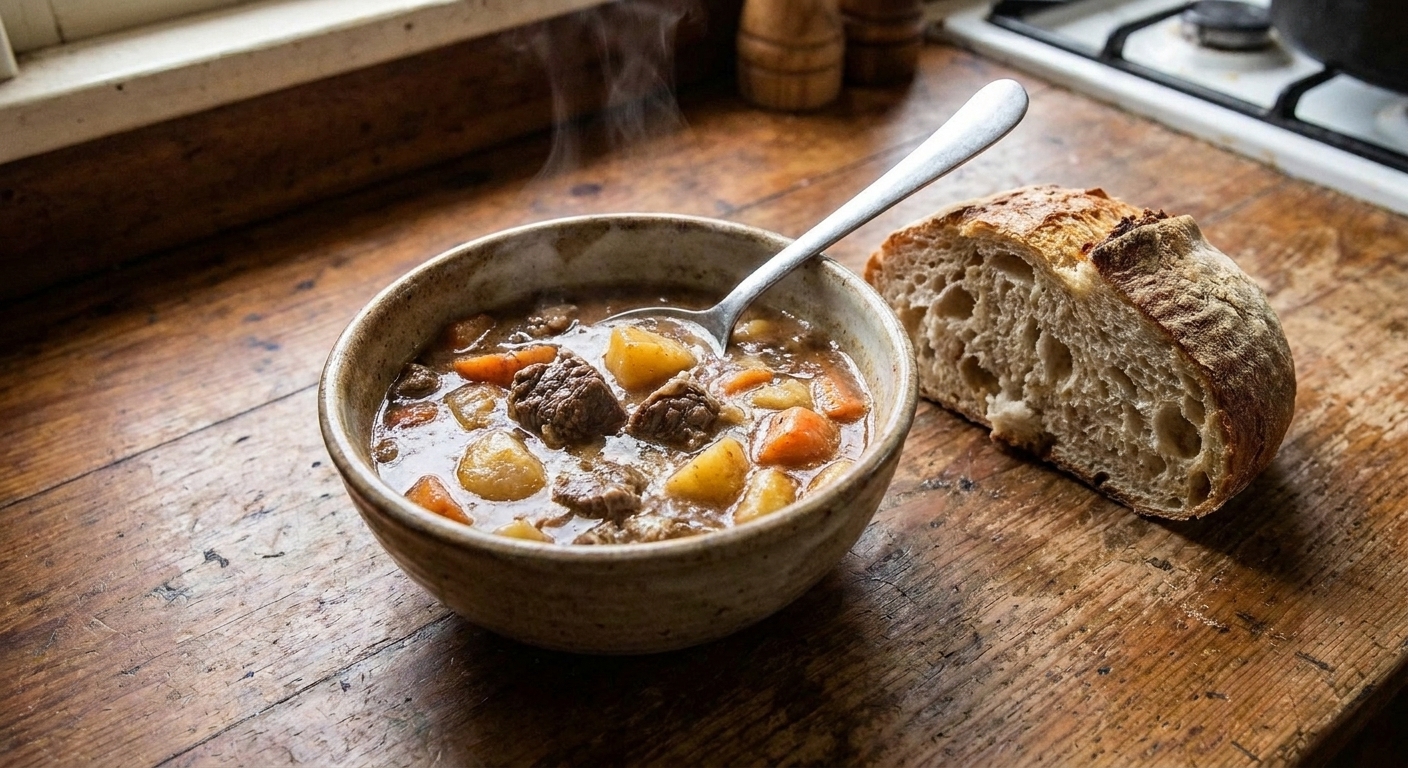

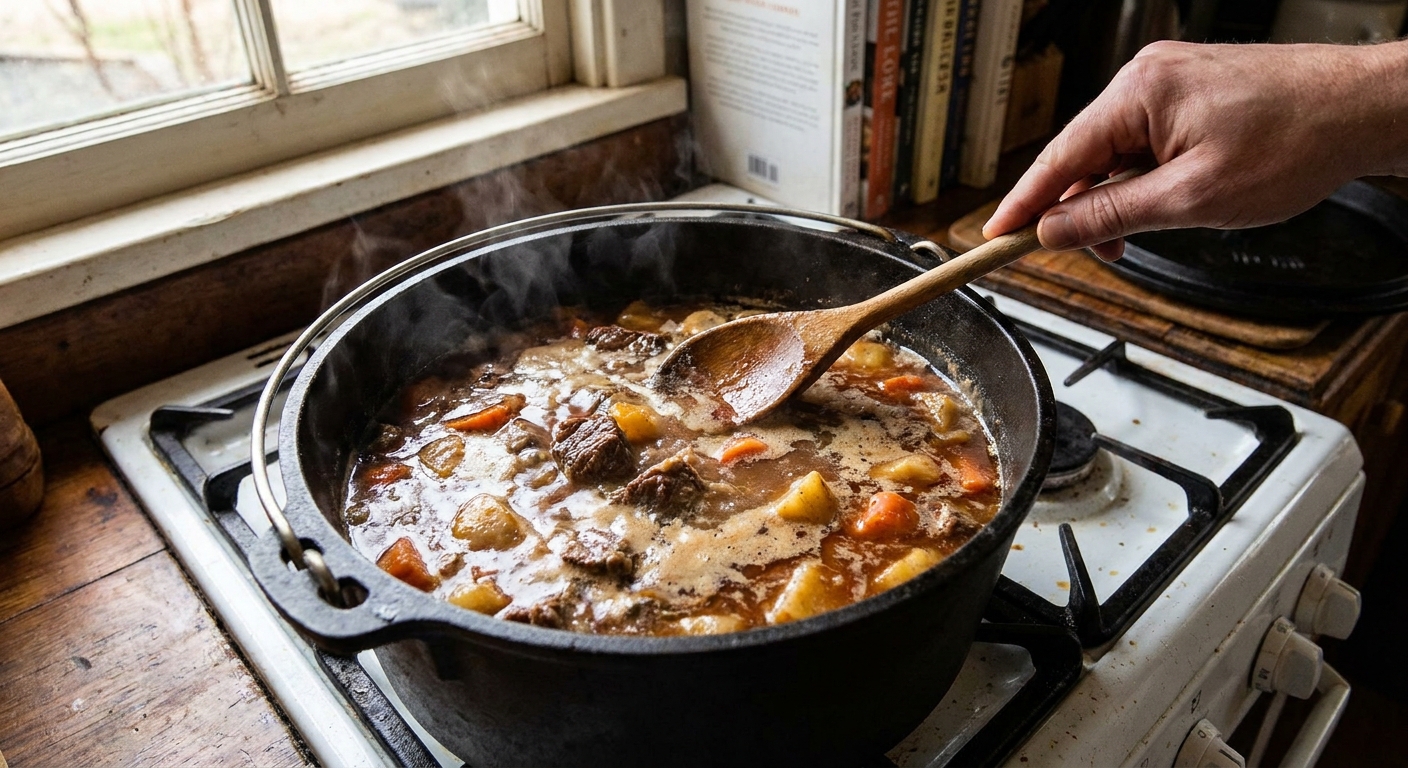

Let me guess: your beef stew smells incredible, the meat is tender, the potatoes are doing their cozy thing, and then you tilt the ladle and see it, that shimmering layer of grease on top. I promise you did not ruin dinner. Beef stew is supposed to be hearty, but it should not leave an oil slick on your bowl.
The good news is you can degrease stew after it is finished with a few simple tricks, and you can do it without turning your gravy watery or bland. I will walk you through four reliable methods and when to use each.
First: What is too much fat?
A little fat is flavor, and stew made with chuck, short rib, or well marbled beef will always release some. What you want is a stew that tastes rich but does not feel oily.
- Normal: a light sheen on top and a velvety mouthfeel.
- Too greasy: a thick layer of fat pools on the surface, your spoon leaves trails, and the stew tastes heavy or slick.
If you are in the “too greasy” camp, pick the method below that matches your timeline.
Quick fix: Spoon-skimming (5 to 10 minutes)
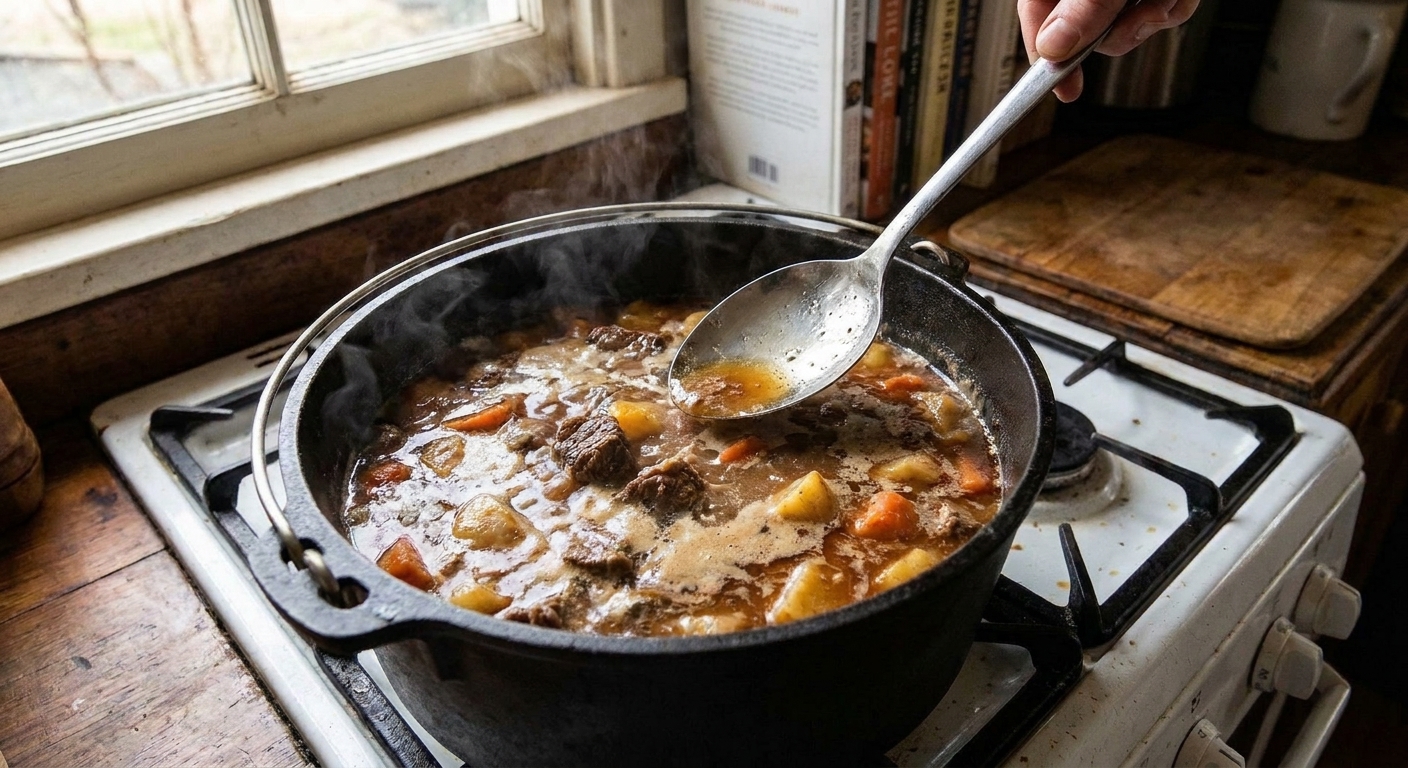
If dinner is in 10 minutes and you just need a fast improvement, spoon-skimming is your friend. Fat floats, so we simply remove it from the surface.
How to do it
- Turn the heat to low so the stew is barely simmering. A hard boil breaks the fat into tiny droplets and makes it harder to remove.
- Let the pot sit 2 minutes so the fat has time to rise and collect.
- Use a wide, shallow spoon or a ladle to skim the surface. Dip just the edge into the fat layer and lift it off. You will probably catch a little broth too, and that is normal.
- Transfer skimmed fat to a bowl (not the sink while it is hot).
- Repeat until the surface looks glossy but not greasy.
Maya tip
Skim in short passes, then pause for 30 seconds. The fat layer rebuilds itself and becomes easier to grab in larger “sheets.”
Best balance: Fat separator (10 minutes)
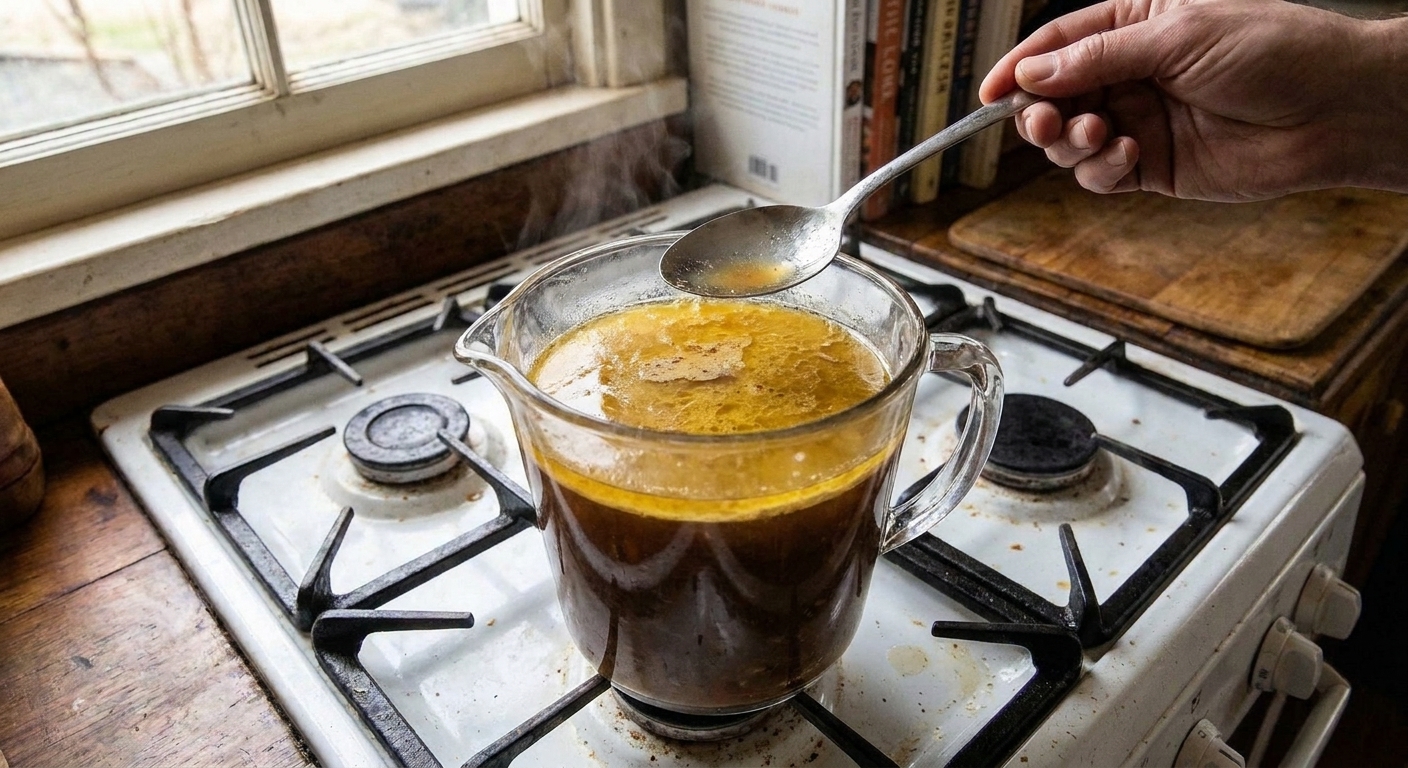
If you have a fat separator, this is the neatest way to remove fat without losing too much gravy. It works because the fat rises to the top while the lean broth stays below, and the separator pours from the bottom.
How to do it
- Turn off the heat.
- Ladle mostly broth and gravy into the separator, leaving the meat and vegetables in the pot. (Chunks can clog the spout, so this is one time where you want mostly liquid.)
- Let it stand 3 to 5 minutes for the fat to fully rise.
- Pour the defatted liquid back into the pot, stopping when you reach the fat layer.
If you do not have one
A heat-safe measuring cup can pinch hit. Ladle in the liquid, let it settle a few minutes, then spoon the fat off the top before pouring the broth back into the pot. It is not as tidy, but it works.
Two important notes
- If your stew is very chunky, you may only be able to separate part of the liquid. That is okay. Even removing some fat makes a big difference.
- Do not shake the separator. Gentle is the name of the game.
Fast fat magnet: The ice trick (3 to 5 minutes)
This one feels like kitchen magic, and it works especially well when the fat is thinly spread and stubborn. Cold makes fat firm up quickly, so it is easier to lift off.
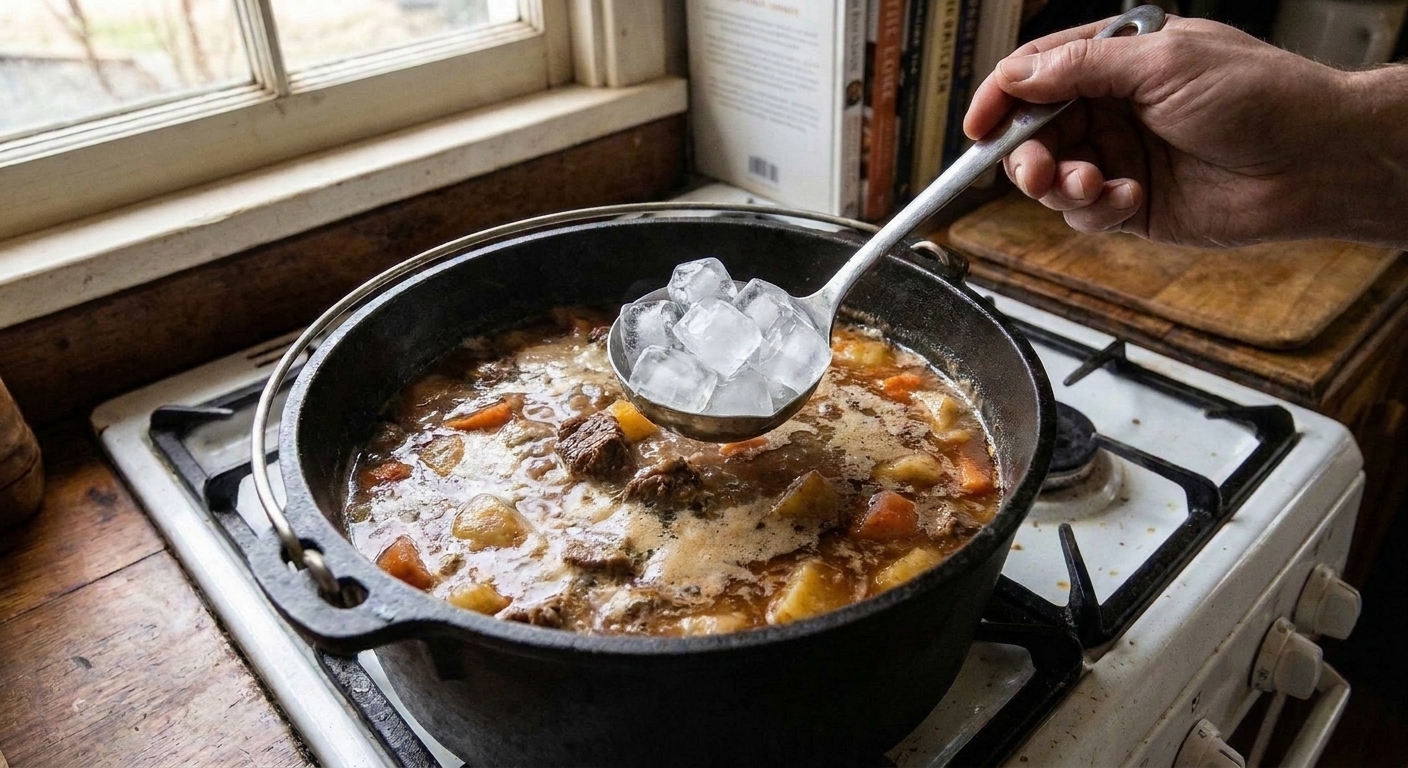
Two safe ways to do it
- Ice in a ladle: Fill a ladle with ice cubes and glide it over the stew’s surface (do not dump the ice in). Fat will firm up near the cold metal, then you skim it off.
- Ice pack method: Put ice cubes in a zip-top bag, seal well, and gently drag the bag across the surface. The fat firms up and sticks to the cold bag.
When to use it
Use the ice trick when you need a quick improvement and you do not want to transfer hot liquid to another container.
Most thorough: Chill and lift the fat cap (hands-off)
If you have time, this is the cleanest degrease you can get. When stew chills, the fat solidifies into a firm layer on top that you can remove in one satisfying lift.
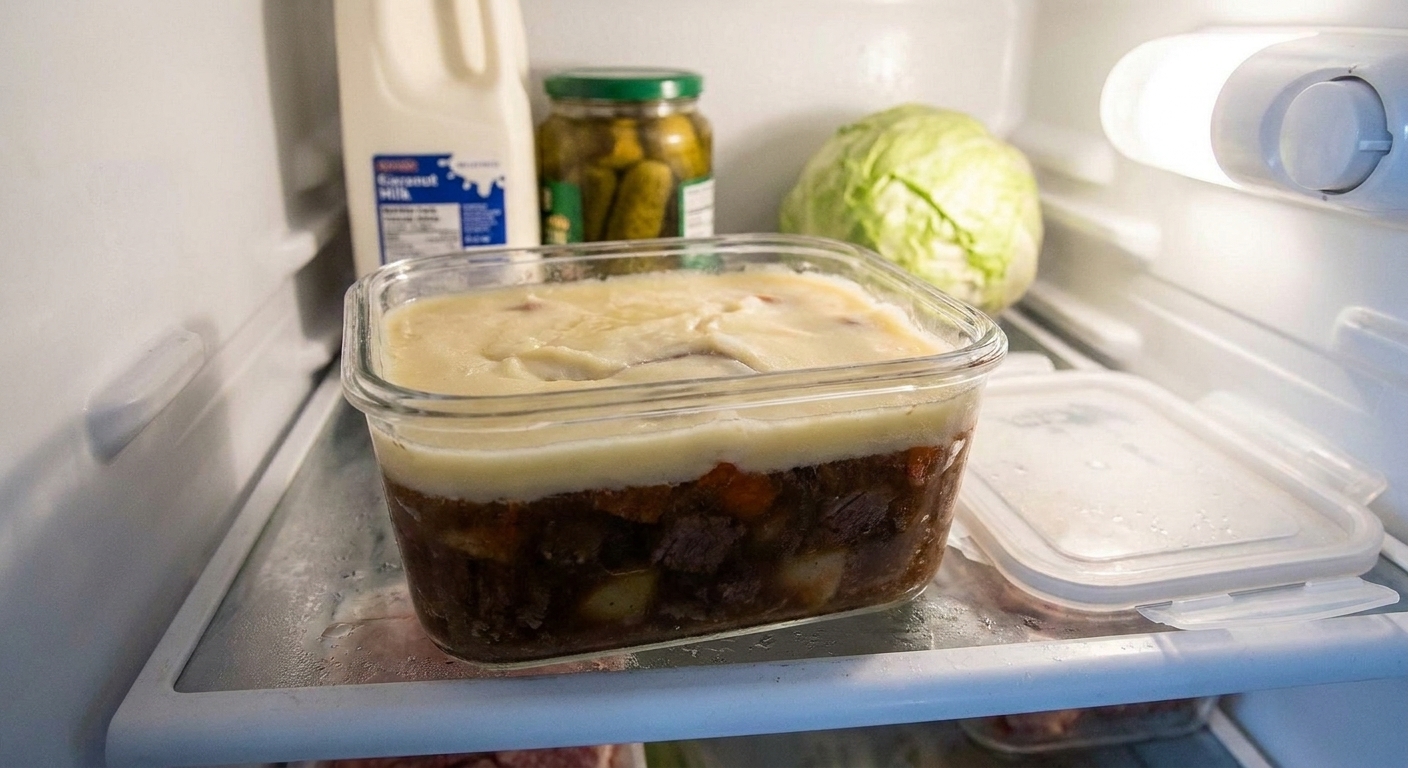
How to do it
- Cool the stew safely: Get it cooling promptly. If it is in a big pot, transfer to shallow containers so it cools faster. Do not leave stew out at room temperature for more than 2 hours total (1 hour if your kitchen is very warm).
- Refrigerate overnight.
- Lift off the fat cap with a spoon and discard (or save for cooking potatoes, if you are feeling old-school).
- Reheat gently over medium-low, stirring occasionally.
Why I love this method
You remove the most fat with the least fuss, and the flavors often taste even better the next day. Stew is one of those meals that really shines after a night in the fridge.
Keep it rich after degreasing
This is the part people do not warn you about: fat carries flavor and creates that luxurious mouthfeel. When you remove a lot of it, your stew can taste a bit flatter, even if it is perfectly seasoned.
Here is how to keep your stew tasting rich and cozy.
1) Reduce before you thicken
If the stew tastes a little watery after degreasing, try simmering uncovered for 5 to 15 minutes to concentrate flavor before adding any thickener. Reduction improves flavor and texture at the same time.
2) Bring back body (not just salt)
Fat gives richness, but that satisfying stew texture also comes from collagen and gelatin. A few ways to bring that back:
- Use gelatin-rich stock or bone broth (homemade, or a good boxed one that sets up slightly when chilled), then simmer briefly.
- Stir in a spoonful of tomato paste and simmer 2 to 3 minutes to round out the broth.
- Add a small splash of Worcestershire sauce for depth.
- If you have it: a spoonful of unflavored gelatin bloomed in cold water can add that slow-simmered feel, especially for quicker stews. (Optional, but surprisingly effective.)
3) Thicken only if you need it
If, after reducing, the stew still needs help, pick one of these and go slowly.
- Flour slurry: Mix 1 tablespoon flour with 2 tablespoons cold water, stir into simmering stew, then simmer 8 to 10 minutes to cook out any raw flour taste.
- Cornstarch slurry: Mix 1 tablespoon cornstarch with 1 tablespoon cold water, stir into simmering stew, cook 1 to 2 minutes. (Cornstarch thickens quickly but can feel a little glossy.)
- Mashed potato trick: Mash a few cooked potato chunks against the side of the pot and stir back in for a natural, stew-friendly thickness.
4) Season in layers
After degreasing, taste again. You may need:
- Salt to wake everything up.
- Acid (a teaspoon or two of red wine vinegar or lemon juice) to brighten and cut heaviness.
- A touch of sweetness (a pinch of sugar or a few diced carrots cooked in) if the stew tastes sharp after reducing.
5) Add a little good fat back if you went too far
I know, I know. We just removed fat. But if you degreased aggressively and the stew tastes thin, adding back a small amount of the right fat can make it taste whole again. Try:
- 1 to 2 teaspoons butter stirred in off heat
- 1 teaspoon olive oil (especially nice if your stew has tomatoes or herbs)
Why stew gets greasy
No shame here, just helpful context for next time.
- Fatty cut: Chuck is classic for a reason, but some packages are extra marbled. Trimming big outer seams of fat before browning can help.
- Not draining after browning: If you brown beef and there is a lot of rendered fat, spoon off or drain some before building the stew.
- Boiling too hard: A rolling boil and aggressive stirring can break fat into tiny droplets and disperse it through the broth, which tastes greasier and is harder to skim.
- Adding oil early: Many recipes start with oil for browning. If your beef renders a lot, that extra tablespoon can push it over the edge.
Common questions
Can I degrease beef stew while it is still hot?
Yes. Spoon-skimming, a fat separator, and the ice trick all work with hot stew. Just keep the heat low so the fat stays on the surface instead of mixing back in.
Will degreasing remove flavor?
It can remove some richness, but you can bring the flavor back by reducing uncovered and adjusting seasoning. A small splash of acid and a pinch of salt usually does wonders.
Why does my stew look greasy even after skimming?
Some fat can get broken into tiny droplets from boiling too hard or stirring aggressively. Try the ice trick, then simmer gently uncovered to help the texture settle.
What should I do with the skimmed fat?
Let it cool, then discard. If it is clean beef fat (no burned bits), you can refrigerate it and use a spoonful to roast potatoes or sauté onions later.
Can I chill stew quickly to remove fat sooner?
You can speed it up by transferring stew to shallow containers so it cools faster in the fridge. For safety, refrigerate promptly and avoid letting stew sit out longer than 2 hours total (1 hour if it is hot in your kitchen).
My go-to plan
If you want the simplest path, here is what I do in real life:
- Turn heat to low and let the pot sit 2 minutes.
- Spoon-skim for 3 to 5 minutes.
- If it still looks oily, do the ice-in-a-ladle trick for another 2 minutes.
- Simmer uncovered 5 to 10 minutes to bring the gravy back into balance.
- Taste, then adjust salt and add a tiny splash of vinegar if it needs brightness.
Your stew can be cozy and rich without being greasy. And once you learn these tricks, winter cooking season gets a whole lot easier.