

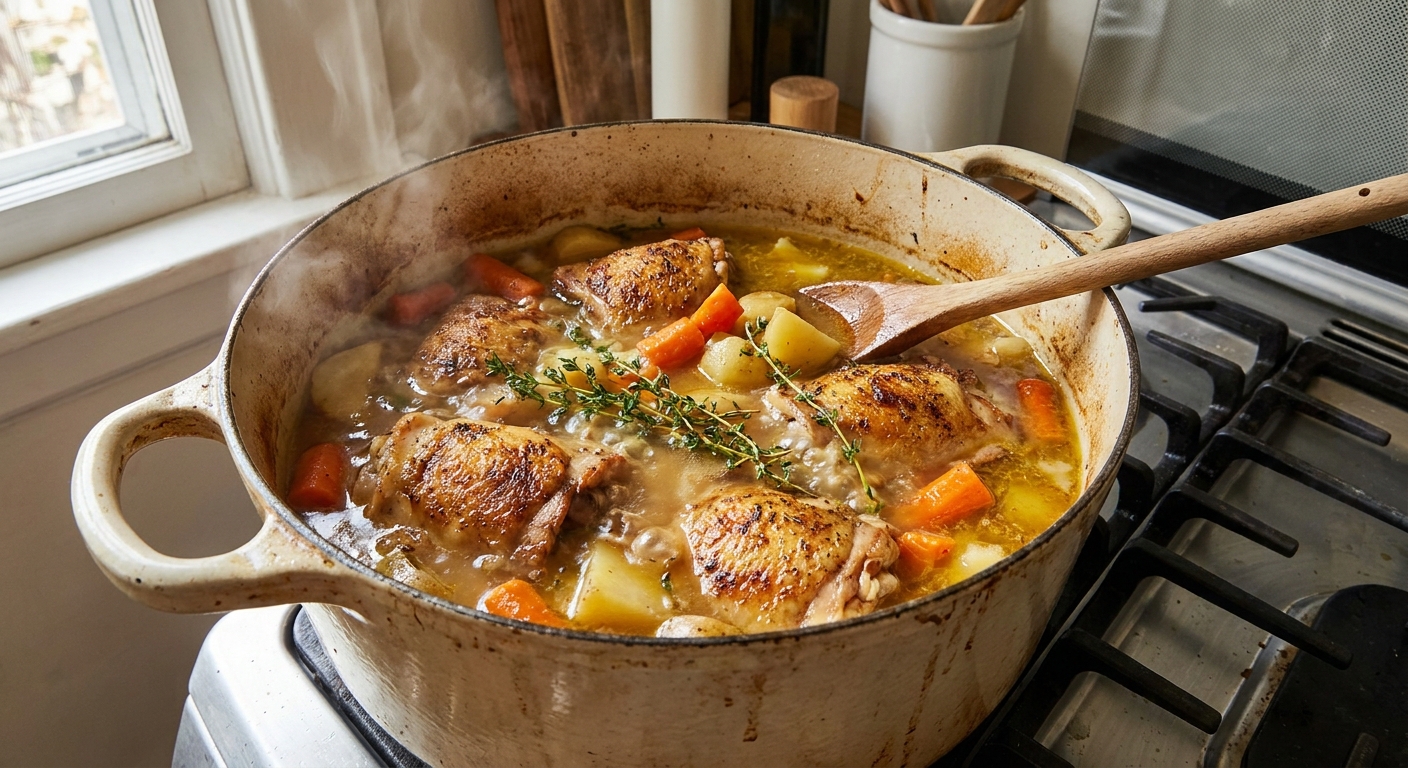
If there is one dinner I can count on to make my kitchen feel instantly calmer, it’s a pot of chicken stew that simmers quietly while I tidy the counter and slice a little bread. This one is inspired by that Ina Garten style of cooking I adore: simple ingredients, treated with care, and layered in a way that tastes like you worked all day.
We’re going for rustic, not fussy. Golden chicken, plenty of garlic, a splash of white wine, and a broth that turns silky from a quick flour dusting and slow simmer. It’s the kind of meal that makes a Tuesday feel like a small celebration.

The idea
Why This Recipe Works
- Golden chicken first: Browning adds deep flavor fast, even before the simmer starts.
- Wine plus stock: White wine brings brightness and that subtle “restaurant” note without being loud.
- Herb-forward: Thyme and parsley keep it classic and cozy, not heavy.
- Thickened the easy way: A light flour dusting on the chicken gives the broth gentle body without making a separate roux.
Shopping
Ingredient Notes
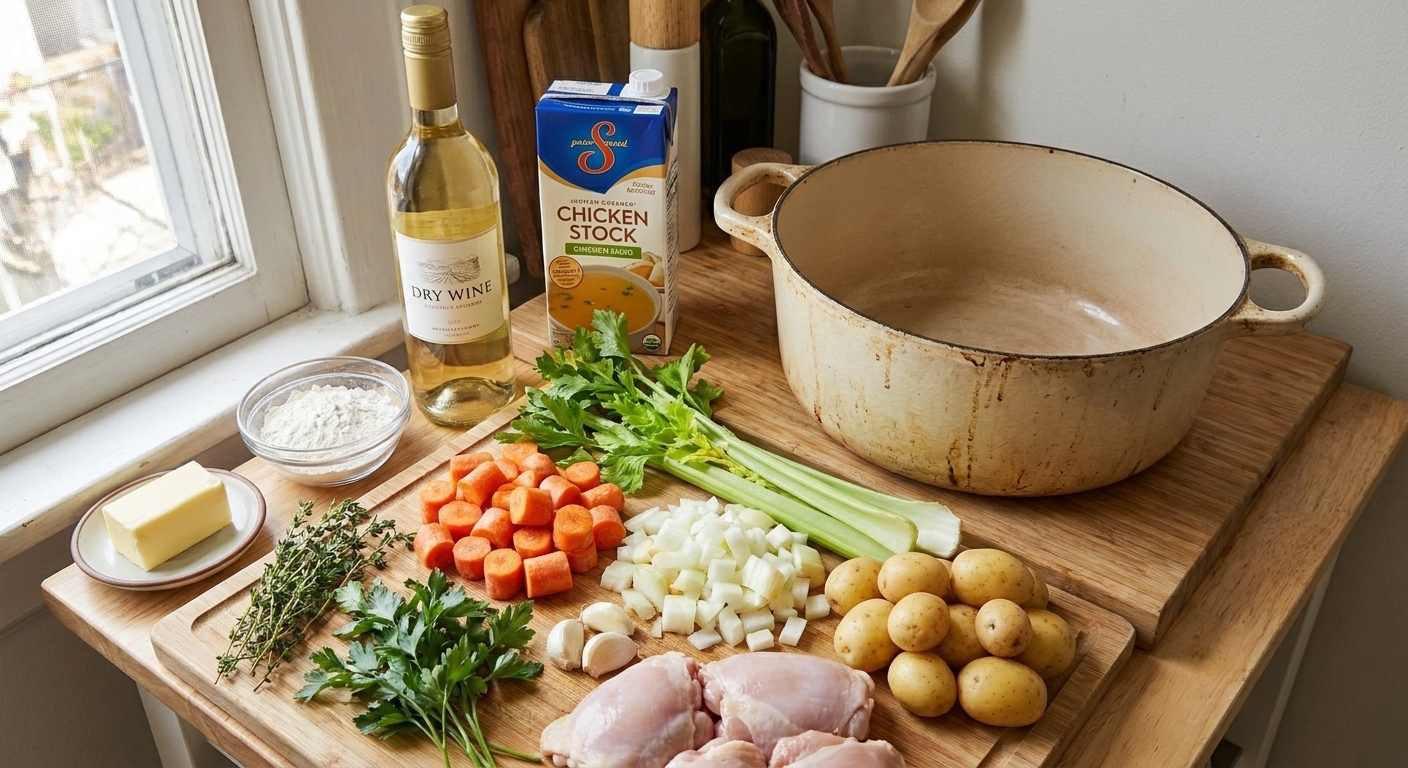
This stew is built from supermarket staples.
Best wine to cook with
Use a dry white wine you’d happily drink. Avoid anything sweet. If you’d rather skip wine, use an extra 3/4 cup stock and add 1 tablespoon lemon juice or white wine vinegar at the end for brightness.
Chicken note
Bone-in, skin-on chicken thighs stay juicy and become very tender when simmered to an internal temperature of at least 175°F to 185°F (the sweet spot for thighs).
Thickening note
The recipe creates a lightly thickened, silky broth from the flour dusting on the chicken. If you want it thicker, see the thickening options in the tips section.
Get set up
Equipment You Will Need
You’ll want a heavy pot here, ideally a Dutch oven. It holds heat beautifully and makes the simmer steady and gentle, which helps keep the chicken tender.
If you don’t have a Dutch oven, a heavy-bottomed pot works too.
Technique
Tips for Getting It Right
- Dry the chicken well: It’s the difference between golden skin and pale, steamy chicken.
- Don’t rush the browning: Those browned bits become your stew’s backbone.
- Keep the simmer gentle: A hard boil can make chicken tough and the broth cloudy.
- Season in layers: A pinch of salt on the vegetables, then final seasoning at the end.
- Finish with herbs and acid: Parsley plus lemon is the easiest way to make stew taste “finished.”
- If the butter browns too fast: If it starts browning too quickly or smells nutty before the chicken goes in, lower the heat slightly so it doesn’t scorch.
- For a thicker stew: Simmer uncovered 5 to 10 minutes, mash a few potatoes into the broth, stir in a slurry (1 tablespoon cornstarch mixed with 2 tablespoons cold water) during the last few minutes, or whisk in a beurre manié (1 tablespoon soft butter mashed with 1 tablespoon flour) off heat and return to a gentle simmer for 2 to 3 minutes.
Flexibility
Substitutes That Work
- No wine: Use an extra 3/4 cup stock and add 1 tablespoon lemon juice or white wine vinegar at the end for brightness.
- Potato swap: Use chopped parsnips or sweet potatoes instead of Yukon Gold potatoes (adjust simmer time as needed).
- Chicken swap: Chicken breasts can be used instead of thighs, but simmer just until cooked through (165°F), then rest and slice before serving to avoid drying out.
Make it yours
Variations to Try
This stew is forgiving and happy to flex with your fridge.
- Add mushrooms: Sauté 8 ounces sliced mushrooms after the onions soften.
- Make it extra hearty: Stir in a can (15 ounces) of drained cannellini beans near the end.
- More vegetables: Add 1 cup chopped fennel with the onions for a subtle, elegant sweetness.
- Creamy finish: Stir in 2 to 4 tablespoons crème fraîche off heat for a Barefoot Contessa-style richness.
- Add peas: Stir in 1 cup frozen peas for the last 2 minutes to heat through (optional but lovely).
On the table
What to Serve It With
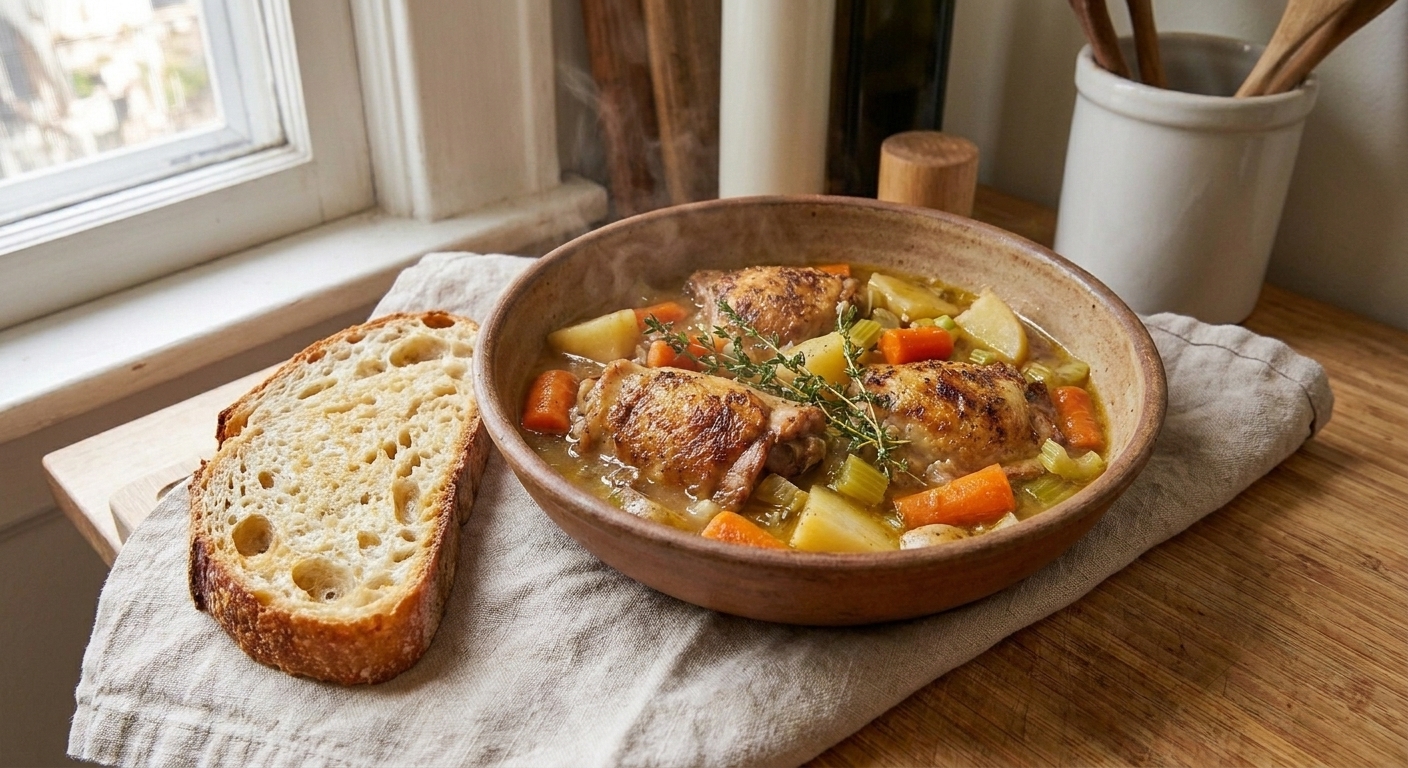
- Crusty bread or warm baguette for dunking
- Buttered egg noodles if you want it extra comforting
- Simple green salad with lemony vinaigrette to balance the richness
- Roasted green beans or asparagus for a clean, crisp side
Later
Storage, Freezing and Reheating
This stew is one of those rare dishes that tastes even better the next day, once the flavors have had time to mingle.
Make ahead
Make the stew up to 2 days ahead. Cool, cover, and refrigerate. If you can, wait to add peas and parsley until reheating day.
Storage
- Refrigerator: 3 to 4 days in an airtight container.
- Freezer: Up to 3 months. Thaw overnight in the fridge for best texture.
Reheating
Reheat gently on the stove over medium-low until hot, adding a splash of stock or water if it has thickened. Finish with fresh parsley and lemon again to make leftovers taste freshly made.
Watch out
Common Mistakes to Avoid
- Starting with wet chicken: If the chicken isn’t patted dry, it steams instead of browning, and you lose flavor.
- Rushing the browning: Skipping a deep golden sear means fewer browned bits to build the stew’s backbone.
- Letting the pot boil hard: A gentle simmer keeps the chicken tender and the broth clearer.
- Under-seasoning: Season in layers (a pinch of salt with the vegetables, then final seasoning at the end).
- Forgetting the finish: Parsley and lemon at the end are key to making the stew taste bright and “finished.”
Questions
Frequently Asked Questions
Can I use chicken breasts instead of thighs?
You can, but thighs stay juicier. If using breasts, brown them quickly and simmer just until cooked through (165°F), then rest them and slice before serving to avoid drying out.
How do I thicken the stew more?
Option 1: simmer uncovered a bit longer. Option 2: mash a few potatoes against the side of the pot. Option 3: stir 1 tablespoon cornstarch with 2 tablespoons cold water and add it during the last few minutes of simmering. Option 4: whisk in a beurre manié (1 tablespoon soft butter mashed with 1 tablespoon flour).
Do I need a Dutch oven?
No, but a heavy-bottomed pot helps prevent scorching. If your pot runs hot, keep the heat lower than you think and stir occasionally.
What if my stew tastes flat?
Add a pinch more salt, a squeeze of lemon, and an extra handful of chopped parsley. Those three fixes solve most “something is missing” moments.
The recipe
Ina Garten-Style Rustic Chicken Stew
Ina Garten-style rustic chicken stew with golden-browned chicken thighs, garlic, white wine, potatoes, and herbs, simmered into a silky, cozy broth and finished with parsley and lemon.
Ingredients
- 2 to 2 1/2 pounds bone-in, skin-on chicken thighs (about 6 to 8 thighs)
- About 2 teaspoons kosher salt, plus more to taste (start with 1 1/2 teaspoons if using regular salted stock)
- About 1 teaspoon black pepper, plus more to taste
- 1/3 cup all-purpose flour (for a light coating)
- 1 tablespoon olive oil
- 2 tablespoons unsalted butter
- 1 large yellow onion, chopped
- 3 medium carrots, sliced into thick coins
- 2 ribs celery, sliced
- 6 to 8 cloves garlic, minced
- 3/4 cup dry white wine (Sauvignon Blanc or Pinot Grigio)
- 4 cups chicken stock (low sodium)
- 1 1/2 pounds baby Yukon Gold potatoes, halved if large (or chopped Yukon Golds)
- 6 to 8 sprigs fresh thyme
- 1 bay leaf
- 1 cup frozen peas (optional)
- 1/3 cup fresh parsley, chopped (plus more if you’d like)
- 1/2 lemon (for a squeeze at the end)
Instructions
- Pat the chicken thighs dry. Season generously with salt and pepper, then lightly coat all over with flour and shake off the excess.
- Heat a Dutch oven over medium-high heat with the olive oil and butter. If the butter starts browning too quickly or smells nutty before the chicken goes in, lower the heat slightly so it doesn’t scorch.
- Brown chicken skin-side down until deeply golden, about 6 to 8 minutes, then flip and cook 2 minutes more. Transfer to a plate.
- Lower the heat to medium. Add onion, carrots, and celery with a pinch of salt. Cook until the onion softens, about 6 minutes. Add garlic and cook 30 seconds, just until fragrant.
- Pour in the white wine and scrape up the browned bits. Let it simmer 2 to 3 minutes to reduce and mellow the wine.
- Add chicken stock, potatoes, thyme sprigs, and bay leaf. Nestle the chicken back into the pot, skin-side up, along with any juices on the plate.
- Bring to a gentle simmer, then reduce heat to low. Cover partially with the lid slightly ajar (leave about a 1-inch gap) and cook 35 to 45 minutes, until the chicken is very tender (meat easily pulls from the bone), or the internal temperature is at least 175°F to 185°F.
- Remove thyme sprigs and bay leaf. If using peas, stir them in for the last 2 minutes to heat through. Taste and adjust salt and pepper.
- Right before serving, add chopped parsley and a small squeeze of lemon.
Recipe notes
Optional thickening (choose one): For a thicker stew, simmer uncovered 5 to 10 minutes; or mash a few potatoes against the side of the pot and stir them in; or stir 1 tablespoon cornstarch with 2 tablespoons cold water and add during the last few minutes; or whisk in a beurre manié (1 tablespoon soft butter mashed with 1 tablespoon flour) off heat and return to a gentle simmer for 2 to 3 minutes.
Make ahead: Make up to 2 days ahead. Cool, cover, and refrigerate. If you can, wait to add peas and parsley until reheating day.
Reheating: Reheat gently on the stove over medium-low until hot, adding a splash of stock or water if it has thickened. Finish with fresh parsley and lemon again.
Leftovers: Refrigerate 3 to 4 days or freeze up to 3 months; thaw overnight in the fridge for best texture.
Nutrition (per serving, approximate)
- Calories: ~620
- Fat: ~28 g
- Carbs: ~44 g
- Protein: ~45 g
- Fiber: ~6 g
- Sugar: ~7 g
- Sodium: ~850 mg
Nutrition values are approximate and will vary by ingredient brands, stock salinity, and serving size.