A reliable, fluffy vanilla buttercream you can spread or pipe on cakes and cupcakes. Plus my best tips for consistency, storage, and easy flavor twists.
Recipeva
Homemade Vanilla Cake
A tender, buttery homemade vanilla cake with simple pantry ingredients, plus a foolproof vanilla buttercream. Easy steps, baking tips, and make-ahead options.

Maya Reynolds
Maya Reynolds is a passionate home cook, recipe developer, and the creative voice behind Recipeva. With over a decade of experience translating complex culinary techniques into approachable weeknight meals, she focuses on creating dishes that bring joy to the dinner table without the stress.
Created September 24, 2026
Updated September 24, 2026
If you have ever wanted one go-to vanilla cake that feels bakery-level but is totally doable on a weeknight, this is it. It bakes up tender and plush, with that warm vanilla aroma that makes the whole kitchen smell like a celebration. No fancy ingredients, no complicated mixing method, and yes, you can absolutely make it even if you are not “a baker.”
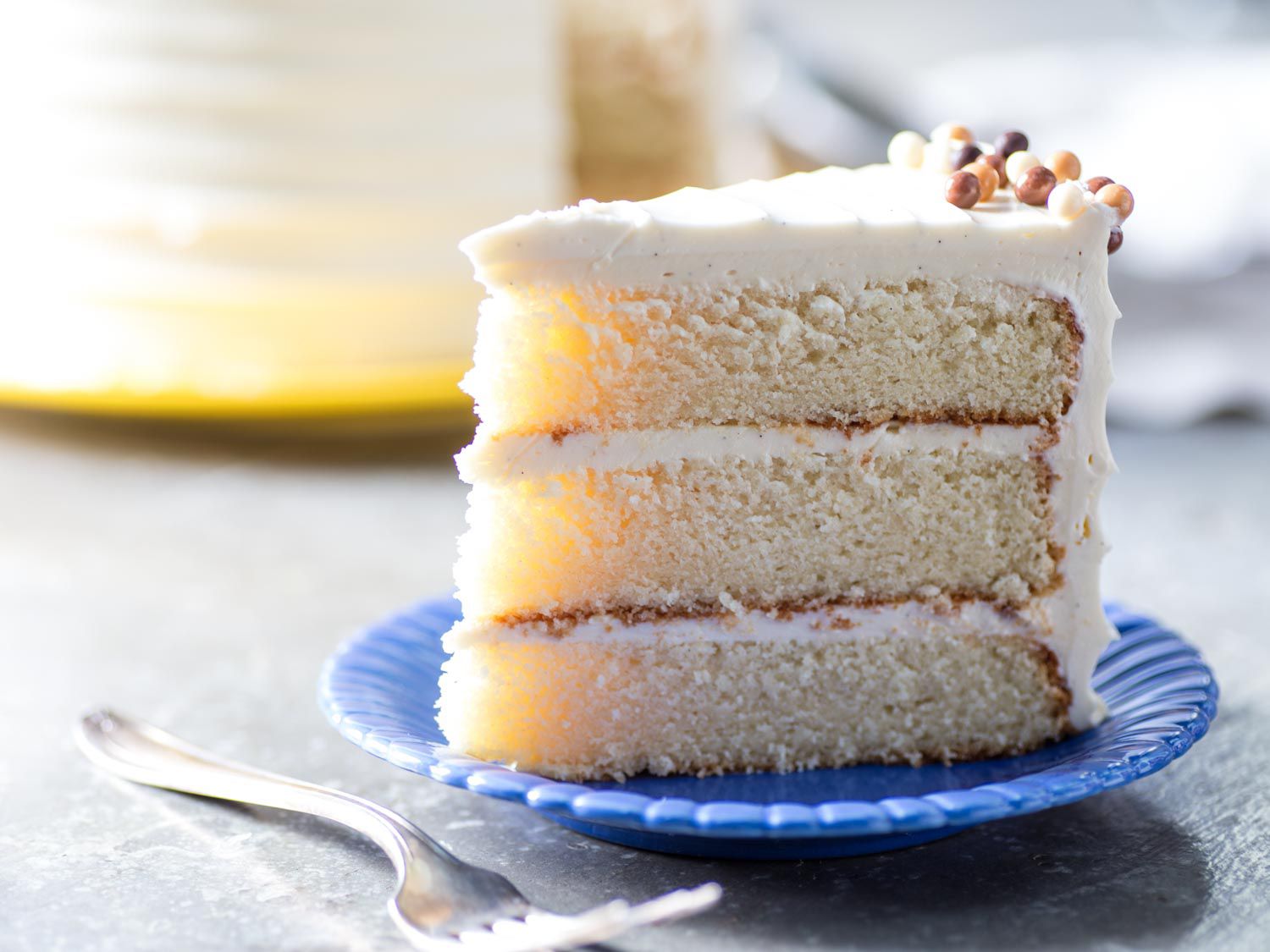
I am going to walk you through exactly what to do and why it works, plus the little details that prevent dry cake, sunken centers, and gummy layers. Grab your butter and vanilla, and let’s do this.
Why this vanilla cake works
- Buttery flavor with a soft crumb: We cream butter and sugar for lift, then use milk for moisture and a gentle, classic cake texture.
- Reliable rise: A balanced blend of baking powder plus just enough structure from eggs keeps it fluffy without being fragile.
- Real vanilla impact: Vanilla extract does the heavy lifting, and vanilla bean paste is an easy upgrade if you have it.
- Flexible: Make it as layers, a sheet cake, or cupcakes with simple timing tweaks below.
Ingredients
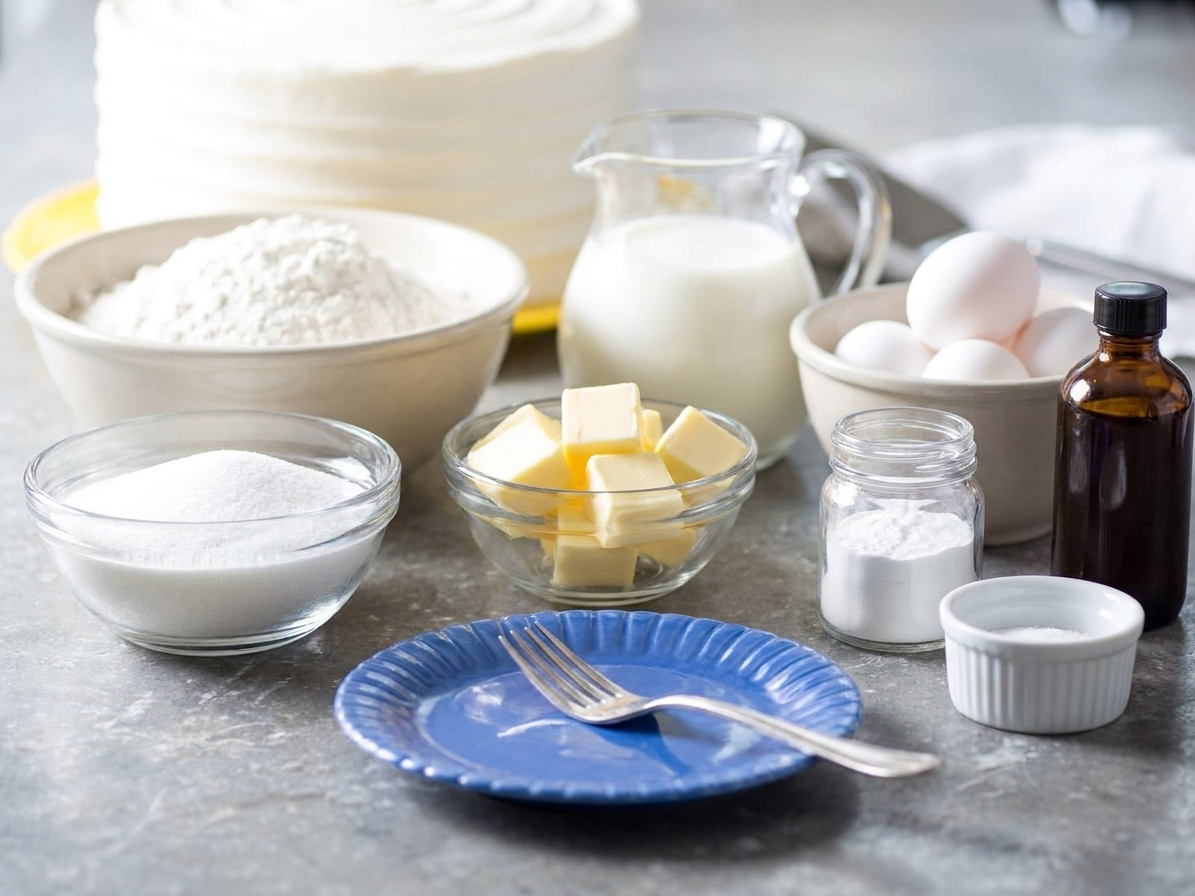
Vanilla cake
- 2 1/2 cups (300 g) all-purpose flour, spooned and leveled
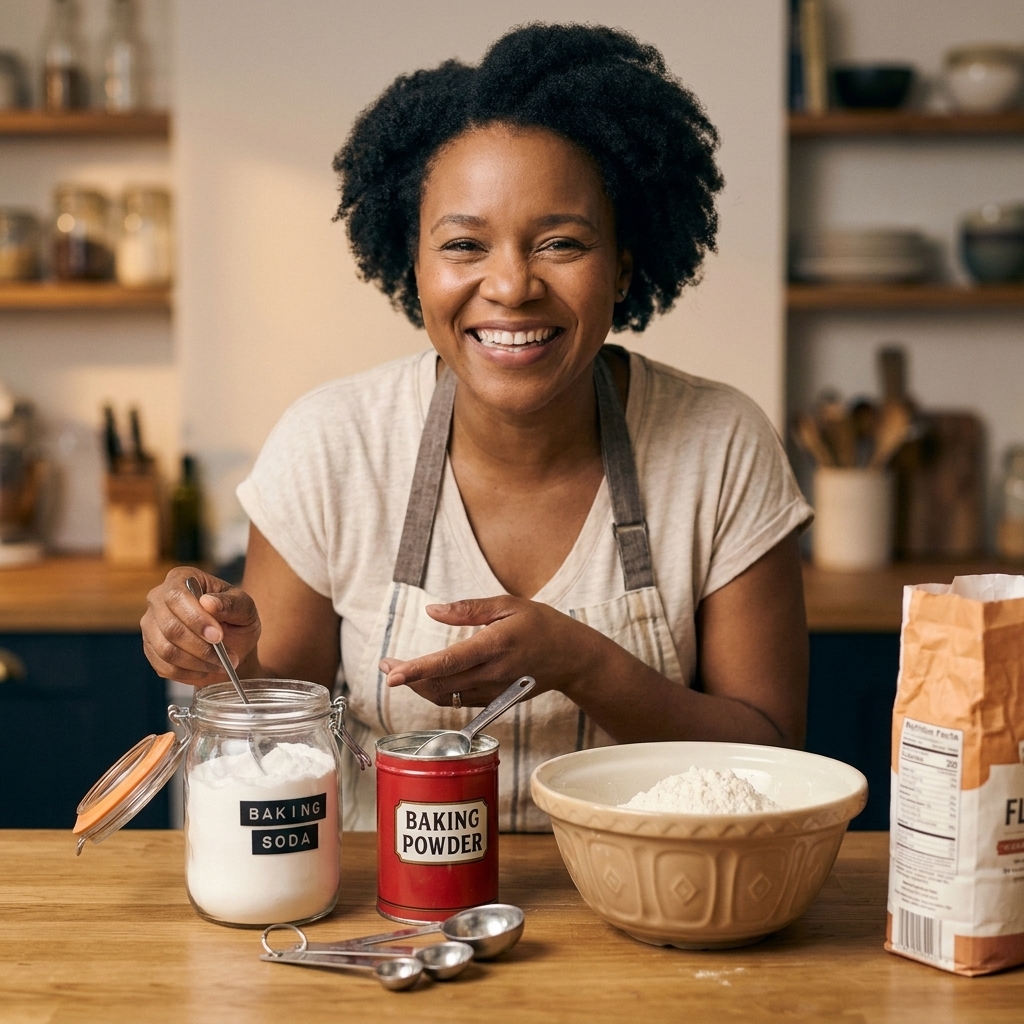
- 2 1/2 tsp baking powder
- 1/2 tsp fine salt
- 3/4 cup (170 g) unsalted butter, softened
- 1 3/4 cups (350 g) granulated sugar
- 4 large eggs, room temperature
- 1 tbsp vanilla extract (or 1 tbsp vanilla bean paste)
- 1 cup (240 ml) whole milk, room temperature
- 1/4 cup (60 ml) sour cream or full-fat plain yogurt, room temperature
Vanilla buttercream (enough for a 2-layer cake)
- 1 cup (226 g) unsalted butter, softened
- 3 1/2 to 4 cups (420 to 480 g) powdered sugar, sifted if lumpy
- 1 tbsp vanilla extract (or 1 tbsp vanilla bean paste)
- 2 to 4 tbsp heavy cream or milk
- Pinch of salt
Ingredient notes: Whole milk gives the best texture. Sour cream adds a subtle tang and helps keep the crumb moist for days. If you only have 2 percent milk, it will still work. Vanilla bean paste is usually a 1:1 swap with extract, but you can adjust to taste if your paste is especially strong.
Equipment you will need
- Two 8-inch or 9-inch round cake pans (see pan notes below)
- Mixing bowls
- Hand mixer or stand mixer
- Whisk and rubber spatula
- Parchment paper
- Cooling rack
Step-by-step: how to make homemade vanilla cake
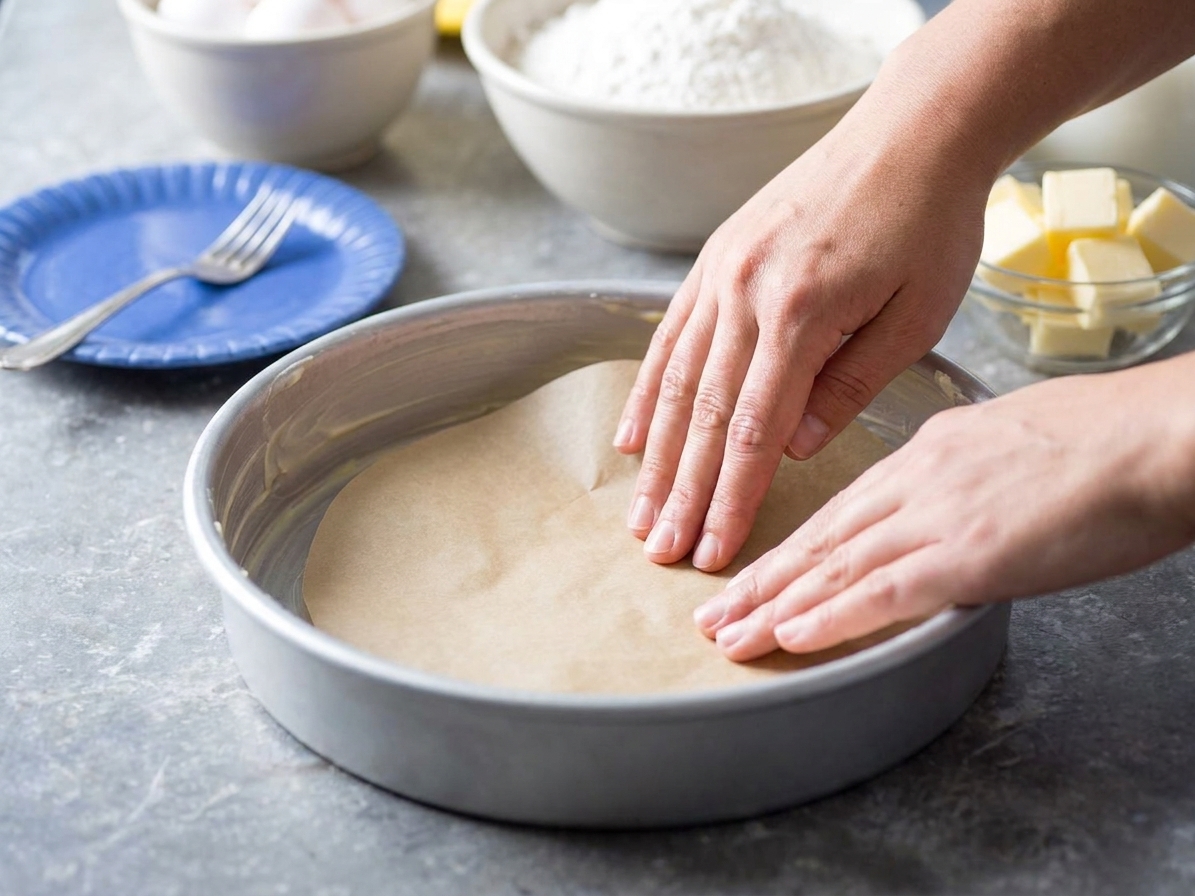
1) Prep your pans and oven
Heat oven to 350°F (175°C). Grease two round cake pans, line the bottoms with parchment, then lightly flour the sides. This is the easiest insurance policy against sticking.
Quick pan note: For 9×13, grease and line with parchment if you want easy lifting. For cupcakes, line the pan with paper liners.
2) Mix the dry ingredients
In a medium bowl, whisk together the flour, baking powder, and salt. Set aside.
3) Cream butter and sugar
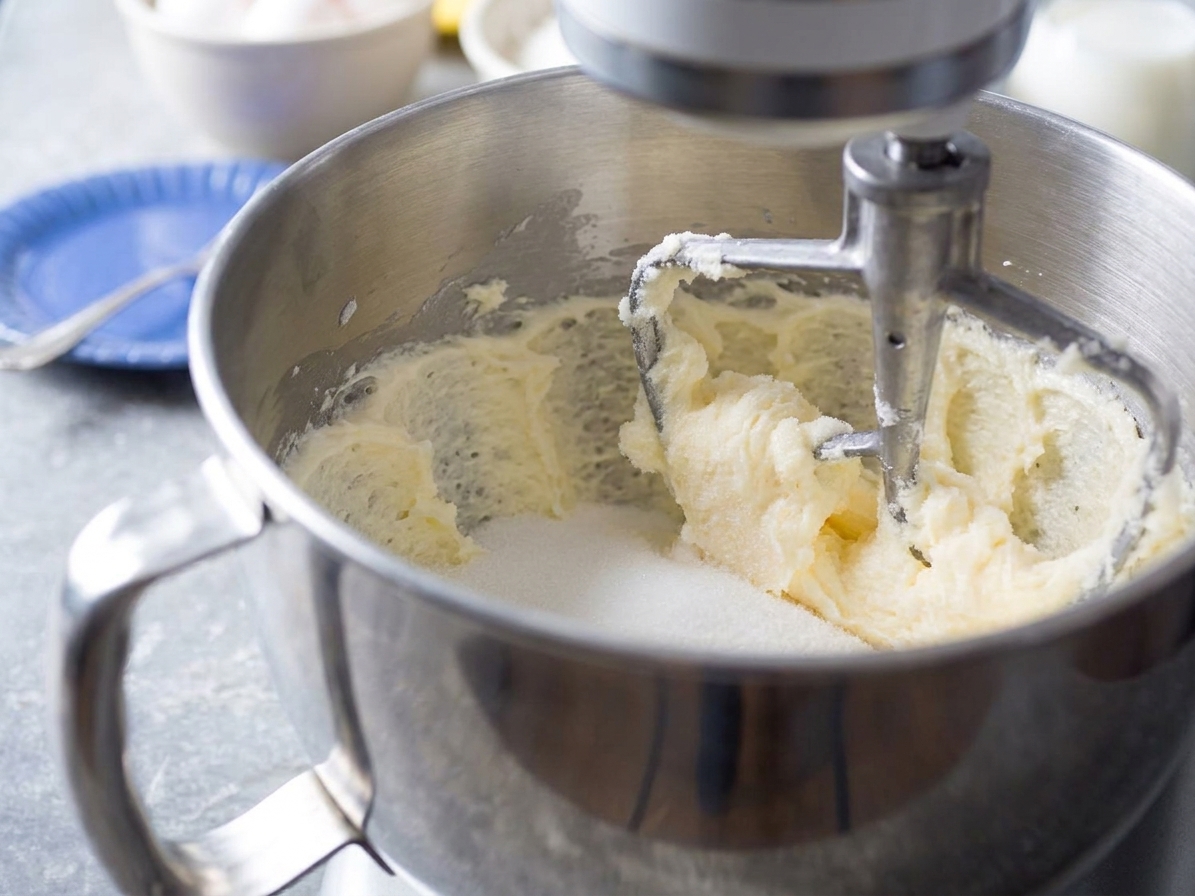
In a large bowl, beat butter and sugar on medium-high until very light and fluffy, 3 to 5 minutes. You are looking for a paler color and a noticeably airy texture. This step creates tiny air pockets that help the cake rise evenly.
4) Add eggs and vanilla
Add eggs one at a time, beating well after each addition and scraping down the bowl. Mix in vanilla.
If the batter looks a little curdled: Totally normal, especially if anything was slightly cool. Once the flour goes in, it smooths out.
5) Alternate dry ingredients with milk
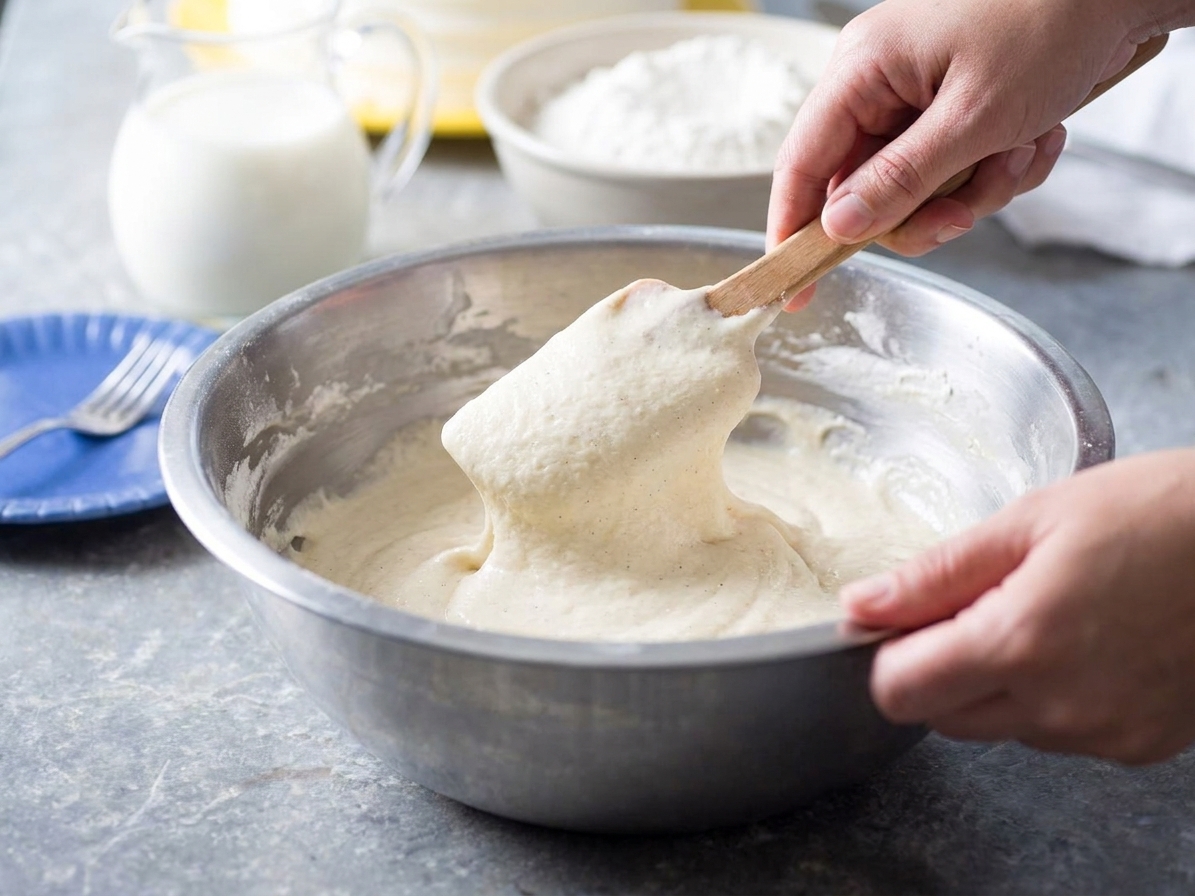
On low speed, add the flour mixture in three additions, alternating with the milk in two additions (flour, milk, flour, milk, flour). Mix just until you no longer see dry flour, then scrape the bowl once and give it a final brief mix.
6) Fold in sour cream
Gently fold in the sour cream or yogurt until smooth. Do not overmix. Overmixing develops gluten and can make the cake dense.
7) Bake
Divide batter evenly between pans and smooth the tops. As a general guide, fill cake pans about halfway to a little over halfway. Bake 25 to 32 minutes, until a toothpick inserted in the center comes out clean or with a few moist crumbs.
Optional thermometer check: The center is typically done around 200 to 205°F (93 to 96°C).
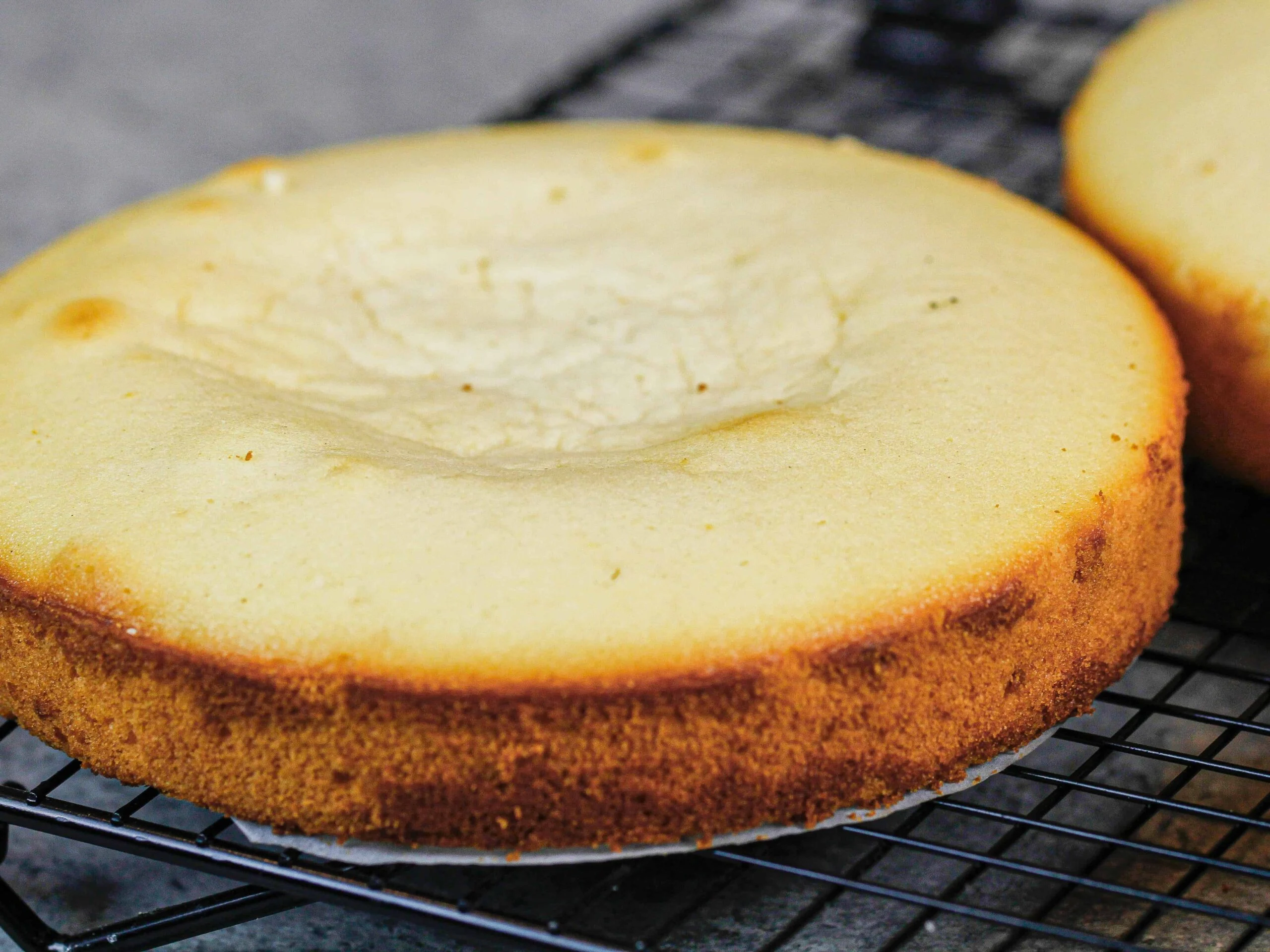
Cool in pans for 10 minutes, then turn out onto a rack to cool completely before frosting.
Vanilla buttercream (balanced and fluffy)
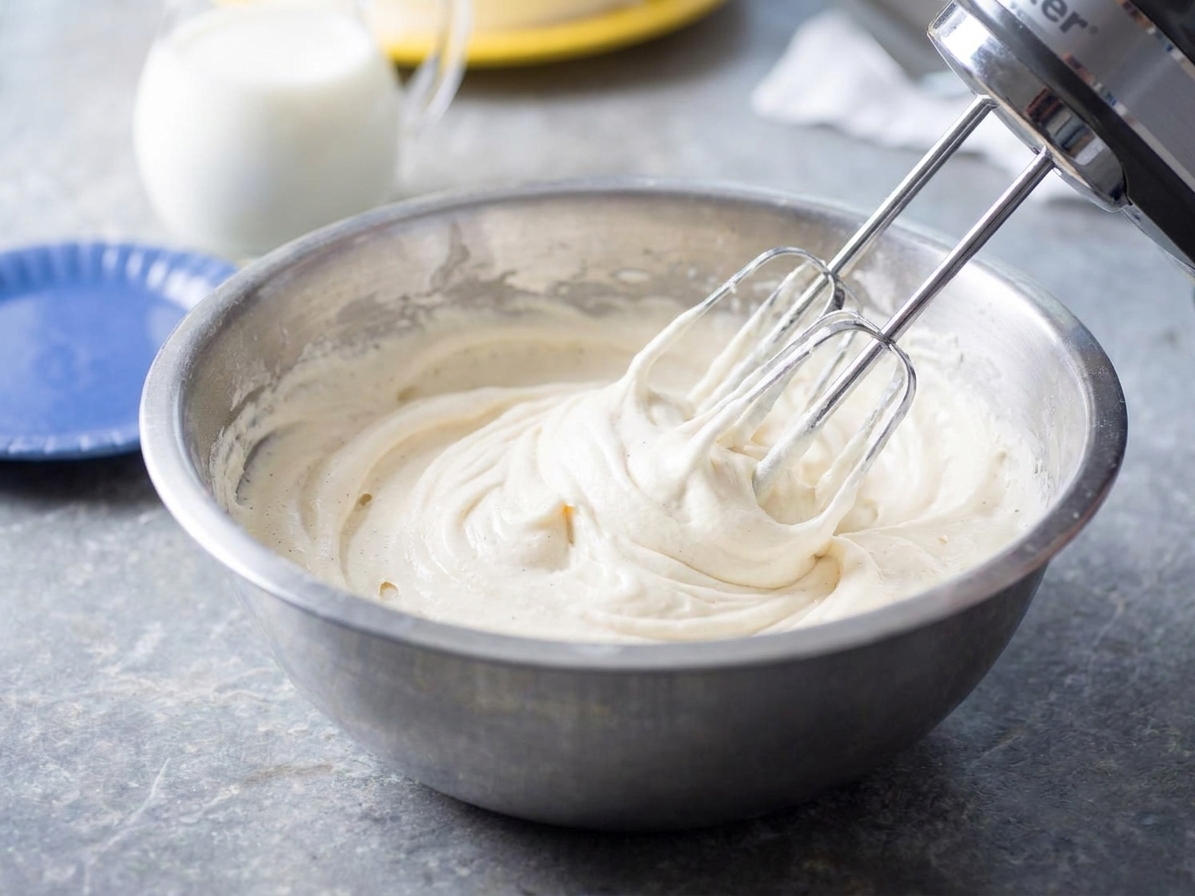
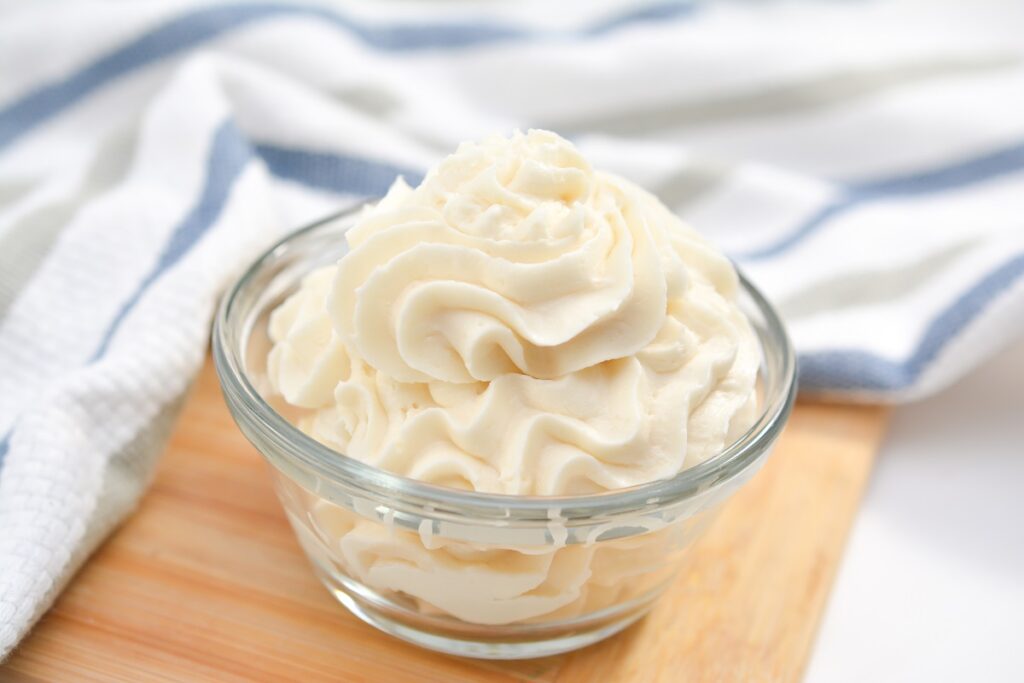
This frosting is fluffy, classic, and easy to spread. It is a standard American-style buttercream, but the pinch of salt and a good vanilla keep it tasting balanced instead of cloying. The pinch of salt is not optional in my kitchen. It makes the vanilla taste louder and keeps the sweetness in check.
How to make it
- Beat butter on medium-high for 2 minutes until creamy and lighter in color.
- Add powdered sugar 1 cup at a time on low speed, then increase to medium and beat until smooth.
- Beat in vanilla and a pinch of salt.
- Add cream or milk 1 tablespoon at a time until it is silky and spreadable.
- Whip on medium-high for 30 to 60 seconds for extra fluff.
Texture tip: If your buttercream feels too thick, add a splash more cream. If it feels too loose, add a little more powdered sugar.
Assembling and frosting your cake
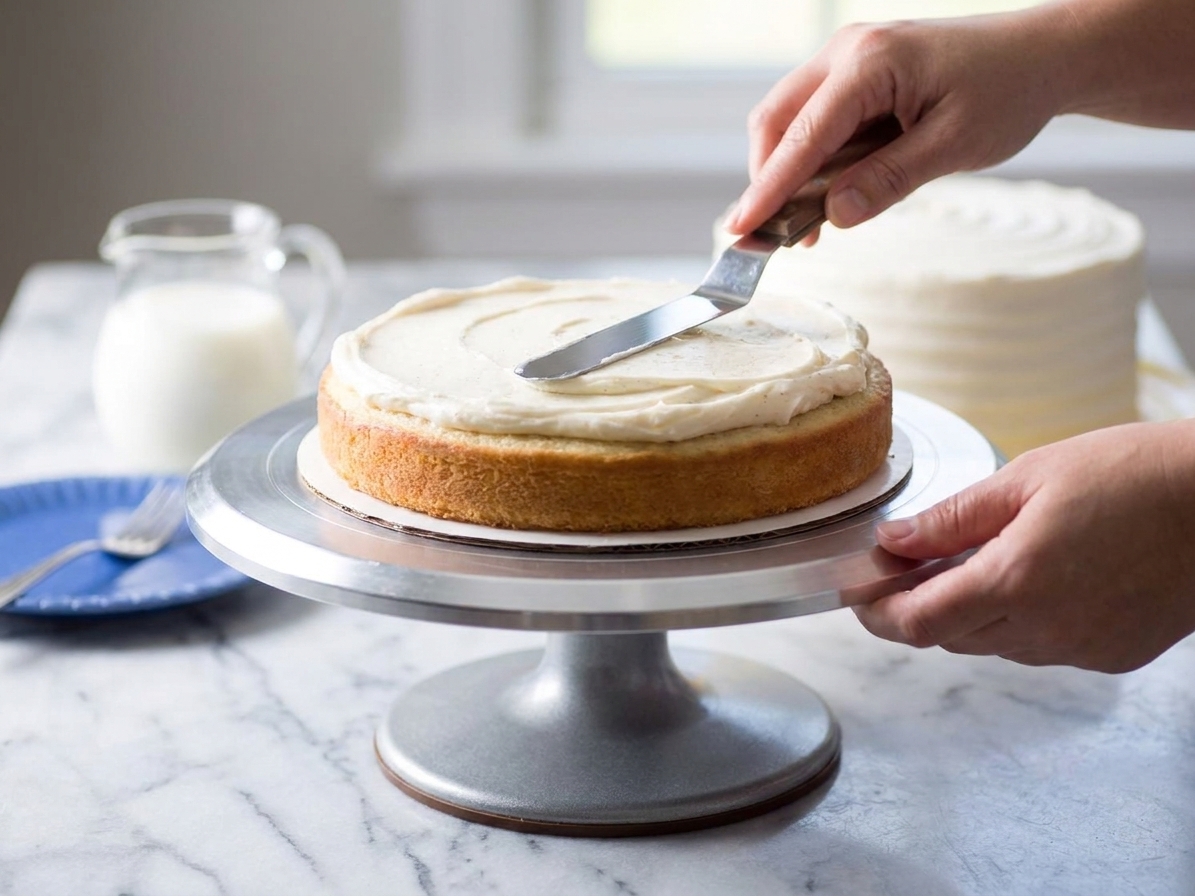
- Level if needed: If the layers domed, trim the tops with a serrated knife once fully cooled.
- First layer: Place one cake layer on a plate or stand. Spread about 3/4 cup frosting on top.
- Second layer: Add the second layer, flat side up for the smoothest top.
- Crumb coat: Apply a thin layer of frosting all over, then chill 15 minutes.
- Final coat: Frost generously, swirl it rustic, or smooth it clean.
My “calm baker” reminder: Your cake does not need to look perfect to taste perfect. A few swoops of frosting are charming, and nobody complains about extra buttercream.
Pan sizes and baking times
- Two 9-inch rounds: 23 to 28 minutes (slightly thinner layers)
- Two 8-inch rounds: 25 to 32 minutes (a bit taller)
- 9×13 sheet cake: 30 to 38 minutes
- 18 to 24 cupcakes: 16 to 20 minutes (fill liners about 2/3 full)
For any size, start checking a few minutes early. Ovens vary, and vanilla cake goes from “perfect” to “dry” faster than we would like.
Tips for the best vanilla flavor
- Use good vanilla: Pure extract or vanilla bean paste makes a noticeable difference.
- Do not skip the salt: It sharpens vanilla and keeps the cake from tasting flat.
- Room temperature ingredients: They combine smoothly, which helps the cake bake evenly.
- Measure flour gently: Spoon into the measuring cup and level off. Packing flour leads to a dry, heavy cake.
Troubleshooting (because cake has feelings)
My cake is dry
- It likely baked a little too long. Pull it when the center is set and the toothpick has a few moist crumbs.
- Too much flour can also do it. Spoon and level, or use a kitchen scale.
My cake sank in the middle
- Oven door opened too early, or the cake needed a few more minutes.
- Expired baking powder can cause poor structure and sinking.
My cake is dense
- Butter and sugar were not creamed long enough, or the batter was overmixed after adding flour.
- Ingredients were too cold, which can prevent proper aeration.
My frosting is grainy
- Powdered sugar was lumpy. Sift it next time or beat a little longer.
- Butter was too cold. Let it soften fully before whipping.
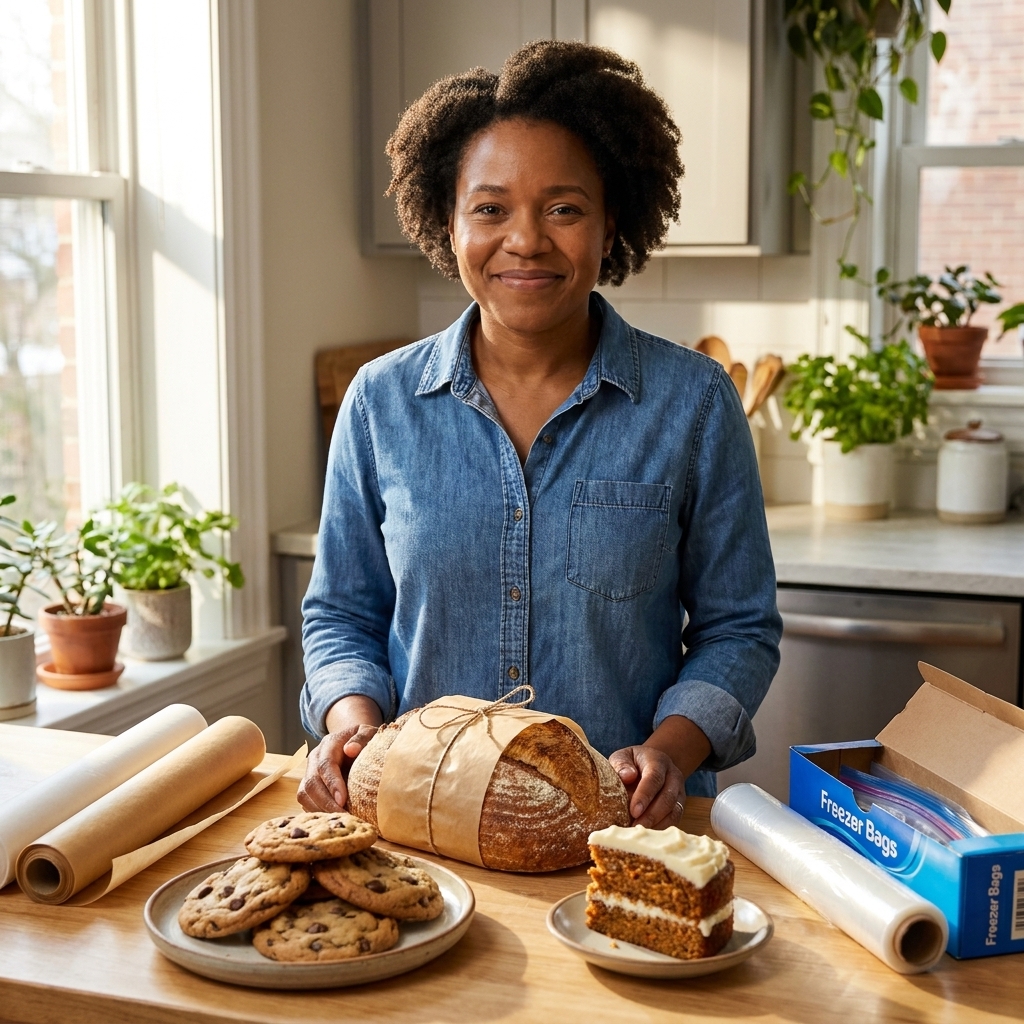
Make-ahead, storage, and freezing
Make ahead
- Cake layers: Bake up to 2 days ahead. Wrap tightly and store at room temperature for 1 day or refrigerate for 2 days.
- Buttercream: Make up to 1 week ahead, refrigerated. Bring to room temp and re-whip before using.
Storage
Store frosted cake covered at room temperature for up to 2 days if your kitchen is cool. If your kitchen runs warm, refrigerate instead (up to 5 days). Let slices come to room temperature for the best texture.
Freezing
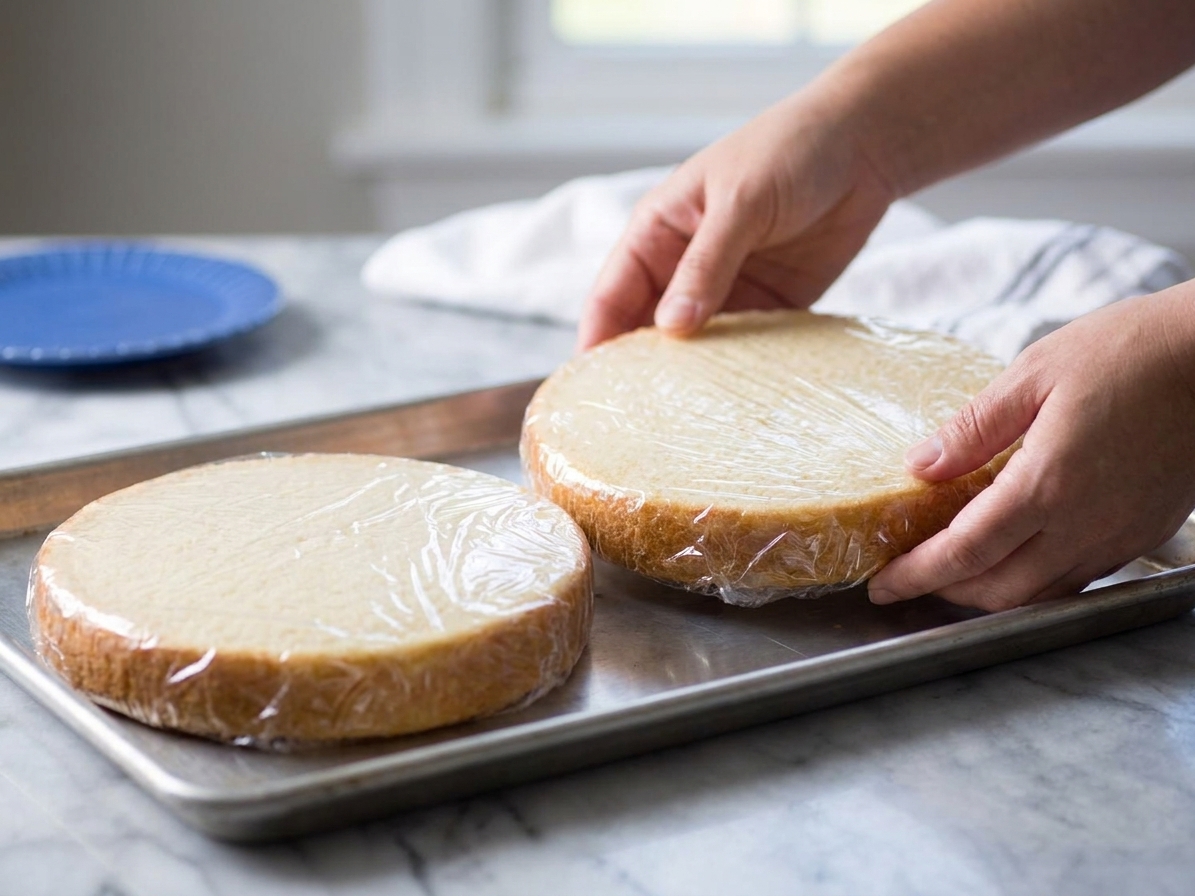
Wrap unfrosted layers tightly in plastic wrap, then foil. Freeze up to 2 months. Thaw wrapped at room temperature, then frost.
Easy variations
- Funfetti: Fold 1/2 cup rainbow sprinkles into the finished batter.
- Lemon vanilla: Add 1 tbsp lemon zest to the sugar before creaming. Rub it in with your fingers to release the oils.
- Almond: Replace 1/2 tsp of the vanilla with almond extract (a little goes a long way).
- Strawberries and cream: Fill the middle with sliced strawberries and a thin layer of frosting.
Serving ideas
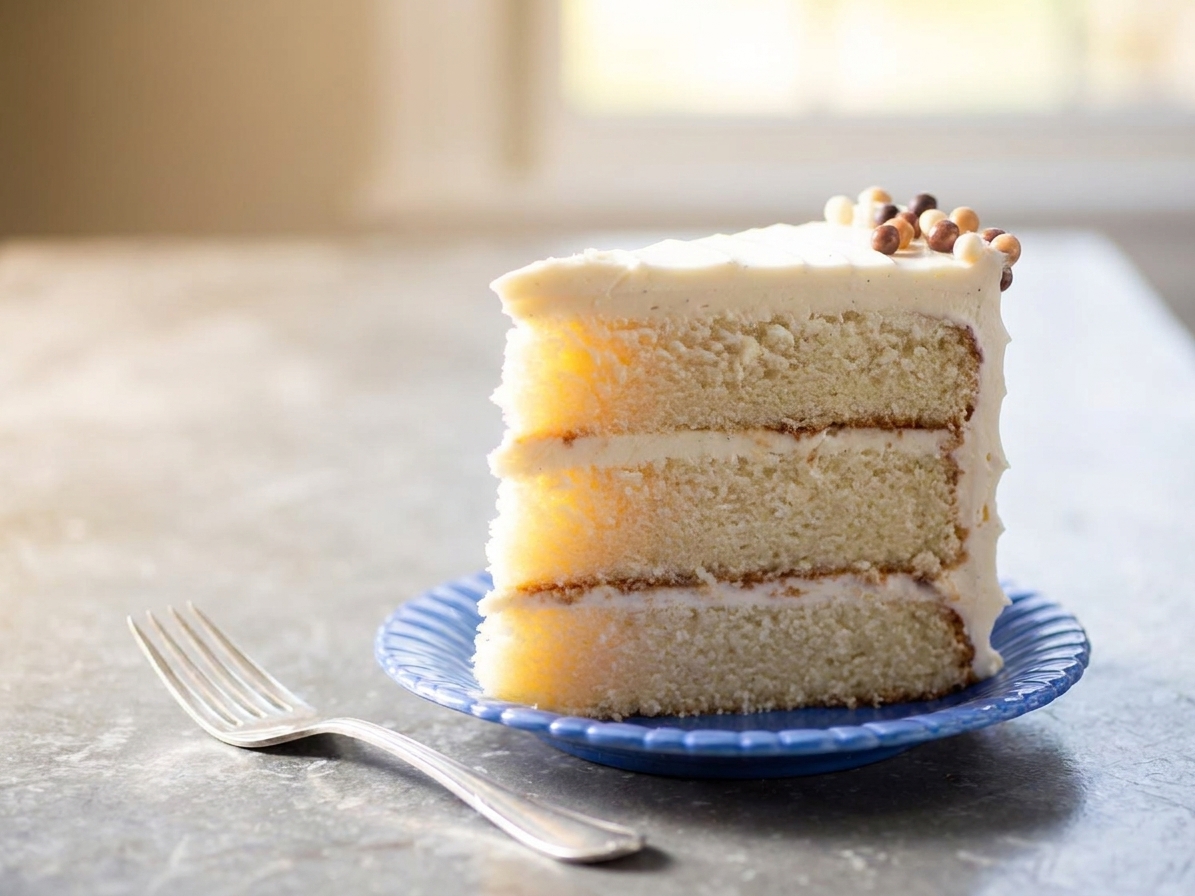
- Fresh berries and a dusting of powdered sugar
- Chocolate ganache drizzle
- Sprinkles for instant birthday vibes
- A scoop of vanilla or strawberry ice cream
FAQ
Can I use cake flour instead of all-purpose?
Yes. Cake flour makes the crumb a bit finer and softer. If you have a scale, start with 285 to 300 g cake flour in place of the all-purpose flour, and use the batter texture as your guide. (Cake flour weights vary by brand.) The batter may look a touch looser, which is normal.
Can I make this into a three-layer cake?
Yes, but you will want to increase the frosting by about 50 percent so you have enough for the extra layer and coverage.
Do I have to use sour cream or yogurt?
I really recommend it for moisture and tenderness, but if you are in a pinch, you can replace it with an equal amount of milk. The cake will be slightly less rich.
How do I get flat cake layers?
Use baking strips on the pans or wrap the pans with damp towel strips designed for baking. Also make sure your oven is fully preheated before the cake goes in.
My final pep talk
Vanilla cake is simple, yes, but it is also a tiny masterclass in the basics. Once you nail a great vanilla layer cake, you can turn it into just about anything. Take your time, let the mixer do the work, and remember that a cake baked with care always tastes like love, even if the frosting swirls are a little “rustic.”