

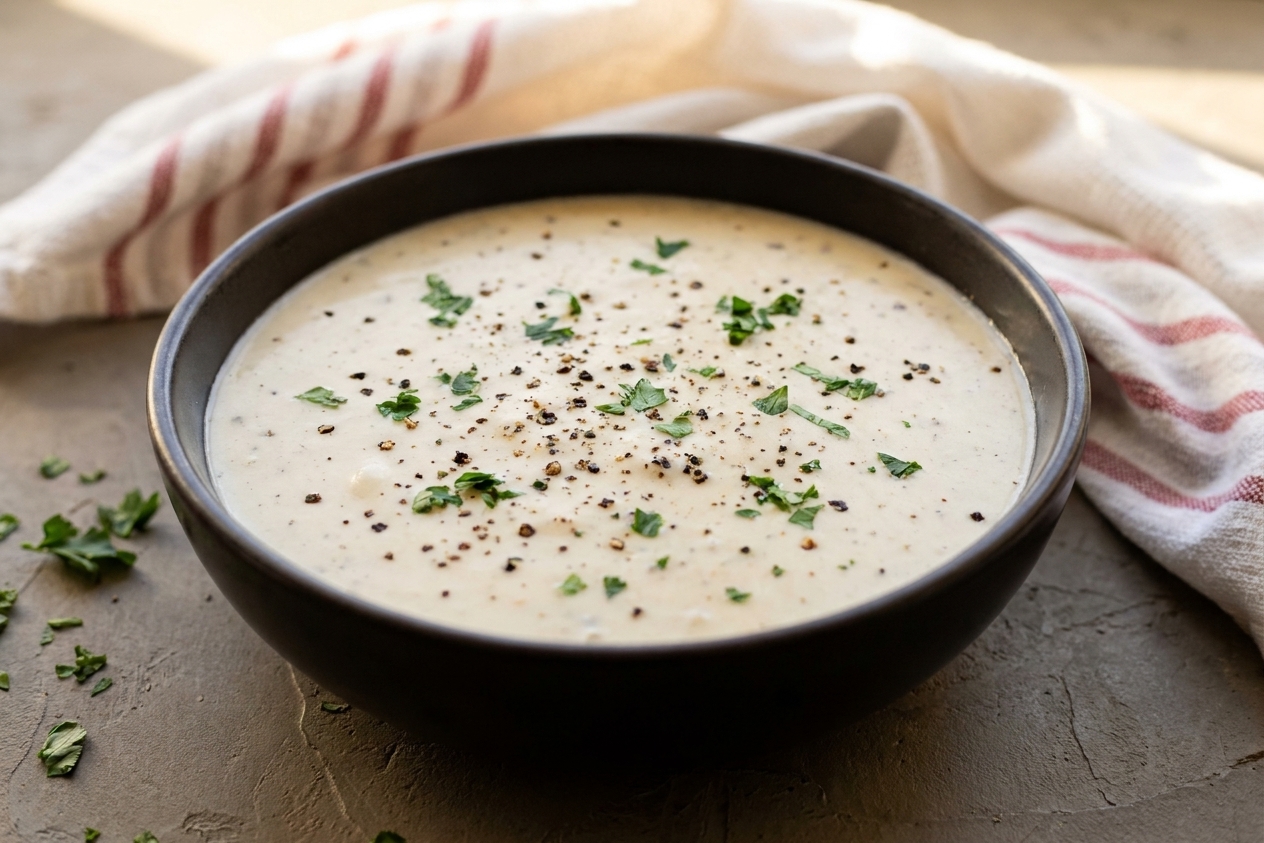
If you have ever dunked a fry into that creamy, peppery chicken gravy and thought, why does this taste so good, welcome. This is my home kitchen version of that classic fast-food style gravy: pale brown, silky, savory, and unapologetically black-pepper forward.

The key is not fancy ingredients. It is how you build the roux and which broth you choose. I am going to walk you through the process so it thickens smoothly without tasting like raw flour, and I will give you easy fixes for the two most common gravy heartbreaks: lumps and that too-thin, won’t-coat-a-spoon situation.
This is weeknight gravy. The kind you can make while your chicken bakes, your biscuits warm, or your mashed potatoes are finishing up. And yes, I do recommend tasting with a spoon. It is basically a law in my house.
The idea
Why This Recipe Works
- A quick blonde roux: Cooking the flour in fat for just a couple of minutes removes the raw flour taste while keeping the gravy light in color, which is key for that restaurant-style look.
- Chicken broth plus a bouillon boost: Store-bought broth can be a little flat. A small amount of chicken bouillon adds the concentrated savory depth you expect.
- Pepper-forward seasoning: Lots of black pepper is not optional here. It is part of the signature flavor.
- Whisking strategy prevents lumps: Adding broth gradually and whisking constantly lets the starch hydrate evenly so the gravy turns glossy and smooth.
Shopping
Ingredient Notes
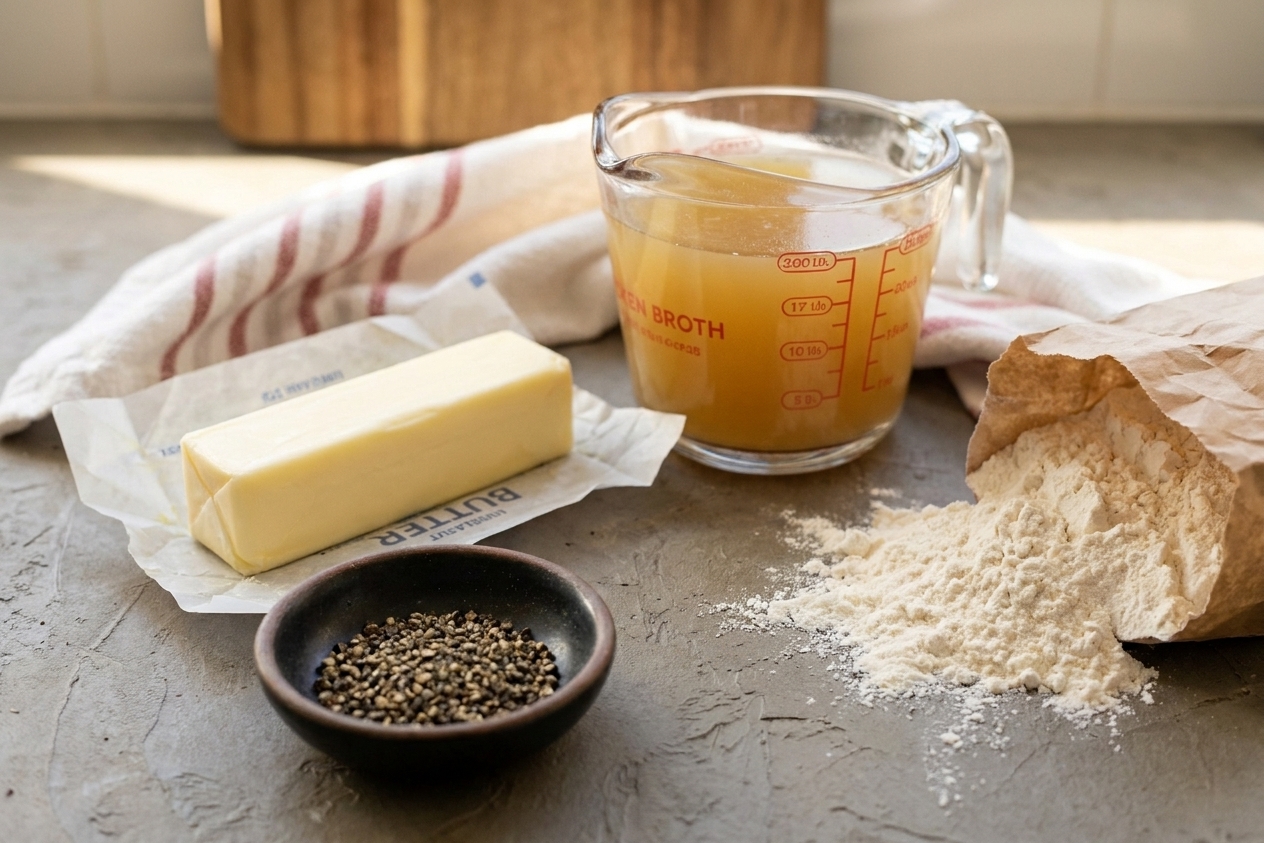
- Butter: Gives a rich, familiar diner-style base. You can swap to drippings if you have them, but butter keeps it consistent.
- All-purpose flour: Standard gravy thickener. Measure accurately, and whisk it in fully so it does not clump.
- Chicken broth or stock: Use low-sodium if possible so you can control the salt. Stock tends to taste richer than broth, but either works.
- Chicken bouillon: Powder, paste, or crushed cube all work. This is the shortcut that helps the gravy taste more like “it came from a restaurant,” even though we are absolutely making it in a saucepan.
- Black pepper: Freshly ground gives the best bite, but pre-ground is totally fine.
- Onion powder and garlic powder: Tiny amounts round out the savoriness without turning this into an onion gravy.
- Optional pinch of MSG: Not required, but it can help mimic that fast-food savory finish. If you use bouillon, you may not need it.
Get set up
Equipment You Will Need
- Small to medium saucepan
- Whisk
- Measuring spoons and cups
- Rubber spatula for scraping the pan corners
- Fine-mesh strainer (optional, for ultra-smooth gravy or lump rescue)
Technique
Tips for Getting It Right
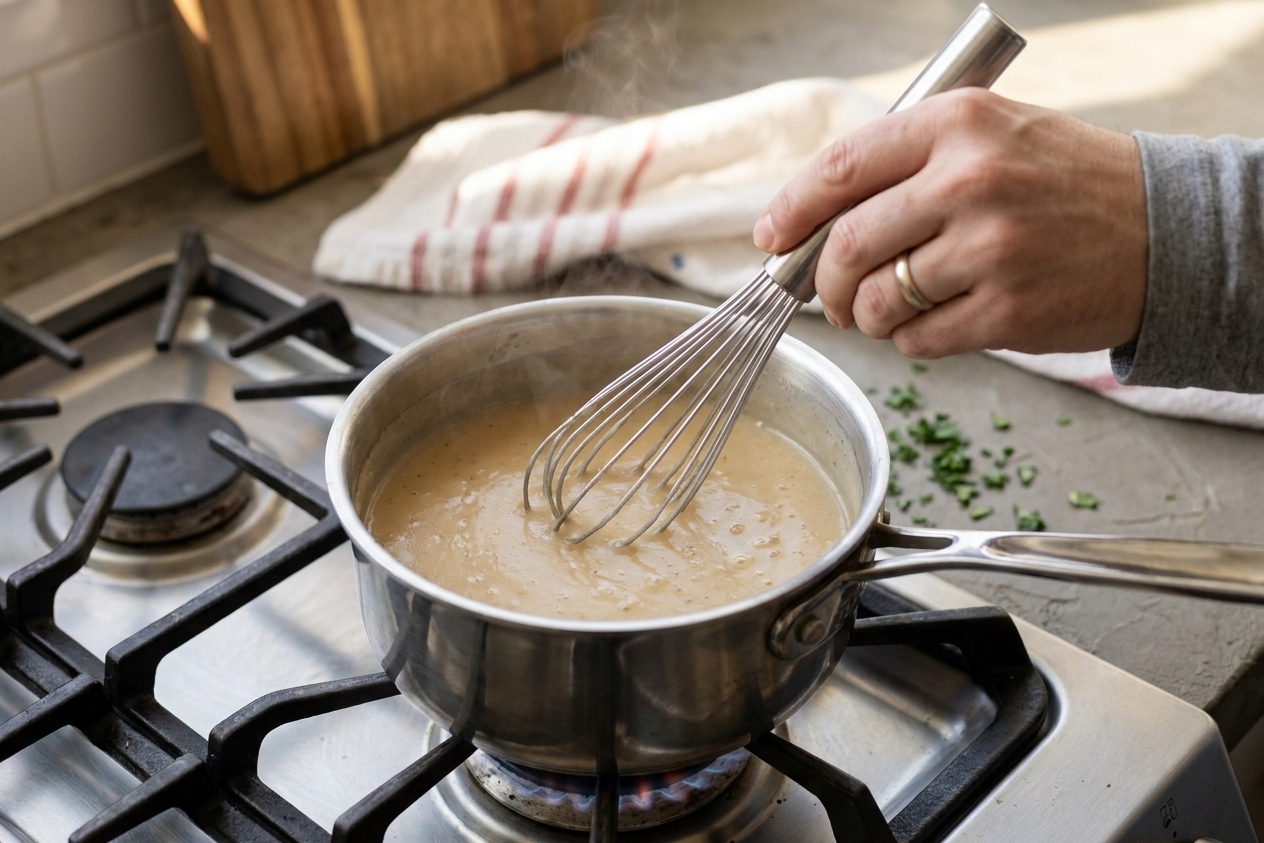
- Roux pace matters: Once the butter melts, whisk in the flour and keep it moving for 1 to 2 minutes. You want it to smell slightly nutty, not toast-dark.
- Add broth gradually: Start with a small splash to make a smooth paste, then add the rest in a steady stream while whisking.
- Simmer to thicken: Gravy thickens as it gently bubbles. If it looks a little thin at first, give it 2 to 3 minutes before adjusting.
- How to fix lumps: If you spot lumps early, take the pan off heat and whisk vigorously. If they will not budge, pour through a fine-mesh strainer back into the pan and continue simmering.
- How to fix thin gravy: Simmer longer first. If it is still thin, whisk 1 teaspoon flour with 1 tablespoon cold water until smooth, then whisk it into the simmering gravy and cook 1 to 2 minutes. Repeat if needed.
- How to fix too-thick gravy: Whisk in warm broth a tablespoon at a time until it pours the way you like.
- Taste at the end: Bouillon and broth vary wildly in saltiness. Always adjust salt after simmering.
Flexibility
Substitutes That Work
- Butter substitute: Use neutral oil (like canola) or rendered chicken fat. If using chicken fat, you might not need as much bouillon.
- Flour substitute: For gluten-free, use a 1:1 gluten-free all-purpose blend that contains starches. (Texture may be slightly different, but it will still be spoon-coating.)
- Bouillon substitute: If you do not have bouillon, use a richer stock, or add a small splash of reduced-sodium soy sauce (start with 1/2 teaspoon) for depth.
- Dairy-free: Use oil or dairy-free butter. The gravy will still be creamy from the roux, even without dairy.
Make it yours
Variations to Try
- Extra peppery: Add an additional 1/4 teaspoon black pepper at the end for a bigger punch.
- Deeper color: Cook the roux 1 to 2 minutes longer, whisking constantly, until it is a light tan. This will make the gravy slightly darker and toastier.
- Richer chicken flavor: Replace 1/2 cup broth with pan drippings plus water (skim off excess fat first), then adjust salt at the end.
On the table
What to Serve It With
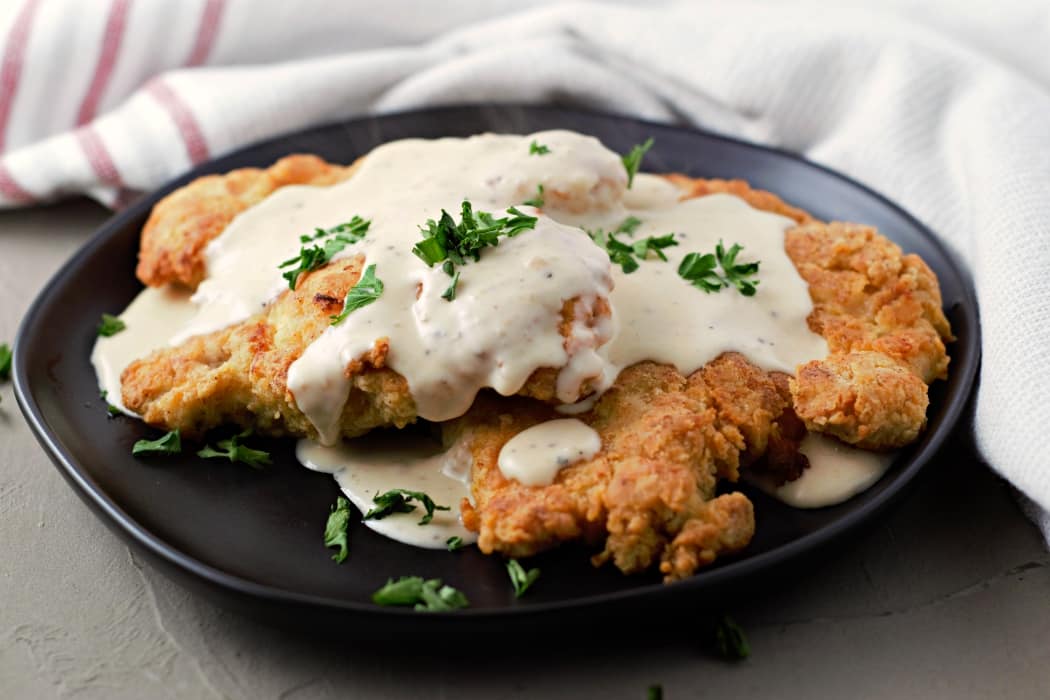
- Serve with crispy fried or oven-fried chicken.
- Spoon over hot biscuits for a cozy, savory breakfast-for-dinner moment.
- Pair with fries, wedges, or roasted potatoes for dunking.
- Use as a sauce for chicken tenders or popcorn chicken.
Later
Storage, Freezing and Reheating
- Refrigerate: Cool, then store in an airtight container for up to 4 days.
- Reheat: Warm in a saucepan over low heat, whisking often. Add a splash of broth or water to loosen as needed.
- Freeze: You can freeze gravy, but roux-thickened sauces sometimes separate slightly. If you freeze it, thaw overnight in the fridge and reheat gently while whisking to bring it back together.
Watch out
Common Mistakes to Avoid
- Not cooking the flour at all: If you rush the roux, the gravy can taste dusty or raw. Give it at least 1 minute of active whisking.
- Dumping in all the broth at once: This is the fastest route to lumps. Start with a splash, whisk smooth, then add the rest.
- Boiling hard: A rolling boil can make gravy reduce too quickly and turn gluey. Aim for a gentle simmer.
- Over-salting early: Bouillon plus broth can get salty fast. Season lightly, then adjust after it thickens.
Questions
Frequently Asked Questions
Is KFC gravy white gravy?
It is not a classic white country gravy. KFC-style gravy is more of a light brown chicken gravy that is creamy and peppery, usually with fine dark specks and a savory chicken-forward flavor.
Why is my gravy lumpy even though I whisked?
Usually it is from adding liquid too quickly or from a roux that was not fully smoothed out before the broth went in. Take it off the heat and whisk hard, or strain it and return it to a simmer.
How do I make gravy that coats a spoon?
Simmer it long enough for the starch to fully thicken the liquid, usually a few minutes. If it still will not coat the back of a spoon, add a small flour slurry (flour plus cold water), whisk into a simmer, and cook for 1 to 2 minutes.
Can I make this without bouillon?
Yes. Use a flavorful chicken stock and taste carefully for salt and depth. Bouillon just helps recreate that concentrated restaurant savoriness.
Can I use pan drippings from fried chicken?
You can. Swap some or all of the butter for drippings, but keep the flour-to-fat ratio the same so the roux thickens properly. Skim off excess fat if your drippings are very oily.
The recipe
Copycat KFC Gravy
A creamy, pepper-forward chicken gravy with a quick blonde roux and savory seasoning for that familiar restaurant-style flavor. Includes easy fixes for lumps and thin gravy.
Ingredients
- 4 tablespoons unsalted butter
- 1/4 cup all-purpose flour
- 2 cups low-sodium chicken broth or chicken stock, warmed if possible
- 1 teaspoon chicken bouillon powder (or 1 teaspoon bouillon paste, or 1 crushed bouillon cube)
- 1/2 to 1 teaspoon freshly ground black pepper (start with 1/2 teaspoon, add more to taste)
- 1/4 teaspoon garlic powder
- 1/4 teaspoon onion powder
- 1/4 teaspoon kosher salt, plus more to taste (optional, depends on broth and bouillon)
- Optional: 1 small pinch MSG
Instructions
- Melt the butter. Set a small to medium saucepan over medium heat. Add the butter and let it melt completely.
- Make a quick roux. Sprinkle in the flour and whisk until smooth. Cook, whisking constantly, for 1 to 2 minutes. The mixture should look like a smooth paste and smell lightly nutty, not raw.
- Add broth gradually. While whisking, add a small splash of chicken broth to loosen the roux into a smooth slurry. Then slowly pour in the remaining broth in a steady stream, whisking the whole time to prevent lumps.
- Season and simmer. Whisk in the chicken bouillon, black pepper, garlic powder, onion powder, and salt (start light). Bring to a gentle simmer and cook 3 to 5 minutes, whisking often, until the gravy thickens and looks glossy.
- Taste and adjust. Taste and add more pepper for that signature bite. Add salt only if needed. If using MSG, whisk in a pinch.
- Fix it if needed. If the gravy is too thick, whisk in a tablespoon or two of warm broth. If it is too thin, simmer 2 to 3 minutes longer. Still thin? Whisk 1 teaspoon flour with 1 tablespoon cold water until smooth, whisk into the simmering gravy, and cook 1 to 2 minutes.
- Serve hot. Serve right away while it is steamy and pourable.
Recipe notes
Lump rescue: If you end up with stubborn lumps, pour the gravy through a fine-mesh strainer into a bowl, then return it to the pan and simmer gently to finish thickening.
Color note: This gravy is meant to be light brown. If you want it slightly darker, cook the roux an extra 1 to 2 minutes, whisking constantly, before adding broth.
Salt note: Because broths and bouillon vary, treat the salt as flexible. I recommend seasoning lightly, simmering, then adjusting at the end.
Nutrition (per serving, approximate)
- Calories: 110
- Fat: 8 g
- Saturated fat: 5 g
- Carbohydrates: 7 g
- Fiber: 0 g
- Sugars: 0 g
- Protein: 2 g
- Sodium: 380 mg