

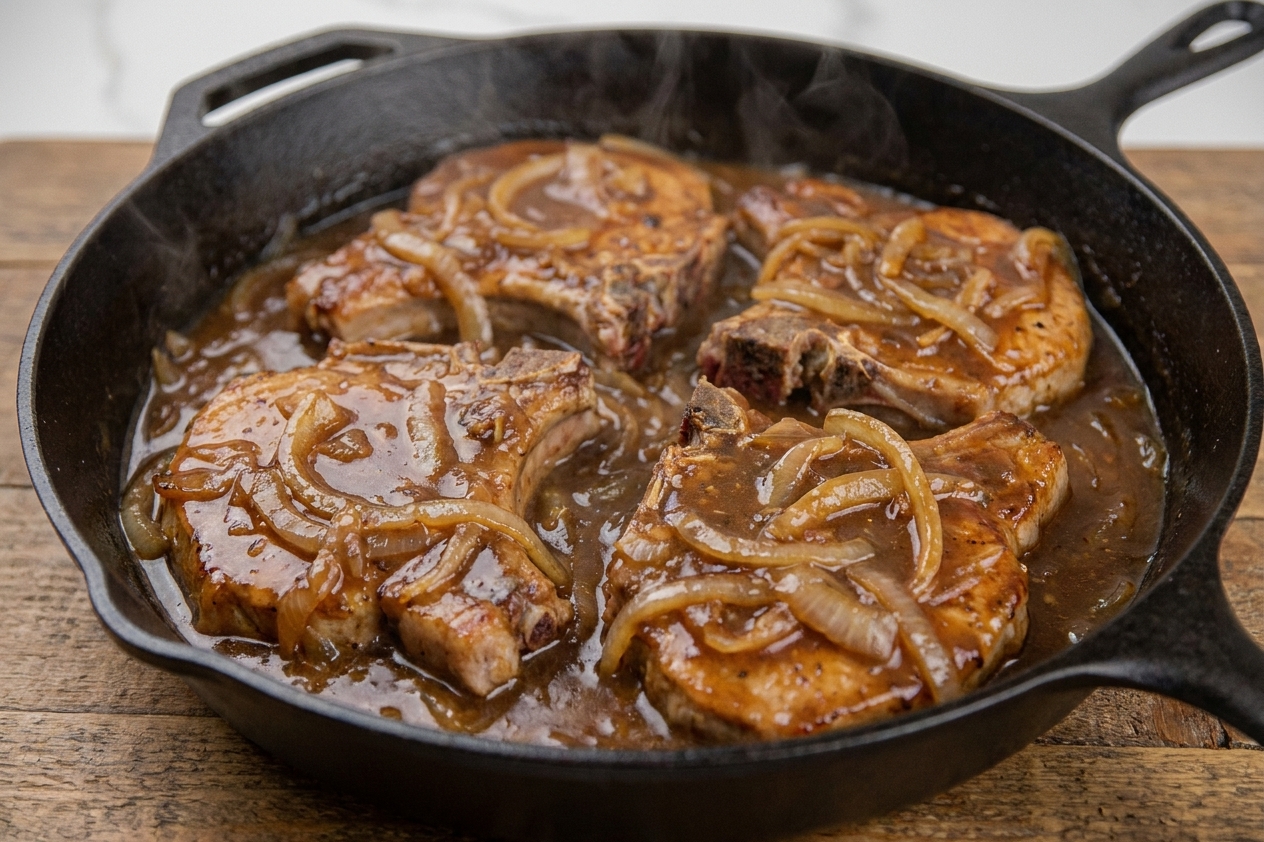
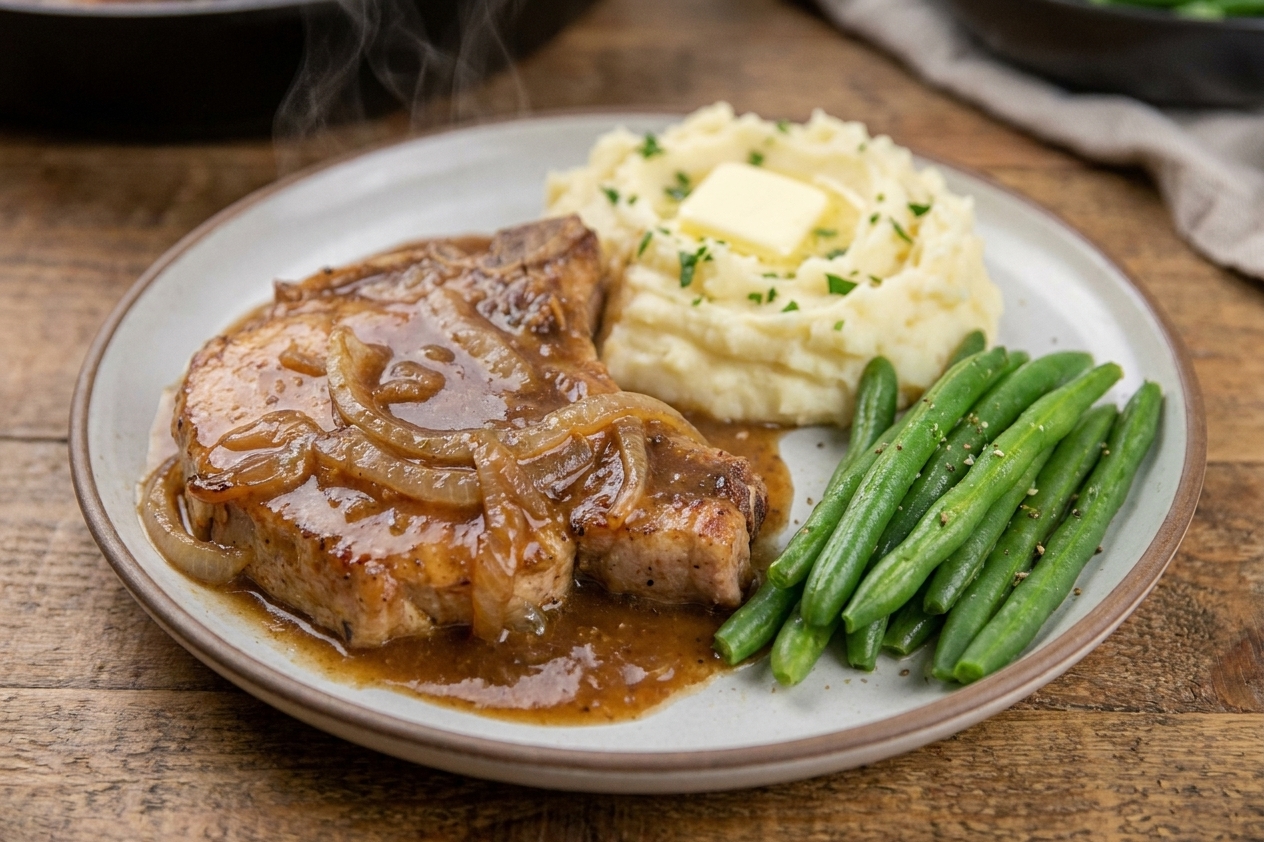
There are nights when I want dinner to feel like a warm blanket. Smothered pork chops are exactly that kind of meal: bone-in chops seared until golden, then tucked under a pile of onions that slowly turn sweet and jammy, all finished with a simple flour-based gravy that tastes like it’s been simmering all day.

This is a weeknight-friendly classic. No cream, no Parmesan, no fussy extra steps. Just a good sear, patient onions, and a covered cook that does the hard work for you. The flavor is exactly what you want here: savory, onion-forward, and peppery in that cozy, old-school way.
I’m also giving you two paths: an all-stovetop method (great when you do not want to heat up the oven) and an oven method (my favorite for hands-off tenderness). And if you are wondering what kind of chops to buy, I like them bone-in and on the thicker side so they stay juicy while they braise.
If you are newer to gravy, you are in the right place. I’ll show you what to look for when onions have moved past “raw and sharp” into “sweet and mellow,” and I’ll walk you through a roux that stays smooth and lump-free. All that is left is deciding what you are serving it with, because this is the kind of gravy that begs for something to soak it up.
The idea
Why This Recipe Works
- Bone-in chops + a gentle braise equals juicy meat. The covered cook keeps the pork tender instead of dry and chalky.
- The onions are cooked twice, on purpose. First they soften in the pan with the fond, then they finish sweetening in the braise, which turns the gravy deeply savory.
- A flour roux makes reliable gravy. Butter and flour cooked briefly, then whisked with broth, gives you that classic “spoon-coating” texture without cream.
- Two cooking paths, same cozy payoff. Stovetop is quick to manage, oven is hands-off and forgiving.
Shopping
Ingredient Notes
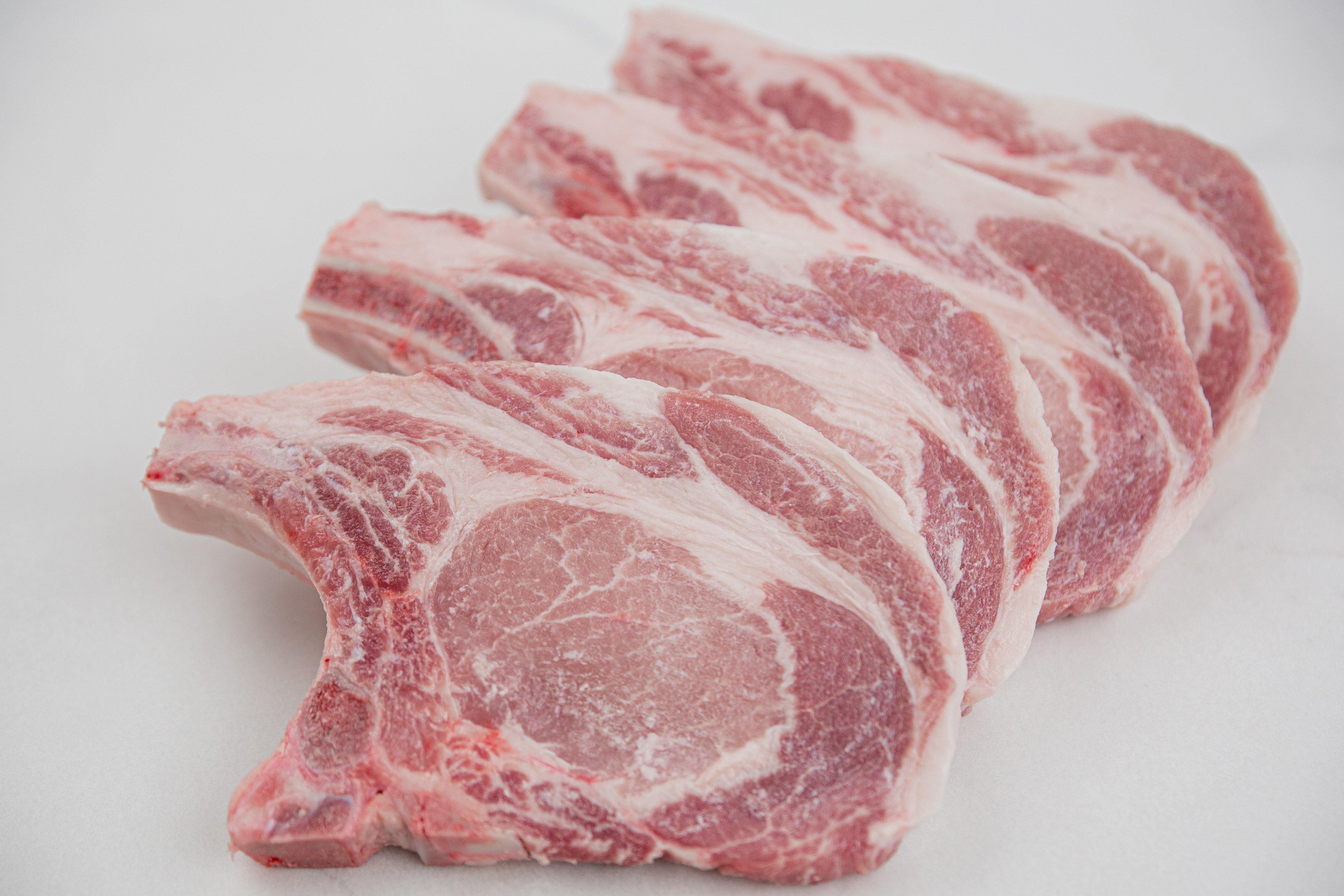
- Bone-in pork chops: Aim for 1 to 1 1/4 inches thick. Thin chops cook too fast and can dry out before the braise works its magic.
- Onions: Yellow onions are my go-to here. They melt down and turn sweet without getting overly mild.
- Flour: All-purpose flour thickens the gravy and also helps the chops brown. If you are gluten-free, see the substitutes section for options.
- Broth: Low-sodium chicken broth is classic and lets you control salt. You can also use pork broth or even beef broth for a darker gravy.
- Garlic: Optional, but you know my feelings. A couple cloves make everything taste more “finished.”
- Worcestershire or soy sauce (optional): A small splash deepens the gravy without making it taste like anything specific.
How to tell the onions are sweet, not raw: they will look slumped and glossy, lose their bright white crunch, and smell mellow and buttery instead of sharp. If you taste one and it stings, cook them longer.
Get set up
Equipment You Will Need
- Large heavy skillet with a lid (12-inch cast iron or stainless steel works great)
- Tongs
- Whisk
- Measuring spoons and cups
- Instant-read thermometer (helpful for confidence)
- Optional for oven path: oven-safe skillet or a Dutch oven
Technique
Tips for Getting It Right
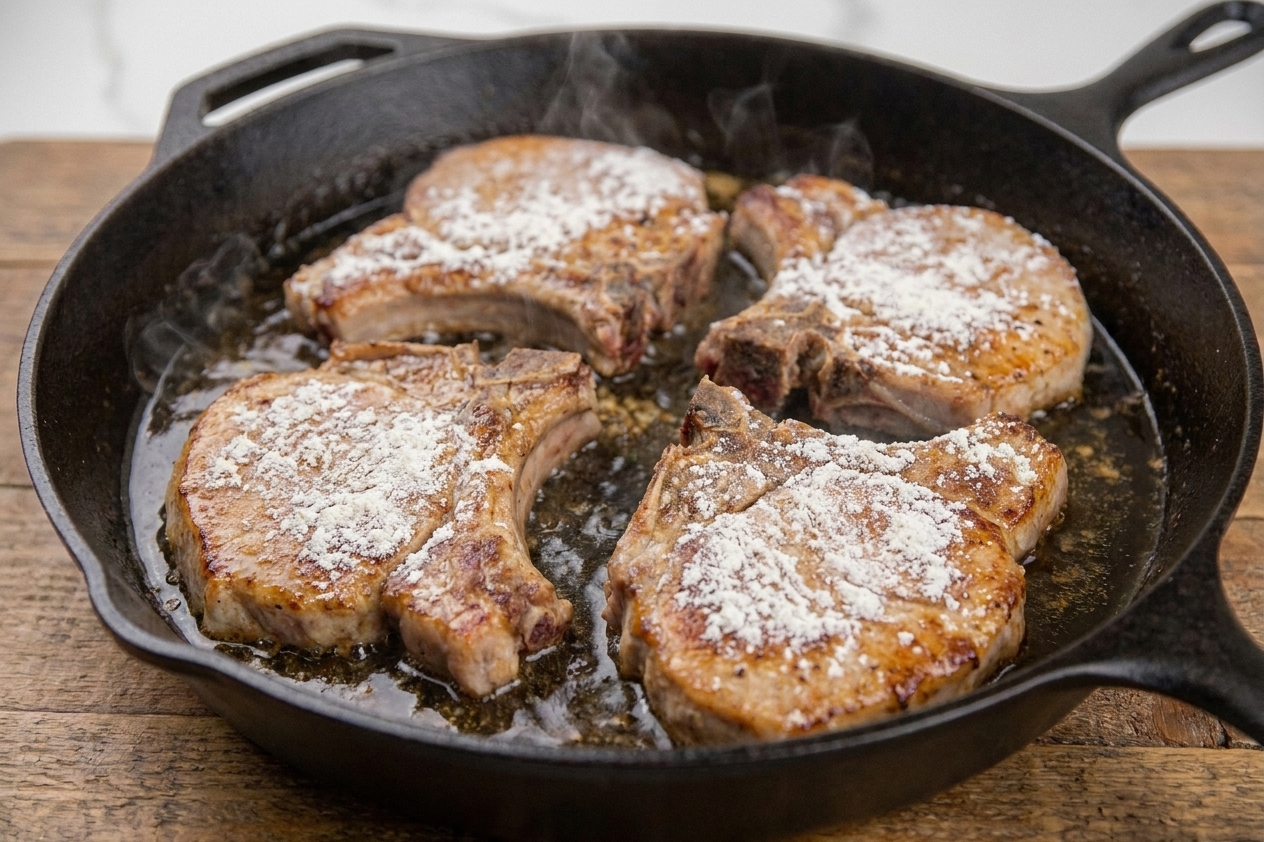
- Pat the chops dry first. Moisture is the enemy of browning. Dry chops = better crust = better gravy flavor.
- Do not rush the onions. Give them time to go translucent and soft before you add liquid. That is where the sweetness comes from.
- Scrape the pan. When you add broth, use a wooden spoon to lift the browned bits. That is your built-in seasoning.
- Whisk the roux hard. When the broth hits the flour-butter mixture, whisk like you mean it for 30 to 60 seconds to keep things silky.
- Braise gently. You want a low simmer, not a rolling boil, so the pork stays tender.
- Know your finish line. The chops are ready when they are very tender when nudged with tongs and register about 145°F near the bone. In a braise, going a touch higher is okay because the moisture protects the meat.
Flexibility
Substitutes That Work
- No butter: Use more oil for the roux. The flavor will be slightly less rich but still delicious.
- No Worcestershire: Use 1 teaspoon soy sauce or a tiny splash of balsamic vinegar for depth.
- Gluten-free: Skip flour on the chops (or use a gluten-free all-purpose blend). For the gravy, whisk 2 tablespoons cornstarch with 2 tablespoons cold water and stir it into simmering broth at the end, adding more only if needed.
- No chicken broth: Use pork broth, turkey broth, or beef broth. Beef broth makes the gravy darker and more assertive.
Make it yours
Variations to Try
- Mushroom and onion gravy: Add 8 ounces sliced mushrooms when you start cooking the onions. Cook until the mushrooms give up their liquid and begin to brown.
- Apple cider note: Replace 1/2 cup of the broth with unsweetened apple cider for a subtle fall vibe that loves pork.
- Herby: Add 1 teaspoon chopped fresh thyme or rosemary at the end, right before serving.
- Extra peppery: Add a pinch of cayenne to the flour dredge for a gentle background heat.
On the table
What to Serve It With
- Mashed potatoes: The obvious choice and always correct.
- Rice: White rice, brown rice, or buttery egg noodles all soak up the onion gravy beautifully.
- Something green: Quick sautéed green beans, broccoli, or a simple side salad to cut the richness.
- Southern-style plate: Serve with collard greens and cornbread if you want the full comfort-food moment.
Later
Storage, Freezing and Reheating
- Refrigerate: Store pork chops with gravy in an airtight container for up to 3 days.
- Freeze: Freeze in a sealed container for up to 2 months. Onion gravy freezes well, though it may look slightly separated when thawed.
- Reheat: Warm gently in a covered skillet with a splash of broth or water, or microwave at 50 to 70% power in short bursts, stirring gravy in between. Low and slow keeps the pork tender.
Watch out
Common Mistakes to Avoid
- Under-cooking the onions: If they still smell sharp and taste “bitey,” the gravy will taste raw. Keep cooking until they are soft, glossy, and mellow.
- Overcrowding the pan: If the chops are packed in tight, they steam instead of sear. Brown in batches if needed.
- Adding flour straight into hot broth: That is how you get lumps. Make a roux in the pan, or use a cornstarch slurry mixed with cold water.
- Boiling the braise: A hard boil can make pork tough. Keep it at a gentle simmer, covered.
- Skipping the scrape: Those browned bits stuck to the pan are gravy gold. Deglaze and scrape them up.
Questions
Frequently Asked Questions
Can I make smothered pork chops without flour?
Yes. You can skip dredging the chops, then thicken the gravy at the end with a cornstarch slurry (mix cornstarch with cold water first). The flavor will still be great, just a little less classic “country gravy” style.
How do I know when onions are truly softened?
They should be translucent, slumped, and flexible, not stiff. When you stir, they will almost look like they are melting into the pan. Most importantly, the smell changes from sharp to sweet.
Why are my pork chops tough?
Usually one of two things: the chops were very lean and thin, or the liquid was boiling hard. Use thicker bone-in chops when possible and keep the braise at a low simmer.
Can I use boneless pork chops?
You can, but keep them thick (at least 1 inch) and start checking earlier. Boneless chops tend to cook faster and can dry out more easily.
My gravy is too thick. What should I do?
Whisk in a splash of broth or water until it loosens to your liking. Simmer for 1 to 2 minutes so the texture becomes silky again.
My gravy is too thin. How do I fix it?
Simmer uncovered for a few minutes to reduce. If it still needs help, whisk 1 tablespoon flour with 2 tablespoons room-temperature water to make a smooth paste, then whisk it into simmering gravy and cook 2 to 3 minutes.
The recipe
Smothered Pork Chops with Onion Gravy
Golden-seared bone-in pork chops braised until tender in a sweet onion gravy thickened with a simple butter-and-flour roux. Includes both a stovetop method and an oven method.
Ingredients
- 4 bone-in pork chops (about 1 to 1 1/4 inches thick)
- 1 1/2 tsp kosher salt, divided, plus more to taste
- 1 tsp black pepper, divided
- 1/2 tsp garlic powder (optional)
- 1/3 cup all-purpose flour, divided
- 2 tbsp neutral oil (such as canola or avocado)
- 2 tbsp unsalted butter
- 2 large yellow onions, thinly sliced
- 3 cloves garlic, minced (optional, but encouraged)
- 2 1/2 cups low-sodium chicken broth, divided
- 1 tsp Worcestershire sauce or soy sauce (optional)
- 1/2 tsp dried thyme (optional)
Instructions
- Season and lightly dredge the pork. Pat the pork chops dry. Season both sides with 1 teaspoon of the salt, 1/2 teaspoon of the pepper, and the garlic powder (if using). Place 1/4 cup of the flour in a shallow dish and lightly coat each chop, shaking off excess.
- Sear. Heat the oil in a large skillet over medium-high heat until shimmering. Add pork chops and sear until golden brown, 3 to 4 minutes per side. Transfer to a plate. (They will not be cooked through yet.)
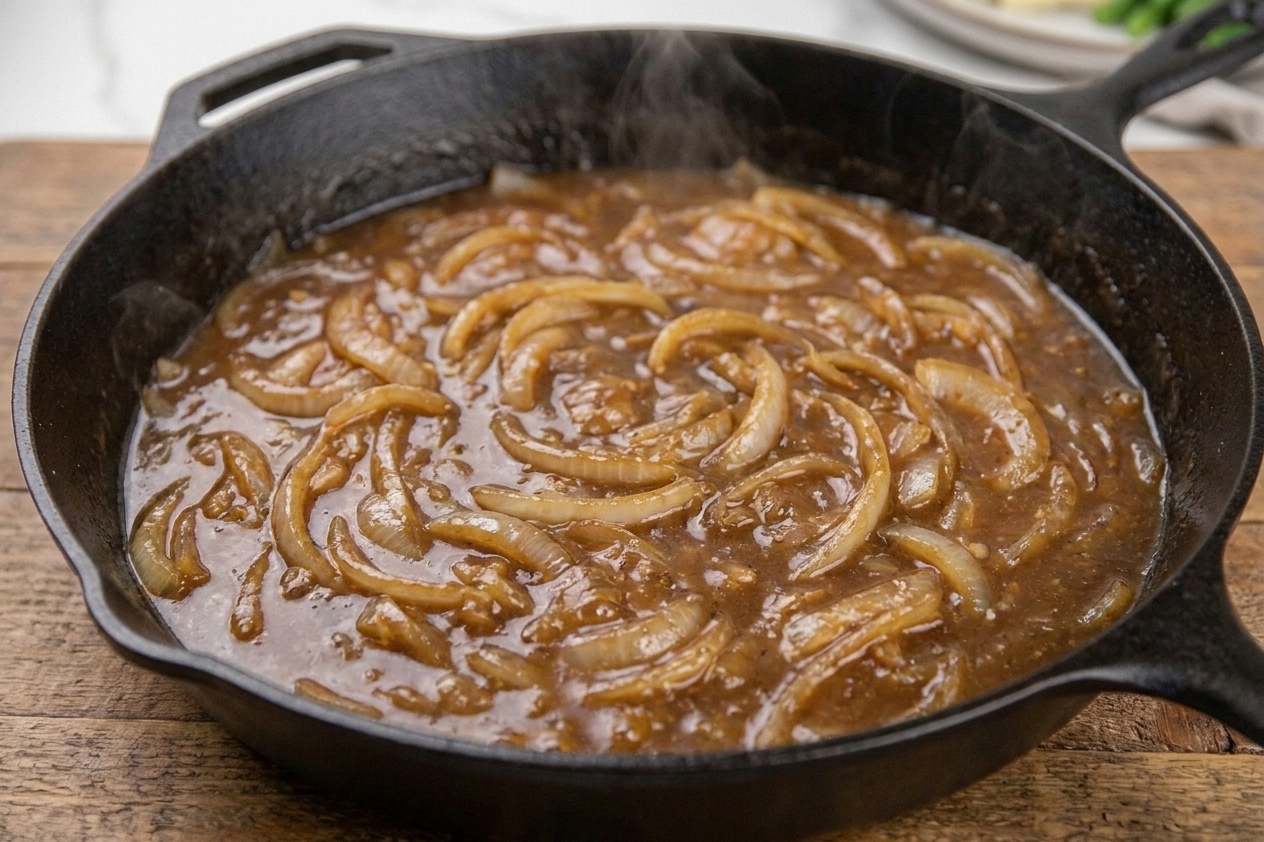
- Soften the onions. Reduce heat to medium. Add butter to the same skillet. Add sliced onions and the remaining 1/2 teaspoon salt. Cook, stirring and scraping up browned bits, until onions are very soft and glossy, 10 to 14 minutes. If the pan looks dry or the onions start to brown too fast, add a splash of broth and keep stirring. Add garlic (if using) and cook 30 seconds.
- Make a roux. Sprinkle the remaining flour (about 1 tablespoon plus 1 teaspoon) over the onions. Stir constantly for 1 minute so the flour coats the onions and loses its raw smell.
- Build the gravy. Slowly pour in about 1/2 cup of the broth while whisking or stirring vigorously to prevent lumps. Add the remaining broth, then stir in Worcestershire or soy sauce (if using) and thyme (if using). Bring to a gentle simmer. The gravy should begin to thicken and look glossy, 2 to 4 minutes.
- Choose your cooking path.
- Stovetop path: Nestle the pork chops (and any juices on the plate) into the gravy. Spoon onions over the top. Cover and simmer on low to low-medium (you want a quiet simmer), flipping once halfway through, until the pork is very tender and reaches about 145°F near the bone, 25 to 35 minutes depending on thickness.
- Oven path: Preheat oven to 325°F. Nestle the pork chops (and any juices) into the gravy and spoon onions over the top. Cover the skillet (or transfer to a Dutch oven and cover) and bake until very tender and about 145°F near the bone, 30 to 40 minutes.
- Rest and finish. Let the pork chops rest in the gravy, off the heat, uncovered, for 5 minutes. Taste the gravy and season with additional salt and pepper as needed. Serve hot with plenty of onion gravy spooned over.
Recipe notes
Onion sweetness cue: If your onions still taste sharp after 10 minutes, keep going. They should be slumped, translucent, and mellow before you add the flour.
Thickness matters: If your chops are thinner than 1 inch, start checking for doneness earlier so they do not overcook in the braise.
Gravy control: Gravy thickens as it cools. If it gets too thick while resting, loosen with a small splash of broth and warm gently.
Nutrition (per serving, approximate)
- Calories: 430
- Protein: 34 g
- Fat: 24 g
- Carbohydrates: 18 g
- Fiber: 2 g
- Sugars: 6 g
- Sodium: 720 mg