

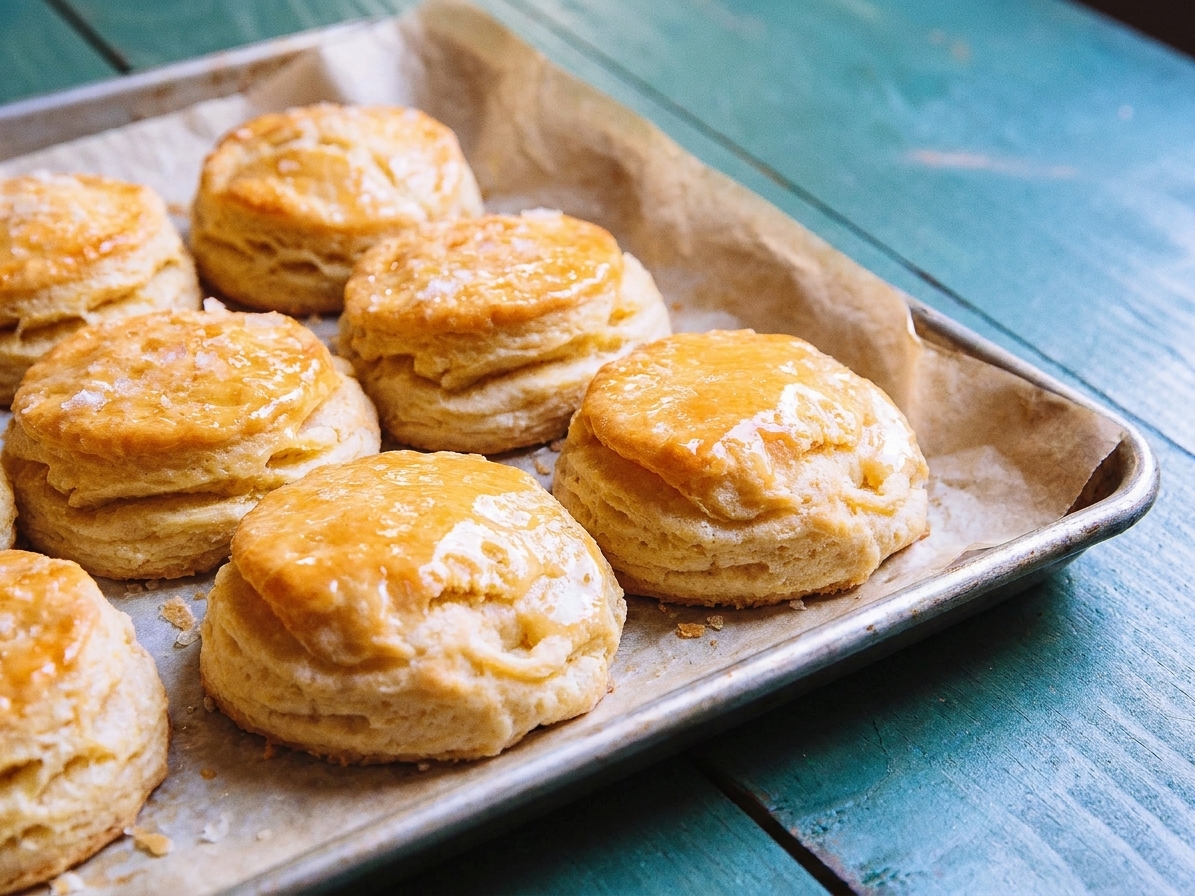
In my Pacific Northwest childhood, biscuits were the kitchen shortcut to making any dinner feel like a Sunday supper. A pot of soup, a little jam, a pat of butter, and suddenly everyone is lingering at the table. These buttermilk biscuits are my weeknight version of that comfort: tall, flaky layers with a soft, steamy interior that practically begs for honey.
The keys are simple: cold butter, a light hand, and a few quick folds that create those pull-apart layers. I also included very specific doneness cues in the recipe card because biscuits can look golden before the centers are truly tender.

And if you are out of real buttermilk, you can still bake excellent biscuits with the classic milk-and-lemon substitute. It gets you the acidity you need, even though it will not be quite as thick or as tangy as cultured buttermilk, and I will walk you through what to look for so the dough stays plush, not dry.
The idea
Why This Recipe Works
- Cold butter equals flaky layers. Keeping the butter in pea-size pieces lets it melt in the oven and create steam pockets that lift the dough.
- Folding builds height without overmixing. A few letter folds stack thin sheets of dough, which is where that pull-apart texture comes from.
- Hot oven, close spacing. Baking at a high temperature sets the sides quickly and encourages lift. Nestling biscuits close together helps them rise up instead of spreading out.
- Doneness is about the center. You are looking for a biscuit that is deeply golden on top, feels light, and shows a fully set, fluffy interior when you gently pull one open.
Shopping
Ingredient Notes
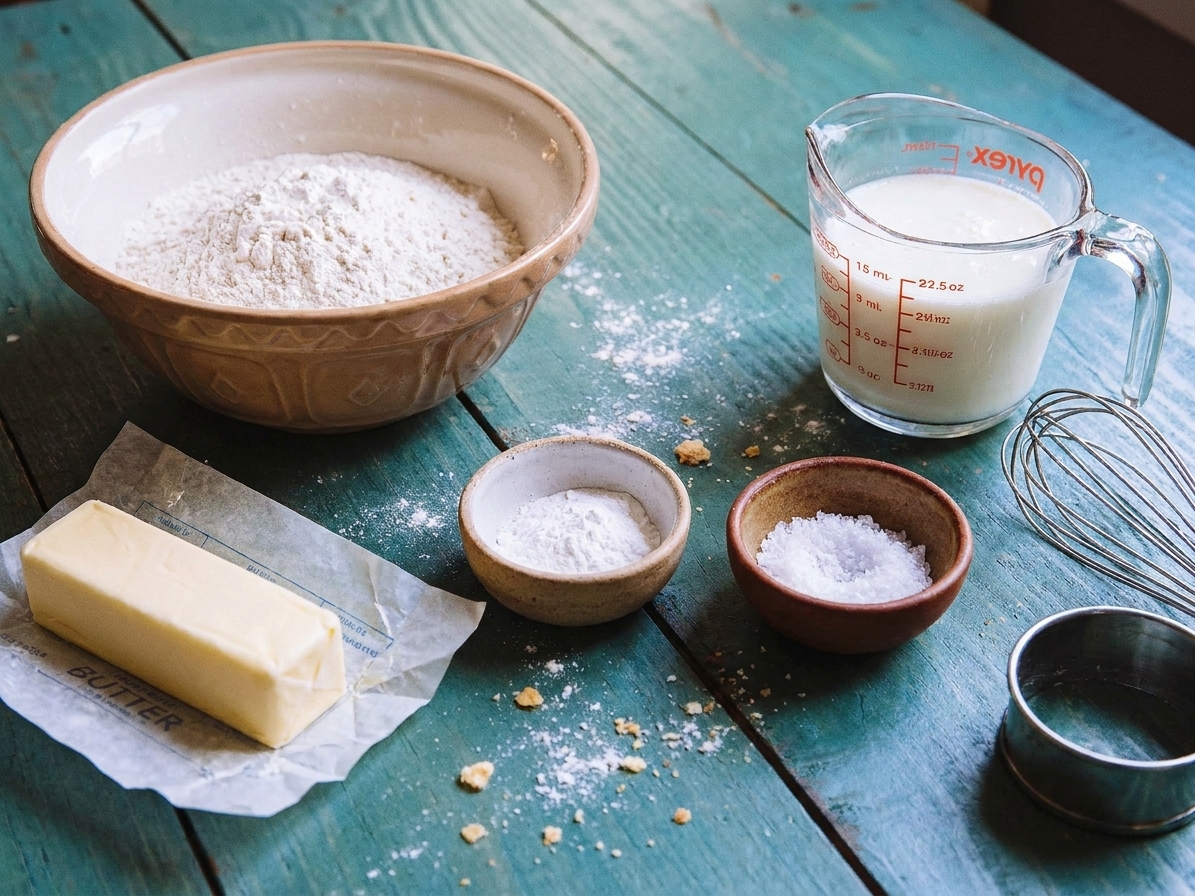
All-purpose flour: Regular supermarket all-purpose flour is perfect here. If you measure by cups, spoon it into the cup and level it off to avoid packing in too much flour.
Baking powder and baking soda: This combination gives both lift and tenderness. Baking powder provides the main rise; baking soda reacts with the acidity in buttermilk to boost browning and height.
Salt: Do not skip it. Biscuits without enough salt taste flat, even with butter and jam.
Butter: Use very cold unsalted butter. If your kitchen runs warm, cube it and pop it in the freezer for 10 minutes before cutting it into the flour.
Buttermilk: Real cultured buttermilk gives the best flavor and a slightly thicker pour, which makes the dough easier to hydrate without turning sticky.
Milk-and-lemon substitute: This works in a pinch, but it is typically thinner than cultured buttermilk and milder in flavor. Expect the dough to look a bit shaggier at first and come together with a touch more flour on the counter during shaping.
Get set up
Equipment You Will Need
- Baking sheet
- Parchment paper (recommended)
- Large mixing bowl
- Box grater or pastry cutter (or your fingertips)
- Measuring cups and spoons
- Bench scraper (helpful but optional)
- 2 1/2-inch biscuit cutter (or a sharp knife for square biscuits)
Technique
Tips for Getting It Right
- Chill while the oven heats. After cutting the biscuits, refrigerate them for 10 minutes. Cold dough hits hot heat and rises higher.
- Mix just until no dry flour remains. The dough should look shaggy, not smooth. Smooth dough usually means overworked gluten and tougher biscuits.
- Use a light dusting of flour. Too much bench flour gets worked in during folding and can dry out the dough.
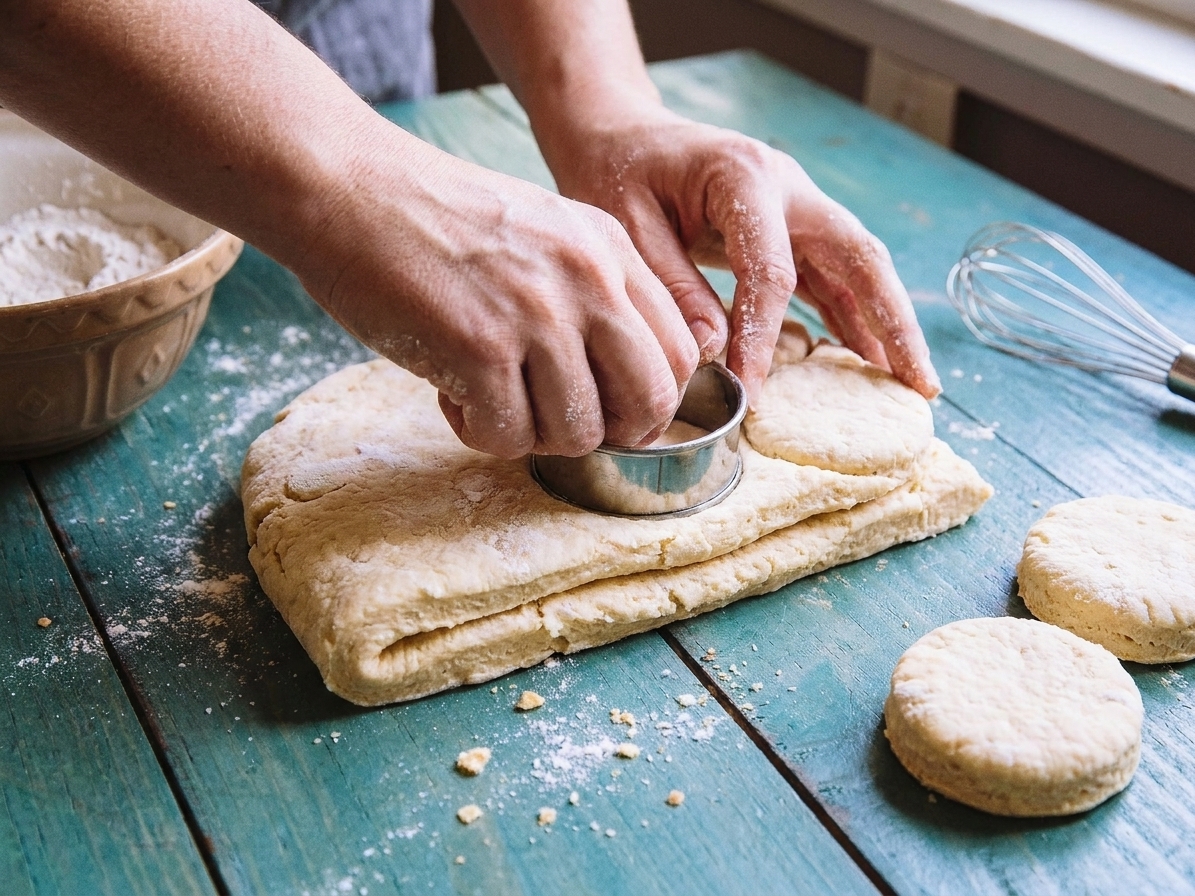
- Press, do not twist, your cutter. Twisting seals the edges and reduces rise. Push straight down and lift straight up.
- Know the doneness cues. Tops should be deeply golden, sides should look set (not wet or doughy), and the biscuits should feel light when lifted. If you break one open, the center should be steamy and fluffy, not glossy or gummy.
Flexibility
Substitutes That Work
Buttermilk substitute (milk plus lemon or vinegar): For 1 cup, stir 1 tablespoon lemon juice or white vinegar into 1 cup milk, then let it stand 5 to 10 minutes. For this recipe, you will use 1 cup total.
How it behaves in biscuit dough: Unlike cultured buttermilk, this mixture does not thicken much, and the flavor is a bit milder. Your dough may look slightly looser at first, then turn shaggy as the flour hydrates. The key is to hold back a few tablespoons of the liquid and add only as needed. If you accidentally add it all and the dough feels sticky, dust your work surface lightly and use a bench scraper to fold, rather than kneading in lots of extra flour.
Butter: Salted butter works. Reduce added salt by about 1/4 teaspoon.
Milk: Whole milk makes the most tender biscuits. Lower fat milk works, but the biscuits bake up a bit less rich.
Make it yours
Variations to Try
- Cheddar chive biscuits: Fold in 3/4 cup shredded sharp cheddar and 2 tablespoons chopped chives right after you add the buttermilk.
- Garlic butter tops: Brush warm baked biscuits with melted butter mixed with a finely grated garlic clove and a pinch of salt. There is no such thing as too much garlic, and I will stand by that forever.
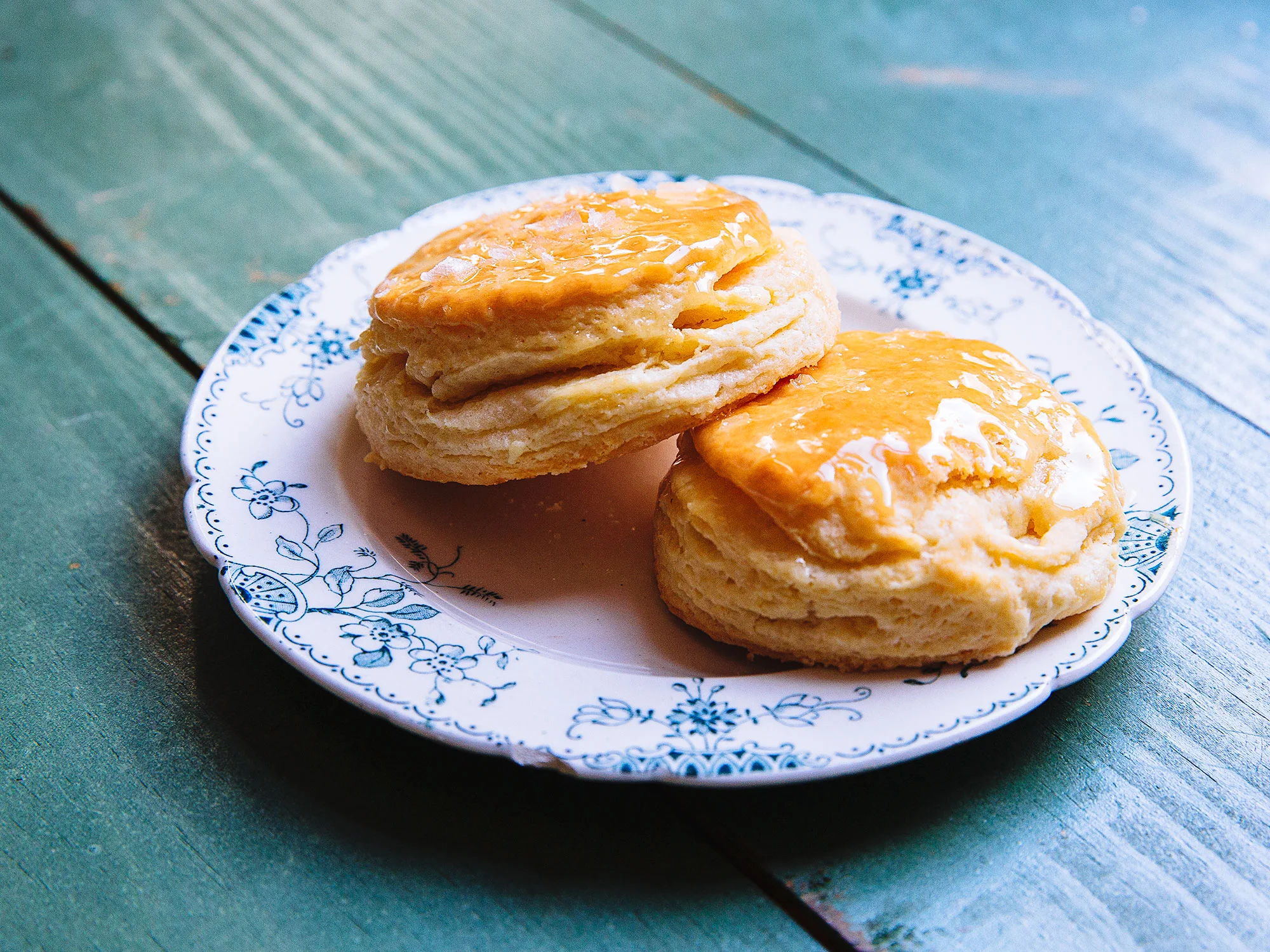
- Honey butter biscuits: Brush with melted butter mixed with 1 to 2 tablespoons honey as soon as they come out of the oven.
- Square biscuits: Pat the dough into a rectangle and cut into 8 squares. No scraps, no re-rolling, very weeknight-friendly.
On the table
What to Serve It With
- Split and fill with scrambled eggs and cheddar for quick breakfast sandwiches.
- Serve alongside chili, stew, or a simple chicken soup.
- Top with sausage gravy for a cozy weekend meal.
- Go sweet with butter and jam, or strawberries and whipped cream for an easy shortcake moment.
Later
Storage, Freezing and Reheating
Room temperature: Store cooled biscuits in an airtight container for up to 2 days. For best texture, reheat before serving.
Freeze baked biscuits: Cool completely, then freeze in a zip-top bag for up to 2 months. Reheat from frozen at 350°F for 10 to 15 minutes, until hot in the center.
Freeze unbaked biscuits: Cut and place on a baking sheet to freeze solid, then transfer to a bag. Bake from frozen, adding 2 to 5 minutes to the bake time. Keep an eye on color and lift.
Reheating: A toaster oven or 350°F oven brings back the edges without drying the middle. Microwaving works in a pinch, but the biscuits soften more and lose some flake.
Watch out
Common Mistakes to Avoid
- Butter that warms up. If your dough looks glossy or greasy, the butter is melting. Chill the bowl or the dough for 10 minutes before continuing.
- Overmixing the dough. Stirring until smooth makes biscuits tough. Stop when the dough is shaggy and holds together when squeezed.
- Too much flour on the counter. Excess flour gets folded in and dries the dough. Dust lightly, then use a bench scraper to move and fold.
- Twisting the cutter. This seals edges and limits rise. Press straight down.
- Pulling them too early. Pale biscuits can be done, but often the center is still underbaked. Look for set sides and a fluffy interior when opened.
Questions
Frequently Asked Questions
Why did my biscuits not rise very much?
The usual culprits are warm butter, old leaveners (baking powder and baking soda), or twisting the cutter. Also make sure your oven is fully preheated. Biscuits need that blast of heat right away.
Can I use the milk-and-lemon buttermilk substitute for biscuits?
Yes. It is a solid swap for the acidity, but it is usually thinner and a little less tangy than cultured buttermilk. Hold back a few tablespoons and add only as needed, aiming for a shaggy dough that just comes together.
How do I know when biscuits are done without a thermometer?
Look for deep golden tops, set sides (no wet-looking seams), and a biscuit that feels light when you lift it. If you crack one open, the center should be fluffy and steamy, not gummy or glossy.
Should biscuits touch on the pan?
I like them close together, almost touching. This encourages upward rise and keeps the sides softer. If you prefer crisper edges, space them farther apart.
Can I make the dough ahead?
You can cut the biscuits, cover, and refrigerate them for a few hours before baking. For longer storage, freeze unbaked biscuits and bake from frozen.
The recipe
Buttermilk Biscuits
Tall, flaky buttermilk biscuits with a soft interior, made with cold butter and quick folds. Includes clear doneness cues and guidance for using a milk-and-lemon buttermilk substitute.
Ingredients
- 2 cups (240 g) all-purpose flour, plus more for the counter
- 1 tablespoon baking powder
- 1/2 teaspoon baking soda
- 1 teaspoon fine salt
- 8 tablespoons (113 g) unsalted butter, very cold and cut into cubes
- 1 cup (240 ml) cold buttermilk
- 1 tablespoon melted butter, for brushing tops (optional)
Instructions
- Heat the oven. Arrange a rack in the upper third of the oven and preheat to 450°F (232°C). Line a baking sheet with parchment paper.
- Mix the dry ingredients. In a large bowl, whisk together the flour, baking powder, baking soda, and salt.
- Cut in the cold butter. Add the cold cubed butter to the bowl. Use a pastry cutter, a box grater, or your fingertips to work the butter into the flour until you have a mix of pea-size pieces and a few slightly larger flakes. If the butter starts to feel soft or smear, refrigerate the bowl for 10 minutes.
- Add buttermilk. Pour in the cold buttermilk and stir with a fork until a shaggy dough forms and no dry pockets of flour remain. The dough should look rough and a little crumbly, but it should hold together when you squeeze a handful. If it feels dry, drizzle in 1 to 2 tablespoons more buttermilk, only as needed.
- Fold for layers. Turn the dough out onto a lightly floured counter. Pat it into a rough rectangle about 3/4-inch thick. Fold the dough into thirds like a letter, rotate 90 degrees, then pat back out to 3/4-inch thick. Repeat the fold and pat 2 more times for a total of 3 letter folds. Work gently and quickly.
- Cut the biscuits. Pat the dough into a final rectangle about 1-inch thick. Using a 2 1/2-inch biscuit cutter, press straight down to cut biscuits without twisting. Place biscuits on the prepared baking sheet with sides just barely touching. Gather scraps, press together gently (do not knead), and cut remaining biscuits.
- Chill briefly. Refrigerate the cut biscuits for 10 minutes. This helps the butter firm up again for a taller rise.
- Bake. Bake for 14 to 18 minutes, until the tops are deeply golden and the sides look set. Doneness cue: a biscuit should feel light when lifted, and when you pull one open the center should be fluffy and steamy, not gummy.
- Finish and serve. If you like, brush the hot biscuits with melted butter. Cool for 5 minutes on the pan, then serve warm.
Recipe notes
- Buttermilk substitute (milk plus lemon or vinegar): To replace the 1 cup buttermilk, stir 1 tablespoon lemon juice or white vinegar into 1 cup milk and let stand 5 to 10 minutes. Because this mixture is thinner than cultured buttermilk, hold back a few tablespoons and add gradually so the dough stays shaggy, not sticky.
- For the best rise: Cold dough into a fully preheated hot oven is the whole game. If your kitchen is warm, chill the bowl, and do not skip the 10-minute fridge rest after cutting.