

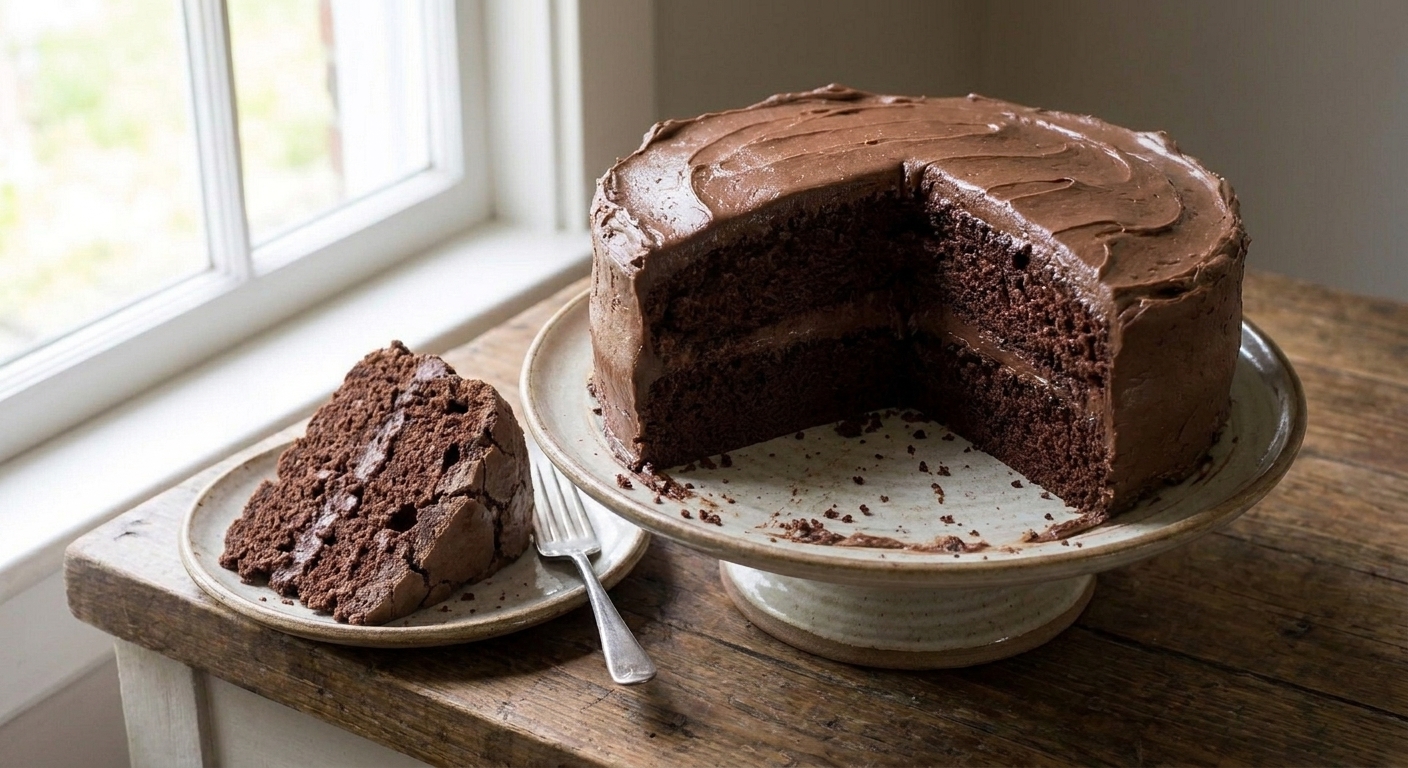

In my family, chocolate layer cake was never fussy. It was the kind of cake that showed up when someone had a hard week, or when my mom needed a dessert that could survive a car ride to a neighborhood potluck in the Pacific Northwest rain. The goal was always the same: a plush, cocoa-forward crumb that stays tender for days when stored covered, plus a frosting that goes on smoothly instead of tearing the cake to shreds.
This recipe is my dependable, weeknight-friendly version of that classic. The batter comes together fast in a couple of bowls (no stand mixer required), and the frosting is the swoopy, straightforward kind. If you divide the batter evenly and pay attention to the doneness cues, you will be set up for nicely level layers, even with the usual realities of oven hot spots and pan quirks. And yes, there is a generous pinch of salt and plenty of vanilla, because chocolate deserves backup singers.
The idea
Why This Recipe Works
- Cocoa plus hot liquid blooms the flavor. Whisking cocoa with hot coffee or hot water wakes up the chocolate notes so the cake tastes rich without needing melted chocolate in the batter.
- Oil keeps the crumb tender. Butter is wonderful, but a neutral oil-based chocolate cake stays softer longer and is less prone to drying out.
- Buttermilk adds tenderness and balance. Its acidity tenderizes the crumb and keeps the cake from tasting flat or overly sweet.
- Thoughtful pan prep prevents heartbreak. Parchment rounds and a cocoa dusting make clean release nearly foolproof, even with delicate layers.
- The frosting is built for spreading. A mix of butter, sifted cocoa, powdered sugar, and a splash of warm cream makes a smooth, swoopy frosting that does not crust instantly or rip crumbs.
Shopping
Ingredient Notes
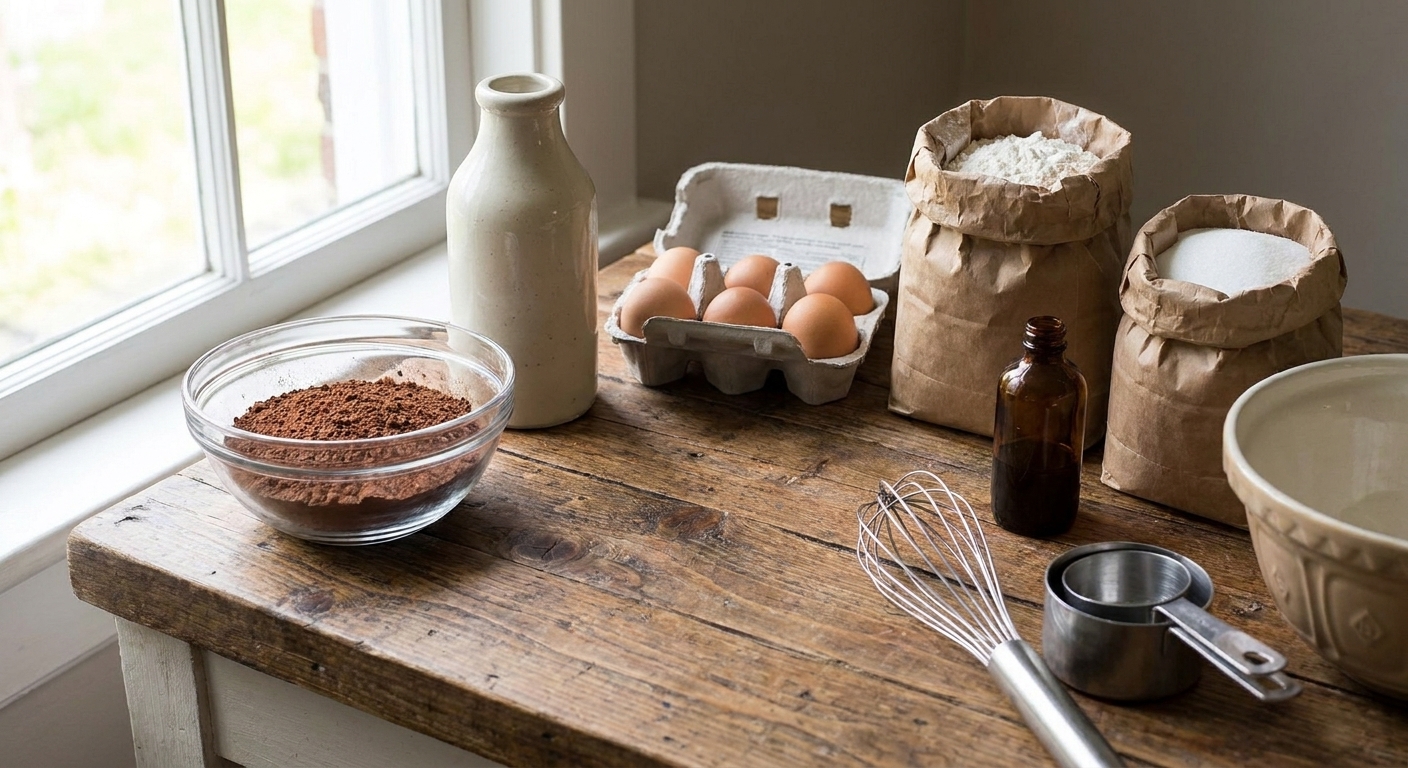
Cocoa powder
Use unsweetened natural cocoa powder for a classic, deep cocoa flavor. Dutch-process also works, but it can slightly mute the tang and shift the rise. If you use Dutch-process, keep everything else the same and rely on the doneness cues.
Hot coffee or hot water
Hot coffee intensifies chocolate flavor without making the cake taste like coffee. If you do not want to use coffee, hot water is perfect.
Buttermilk
Real buttermilk gives the best texture. In a pinch, you can make a quick substitute (see Substitutes), but if you bake often, a carton of buttermilk is worth it.
Oil
Choose a neutral oil like canola, vegetable, or avocado oil. Olive oil can be tasty but will change the flavor profile.
Powdered sugar
Sift it for the smoothest frosting. It is a tiny step that prevents little sugar beads from wrecking your finish.
Heavy cream
Helps the frosting spread cleanly and feel silky. Half-and-half works, and milk can work in a pinch, but you may need less.
Get set up
Equipment You Will Need
- Two 9-inch round cake pans (2 inches deep is ideal)
- Parchment paper
- Mixing bowls
- Whisk and rubber spatula
- Hand mixer or stand mixer
- Wire racks for cooling
- Offset spatula for frosting
- Kitchen scale (optional but very helpful for even layers)
Technique
Tips for Getting It Right
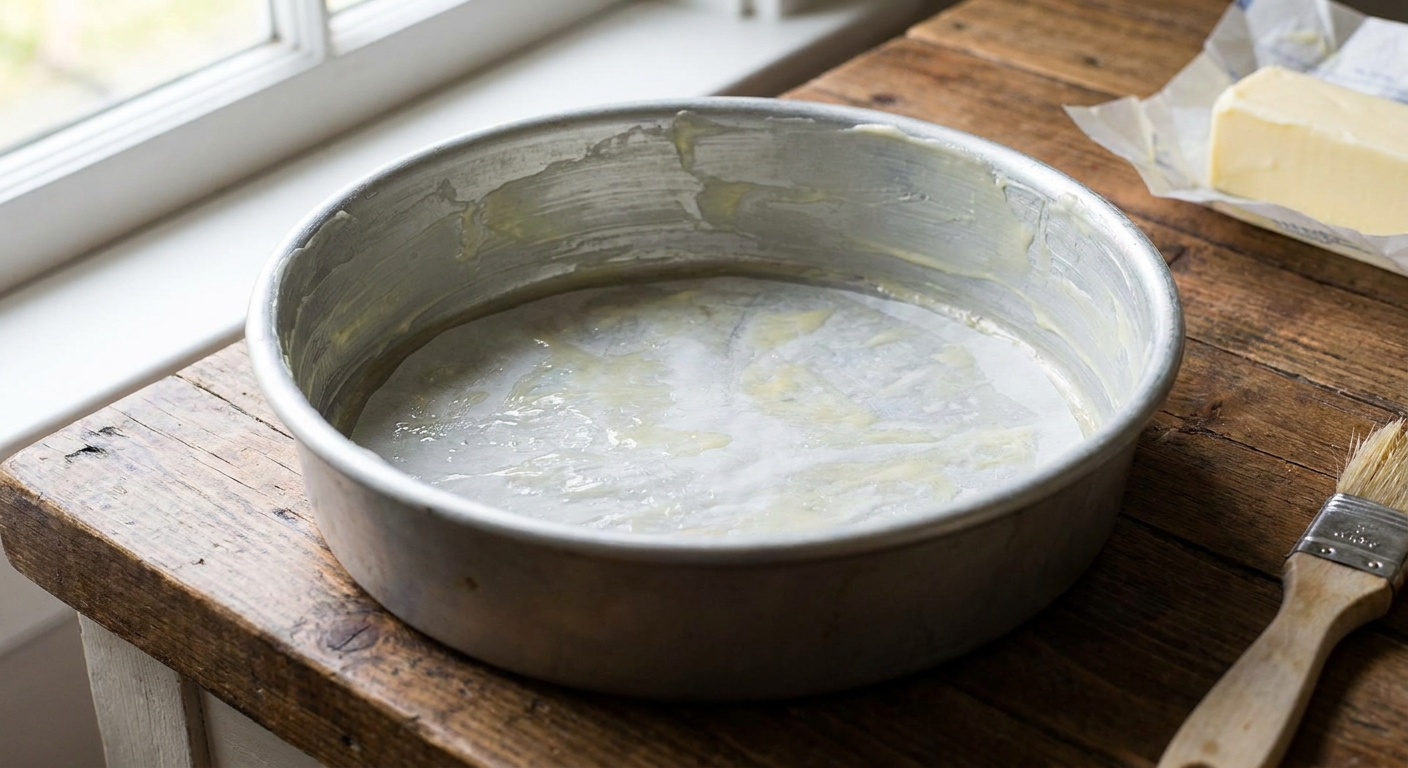
- Pan prep that actually works: Grease the pans, add parchment rounds, grease the parchment, then dust with cocoa powder (not flour). Tap out the excess. Cocoa keeps the outside chocolatey and invisible.
- Room temp ingredients = smoother batter: Cold buttermilk and eggs can make the batter look a little curdled. It will still bake, but room temperature makes mixing easier and more consistent.
- Do not overmix after the flour goes in: Once you add the dry ingredients, mix just until the streaks disappear. Overmixing makes a tighter, tougher crumb.
- Use bake cues, not only the timer: The cake is done when the center springs back lightly, the edges just begin to pull from the pan, and a toothpick comes out with a few moist crumbs (not wet batter).
- Cool completely before frosting: Even slightly warm layers will melt your frosting and cause sliding. If you are in a hurry, pop the layers (well wrapped) in the fridge for 30 to 45 minutes.
- For clean frosting: Crumb coat first, chill 15 to 20 minutes, then do the final coat. This is the calmest way to get swoops without dragging crumbs.
Flexibility
Substitutes That Work
- No buttermilk: Mix 1 tablespoon lemon juice or white vinegar with enough milk to measure 1 cup. Let sit 5 to 10 minutes. Use in place of buttermilk.
- No coffee: Use hot water. You can add 1 teaspoon espresso powder to the cocoa if you want extra depth, but it is optional.
- Dairy-free: Use an unsweetened plant milk + acid for the cake. For frosting, use plant-based butter and a thick plant creamer. The texture will be slightly softer.
- Gluten-free (tested approach): Use a 1:1 gluten-free baking blend that contains xanthan gum. Let the batter sit 10 minutes before baking to hydrate. Expect a slightly more delicate crumb.
- Egg-free: Replace each egg with a commercial egg replacer prepared for baking. Results vary by brand, and the cake may be a little less springy.
Make it yours
Variations to Try
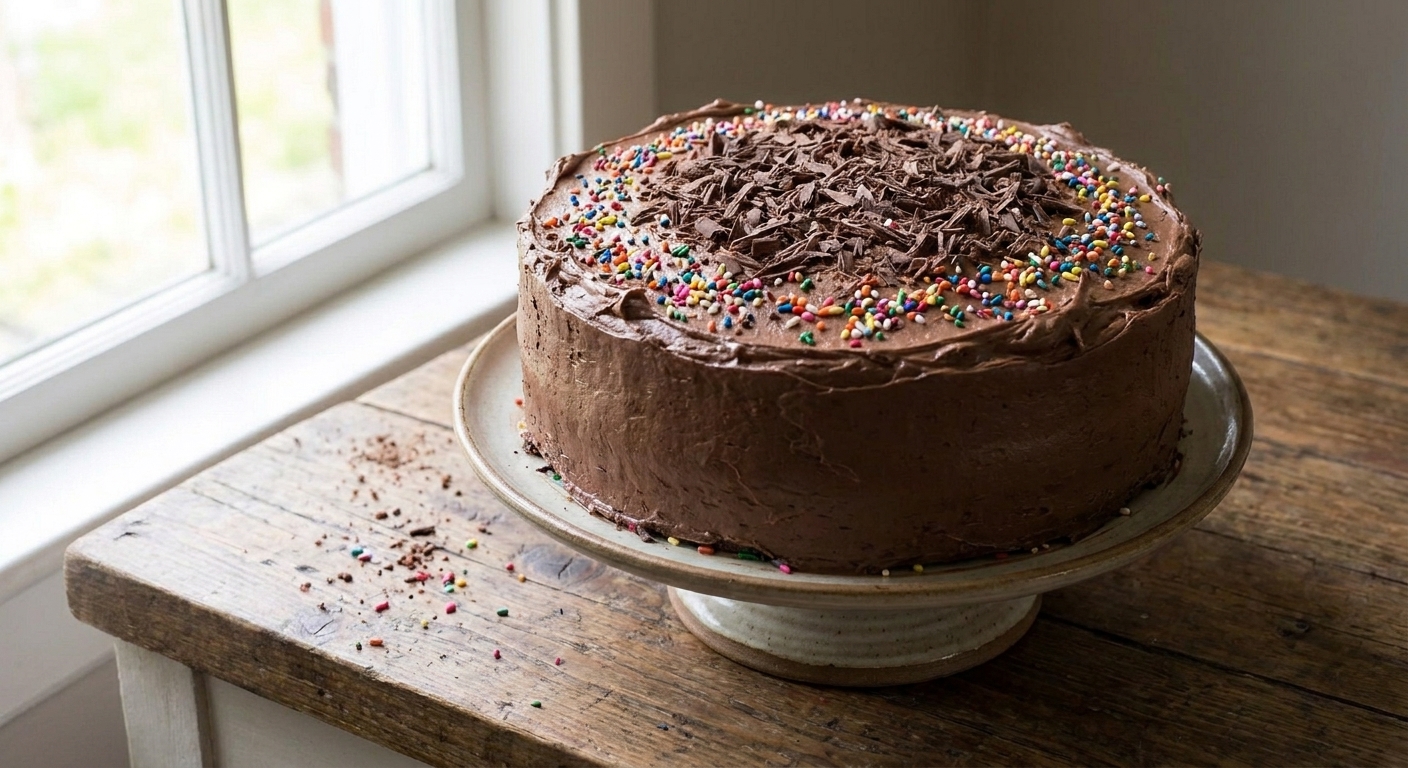
- Chocolate fudge frosting: Add 2 ounces melted and cooled semisweet chocolate to the frosting for a deeper, fudgier finish.
- Raspberry layer: Spread 1/2 cup seedless raspberry jam between layers before frosting for a bright contrast.
- Peanut butter swirl: Warm 1/3 cup creamy peanut butter and swirl it into the frosting as you spread it.
- Mocha cake: Use hot coffee and add 1 teaspoon espresso powder to the cocoa mixture.
- Chocolate orange: Add 1 teaspoon finely grated orange zest to the frosting and a tiny splash of orange extract.
On the table
What to Serve It With
- A tall glass of cold milk or a latte if you like the cozy cafe vibe.
- Fresh berries tossed with a pinch of sugar and a squeeze of lemon.
- Vanilla ice cream or lightly sweetened whipped cream.
- For birthdays: candles, sprinkles, and a very sharp knife dipped in hot water for clean slices.
Later
Storage, Freezing and Reheating
- Room temperature: Store the frosted cake covered at cool room temperature for up to 2 days. If your kitchen runs warm, refrigerate.
- Refrigerator: Covered cake keeps well for up to 5 days. Let slices sit at room temperature 20 to 30 minutes before serving for the softest texture.
- Freezing unfrosted layers: Wrap cooled layers tightly in plastic wrap, then foil. Freeze up to 2 months. Thaw (still wrapped) at room temperature.
- Freezing frosted cake: Freeze slices on a parchment-lined sheet until firm, then wrap and store in an airtight container up to 1 month. Thaw overnight in the fridge or at room temperature for a couple of hours.
Watch out
Common Mistakes to Avoid
- Skipping parchment: Grease alone is not enough insurance. Parchment rounds prevent sticking and broken layers.
- Overbaking: Chocolate cakes can look done before they are, then go dry fast. Pull when a toothpick has moist crumbs, not when it is bone dry.
- Frosting a warm cake: This leads to melting, sliding layers, and streaky frosting.
- Not sifting cocoa or powdered sugar for frosting: Those little lumps will show up exactly when you want a silky finish.
- Adding too much liquid to frosting at once: Drizzle in cream slowly. You can always add more, but it is hard to recover if the frosting gets soupy.
Questions
Frequently Asked Questions
Can I make this as a sheet cake?
Yes. Bake in a greased and parchment-lined 9x13-inch pan at 350°F. Start checking around 28 to 32 minutes. It is done when the center springs back and a toothpick comes out with moist crumbs.
Can I use 8-inch pans instead of 9-inch?
You can. The layers will be thicker and may need a few extra minutes. Start checking at 28 minutes and use the doneness cues.
Why did my cake sink in the middle?
The most common reasons are underbaking, opening the oven door too early, or expired leavening. Make sure your baking powder and baking soda are fresh and bake until the center springs back.
How do I get flat cake layers?
Weigh your batter into the pans for even layers, then give each pan a gentle tap on the counter to pop big air bubbles. If your cakes still dome, you can level them with a serrated knife once completely cool.
My frosting is too thick. What should I do?
Add warm cream 1 teaspoon at a time while mixing until it spreads easily. If it gets too soft, chill it for 10 minutes and beat again.
My frosting is too thin. Can I fix it?
Yes. Add more sifted powdered sugar a few tablespoons at a time, or chill the frosting briefly to firm it up.
The recipe
Chocolate Layer Cake
A tender, cocoa-forward two layer chocolate cake with a smooth chocolate frosting that spreads cleanly. Includes reliable pan prep, clear doneness cues, and make-ahead options.
Ingredients
- For the cake: Neutral oil, for greasing pans
- 2 cups (250 g) all-purpose flour
- 2 cups (400 g) granulated sugar
- 3/4 cup (65 g) unsweetened natural cocoa powder, plus more for dusting pans
- 2 teaspoons baking powder
- 1 1/2 teaspoons baking soda
- 1 teaspoon fine salt
- 2 large eggs, room temperature
- 1 cup (240 ml) buttermilk, room temperature
- 1/2 cup (120 ml) neutral oil (canola or vegetable)
- 2 teaspoons vanilla extract
- 1 cup (240 ml) hot coffee or hot water
- For the chocolate frosting:
- 1 cup (226 g) unsalted butter, softened
- 3 1/2 cups (420 g) powdered sugar, sifted if lumpy
- 3/4 cup (65 g) unsweetened cocoa powder, sifted if lumpy
- 1/4 teaspoon fine salt
- 2 teaspoons vanilla extract
- 1/3 cup (80 ml) heavy cream, warm, plus more as needed
Instructions
- Prep the pans and oven: Heat the oven to 350°F (175°C). Grease two 9-inch round cake pans. Line the bottoms with parchment rounds, then grease the parchment. Dust each pan with cocoa powder and tap out the excess.
- Mix the dry ingredients: In a large bowl, whisk together the flour, sugar, cocoa powder, baking powder, baking soda, and salt until evenly combined and no cocoa pockets remain.
- Mix the wet ingredients: In a medium bowl, whisk the eggs, buttermilk, oil, and vanilla until smooth.
- Make the batter: Pour the wet mixture into the dry ingredients and whisk just until mostly combined. Slowly whisk in the hot coffee or hot water. The batter will be thin. That is correct. Scrape the bowl well to make sure no dry flour is hiding at the bottom.
- Pan and bake: Divide the batter evenly between the prepared pans (a kitchen scale helps). Bake for 26 to 32 minutes, rotating pans once halfway through, until the centers spring back lightly, the edges just begin to pull away from the sides, and a toothpick inserted in the center comes out with a few moist crumbs.
- Cool: Let the cakes cool in the pans for 10 minutes. Run a thin knife around the edges, then turn out onto wire racks. Peel off the parchment and cool completely before frosting.
- Make the frosting: In a large bowl using a mixer, beat the softened butter on medium speed until creamy, about 1 to 2 minutes. Add powdered sugar, cocoa powder, and salt. Mix on low until the dry ingredients are mostly incorporated. Add vanilla and warm cream, then beat on medium-high until smooth and fluffy, 2 to 3 minutes. If the frosting is too thick, add more warm cream 1 teaspoon at a time. If it is too soft, chill for 10 minutes and beat again.
- Assemble: Place one cake layer on a serving plate or cake stand. Spread about 3/4 cup frosting evenly over the top. Add the second layer, top side down for the flattest surface.
- Crumb coat (optional but recommended): Spread a thin layer of frosting over the top and sides to trap crumbs. Chill the cake for 15 to 20 minutes.
- Finish frosting: Spread the remaining frosting over the top and sides, smoothing or making swirls as you like. Slice with a sharp knife, wiping the blade between cuts for clean edges.
Recipe notes
- Buttermilk substitute: If needed, add 1 tablespoon lemon juice or white vinegar to a liquid measuring cup, then add milk to reach 1 cup. Rest 5 to 10 minutes.
- Make ahead: Bake layers up to 2 days ahead. Wrap cooled layers tightly and store at room temperature (cool spot) or refrigerate. Frost the day you serve for the prettiest finish.
- Leveling: If your layers dome, cool completely, then level with a serrated knife before assembling.
- Frosting texture: Warm cream helps cocoa dissolve and makes a smoother spread. Do not add it scorching hot or the frosting can get greasy.