

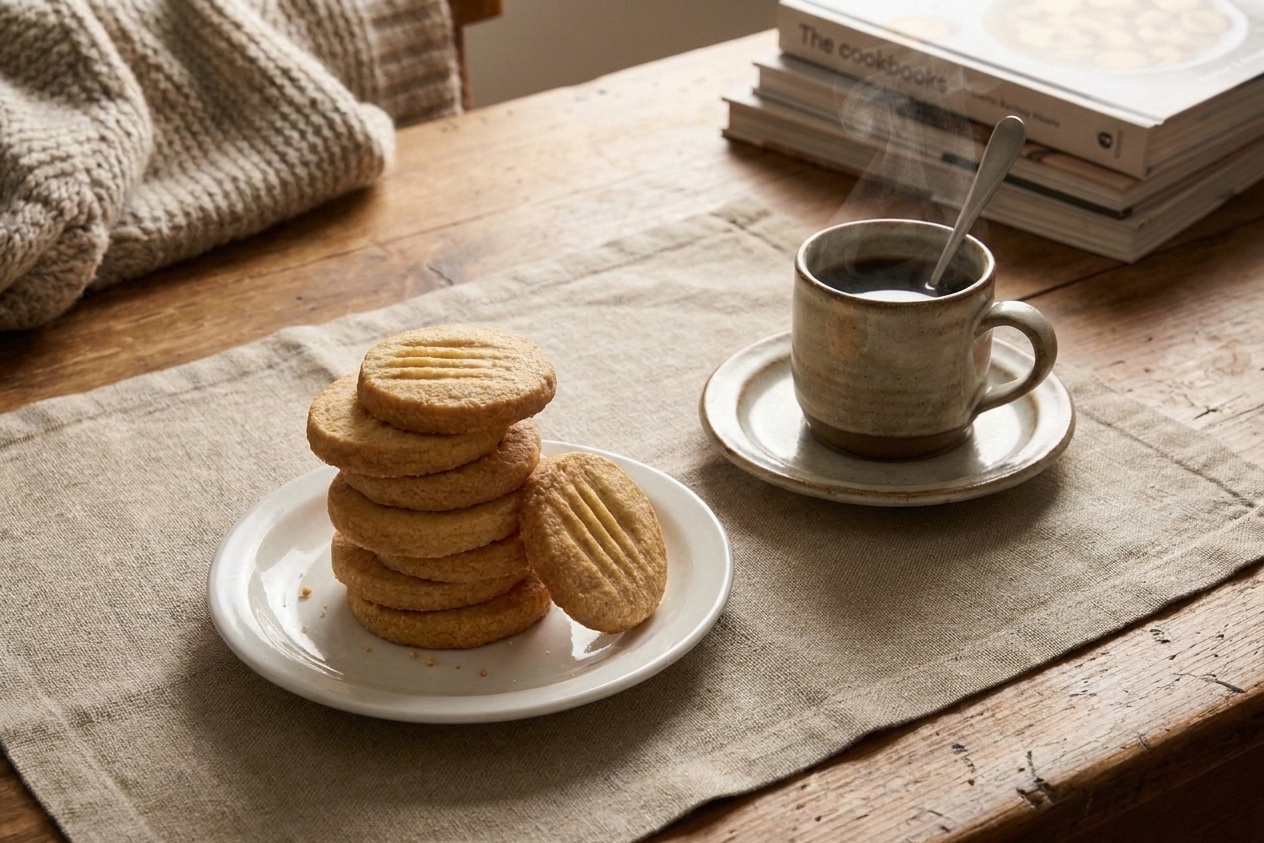

I love a cookie that feels quietly fancy, and shortbread is exactly that. No frosting, no sprinkles, no drama. At its simplest, it is butter, sugar, flour, and a pinch of salt, with a crumb that almost melts the second it hits your tongue.
When you swap in brown sugar, you get that little whisper of molasses and a sandy, caramel-kissed bite that makes a plain cup of coffee feel like an event. (Brown sugar can behave a little differently depending on brand and how you measure, but this ratio keeps the texture where we want it: crisp-tender, not chewy.)
My Recipeva version is designed for real life. It is a slice-and-bake dough (my favorite for tidy rounds and make-ahead ease), but I also included a simple press-in option if you want classic shortbread squares. I will walk you through the key ratio in plain terms, when to dock, and the small choices that keep this baking up like shortbread, not a soft drop cookie.
The idea
Why This Recipe Works
The shortbread ratio keeps it crisp
Shortbread lives and dies by ratio. For this recipe, think 2 parts flour : 1 part butter : 1/2 part sugar by weight. That higher flour and fat structure is what gives you a tender, crumbly snap instead of a soft cookie bend.
Brown sugar brings flavor without turning it into a drop cookie
Brown sugar adds moisture compared to white sugar, but we keep it in check by using a true shortbread method. No eggs, no chemical leaveners, and no prolonged mixing once the flour goes in. Those three things are the usual suspects behind chewy, puffy cookies.
Chilling and slicing (or pressing) sets the shape
Cold dough holds clean edges. For slice-and-bake rounds, the log chill helps you get even cookies. For press-in shortbread, chilling briefly before baking helps prevent spread and keeps the crumb delicate.
Docking prevents bubbles and helps even baking
Shortbread can puff in odd spots as butter melts and steam tries to escape. Docking gives that steam a path out so the surface stays flat and the texture stays crisp.
Shopping
Ingredient Notes
Brown sugar
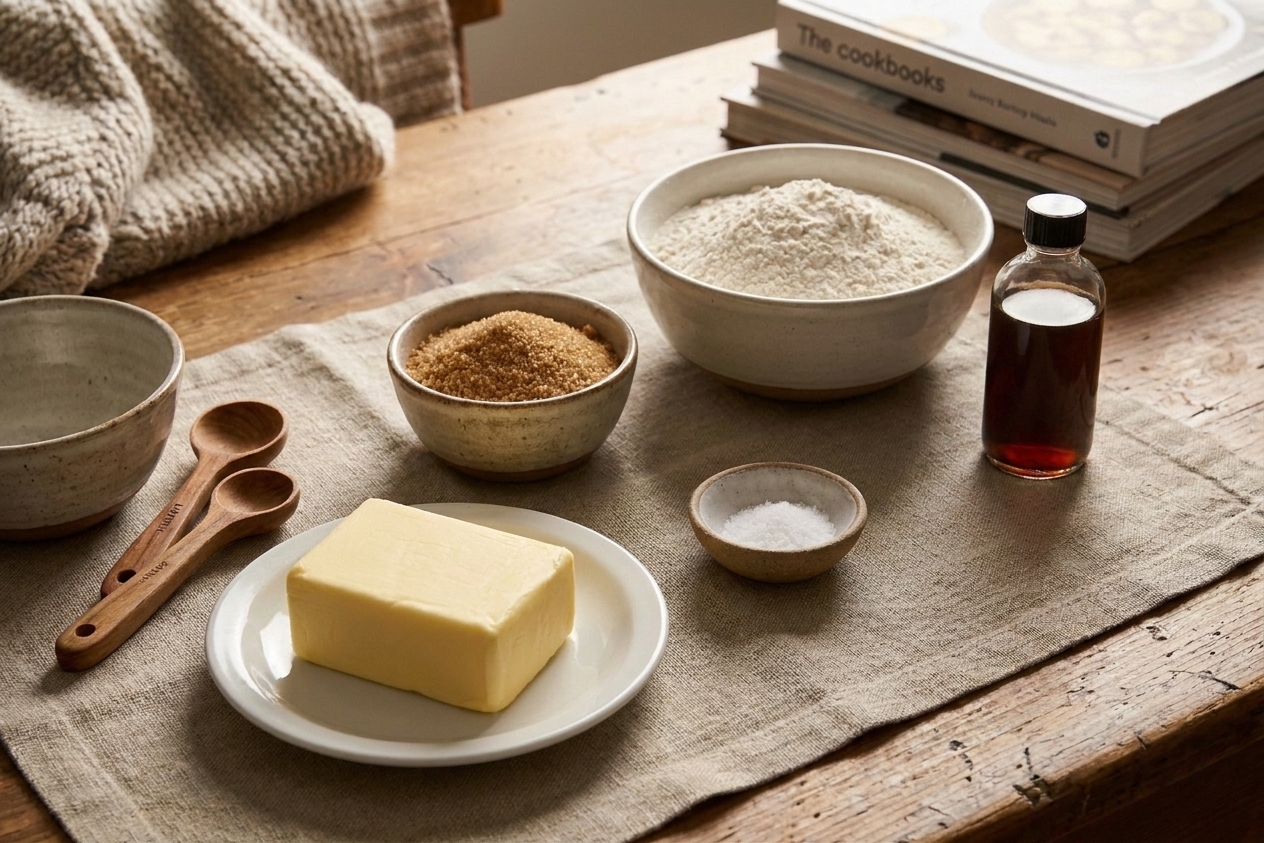
Either light or dark brown sugar works. Light gives a classic caramel note. Dark leans more molasses-forward and bakes a touch darker. Pack it when measuring by cups, or use a scale for best consistency.
Butter
Use unsalted butter so you control the salt. Temperature matters. You want it cool room temperature, soft enough to mix but not shiny or greasy. If it is overly warm, the dough can turn greasy and the cookies may spread.
Flour
All-purpose flour is perfect. If you tend to scoop flour heavily, consider spooning into the cup and leveling, or use a scale. Too much flour makes a dry, dusty cookie that crumbles into sand.
Salt
Shortbread needs salt to taste like something. It makes the butter taste more buttery and the brown sugar taste more caramel-y.
Vanilla (optional but lovely)
Vanilla is not traditional in every shortbread, but it plays beautifully with brown sugar. Keep it modest so the shortbread still tastes clean and simple.
Get set up
Equipment You Will Need
- Stand mixer or hand mixer (or a sturdy bowl and spatula for mixing by hand)
- Measuring cups and spoons or a kitchen scale
- Rubber spatula
- Parchment paper
- Rimmed baking sheets
- Sharp knife for slicing (slice-and-bake) or an 8-inch square pan (press-in option)
- Fork or skewer for docking
Technique
Tips for Getting It Right
How to keep it from baking like a chewy drop cookie
- No eggs. Eggs add moisture and structure that pushes you into soft cookie territory.
- No leavening. Skip baking powder and baking soda. Shortbread should not rise like a cake-y cookie.
- Do not overmix after flour. Mix just until the flour disappears. Overmixing develops gluten and makes the texture tougher.
- Chill the dough. Cold dough helps the butter melt more slowly, which keeps edges crisp and spread minimal.
Slice-and-bake: the clean slice trick
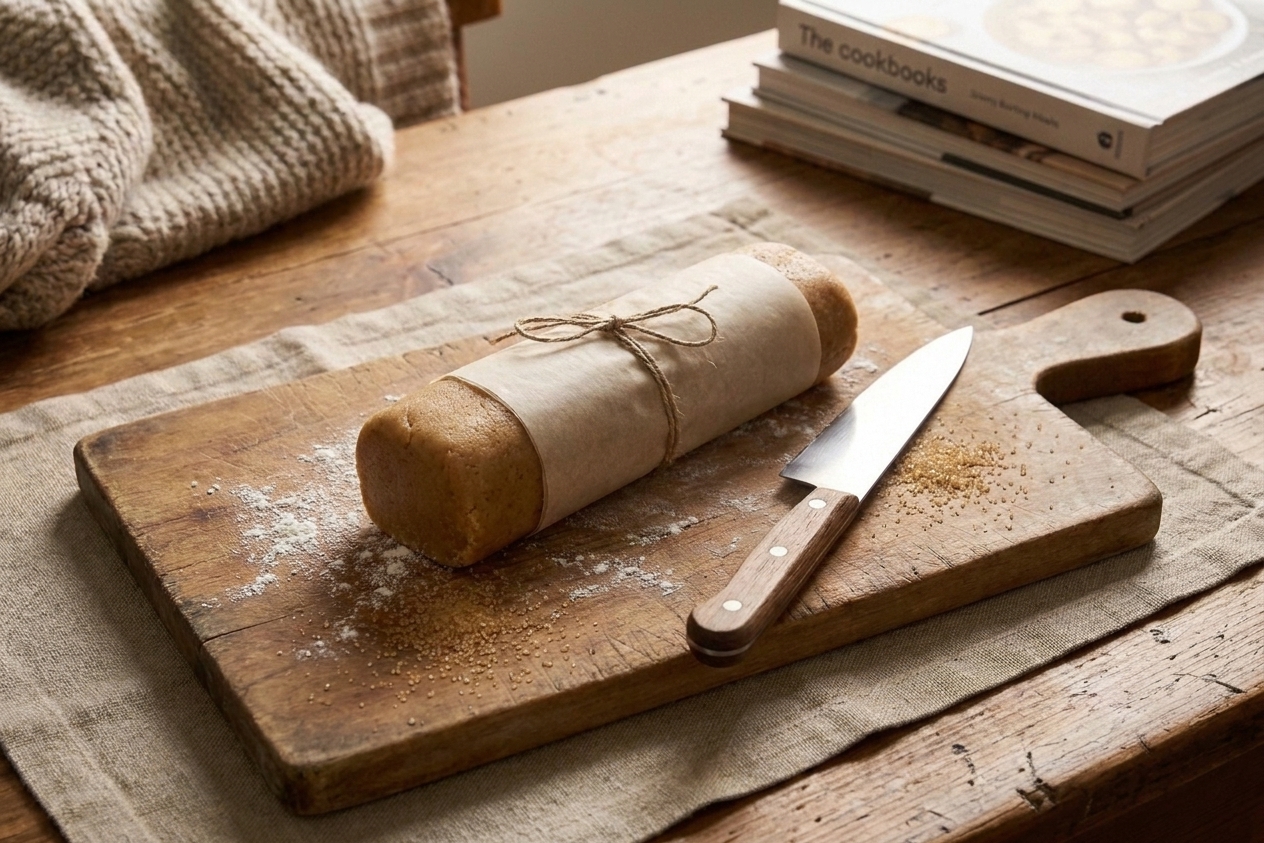
After chilling, let the log sit at room temperature for 5 to 10 minutes. Then use a sharp knife and slice straight down. If the rounds squish, the dough is too warm. If the dough cracks badly, it is too cold. (It is a Goldilocks moment, and you will nail it.)
Dock or slice, and when
- Slice-and-bake rounds: Slice first, then dock each round with a fork.
- Press-in shortbread: Press into the pan, chill briefly, then dock the surface before baking.
For crisp edges, bake until just golden
Shortbread can look pale and still be underbaked. You want a light golden color at the edges and a set surface. It will continue to firm up as it cools.
Flexibility
Substitutes That Work
Salted butter
You can use salted butter. Reduce the added salt to 1/4 teaspoon.
Powdered sugar instead of brown sugar
This changes the cookie into a more classic meltaway shortbread with less caramel flavor. If that is what you have, it will still work, but it will not have the same brown sugar depth.
Gluten-free flour blend
A 1:1 measure-for-measure gluten-free baking blend can work for shortbread, but brands vary a lot. Expect a slightly more fragile cookie, and chill thoroughly before slicing.
Make it yours
Variations to Try
Brown sugar and espresso
Add 1 tablespoon espresso powder with the flour for a subtle coffee bitterness that makes the caramel note pop.
Toasted pecan shortbread
Mix in 1/2 cup finely chopped toasted pecans. Keep pieces small so slices stay neat.
Citrus brown sugar shortbread
Add 1 tablespoon finely grated orange zest or 2 teaspoons lemon zest when creaming the butter and sugar.
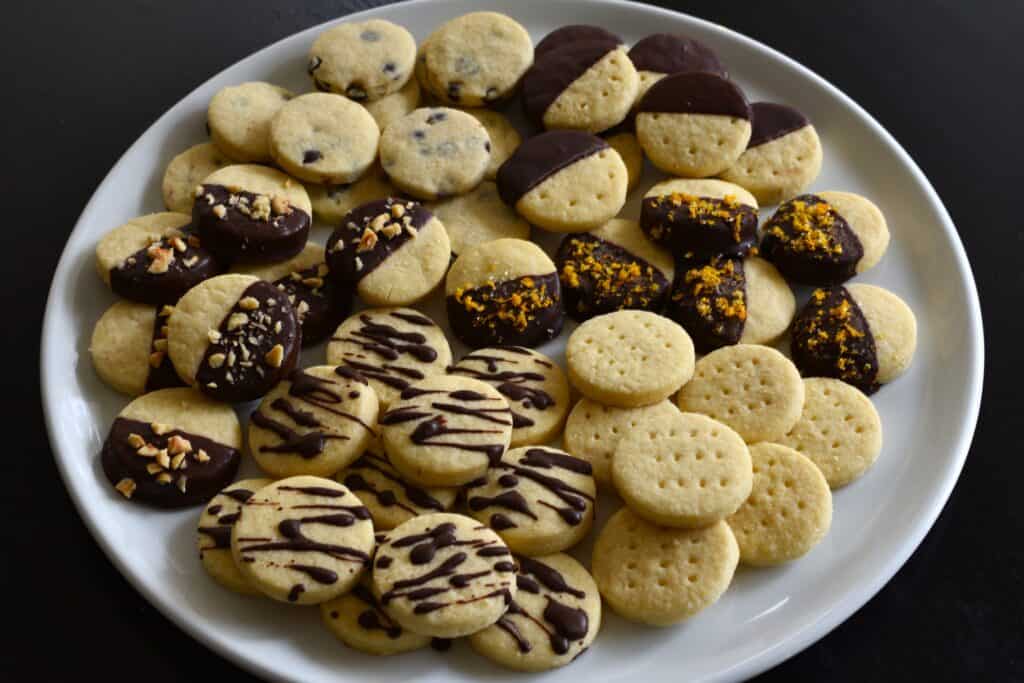
Chocolate-dipped
Once cooled, dip half of each cookie in melted chocolate and let set. This is wildly good with dark brown sugar shortbread.
On the table
What to Serve It With
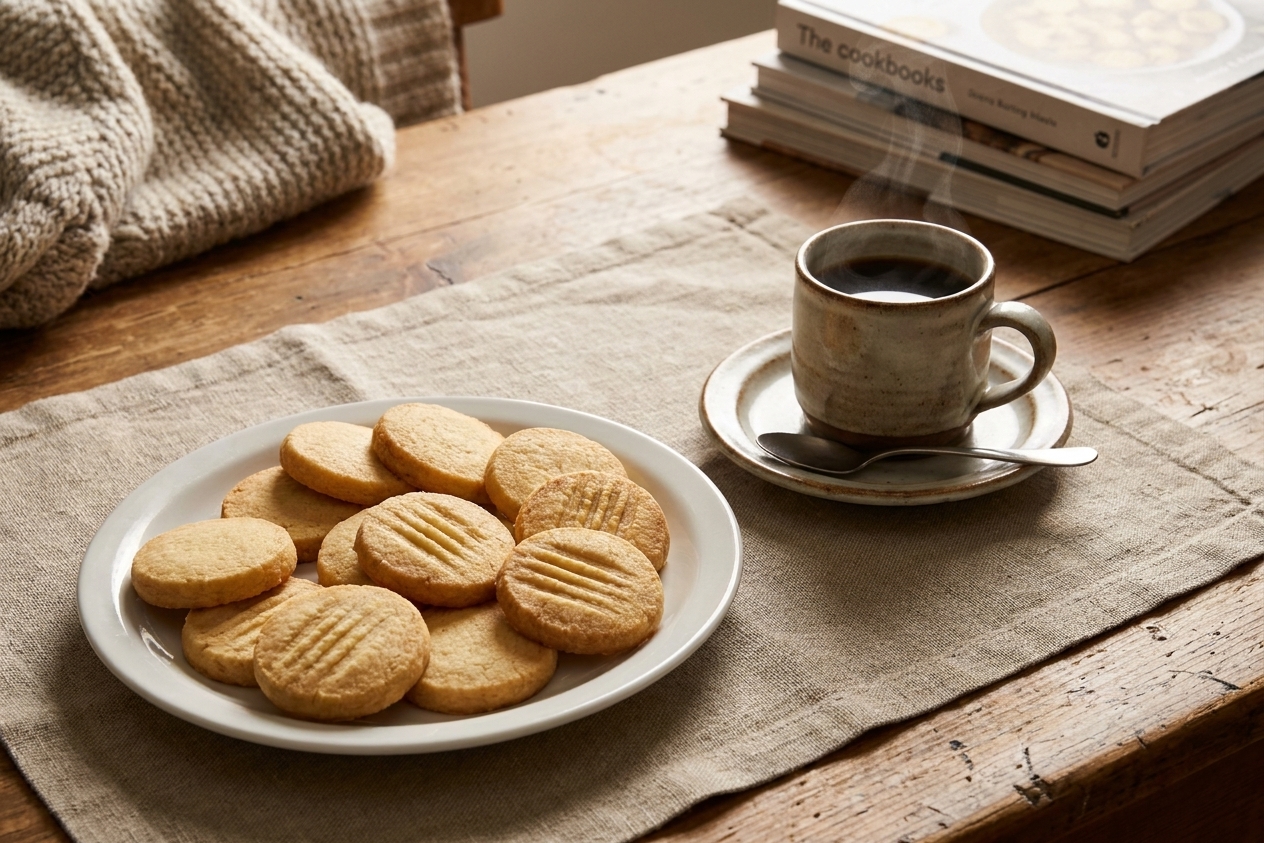
Shortbread is a natural with anything warm and sippable.
- Hot coffee or a strong black tea
- Chai latte with extra cinnamon
- Vanilla ice cream and berries for an easy dessert plate
- A holiday cookie tray next to something bright like citrus or cranberry treats
Later
Storage, Freezing and Reheating
Room temperature
Store in an airtight container at room temperature for 5 to 7 days. If your kitchen runs warm, keep them away from the stove or sunny windows so the butter does not soften the cookies.
Freezing the dough
Shortbread dough freezes beautifully.
- Log method: Wrap tightly in plastic wrap, then in foil. Freeze up to 2 months. Thaw in the refrigerator overnight before slicing.
- Pre-sliced: Freeze slices on a baking sheet until firm, then bag. Bake from frozen, adding 1 to 2 minutes.
Freezing baked cookies
Freeze fully cooled cookies in an airtight container for up to 2 months. Thaw at room temperature.
Watch out
Common Mistakes to Avoid
Using overly warm butter
If the butter is glossy and almost melting, the dough can turn greasy and the cookies may spread. Aim for cool room temp butter and chill the dough as directed.
Overmixing after adding flour
This is the fastest route to tough shortbread. Mix just until the flour disappears and the dough comes together.
Skipping docking
Undocked shortbread often bubbles and bakes unevenly. A few fork pricks take 10 seconds and make the finished cookies look polished.
Baking too dark
Brown sugar shortbread browns faster than white sugar shortbread. Pull it when the edges are light golden. If you wait for deep brown edges, the cookie can taste a bit over-toasted.
Slicing too thin
Thin slices can overbake and lose that tender crumble. Aim for 1/4-inch thick for the best texture.
Questions
Frequently Asked Questions
Is brown sugar shortbread supposed to be crumbly?
Yes. Shortbread should have a sandy, buttery crumb and a tender snap. If it is chewy, it usually means the dough was overmixed, too warm, or had extra moisture from add-ins.
Should I dock shortbread?
I recommend it. Docking (fork pricks) helps steam escape so the cookies bake flat and evenly. For slice-and-bake rounds, dock after slicing. For press-in shortbread, dock the surface in the pan before baking.
Why did my shortbread spread?
The most common causes are warm dough, butter that was too soft, or measuring too little flour. Chill the log until very firm and bake on a parchment-lined sheet. If your kitchen is warm, pop the sliced rounds back into the fridge for 10 minutes before baking.
Can I make this as press-in shortbread instead of slice-and-bake?
Absolutely. Press the dough into a parchment-lined 8-inch square pan, chill 15 minutes, dock, then bake. Cut into squares while warm and let cool completely in the pan for the cleanest edges.
How do I get clean slices without cracking?
Let the chilled log sit for 5 to 10 minutes before slicing, then use a sharp knife and slice straight down. If it still cracks, your dough is too cold. If it squishes, it is too warm.
The recipe
Brown Sugar Shortbread
Buttery, sandy brown sugar shortbread cookies with a crisp edge and caramel-like flavor. Make as slice-and-bake rounds or use the notes for a simple press-in pan version.
Ingredients
- 1 cup (227 g) unsalted butter, cool room temperature
- 1/2 cup (110 g) packed light or dark brown sugar
- 1/4 cup (30 g) powdered sugar
- 1 teaspoon vanilla extract
- 1/2 teaspoon fine salt
- 2 1/2 cups (300 g) all-purpose flour
- 2 tablespoons coarse sugar (optional, for rolling the log)
Instructions
- Cream butter and sugars. In a large bowl (or stand mixer bowl), beat the butter, brown sugar, and powdered sugar on medium speed until smooth and well combined, about 1 to 2 minutes. Scrape down the bowl.
- Add vanilla and salt. Beat in the vanilla and salt just until combined.
- Add flour gently. Add the flour and mix on low speed just until the dough looks crumbly but holds together when squeezed. Finish mixing with a spatula if needed. Do not overmix.
- Shape into a log. Turn the dough onto a piece of parchment. Use the parchment to help you press and roll it into a log about 2 inches in diameter. Wrap tightly.
- Chill. Refrigerate until very firm, at least 45 minutes (or up to 3 days).
- Heat oven and prep pan. Heat the oven to 325°F (163°C). Line 2 baking sheets with parchment paper.
- Roll (optional) and slice. If using coarse sugar, roll the chilled log in coarse sugar. Let the log sit at room temperature for 5 to 10 minutes. Slice into 1/4-inch rounds and place on prepared baking sheets about 1 inch apart.
- Dock. Prick each round 2 to 3 times with a fork.
- Bake. Bake for 18 to 22 minutes, rotating the pans halfway through, until the edges are lightly golden and the tops look set.
- Cool. Let cool on the baking sheet for 10 minutes, then transfer to a rack to cool completely. Shortbread firms as it cools.
Recipe notes
Ratio note: By weight, this dough is built on a classic shortbread structure: about 2 parts flour to 1 part butter to 1/2 part sugar.
Press-in option: Instead of shaping a log, press the dough into a parchment-lined 8-inch square pan. Chill 15 minutes, dock all over with a fork, then bake at 325°F (163°C) for 28 to 32 minutes until lightly golden at the edges. Cool 10 minutes, cut into squares, then cool completely.
For the crispest shortbread: Measure flour accurately, chill the dough, and avoid overmixing once the flour goes in.
Nutrition (per serving, approximate)
- Calories: 160
- Fat: 10 g
- Saturated Fat: 6 g
- Carbohydrates: 16 g
- Sugar: 6 g
- Protein: 2 g
- Sodium: 60 mg
- Fiber: 0 g