

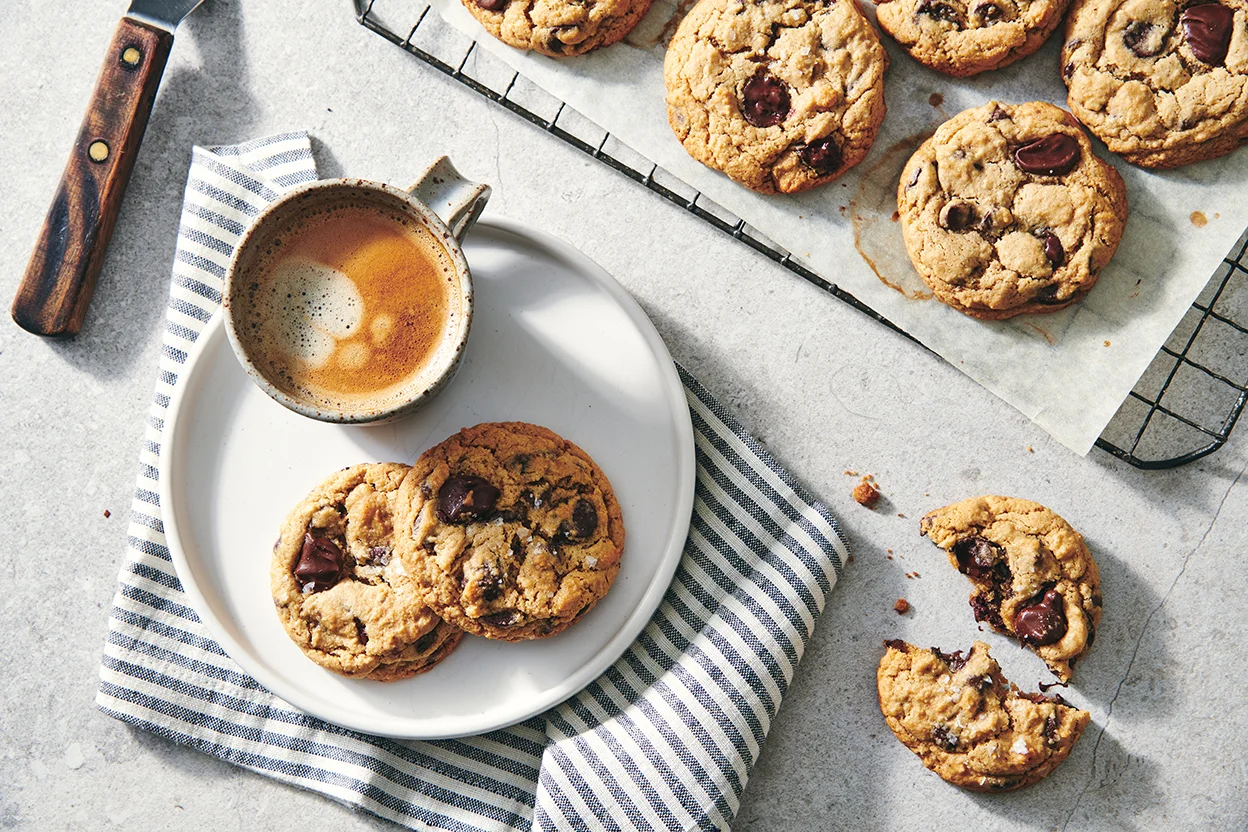
Nothing breaks a baker’s heart quite like pulling a tray of cookies from the oven, only to find they turn dry, crunchy, or rock hard by the next day. The good news: keeping cookies soft is not luck. It’s a handful of small choices that protect moisture from the moment you mix the dough to the moment you store the last cookie.
In this guide, I’ll walk you through the big three: baking (slightly under is your friend), cooling (don’t let them dry out on the counter too long), and storage (seal them right, and add a little “moisture insurance”). I also included a simple base cookie recipe you can use with chocolate chips, spices, or whatever mix-ins you already have.

What makes a cookie soft
Softness is mostly a moisture story. You’re trying to keep water in the cookie and slow down how quickly it escapes. A cookie’s texture is influenced by:
- Sugar type: Brown sugar and honey or corn syrup hold onto moisture better than white sugar.
- Fat type: Butter gives great flavor, but cookies made with a little oil or extra egg yolk can stay softer longer.
- Flour amount: Too much flour soaks up moisture and makes cookies drier.
- Bake time: Even 1 to 2 minutes too long can dry out the center as steam escapes.
- Air exposure: Cookies left uncovered keep drying as moisture evaporates and the crumb firms up over time.
The soft-cookie plan
1) Mix for softness
- Measure flour the gentle way: Spoon flour into the measuring cup, then level it. Scooping directly from the bag packs in extra flour fast.
- Use more brown sugar than white: For a classic drop cookie, a brown-sugar-forward ratio helps softness.
- Don’t overmix once flour goes in: Overmixing develops gluten, which can make cookies tougher and drier.
- Chill the dough (optional, but helpful): Even 30 to 60 minutes can improve texture and help prevent overbaking thin cookies.
2) Bake for soft centers
If you want cookies that stay soft tomorrow, you’ve got to be brave today: pull them when the centers still look slightly underdone. For anxious bakers, here’s the visual: centers should look pale and soft, not wet or raw. Edges should look set and lightly golden, and the middle can have a faint sheen.
- Use a reliable baseline temperature: 350°F works well for many drop cookies, but always follow your recipe and adjust for your oven if it runs hot or cool.
- Use the middle rack: Too high browns too fast, too low can overcrisp bottoms.
- Watch the edges, not the clock: Ovens vary. Start checking 2 minutes early.
3) Cool on purpose
Cooling is where a lot of cookies accidentally lose their softness. Here’s the best rhythm for most drop cookies:
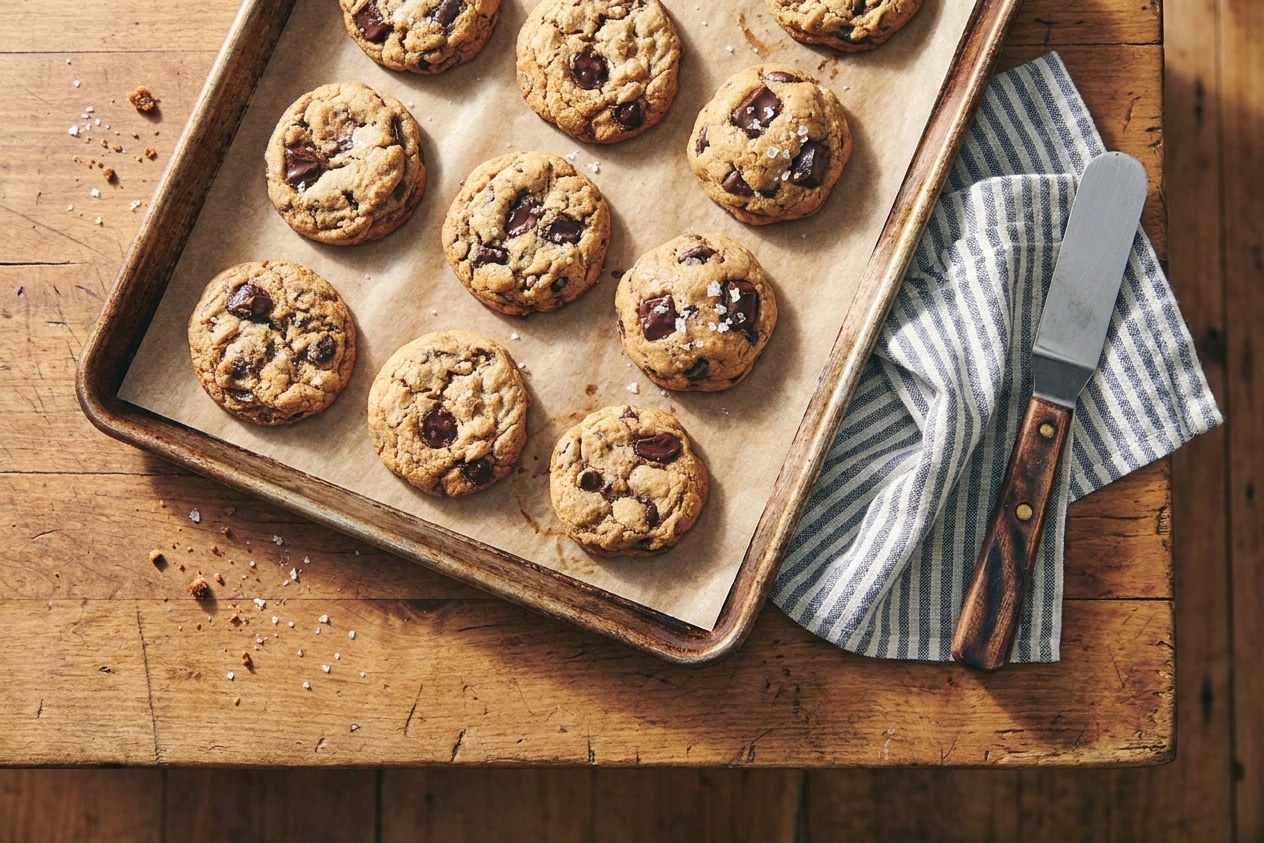
- Rest on the baking sheet for 5 to 10 minutes: This lets the cookies finish setting gently from residual heat. Set a timer. If your cookies are thin, lean toward 5 minutes so they do not over-set on the hot pan.
- Then move to a rack: After they’ve firmed up enough to move, a rack helps prevent soggy bottoms.
- Don’t leave cookies out for hours: Once fully cool, get them sealed up.
4) Store like you mean it
Your goal is a tight seal plus a little moisture buffer.
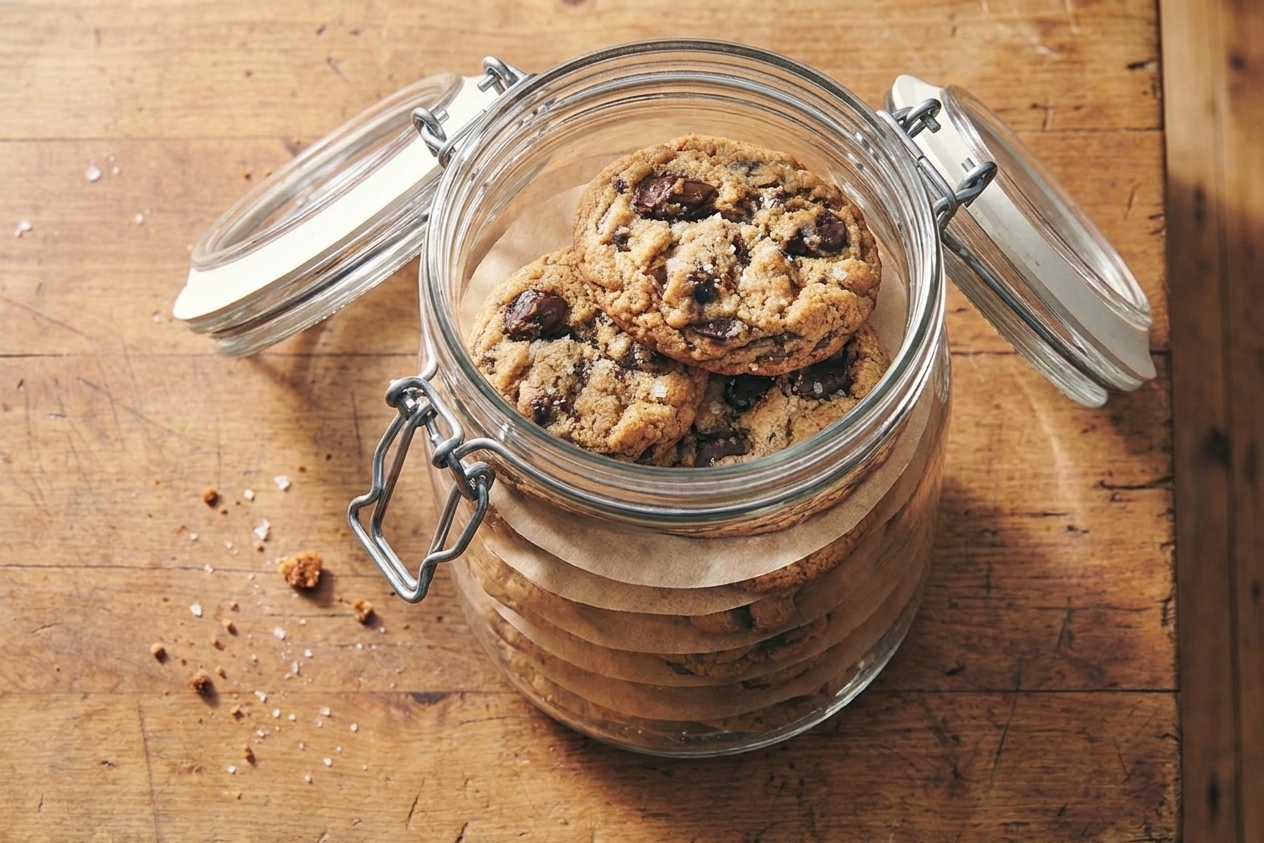
- Best everyday option: An airtight container with a snug lid.
- Even better: Add a slice of sandwich bread (or a flour tortilla) to the container. It helps balance moisture in the container, which keeps cookies tender longer.
- Quick safety and quality note: Replace the bread daily (or whenever it feels dry). If your cookies are still warm or very moist, skip the bread until everything is fully cool. Trapped steam can make cookies sticky and can shorten shelf life.
- Layer smart: Separate layers with parchment to prevent sticking.
- Keep different textures apart: Crisp cookies stored with soft cookies will trade moisture. Both end up wrong.
Base cookie recipe
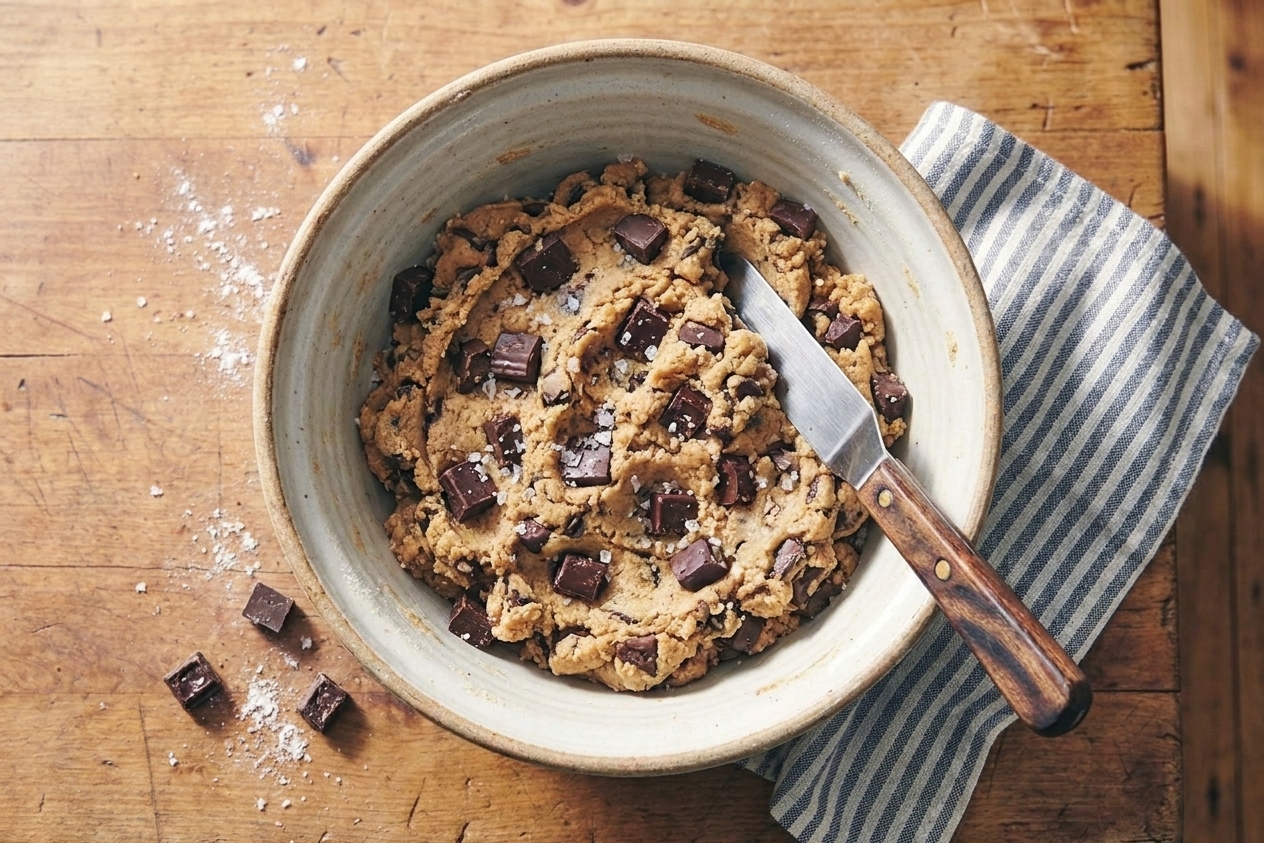
This is my go-to “stay soft” base. It’s brown-sugar-forward with a little cornstarch and an extra yolk, so it bakes up tender and stays that way. Use it with chocolate chips, chopped chocolate, or any mix-ins you like.
Ingredients
- 2 1/4 cups all-purpose flour (spooned and leveled)
- 2 teaspoons cornstarch
- 1 teaspoon baking soda
- 1/2 teaspoon fine salt
- 3/4 cup unsalted butter, softened
- 3/4 cup packed brown sugar (light or dark)
- 1/2 cup granulated sugar
- 1 large egg
- 1 large egg yolk
- 2 teaspoons vanilla extract
- 1 1/2 cups semi-sweet chocolate chips (or chopped chocolate)
Instructions
- Prep the oven and pans. Heat oven to 350°F. Line 2 baking sheets with parchment paper.
- Mix dry ingredients. In a medium bowl, whisk together flour, cornstarch, baking soda, and salt.
- Cream butter and sugars. In a large bowl (or stand mixer), beat butter, brown sugar, and granulated sugar until fluffy, about 1 to 2 minutes.
- Add eggs and vanilla. Beat in the egg, then the egg yolk, then vanilla until smooth.
- Add dry ingredients. Mix in the flour mixture on low just until no dry streaks remain. Don’t overmix.
- Stir in chocolate. Fold in chocolate chips.
- Chill (optional but recommended). Chill dough 30 to 60 minutes for thicker, softer cookies.
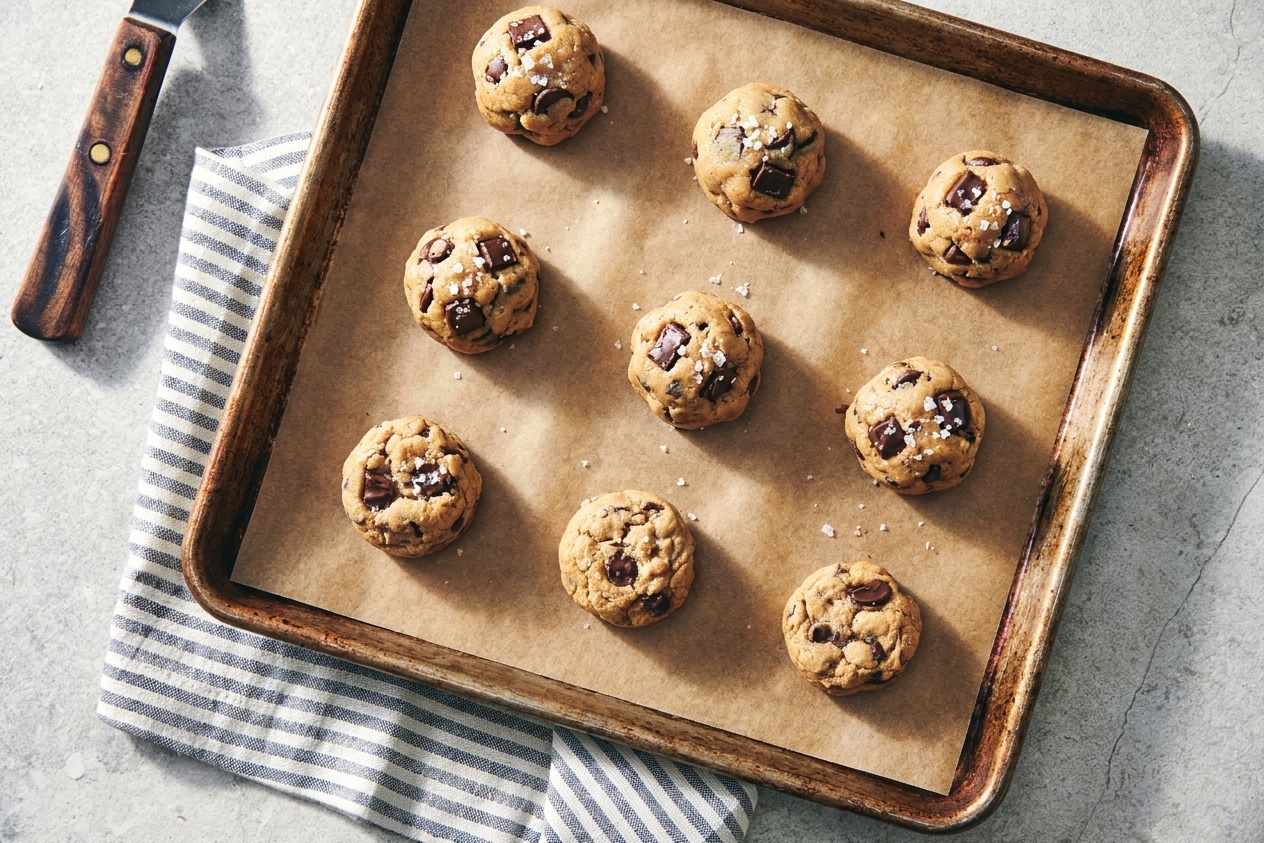
- Scoop. Scoop 1 1/2 tablespoon portions (or about 35 g each) onto prepared baking sheets, spacing 2 inches apart.
- Bake for soft centers. Bake 9 to 11 minutes, rotating the pan halfway through, until edges are set and lightly golden but centers still look slightly underdone.
- Cool strategically. Let cookies cool on the baking sheet for 5 to 10 minutes, then transfer to a wire rack to cool completely.
- Store to stay soft. Once fully cool, store airtight. For extra softness, tuck a small piece of bread into the container and replace it daily.
The idea
Why This Recipe Works
- Brown sugar plus a touch of cornstarch helps cookies stay tender by retaining moisture and softening the flour’s set.
- Slight underbaking keeps the centers moist, and the carryover heat finishes the cookie without drying it out.
- Resting on the pan first sets structure gently so cookies don’t need extra oven time.
- Airtight storage with “moisture insurance” (bread or tortilla) helps balance moisture and keeps cookies soft for days.
Shopping
Ingredient Notes
Brown sugar
Light or dark both work. Dark brown sugar has more molasses, which means a slightly deeper flavor and even better moisture retention.
Cornstarch
This is my quiet little softness helper. It lowers the cookie’s chew toughness and encourages a more tender bite. If you skip it, the cookies are still good, just a bit less plush.
Butter
Use unsalted if you can so you control the salt. If you only have salted butter, reduce added salt to 1/4 teaspoon.
Egg plus egg yolk
The extra yolk adds richness and tenderness. It’s one of the simplest ways to keep cookies soft without making them cakey.
Flour
All-purpose flour is perfect here. If your cookies are often dry, your first troubleshooting step should be checking how you measure flour.
Chocolate chips or mix-ins
Chocolate chips, chopped chocolate, or chunks all work. Chopped chocolate melts more and creates softer pockets.
Get set up
Equipment You Will Need
- Stand mixer or hand mixer (or a sturdy bowl and spatula)
- Measuring cups and spoons (or a kitchen scale if you have one)
- 2 baking sheets
- Parchment paper or a silicone baking mat
- Cookie scoop (optional, but makes even cookies)
- Wire rack for cooling
- Airtight container for storage
Technique
Tips for Getting It Right
Pull them early
For soft cookies, the biggest tip is the simplest: stop baking sooner than you think. The centers should look pale and soft when you take the pan out, not wet or raw.
Use an oven thermometer
If your oven runs hot, you’ll dry cookies out fast. A simple oven thermometer can fix weeks of “why are my cookies crunchy?” frustration.
Pan matters
Dark pans brown faster. If you use dark nonstick sheets, start checking cookies 1 to 2 minutes early.
Time the cooling step
That 5 to 10 minutes on the pan is a sweet spot. Set a timer so thin cookies do not sit too long on residual heat.
The bread trick, explained
Cookies go firm as moisture migrates and starches set up over time. A piece of bread in the container helps balance moisture, so the cookies stay tender longer.
Flexibility
Substitutes That Work
- No cornstarch: Omit it. The cookies will be slightly less tender, but still soft if you don’t overbake.
- No extra egg yolk: Use 2 whole eggs total instead of 1 egg plus 1 yolk. Texture will be a bit more cake-leaning but still soft.
- Butter alternative: Replace 2 tablespoons of the butter with neutral oil (like canola) for a slightly softer cookie that stays tender longer.
- Gluten-free: Use a 1:1 gluten-free baking blend designed for cookies. Chill the dough 1 hour for best results.
- Lower sugar: Reducing sugar can reduce softness. If you cut sugar, keep more brown sugar than white and be extra careful not to overbake.
Make it yours
Variations to Try
Soft cinnamon-sugar cookies
Swap chocolate chips for 1 teaspoon cinnamon in the dough. Roll dough balls in cinnamon sugar before baking.
Chewy oatmeal chocolate chip
Replace 1 cup flour with 1 cup old-fashioned oats. Chill the dough 30 minutes so the oats hydrate for a softer bite.
Peanut butter swirl
Dollop 1/2 teaspoon peanut butter on each dough ball and lightly swirl with a toothpick. Peanut butter helps softness too.
Lemon white chocolate
Add 1 tablespoon lemon zest and use white chocolate chips. Bright, soft, and bakery-feeling with pantry ingredients.
On the table
What to Serve It With
- Classic: A cold glass of milk or a hot mug of coffee.
- Cozy: Sandwich vanilla ice cream between two cookies and freeze 30 minutes.
- Dessert board: Serve with fresh berries, salted pretzels, and a small bowl of peanut butter or Nutella for dipping.
- Lunchbox: Pack with a piece of fruit and a handful of nuts. Store the cookie in a small sealed bag so it doesn’t dry out.
Later
Storage, Freezing and Reheating
How to store cookies
- Room temperature: Store fully cooled cookies in an airtight container for 3 to 5 days.
- Add a bread slice: Place 1 small piece of soft sandwich bread (or half a tortilla) in the container and replace it daily, or sooner if it feels dry. It helps balance moisture in the container.
- Keep away from heat: Don’t store near the oven or in direct sunlight, which speeds staling.
- Skip the fridge: Refrigerators are dry and can make cookies taste stale faster. Room temp storage is usually best.
Freezing
- Freeze baked cookies: Cool completely, then freeze in a zip-top freezer bag with parchment between layers for up to 3 months. Thaw covered at room temperature so they do not dry out.
- Freeze cookie dough balls: Scoop dough, freeze on a sheet until solid, then transfer to a bag. Bake from frozen, adding 1 to 2 minutes.
Reheating
- Microwave: 8 to 12 seconds per cookie for that just-baked softness.
- Oven: 300°F for 3 to 5 minutes.
Watch out
Common Mistakes to Avoid
Overbaking by “color”
If you wait for cookies to look fully done in the center, they’ll be overdone once cooled. Pull when the center looks pale and slightly under.
Packing flour into the measuring cup
Too much flour is the stealth cause of dry cookies. Spoon and level, or weigh your flour if you can.
Leaving cookies uncovered
Air is a cookie’s enemy. Once cool, seal them up.
Storing warm cookies
Warm cookies trap steam and can turn wet and sticky. Cool completely first.
Mixing crisp and soft cookies
They’ll exchange moisture. Your crisp cookies soften, and your soft cookies can dry out. Store separately.
Questions
Frequently Asked Questions
Why did my cookies get hard after cooling?
Most often: they baked a little too long, had a bit too much flour, or sat out uncovered too long after baking. The fix is usually pulling them 1 to 2 minutes earlier next time, measuring flour more lightly, and storing airtight once fully cool.
Does putting bread in the container really work?
Yes. It helps balance moisture in the container, which often keeps cookies softer. Use a small piece of plain sandwich bread and replace it daily (or when it dries out).
Should I store cookies in the fridge to keep them soft?
Usually no. Refrigerators are dry and can actually make many cookies taste stale faster. Room temperature in an airtight container is best for most soft drop cookies.
How do I keep cookies soft overnight for a party?
Cool completely, then store airtight with a small piece of bread or tortilla. If you want that fresh-from-the-oven vibe, microwave each cookie 8 to 10 seconds right before serving.
Why are my cookies soft on day one but dry on day two?
That points to storage. Make sure the container truly seals, and don’t leave the lid cracked. Adding bread is the simplest day-two insurance.
Can I freeze the dough or baked cookies?
Yes. Freeze dough balls on a sheet until firm, then transfer to a freezer bag. Bake from frozen with 1 to 2 extra minutes. You can also freeze baked cookies (fully cooled) in an airtight freezer bag with parchment between layers for up to 3 months, then thaw covered at room temperature.
The recipe
How to Keep Homemade Cookies Soft
A simple, brown-sugar-forward base cookie designed to stay soft for days. Pull them slightly underbaked, cool briefly on the pan, then store airtight with a piece of bread for maximum tenderness.
Ingredients
- 2 1/4 cups all-purpose flour (spooned and leveled)
- 2 teaspoons cornstarch
- 1 teaspoon baking soda
- 1/2 teaspoon fine salt
- 3/4 cup unsalted butter, softened
- 3/4 cup packed brown sugar (light or dark)
- 1/2 cup granulated sugar
- 1 large egg
- 1 large egg yolk
- 2 teaspoons vanilla extract
- 1 1/2 cups semi-sweet chocolate chips (or chopped chocolate)
Instructions
- Prep the oven and pans. Heat oven to 350°F. Line 2 baking sheets with parchment paper.
- Mix dry ingredients. In a medium bowl, whisk together flour, cornstarch, baking soda, and salt.
- Cream butter and sugars. In a large bowl (or stand mixer), beat butter, brown sugar, and granulated sugar until fluffy, about 1 to 2 minutes.
- Add eggs and vanilla. Beat in the egg, then the egg yolk, then vanilla until smooth.
- Add dry ingredients. Mix in the flour mixture on low just until no dry streaks remain. Don’t overmix.
- Stir in chocolate. Fold in chocolate chips.
- Chill (optional but recommended). Chill dough 30 to 60 minutes for thicker, softer cookies.
- Scoop. Scoop 1 1/2 tablespoon portions (or about 35 g each) onto prepared baking sheets, spacing 2 inches apart.
- Bake for soft centers. Bake 9 to 11 minutes, rotating the pan halfway through, until edges are set and lightly golden but centers still look slightly underdone.
- Cool strategically. Let cookies cool on the baking sheet for 5 to 10 minutes, then transfer to a wire rack to cool completely.
- Store to stay soft. Once fully cool, store airtight. For extra softness, tuck a small piece of bread into the container and replace it daily.
Recipe notes
- For the softest result: Pull cookies when the centers still look pale with a touch of sheen. They’ll finish setting as they cool.
- Flour tip: If you tend to get dry cookies, weigh your flour (about 270 g for 2 1/4 cups, depending on brand and how you measure).
- Cooling tip: Set a timer for the pan-rest step. For thin cookies, do not exceed 10 minutes on the hot baking sheet.
- Storage tip: Add a small piece of sandwich bread to the container and replace it daily (or when it feels dry). It helps balance moisture in the container, which keeps cookies soft.
- Fridge note: In most cases, do not refrigerate baked cookies. The fridge air is dry and can make cookies taste stale faster. Room temperature storage is usually best.
- Freeze-ahead: Scoop dough balls and freeze. Bake from frozen with 1 to 2 extra minutes.
Nutrition (per serving, approximate)
- Calories: 210
- Protein: 2 g
- Fat: 10 g
- Saturated Fat: 6 g
- Carbohydrates: 29 g
- Fiber: 1 g
- Sugars: 18 g
- Sodium: 140 mg