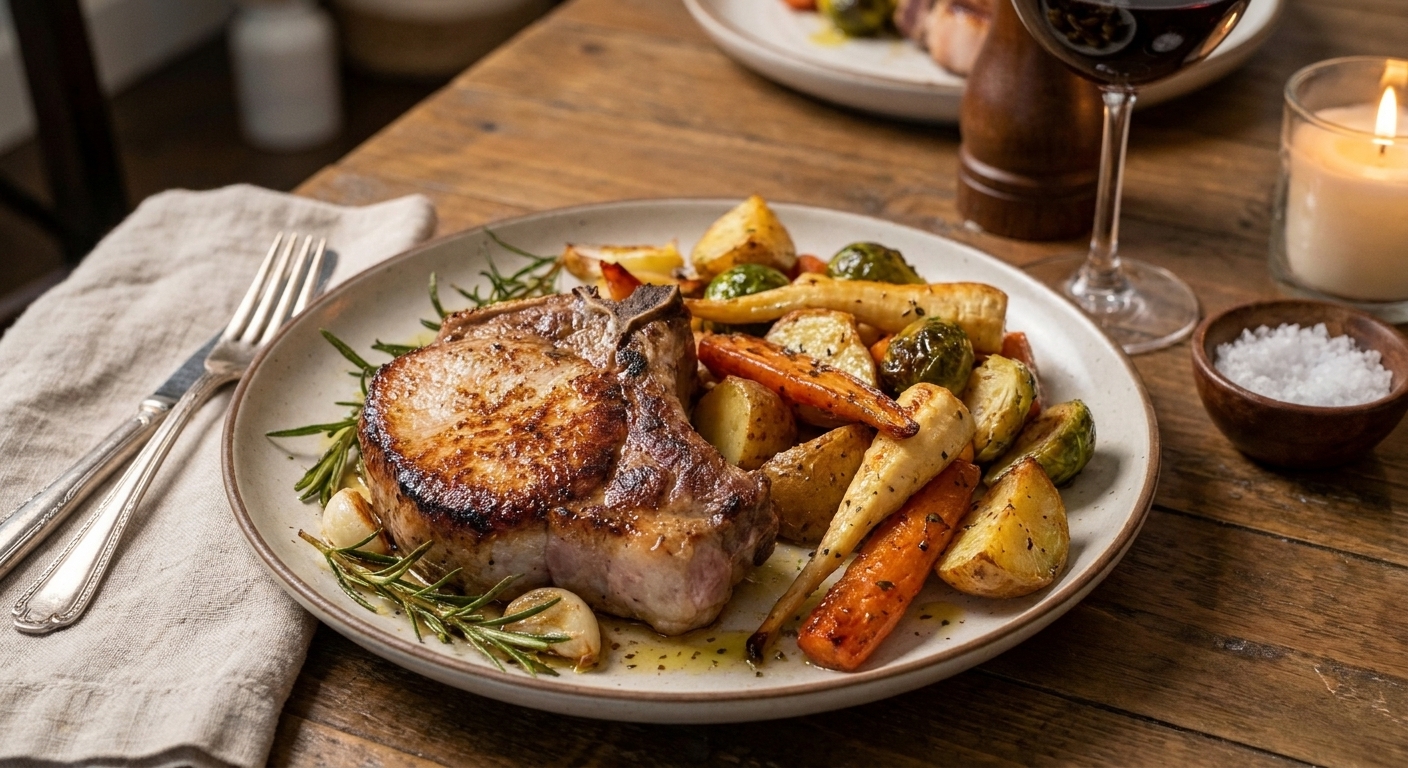

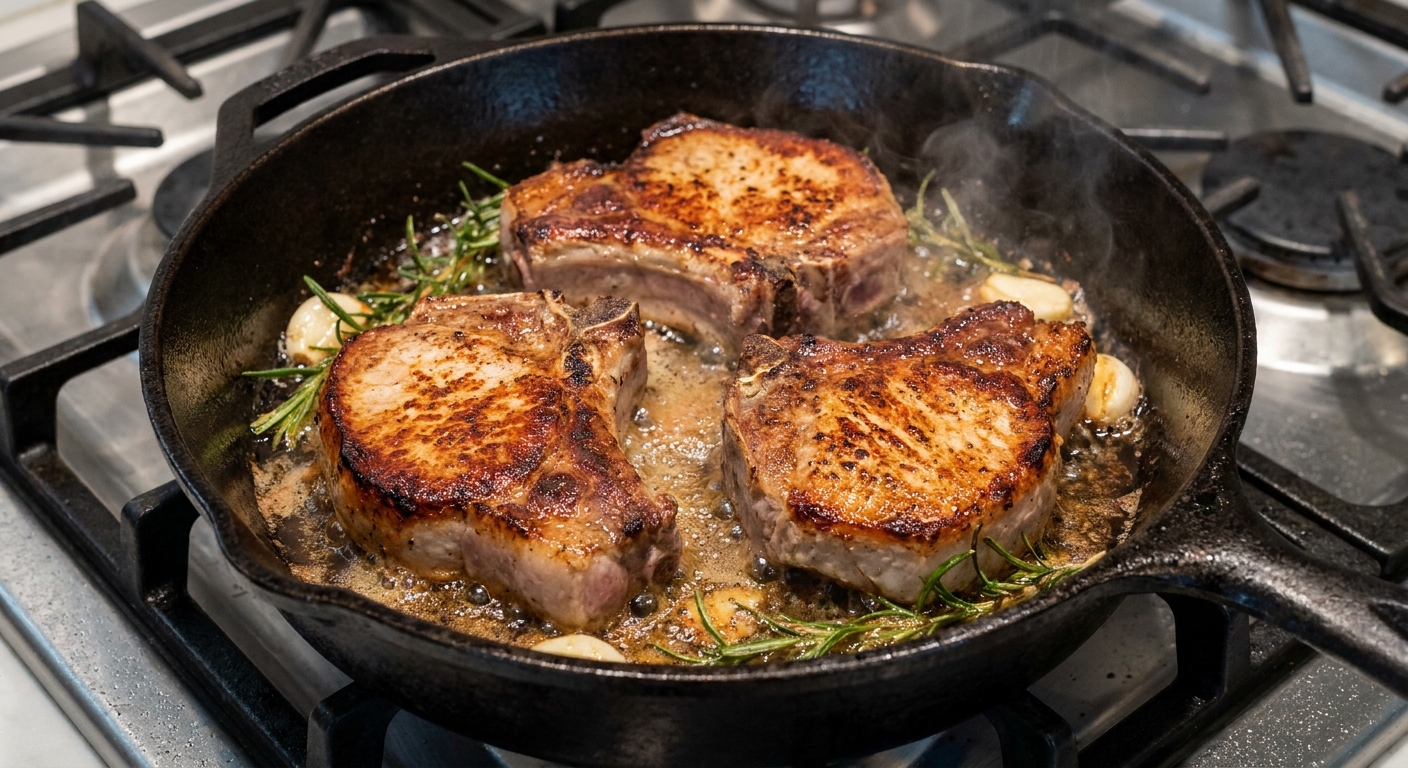
I grew up in a loud Pacific Northwest kitchen where somebody was always “doing something” to the meat before it hit the pan. A quick salt soak. A garlicky bag of marinade. A suspiciously scientific sprinkling of this and that. And honestly, it worked, but nobody ever explained why.
If you have pork chops in the fridge and you are trying to decide between a brine and a marinade, here is the simple truth: brines are for juiciness and consistent seasoning, and marinades are for surface flavor and style. You can get great chops with either, as long as you match the method to the thickness of the chop and the amount of time you have.

Quick definitions
What a brine does
A brine is salty water (sometimes with sugar and aromatics) that lightly seasons pork all the way through and helps it hold onto moisture as it cooks. Even a short brine can make modern, lean pork chops noticeably more forgiving.
What a marinade does
A marinade is a seasoned liquid (often oil plus an acid like citrus or vinegar, plus herbs and spices). Marinades mostly flavor the outside of the chop. They are fantastic for adding a specific flavor direction, but they do not guarantee juiciness the way a properly measured brine can.
Brine vs. marinade
| Goal | Choose a brine | Choose a marinade |
|---|---|---|
| Juicy, evenly seasoned meat | Best choice, especially for lean chops | Helps a little, but not as reliably |
| Big flavor on the outside | Subtle, unless you add aromatics | Best choice for bold profiles |
| Timing | Great for short windows (30 to 90 minutes) | Works best with longer time (2 to 12 hours) |
| Risk of going wrong | Oversalting if too strong or too long | Mushy surface if too acidic or too long |
| Best sear | Easier, brined chops can be patted dry | Harder if the surface is wet or sugary |
| Thin chops | Excellent, short brine helps a lot | Tricky, easy to overwhelm or burn |
| Thick chops | Excellent, more time pays off | Great for flavor, but still dry the surface |
Timing
Brine timing
For most pork chops, a 30 to 90 minute brine is the sweet spot. It is long enough to make a difference, short enough to fit into real life.
- Thin chops (about 1/2 inch): 20 to 45 minutes
- Medium chops (about 3/4 inch): 30 to 60 minutes
- Thick chops (1 inch or more): 45 to 90 minutes (up to 2 hours if needed)
Food safety note: brine in the refrigerator, especially if you are going longer than 30 minutes. Keep the brine cold from the start.
Marinade timing
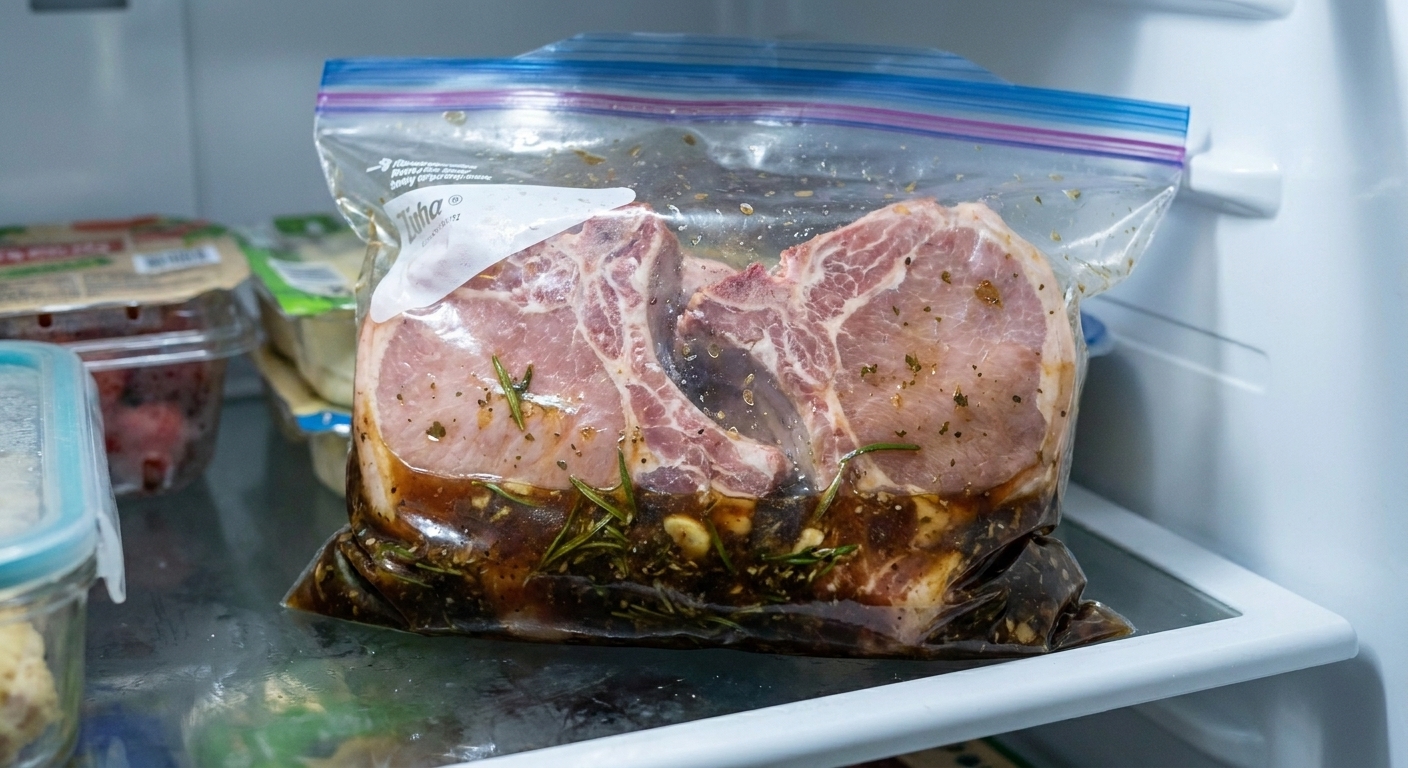
Marinades shine when they have time to hang out. For pork chops, 2 to 8 hours is usually plenty. You can push to 12 hours for low-acid marinades, but if your marinade is heavy on vinegar, lemon, or lime, keep it shorter so the texture stays meaty instead of soft on the outside.
Also: marinate in the refrigerator, not on the counter.
Common mistakes
Brine risk: too salty
Brining is incredibly dependable when the salt level and time are reasonable. Where it goes sideways is when the brine is too strong, or the chops sit too long, especially thin chops.
My go-to brine strength: aim for a 5 to 6 percent brine by weight, which is about 50 to 60 grams salt per 1,000 grams (1 liter) water.
If you measure by tablespoons, just know it is brand-dependent. A tablespoon of Diamond Crystal kosher salt is lighter than a tablespoon of Morton kosher salt, so the same spoon measure can land you anywhere from “mild” to “whoa.” When I want zero surprises, I weigh the salt.
Easy safeguards:
- Set a timer. Thin chops do not need hours.
- If you are not weighing salt, stick with the same brand of kosher salt so your results stay consistent.
- Brine in the refrigerator, especially past 30 minutes.
Marinade risk: the outside turns soft
Acid is great for flavor, but it can make the surface of pork a little “cooked” and pasty if it sits too long. This is most noticeable with thin chops.
Easy safeguards:
- For acidic marinades, keep it to 30 minutes to 4 hours for thin to medium chops.
- If you want overnight, use a low-acid marinade (more oil, herbs, garlic, mustard, miso, soy sauce, spices).
Better sear
If you want that golden, restaurant-style crust, the surface of the chop needs to be dry. Water has to evaporate before browning can start, and that means less crust and more steaming.
After brining
- Remove chops from brine.
- Do not rinse by default. If your brine was properly measured, rinsing usually just washes away surface seasoning. Only consider a quick rinse if you accidentally went too salty or way too long.
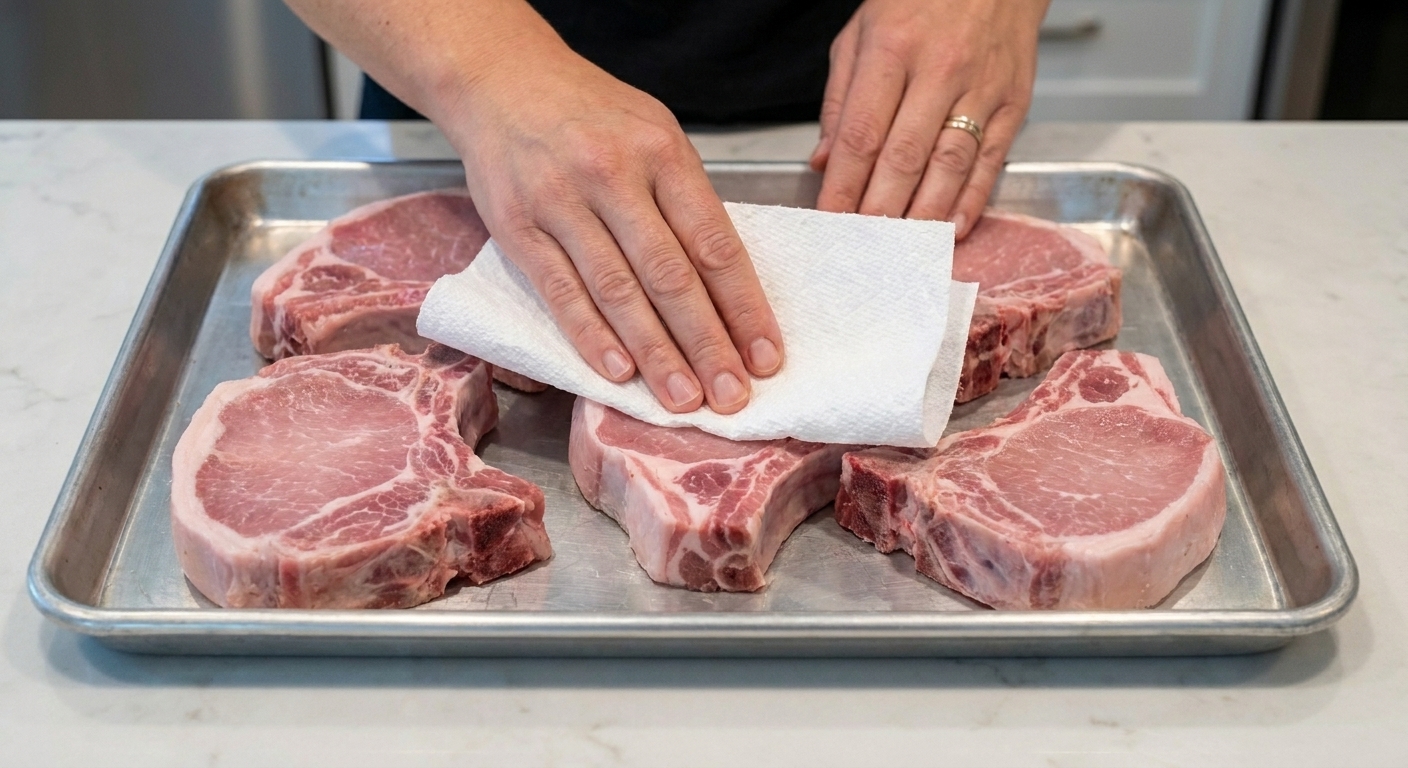
- Pat very dry with paper towels.
- If you are cooking soon: air-dry on a rack 10 to 20 minutes.
- If you have time: dry uncovered in the fridge 30 to 60 minutes for the best crust.
After marinating
- Lift chops out and let excess marinade drip off.
- Blot the surface well. You want seasoning to stay, but you do not want puddles.
- Watch sugar and honey. They brown fast and can burn in a ripping-hot skillet.
Thin vs. thick
Thin pork chops
Thin chops cook so quickly that you have almost no margin for error. This is where a short brine is my favorite. It seasons fast, helps retain moisture, and you can still get a quick sear without the surface being coated in wet marinade.
- Best choice: brine
- If you marinate: keep it short, and choose low sugar
Thick pork chops
Thick chops can handle either method well. If your main goal is juicy meat, brine. If your main goal is a strong flavor profile (garlic herb, smoky chipotle, soy ginger), marinade.
- Best choice for juiciness: brine
- Best choice for bold flavor: marinade, then dry the surface before cooking
Bone-in chops
Bone-in chops tend to be a little more forgiving because they often cook a bit more slowly and unevenly in a helpful way. The bone acts like a heat buffer, which can reduce the odds of blasting the whole chop past juicy and into dry. You can still overcook them, though. Brining is still a win if you are prone to overdoing it, and marinades are great if you want a specific flavor direction.
Doneness
If you want one habit that fixes more dry pork chops than any brine or marinade, it is this: do not cook them to death. I pull chops when the thickest part hits 140 to 145°F, then let them rest 5 minutes. The temperature will coast up slightly, and the juices will settle back in.
Using both
You can use both methods, but doing it well takes restraint. If you brine first and then marinate, you risk oversalting unless your marinade is low salt.
If you want the best of both without stress, I recommend this approach:
- Brine briefly (30 to 60 minutes) for juiciness.
- Pat dry.
- Season like a “dry marinade” right before cooking: black pepper, garlic powder, smoked paprika, dried herbs, or a spice rub.
This gives you strong flavor plus an easy sear, with much less mess.
My formulas
Simple pork chop brine
This is the one I reach for constantly because it is predictable.
- 1 liter (1,000 g) cold water
- 50 to 60 g kosher salt
- Optional: 15 to 25 g brown sugar, a few smashed garlic cloves, peppercorns, bay leaf
Stir to dissolve, chill if needed, brine chops in the refrigerator, then pat very dry.
How much brine do you need? Enough to fully submerge the chops. As a rough guide, 1 liter is usually plenty for 2 to 4 chops in a snug container or zip top bag.
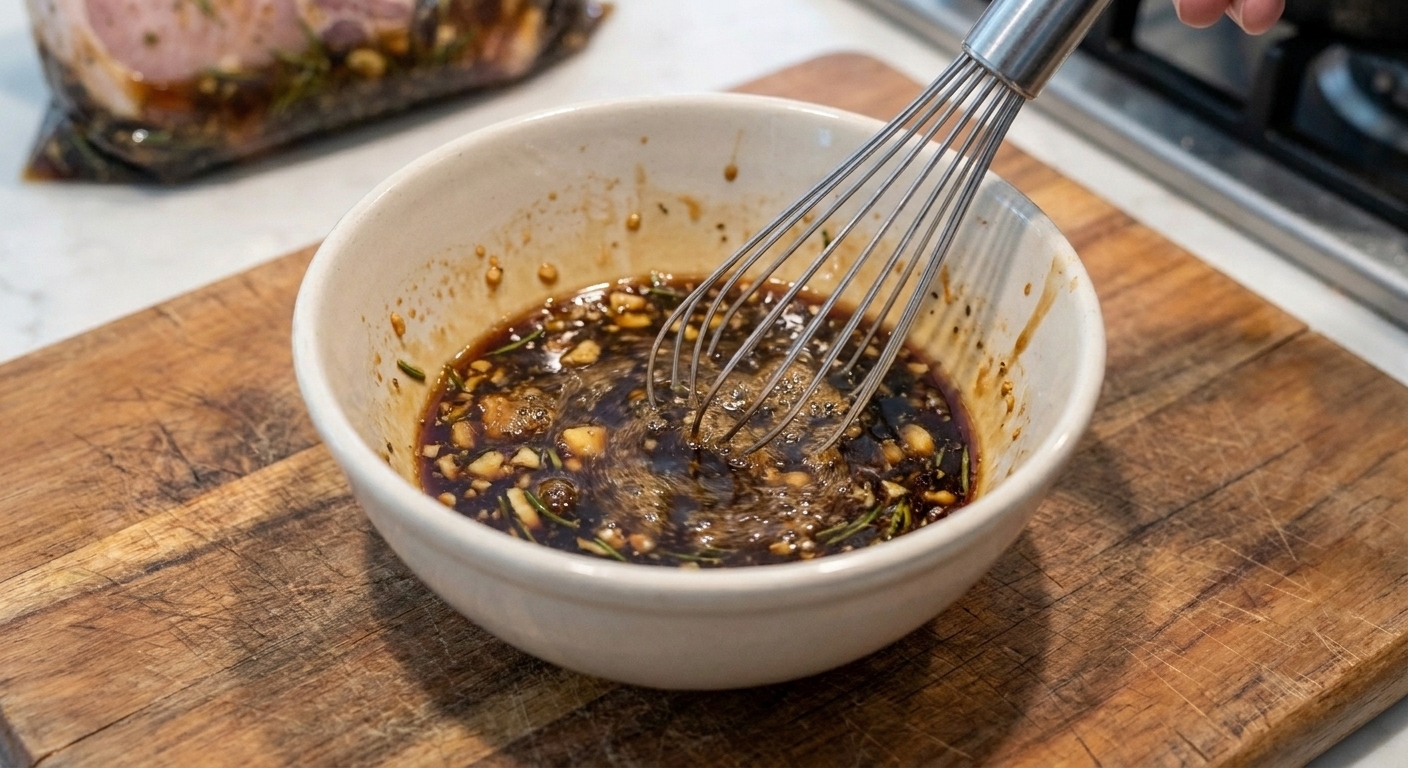
Easy flavor-forward marinade
This one plays nicely with pan-searing and does not rely on lots of acid.
- 3 tablespoons olive oil
- 1 tablespoon soy sauce
- 1 tablespoon Dijon mustard
- 2 to 3 garlic cloves, grated or minced (yes, more is fine)
- 1 teaspoon honey (optional, go light for high-heat searing)
- Black pepper, and a pinch of smoked paprika or dried thyme
Marinate 2 to 6 hours in the refrigerator, then blot dry before cooking.
FAQ
Do I need to rinse pork chops after brining?
Usually, no. With a properly measured brine, I skip rinsing and just pat the chops very dry. Rinsing can remove surface seasoning and does not fix an overcooked chop. If you accidentally made the brine too salty or the chops sat longer than planned, a quick rinse can help, but dry thoroughly after.
Will marinating make pork chops tender?
It can make the surface feel a bit softer, especially with acidic marinades, but it does not reliably fix dryness from overcooking. For tenderness and juiciness, brining plus a sane final temperature is the bigger win.
What if my marinade already has a lot of salt?
Then treat it like a salty marinade and keep the time shorter, especially for thin chops. Also, go easy on extra salt before cooking.
How do I keep brined chops from looking wet and steaming?
Pat dry aggressively, then let the chops air-dry on a rack 10 to 20 minutes if you are cooking right away. If you have time, an uncovered rest in the fridge 30 to 60 minutes is even better for a crisp sear.
What is the best choice if I only have 30 minutes?
Brine. A quick brine plus a good dry-off sets you up for juicy chops and a gorgeous crust with minimal planning.
My decision rule
If you want my real-life shortcut from years of weeknight cooking, it is this:
- If I care most about juicy chops: brine.
- If I care most about a specific flavor profile: marinade, then blot dry.
- If the chops are thin: short brine almost always wins.
- If I want a hard sear: brine or a low-sugar marinade, and dry the surface like it is your job.
Whichever route you pick, you are already doing the thing that matters most: you are paying attention before the pan even heats up. That is how pork chops go from “meh” to “make these again.”