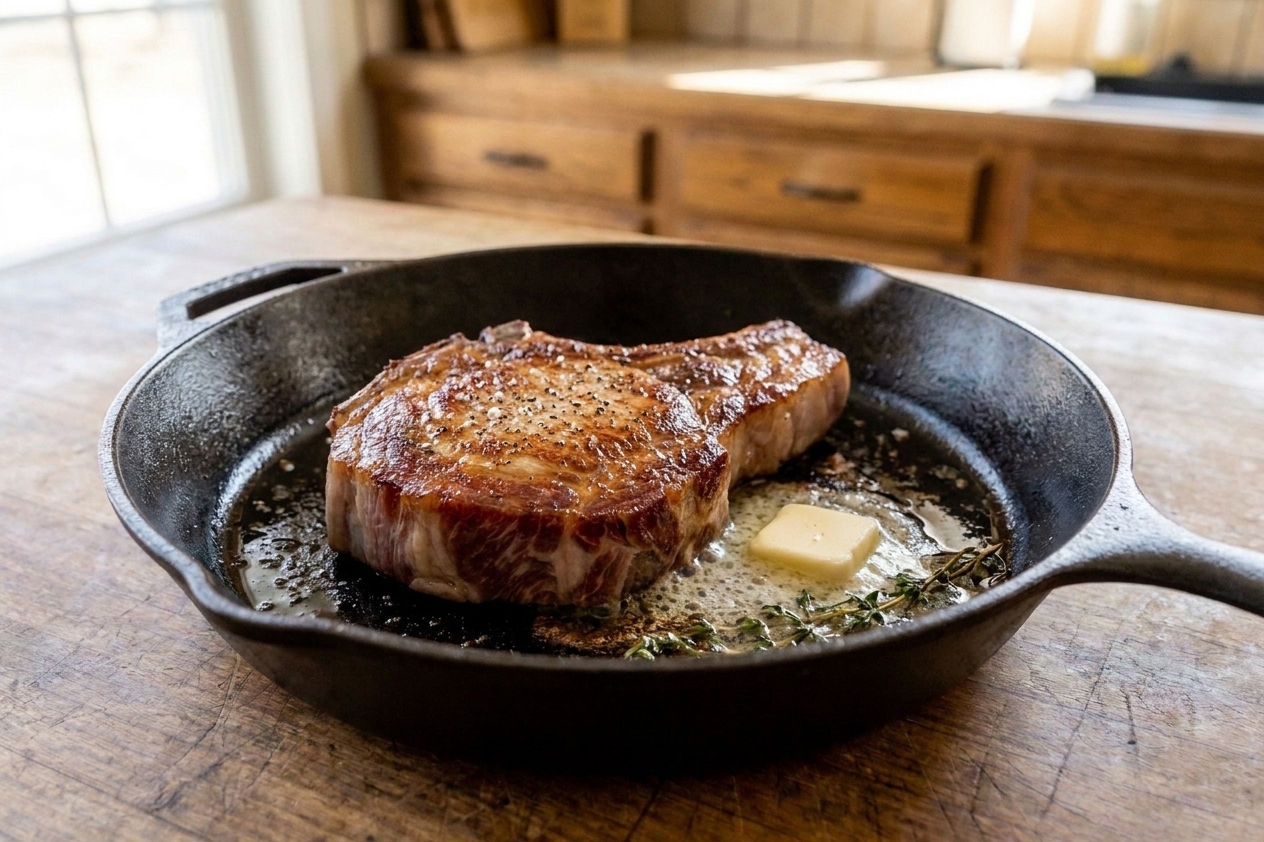

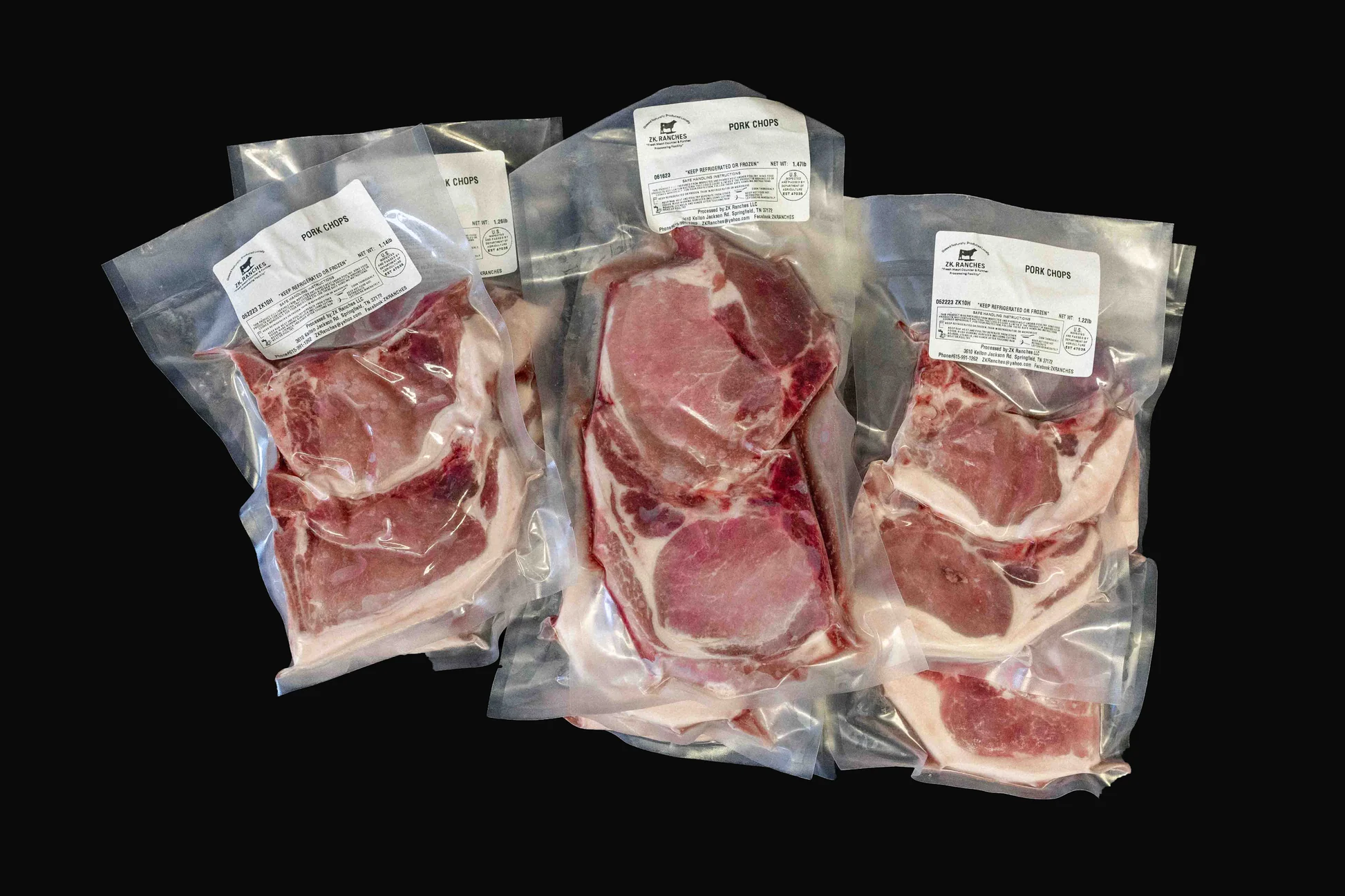
I have stood in the meat aisle more times than I can count, holding two nearly identical packages of pork chops and thinking, okay, which one is going to make my Tuesday night easier? Bone-in or boneless is not just a preference thing. It changes how forgiving the chop is, how fast it cooks, and how likely it is to stay juicy.
This guide is here to help you choose a package with confidence based on what you plan to do with it, whether that is a fast skillet dinner or a longer oven bake.

The quick answer at the store
If you want the simplest decision, use this:
- Quick skillet dinner: Choose boneless if you want speed and easy eating, but pick thick cut. Thin boneless chops dry out fast.
- Sear then finish in the oven: Choose bone-in, ideally 1 to 1.5 inches thick. The bone can add a little insulation and buy you time.
- Grilling: Either works, but bone-in, thick cut is often more forgiving over hot spots.
- Stuffing: Boneless is easier to butterfly and fill evenly, but you want a thick cut.
What bone-in and boneless change
Juiciness and forgiveness
Pork chops are lean, and modern pork is often leaner than what many of us grew up with. That means your biggest enemy is overcooking.
Bone-in chops are generally more forgiving because the bone can slow heat transfer near it. You get a slightly wider window before the meat goes from juicy to dry.
Boneless chops cook more evenly and a bit faster because there is no bone affecting how heat moves through the chop. Even cooking is great, but it also means you can overcook the whole chop at once if you are not watching closely.
Flavor
The bone can contribute a little extra flavor, especially in longer cooking methods where rendered fat and juices have time to mingle. It is not magic, but bone-in can taste a touch meatier.
Ease of eating and slicing
Boneless wins for weeknight convenience. No navigating around a bone, and it is easier to slice into neat strips for salads, rice bowls, and sandwiches.
Thickness matters most
If you remember one thing from this whole guide, let it be this: thickness matters more than bone-in vs. boneless.
Best thickness by method
- Quick skillet dinner: 3/4 to 1 inch is the sweet spot. Thinner than 3/4 inch cooks so fast it is easy to overshoot juicy.
- Sear then finish in the oven: 1 to 1.5 inches gives you a great crust without overcooking the center.
- Oven bake: 1 to 1.5 inches is ideal. Thin chops tend to dry out before they brown at all.
What to avoid
Very thin boneless chops, often sold as “quick fry” or “thin cut,” can be fine for breading and very fast cooking, but they are the most likely to end up tough and dry if dinner gets distracted by, you know, life.
Cook time and temp
Cook time depends on thickness, starting temperature, and your pan or oven, so I am going to keep this practical and approximate. Use the times as a rough map, then cook to temperature.
Skillet (medium-high heat)
- Boneless, 1-inch thick: Often about 3 to 5 minutes per side, plus a short rest.
- Bone-in, 1-inch thick: Often about 4 to 6 minutes per side, sometimes needing a couple extra minutes because the meat near the bone heats differently.
Oven finishing or baking
- Bone-in chops: Tend to do well with a longer, steadier cook. They stay juicy and are often forgiving if your oven runs hot.
- Boneless chops: Bake a bit faster. If they are not thick, they can go from perfect to dry quickly.
Use a thermometer
This is the easiest way to stop guessing. The USDA guidance for whole cuts of pork is 145°F with a 3-minute rest.
In my kitchen, if I want a slightly rosy, juicy center, I will sometimes pull thick chops at about 140°F, then rest until they reach 145°F. If you do not want to think about carryover cooking, simply cook to 145°F and rest.
Important: Insert the thermometer into the thickest part. For bone-in chops, avoid touching the bone with the probe because it can give a false reading.
Rest time tip
For thinner chops, 3 to 5 minutes is plenty. For really thick chops, especially bone-in, I like a slightly longer rest, closer to 5 to 10 minutes, because carryover cooking can be more noticeable.
Brining: when to do it
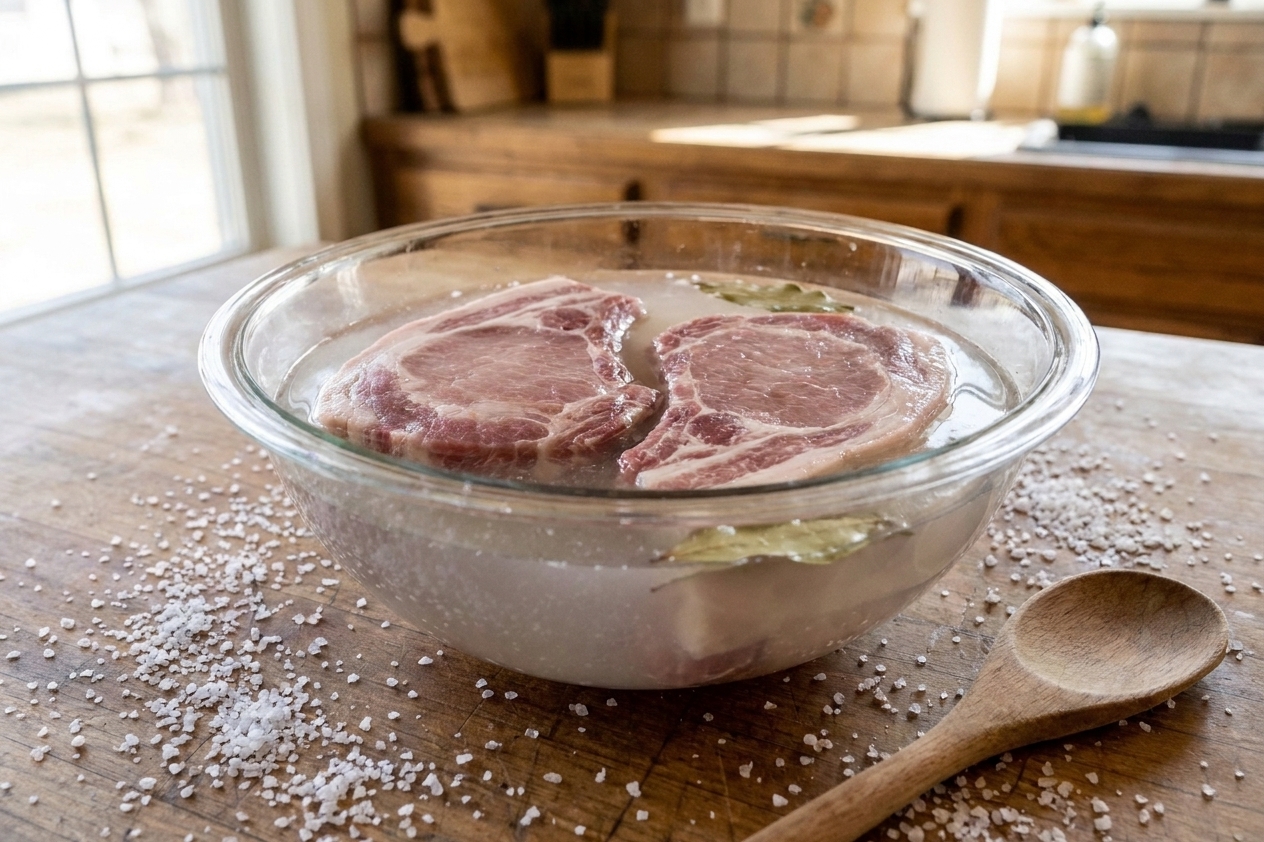
I love a brine for pork chops because it gives you a cushion against dryness and seasons the meat all the way through. But you do not always need it.
Brine helps most for
- Boneless chops, especially if they are lean or on the thinner side
- Any chop you plan to cook quickly (hot pan, short cook time)
- Chops labeled “loin chop”, which are typically lean
You can often skip brining for
- Very thick, well-marbled chops cooked gently (like sear then finish in the oven)
- Chops that are already “enhanced” or “seasoned” at the store
A simple brine timeline
For weeknights, I keep it simple: a quick salt brine in the fridge for 30 minutes to 2 hours makes a noticeable difference. Longer can be great for thick chops, but even 30 minutes helps.
Shopping tip: Check the label for wording like “contains up to X% solution.” Those chops have already been treated with salt water. They can still be tasty, but do not brine them again or they may taste too salty.
Best chop for a quick skillet dinner
If dinner needs to be on the table fast, you want a chop that cooks quickly and evenly, and that does not punish you for a small timing mistake.
My pick: thick-cut boneless
- Look for: 3/4 to 1 inch thick
- Why it works: It cooks evenly in a skillet and is easy to slice and serve
- How to protect it: A quick brine or at least a generous salting helps a lot
When bone-in still shines on the stovetop
If the bone-in chops are noticeably thicker and prettier, I will absolutely grab them for a skillet dinner. To keep the outside from overcooking while the area near the bone catches up, I like to sear first, then lower the heat and cover for a minute or two, or slide the pan into the oven to finish.
Best chop for baking
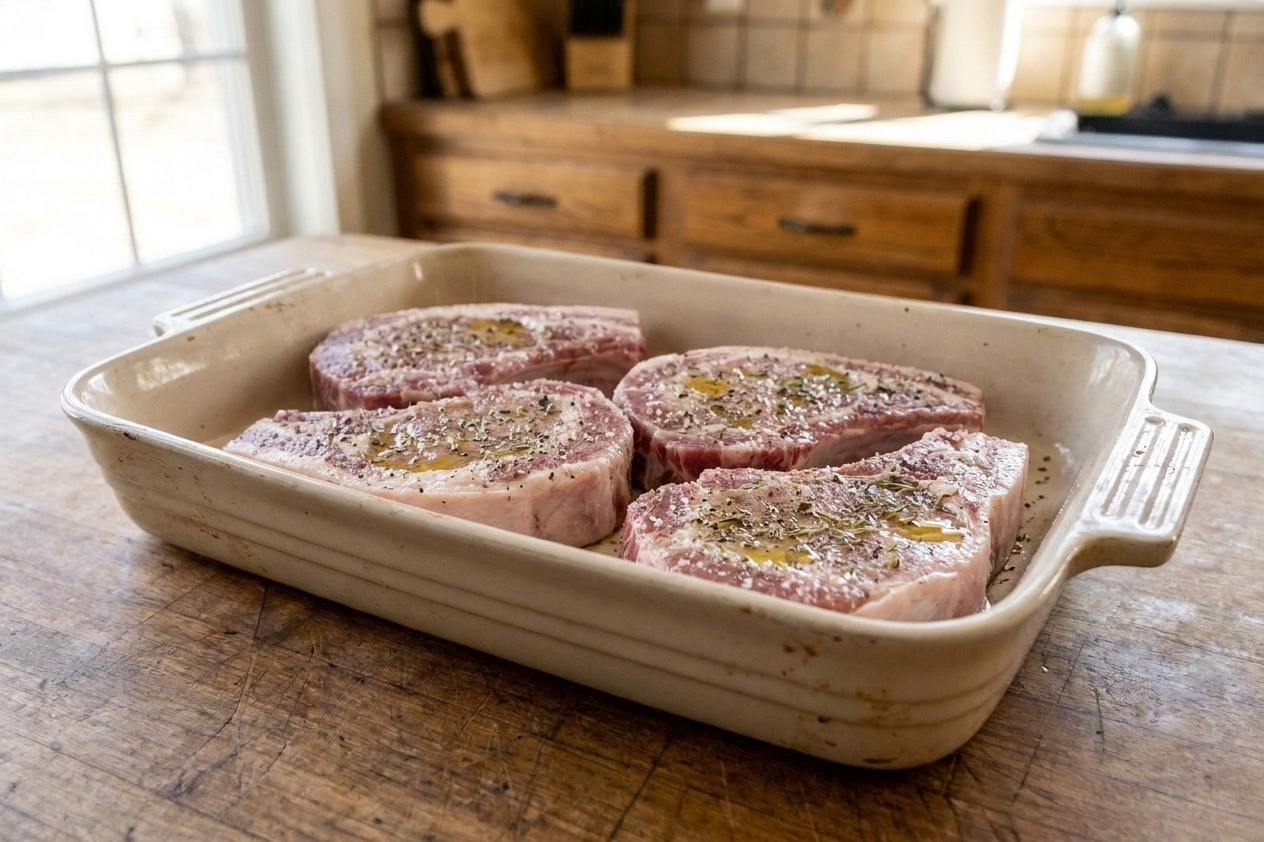
For baking, you want a chop that stays juicy through a longer, drier heat environment.
My pick: bone-in, 1 to 1.5 inches thick
- Look for: A thick center-cut chop with visible marbling along the edge
- Why it works: The bone can add insulation and the thickness gives you a bigger window for juicy results
- Bonus: Bone-in chops often look and feel a little more “special” for the same effort
If you only see boneless chops
You can still bake boneless chops successfully. The key is to buy thick ones and avoid overbaking. A thermometer becomes your best friend here.
How to pick a good package
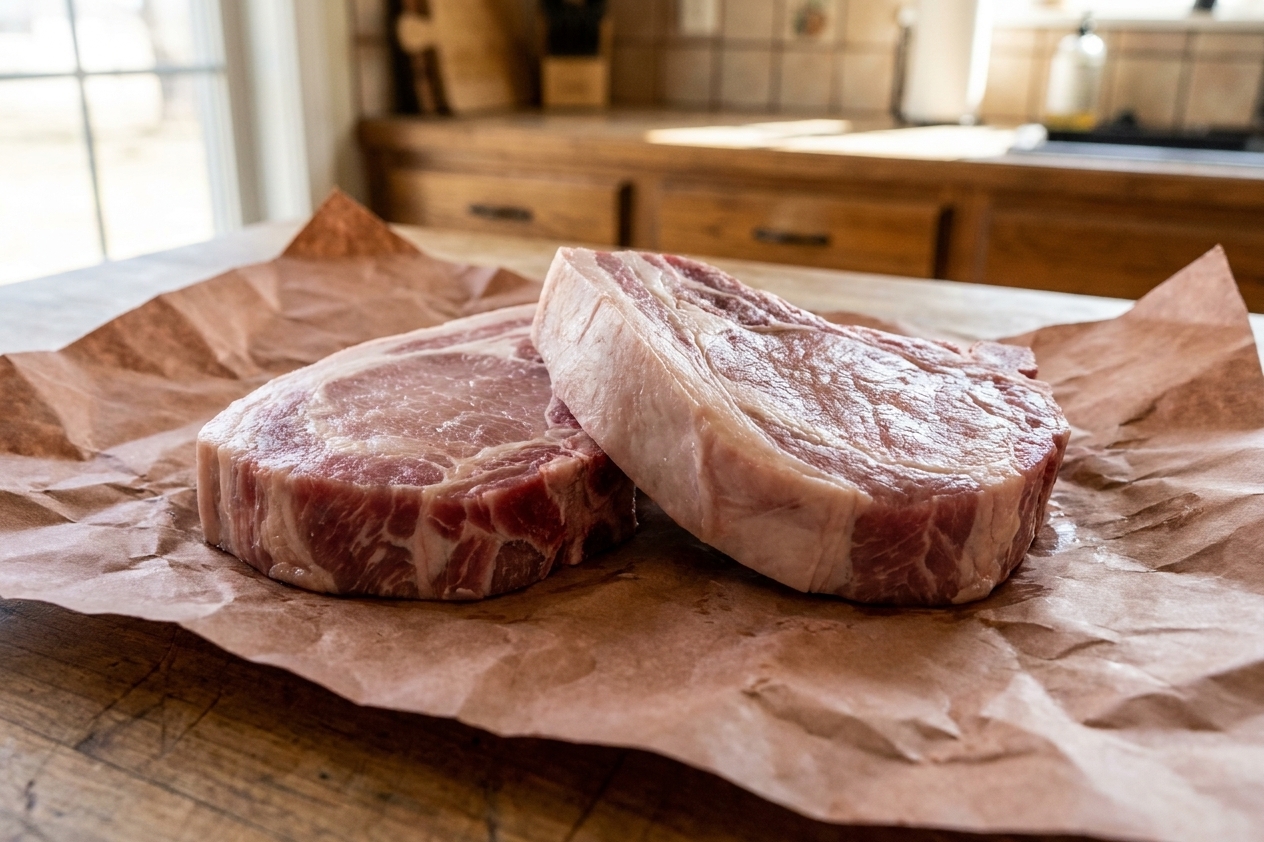
Look for marbling
A little intramuscular fat looks like thin white streaks in the meat. More marbling usually means a juicier chop.
Watch the color
Fresh pork should be pale pink to a deeper rosy pink, not gray or dull. Some variation is normal under store lighting.
Check the liquid in the tray
A little moisture is normal. A package swimming in liquid can mean the chop will sear less nicely and may have been sitting longer. It is not an automatic no, but it is a clue.
Know the labels
- Loin chop: Leaner, mild flavor, benefits from brining and careful cooking. Most boneless pork chops are cut from the loin, which is a big reason they can dry out if they are thin.
- Rib chop: Often tender and a bit fattier than loin, usually bone-in.
- Sirloin chop: Can be a little tougher and more irregular in shape. It often does better with gentler cooking, like sear then finish in the oven, or a light braise, rather than a super-fast hot sear.
- Blade or shoulder chop: Usually has more fat and connective tissue, which can stay juicy but may want a little more time and a slightly lower heat.
FAQ
Are bone-in pork chops always better?
Not always. Bone-in chops are often more forgiving and can taste a little meatier, but a thick boneless chop cooked properly can be just as juicy and is sometimes easier for weeknight cooking.
Do boneless pork chops cook faster?
Usually, yes. With no bone, heat moves through the meat more evenly, so boneless chops tend to finish a bit sooner than bone-in chops of the same thickness.
What thickness should I buy if I hate dry pork?
Aim for 1 inch if you are cooking on the stovetop, and 1 to 1.5 inches if you are baking or doing a sear then finish in the oven. Thicker chops give you a bigger window for juicy results.
Should I brine bone-in chops too?
You can, and it helps, especially for lean loin chops. That said, brining is most crucial for boneless or thinner chops because they dry out more easily.
What is the easiest chop for beginners?
I would choose a bone-in, 1-inch thick chop if you are nervous about overcooking, or a boneless, thick-cut chop if you want simple slicing and even cooking. Either way, use a thermometer and cook to 145°F with a rest.
My rule of thumb
If I am cooking in a hurry, I buy thick boneless chops and I brine if I have even 30 minutes. If I am baking or trying to keep things extra juicy, I buy thick bone-in chops and let the oven do the steady work.
And if the package looks gorgeous and the chops are thick? I do not overthink it. Pork chops reward confidence, a hot pan, and a thermometer.