

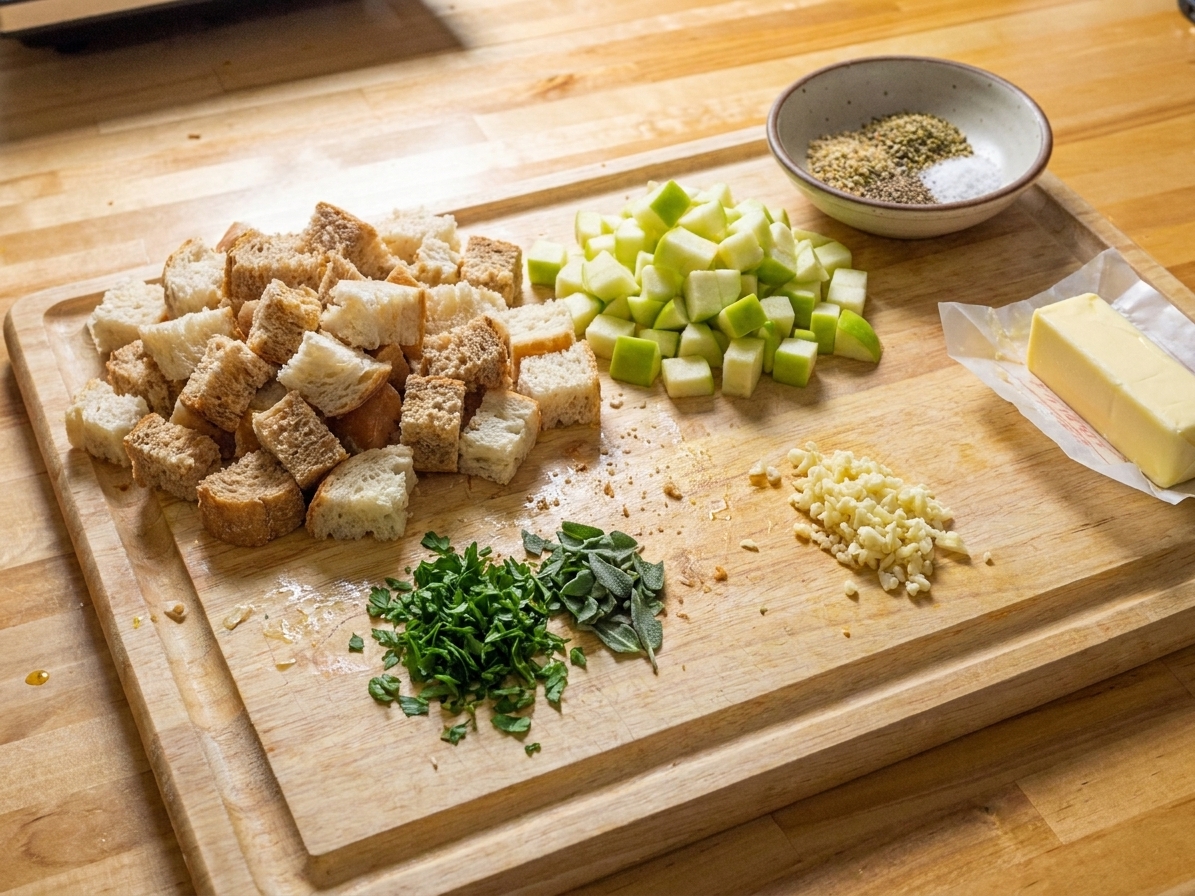
Stuffed pork chops are one of those dinner table tricks that feels a little fancy, but is secretly very weeknight-friendly once you learn the pocket cut. You get the best of both worlds: a juicy, thick chop that stays tender, plus a warm, herby stuffing that turns every bite into a whole event. And yes, the pocket cut is easier than it sounds.
I grew up in the Pacific Northwest where apples show up in everything from salads to roasts, and I still love the way a little diced apple wakes up rich pork. This version leans classic with a bread-and-herb base, then tucks in apple for that savory-sweet balance, a buttery herb aroma, and little crisp-tender bites throughout.

The method is simple and reliable: mix a moist (not soggy) stuffing, cut a deep pocket into thick chops, secure them with toothpicks or twine, then sear and bake. That quick sear builds flavor fast, and the oven finish helps heat the filling through while you cook the pork to the right internal temperature and let it rest, which is the real key to keeping everything juicy.
The idea
Why This Recipe Works
- Thick chops plus a pocket cut give you room for stuffing without turning the pork into a dry overcooked situation.
- Sear first, bake second creates a browned, flavorful exterior while the oven gently brings the center and stuffing up to temperature.
- Moist stuffing (broth plus butter, and optional egg) heats through and stays cohesive instead of falling out in the pan.
- Two easy ways to secure the pocket (toothpicks or kitchen twine) keep the filling where it belongs so you can cook confidently.
- Temperature-based doneness takes the guesswork out. Pulling at 140 to 145°F and resting keeps the chops juicy.
Shopping
Ingredient Notes
Pork chops
Look for bone-in or boneless loin chops that are 1 1/2 to 2 inches thick. Thin chops are much harder to stuff and tend to overcook before the filling is hot. If your store has “thick cut” or “center cut” chops, you are in the right aisle.
Bread
Use sturdy bread like sourdough, country loaf, or a basic Italian loaf. Slightly stale bread is ideal because it drinks up broth without turning mushy. If your bread is very fresh, cube it and toast it briefly.
Apples
I like Honeycrisp for sweet crunch or Granny Smith if you want more tang. Peel is optional, but I usually peel for a softer texture inside the pocket.
Herbs
Fresh parsley plus a little sage or thyme makes this taste like a holiday meal that somehow landed on a Tuesday. Dried herbs work too, just use less.
Broth
Chicken broth is the easiest option. If you have it, low-sodium gives you more control. Add broth gradually until the stuffing holds together when squeezed.
Egg (optional but helpful)
One egg helps bind the stuffing so it slices neatly and stays put. If you prefer to skip it, the stuffing will be looser but still delicious. Just pack it well and secure the pocket tightly.
Get set up
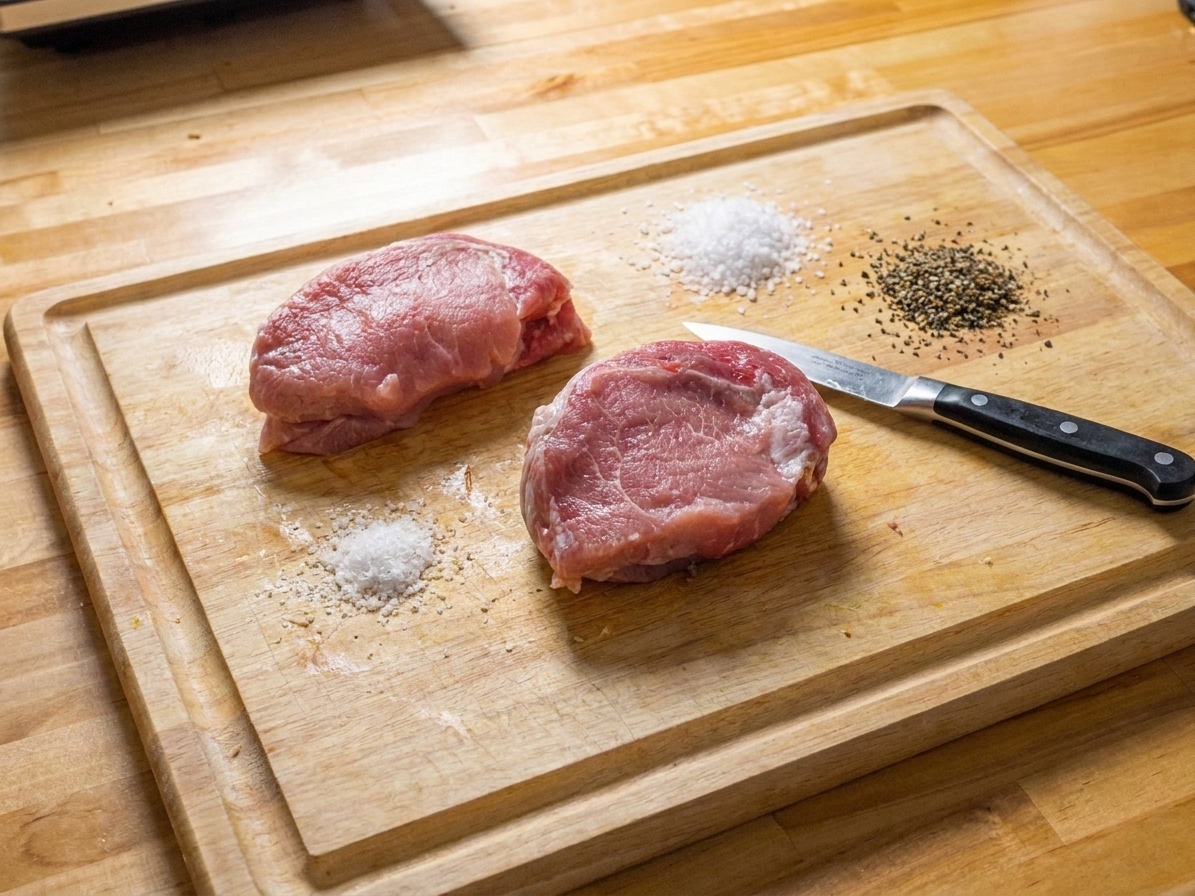
Equipment You Will Need
- Oven-safe skillet (cast iron is perfect) or a skillet plus a baking dish
- Instant-read thermometer for juicy, accurate doneness
- Small skillet (or the same skillet) for sautéing aromatics
- Mixing bowl for the stuffing
- Sharp knife for cutting the pocket
- Toothpicks or kitchen twine for securing the pocket
- Tongs for searing
Technique
Tips for Getting It Right
How to cut a pocket
Set the chop flat and insert your knife into the long side, aiming for the center. Move the blade gently back and forth to create a deep pocket, leaving about 1/2 inch of meat around the edges. If you accidentally poke through, do not panic. Just patch the spot with a toothpick later.
Toothpicks or twine
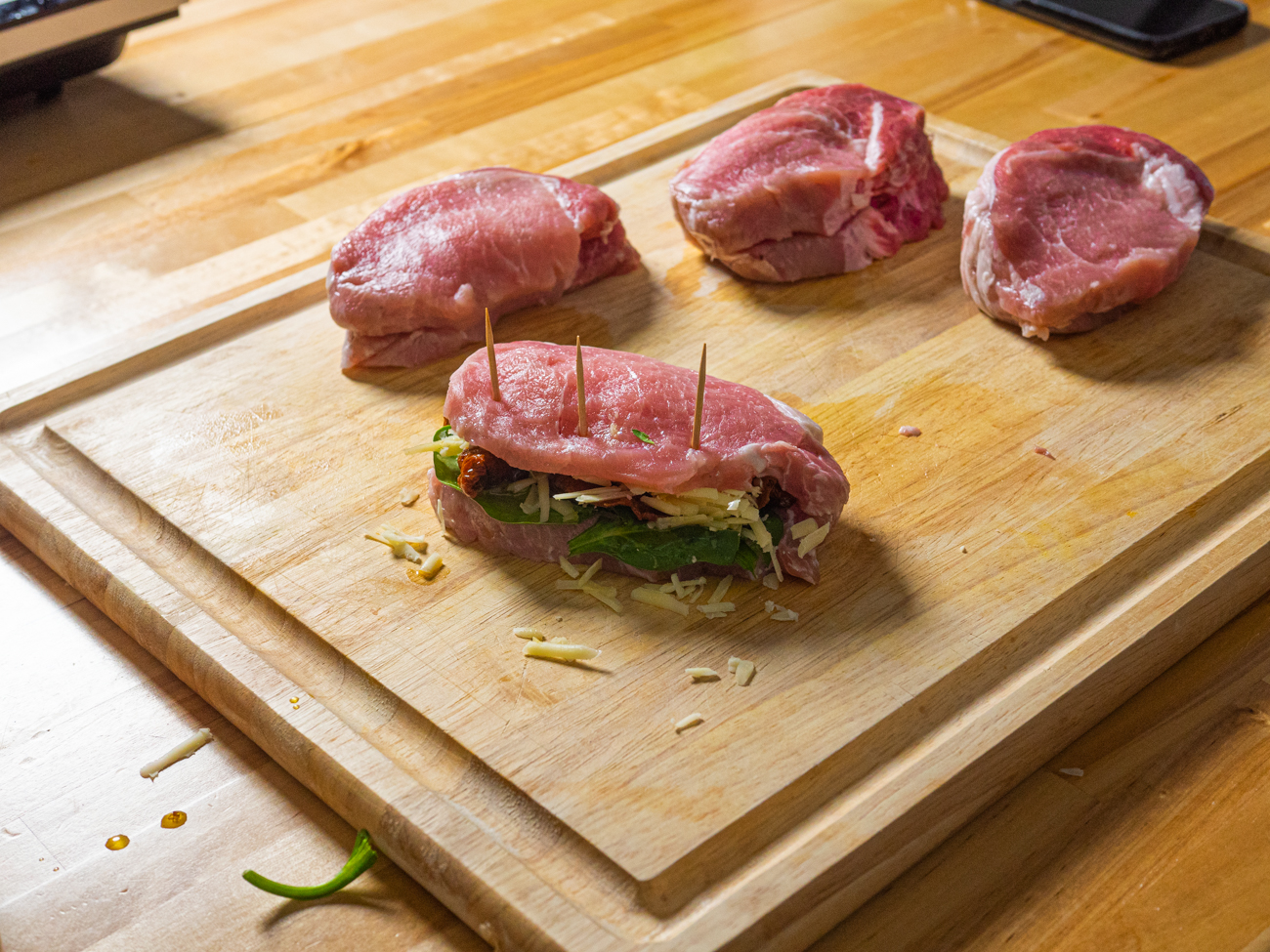
- Toothpicks: Fast and easy. Use 2 to 3 toothpicks like little stitches across the opening.
- Kitchen twine: Most secure, especially if your stuffing is generous. Wrap around the chop like a belt 2 to 3 times and tie snugly, not strangling.
Stuffing texture
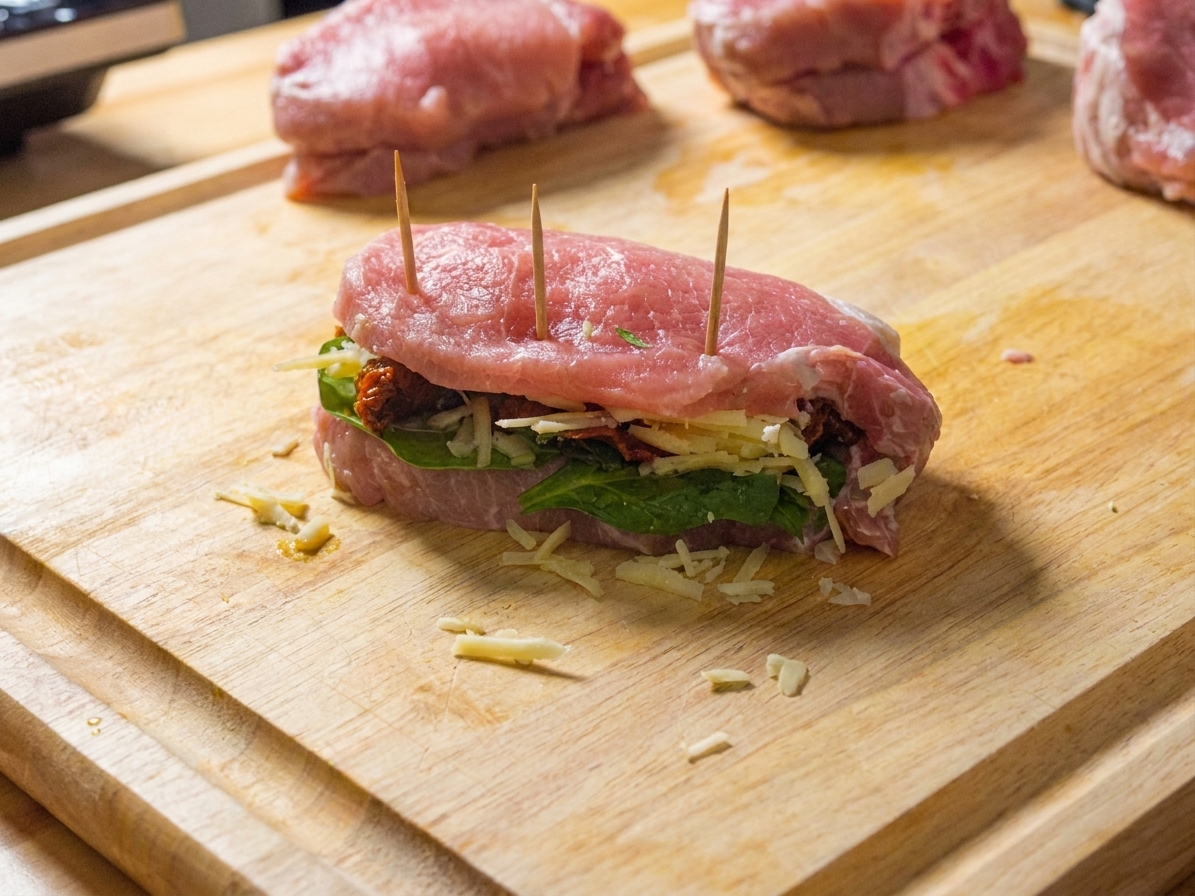
If your stuffing is dry and sandy, it will taste dry inside the chop. If it is soupy, it will leak. Add broth slowly and stop when it holds together in your hand.
Sear for color
Your goal is a quick golden crust. The oven will finish cooking the pork and fully heat the center. Over-searing can push you toward dry chops.
Use temperature, then rest
Pull the chops from the oven when the thickest part of the pork hits 140 to 145°F. Rest 5 to 10 minutes. The temperature will keep climbing a little, and the juices will settle back in.
Flexibility
Substitutes That Work
- No apple: Swap in pear, dried cranberries, or chopped dried apricots. If using dried fruit, reduce slightly and add an extra splash of broth.
- No fresh herbs: Use dried. A good rule is about 1 teaspoon dried for 1 tablespoon fresh.
- No breadcrumbs or bread cubes: Crushed buttery crackers work surprisingly well for a softer stuffing. Add broth carefully since crackers absorb quickly.
- Dairy-free: Use olive oil instead of butter in the stuffing and for searing.
- Gluten-free: Use a gluten-free loaf or gluten-free stuffing cubes and check your broth label.
Make it yours
Variations to Try
Apple and cheddar
Add 1/2 cup shredded sharp cheddar to the stuffing. Keep the pocket well secured because cheese likes to melt and wander.
Spinach and garlic
Skip the apple. Sauté 3 packed cups baby spinach with garlic until wilted, squeeze dry, then mix into the bread stuffing. Extra garlic is welcome here, always.
Mustard herb
Brush the inside of the pocket with 1 to 2 teaspoons Dijon mustard before stuffing. It adds tang and makes the pork taste extra savory.
Sausage stuffed
Brown 4 ounces Italian sausage and mix it into the stuffing. Reduce butter slightly since sausage brings fat.
On the table
What to Serve It With
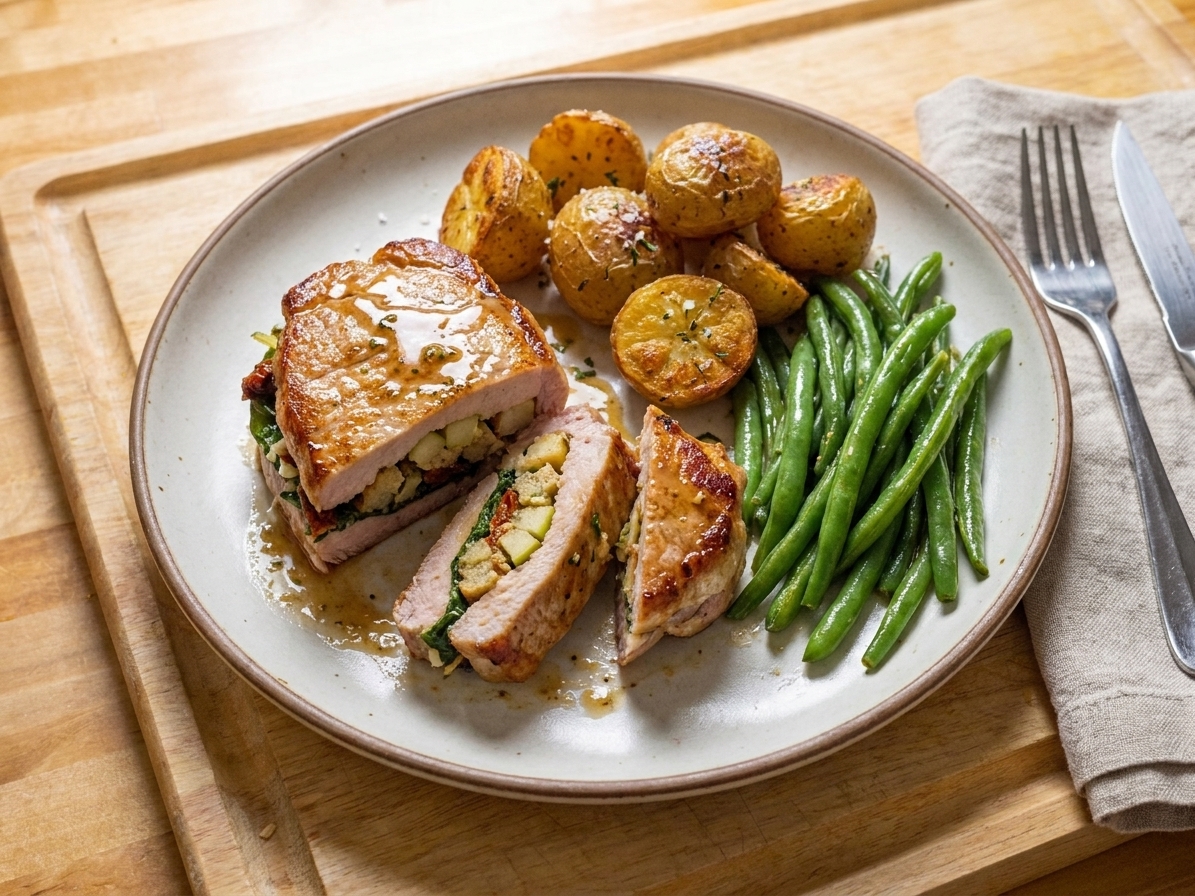
- Roasted green beans or broccoli with lemon and garlic
- Mashed potatoes or cauliflower mash to soak up any pan juices
- Simple side salad with a crisp vinaigrette to balance the richness
- Roasted sweet potatoes for a cozy fall-style plate
- Applesauce on the side if you want a classic nod
Later
Storage, Freezing and Reheating
Refrigerate
Store leftover stuffed pork chops in an airtight container for up to 3 days.
Freeze
You can freeze cooked stuffed chops for up to 2 months. Wrap tightly, then place in a freezer bag. Thaw overnight in the fridge before reheating for best texture.
Reheat
My favorite way is in the oven: place in a baking dish, add a splash of broth or water, cover with foil, and warm at 325°F until heated through. For quicker reheating, microwave at medium power in short bursts, but the stuffing can heat unevenly.
Watch out
Common Mistakes to Avoid
- Using thin chops: They cook too fast and leave you with dry pork and under-heated stuffing.
- Overstuffing: It is tempting, I know. Leave a little room so you can close the pocket fully and secure it well.
- Dry stuffing: Add broth gradually and test by squeezing. Dry stuffing stays dry once it is inside the pork.
- Skipping the thermometer: Stuffed chops are thicker and less predictable. Temperature is your best friend.
- Not resting: Cutting right away lets the juices run out and the stuffing can slip. Give it a few minutes.
- Forgetting toothpicks or twine: The pocket will open, the stuffing will escape, and you will be chasing breadcrumbs around the skillet.
Questions
Frequently Asked Questions
What internal temperature should stuffed pork chops be?
Cook pork to 145°F in the thickest part of the meat, measured with an instant-read thermometer. Because these are stuffed, make sure the center is hot and the stuffing is thoroughly warmed.
Do I need to cook the stuffing before putting it in the pork chops?
Yes, at least partially. Sauté the onion and celery and warm the mixture so the flavors meld and everything heats through evenly. The stuffing does not need to be fully cooked like a casserole, but it should be well mixed and moistened before stuffing.
Can I make stuffed pork chops ahead of time?
You can assemble them up to 8 hours ahead, cover, and refrigerate. Bring them toward room temperature for about 20 minutes before searing so they cook more evenly.
How do I keep the stuffing from falling out?
Pack the stuffing firmly, then secure the opening with toothpicks like stitches or tie with kitchen twine. Also, avoid overstuffing and do a confident sear so the outside sets quickly.
Can I use bone-in chops?
Absolutely. Bone-in chops are flavorful and stay juicy. The pocket cut is the same, just aim your knife so you are cutting into the thickest part away from the bone.
Why did my pork chops turn out dry?
The most common cause is overcooking. Thick stuffed chops can look done on the outside before the center is perfect. Pull them at 140 to 145°F and rest. Also, choose thick chops and do not bake at a high temperature for too long.
The recipe
Stuffed Pork Chops
These sear-then-bake stuffed pork chops are filled with a cozy bread-and-herb stuffing with apple and garlic. Thick chops stay juicy, and simple toothpick or twine “stitches” keep the pocket neatly closed while everything bakes through.
Ingredients
- 4 thick-cut pork chops (1 1/2 to 2 inches thick), bone-in or boneless
- 2 1/2 tsp kosher salt, divided
- 1 tsp black pepper, divided
- 1 1/2 tsp garlic powder, divided
- 2 tbsp olive oil, plus more as needed
- 3 tbsp unsalted butter
- 1 small yellow onion, finely diced
- 2 celery ribs, finely diced
- 4 cloves garlic, minced
- 1 1/2 cups bread cubes (about 1/2-inch cubes), lightly dried or toasted
- 1 small apple, peeled and finely diced (about 3/4 cup)
- 2 tbsp chopped fresh parsley
- 1 tsp chopped fresh sage (or 1/2 tsp dried sage)
- 1/2 tsp dried thyme (or 1 1/2 tsp fresh thyme leaves)
- 1/2 to 3/4 cup chicken broth, warmed, plus more as needed
- 1 large egg, beaten (optional, for binding)
- 1 tbsp Dijon mustard (optional)
- Toothpicks or kitchen twine, for securing
Instructions
- Heat the oven. Arrange a rack in the center of the oven and preheat to 375°F.
- Start the stuffing base. In a skillet over medium heat, melt 3 tablespoons butter. Add the diced onion and celery and cook, stirring often, until softened, 5 to 7 minutes.
- Add garlic. Stir in the minced garlic and cook until fragrant, 30 to 60 seconds.
- Mix the stuffing. In a mixing bowl, combine bread cubes, diced apple, parsley, sage, and thyme. Scrape in the warm onion mixture. Add 1/2 cup warm broth and mix. If using, stir in the beaten egg. Add more broth, 1 to 2 tablespoons at a time, until the mixture is moist and holds together when squeezed. Set aside to cool slightly while you prep the pork.
- Cut pockets in the pork chops. Pat the chops dry. Place one chop on a cutting board. Using a sharp knife, cut a deep pocket into the long side of the chop, stopping about 1/2 inch from the edges so the pocket stays intact. Repeat with remaining chops.
- Season the pork. In a small bowl, mix 2 teaspoons kosher salt, 3/4 teaspoon black pepper, and 1 teaspoon garlic powder. Season the outside of the chops on both sides (and lightly inside the pocket if you like).
- Optional mustard layer. If using Dijon, spread about 3/4 teaspoon inside each pocket.
- Stuff the chops. Spoon stuffing into each pocket, packing it in firmly but leaving enough room to close the opening.
- Secure the pocket. Close the pocket and secure with 2 to 3 toothpicks inserted like stitches, or tie snugly with kitchen twine wrapped around the chop 2 to 3 times.
- Sear. Heat 2 tablespoons olive oil in a large oven-safe skillet over medium-high heat. When shimmering, add the chops and sear until deep golden brown, 2 to 3 minutes per side. If your skillet is dry, add a small drizzle of oil.
- Bake. Transfer the skillet to the oven. Bake until the thickest part of the pork reaches 140 to 145°F, 12 to 18 minutes depending on thickness. (If your skillet is not oven-safe, move the chops to a lightly oiled baking dish.)
- Rest, then serve. Remove from the oven and let rest 5 to 10 minutes. Remove toothpicks or twine. Slice carefully and serve warm.
Recipe notes
- Broth amount: Bread varies a lot. Start with 1/2 cup, then add more just until the stuffing clumps when squeezed.
- Food safety: If you want to double-check, the stuffing should be steaming hot in the center when you slice the chop after resting.
- Skillet size: If your chops feel crowded, sear in two batches. Crowding can prevent browning.