Everything you need for tender, juicy pork chops with modern flavors. Learn smart shopping tips, safe doneness temps and resting, and simple sauces that tast...
Recipeva
Juicy Pork Tenderloin
Make juicy pork tenderloin every time with a simple garlic-herb rub, a quick stovetop sear, and an easy oven finish. Includes safe temps, timing, and a fast pan sauce.

Maya Reynolds
Maya Reynolds is a passionate home cook, recipe developer, and the creative voice behind Recipeva. With over a decade of experience translating complex culinary techniques into approachable weeknight meals, she focuses on creating dishes that bring joy to the dinner table without the stress.
Created September 22, 2026
Updated September 22, 2026
Pork tenderloin is one of my favorite weeknight proteins because it is lean, quick-cooking, and surprisingly fancy on a plate. The tricky part is that “lean and quick” can turn into “dry and overdone” in about two minutes if we are not paying attention. The good news: you do not need a complicated marinade or special equipment to nail it. You just need a hot pan, a reliable thermometer, and the patience to let it rest.
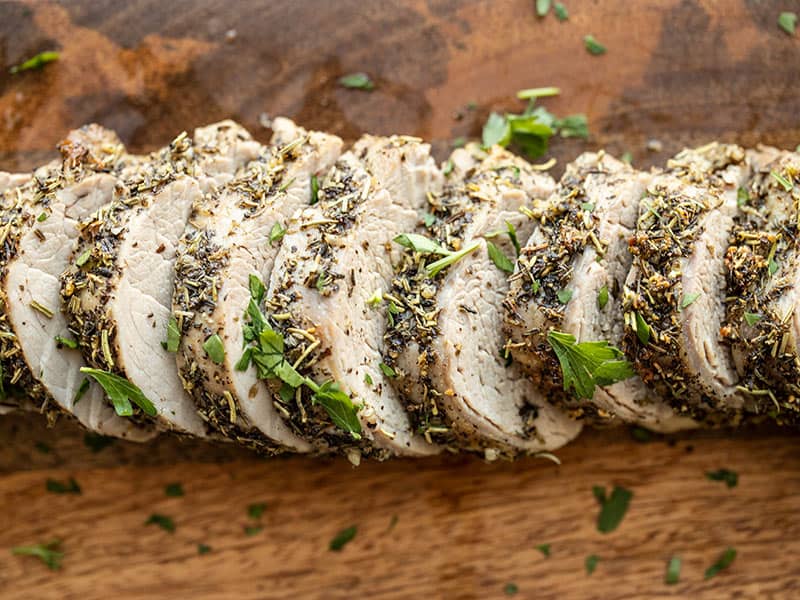
This is my go-to method for a juicy, deeply seasoned pork tenderloin with a golden crust and tender center. I will walk you through the technique, the exact internal temperature to aim for, and a simple pan sauce you can whisk together while the pork rests.
What keeps it juicy
Let us stack the deck in your favor. Juicy tenderloin comes down to a few small choices that matter a lot:
- Do not confuse tenderloin with pork loin. Tenderloin is the long, narrow, very tender cut (usually 1 to 1.5 pounds). Pork loin is thicker and needs different timing.
- Season early if you can. Even 20 to 30 minutes of salt time can improve juiciness and help the pork taste seasoned all the way through.
- Sear first. A fast sear builds flavor and gives you that restaurant-style crust.
- Cook to temperature, not “minutes.” Pork tenderloin can go from perfect to dry quickly. A thermometer is your best friend.
- Rest, always. Resting lets juices redistribute so they end up in the meat, not on your cutting board.
Ingredients
This is a classic garlic-herb profile that pairs with basically everything in your fridge. Feel free to swap herbs depending on what you have.
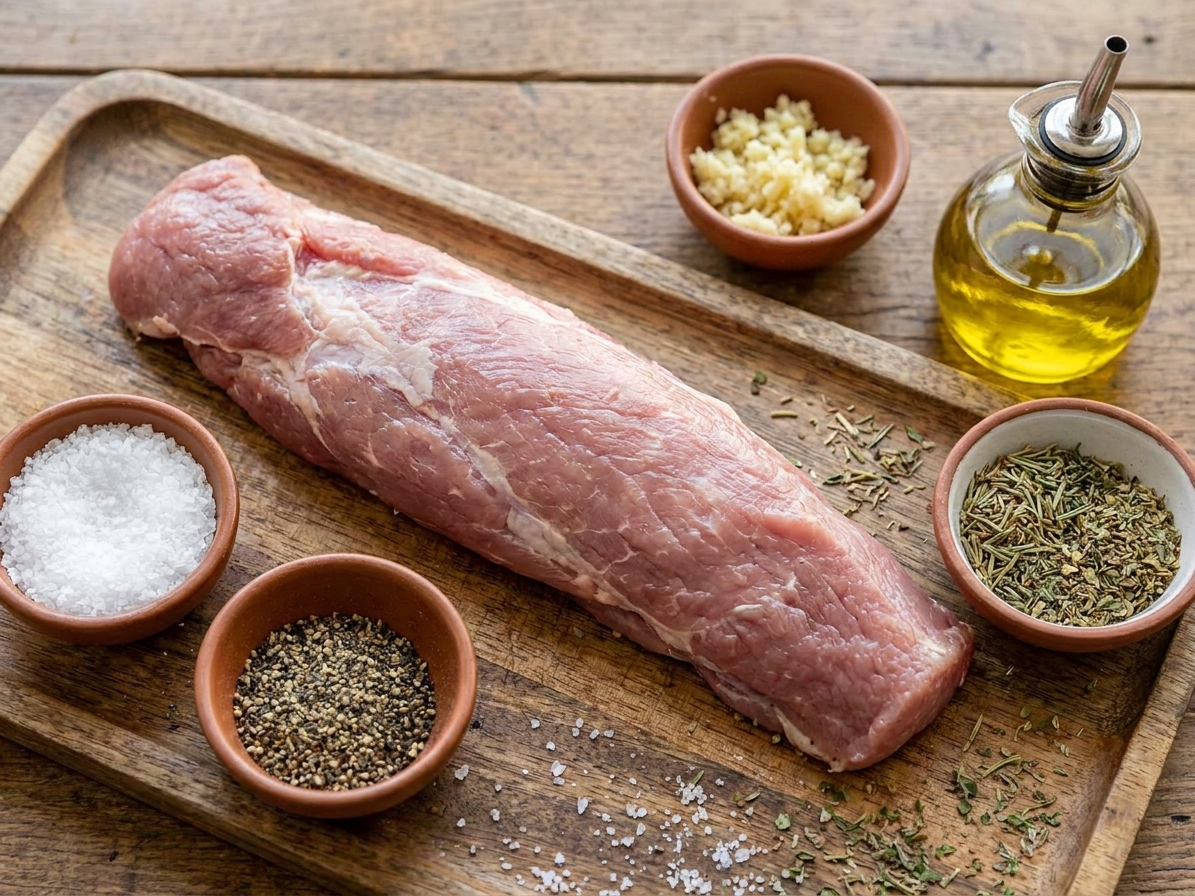
- Pork tenderloin (1 to 1.5 pounds)
- Salt (kosher is ideal)
- Black pepper
- Garlic (fresh minced or pressed, and yes, you can add more)
- Dried herbs (Italian seasoning, rosemary, thyme, or a mix)
- Olive oil
- Optional flavor boosters: Dijon mustard, smoked paprika, lemon zest, or a touch of brown sugar
Optional quick pan sauce: butter, minced shallot (or onion), chicken broth, a splash of balsamic or apple cider vinegar, and a spoon of Dijon.
Sear and roast
This method gives you maximum flavor with minimal fuss. You will start on the stove and finish in the oven, all in one skillet.
1) Trim and dry
Pat the pork dry with paper towels (right out of the package is fine). If it has a silver skin (a thin, shiny membrane), slide a knife tip under it and trim it off. That membrane does not break down, and it can cause the tenderloin to curl.
2) Season generously
Rub the tenderloin with olive oil, then season all over with salt, pepper, garlic, and herbs. If you have 20 minutes, let it sit at room temperature while you preheat the oven. For food safety, keep this window reasonable (about 1 to 2 hours max at room temperature).
3) Sear in a hot skillet
Heat the oven to 425°F. Place a large oven-safe skillet (cast iron is great) over medium-high heat. Add a drizzle of oil and sear the tenderloin for about 2 minutes per side until browned. Do not forget the ends. Total sear time is usually 6 to 8 minutes.
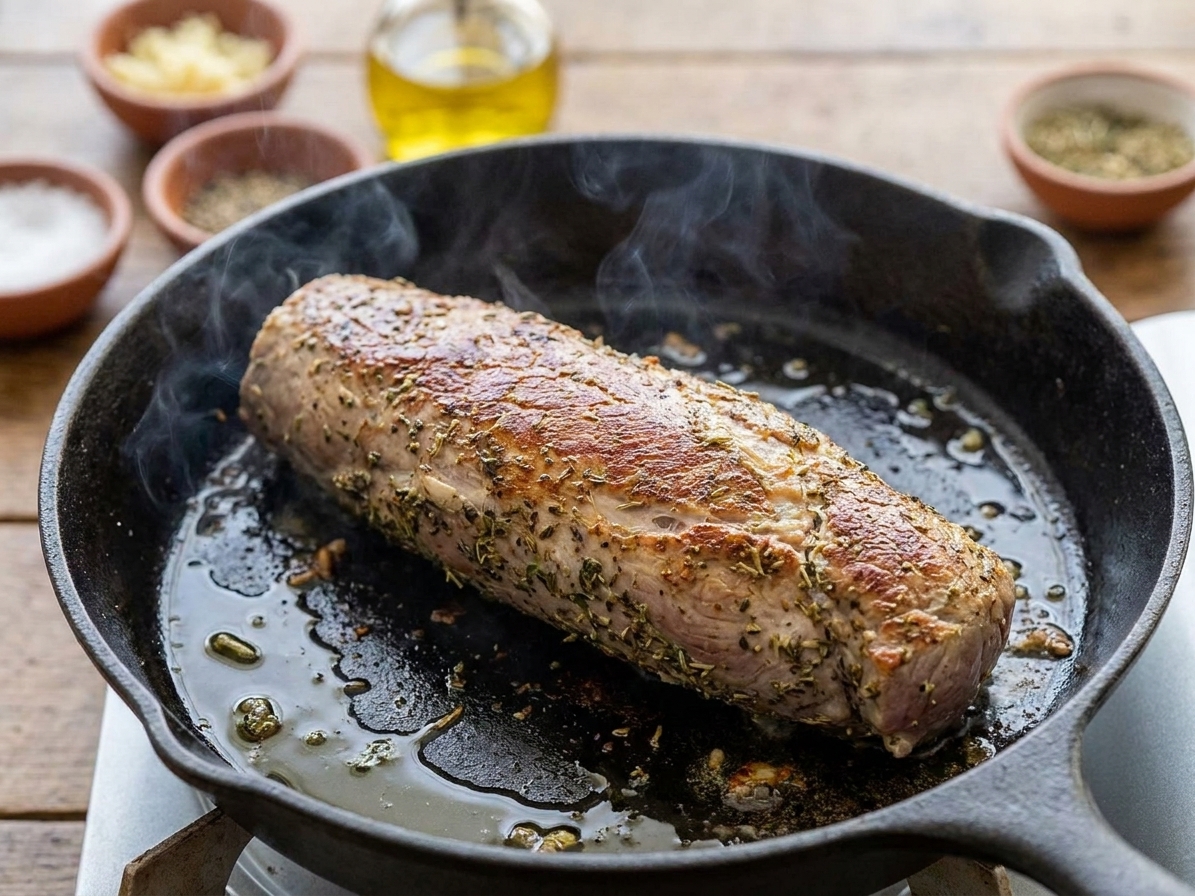
4) Roast until just done
Transfer the skillet to the oven. Roast until the thickest part reaches 140 to 145°F, usually 10 to 16 minutes depending on thickness.
Maya tip: Start checking early. Two tenderloins from the same package can cook at different speeds, especially if one is thicker.
Thermometer tip: Insert the probe into the thickest part from the side, aiming for the center, and make sure you are not touching the pan.
5) Rest, then slice
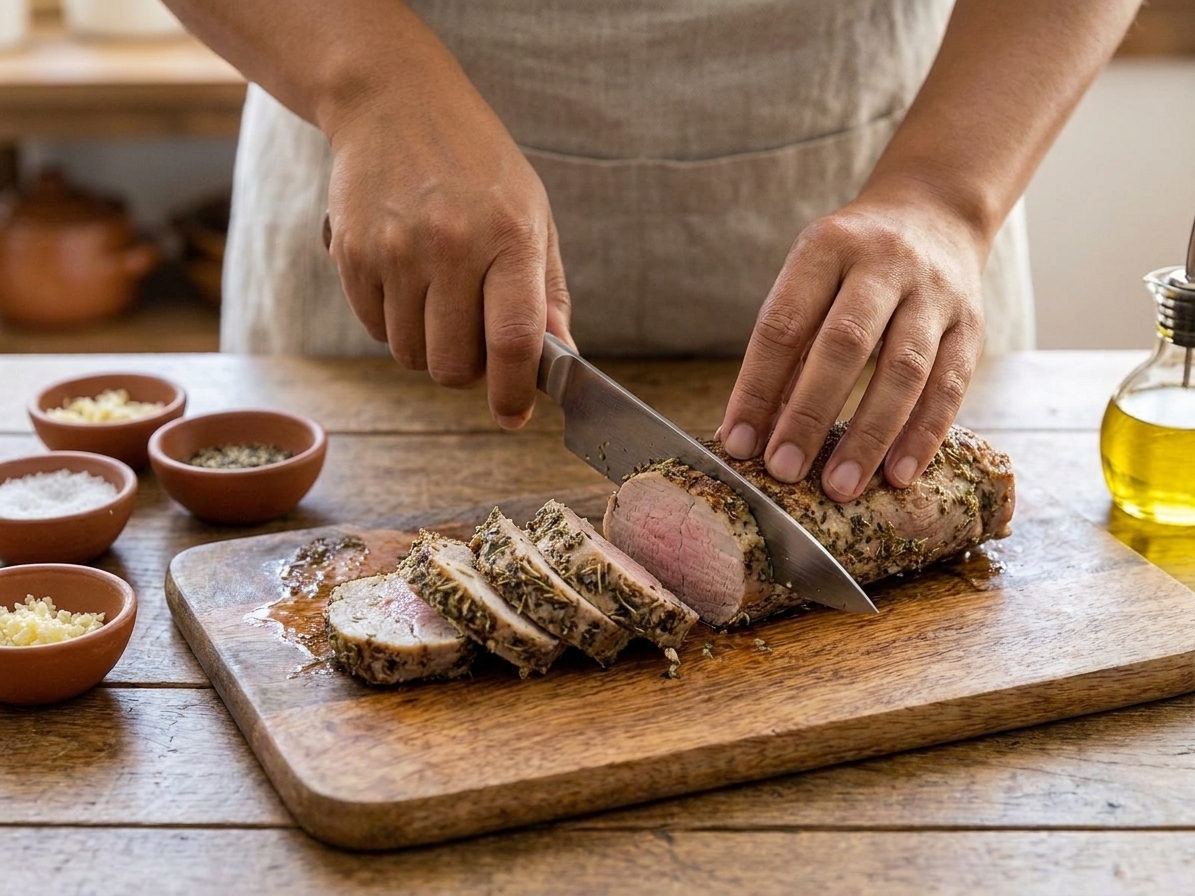
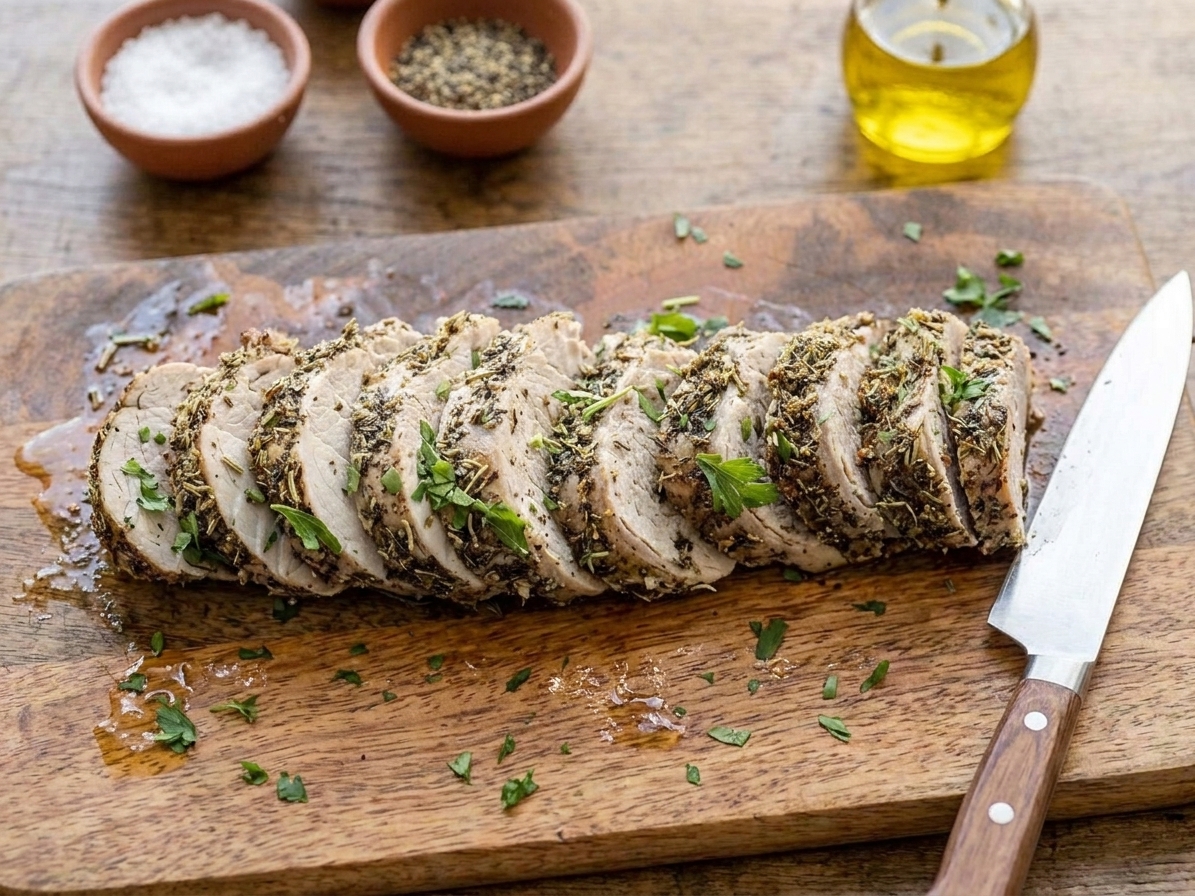
Move the pork to a cutting board and rest for 8 to 10 minutes. Slice into 1/2-inch medallions against the grain for maximum tenderness.
Temperature guide
Pork is safest and juiciest when you respect carryover cooking. The internal temperature will rise a few degrees while resting.
- If you pull at 140°F: do it only if you expect carryover heat to bring the center up to about 145°F during the rest. Verify with a thermometer before serving.
- Pull at 145°F: for a pale pink, very juicy center (my usual target). Pale pink is normal here.
- 150°F and above is still safe, but it starts to get noticeably drier.
USDA note: Whole cuts of pork are considered safe at 145°F with a 3 minute rest. Resting is not optional, it is part of the cooking process.
Quick pan sauce
While the pork rests, you have a warm skillet full of browned bits, which is basically free flavor. Here is my fast, flexible sauce:
- Pour off excess fat, leaving about 1 tablespoon in the skillet.
- Add 1 minced shallot (or a few tablespoons finely chopped onion). Cook 1 to 2 minutes.
- Deglaze with 3/4 cup chicken broth, scraping up browned bits.
- Stir in 1 to 2 teaspoons Dijon and 1 teaspoon balsamic or apple cider vinegar.
- Simmer 3 to 5 minutes until slightly reduced.
- Turn off heat and swirl in 1 tablespoon butter.
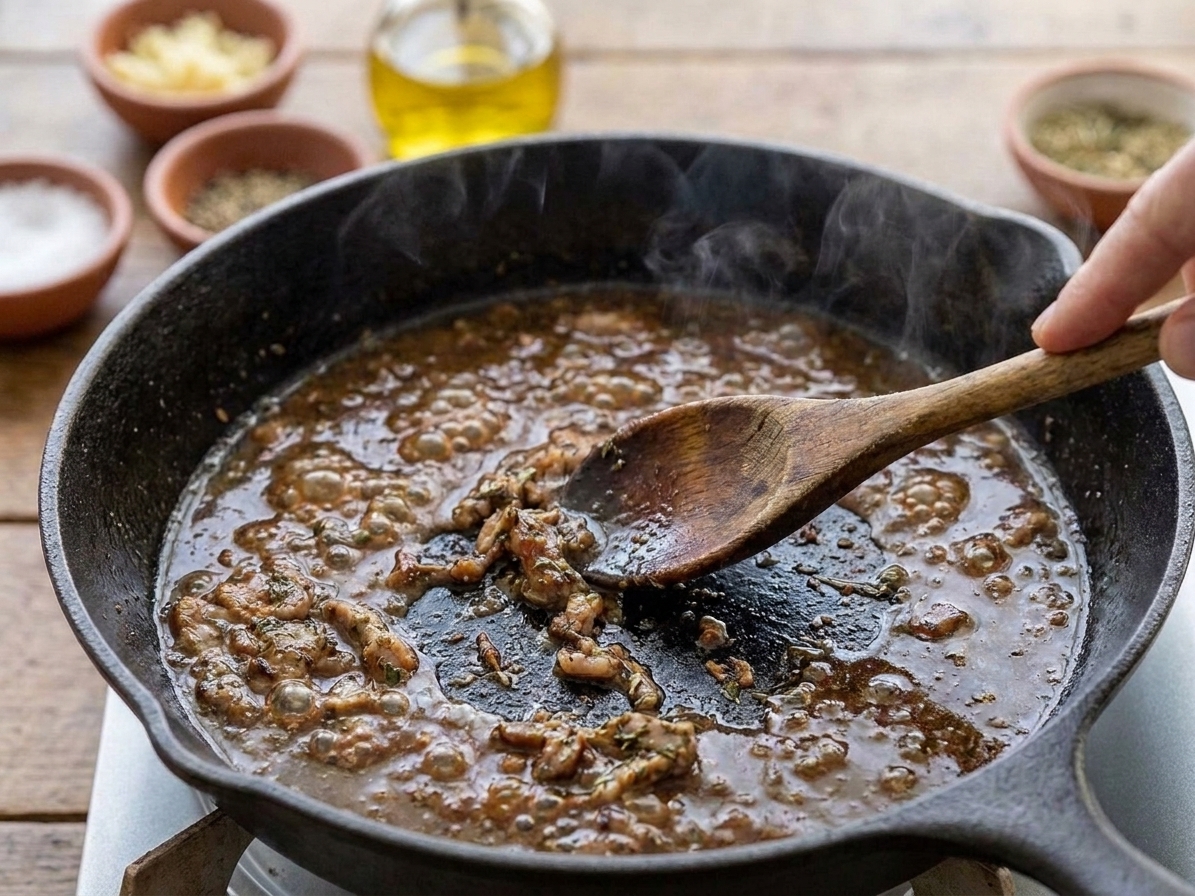
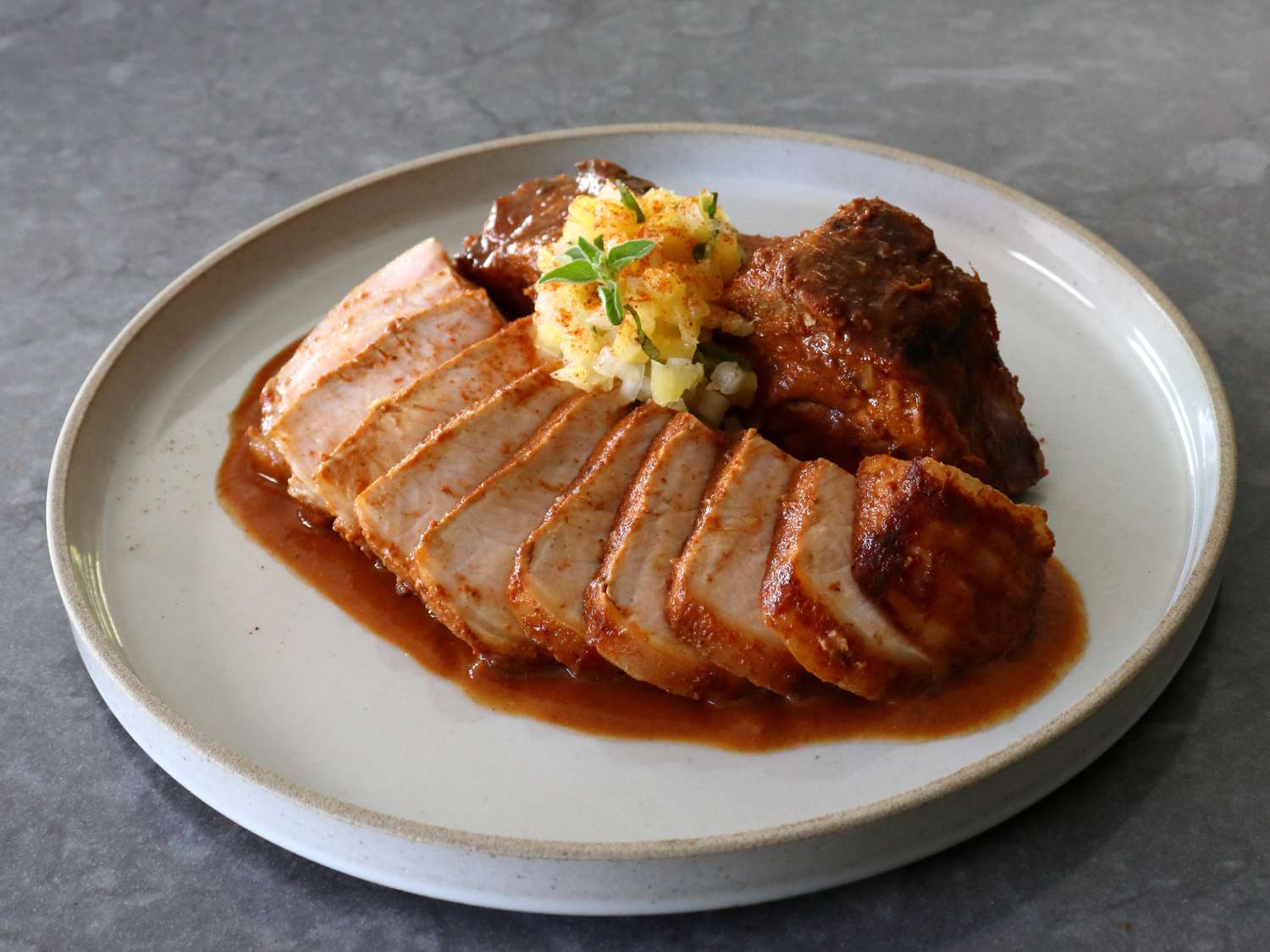
Slice the pork and spoon the sauce over the top. If you want to feel extra cozy, add a handful of baby spinach to the sauce to wilt right before serving.
Common mistakes
- Overcooking: Use a thermometer and aim for 145°F after resting.
- Skipping the rest: If you slice right away, the juices run out. Give it 8 to 10 minutes.
- Pan not hot enough: A lukewarm pan leads to pale meat and sticking. Preheat until the oil shimmers.
- Under-seasoning: Tenderloin is mild. I do not skip salt and garlic, and the pan sauce helps too.
- Cooking straight from the fridge: Let it sit out 20 minutes so it cooks more evenly.
Serving ideas
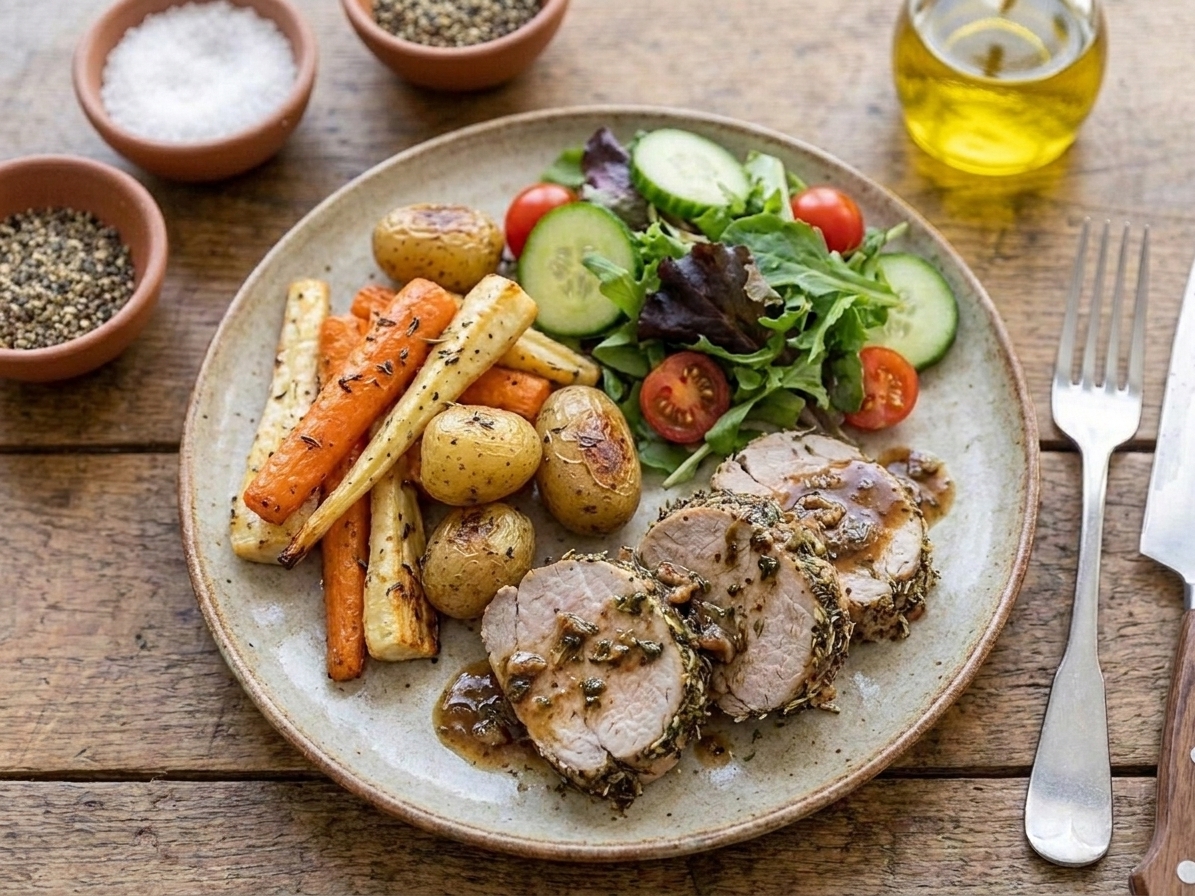
This tenderloin plays well with both comfort food sides and lighter options. Here are a few easy pairings:
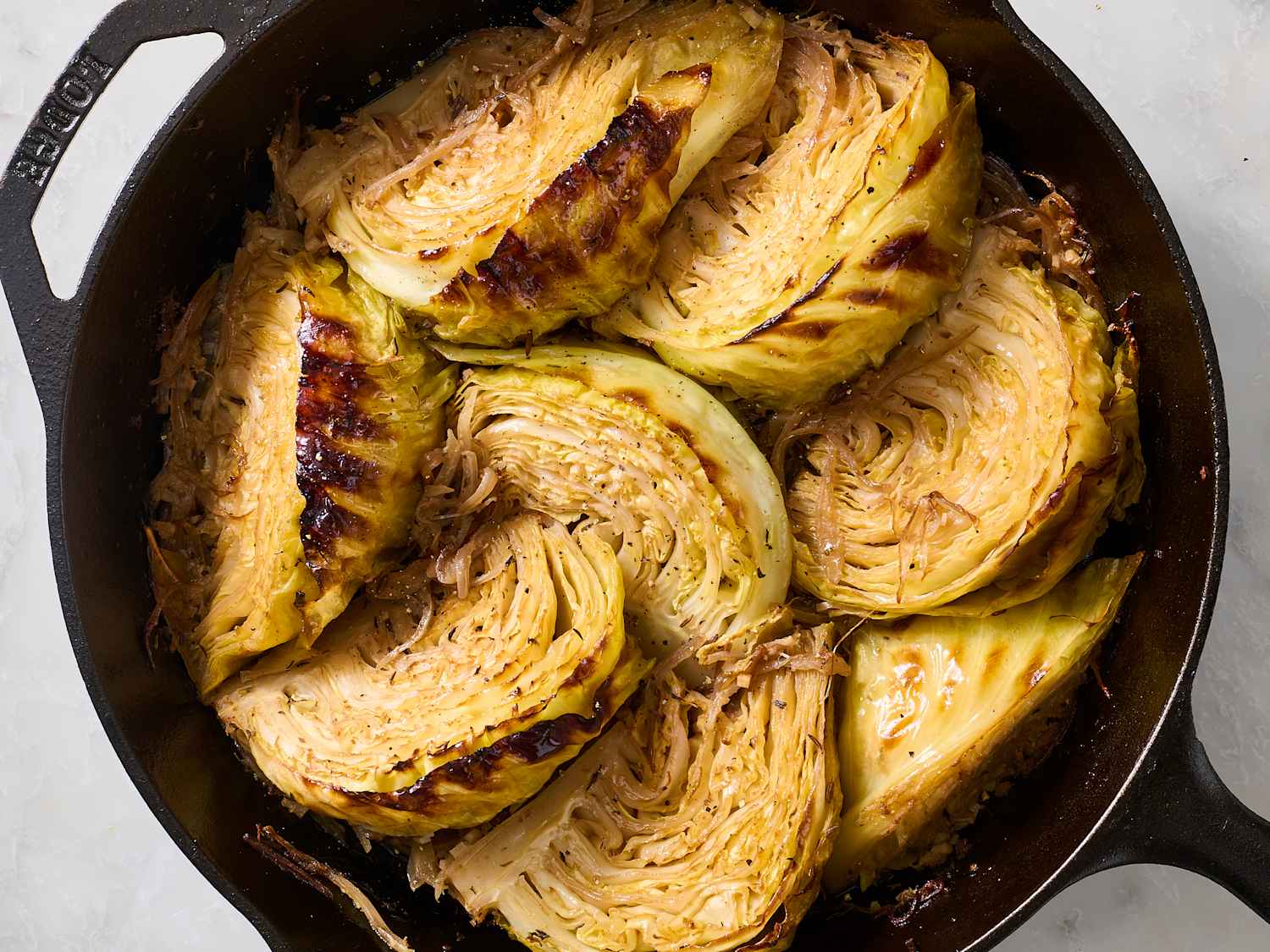
- Roasted vegetables: broccoli, carrots, Brussels sprouts, or green beans
- Something starchy: mashed potatoes, rice pilaf, buttered noodles, or roasted sweet potatoes
- Something fresh: a crisp green salad, apple slaw, or cucumber salad
Storage and reheating
Because tenderloin is lean, reheating gently is the secret to keeping leftovers juicy.
- Refrigerate: Store in an airtight container for up to 3 to 4 days.
- Freeze: Freeze sliced pork with a little sauce or broth for up to 2 months for best texture.
- Reheat: Warm slices in a covered skillet with a splash of broth over low heat, just until heated through. Microwave works too, but use 50 percent power and short bursts.
FAQ
Should I marinate pork tenderloin?
You can, but you do not have to. A simple dry rub plus a good sear creates big flavor fast. If you want extra insurance, a quick brine (saltwater) for 30 to 60 minutes can add moisture.
Can I cook two tenderloins at once?
Yes. Sear them one at a time (so the pan stays hot), then roast together. Check each one with a thermometer since they can finish at different times.
What if my tenderloin is already at 150°F?
Do not panic. Slice it a little thicker and serve with sauce or gravy. You can also toss slices into a skillet with a splash of broth to re-moisten gently.
Can I make this without an oven-safe skillet?
Absolutely. Sear in any skillet, then transfer the tenderloin to a baking dish to finish roasting.
My weeknight reminder
If pork tenderloin has intimidated you in the past, I want you to know this: it is not “fussy,” it is just fast. Once you trust your thermometer and commit to resting, you will get that juicy, tender result consistently. And if you accidentally add too much garlic, well, you are cooking with me now.