

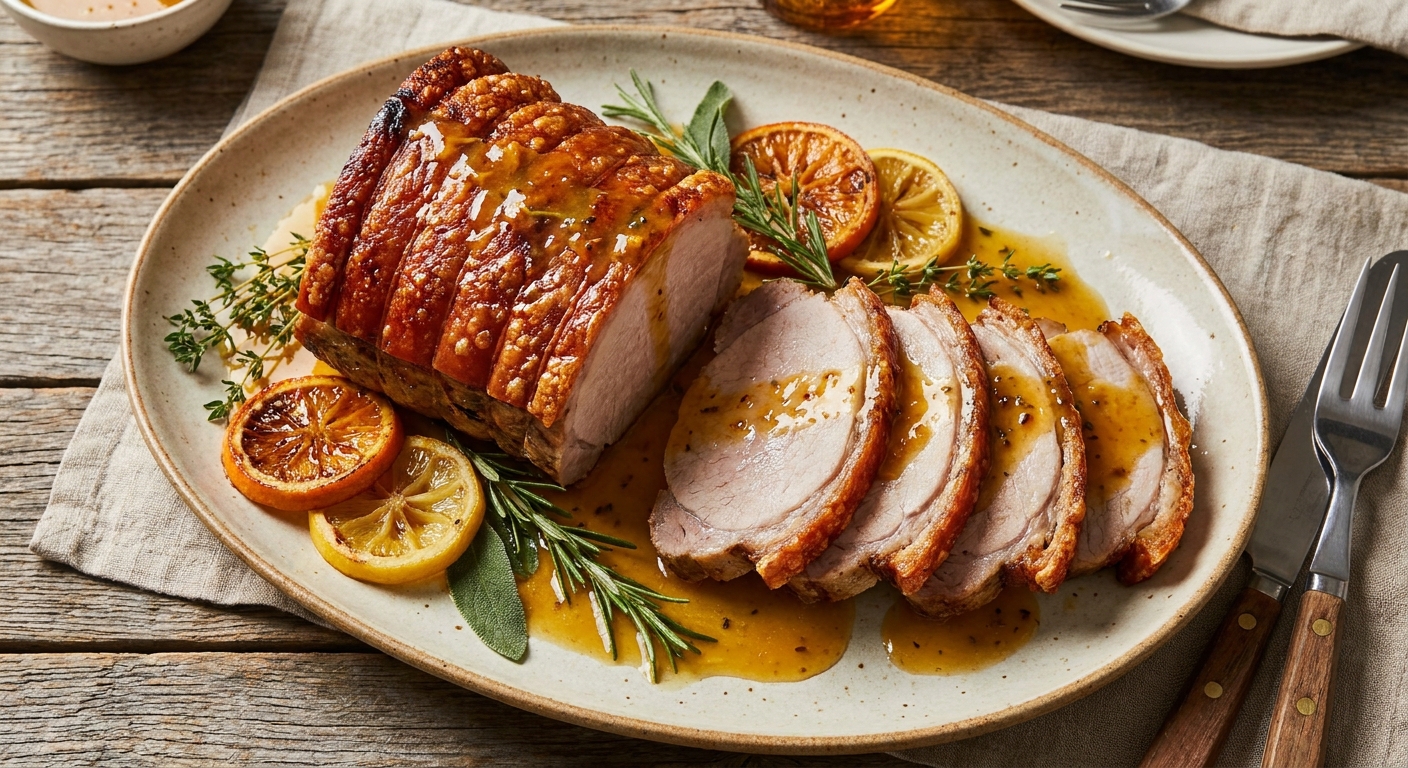
If you love a cozy pork roast but sometimes crave something lighter than a heavy gravy situation, this is your recipe. We’re keeping the comfort, but swapping in bright orange and lemon, a little honey, and my forever favorite: lots of garlic. The result is a roast that tastes like it simmered all day, even though the steps are truly weeknight-friendly.

I developed this one for the nights when you want a centerpiece dinner without stress. You do a quick marinade while the oven heats, roast until juicy, then finish with a simple pan sauce that tastes like you planned ahead.
The idea
Why This Recipe Works
- Citrus does double duty: It brightens the flavor and can help tenderize the surface of the pork.
- A balanced glaze: Honey (or brown sugar) rounds out the acidity so it tastes vibrant, not sharp.
- The sauce makes itself: Pan drippings plus citrus juices equal instant payoff.
- Leftovers are a gift: This pork is amazing cold in sandwiches, warm in grain bowls, or tucked into tacos.
Shopping
Ingredient Notes
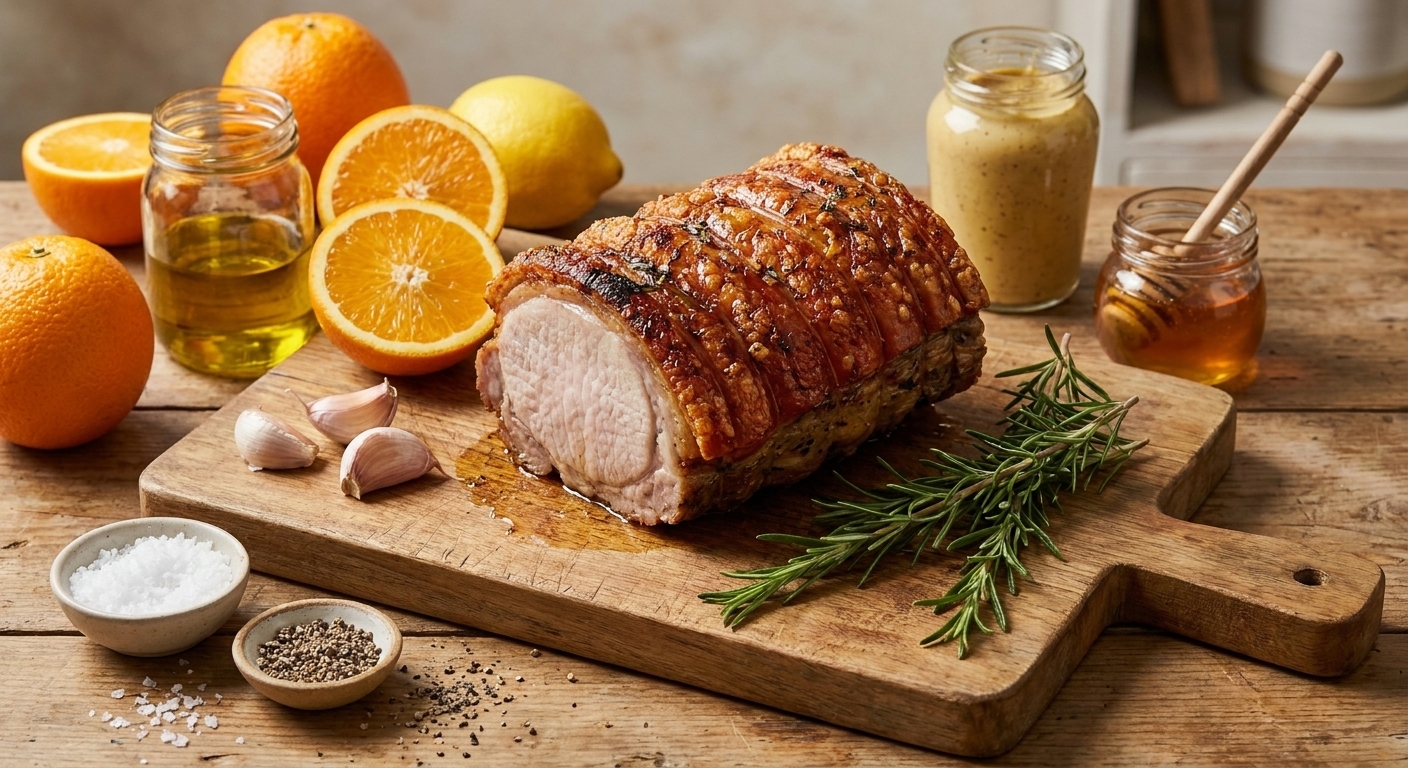
- Pork roast: Use a 2.5 to 3.5 lb pork loin roast (not tenderloin) for neat slices and a faster roast. Pork shoulder also works if you prefer shreddable pork, but it takes longer and should be cooked to a higher final temperature.
- Orange and lemon: Use both zest and juice. The zest brings the most aroma.
- Garlic: 6 to 8 cloves sounds like a lot, and that is the point.
- Honey (or brown sugar): Helps balance the citrus so the flavor stays vibrant, not sharp.
- Herbs: Rosemary is bolder; thyme is softer. Fresh works, and dried works (with adjusted amounts).
- Salt: The recipe uses 1 1/2 to 2 teaspoons kosher salt in the marinade. Diamond Crystal kosher salt is lighter than Morton; if you use Morton or a fine salt, start on the lower end.
- Optional sauce boosters: Chicken broth helps loosen pan drippings; butter adds a glossy finish; a pinch of red pepper flakes adds warmth.
If your roast is labeled pork sirloin roast, it can work too, but it’s a bit less uniform. Rely on a thermometer, not the clock.
Get set up
Equipment You Will Need
- Small bowl and whisk (for the marinade)
- Roasting pan or large oven-safe skillet
- Optional: rimmed baking sheet with a wire rack (alternative to a roasting pan)
- Kitchen twine (if the roast is uneven)
- Instant-read or probe thermometer (strongly recommended)
- Cutting board and knife (for resting and slicing)
- Measuring cup (helpful for separating fat from drippings) or a small saucepan (if you prefer making sauce off-pan)
Technique
Tips for Getting It Right
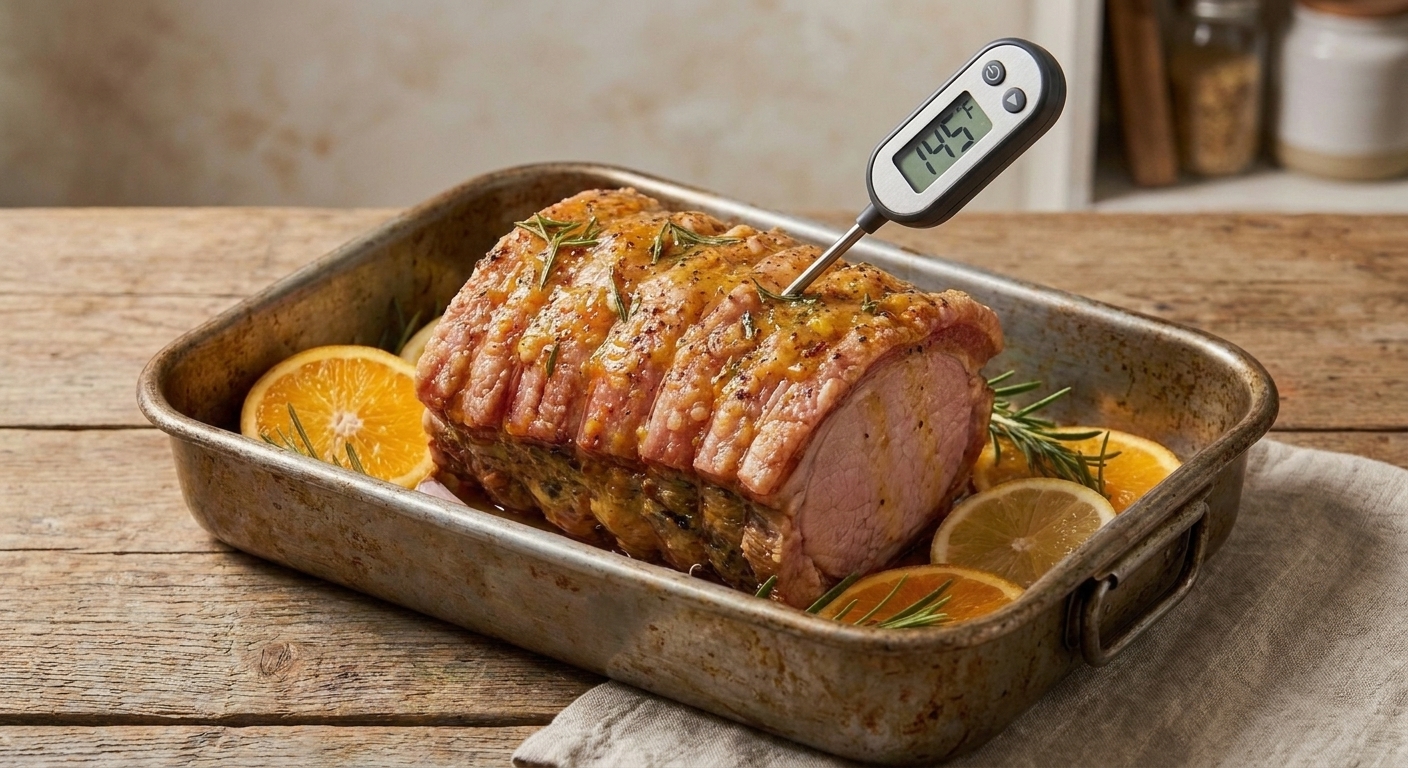
- Use a thermometer: Pork loin goes from perfect to dry quickly if overcooked.
- Don’t skip the rest: Resting 10 to 15 minutes keeps the juices where they belong.
- Salt matters: A roast needs enough salt to taste seasoned all the way through. Start with 1 1/2 teaspoons kosher salt if you’re unsure (especially if using Morton).
- Acid timing: Citrus is great, but don’t marinate for days. Up to 12 hours is plenty for a loin roast.
- Prevent over-browning: If the top browns too fast, loosely tent with foil.
- Garlic note: If your garlic tends to burn, keep the roast on the middle rack and add a splash of broth to the pan early.
Maya tip: If you’re unsure, pull the roast a couple degrees early. Carryover heat finishes the job, and you get juicier slices every time.
Flexibility
Substitutes That Work
- Honey: Use brown sugar instead.
- Herbs: Swap rosemary for thyme (or vice versa). Use fresh or dried (with the dried amount adjusted as noted in the ingredients).
- Orange juice: Bottled orange juice works in a pinch, but use fresh zest from an orange and lemon if you can since the zest is where the aroma lives.
- Roasting vessel: If you don’t have a roasting pan, use a large oven-safe skillet or a rimmed baking sheet with a wire rack. If using a sheet pan, consider adding a little broth halfway through so drippings don’t burn.
Make it yours
Variations to Try
- Orange and lime: Swap the lemon for lime for a punchier citrus vibe.
- Ginger citrus: Add 1 to 2 teaspoons fresh grated ginger to the marinade.
- Spicy citrus: Add 1 teaspoon chili powder or a minced chipotle in adobo.
- Herb swap: Thyme is softer, rosemary is bolder. Both are great.
- Slow cooker: Use pork shoulder. Cook on low 8 hours. Finish by reducing the cooking liquid into a sauce on the stove.
On the table
What to Serve It With
This roast is bright enough to pair with lighter sides, but it’s still absolutely a comfort dinner. Here are my favorites:
- Roasted potatoes with rosemary and extra garlic
- Simple arugula salad with shaved Parmesan and citrus vinaigrette
- Green beans sautéed with lemon zest
- Rice or couscous to soak up the sauce
- Roasted carrots with a touch of honey and thyme
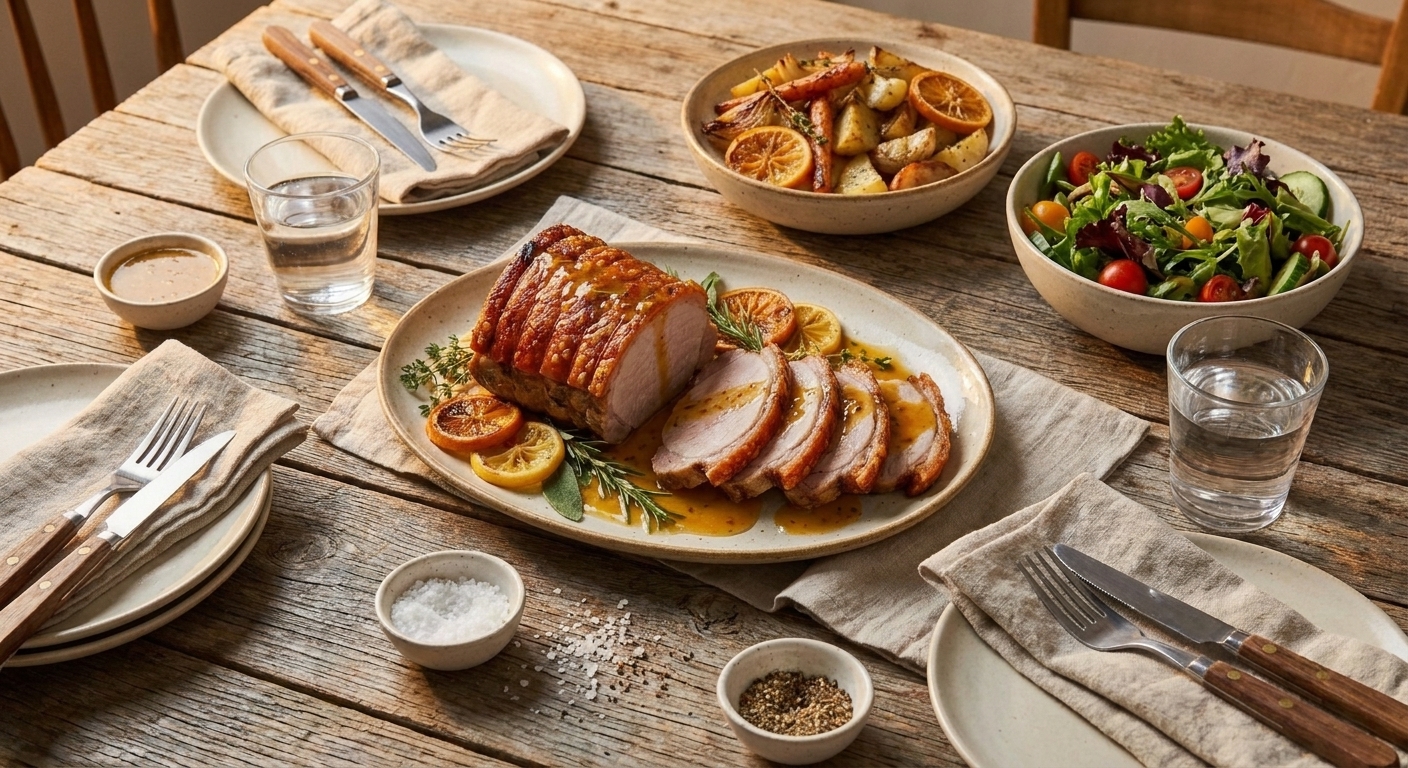
Leftovers are also great cold in sandwiches, warm in grain bowls, or tucked into tacos.
Later
Storage, Freezing and Reheating
Make-ahead
- Marinade: Mix up to 2 days ahead and keep refrigerated.
- Roast: You can roast earlier in the day, refrigerate, and rewarm slices gently in a little pan sauce.
Storage
- Refrigerate: Store pork and sauce separately if possible, 3 to 4 days.
- Freeze: Freeze sliced pork with a little sauce for moisture, up to 2 months.
Reheating
Warm slices in a covered skillet with a splash of broth or extra sauce over low heat. Microwave works too, but do it at 50 percent power so the pork stays tender.
Watch out
Common Mistakes to Avoid
- Overcooking pork loin: Loin is most often dry because it was cooked past 145°F. Next time, pull at 145°F, rest, and slice.
- Using tenderloin with loin timing: Tenderloin cooks much faster, so it can overcook if you treat it like a larger roast.
- Relying on minutes-per-pound: For loin, thickness and starting temperature matter a lot. Trust the thermometer.
- Skipping the rest: Resting 10 to 15 minutes is key to keeping the roast juicy.
- Letting drippings burn: If using a sheet pan, add a little broth halfway through if needed so drippings don’t scorch.
Questions
Frequently Asked Questions
Can I use bottled orange juice?
You can, especially in a pinch, but I recommend at least using fresh zest from an orange and lemon. The zest is where the aroma lives.
Is 145°F really safe for pork?
Yes. The USDA recommends 145°F for whole cuts of pork followed by a 3 minute rest. Resting also improves juiciness.
What if I don’t have a roasting pan?
A large oven-safe skillet or a rimmed baking sheet with a wire rack works. If using a sheet pan, consider adding a little broth halfway through so drippings don’t burn.
Can I make this with pork tenderloin?
You can, but it cooks much faster. Roast tenderloin at 400°F and start checking around 18 to 22 minutes total, depending on thickness. Pull at 145°F and rest.
The recipe
Bright Citrus Pork Roast
Bright Citrus Pork Roast is a cozy, weeknight-friendly roast flavored with orange, lemon, honey, Dijon, herbs, and lots of garlic, then finished with a simple citrus pan sauce from the drippings.
Ingredients
- 2.5 to 3.5 lb pork loin roast
- Zest and juice of 1 orange
- Zest and juice of 1 lemon
- 6 to 8 garlic cloves, minced or grated
- 1 tbsp Dijon mustard
- 2 tbsp honey
- 2 tbsp olive oil
- 1 tbsp chopped rosemary or thyme (or 2 tsp dried)
- 1 1/2 to 2 tsp kosher salt, plus more to taste
- 1 tsp black pepper
- Orange and lemon slices (optional)
- 1/2 cup chicken broth (optional, for sauce)
- 1 tbsp butter (optional, for sauce)
Instructions
- Heat oven to 375°F.
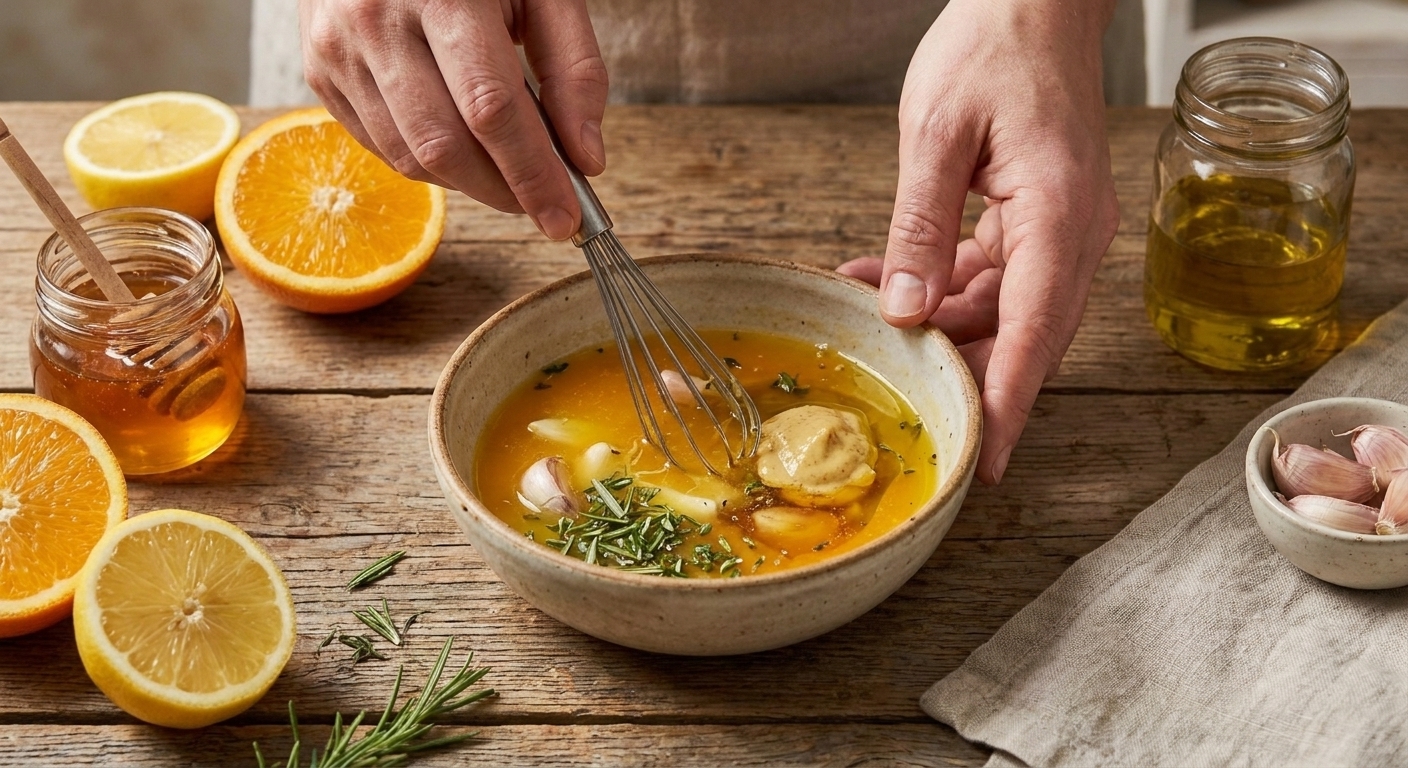
- Whisk orange and lemon zest and juice, garlic, Dijon, honey, olive oil, herbs, salt, and pepper.
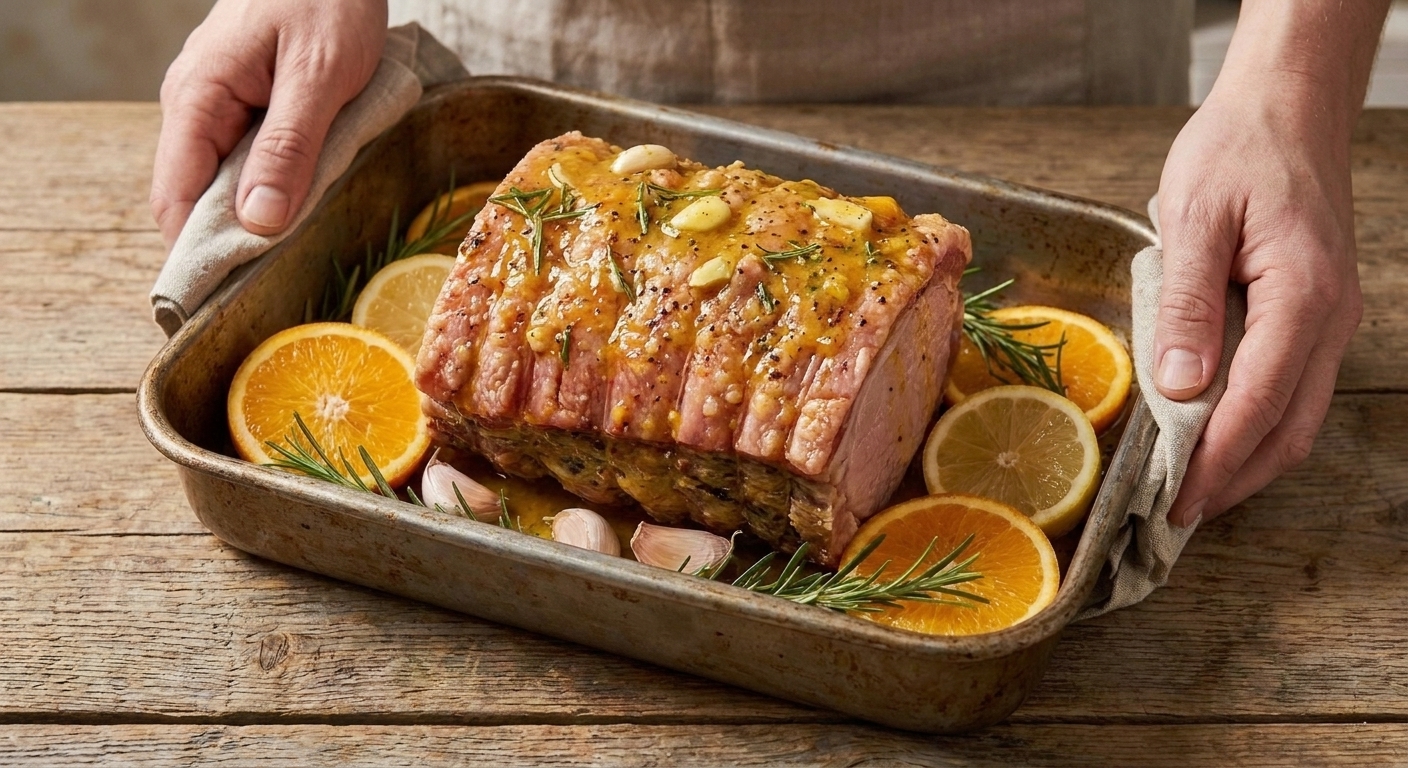
- Pat pork dry. Trim silverskin if needed and tie if uneven. Rub with the marinade. Marinate up to 12 hours refrigerated, or up to 30 minutes at room temp while the oven heats (don’t exceed 1 hour total out of the fridge).
- Place pork in a roasting pan or oven-safe skillet and roast uncovered, fat side up if it has a fat cap. Add citrus slices around the roast if using. Roast until the thickest part reaches 145°F for pork loin.
- Rest 10 to 15 minutes.
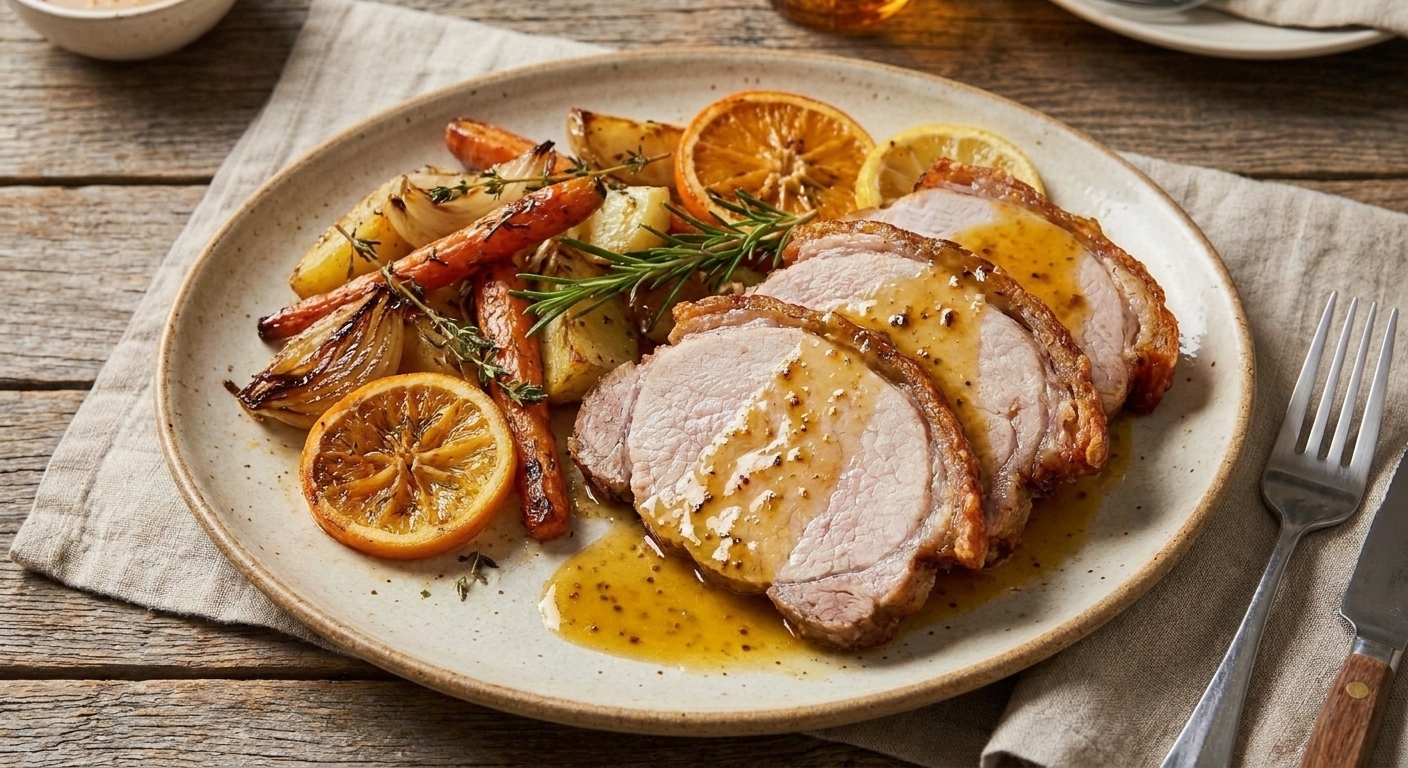
- Spoon off excess fat from drippings. Simmer drippings with broth if needed, scraping up browned bits. Swirl in butter off heat if using.
- Slice pork against the grain and serve with pan sauce.
Recipe notes
- Marinating window: Up to 12 hours in the fridge is ideal for pork loin. If starting straight from the fridge, let the roast sit out 20 to 30 minutes before roasting so it cooks more evenly.
- Temperature targets: For pork loin, cook to 145°F (USDA safe temperature with rest time). For pork shoulder, cook to 190 to 205°F for shreddable results.
- Roast timing: For a 2.5 to 3.5 lb pork loin, roasting is typically 50 to 90 minutes, depending on thickness, starting temperature, and pan setup. Minutes-per-pound is less reliable than a thermometer.
- Sauce balancing: Adjust the finished sauce with a pinch of salt, a squeeze of lemon, or a drizzle more honey. Butter adds a glossy finish.
Nutrition (per serving, approximate)
- Calories: ~360
- Fat: ~15 g
- Carbs: ~10 g
- Protein: ~44 g
- Fiber: ~1 g
- Sugar: ~8 g
- Sodium: ~520 mg
Nutrition values are approximate and will vary by roast size, trimming, and how much sauce is served.