
I have stood in the meat aisle more times than I can count, holding a package of pork tenderloin in one hand and pork chops in the other, trying to answer the same very real weeknight question: what is going to get me dinner on the table with the least stress and the most flavor?
Both are great. They just behave differently. Think of pork tenderloin as a lean, quick-roasting cut that loves a simple seasoning rub, and pork chops as portioned, fast-cooking steaks that shine with a confident sear. Here’s how I choose, based on thickness, cook time, brining, price per serving, and the cooking method you have in mind.

What you’re buying
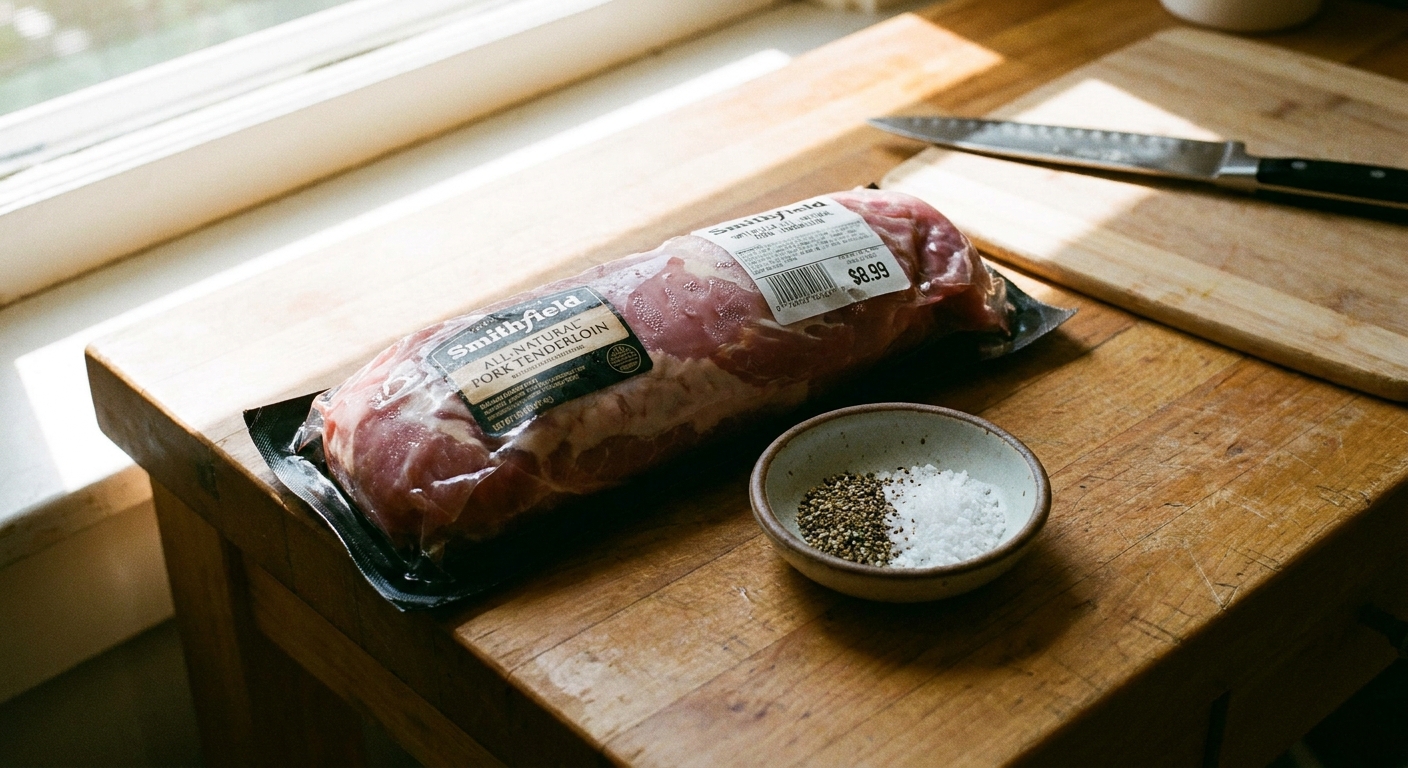
Pork tenderloin is a long, narrow muscle that runs along the spine (often described as the psoas muscle near the backbone). It is very lean, very tender, and usually sold as one tenderloin (about 1 to 1.25 pounds) or a two-pack.
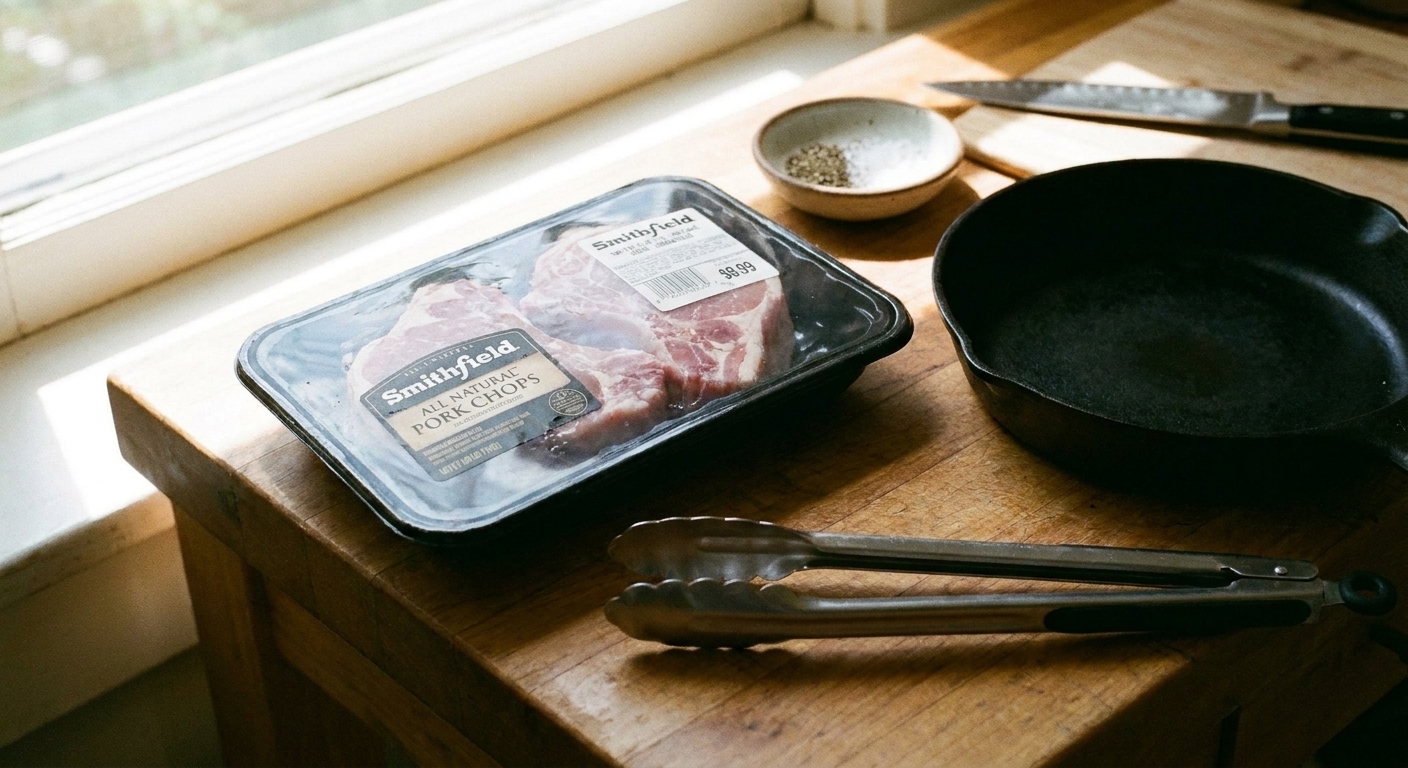
Pork chops are slices cut from the loin area. They can be cut thicker or thinner and may come with more or less fat depending on what’s in the case. To keep this simple and shopper-friendly, I’m treating “pork chops” like the package in front of you, not getting too deep into bone-in versus boneless.
One quick note that matters, though: the exact chop cut affects tenderness. Rib and center-cut loin chops are usually the most tender, while shoulder or blade chops have more connective tissue and do better with a slightly gentler finish (or a longer cook).
Thickness matters
Thickness is the detail that decides whether pork is juicy or dry and whether you are eating in 15 minutes or waiting on the oven.
Tenderloin thickness
Tenderloin is fairly consistent in size: thinner at one end and thicker at the other. That natural taper is why it often cooks best as a whole piece, then gets sliced.
Chop thickness
Chops can vary a lot. If you have choices, here’s the quick rule I teach friends:
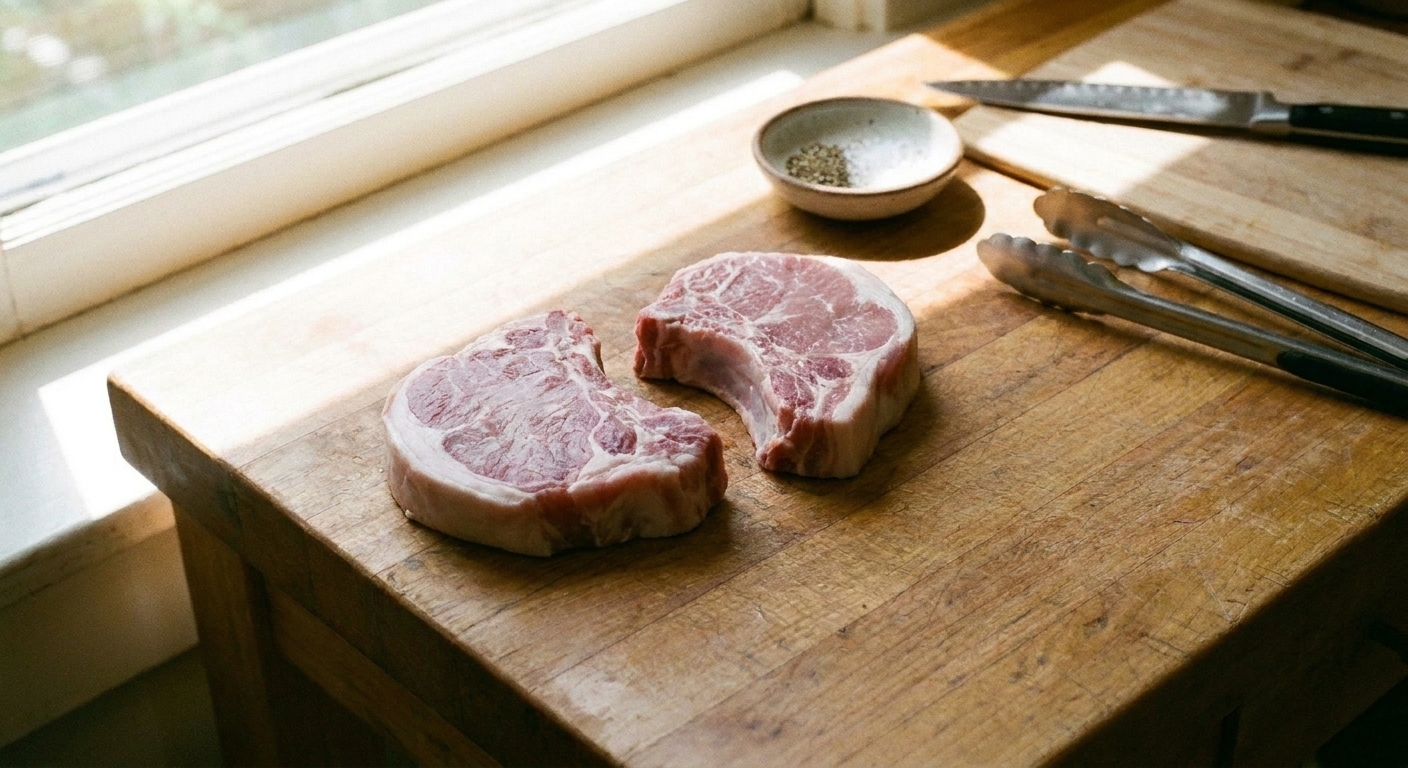
- Thin chops (about 1/2 inch): cook very fast, but they are easy to overcook.
- Thicker chops (about 1 to 1 1/2 inches): give you breathing room for a solid sear and a juicier interior.
If your goal is a quick sear, I strongly prefer chops that look thick enough to handle high heat without drying out before the center is done.
Cook time and doneness
Here is the biggest practical difference: chops are already portioned, tenderloin is not. That affects timing and the rhythm of dinner.
Typical cook times
- Pork chops: often the fastest for a true weeknight sear because they can go straight from package to pan. Depending on thickness and whether you finish in the oven, you are generally looking at 8 to 15 minutes of cooking time, plus a short rest.
- Pork tenderloin: often gets a quick sear then a short roast (or it can be roasted straight through). Most tenderloins cook in about 18 to 30 minutes total, depending on thickness, oven temperature, and whether you are cooking one or two pieces, plus rest time.
Those ranges are real-life guides, not guarantees. Pork goes from perfect to dry fast, so I treat a thermometer like the weeknight cheat code.
Internal temp
For whole cuts like chops and tenderloin, I aim to pull the meat at 140 to 145°F and let it rest. Resting helps the temperature finish climbing and keeps juices where they belong.
In my kitchen, chops win when I want dinner fast and I am happy to babysit the stove for a few minutes. Tenderloin wins when I want something mostly hands-off once it hits the oven.
Does brining help?
Yes, but it helps the two cuts in different ways.
Chops and brining
Chops are the ones that most often benefit from a brine, especially if they are lean, on the thinner side, or you suspect they are from the loin end with very little fat. A short brine helps them hold onto moisture during a high-heat sear.
- When it’s worth it: you have 30 to 60 minutes, your chops look very lean, or you know you tend to overshoot doneness.
- When you can skip it: the chops are thick and nicely marbled and you are confident with your timing.
Tenderloin and brining
Tenderloin is lean too, but because it is cooked as a whole piece, it is easier to keep juicy with good temperature control and a rest. I usually brine tenderloin only when I want extra insurance or I am planning to cook it hot and fast.
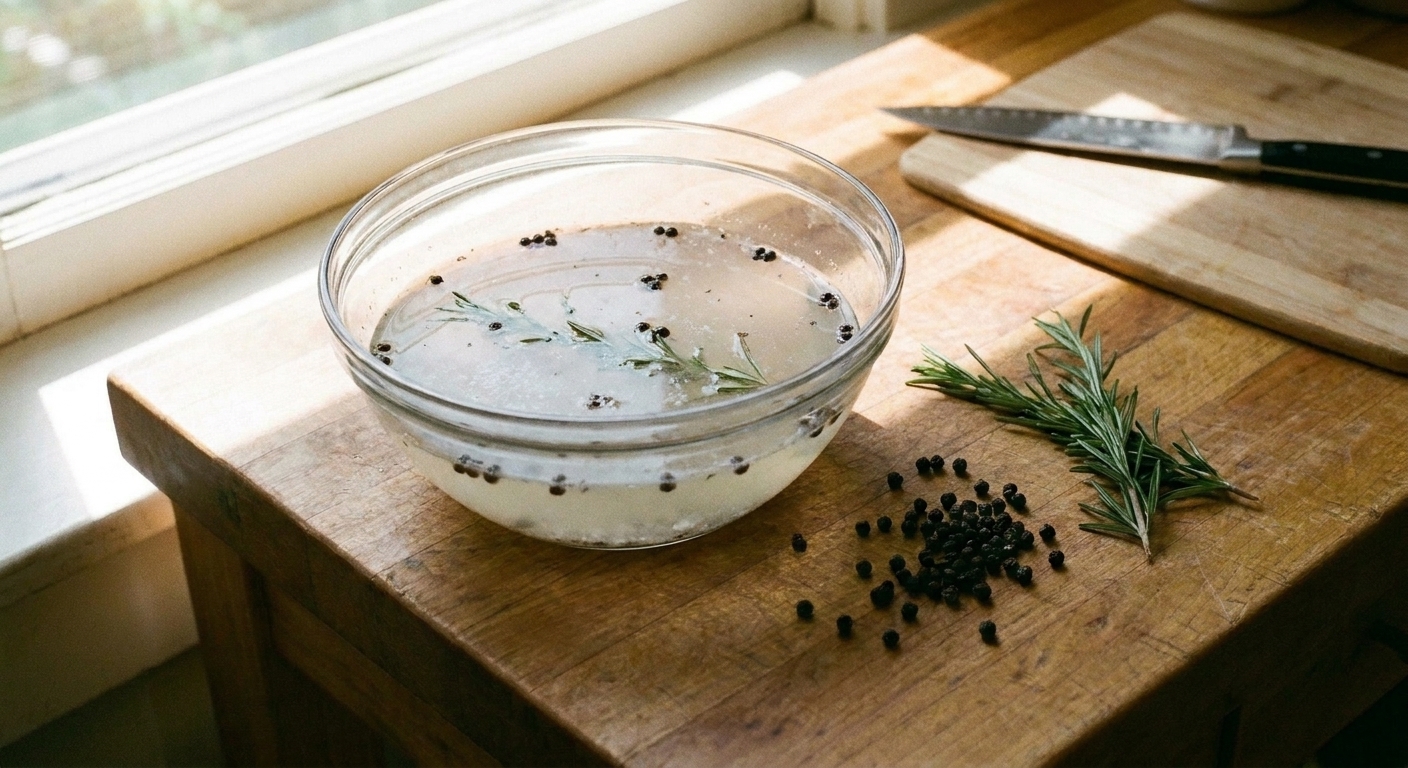
If you prefer a simpler option, dry brining works beautifully for both cuts. Salt the pork all over (I do this on a sheet pan or plate), then refrigerate uncovered for 30 minutes up to overnight when you have time.
If you are deciding at the store and you do not have extra time, I would not let brining be the deciding factor. Just know that chops often show a bigger before-and-after difference from brining, especially lean chops.
Price per serving
Prices swing wildly by region and week, so instead of tossing out numbers that will be wrong the moment you read them, here is the simple math I use when I’m shopping.
Tenderloin math
Tenderloin is low-waste. You may trim off a strip of silverskin if it is still on, but you generally get very little loss. A 1.25 pound tenderloin typically feeds 3 to 4 people if you are serving about 4 to 6 ounces per person with sides. For bigger appetites, call it 2 to 3.
Chop math
Chops are sold by weight too, but you are buying portions. You can usually assume one chop per person. If chops are very large, one chop can sometimes stretch to two smaller servings when sliced, but I would not count on it for hungry teenagers.
My quick aisle rule
- If tenderloin and chops are close in price per pound, tenderloin often ends up the better price per serving because it is efficient and easy to portion.
- If chops are on a great sale and you only need a couple servings, chops can be the better deal because you are not paying for extra meat you will not use that night.
Which one to pick
If you only read one part, make it this. Choose based on the cooking method you want tonight.
Pick pork chops
- You want dinner fast with stovetop energy.
- You like crisp edges and a browned crust.
- You want built-in portions with minimal slicing.
- You are willing to pay attention for a few minutes so you do not overshoot doneness.
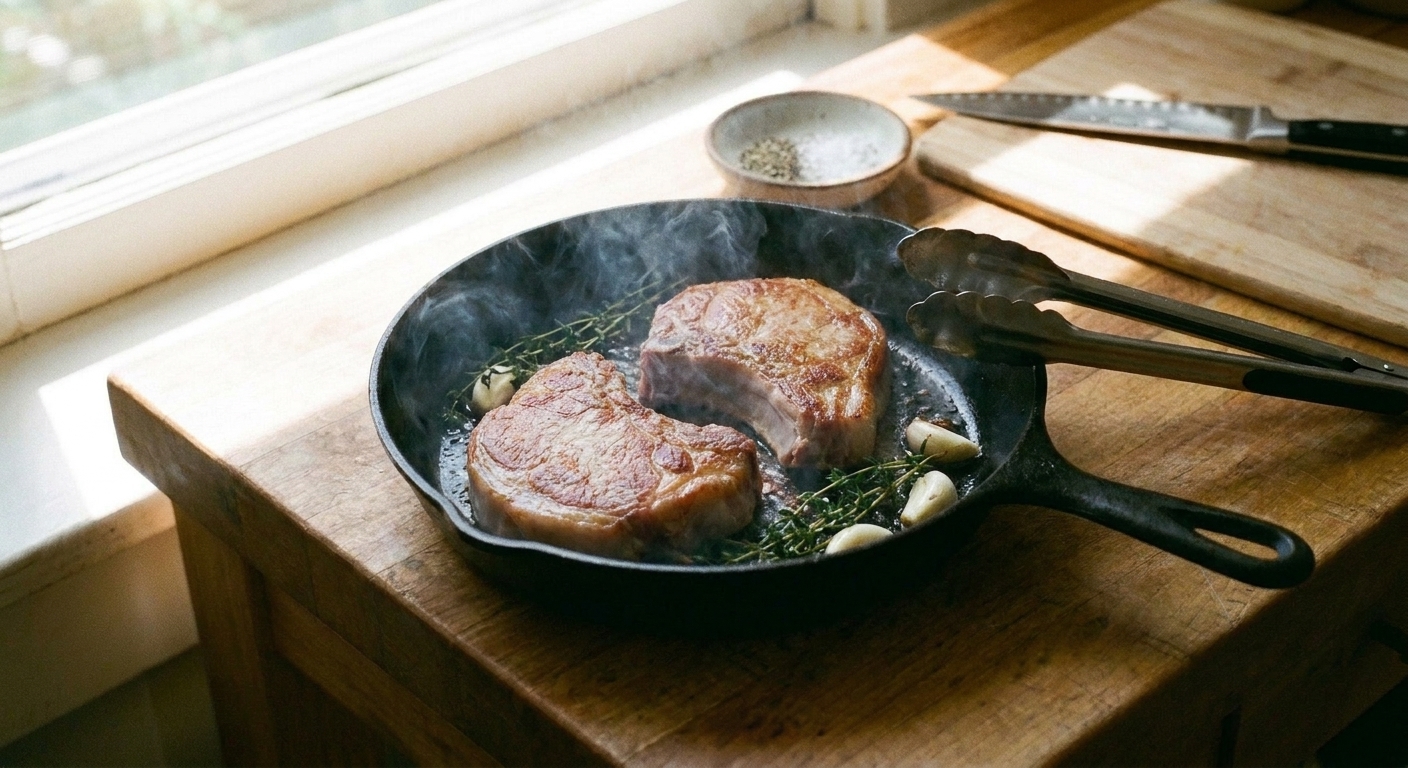
My go-to method: Pat dry, season well, sear in a hot pan, then rest. For thick chops, I often do a quick oven finish after the sear so the center cooks gently.
Pick pork tenderloin
- You want a mostly hands-off main that finishes in the oven.
- You are feeding more than two people and want easy slicing.
- You want a lean cut that takes well to a simple rub, glaze, or pan sauce.
- You like the idea of leftovers for sandwiches, salads, or fried rice tomorrow.
My go-to method: Season, sear quickly, roast until it hits temperature, then rest and slice against the grain.
Standing at the case and deciding for tonight: chops are your quick sear, tenderloin is your short roast. Pick the one that matches your evening, and you’re already halfway to a great dinner.