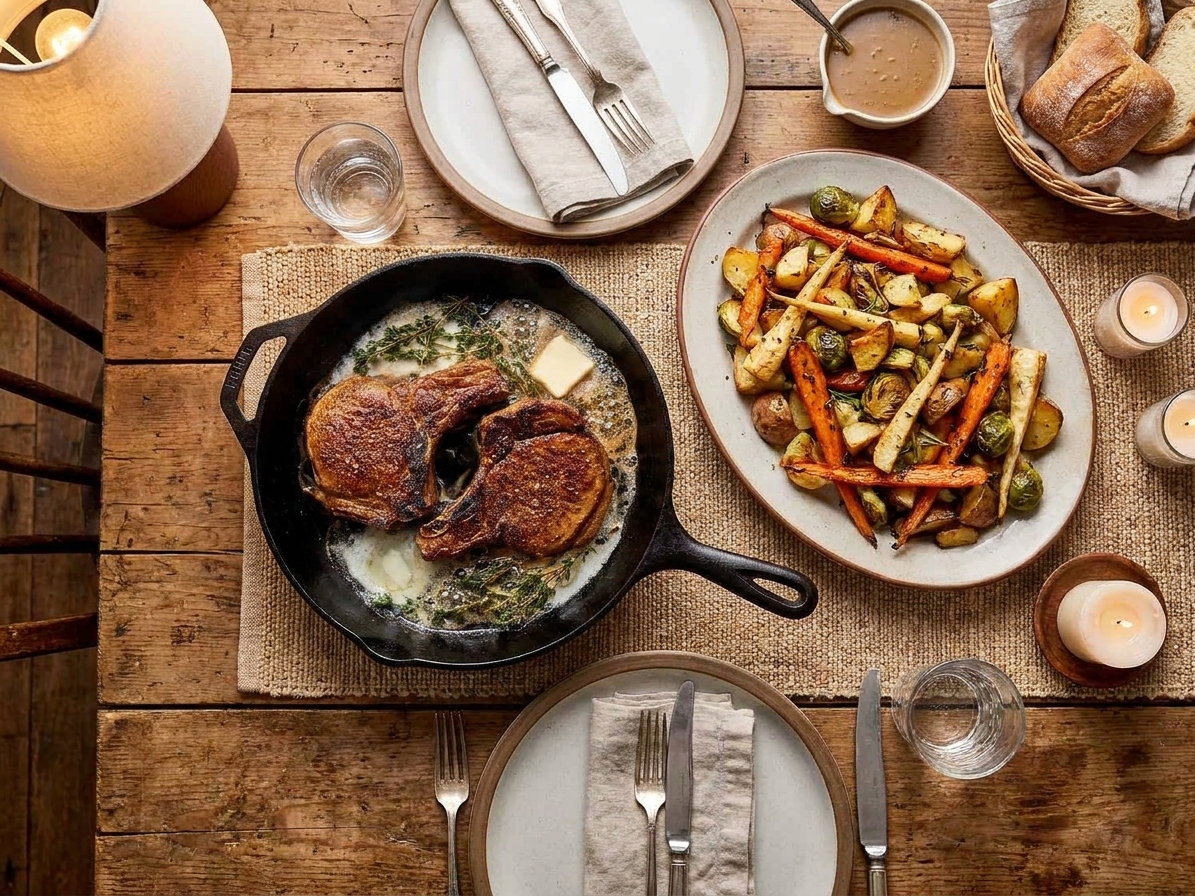

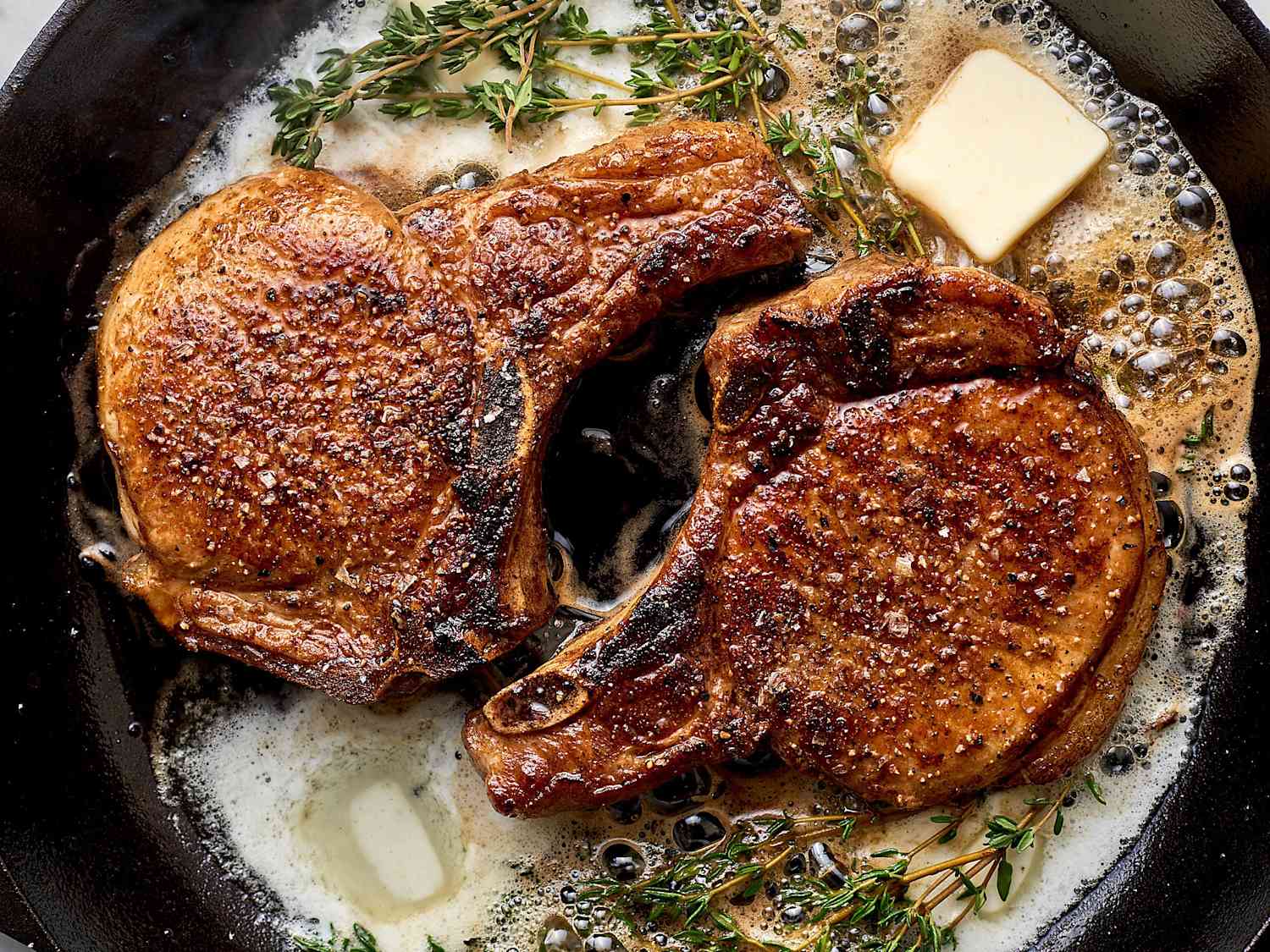
The first time I cooked pork chops for my very loud, very hungry family in the Pacific Northwest, I treated them like chicken breasts: crank the heat, cook until I felt “safe,” and serve immediately. The result was exactly what you are describing: dry, tough, and kind of sad. The good news is that dry pork chops are usually not a mystery. They are a combination of a few fixable habits, and once you know what to watch for, juicy chops become a weeknight sure thing.

The real reason pork chops dry out
Pork chops dry out when the muscle fibers tighten too much and squeeze out moisture. That happens fastest when the meat is cooked past its sweet spot or cooked too aggressively on the outside before the center is ready.
Modern pork is also leaner than what many of us grew up eating, especially boneless loin chops. Less fat means less margin for error. That is not a bad thing, it just means technique matters a bit more.
Quick diagnosis: what happened?
If you take a bite and think, “Yep, dry,” run through these common culprits.
1) The chops were too thin
Thin chops cook through before they have time to brown properly, and they go from juicy to overdone in a blink. If your chops are under about 1 inch thick, you are playing on hard mode.
- What it looks like: browned outside, dry center, no wiggle room.
- Better next time: buy chops that are 1 to 1 1/2 inches thick when you can. Thick chops forgive small timing mistakes.
2) You skipped any kind of brine
A light brine is my favorite quiet little insurance policy. Salt changes the meat’s structure so it holds onto moisture better as it cooks, and it seasons deeper than sprinkling right before the pan.
- What it looks like: pork tastes bland and feels tight, even if it is not wildly overcooked.
- Better next time: do a quick brine or dry brine (details below). Even 30 minutes helps.
3) The heat was too high for the thickness
High heat is great for browning, but if the burner stays on blast the entire time, the outside overcooks while you wait for the center to catch up. This is especially common with thick chops in a ripping hot skillet.
- What it looks like: dark crust, dry band around the edge, center still catching up, pan smoking.
- Better next time: start hot to sear, then lower the heat to finish gently, or finish in the oven if needed.
4) You did not rest the meat
Resting is not fussy chef talk. It gives the temperature a chance to even out, and it helps reduce juice loss when you cut.
- What it looks like: a puddle of juice on the plate and a noticeably drier chop.
- Better next time: rest 5 minutes for thinner chops and 8 to 10 minutes for thicker ones.
Three big juicy-chop moves
Choose the right cut
For everyday cooking, the easiest chops to keep juicy are bone-in, 1 to 1 1/2 inches thick. The bone can slow down cooking slightly, which buys you time. It can also lead to a little unevenness near the bone, so always temp the thickest meaty part, not the bone itself.
A quick cheat sheet if you buy what is on sale:
- Loin chops (often boneless): leanest, dries out fastest. Great when cooked carefully to temperature.
- Rib chops: usually a bit more forgiving and tender.
- Blade or shoulder chops: more connective tissue. They can be juicy and flavorful, but they often do better with gentler cooking or a longer, slower approach.
Brine briefly (or dry brine)
You have two low-effort options:
- Quick wet brine: Use 1 tablespoon kosher salt per 1 cup water (or 3/4 tablespoon fine salt). Stir into cold water until dissolved. Add chops and refrigerate 30 to 60 minutes. Pat very dry before cooking so they brown.
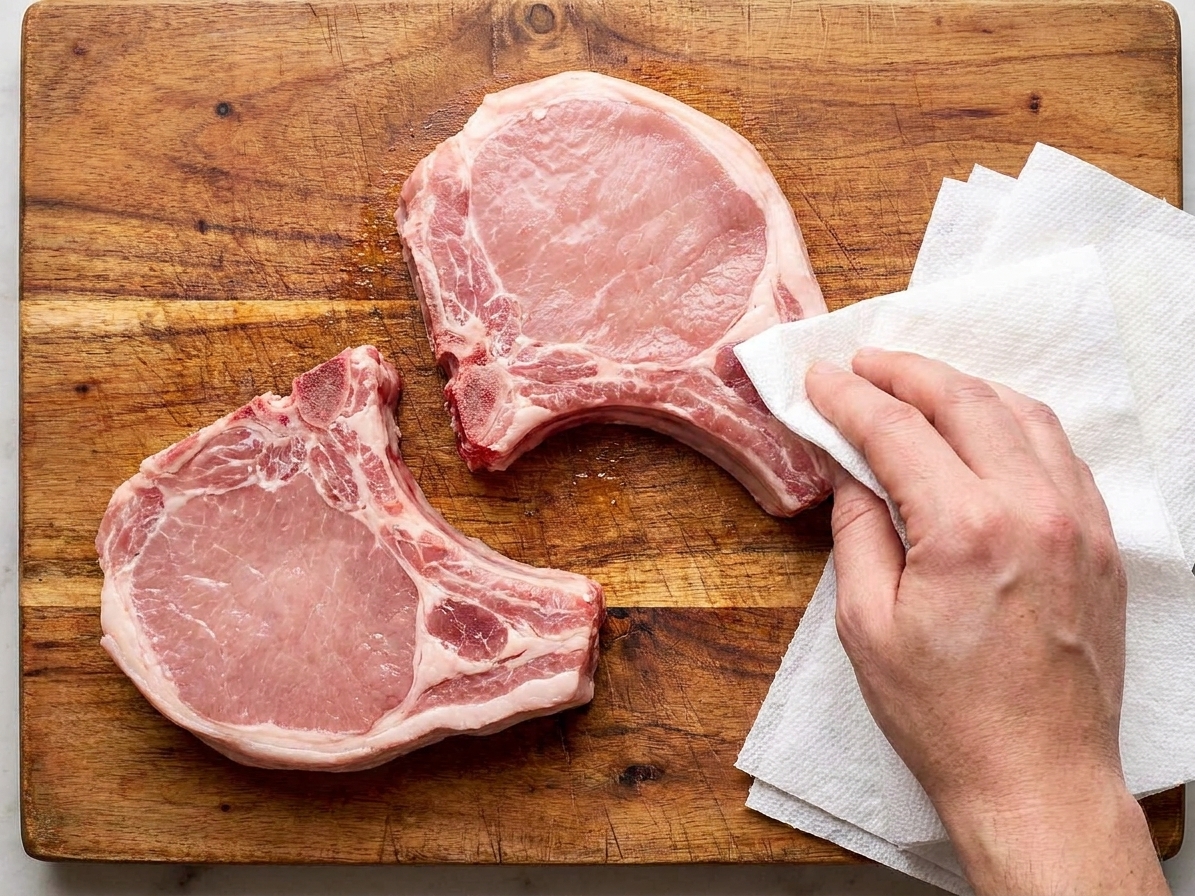
- Dry brine: Salt both sides generously (think an even, light coating), set on a plate or rack, and refrigerate 30 minutes up to overnight. Blot any surface moisture before cooking.
Either way, do not skip the pat-dry step. Wet meat steams instead of sears. Also, after brining, go easy on additional salt. You might only need pepper and aromatics.
Cook to temperature, not vibes
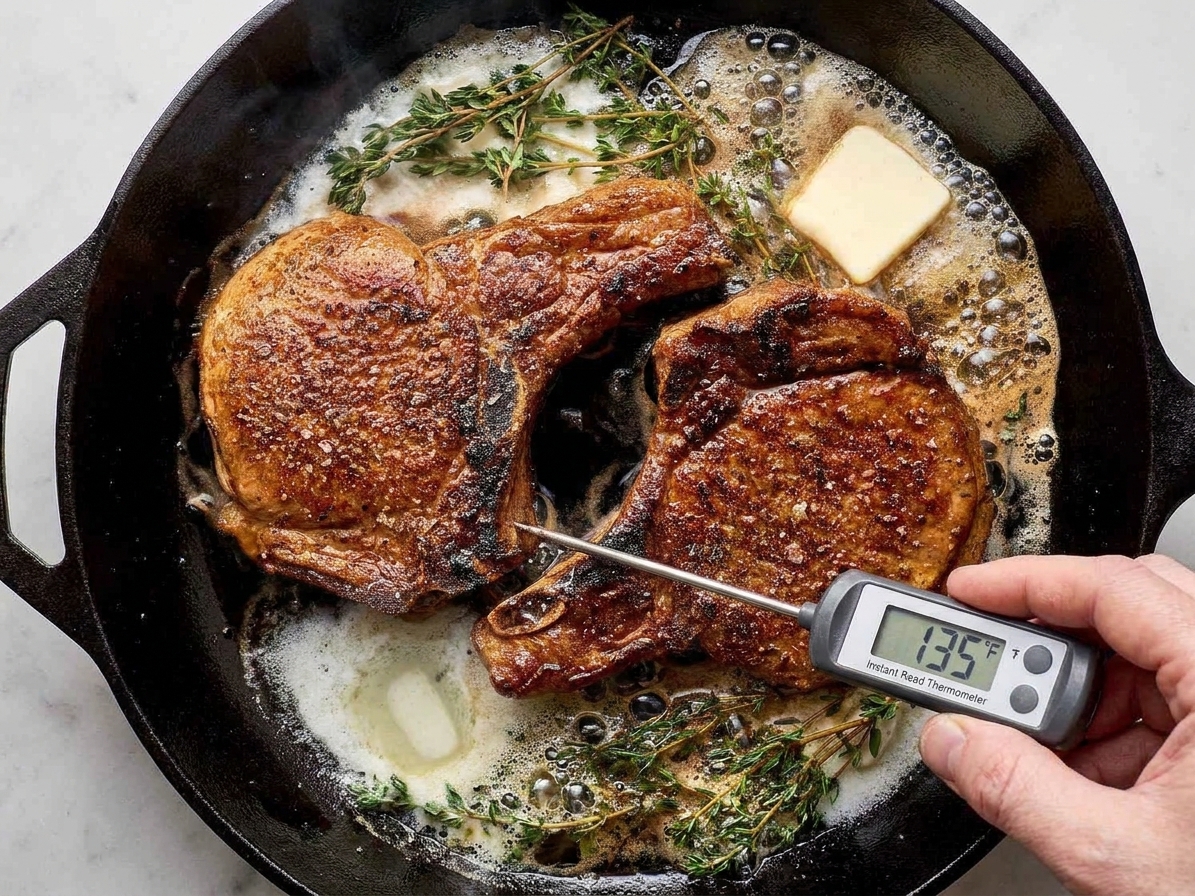
I am going to say the thing that changed my pork chop life: use a meat thermometer. Pork chops can be perfectly juicy and still safe.
- USDA guidance: For whole cuts of pork, cook to 145°F and then rest 3 minutes.
- My practical method: Pull the chops at 140 to 142°F, then rest 5 to 10 minutes. Carryover cooking typically brings them up to 145°F as they sit, and you land in the juicy zone.
If you need an oven finish
This is not a full recipe, just a reliable path when you have thicker chops or a pan that browns fast:
- Sear in a hot skillet about 2 to 3 minutes per side until nicely browned.
- Move the skillet to a 375°F oven and finish until the thickest part hits 140 to 145°F.
- Rest before slicing.
How to rescue chops already dry
Can you turn a dry chop into a tender, juicy chop again? Not completely, but you can make it pleasant and flavorful instead of a workout for your jaw.
1) Slice thin, across the grain
Thin slices feel more tender, and cutting across the grain shortens the muscle fibers so each bite is easier to chew. This is the simplest save, and it works even if dinner is already on the table.
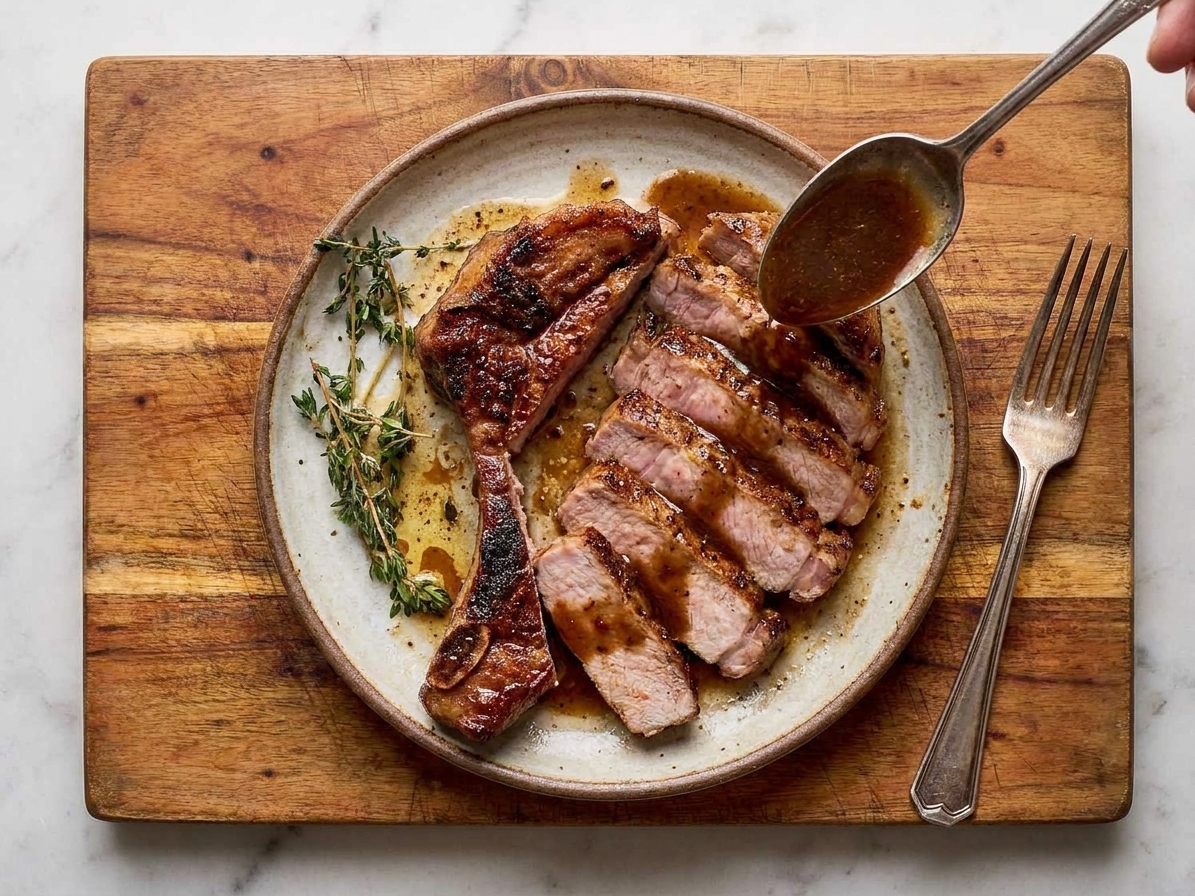
2) Add moisture back with a quick pan sauce
Dry chops love sauce. If your chops are already cooked, you can make a fast sauce in the same pan:
- Remove chops to a plate.
- Lower heat to medium.
- Add a splash of broth, water, or even a little apple juice.
- Scrape up browned bits, then whisk in a small knob of butter at the end for richness.
- Spoon over sliced chops.
If you keep garlic around (I do, always), a quick sautéed clove in the pan before you deglaze makes everything taste intentional.
3) Simmer gently in liquid (only if they are very tough)
If the chops are truly tough and thick, you can treat them like a quick braise to soften them:
- Slice or leave whole.
- Set in a skillet with a shallow layer of broth or gravy.
- Cover and simmer on low until warmed through and slightly more tender.
Important: Keep it gentle. A hard boil will tighten the meat even more.
4) Turn them into something else on purpose
This is my favorite “nobody has to know” move. Chop dry pork into small pieces and use it like a flavorful add-in:
- Stir into fried rice or noodle bowls with a saucy glaze.
- Tuck into quesadillas with melty cheese and salsa.
- Fold into a creamy pasta, where sauce does the heavy lifting.
Small details, big difference
Pat the chops dry
Surface moisture causes steaming, and steaming makes it easier to overcook while you chase color. Dry chops brown faster, which means less time on heat overall.
Do not flip constantly
One flip is usually enough for pan-seared chops. Too much fiddling can slow browning and tempt you to cook longer “just to be sure.”
Watch the thickest spot
Bone-in chops often have uneven thickness. The meat right near the bone can run a bit pinker and take a touch longer. Place your thermometer in the thickest meaty part, not touching the bone.
Remember carryover cooking
Meat keeps cooking after it leaves the pan. Pulling at the right temperature and letting it rest is how you land on juicy instead of dry.
Pork chop dryness FAQ
Is it okay if pork chops are a little pink?
Yes. Color is not a reliable doneness test. For whole cuts of pork, the USDA recommendation is 145°F plus a 3-minute rest. A faint blush can be normal, especially near the bone, and it is often much juicier than a fully gray chop.
Why are my pork chops tough, not just dry?
Toughness often comes from overcooking, but it can also come from the cut. Very lean loin chops get tough faster. Thick chops, brining, gentler heat, and slicing across the grain all help.
Should I use high heat or medium heat?
Start hot enough to brown, then reduce to medium or medium-low to finish without hammering the moisture out. If your pan is smoking aggressively, it is usually too hot.
How long should pork chops rest?
At least 5 minutes. For thick chops, 8 to 10 minutes is even better. Tent loosely with foil if you like, but do not wrap tightly or you will soften the crust.
Does brining make pork chops salty?
Not if you keep it brief and do not double-salt later. After a brine, taste your seasoning plan: you might only need pepper and aromatics, not another heavy sprinkle of salt.
My weeknight checklist
If you want a simple mental script, this is mine:
- Buy thicker chops when possible, ideally 1 to 1 1/2 inches.
- Salt ahead (quick brine or dry brine), even just 30 minutes.
- Pat dry before cooking for better browning.
- Sear, then ease up on the heat to finish gently (or use an oven finish for thick chops).
- Use a thermometer and aim to land at 145°F with a rest.
- Rest before slicing.
And if tonight’s chops are already overdone, slice them thin and give them a saucy landing spot. Dinner can still be really good.