
8 filling, refreshing no-cook dinners for hot nights. Think hearty salads, wraps, and snack-plate meals with smart shortcuts and make-ahead tips.
Recipeva
Best Hummus Recipe (Smooth and Creamy)
This is my go-to smooth and creamy hummus recipe: fluffy, garlicky, and easy with pantry staples. Includes the secret to ultra-silky texture, plus flavor variations and storage tips.

Maya Reynolds
Maya Reynolds is a passionate home cook, recipe developer, and the creative voice behind Recipeva. With over a decade of experience translating complex culinary techniques into approachable weeknight meals, she focuses on creating dishes that bring joy to the dinner table without the stress.
Created September 22, 2026
Updated September 22, 2026
There are two kinds of hummus nights in my house: the “quick snack” nights and the “we accidentally ate half the bowl before dinner” nights. This is the hummus that causes the second situation.
It is smooth, creamy, deeply garlicky, and balanced with lemon and good olive oil. The best part is that it is absolutely doable on a weeknight, even if you are starting with canned chickpeas.
What makes hummus extra smooth?
Hummus gets luxuriously creamy from a few small choices that stack up in your favor:
- Warm, softened chickpeas blend more smoothly than cold, firm chickpeas. (Temperature helps, but softness is the real magic.)
- Tahini first: blending tahini with lemon juice and water creates a pale, whipped base that turns hummus fluffy.
- Enough liquid: a few tablespoons of cold water (or chickpea liquid) at the end makes it lighter and silkier. Ice-cold is nice, not required.
- Optional peeling: removing chickpea skins helps, but you can still make silky hummus without it if you blend long enough.
If you have ever made hummus that tasted great but felt a little grainy, you are about two minutes of blending and a splash of water away from fixing it.
Ingredients
This recipe uses simple supermarket staples, but each one matters. Aim for the freshest lemon and the best tahini you can find.
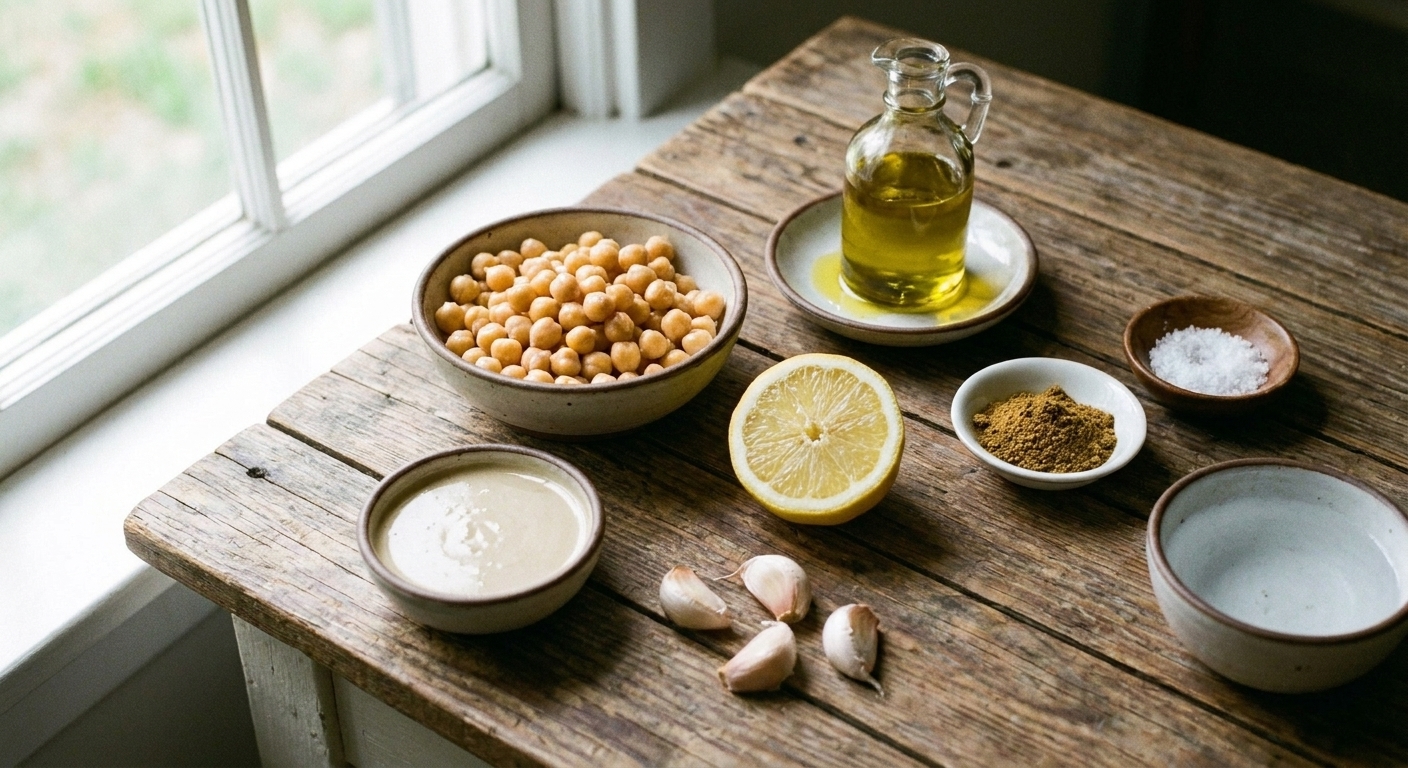
- Chickpeas: 1 (15-ounce) can, rinsed and drained, or 1 1/2 cups cooked chickpeas
- Tahini: 1/3 cup, well-stirred
- Lemon juice: 3 tablespoons (from about 1 large lemon)
- Garlic: 1 to 2 cloves (I vote 2, always)
- Olive oil: 2 tablespoons, plus more for serving
- Ice-cold water: 3 to 6 tablespoons total, as needed (or use aquafaba)
- Salt: 3/4 teaspoon, plus more to taste
- Ground cumin: 1/2 teaspoon
- Optional for extra smoothness: 1/4 teaspoon baking soda (helps soften chickpeas if you warm them on the stove, but do not overdo it or it can taste soapy)
- To serve: paprika or sumac, chopped parsley, toasted pine nuts (optional)
Best hummus recipe
Yield: about 2 cups
Time: 10 minutes (15 to 20 minutes if you warm and soften the chickpeas)
1) Warm and soften the chickpeas (optional)
If you want that truly restaurant-smooth texture, do this quick step.
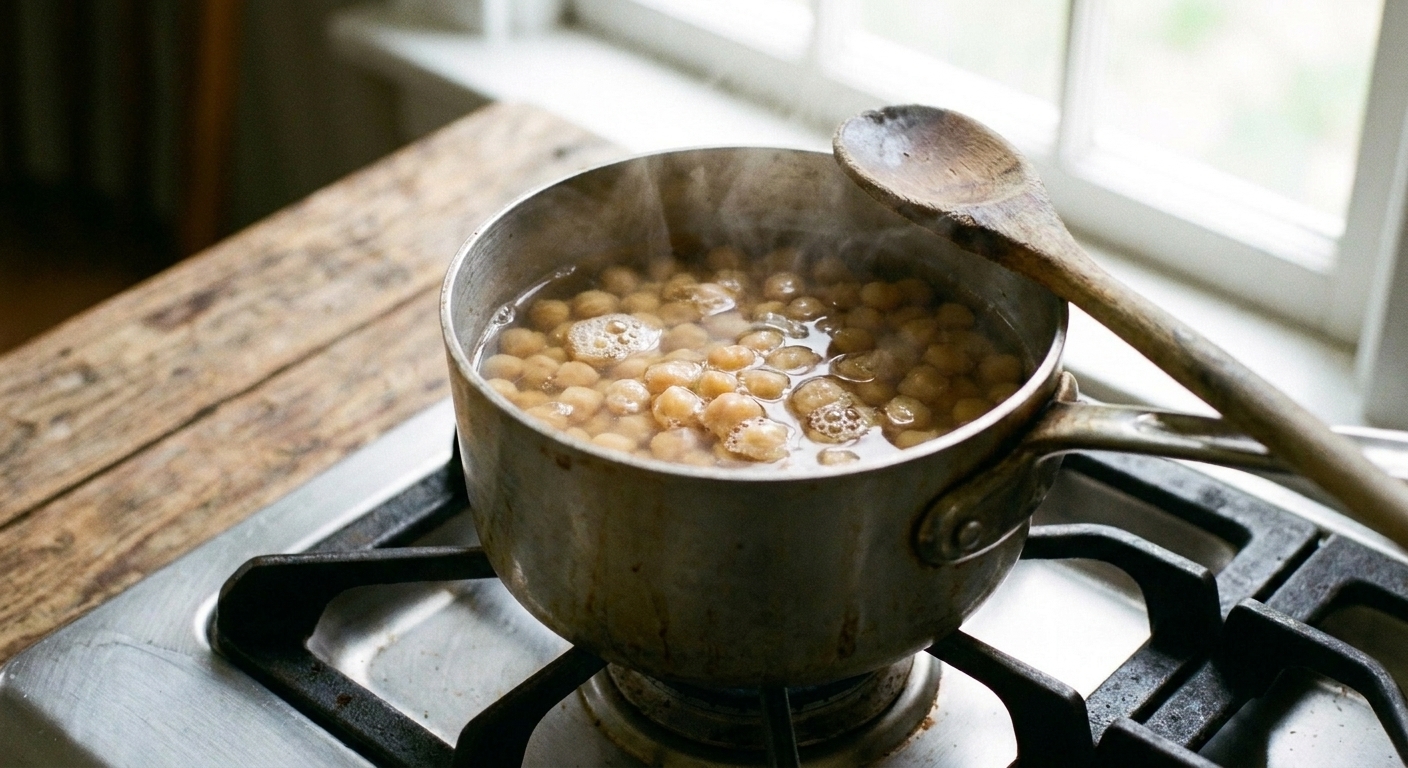
- Add rinsed chickpeas to a small pot and cover with water by 1 inch.
- Bring to a simmer for 5 to 8 minutes. If using, add 1/4 teaspoon baking soda while they warm. (Just a pinch. Too much can taste soapy.)
- Drain and let them steam dry for a minute.
2) Whip the tahini base
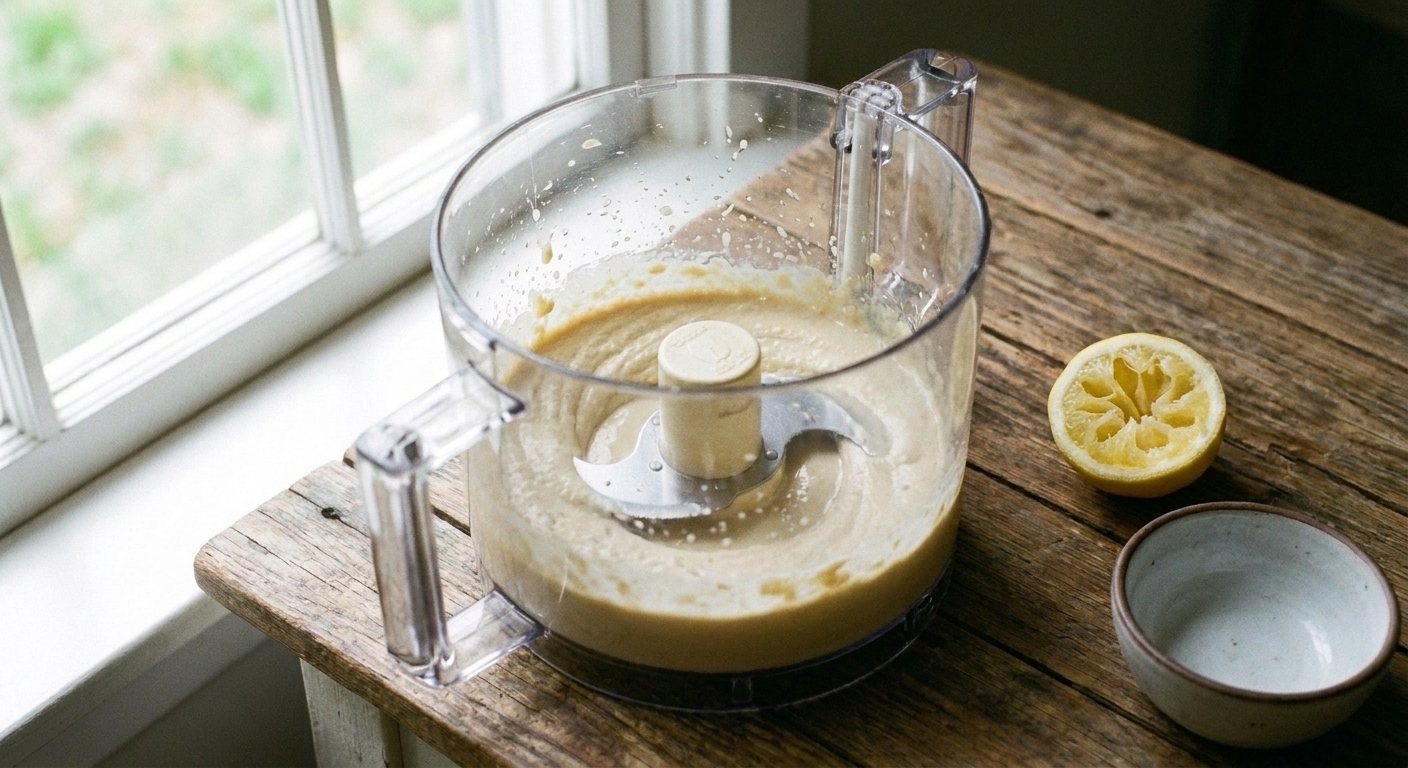
- In a food processor, add tahini and lemon juice.
- Process for 30 to 60 seconds, until it looks lighter and thickened.
- Add 2 tablespoons ice-cold water and process again. It should look creamy and whipped.
Water note: the recipe calls for 3 to 6 tablespoons water total. You will use 2 tablespoons here, then add 1 to 4 more later if needed.
3) Add garlic, salt, and cumin
Add the garlic, salt, and cumin. Process 20 seconds. Scrape down the sides.
Garlic tip: If you like a mellow garlic flavor, grate the garlic and let it sit in the lemon juice for 5 minutes before blending. It softens the bite.
4) Blend chickpeas until silky
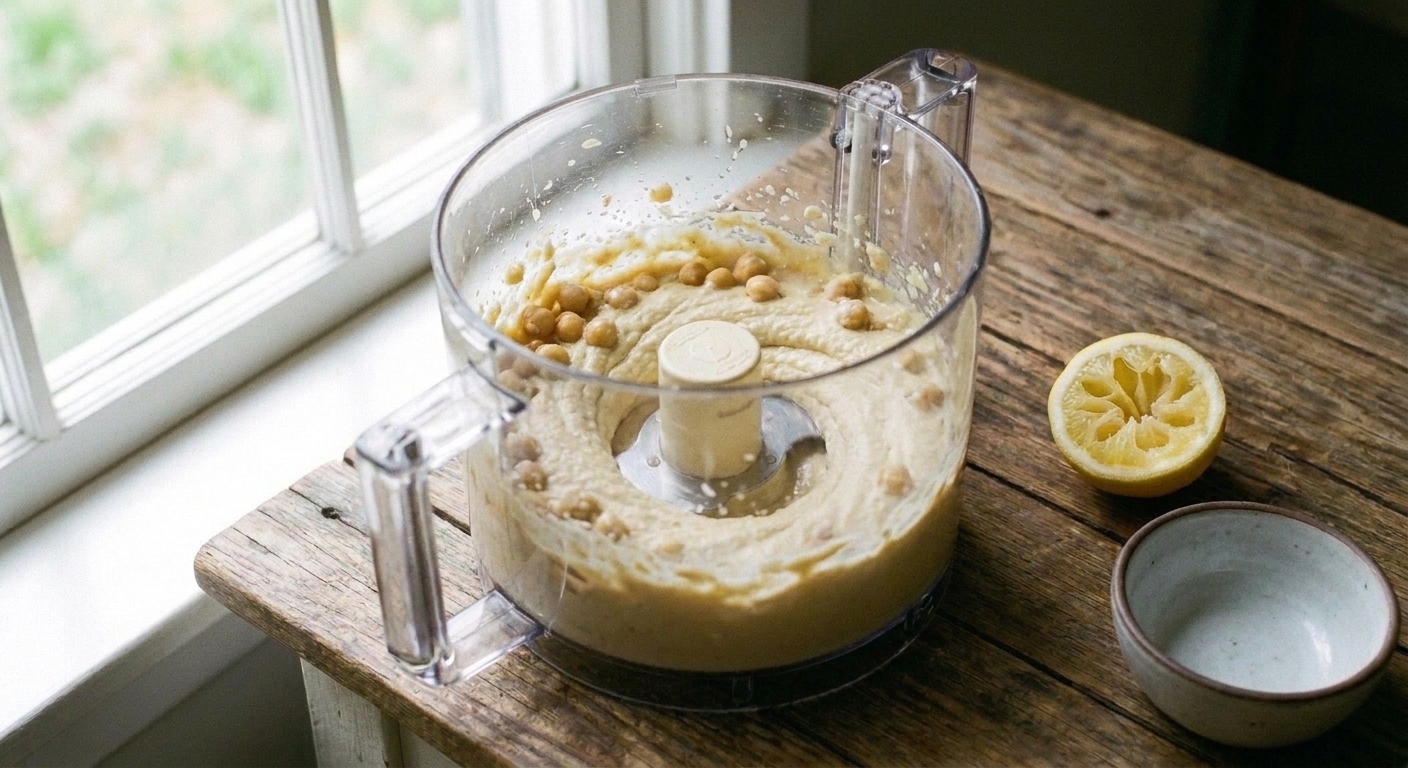
- Add the warm chickpeas (or room temperature chickpeas if skipping the warming step).
- Process for 2 to 3 minutes, stopping once to scrape down the sides.
- With the processor running, drizzle in 2 tablespoons olive oil.
- Add more cold water (or a splash of aquafaba), 1 tablespoon at a time, until the hummus is pillowy and smooth.
Blender vs. food processor: A food processor is the classic move. A high-speed blender can make it even smoother, but you may need to stop and scrape more often, and you will likely use a little extra liquid to keep it moving.
5) Taste and finish
Taste and adjust:
- More lemon for brightness
- More salt to make flavors pop
- A touch more tahini for richness
- More water for a lighter, fluffier dip
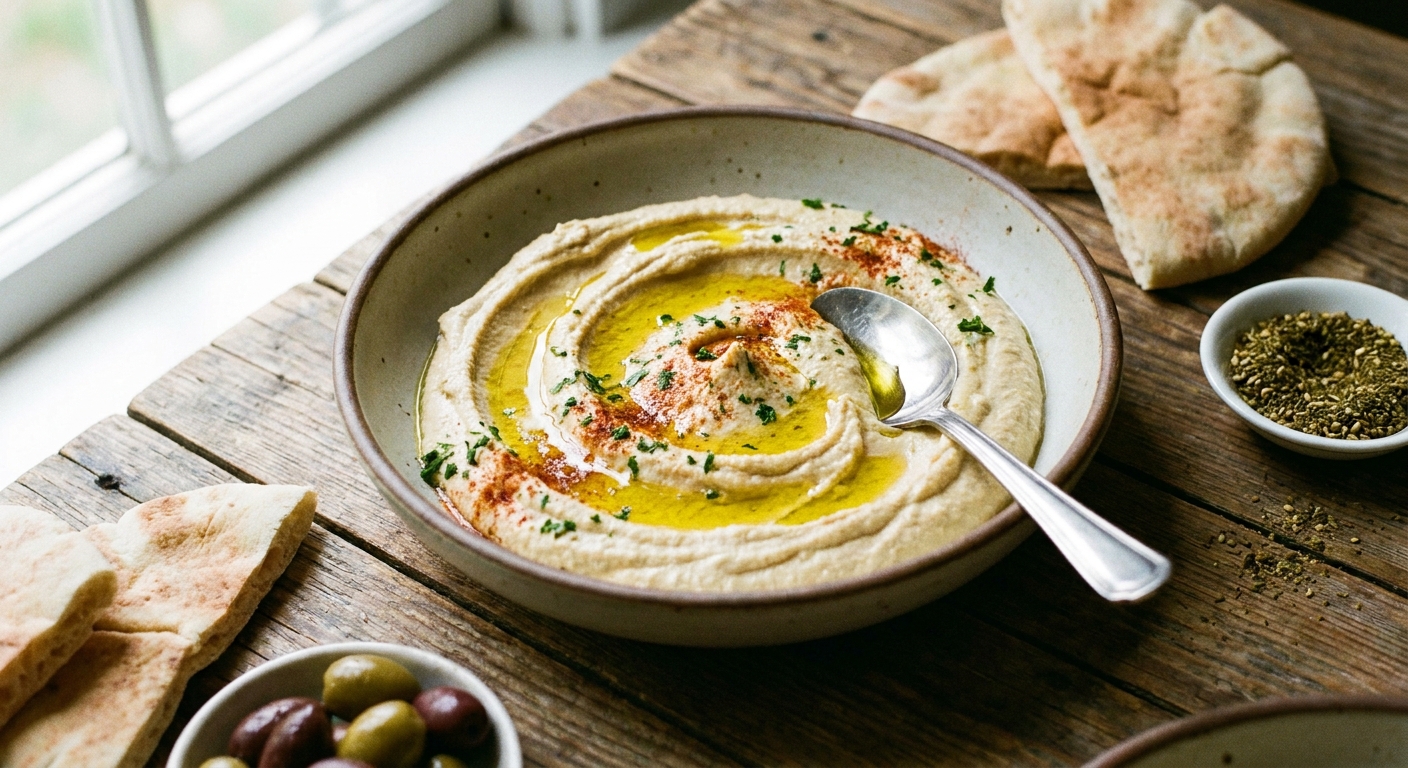
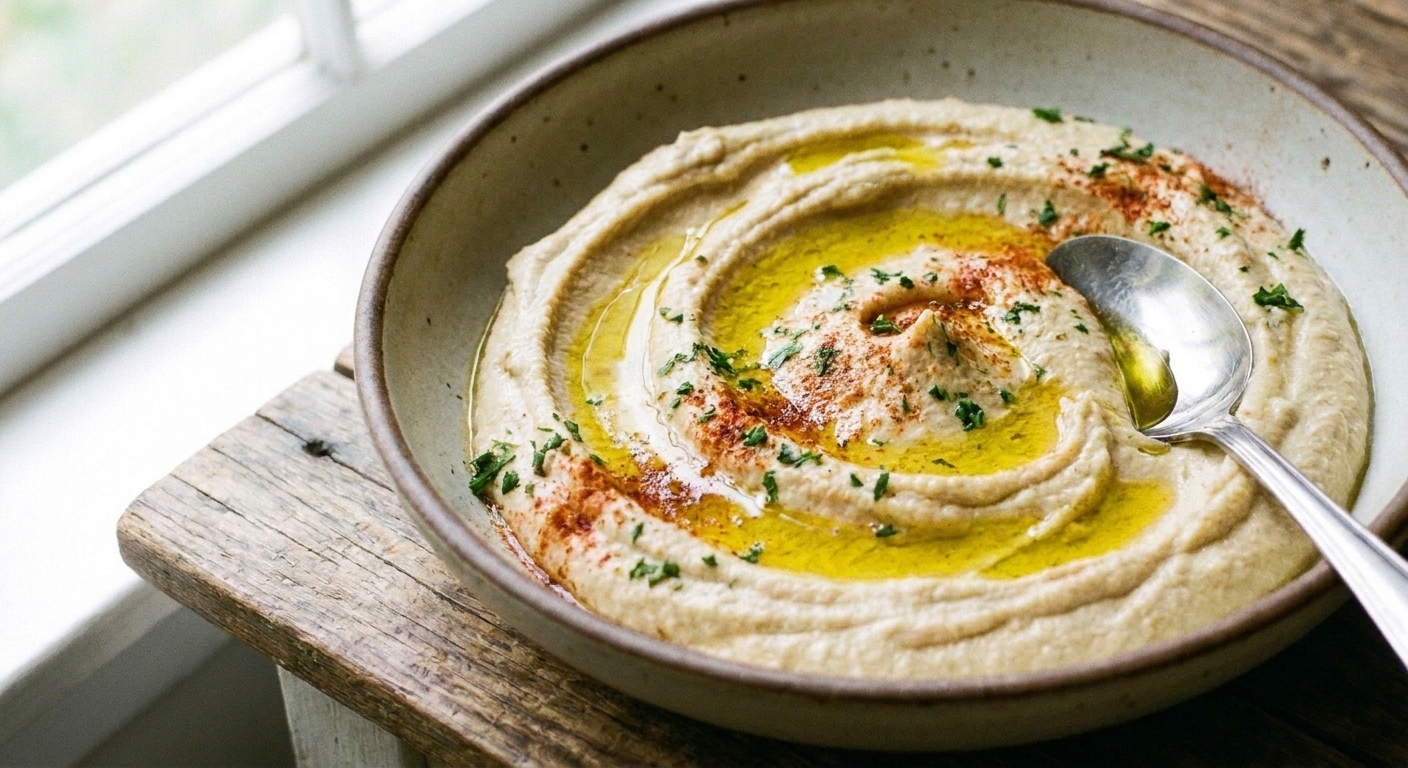
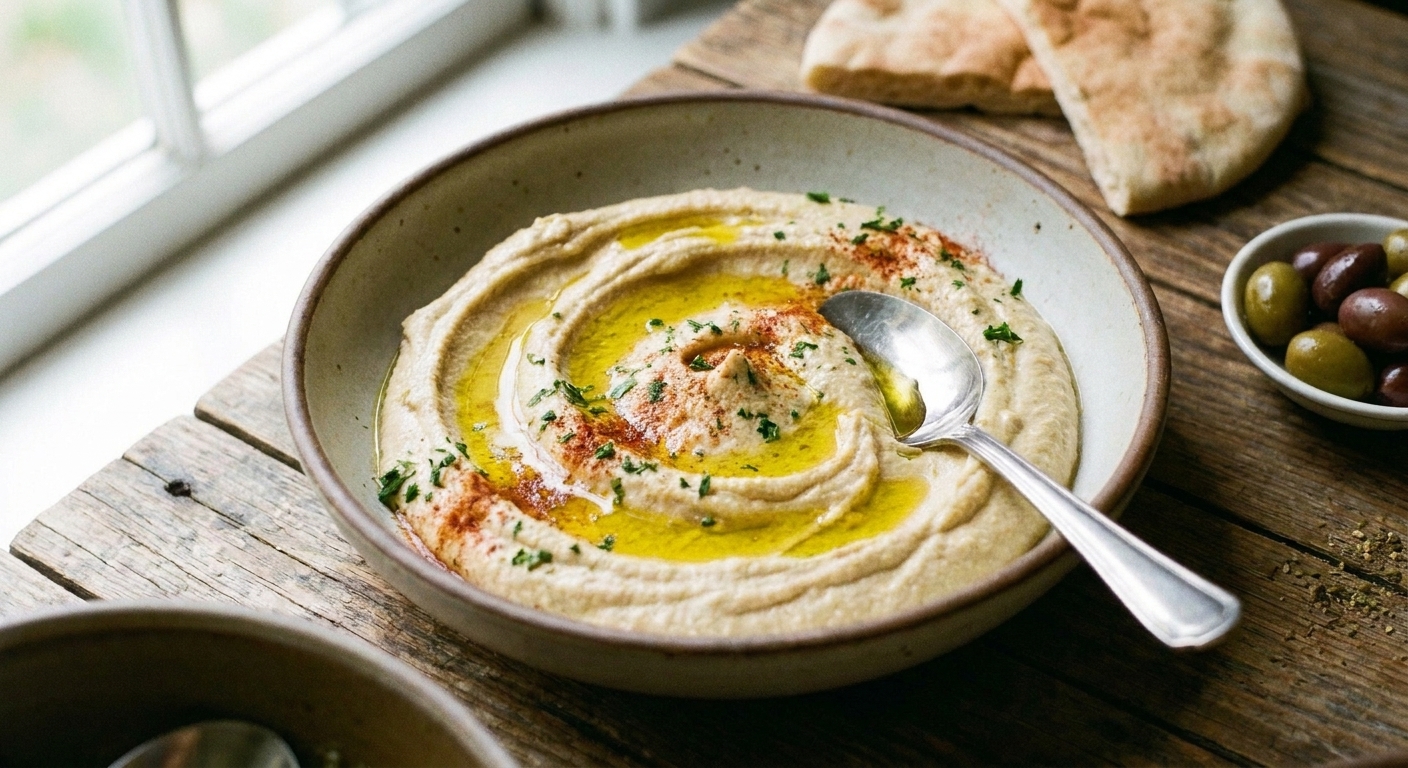
Spoon into a shallow bowl, swirl with the back of a spoon, and drizzle with olive oil. Sprinkle paprika or sumac and parsley if you like.
My no-stress tips
- Use a good tahini. If your tahini tastes bitter on its own, it will taste bitter in hummus. Look for one that is nutty and pourable after stirring.
- Blend longer than you think. Grainy hummus is usually under-processed hummus.
- Do not skip salt. Chickpeas need it. If it tastes flat, add a pinch and re-taste.
- Texture is adjustable. Too thick? Add cold water. Too thin? Add a spoonful of tahini or a few extra chickpeas and blend again.
Flavor variations
Once you have the base recipe down, you can make it your own. Here are my favorite variations that still keep that smooth, creamy texture:
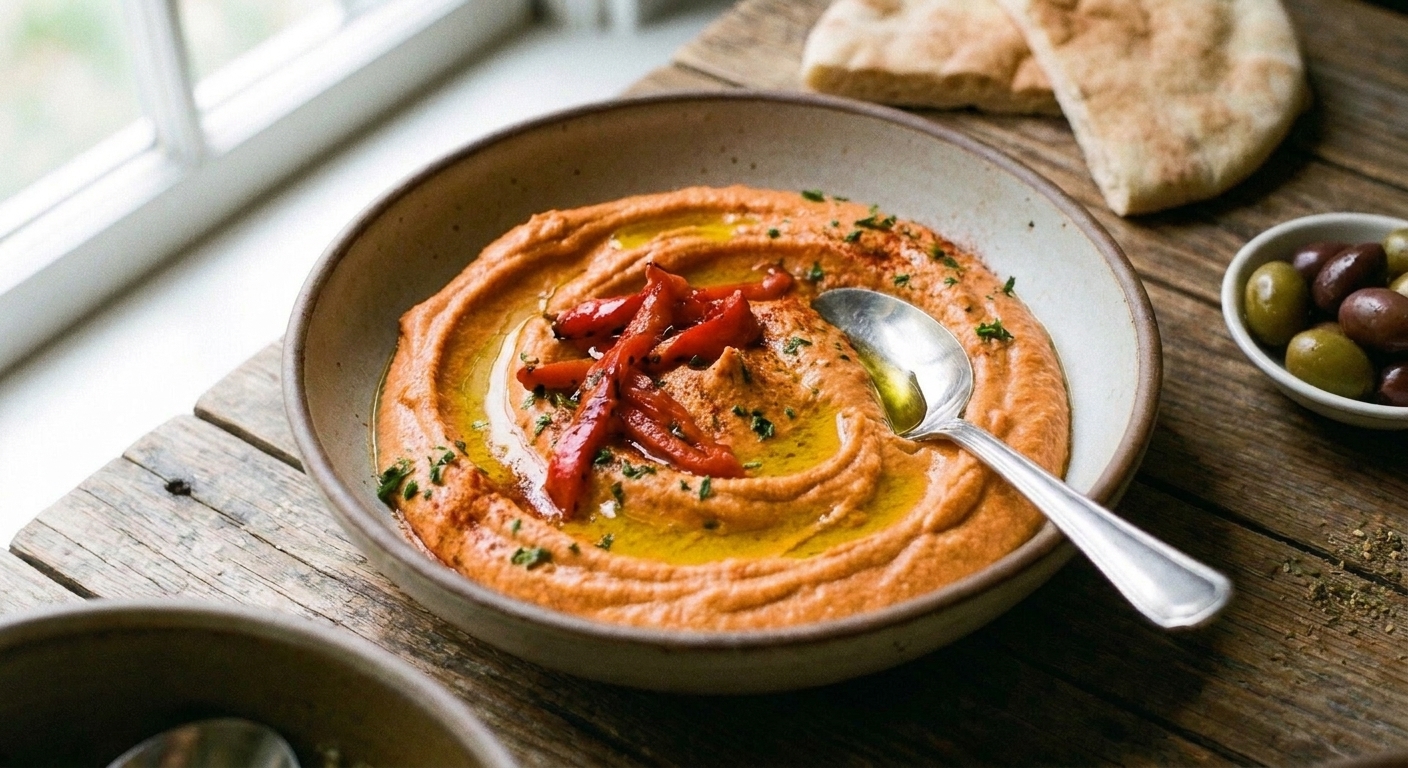
Roasted red pepper hummus
- Add 1/2 cup drained roasted red peppers
- Add 1 tablespoon extra lemon juice
- Optional: pinch of smoked paprika
Spicy harissa hummus
- Add 1 to 2 tablespoons harissa (start small)
- Top with a little more olive oil and toasted sesame seeds
Herby green hummus
- Add 1 cup packed parsley and/or cilantro
- Add 1 small handful spinach for extra green (optional)
- Increase lemon to taste
Extra-garlic hummus
- Use 3 cloves garlic
- Let the garlic sit in lemon juice 10 minutes first for a smoother flavor
What to serve with hummus
Hummus is a full-on dinner helper in my kitchen. A few easy ideas:
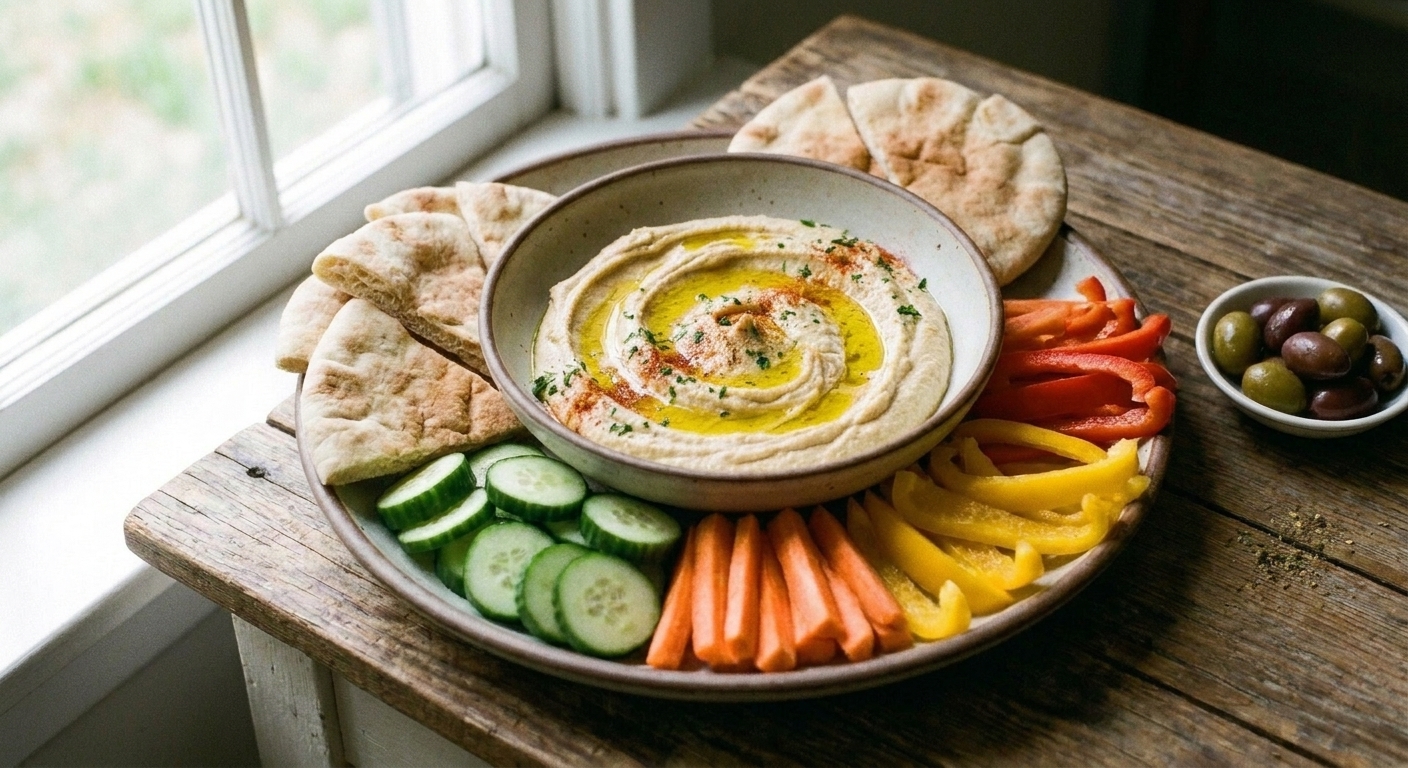
- Warm pita, naan, or flatbread
- Crunchy veggies: cucumbers, carrots, bell peppers, sugar snap peas
- As a spread in wraps and sandwiches
- With grain bowls: quinoa, roasted sweet potatoes, crispy chickpeas
- Alongside grilled chicken, salmon, or falafel
Storage and make-ahead
Refrigerator: Store in an airtight container for up to 5 days. For the best surface texture, smooth the top and add a thin layer of olive oil before chilling.
Freezer: Yes, you can freeze hummus. Portion into containers, leave a little space for expansion, and freeze up to 3 months. Thaw overnight in the fridge, then stir well and refresh with lemon juice and a splash of water.
To make leftover hummus creamy again: Stir in 1 to 2 teaspoons water (or aquafaba) and a small squeeze of lemon, then drizzle with olive oil.
Troubleshooting
Why is my hummus grainy?
Most commonly: chickpeas were not soft enough, not blended long enough, or the mixture needed more liquid. Blend longer and add cold water 1 tablespoon at a time.
Why does my hummus taste bitter?
Bitter tahini is the usual culprit. A little bitterness can also happen if garlic is very sharp. Try mellowing garlic in lemon juice first.
Why is my hummus too thick?
Add cold water until it loosens and looks glossy. A tablespoon or two makes a big difference.
Can I make hummus without tahini?
You can, but it will taste less nutty and feel less creamy. If you need a substitute, try 2 to 3 tablespoons olive oil plus 2 tablespoons plain Greek yogurt (not vegan, and it adds a little tang), or a mild nut butter like cashew butter (use sparingly and taste as you go).
Recipe card
Smooth and Creamy Hummus
- Chickpeas: 1 (15-ounce) can, rinsed and drained (or 1 1/2 cups cooked)
- Tahini: 1/3 cup
- Lemon juice: 3 tablespoons
- Garlic: 1 to 2 cloves
- Olive oil: 2 tablespoons, plus more for serving
- Ice-cold water: 3 to 6 tablespoons total
- Salt: 3/4 teaspoon
- Cumin: 1/2 teaspoon
- Optional: 1/4 teaspoon baking soda (if warming chickpeas)
Instructions
- Optional for extra smoothness: Simmer rinsed chickpeas in water 5 to 8 minutes (add baking soda if using, but do not overdo it). Drain.
- In a food processor, blend tahini and lemon juice 30 to 60 seconds until whipped and pale.
- Add 2 tablespoons cold water and blend again until creamy.
- Add garlic, salt, and cumin. Blend 20 seconds.
- Add chickpeas and blend 2 to 3 minutes, scraping down once.
- With processor running, drizzle in olive oil. Add more cold water 1 tablespoon at a time until smooth and fluffy.
- Taste and adjust lemon and salt. Serve with olive oil and paprika or sumac.
If you make this, I want you to do one thing before serving: take a spoon, make that classic swirl, and add a generous drizzle of olive oil. It is a tiny step that makes homemade hummus feel like a treat.